











Are 3 or 4 Blade Ceiling Fans Better? A Fun & Informative Buying Guide
When you’re staring up at the ceiling, trying to decide on the perfect fan, the old "3-blade vs. 4-blade" question inevitably comes up. So, what’s the real answer? For today's fans, the simple truth is this: the difference is primarily about style, not performance. It's less about engineering and more about the vibe you want for your room. Let's have some fun with it!
Thanks to huge leaps in motor technology and blade aerodynamics, the old idea that more blades means a better or quieter fan is pretty much a myth. Modern engineering has made this debate all about the aesthetics.
Decoding the Great Blade Debate
It wasn't always this way. In the past, the number of blades was a big deal. Fewer blades meant they had to spin faster to move air, which often meant more noise. More blades could offer a gentler, quieter breeze, but they sometimes struggled to create a strong downdraft. That trade-off is largely a thing of the past.
The evolution of ceiling fan design has completely changed the game. With advanced engineering, including low-drag blade shapes and precision balancing, a 3-blade fan can perform just as efficiently and quietly as one with 4, 5, or even more blades. These days, the choice is mostly about looks.
This short decision guide breaks it down perfectly. It all starts with one question: what’s more important to you—style or performance?

As you can see, once you decide to lead with style, you can just pick the look you love. Modern engineering ensures both options will deliver great performance, so you really can't go wrong.
Quick Look 3-Blade vs 4-Blade Fan Characteristics
To help you see the differences at a glance, here’s a quick comparison of what each style typically brings to a room. This table zeros in on the general aesthetic and design vibes, since performance metrics like airflow (CFM) are now driven by the motor and blade pitch, not just how many blades are spinning.
| Feature | 3-Blade Ceiling Fans | 4-Blade Ceiling Fans |
|---|---|---|
| Primary Aesthetic | Modern, minimalist, industrial | Traditional, transitional, classic |
| Visual Impression | Creates a clean, sculptural look that can feel dynamic and light. | Offers a more balanced, symmetrical appearance that feels substantial and grounded. |
| Common Use Cases | Loft apartments, contemporary living rooms, minimalist bedrooms, and office spaces. | Classic master bedrooms, family rooms with traditional decor, and farmhouse-style kitchens. |
| Design Focus | Sleek lines and an uncluttered profile are the name of the game. | A sense of balance and timeless design that complements more conventional decor. |
Ultimately, both 3-blade and 4-blade fans from reputable brands will give you excellent airflow and quiet operation. Your decision should start with the style that best fits your room’s decor. From there, you can dig into the specifics—comparing motor quality, blade span, and CFM ratings to find the perfect fan for your space.
If you're drawn to that sleek, modern aesthetic, you can find stunning options in our Modern Fan Collection.
Understanding Airflow Performance and Efficiency

When you're comparing 3-blade and 4-blade fans, it’s easy to get caught up in the numbers. Common sense might suggest that more blades mean more air, but that’s not the whole story. Let’s get one thing straight: the number of blades is a supporting actor.
The real star of the show is the motor, and the single most important number you need to look for is CFM (Cubic Feet per Minute).
CFM tells you exactly how much air a fan actually moves. A high-quality 3-blade fan with a powerful motor will always run circles around a 4-blade fan that has a weak motor and a low CFM rating. It’s that simple. When you're looking at a spec sheet, your eyes should go straight to the CFM. Think of it as the horsepower of your fan—it’s the ultimate measure of its breeze-making power.
The Motor Is the Heart of the Fan
Behind every impressive CFM rating is an even more impressive motor. The motor is what dictates a fan's strength, its efficiency, and how fast the blades can spin without sounding like a helicopter in your living room. This is where the difference between AC and DC motors really matters.
- AC Motors: These are the old-school standard. They're reliable and generally less expensive, but they tend to be less energy-efficient and usually only offer a few speed settings.
- DC Motors: This is the modern powerhouse. DC motors are way more energy-efficient, run almost silently, and often come with six or seven speed settings for total control over your comfort.
The motor is the heart of the ceiling fan. A powerful, well-engineered motor is the single most critical component for determining airflow performance and overall efficiency, regardless of whether the fan has three or four blades.
This is why you see such a leap in quality with premium fans—especially those in the $300 and up price range. Manufacturers pour a ton of engineering into creating powerful, silent DC motors paired with aerodynamically optimized blades. It’s proof that great design trumps a simple blade count every single time.
Blade Pitch and Its Role in Air Movement
Another piece of the puzzle is blade pitch—the angle of the blades. Think of it like a propeller on a boat. A steeper pitch, ideally between 12 and 15 degrees, will slice through the air and push more of it down where you can feel it. A flat blade, no matter how fast it spins, just isn't going to move much air.
So, when we're talking efficiency, the magic isn't in the blade count itself. It's in the relationship between the motor, the blade design, and the pitch. As long as the fan has a strong motor and the blades are angled properly, both 3- and 4-blade models can be incredibly efficient.
Of course, none of this matters if the fan is the wrong size for your room. A fan that’s too small for a large space will struggle to circulate air effectively, no matter how powerful it is. Be sure to check out our guide on choosing the right ceiling fan size to make sure you get a perfect match.
While a great ceiling fan is a game-changer for your personal comfort, it’s just one part of the equation. Remember that maintaining good overall home air quality and HVAC efficiency is just as crucial for a truly comfortable home. With today's premium fans, the performance difference between 3 and 4 blades is often so small that you can confidently just pick the one that looks best in your space.
Comparing Noise Levels for Quiet Operation

There’s a stubborn myth floating around that more blades automatically means a quieter fan. It might have held a little water years ago, but modern fan engineering has completely flipped that idea on its head. Today, the real story behind whether a 3-blade or 4-blade fan is quieter is a lot more interesting than just counting blades.
Historically, 3-blade fans did have to spin faster to move the same amount of air as a model with four or five blades. That higher speed often created more wind noise—that classic "whoosh" sound. With today’s premium fans, though, that’s simply no longer the case.
How Modern Engineering Silenced the 3-Blade Fan
The secret to a silent fan isn’t in the blade count; it's all about the quality of its design and components. A few key advancements have allowed 3-blade fans to become just as quiet, if not quieter, than their 4-blade cousins.
- Ultra-Quiet DC Motors: As we mentioned earlier, DC motors are a total game-changer. They run with virtually no motor hum and are incredibly energy-efficient, delivering smooth, silent power even at higher speeds.
- Precision Blade Balancing: High-end fans are put through a rigorous balancing process right at the factory. This makes sure the blades are perfectly weighted, which gets rid of the wobble that causes all those annoying rattling and shaking noises.
- Aerodynamic Blade Design: Modern fan blades aren't just flat paddles anymore. They are carefully sculpted using aerodynamic principles, allowing them to slice through the air with minimal drag. Less drag means significantly less wind noise.
Thanks to these breakthroughs, a well-designed 3-blade fan can easily be as quiet as an old-school 5- or 6-blade model. When you're choosing between a 3-blade and a 4-blade fan, you should be looking at the motor and blade specs, not just making assumptions based on looks.
This is especially true for fans in the $300 and up price range, where this kind of superior engineering is standard.
So, What Really Causes Fan Noise?
If the number of blades isn't the real problem, what is? Most unwanted fan noise boils down to a few common culprits that can affect any fan, regardless of blade count.
- Motor Hum: This is the signature of a cheap, low-quality AC motor. It produces that constant, irritating hum that can drive you crazy.
- Wobble: A fan that wasn't installed correctly or has imbalanced blades will wobble. That wobble is what leads to clicking, ticking, and rattling sounds.
- Wind Rush: Blades with a poor, non-aerodynamic design will struggle to move air, creating excessive wind noise as they chop through it.
The quietest ceiling fan for your bedroom isn't determined by its blade count. It's the one with a high-quality DC motor, perfectly balanced blades, and an aerodynamic design.
When you’re picking out a fan for a quiet space like a bedroom or home office, make a DC motor your top priority. That single feature will have the biggest impact on on ensuring whisper-quiet operation. Our Quiet Fan Collection is a great place to find your peaceful sanctuary.
Ultimately, you can confidently choose a sleek 3-blade model for your space without having to worry about noise.
Choosing a Fan to Match Your Interior Design Style
Now that we've covered the technical side, let's get to the fun part: style. With high-quality 3 and 4-blade fans performing on pretty equal footing, your decision can shift from CFM and RPM to pure aesthetics. A ceiling fan isn't just an appliance anymore; it's a statement piece that can either anchor your room's design or feel completely out of place. This is where the blade count makes a real difference.
The choice between three and four blades is a powerful one that can steer the entire mood of your space. Are you going for a clean, modern, and minimalist vibe, or something more balanced, classic, and traditional? Your answer will almost certainly point you in the right direction.
The Bold Simplicity of 3-Blade Fans
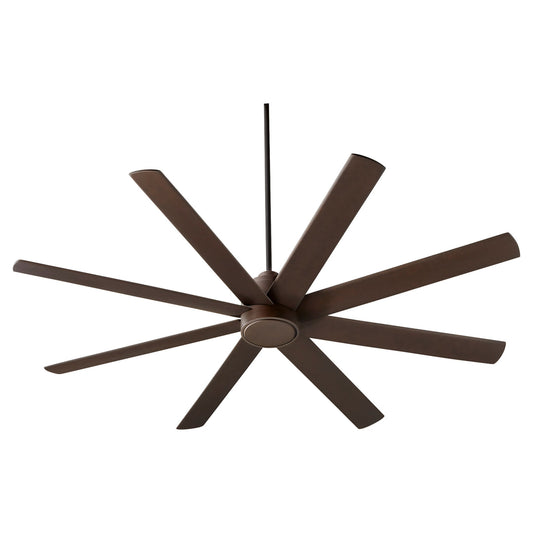
Three-blade fans are the go-to for anyone aiming for a modern, minimalist, or industrial look. Their clean lines and uncluttered profile create a sense of visual lightness and dynamic movement. Instead of just blending in, they often act as a sculptural element.
They really shine in certain aesthetics:
- Modern & Minimalist: In a room where "less is more," a 3-blade fan’s simple form is the perfect fit. It adds function without creating visual clutter, helping to maintain that sleek, open feel.
- Industrial & Loft-Style: Think exposed brick, high ceilings, and metal accents. These spaces almost demand a 3-blade fan. Many are inspired by aircraft propellers, giving them a raw, mechanical edge that just works.
- Scandinavian: This style is all about clean lines, simplicity, and natural materials. A 3-blade fan, especially one with light wood finishes, fits right in.
The Minka-Aire Artemis IV, available from Fan Connection, is a perfect example. With its gracefully flowing blades, it's less of a fan and more of a kinetic sculpture. This is the kind of bold statement piece, with a price that reflects its superior design, that becomes a focal point in a contemporary living room or minimalist master suite.
The Timeless Balance of 4-Blade Fans
If 3-blade fans are all about modern edge, 4-blade fans bring a sense of classic symmetry and balance. Their look feels more substantial and grounded, making them an ideal match for a whole range of popular, comforting design styles.
You’ll see 4-blade fans work beautifully in these settings:
- Traditional & Classic: In rooms with crown molding, antique furniture, and a more formal layout, the symmetrical look of a 4-blade fan just feels right. It offers a timeless elegance that won’t fade.
- Transitional: This style mixes the best of modern and traditional design. A simple 4-blade fan can be the perfect bridge, offering a classic shape with more updated finishes.
- Farmhouse & Coastal: These cozy, inviting styles benefit from the balanced, welcoming look of a 4-blade fan. It feels less severe than a 3-blade model and adds to the room's relaxed charm.
When you can’t decide, think about the visual weight of the room. Spaces with heavier furniture, more textures, and traditional architecture often look more complete with the balanced presence of a 4-blade fan.
When picking a fan, it helps to think about how its look fits with broader interior design principles to create a truly cohesive space. If you're looking to bring this balanced aesthetic home, exploring the Classic and Traditional Collections at Fan Connection is a great place to start. You’ll find premium models priced over $300 that deliver that perfect, timeless appeal without sacrificing modern performance. For more ideas on how to weave your choice into your home's overall look, you can also check out the latest ceiling fan design trends.
Premium Fan Recommendations From Fan Connection

Okay, we’ve covered the technical side of things. Now for the fun part: seeing how these ideas come to life. We’ve pulled together a few of our favorite 3 and 4-blade models that really show what a premium fan can do for a room.
Every fan here is in the $300+ range, and for good reason. When you invest in a fan at this level, you’re not just getting blades and a motor; you’re getting top-tier engineering, beautiful materials, and a design that truly elevates your space.
Let’s look at some real-world examples that answer the "3 vs. 4 blade" question once and for all.
Statement-Making 3-Blade Fans
If your style leans modern, minimalist, or just plain bold, a 3-blade fan is often the perfect fit. They have a certain sculptural quality that makes them a focal point, delivering powerful airflow without looking busy.
For the Urban Loft: The Minka-Aire Artemis IV Fan ($800) This is more than a fan—it’s a conversation piece. The Artemis IV has this incredible, fluid design that feels like it's in motion even when it's standing still. It's a breathtaking centerpiece for rooms with high ceilings, an industrial vibe, or minimalist decor. And with a powerful DC motor inside, its performance is just as impressive as its looks.
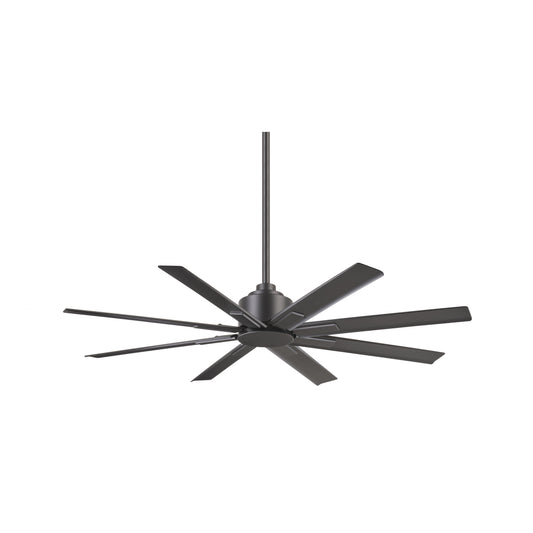
For the Minimalist Retreat: The Aerovon 3-Blade Fan ($380) Sleek, simple, and seriously effective. The Aerovon is the definition of minimalist design with its clean lines and understated profile. It's the ideal choice for a calm bedroom or a tidy home office where you want quiet, powerful cooling without any visual clutter. It’s proof that you don’t need a complex design to get great results.
These models are perfect examples of how a 3-blade fan can make a strong design statement. They’re for anyone who sees their fan as a key part of the room’s decor, not just a utility.
Choosing a premium fan means you're investing in the heart of the machine—the motor. The fans in our collection feature advanced DC motors that provide powerful, silent, and highly efficient airflow, making the debate over blade count secondary to quality engineering.
If you’re curious about this advanced motor tech, you can get the full story by exploring our DC Motor Fan Collection. Knowing how they work will give you even more confidence in your final pick.
Timeless and Elegant 4-Blade Fans
If your home has more of a classic, traditional, or transitional feel, a 4-blade fan brings a sense of balance and timeless style. These fans blend in beautifully, adding a touch of refined elegance and a comfortable breeze.
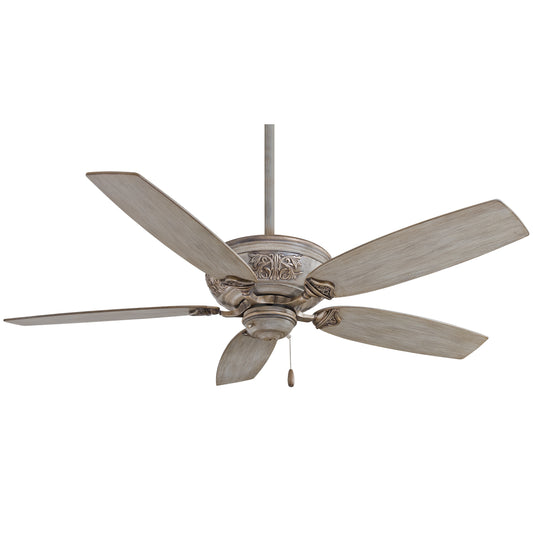
For Classic Comfort: The Chateaux 4-Blade Fan ($500) The Chateaux is a masterclass in traditional design. With its ornate details and rich finishes, it adds a touch of old-world charm to any space. It’s right at home in a formal dining room or a master bedroom with classic furniture, where its gentle, consistent airflow enhances the room's stately character.
For Transitional Style: The Apex 4-Blade Fan ($450) The Apex fan is a versatile workhorse that perfectly bridges the gap between traditional and modern. It has clean, straightforward lines but keeps the balanced symmetry of a 4-blade model. This makes it an incredibly adaptable choice for family rooms, guest bedrooms, or any space where you're mixing styles.
Curated Premium Fan Picks for Your Home
Our expert selection of top-tier 3-blade and 4-blade fans, highlighting their unique features, ideal placement, and style.
To help you visualize the right fit, here’s a quick-glance table comparing our top recommendations. This should make it easy to see which fan aligns best with your room's style and your personal priorities.
| Fan Model | Blade Count | Best For | Price Point | Why We Love It |
|---|---|---|---|---|
| Artemis IV | 3-Blade | Modern, high-ceiling living rooms | $800 | Its stunning, sculptural design makes it an undeniable artistic statement. |
| Aerovon | 3-Blade | Minimalist bedrooms and offices | $380 | Delivers powerful airflow with an ultra-clean, unobtrusive profile. |
| Chateaux | 4-Blade | Traditional dining or living rooms | $500 | Offers timeless, old-world elegance and a refined aesthetic. |
| Apex | 4-Blade | Transitional family rooms | $450 | A perfectly balanced design that fits seamlessly into a variety of decor styles. |
Ultimately, whether you land on a 3-blade or 4-blade model from our premium collections, you’re choosing quality. These fans are built to perform, run silently, and last for years. The final decision really comes down to which style speaks to you and best completes the beautiful home you've created.
Your Biggest Fan Questions, Answered
Okay, you've narrowed it down, but a few questions are still lingering. That's perfectly normal. When you're investing in a fixture that will define a room's comfort and style, you want to be certain.
We get these questions all the time from our customers. Let's clear the air and tackle the most common myths about 3-blade versus 4-blade fans head-on.
Does Blade Count Affect Ceiling Fan Wobble?
Let's get this one out of the way first: blade count has nothing to do with a wobbly fan. A shaky fan is a mechanical problem, not a design flaw tied to the number of blades. It almost always comes down to an improper installation or unbalanced blades.
This is exactly why high-quality fans, whether they have three blades or four, ship with a balancing kit. The real secret to a perfectly stable, wobble-free fan is two-fold:
- A Secure Mount: The fan needs to be attached to a ceiling-joist-braced electrical box that’s rated to handle the fan's weight and motion.
- Blade Balancing: Each blade must be perfectly balanced according to the manufacturer’s instructions.
When installed and balanced correctly, a 3-blade fan will be just as rock-solid as a 4-blade model. Think of a wobble as a fixable installation issue, not a built-in problem.
Are 3-Blade or 4-Blade Fans Better for Large Rooms?
For big rooms, you're asking the wrong question if you're focused on blade count. The only two metrics that truly matter are the fan's blade span (its diameter) and its CFM (Cubic Feet per Minute) rating.
A huge great room or open-concept space needs a fan with a wide wingspan and a motor powerful enough to move a serious amount of air. A large-diameter 3-blade fan with a high CFM rating will always outperform a smaller 4-blade fan with a wimpy motor.
When you're outfitting a large space, always prioritize blade span and CFM. A 60-inch, high-CFM 3-blade fan will deliver far superior air circulation than a 42-inch, low-CFM 4-blade fan every single time.
Start by matching the fan’s diameter to your room’s square footage. From there, find the highest CFM you can in a style you love. That’s how you guarantee performance, regardless of how many blades it has.
Is a 3-Blade Fan Cheaper Than a 4-Blade Fan?
Not really. It’s a common assumption, but a fan’s price tag is all about its quality and features, not how many blades it has.
The final cost comes down to a mix of things, like:
- The motor quality (an efficient DC motor costs more than a standard AC one).
- The materials used for the blades and housing—think solid wood versus molded plastic.
- The complexity of the design and the reputation of the brand.
- Extra features like an integrated LED light, smart home compatibility, or an included remote.
You'll easily find a premium 3-blade fan, like the stunning Minka-Aire Artemis IV for $800, that costs far more than a basic 4-blade model. Here at Fan Connection, our fans are priced based on their engineering and design excellence, making the blade count purely a style choice, not a cost factor.
How Does Blade Pitch Impact My Choice Between 3 and 4 Blades?
Blade pitch—the angle of the blades—is what actually grabs the air and pushes it down. Think of it like a boat propeller; a steeper pitch moves more air. For most homes, the sweet spot is a pitch between 12 and 15 degrees.
A well-designed 3-blade fan with an aggressive 14-degree pitch can move way more air than a poorly engineered 4-blade fan with a flat, inefficient 10-degree pitch.
But here’s the good news: when you shop for premium fans, this becomes a non-issue. The engineers have already done the heavy lifting, perfectly matching the blade pitch to the motor’s power for optimal airflow. For any fan in the $300+ range, you can trust that both 3 and 4-blade options are designed for maximum performance. This frees you up to focus on the look that fits your home, knowing the fan will work beautifully.
At Fan Connection, we believe choosing a fan should be an exciting design decision, not a technical headache. We’ve curated our collections to ensure that every single model, whether it has three blades or four, meets the highest standards of performance and quality. All you have to do is pick the style that speaks to you.
Ready to find the perfect centerpiece for your room? Explore the full collection at Fan Connection and discover a fan you'll love for years to come.


