











Using a Ceiling Fan Blade Cleaner Like a Pro
When it comes to the best ceiling fan blade cleaner, fancy gadgets aren't always the answer. Honestly, some of the most effective tools are probably already in your home—think a microfiber duster sleeve or even a simple pillowcase. It's like finding out the secret to a magic trick is something you've had up your sleeve the whole time!
The trick is to trap the dust, not just send it flying around the room like confetti at a party you didn't want to throw. Pairing one of these simple tools with a mild cleaner gets the job done without kicking up a bunch of allergens. It’s less about buying a specific product and more about adopting a smart method that keeps your air clean and your home looking sharp.
Why a Clean Ceiling Fan Matters More Than You Think
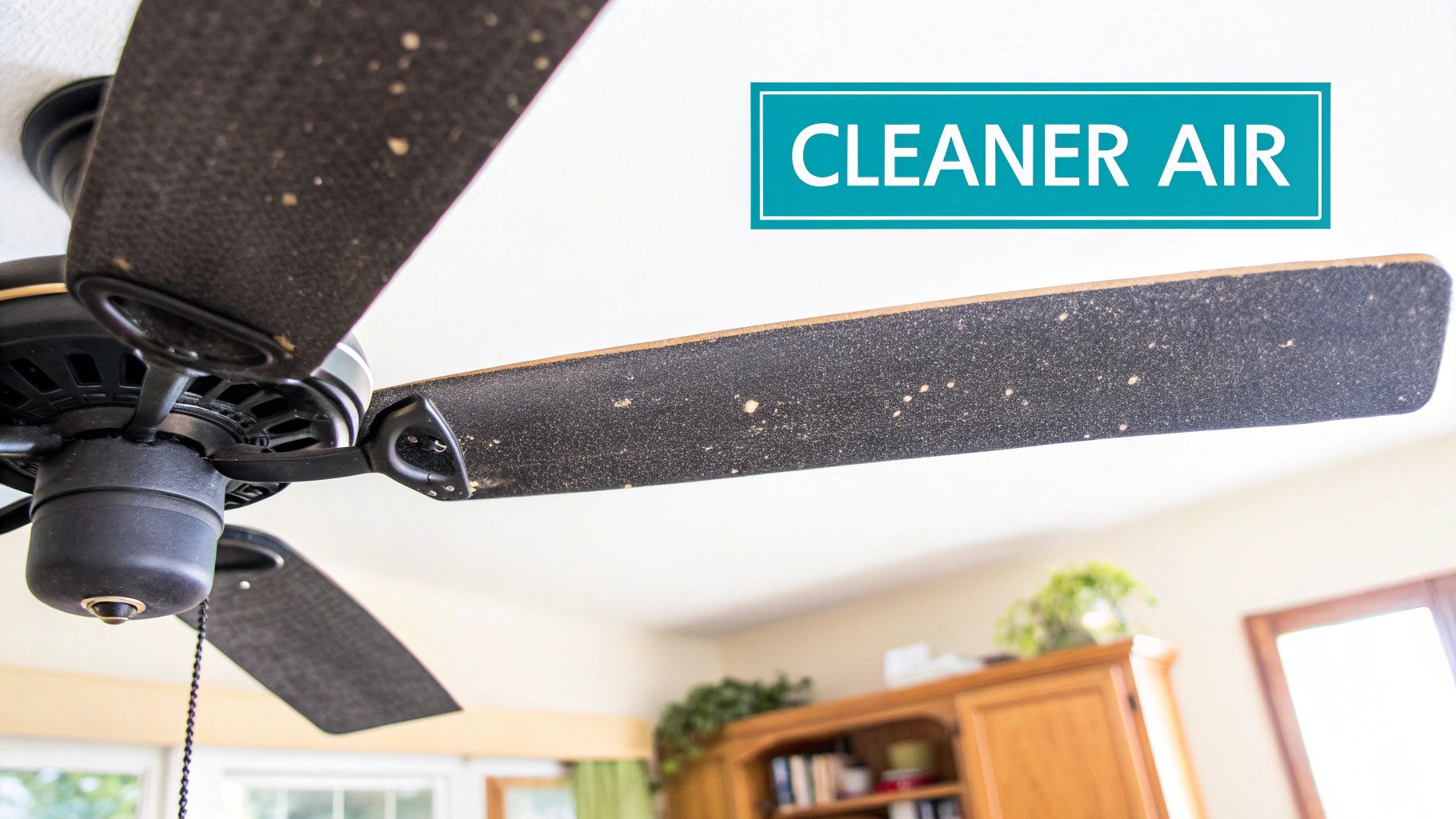
It’s easy to ignore that layer of dust collecting on your ceiling fan blades. Out of sight, out of mind, right? But the moment you flip that switch, those blades turn into a high-speed delivery system for dust, pollen, pet dander, and other irritants, scattering them all over your home. This isn't just about looks; it's a real issue for your indoor air quality.
The Hidden Impact on Your Home's Health
That gray fuzz isn't just sitting there innocently. When the blades start spinning, they launch all those microscopic particles into the air you and your family breathe. This can be a huge trigger for allergies and other respiratory issues. Think of it as a silent source of stuffy noses, itchy eyes, and that "why am I always sneezing?" feeling.
Taking a few minutes to clean your fan offers some serious benefits:
- Healthier Indoor Air: Wiping away that buildup of allergens makes a noticeable difference. You’re creating a healthier breathing environment, especially for kids, pets, or anyone with sensitivities.
- Improved Fan Efficiency: A thick coat of dust and grime actually adds weight and drag to the blades, forcing the motor to work harder just to spin. Clean blades slice through the air with less resistance, which means better airflow and lower energy use.
- Prevents Motor Strain: Over time, caked-on dust can throw the blades off-balance. That imbalance is what causes that annoying wobble and puts extra strain on the fan’s motor, which can shorten its lifespan.
Think of this task as preventative maintenance for both your fan and your family's well-being. A few minutes of cleaning every couple of months can save you from future repairs and make your home a much more comfortable place to be.
More Than Just a Cooling Device
Ceiling fans have become a staple in modern homes, prized for both their style and their practicality. The global ceiling fan market, valued at around USD 13.06 billion, is expected to grow to nearly USD 18.90 billion by 2033. This boom is all about the demand for energy-efficient ways to improve air circulation and support HVAC systems.
This just goes to show that a well-maintained fan is a genuine asset. Taking the time to properly use a ceiling fan blade cleaner ensures your investment keeps running smoothly and efficiently. Understanding the breezy benefits of having a ceiling fan really drives home how much this simple appliance can improve your home. Keeping it clean is the key to unlocking its full potential, from saving energy to promoting a healthier space.
Getting Your Fan Cleaning Toolkit Ready
Before you even think about tackling those dusty fan blades, a little prep work goes a long way. The right supplies will make the job safer, faster, and a whole lot less messy. Think of it as setting yourself up for success—a smart toolkit prevents a dust storm from taking over your living room.
Your first thought should always be about safety. Cleaning a ceiling fan means you'll be working overhead, which comes with a few risks. But don't worry, they're easy to manage if you're prepared.
Safety First, Always
Honestly, your most important tools aren't for dusting at all—they're for keeping you safe. The biggest challenge is just reaching the fan, which is why a sturdy stepladder is non-negotiable. Make sure it's the right height for your ceilings and sitting on a flat, solid surface before you even step on it.
Next up, protect yourself from falling debris. A pair of safety glasses might seem like overkill, but you'll be glad you have them when a clump of dust decides to make a run for your eyes. And if you're sensitive to allergens, a simple dust mask can make all the difference, keeping you from breathing in everything you're trying to clean up.
Picking Your Weapon of Choice
Once your safety gear is sorted, it’s time to choose your cleaning tool. There are a few fantastic options, and the best one for you really depends on your ceiling height and just how much dust has piled up.
-
The Pillowcase Hack: This little trick is a fan favorite for good reason. Just slip an old pillowcase over a blade and wipe it clean. All the dust and gunk get trapped right inside the case instead of showering down on your furniture. It’s effective, mess-free, and costs you nothing.
-
Extendable Microfiber Dusters: Got vaulted or extra-high ceilings? A duster with a long, telescoping pole will be your best friend. Look for one with a U-shaped head specifically designed to hug the blade, cleaning the top and bottom at the same time. It's the best way to work safely from the ground.
-
Microfiber Cloths & All-Purpose Cleaner: For that sticky, greasy grime that loves to build up in kitchens, you'll need a more hands-on approach. A gentle all-purpose cleaner sprayed onto a microfiber cloth—never directly onto the fan itself!—can cut through the buildup without harming the blade’s finish.
The real goal isn't just to move dust; it's to capture it. Whether you use a pillowcase or a specialized duster, the best tool is the one that keeps debris from raining down on you and your home.
DIY vs. Commercial Ceiling Fan Cleaning Tools
So, should you grab that old pillowcase or invest in a specialized tool? Both have their place. It really comes down to your fan's location, how dirty it is, and your personal preference. Here’s a quick breakdown to help you decide.
| Tool/Solution | Pros | Cons | Best For |
|---|---|---|---|
| Old Pillowcase | Traps dust perfectly; completely free; readily available. | Requires a ladder; can be awkward on wide blades. | Standard-height ceilings and containing heavy dust buildup. |
| DIY Cleaner (Vinegar/Water) | Inexpensive; chemical-free; effective on light grease. | May not cut through heavy grime; can smell strong. | Eco-conscious cleaning and routine maintenance in kitchens. |
| Extendable Duster | Great for high ceilings; no ladder needed; cleans top and bottom simultaneously. | May not trap all dust; less effective on sticky grime. | Vaulted ceilings and quick, regular dusting between deep cleans. |
| Commercial All-Purpose Cleaner | Powerful on grease and stains; leaves a fresh scent; works quickly. | Can contain harsh chemicals; must be sprayed on a cloth, not the fan. | Greasy kitchen fans or removing stubborn, stuck-on dirt. |
Ultimately, there's no single "best" answer. Many of us here at Fan Connection keep both an extendable duster for quick touch-ups and a few old pillowcases on hand for the serious deep cleans.
Prepping Your Space for a Mess-Free Job
One last step before you start. Even with the pillowcase method, a little dust is bound to escape. Do yourself a favor and lay an old sheet or a plastic drop cloth over any furniture, beds, or rugs directly under the fan.
This tiny bit of prep takes maybe a minute, but it saves you from having to clean your whole room afterward. With your drop cloths down, your ladder secure, and your tools ready, you’re all set to get those blades looking brand new.
The Mess-Free Method for Spotless Fan Blades
Alright, let's get down to business. You’ve gathered your supplies, prepped the room, and now it’s time to tackle that furry layer of dust clinging to your fan blades. This isn't just about wiping things down; it's about using a clever technique that actually captures the grime instead of just flinging it across your furniture.
The very first, non-negotiable step is safety. Before you do anything else, head to your circuit breaker and flip the switch that powers the room with the fan. This simple move takes ten seconds and completely eliminates the risk of the fan accidentally turning on while you're up on a ladder. Total peace of mind.
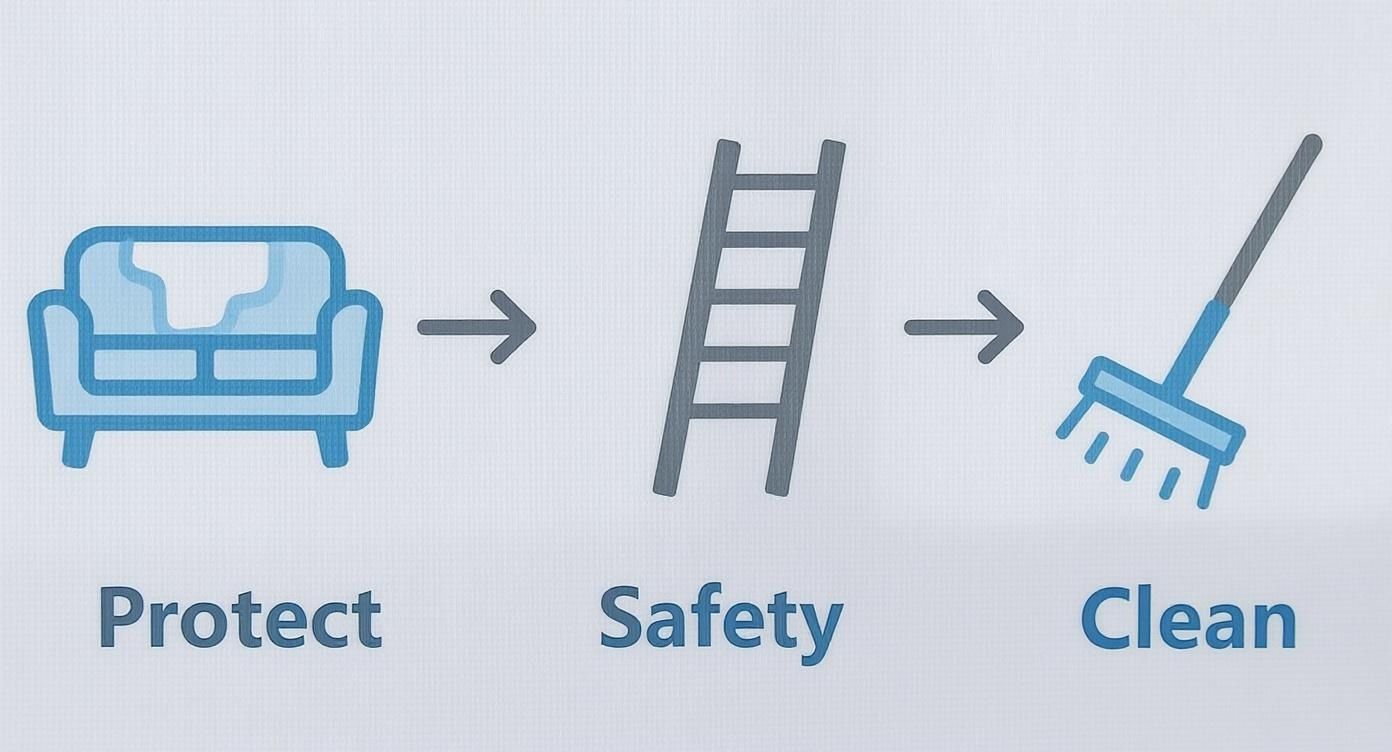
With the power safely off, you're ready to start. The infographic below lays out the simple, three-step prep for a successful and safe cleaning session.
This visual just reinforces the basics: protect your space, stay safe, and have the right tools ready to go before you even think about touching the blades.
Mastering the Pillowcase Trick
This method is a game-changer. Honestly, it’s the most effective ceiling fan blade cleaner you'll ever find, and it’s probably already sitting in your linen closet. The beauty of the old pillowcase trick is its brilliant simplicity—it traps every last bit of dust inside the case.
Here’s how to do it right:
- Get Your Ladder in Position: Set up your stepladder so you can easily and comfortably reach the fan blades without stretching or losing your balance.
- Slide and Enclose: Grab an old, clean pillowcase and slide it all the way over one of the fan blades, like you’re putting on a sleeve.
- Wipe and Pull: Using both hands, gently press the fabric against the top and bottom of the blade. Now, just slowly pull the pillowcase back toward you.
As you pull, the fabric scrubs the blade clean, and all that dust, dirt, and dander falls directly into the pillowcase instead of all over your floor. You'll be shocked at what comes off. Just take the pillowcase outside, shake it out, and toss it in the wash for next time.
Tailoring Your Technique to Blade Materials
Not all fan blades are created equal. Using the wrong cleaning solution can ruin delicate finishes, so it’s crucial to know what you’re working with. A one-size-fits-all approach can lead to warping, discoloration, or stripping.
-
Finished Wood Blades: These are really sensitive to moisture. Never use a soaking wet cloth. A lightly dampened microfiber cloth is your best friend here, but only after you’ve done an initial dry dusting. For a little extra shine, a small amount of wood furniture polish on a dry cloth works wonders and helps repel future dust.
-
Metal or Plastic Blades: These are much more durable and can handle a bit more elbow grease. If you’re dealing with that greasy film that builds up on kitchen fans, a cloth dampened with warm water and a few drops of dish soap will cut right through it. Always follow up with a clean, dry cloth to avoid water spots.
-
Natural or Unfinished Wood: Be extremely careful here. These blades are porous and can stain in an instant. Stick to dry methods only—like the pillowcase trick or a soft-bristled brush. Avoid water and cleaning solutions entirely to keep their natural look intact.
Here's a pro-tip for any material: never spray cleaner directly onto the fan. Liquid can easily get inside the motor housing and cause serious electrical damage. Always, always apply your cleaner to the cloth first.
Tackling Stubborn Grime and High Ceilings
What if a simple dusting doesn’t cut it? Sometimes, especially in kitchens or humid areas, dust mixes with grease and moisture to create a sticky, stubborn film.
For that kind of buildup, you’ll need to follow your dry-dusting pass with a damp wipe-down, using the right method for your blade material. The key is to work on one blade at a time, making sure each one is completely dry before you move to the next. This prevents drips and guarantees a streak-free finish.
If you’ve got vaulted or cathedral ceilings, teetering on a super-tall ladder is just asking for trouble. This is where an extendable duster becomes your best friend. Look for one with a flexible or U-shaped head that’s designed to clean both sides of the blade at once. It might not be as thorough as the hands-on pillowcase method for heavy grime, but it's the perfect tool for regular maintenance to keep dust from building up in the first place—all while you stay safely on the ground.
Cleaning Beyond the Blades for Peak Performance
You’ve done the hard part—the blades are spotless. But if you stop there, you’re missing what separates a quick dusting from a true, professional-level clean. Taking a few extra minutes to address the motor housing, light fixtures, and pull chains isn't just about appearances; it's what keeps your fan running quietly and efficiently for the long haul.
Think of it as a complete tune-up for your fan's entire system, not just the parts you see spinning.
A Deeper Dive Into Fan Components
Once the blades are clean, grab a fresh, slightly damp microfiber cloth and turn your attention to the rest of the fan. These parts collect just as much grime but are often overlooked.
Here's a quick checklist for those neglected spots:
- Motor Housing: Gently wipe down the whole casing. Dust loves to settle here and can eventually find its way into the motor's vents, which is a big no-no.
- Pull Chains: These get handled all the time, so they accumulate oils and dirt. A quick wipe-down makes them look and feel brand new.
- Light Fixtures and Globes: If your fan has lights, carefully remove any glass shades. A simple wash in warm, soapy water, followed by a thorough drying, will make a huge difference in how bright your room feels.
This whole process only adds a few minutes to your cleaning routine, but the payoff in your fan's appearance and longevity is massive.
A truly clean fan is more than just spotless blades. It’s a well-maintained machine where every component, from the motor vents to the blade brackets, is inspected and cared for.
The Critical Motor Vent Checkup
The motor is the heart of your ceiling fan, and just like any engine, it needs to breathe. Most fans have small vents to keep the motor cool, but they are magnets for dust and lint. When these vents get clogged, airflow is restricted, forcing the motor to work harder and risk overheating.
This buildup is a silent performance killer. An overheating motor doesn't just run less efficiently; it's also on the fast track to premature failure. While the power is still off, use a can of compressed air or your vacuum's brush attachment to gently clear out any debris from these vents. It’s a simple, two-minute task that can add years to your fan's life.
The Wobble Fix: Tightening Screws
Ever clean your fan only to turn it back on and find it has developed a new, annoying wobble? The culprit is almost always a loose screw. The fan's natural vibration can slowly loosen the screws holding the blade brackets (sometimes called blade irons) to the motor.
While you've got the ladder out, take an extra minute to check these. Grab a screwdriver and make sure each one is snug. You don't need to overtighten them, just eliminate any wiggle room. This is one of the easiest and most effective ways to prevent a wobbly fan and the strain it puts on the motor. The number of blades can sometimes play a role in balance, too—you can read more about the impact of fan blade count and fan efficiency in our guide.
Listening for Trouble
Okay, you're all done. Once everything is reassembled and the power is back on, flip the switch and just... listen. A healthy fan should be nearly silent or produce a gentle hum.
Pay close attention to any new or unusual sounds:
- Grinding or Scraping: This could point to an issue with the motor's bearings.
- Repetitive Clicking: This often means a wire is out of place or something is hitting the blades as they rotate.
These noises are your fan's way of telling you something deeper is wrong. Catching these signals early can be the difference between a simple fix and a costly replacement. If you hear anything persistent or concerning, it might be time to call in a pro.
Ready for an Upgrade? Why a Statement Ceiling Fan Changes Everything

Sometimes, you can scrub and polish all you want, but you realize the problem isn't the dust—it's the fan itself. An old, wobbly, or just plain boring fan can really drag down the look of a room. This is when an upgrade feels less like a replacement and more like a total design refresh.
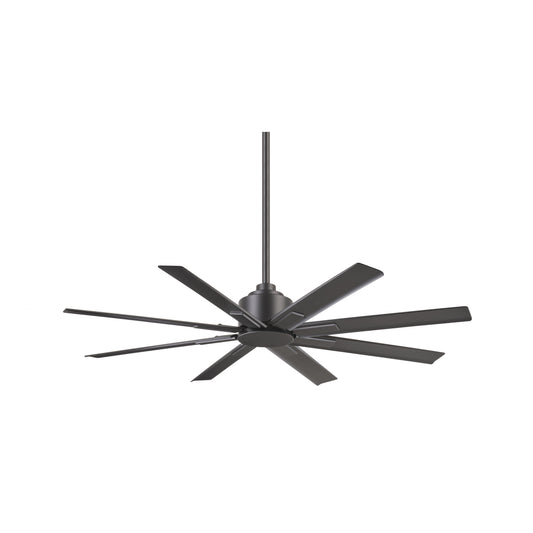
Once you step into the premium tier of ceiling fans—think $300 and up—you're not just buying an appliance. You're investing in a statement piece that becomes the focal point of your space. These fans bring together incredible style, the latest tech, and performance that you can feel. For instance, the Minka-Aire F896-65-BNW Xtreme H2O 65" Ceiling Fan (around $360) is a masterpiece of modern engineering, perfect for large indoor spaces or covered patios with its wet rating and impressive airflow.
The Future is Bladeless and Bold
One of the coolest innovations we're seeing is the bladeless ceiling fan. At first glance, they look more like a sleek, modern light fixture. But inside, they use air-multiplying technology to push out a smooth, strong stream of air without any visible spinning blades. It's not just a niche trend; homeowners are clearly hungry for quieter, safer, and more energy-efficient designs that look amazing.
This design isn't just a head-turner; it's also a lot safer. It's the perfect solution for rooms with low ceilings, kids' rooms with bunk beds, or for anyone with curious pets who like to jump.
You Can't Beat Premium Materials and Craftsmanship
For those who love a timeless look, nothing beats a fan made from high-quality materials. Consider the Hunter Fan Company 59264 Hunter Cassius 52" Fan (approximately $350), which combines rustic charm with industrial toughness, making it a powerful statement in any room. We're talking solid wood blades carved from rich oak or walnut, paired with metal housings in finishes like brushed brass or matte black. These aren't just fans; they're pieces of furniture for your ceiling.
But it’s not just about looks. These fans deliver real, tangible benefits:
- Whisper-Quiet DC Motors: Unlike older AC motors, DC motors are almost completely silent. They also use up to 70% less energy and give you more speed options for perfect comfort.
- Rock-Solid Performance: High-end fans are engineered for perfect balance. No wobbling, no rattling—just a serene, peaceful environment.
- Built to Last: Quality materials mean these fans will look and perform beautifully for years, making them a worthwhile investment.
A premium ceiling fan is an investment in your home’s comfort and style. It’s the kind of upgrade that not only feels good but also adds tangible value and sophistication to your living space.
Smart Tech for Effortless Comfort
In a connected home, convenience is everything. The best modern fans are now fully integrated with smart home technology, letting you control them with your voice or a tap on your phone. Imagine telling Alexa to turn the fan up, changing its direction for the winter, or dimming the lights—all without getting off the couch. A model like the Modern Forms FH-W1803-72L-TT Wynd 72" Smart Fan (around $700) brings this future to your home today.
Many of our top models work seamlessly with systems like Amazon Alexa, Google Assistant, and Apple HomeKit. This lets you schedule your fan to turn on right before you get home or to circulate air during the hottest part of the day, all automatically. This blend of high-tech and high-design is central to how people decorate their homes today. You can see how smart features are shaping what’s popular by checking out the latest current ceiling fan design trends. An upgrade isn't just about a new look; it’s about a smarter, more comfortable way to live.
Your Ceiling Fan Cleaning Questions Answered
Even with the best step-by-step guide, there are always a few tricky situations that pop up. To wrap things up, I’ve gathered the most common questions we get from customers about keeping their fans in top shape. Think of this as your go-to troubleshooting guide.
How Often Should I Clean My Ceiling Fan Blades?
For most homes, a good, thorough cleaning every two to three months is the perfect rhythm. This stops that thick, stubborn layer of dust from ever really setting in.
However, life happens. If you have pets shedding fur or live somewhere with a lot of dust and pollen, you’ll probably want to bump that up to a monthly deep clean. A quick swipe with an extendable duster every couple of weeks also works wonders—it makes the bigger cleaning jobs go so much faster.
Can I Use a Vacuum Cleaner on My Fan Blades?
You absolutely can! A vacuum with a soft brush attachment is a fantastic tool for grabbing all that loose dust without sending it flying everywhere. Just do me one favor: make sure the power to the fan is completely off at the circuit breaker first. Safety first, always.
Gently run the brush over the top and bottom of each blade. While this is great for a quick touch-up, you'll likely still need to follow up with a damp cloth or the pillowcase trick to handle any sticky, caked-on grime that the vacuum leaves behind.
What Is the Best Way to Clean High Ceiling Fans?
When you’re dealing with high or vaulted ceilings, safety is everything. Your best friend here is an extendable duster with a telescoping pole. These tools are designed to reach up to 15-20 feet, so you can get the job done with both feet firmly on the ground.
Look for a duster with a U-shaped or flexible head. This lets you clean the top and bottom of the blade at the same time. It completely eliminates the need to teeter on a dangerously tall ladder and is perfect for regular upkeep.
Don't ever compromise on safety. An extendable duster is a smart, one-time investment that prevents a serious accident while keeping your high-up fans clean and efficient.
Why Does My Fan Wobble After Cleaning?
It's a frustrating but surprisingly common problem. If your fan starts wobbling right after a good cleaning, it usually points to one of two culprits.
First, you might have accidentally bent one of the blade brackets—those are the metal arms holding the blades to the motor. Stand back and look at the fan from the side. Are all the blades level? If one looks a little higher or lower than the others, you can gently bend the bracket back into alignment.
The other possibility is that you knocked off a balancing weight. Most fans come with a small balancing kit for this exact reason. While you’re up there, it’s also a good idea to double-check that all the screws connecting the blades to their brackets are snug. They can loosen over time.
Upgrading your home's style and comfort is about more than just cleaning—it's about choosing the right centerpiece. If you're ready for a fan that blends flawless performance with stunning design, explore the curated collections at Fan Connection. Discover your perfect fan today at https://www.fanandlights.com.


