











Your Guide to the Perfect Ceiling Fan with Light Kit
Let’s be honest: a ceiling fan with a built-in light is one of those home fixtures that just makes sense. It’s a simple, elegant solution that combines air circulation and lighting into one unit, saving space and hassle from a single electrical box. They’ve come a long way from being basic, functional appliances and are now true design elements in their own right.
From Functional Fixture to Design Centerpiece
Long gone are the days when a ceiling fan was a purely practical choice for a stuffy room. Today, a premium ceiling fan with a light kit can be the centerpiece of a room's design, defining its entire atmosphere. Think of it as an investment in comfort, style, and efficiency—a single fixture that blends powerful airflow with beautiful lighting.
This guide is all about helping you navigate the world of high-end fans. We'll be focusing exclusively on premium models priced at $300 or more, because that's where you find the good stuff: superior engineering, high-quality materials, and advanced features that deliver real value and lasting style. These aren't just fans; they're statement pieces that elevate your home.
Why Invest in a Premium Fan?
Stepping up to a higher-end model unlocks a whole different level of performance and design. Here’s what really sets them apart:
- Superior Motor Technology: The best fans almost always feature ultra-quiet, energy-efficient DC motors. These powerhouses consume up to 70% less energy than their old-school AC counterparts, so they're gentle on your electric bill.
- High-End Materials: Instead of basic finishes, you'll find gorgeous brushed brass, modern matte black, and rich woods. These materials are crafted to last and complement a more sophisticated interior design.
- Advanced Lighting: Forget harsh, single-note bulbs. Integrated LED technology offers better light quality, incredible longevity, and cool features like adjustable color temperature to set the perfect mood.
The demand for these all-in-one solutions is booming. The global market for ceiling fans with light kits was valued at USD 3.5 billion and is expected to hit USD 5.8 billion by 2033. It’s a clear sign that homeowners want appliances that deliver both form and function without any compromises. You can learn more about these market trends for ceiling fans.
Setting the Stage for Your Perfect Fan
Before we dive into styles and features, remember that the right fan is about more than just looks. It’s about striking the perfect balance between airflow, lighting, and your room's decor. The goal is to find a fixture that not only cools the space but enhances its overall feel—giving you bright, functional light when you need it and soft, ambient light for relaxing evenings.
A great ceiling fan shouldn't be an afterthought. It should be a deliberate choice that anchors your room's design, providing comfort and beauty in equal measure.
Throughout this guide, we’ll walk through everything from sizing the fan to your room's dimensions to understanding the latest in smart home tech. By the end, you'll have all the knowledge you need to pick a ceiling fan with a light kit that you'll love for years to come. Let's find the perfect fixture to transform your space.
Finding the Right Fit for Airflow and Ambiance
Picking a ceiling fan with a light kit is a bit like casting a main character for your room—if you get it wrong, the whole production feels off. A fan that’s too small will just spin its blades without making a difference, leaving the room feeling stuffy. Go too big, and you've created an unwelcome wind tunnel.
The trick is matching the fan’s size and power to the room itself.
There are two key numbers to know. The first is blade span, which is simply the diameter of the fan from tip to tip. A bigger room needs a bigger blade span. The second, and arguably more important, is CFM (Cubic Feet per Minute). This number tells you how much air the fan actually moves. You'll find that premium models, especially those over $300, have better-engineered motors that deliver a higher CFM without all the noise.
Mastering Airflow with the Right Fan Size
Think of CFM as the horsepower of your fan. A tiny fan spinning like crazy might look like it’s working hard, but it doesn’t have the muscle to cool a large living room. To get it right, start with your room's square footage.
- Small Rooms (up to 75 sq. ft.): Perfect for home offices or breakfast nooks. A fan with a 29-36 inch blade span will do the job nicely.
- Medium Rooms (76-144 sq. ft.): This is the sweet spot for most standard bedrooms. Look for a span between 42-48 inches.
- Large Rooms (145-225 sq. ft.): For living rooms and primary bedrooms, you’ll need a 50-54 inch fan to make sure the breeze reaches every corner.
- Great Rooms (over 225 sq. ft.): In big, open-concept spaces or rooms with vaulted ceilings, go big. You'll want a fan that’s 56 inches or larger, often with a powerful CFM rating over 6,000.
If you want to get really precise, our guide on choosing the right ceiling fan size for maximum efficiency has all the details you need.
Illuminating Your Space with Lumens
Okay, you've got the airflow sorted. Now for the "light" part. The old way of thinking about brightness was watts, but the real measure you need to know is lumens. Lumens tell you the total amount of visible light a bulb gives off. Simple: more lumens, brighter light.
This decision tree gives you a quick visual on how a room’s purpose changes its lighting needs.
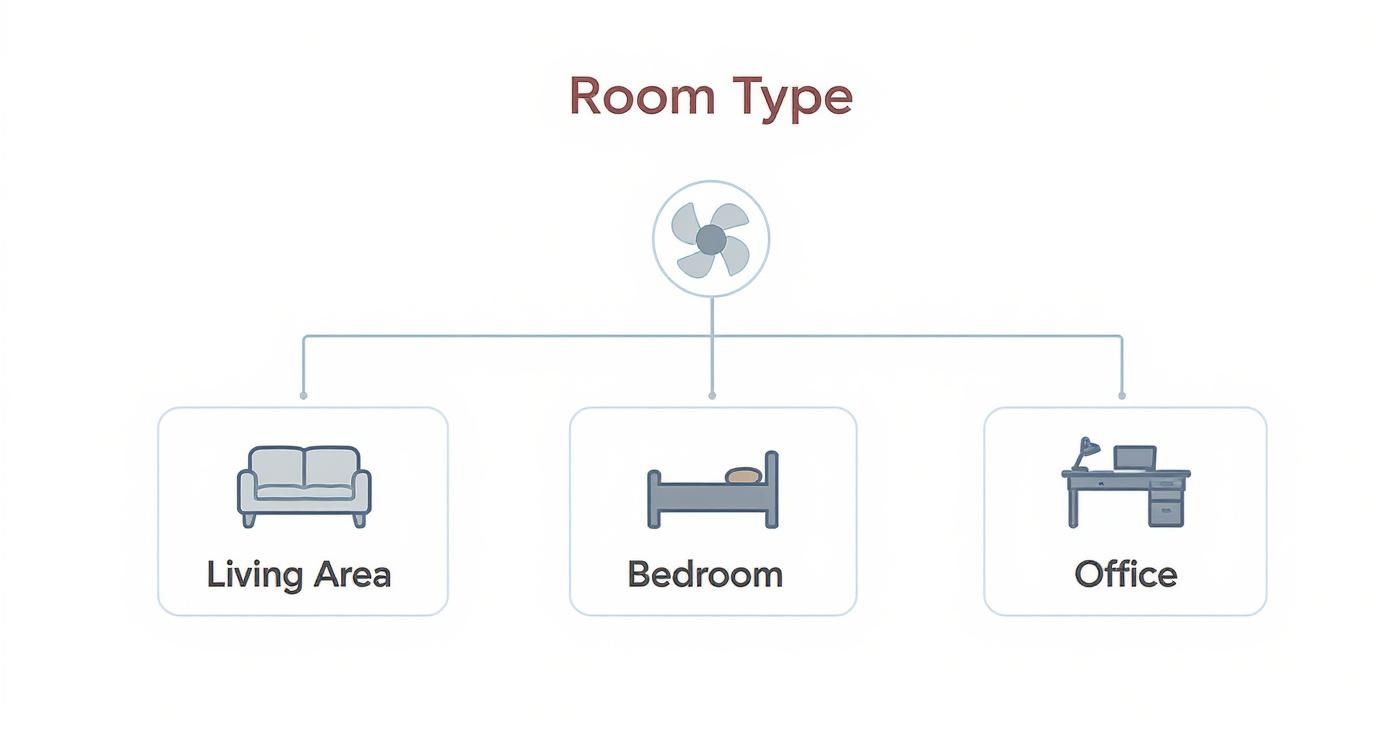
As you can see, a living room needs flexible lighting, a bedroom wants a softer glow, and an office requires clear, focused light to keep you on task.
Figuring out how many lumens you need is pretty easy. Just multiply your room’s square footage by the recommended "foot-candles" (a unit for light intensity).
Simple Lumen Calculation: Room Square Footage x Recommended Foot-Candles = Target Lumens
Here are some good starting points:
- Bedrooms: Aim for 10-20 foot-candles. So, a 150 sq. ft. bedroom would need 1,500-3,000 lumens.
- Living Rooms: These multi-purpose spaces also do well with 10-20 foot-candles. A 250 sq. ft. room needs about 2,500-5,000 lumens.
- Kitchens & Bathrooms: These are work zones, so you'll want brighter light—think 30-40 foot-candles. A 100 sq. ft. kitchen needs around 3,000-4,000 lumens.
Don't forget to look up! If your ceilings are taller than the standard 8 feet, you'll need a downrod to hang the fan at the right height (around 8-9 feet from the floor). Taller ceilings also mean you might need more lumens to light the space below. This is where investing in a quality fan really pays off—they often come with high-lumen, dimmable LED kits that let you switch from bright and functional to soft and cozy with one click.
Room Size Guide for Fan Span and Brightness
Use this quick reference to match your room's square footage with the ideal fan blade span and brightness level for perfect comfort and lighting.
| Room Size (Sq. Ft.) | Recommended Fan Span (Inches) | Ideal Lumens |
|---|---|---|
| Up to 75 | 29-36 | 750-1,500 |
| 76-144 | 42-48 | 1,500-3,000 |
| 145-225 | 50-54 | 2,500-5,000 |
| Over 225 | 56+ | 5,000+ |
Matching these numbers to your space is the surest way to get a fan that not only looks great but performs flawlessly, too.
Integrated LED vs. Traditional Bulbs: What’s the Difference?
When you’re picking out a ceiling fan with a light, one of the biggest decisions you'll make is about the light source itself. This choice doesn't just shape the room's vibe; it also affects your long-term costs and how much maintenance you’ll be doing. You'll run into two main options: modern integrated LEDs and classic light kits that use replaceable bulbs.
Think of it this way: are you buying a high-tech electric car or a classic, customizable hot rod? One is built for incredible efficiency and a sleek, all-in-one design. The other gives you total freedom to tinker and change things up. Both get the job done, but the experience is completely different.
The Case for Integrated LED Light Kits
Integrated LED light kits have become the go-to standard, especially for premium fans over $300. The LEDs are built right into the fan's body, which creates a seamless, low-profile look. You don’t see any bulbs—just a clean, even glow.
The biggest plus here is lifespan. An integrated LED array can run for an incredible 50,000 hours or more. If you use the light for eight hours every single day, that’s over 17 years before you’d even have to think about a replacement. It’s a “set it and forget it” approach that’s perfect for anyone who values convenience.
Beyond their longevity, LEDs are ridiculously efficient. They sip energy compared to traditional bulbs, giving you the same amount of light for a fraction of the cost. If you want to dive deeper, you can learn more about the energy efficiency and cost savings of ceiling fans in our guide.
Another huge benefit is control over color temperature, which is measured in Kelvin (K).
- Warm White (2700K): This is that cozy, yellowish glow you get from an old-school incandescent bulb. It's perfect for creating a relaxing atmosphere in bedrooms and living rooms.
- Neutral White (3000K-3500K): A versatile, crisp white light that’s great for kitchens and bathrooms where you need good visibility without it feeling sterile.
- Cool White (4000K+): This bright, bluish-white light is like natural daylight, making it ideal for home offices, garages, or any workspace where you need to focus.
Many high-end fans now let you adjust the color temperature on the fly, so you can switch from bright task lighting to a warm, dinner-party glow with the press of a button.
The Freedom of Traditional Bulb Light Kits
While LEDs are taking over, there’s still a lot to love about fans that use good old-fashioned, replaceable bulbs. The appeal boils down to one simple word: flexibility.
With a traditional light kit, you’re the boss. Don't like how bright it is? Swap in a lower-lumen bulb. Want to change the mood? Pop in a vintage-style Edison bulb for an industrial touch. And when a bulb eventually burns out, replacing it is a quick, cheap fix you can do in minutes.
This is the perfect route for anyone who loves to tweak their decor or just wants the peace of mind knowing they can always change their lighting to match their needs. The power of choice is completely in your hands.
This flexibility is also a backdoor to smart home features. You can easily screw in smart bulbs from brands like Philips Hue or Wyze, giving your fan app control, scheduling, and color-changing abilities without needing to buy a fully "smart" fan.
Head-to-Head Comparison
So, which one is right for you? It really comes down to what you value most.
| Feature | Integrated LED | Traditional Bulbs |
|---|---|---|
| Longevity | Exceptional (15-20+ years) | Variable (1-10 years per bulb) |
| Efficiency | Highest possible | Good (with LED bulbs) |
| Flexibility | Limited to built-in features | Total control over bulb type |
| Aesthetics | Sleek, minimalist, modern | Classic, vintage, or transitional |
| Maintenance | Virtually none | Occasional bulb replacement |
If you’re after a sleek, modern look and want a hassle-free fixture that’s incredibly efficient, an integrated LED fan is your best bet. But if you crave the freedom to customize your light on a whim and prefer a more traditional style, a fan with replaceable bulbs offers versatility that’s tough to beat.
Matching Your Fan to Your Home's Style
A ceiling fan with a light kit isn't just another appliance—it's a major design piece. Think of it as functional art for your ceiling. Get it right, and it ties the whole room together. Get it wrong, and it can feel totally out of place. Your goal is to find a fan that not only keeps you comfortable but also elevates your home's aesthetic.
The great news is that we've moved way past the days of boring, uninspired fan designs. The market is now flooded with gorgeous options for every style imaginable, from rustic farmhouse to sleek, urban modern. This shift is a direct response to homeowners who demand appliances that look as good as they work.
In fact, the global ceiling fan market was valued at USD 14.24 billion in 2023 and is projected to climb to USD 19.92 billion by 2030. The decorative fan segment—which almost always includes a light kit—is growing even faster. It's clear that people are seeing their fans as a key part of their decor. You can explore more about the ceiling fan market trends to see just how much design is driving the industry forward.
Finding Your Design Language
Before you even start shopping, take a good look at your room. What's its personality? A fan should complement your existing decor, not fight with it. When you choose a fan that aligns with your style, it will blend in seamlessly, as if it was always meant to be there.
Here’s a quick guide to pairing fans with popular home styles:
- Modern & Minimalist: Stick to clean lines, simple forms, and zero fuss. Fans with three blades, integrated LEDs, and finishes like matte black, crisp white, or brushed nickel are your best friends. The fan should feel sleek, almost disappearing into the ceiling.
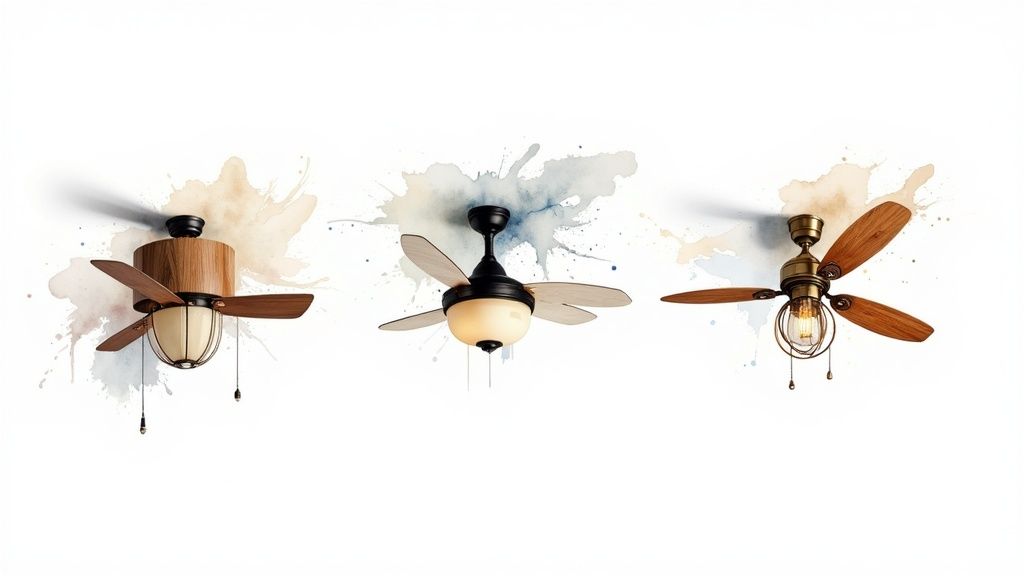
- Farmhouse & Rustic: This style is all about warmth and texture. Look for fans with blades that mimic reclaimed wood, finishes like aged bronze or pewter, and light kits with rustic caged shades or charming seeded glass.
- Industrial & Urban Loft: Think bold, raw, and mechanical. Fans with metallic finishes like galvanized steel or oil-rubbed bronze, exposed hardware, and light kits featuring cages or Edison bulbs capture that functional, factory-chic vibe perfectly.
- Coastal & Bohemian: The keywords here are light, airy, and natural. White finishes, blades that look like woven materials or light-washed woods, and simple globe or fabric drum shades help create that relaxed, breezy atmosphere.
The Power of Finishes and Materials
Don't underestimate the impact of the fan's finish. A simple rule of thumb is to match the fan’s metal to other hardware in the room—think cabinet pulls, doorknobs, or faucets. This simple trick creates a cohesive, thoughtful look.
For example, a brushed brass fan can add a touch of warm luxury to a kitchen that already has brass cabinet hardware. In the same way, a matte black fan perfectly complements the clean, bold lines of a modern bathroom with black fixtures.
Don't be afraid to mix metals, but do it with purpose. A common strategy is to stick to two main metal finishes in a room—for example, matte black for primary fixtures and a touch of brass for accent pieces. Your fan can follow either path.
Let the Light Shade Define the Mood
The light shade on your ceiling fan with light kit is another powerful design lever you can pull. It's often the most visible part of the fixture and can dramatically shift the room's entire vibe.
- Glass Globes: Classic and timeless. Opal or frosted glass globes give off a soft, diffused light that works just about anywhere, from a cozy bedroom to a busy living room.
- Caged Fixtures: These bring an industrial or farmhouse edge to the space. They cast interesting shadow patterns and are the perfect way to show off vintage-style Edison bulbs.
- Fabric Drums: Elegant and sophisticated. A fabric drum shade softens the light and adds a layer of texture, making it a great fit for a formal living room or a serene primary bedroom.
- Spotlights: For a more practical approach, some fans come with directional spotlights. These are fantastic for task-oriented spaces like a home office or kitchen where you need to aim light right where you need it.
By taking the time to consider the style, finish, and light shade, you can choose a fan that does more than just move air—it becomes a true centerpiece that completes your vision for the room.
Embracing Smart Technology and Control
In our connected homes, convenience is everything. We expect our devices to just work together, and the modern ceiling fan with light kit is no different. The days of fumbling for a pull chain in the dark are over. We’ve stepped into an era where total control over your room’s climate and lighting is in the palm of your hand—or just a voice command away.
This jump in technology turns a simple fixture into a smart home workhorse. You'll find that premium models, especially those in the $300 and up range, are often packed with features that slot right into your daily routines, making life a little easier and a lot more comfortable.
The Power of App and Voice Control
Imagine walking into your home on a sweltering day and saying, "Alexa, turn on the living room fan." A few seconds later, a cool breeze starts to circulate. This isn't science fiction anymore; it's a standard feature on many of today's best fans.
Smart fans hook up to your home’s Wi-Fi, letting you sync them with popular voice assistants like Amazon Alexa and Google Home. That integration opens up a world of hands-free convenience. Beyond just turning the fan on or off, you can adjust the speed, dim the lights, and change settings without ever leaving the couch.
Dedicated smartphone apps take that control even further. They act as a central command hub for your fan, offering features that go way beyond what a traditional remote can do.
A truly smart fan doesn’t just respond to commands; it anticipates your needs. By creating schedules and routines, you can automate your comfort, saving energy and ensuring your home is always at the perfect temperature.
Advanced Features for Ultimate Comfort
When you invest in a smart ceiling fan with light kit, you're unlocking a whole suite of thoughtful features designed to make your space better. These are the details that separate a basic fan from a truly premium home comfort solution.
- Custom Scheduling: You can program your fan to turn on automatically before you wake up or to slow down as the house cools off at night. It’s perfect for keeping a comfortable sleeping environment without waking up freezing in the middle of the night.
- Natural Breeze Simulation: Some fans have a "breeze" mode that varies the speed to mimic the feeling of a gentle, outdoor wind. It’s a subtle touch that creates a more organic and relaxing atmosphere.
- Seasonal Motor Reversal: Flipping your fan’s direction in the winter is key for circulating warm air that gets trapped at the ceiling. With a smart fan, you can do this with a quick tap in the app—no more climbing a ladder to mess with a tiny switch on the motor.
The Evolution of the Remote Control
Even if you're not fully on board with voice or app control, the trusty remote has come a long way from the old three-speed clicker. Today’s remotes are sleek, intuitive, and loaded with useful features.
Many now include memory functions that recall your last-used speed and light settings, so your fan goes right back to your favorite setup every time you turn it on. They also offer more precise control, often with six or more speed settings, letting you dial in the exact amount of airflow you want. These small upgrades make a huge difference in day-to-day use. Whether it's through an app, your voice, or an advanced remote, modern fans put your comfort just a command away.
Installation Insights And Lasting Care
A great ceiling fan with a light kit is more than just a fixture; it's an investment in your home’s comfort and style. And like any good investment, it pays to protect it—starting with a proper installation. Getting the setup right from the get-go is the secret to years of safe, silent, and wobble-free performance. It’s what turns a box of parts into a seamless part of your home.
This section will walk you through the essentials of installation and long-term care. While we always stand by hiring a licensed electrician for safety and to protect your warranty, knowing the process makes you a smarter homeowner. After all, a little know-how goes a long way. For a deep dive, check out our detailed guide on how to install a ceiling fan safely and easily.

The Unshakeable Foundations Of Installation
Before you even think about connecting wires, two things are non-negotiable. First, and most importantly, kill the power at the breaker box. No exceptions. Second, you have to confirm the electrical box in the ceiling is fan-rated. This is a common mistake people make. A standard box for a light fixture just can't handle the weight and constant motion of a fan, which can easily top 35 pounds. A fan-rated box is bolted directly to a ceiling joist, giving it the muscle needed for a secure installation.
Once the fan is mounted, there's one final step before you can kick back and enjoy the breeze: balancing the blades. Even the best fans might have a tiny wobble if the blades aren't perfectly balanced. That’s why most premium models include a simple balancing kit. Don't skip this step! It’s the secret to whisper-quiet operation.
A wobbly fan isn't just annoying; it's a red flag. That imbalance puts extra stress on the motor and all the mounting hardware. Taking a few minutes to balance the blades is probably the single most important thing you can do for your fan's long-term health.
A Simple Checklist For Lasting Care
Your ceiling fan with a light kit works hard, but thankfully, keeping it happy is easy. A few quick checks a couple of times a year are all it takes to keep it running like the day you bought it.
Here’s a quick maintenance list to keep in your back pocket:
- Clean with Care: Dust is the enemy of a balanced fan. It builds up on the blades, causing wobbles and making the motor work harder. Once a month, just wipe them down with a soft, damp cloth. Steer clear of harsh chemical sprays, which can ruin the finish.
- Check for Loose Screws: Over time, vibrations can jiggle things loose. Twice a year, give the screws holding the blades and the fan canopy a gentle check to make sure they're snug.
- Inspect Light Fixtures: If your fan has replaceable bulbs, make sure they're screwed in tightly. For integrated LED models, a simple wipe of the lens cover is all you need to keep things bright.
Follow these simple rules, and your fan will be a beautiful, functional centerpiece in your room for years to come.
A Few Final Questions
Even after you've narrowed down your choices, a few questions always seem to pop up. Think of this as the final checklist before you make a confident decision, ensuring the fan you pick is the perfect one for your home.
Let's tackle some of the most common things people ask.
Can You Add a Light Kit to Any Ceiling Fan?
This is probably the most-asked question, and the short answer is a hard no. Not all fans are built the same. Some are specifically designed to be "light kit adaptable," meaning they have the right wiring and a place to mount a light.
But trying to MacGyver a light kit onto a fan that wasn't made for one is a bad idea—it’s unsafe, looks mismatched, and will instantly void your warranty. The best approach? Choose a fan where the ceiling fan and light kit were designed as a single, cohesive unit from the start. It guarantees a perfect style match and you know all the parts are meant to work together safely.
How Do You Reverse a Fan for Winter Use?
Flipping your fan's direction in the winter is one of the best energy-saving hacks out there. Instead of creating a cooling downdraft, it gently pulls air up and pushes the warm air that's trapped at the ceiling back down along the walls. It's a simple switch that can make a room feel cozier, letting you dial back the thermostat.
On older fans, you'll usually find a little toggle switch on the side of the motor housing. For modern, higher-end models—especially those over $300—it’s much easier. The reverse function is usually just a button on the remote control or a quick tap in the fan's smartphone app.
What Is a Good CFM Rating for a Fan?
CFM, which stands for Cubic Feet per Minute, is the real measure of a fan's muscle. It's not about blade speed; it's about how much air the fan actually moves. The higher the CFM, the more powerful the breeze.
For a small office or guest room, a CFM between 1,000 and 3,000 will probably do the trick. But for bigger spaces like a great room or a master bedroom (think anything over 200 sq. ft.), you’ll want to look for a fan with a CFM rating of 5,000 or more. That's where premium fans really shine, using better motors to deliver that powerful airflow without making a lot of noise.
Are Ceiling Fans with Light Kits Energy Efficient?
Absolutely. The high-quality models available today are miles ahead of the old, wobbly fans you might remember. The secret sauce is a combination of two things: a DC motor and an integrated LED light kit.
Modern DC motors are incredible, using up to 70% less energy than the old AC motors. Pair that super-efficient motor with a long-lasting, low-wattage LED, and you’ve got one of the most cost-effective ways to cool and light a room. It’s the perfect blend of powerful performance and low-key energy consumption.
At Fan Connection, we've brought together a collection of premium ceiling fans that live up to the highest standards of style, performance, and efficiency. Take a look through our collections to find the perfect fixture that will elevate your space for years to come.


