











How to Choose a Ceiling Fan for a Bedroom? Your 2026 Guide to Comfort and Style
Picking the right ceiling fan for your bedroom is about more than just moving air—it’s about creating a quiet, comfortable retreat where you can truly unwind. It seems simple enough, but getting it right is the secret to unlocking better sleep and a room you can't wait to escape to.
Ready to find a fan that’s silent, powerful, and perfectly captures your style? Let’s dive in and have some fun with it!

What Makes a Great Bedroom Fan
When you’re looking for a bedroom fan, a few key things separate the truly great models from the ones you'll just tolerate. It’s not just about a pretty fixture; it's about upgrading your personal sanctuary.
Here’s the dream team of features you should be looking for:
- Whisper-Quiet Operation: This is non-negotiable. The last thing you want is a humming or clicking motor disrupting your sleep. A silent fan is the number one requirement.
- Optimal Airflow for Comfort: You need enough airflow (measured in CFM) to feel a gentle breeze, not a windstorm. The goal is consistent comfort, not a chaotic gust of air.
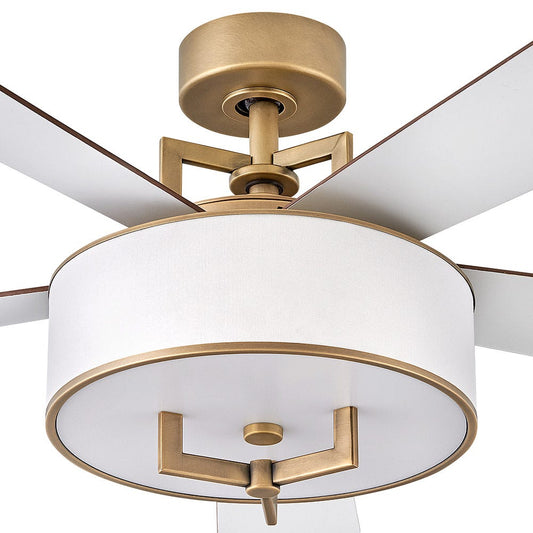
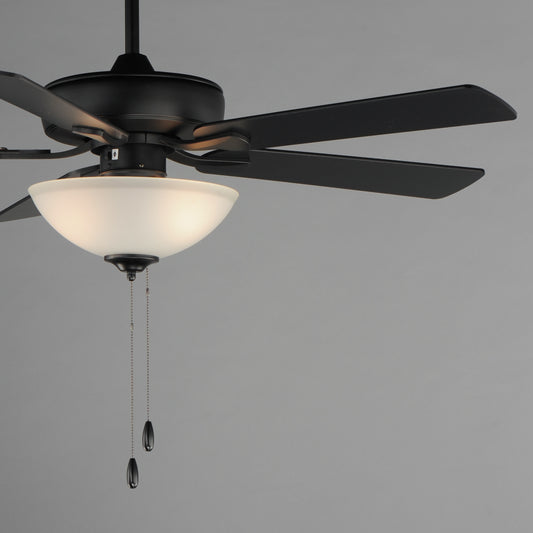
- Integrated, Dimmable Lighting: Modern fans with built-in LED lights are a fantastic two-in-one solution. They provide soft, ambient light that you can dim to set the mood for movie night or quiet reading.
- Smart and Convenient Controls: Fumbling for a pull chain in the dark is a thing of the past. A remote or smart-home compatibility gives you effortless control right from your bed.
The most common mistake we see is people choosing a fan based on looks alone. While style is important, a fan’s performance—its airflow, noise level, and motor quality—is what will ultimately determine how happy you are, especially in a bedroom.
Why Investing in Quality Pays Off
It can be tempting to grab the cheapest fan on the shelf, but investing in a high-quality model is one of the smartest upgrades you can make. Premium fans, often priced at $300 or more, are built with superior components that deliver real, tangible benefits.
Take the motor, for instance. Advanced DC motors are not only up to 70% more energy-efficient than their AC counterparts, but they’re also virtually silent.
Models like the sleek Artemis IV or the minimalist Bola are engineered for performance and longevity, ensuring your investment pays off in comfort and style for years to come.
The following sections will walk you through every step, from sizing to style, so you can make a choice with total confidence.
Getting the Size and Scale Right for Your Space
Let's be honest—choosing the right size ceiling fan for your bedroom is a big deal. Go too small, and you’ve got a glorified decoration that barely stirs the air. Go too big, and you might feel like you're trying to sleep in a wind tunnel. Getting the scale just right is the key to perfect comfort.
It all starts with a simple tape measure. Find the length and width of your bedroom, then multiply them to get your square footage. That one number is your starting point for everything else.
Matching Blade Span to Room Size
Once you know your room's square footage, you can find a fan with the right blade span—that’s the full circle the blades make, measured from tip to tip. This is what guarantees your fan will move air efficiently without being overwhelming or, well, underwhelming.
Getting this match right is non-negotiable. For a standard bedroom between 100-144 square feet, a fan with a 44 to 50-inch span is needed to circulate air properly. Interestingly, a 2023 study found that 52-inch fans are the sweet spot for the most common bedroom sizes (144-225 square feet), which make up about 60% of U.S. homes. A fan like that can even help trim cooling bills by up to 20% a year.
Here’s what I usually recommend for a quick reference:
- Small Bedrooms (Up to 100 sq. ft.): Stick with a 42-inch blade span or smaller.
- Standard Bedrooms (100 - 175 sq. ft.): A fan between 44 and 52 inches is your best bet.
- Large Master Bedrooms (175 - 350 sq. ft.): You'll want to step up to a larger 52 to 60-inch model.
- Expansive Suites (Over 350 sq. ft.): For a truly grand space, you can go big. An oversized model makes a real statement and delivers serious airflow.
Considering Ceiling Height and Mounting
Blade span is only half the story. Your ceiling height is just as critical. For the best airflow and to keep everyone safe, the fan blades should hang at least 7 feet from the floor. But the real sweet spot for performance is 8-9 feet from the floor.
This is where downrods come into play. A downrod is simply the pipe connecting the fan motor to the ceiling mount, and it’s what lets you hang the fan at the perfect height. Most fans include a short 3 to 6-inch downrod, which works great for standard 8-foot ceilings.
If your bedroom has high or vaulted ceilings—anything 9 feet or taller—you absolutely need a longer downrod. If you skip it, the fan will be too close to the ceiling to move air effectively, and the room will feel stuffy even with the fan on full blast.
On the other hand, if your ceilings are under 8 feet, you’ll want a "hugger" or low-profile fan. Models in our versatile Anywhere collection are designed specifically for these tighter spaces. They mount flush against the ceiling to give you plenty of safe headroom.
Getting the sizing right for both your room’s footprint and its height is one of the most important things to master. It’s the secret to a comfortable bedroom for years to come.
Finding the Sweet Spot: Airflow vs. Noise
Once you have the right size picked out, the next big question is performance. For a bedroom, this is a delicate balancing act. You want powerful airflow, but you can’t sacrifice peace and quiet. After all, what good is a cool breeze if it sounds like a helicopter is landing in your room?
Getting this right is the secret to a bedroom that feels like a true retreat. To do that, we need to talk specs.
Getting a Handle on Airflow: Your CFM Comfort Zone
The most important number you’ll see when comparing fans is the CFM, which stands for Cubic Feet per Minute. This metric tells you exactly how much air a fan moves. More CFM means a stronger breeze.
But for a bedroom, bigger isn't always better. The goal is a gentle, refreshing circulation, not a wind tunnel that sends papers flying. You need to match the fan’s CFM to your room size.
Here’s a quick guide to get you in the right ballpark:
- Small Bedrooms (under 100 sq. ft.): A CFM between 1,000 and 3,000 is usually plenty.
- Standard Bedrooms (100-175 sq. ft.): Look for something in the 2,500 to 4,500 CFM range.
- Large Master Bedrooms (over 175 sq. ft.): You’ll want a more powerful fan, from 4,000 to 6,000+ CFM.
This flowchart breaks down the whole process, from measuring your room to checking your ceiling height.

As you can see, it's a straightforward path: measure the space, find the right blade span, and make sure your ceiling height works for the mounting style.
The Secret to Silence: AC vs. DC Motors
So, how do you get all that airflow without all the noise? It all comes down to the motor. Honestly, this is where spending a bit more on a quality fan—typically one over $300—pays off every single night.
You’ll generally find two types of motors: traditional AC (Alternating Current) and modern DC (Direct Current).
AC Motors Think of these as the old-school standard. They’re reliable and more affordable, but they have their limits. AC motors usually give you just three speed settings (low, medium, high) and tend to get noticeably louder the faster they spin.
DC Motors This is the technology you want for a bedroom. DC motors are the new gold standard, engineered to be incredibly quiet, even at their highest speeds.
A high-quality DC motor is the single most important feature for a bedroom fan. The near-silent operation means you get all the cooling power you need without any of the disruptive noise that can ruin a good night's sleep.
On top of being whisper-quiet, DC motors have a few other huge perks:
- More Control: Instead of just three speeds, DC fans often have six or more. This lets you dial in the perfect amount of airflow.
- Serious Energy Savings: DC motors are champs at efficiency, using up to 70% less energy than AC models. That’s good for your wallet and the planet.
- Easy Reversibility: Most DC fans let you reverse the blade direction right from the remote. No more climbing a ladder to flip a switch when the seasons change.
The investment in a fan with a premium DC motor is one you’ll appreciate every time you settle in for a peaceful, comfortable night's rest.
Matching Blades and Finishes to Your Bedroom Style
Okay, we’ve handled the technical stuff like airflow and noise. Now for the fun part: making your fan look incredible. A ceiling fan isn't just a machine that moves air; it's a major design feature. Think of it as a piece of furniture for your ceiling—it can either blend in quietly or become the standout piece that ties the whole room together.
Your choice of blades and finish is what gives your bedroom its personality. Do you want something that disappears into the ceiling, keeping the space feeling open and airy? Or are you looking for a bold statement piece that draws the eye upward? There’s no wrong answer, but this decision will absolutely define the feel of your sanctuary.

Blade Count Sets the Tone
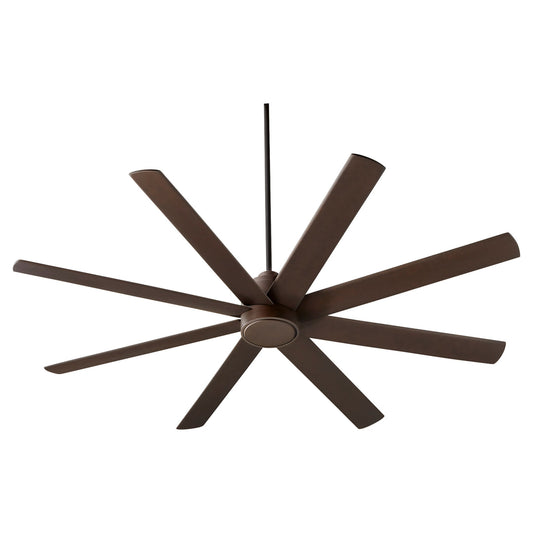
More than just a functional component, the number of blades creates an immediate visual impression. Fewer blades tend to read as modern and industrial, while a higher blade count often gives off a more traditional or luxurious vibe.
- Three-Blade Fans: These are the darlings of minimalist design. Their clean lines and uncluttered profile feel sleek and efficient. They’re a perfect match for contemporary, mid-century modern, or industrial-style bedrooms.
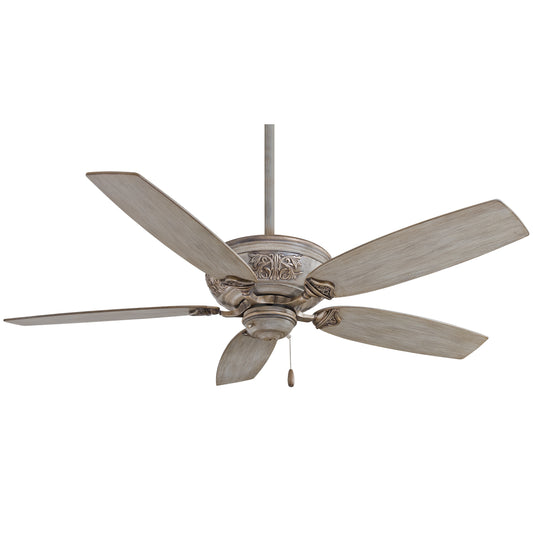
- Five-Blade Fans: This is the classic, go-to look for a reason. Five-blade fans offer a balanced, familiar appearance that works in just about any decor. The look is substantial and comforting, creating a softer visual rhythm than a three-blade fan.
It’s interesting—while blade count is a key style choice, it also affects performance. Three-blade fans often have to spin faster to create a strong breeze, which is why they’re a popular choice for people who really want to feel the air moving. Five-blade fans, on the other hand, can move air more gently and quietly, making them a favorite for creating a more serene environment.
Making a Statement with More Blades
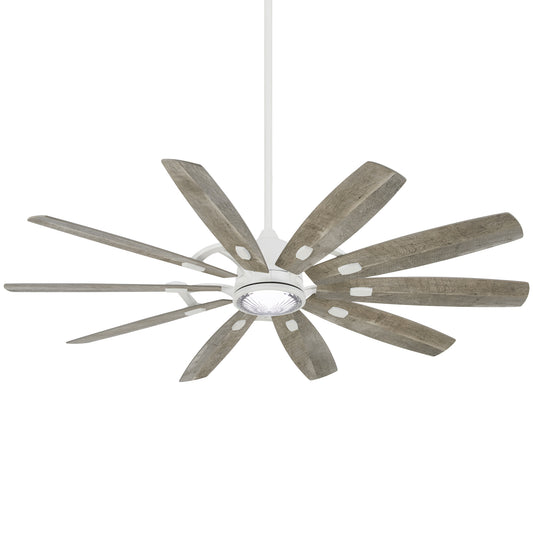
If you want your fan to be a true showstopper, going with six or more blades is the way to do it. This is where you really lean into the fan as a decorative element.
Many premium fans feature wide, leaf-shaped blades that instantly make you feel like you're at a five-star resort or a breezy coastal hideaway. They’re fantastic for building a relaxed, vacation-like atmosphere right in your master suite.
Don’t be afraid to go bold here. A dramatic fan, especially in a primary bedroom with high ceilings, acts like a piece of sculptural art. It shows you've thought about every detail, right up to the ceiling.
Choosing the Perfect Finish
The finish is the final touch that connects your fan to everything else in your bedroom—the furniture, the hardware, the paint. It’s what makes the fan feel like it truly belongs.
Think about the mood you're aiming for:
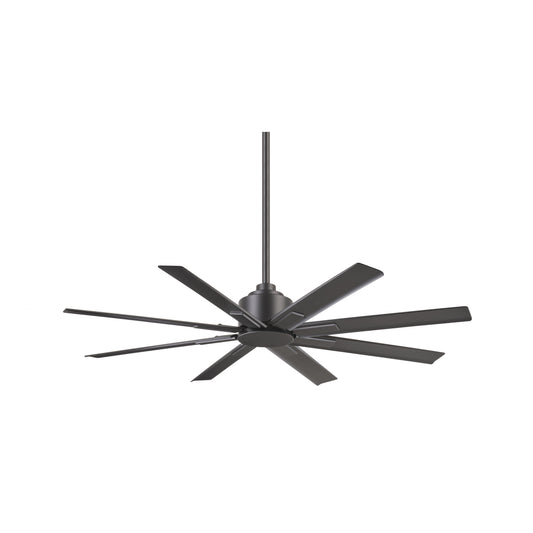
- Matte Black: This finish is all about modern sophistication. It creates a striking contrast against a white ceiling and pairs beautifully with other black accents in your hardware or decor.
- Warm Woods: Finishes like walnut, oak, or koa bring in natural texture and warmth. They're ideal for making rustic, bohemian, or mid-century spaces feel cozy and inviting.
- Brushed Nickel or Chrome: Sleek, clean, and incredibly versatile. These metallics work well in contemporary and transitional bedrooms, reflecting light and adding a touch of polished elegance.
- Clean White: For a fan that practically disappears, white is your best bet. It blends right into most ceilings, which helps make the room feel larger and keeps the visual focus on your other design elements.
When you carefully select your fan’s blades and finish, you’re making a deliberate design choice, not just picking an appliance. It's the final step in creating a bedroom that’s your own personal sanctuary.
Embracing Smart Controls and Energy Efficiency
These days, a great bedroom fan is about more than just moving air. It’s about being smart, quiet, and incredibly efficient. Let’s be real: fumbling for a pull chain in the dark or listening to a noisy, energy-guzzling motor all night is a thing of the past.
Choosing a fan with modern controls and an efficient design isn't just an upgrade—it's a long-term investment in your comfort and your wallet. The secret sauce behind these next-gen fans? It often starts with the motor.
The Power of Energy-Efficient Design
When you're figuring out how to choose a ceiling fan for a bedroom, prioritizing energy efficiency is one of the smartest moves you can make. It saves you money, lightens your environmental footprint, and usually means you're getting better technology. The two things to look for here are DC motors and an Energy Star certification.
A fan with an Energy Star rating isn't just a marketing sticker; it's a promise of performance. These fans are independently tested and proven to be worlds more efficient than older models.
An Energy Star certified ceiling fan can use up to 70% less energy than a conventional AC fan. That translates directly into savings, potentially shaving $20 to $40 off your annual electricity bill for just one fan.
This massive drop in energy consumption is mostly thanks to that advanced motor technology we mentioned. It's a perfect example of how a slightly higher initial investment in a quality fan pays for itself over time through lower running costs.
The Rise of Smart Convenience
Beyond saving money, the best modern bedroom fans offer a level of control that completely changes how you use them. Forget about those clunky pull chains.
- Remote Controls: This is the new normal. A simple handheld remote lets you adjust the fan speed, switch the blade direction for winter, and dim the lights—all without getting out of bed.
- Wall Switches: If you prefer a more permanent solution, modern wall controls pack all the functionality of a remote into a sleek, wall-mounted panel.
- Smart Fans: Here's where things get really good. Smart fans connect to your home's Wi-Fi, letting you control everything from a smartphone app or with voice commands through assistants like Alexa or Google Home.
Imagine setting a schedule so your fan turns on just before bed, or just telling your smart speaker to bump up the speed in the middle of the night. This isn't some futuristic dream; it’s a standard feature on premium models built for how we live today.
When it comes down to it, energy efficiency is a top priority, especially with rising electricity costs. In the U.S., Energy Star fans use 60% less energy on average—running on just 30-50 watts compared to the 75-100 watts of standard AC motors.
Your Bedroom Fan Questions Answered
Alright, you’ve sorted through room sizes, motor types, and maybe even blade pitch. But there are always a few practical questions that pop up right before you click "buy." We get it.
Let's tackle some of the most common ones we hear from our customers to help clear up any last-minute confusion so you can feel totally confident in your choice.
Should I Install a Ceiling Fan Myself or Hire an Electrician?
This is the big one, and the right answer really comes down to safety and what’s already in your ceiling.
If you're a seasoned DIYer and you're just swapping out an old fan for a new one, you can probably handle it. The key is making sure a properly braced, fan-rated electrical box is already installed. These boxes are built to handle the weight and wobble of a running fan, unlike a standard box for a simple light fixture. Our instructions can walk you through the rest.
However, we strongly recommend hiring a licensed electrician if you’re ever in doubt. If there's no existing fixture, if you need new wiring run, or if the box in the ceiling wasn't meant for a fan, don't risk it. A professional is the only way to go. Your safety and your home are worth a whole lot more than saving a few bucks on installation.
Professional installation isn't just a convenience—it's peace of mind. An electrician will guarantee your fan is secure, wired correctly, and up to code. That means no wobbles, no weird noises, and no electrical risks down the road.
Think of it as a small investment to protect your bigger one.
What Is the Difference Between a Standard and a Hugger Fan?
This choice is all about your ceiling height. The sweet spot for a fan's performance is having the blades hang about 8 to 9 feet from the floor. The type of mount you choose is what gets you there.
A standard mount fan is what most people picture. It uses a downrod, which is a small pipe that connects the fan motor to the ceiling bracket. This is what you'll want for most bedrooms with ceilings 8 feet or higher. That downrod drops the fan into the open air of the room, where it can really get to work pulling air from above and pushing it down.
A hugger fan (you'll also hear them called low-profile or flush-mount fans) does exactly what it sounds like: it "hugs" the ceiling. These models, like those in our versatile Anywhere collection, are made specifically for rooms with ceilings under 8 feet. They give you the safe clearance you need (at least 7 feet from floor to blades) where a standard fan would hang dangerously low. The only trade-off is a little less airflow, since the blades are too close to the ceiling to circulate air with the same power.
The rule is simple:
- Ceilings 8 feet or higher: Go with a standard mount fan and pick the right downrod.
- Ceilings under 8 feet: A hugger fan is your safe and correct choice.
Does My Bedroom Fan Need an Integrated Light Kit?
This is all about your personal needs and style. Is this fan replacing the only light source in your bedroom? If so, then a fan with an integrated light is a no-brainer. It's a clean, two-in-one solution that gives you both air and light from a single spot.
Many of our best-loved models, like the elegant Bola or the sculptural Artemis IV, have gorgeous, dimmable LED lights built right into the design. These aren't just an add-on; they're designed to cast a perfect, ambient glow. For a fan over $300, it's an investment in both function and style.
On the other hand, if your bedroom already has plenty of light from lamps or recessed cans, you might prefer the clean, simple look of a fan without a light. It puts all the focus on the fan's design and keeps your ceiling from feeling cluttered. Think about how you use your room. If the fan will be your main light, the kit is a must. If not, you've got more freedom to choose based on looks alone.
Figuring out how to choose a ceiling fan for a bedroom is a journey, but by answering these final questions, you're ready. You've got all the info you need to pick a fan that won't just look great but will make your bedroom the comfortable, quiet retreat you deserve.
At Fan Connection, we believe the perfect fan is waiting for you. Browse our curated collections to discover models that combine whisper-quiet performance, stunning design, and modern efficiency. Find your ideal bedroom upgrade today at https://www.fanandlights.com.


