

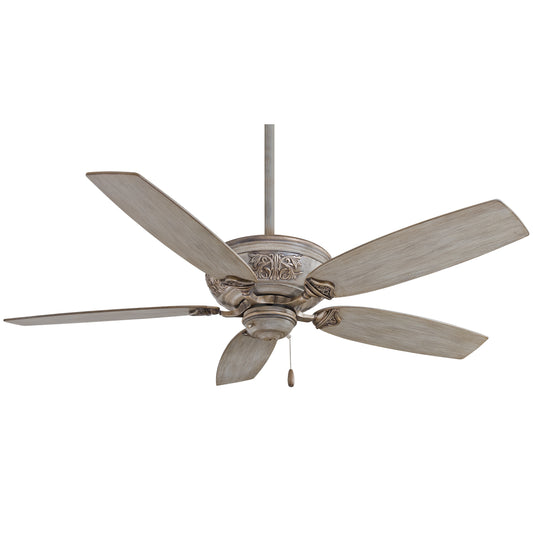


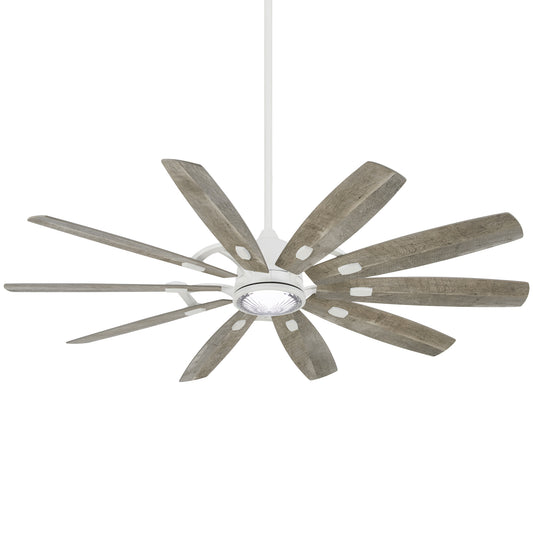

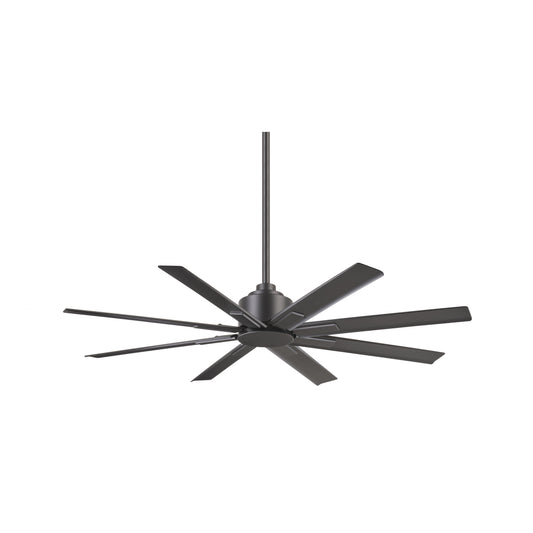

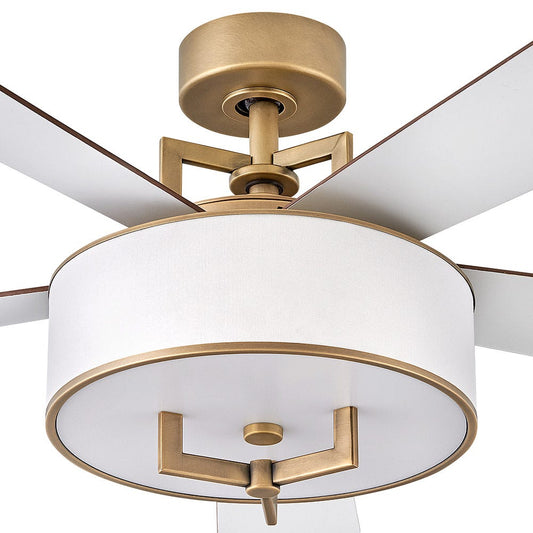






How to Choose a Ceiling Fan Size for Your Room
Picking the right ceiling fan size is actually pretty straightforward, and dare we say, fun: the bigger the room, the bigger the fan needs to be. It’s a simple rule of thumb, but it’s the most important one. A fan that’s too small will just spin its little heart out without making much of a difference, while one that’s too big can turn your cozy living room into an unexpected wind tunnel.
Getting this one detail right from the start is the key to creating that perfect, comfortable airflow you're after.
Why Room Size Is The Deciding Factor
Before you get carried away with a fan's stunning style or sleek finish, the first thing you need to do is measure your room. A ceiling fan's job is to move air, and how well it does that comes down to its blade span—the full diameter from the tip of one blade to the tip of its opposite.
Think of it this way: you wouldn't try to cool down a giant warehouse with a tiny desk fan. The same logic applies here. A little 36-inch fan will get lost in a spacious living room, leaving the air feeling stuffy and stagnant. On the flip side, putting a massive 60-inch fan in a small home office will just be overpowering and uncomfortable.
Matching Fan Diameter To Your Room
The goal is to strike that perfect balance for consistent, gentle circulation. You want to feel a comfortable breeze, not an arctic blast or a barely-there flutter. It’s all about finding that “Goldilocks” size that feels just right.
Luckily, there are clear industry guidelines to help. For smaller rooms up to 75 square feet, you’ll want a fan in the 29 to 36-inch range. For larger spaces between 225 and 400 square feet, a 50 to 54-inch fan is a much better fit. And for those big, open-concept great rooms over 400 square feet, you’ll definitely need a fan that’s 60 inches or larger to move enough air.
Key Takeaway: Sizing isn't just about looks; it's about physics. A correctly sized fan works more efficiently, uses less energy, and runs quieter while delivering the cooling comfort you expect.
To make things even easier, here’s a quick reference chart to help you narrow down your options.
Quick Ceiling Fan Sizing Chart
Use this quick reference to match your room's square footage to the recommended fan blade span for efficient air circulation.
| Room Size (Square Feet) | Recommended Fan Diameter (Inches) |
|---|---|
| Up to 75 sq. ft. | 29" - 36" |
| 76 - 144 sq. ft. | 36" - 42" |
| 144 - 225 sq. ft. | 44" - 50" |
| 225 - 400 sq. ft. | 50" - 54" |
| Over 400 sq. ft. | 60" or larger |
Once you know the size you need, finding a fan you love is the fun part. Whether you're looking for a sleek, modern fan for a small bedroom or a bold statement piece for your great room, we’ve got you covered.
For a little more guidance, check out our complete guide on how to find the perfect fan for any room in your house.
Get an Accurate Measurement of Your Space
Before you even start browsing, the very first step—and I can't stress this enough—is to pull out a tape measure. You have to know your room's dimensions. It’s the only way to choose a fan that actually performs well and doesn't just look good. A quick length-times-width calculation is your starting point, but let's be real, most rooms aren't perfect squares.
To get a number you can rely on, you need to be precise and account for the room's actual layout. This ensures you pick a fan with the right blade span to move air the way it's supposed to, without creating a wind tunnel or, worse, doing nothing at all.
What to Do with Awkward or L-Shaped Rooms
So, what happens if you have an L-shaped living room or an open-concept space that flows into a kitchen? Don't sweat it. The math is still pretty simple. Just break down the odd shape into a couple of basic, regular rectangles.
- First, measure the length and width of each rectangular section on its own.
- Next, calculate the square footage for each of those smaller areas.
- Finally, just add those numbers together to get your grand total.
For instance, say your L-shaped room has one part that’s 10x12 feet (120 sq. ft.) and another that’s 8x10 feet (80 sq. ft.). Your total area is 200 square feet. Right away, that tells you to start looking for a fan somewhere in the 44 to 50-inch range.
This simple infographic gives you a great visual for how to go from measuring your room to picking the right size.

As you can see, getting that measurement right is the foundation for everything that follows. It's the step that points you directly to the fan size you need.
Don't Forget About Ceiling Height
Your room's square footage tells you how wide the fan should be (the blade span), but the ceiling height is what determines how you'll mount it. This is a huge deal for both safety and performance. The blades of your fan need to hang at least 7 feet from the floor to be safe, but the sweet spot for airflow is really between 8 and 9 feet.
Pro Tip: When a fan hangs in that 8-to-9-foot zone, you get the best of both worlds. It's high enough to be out of the way, but low enough to create a breeze you can actually feel. It’s the key to efficient circulation.
Getting your fan to that perfect height comes down to choosing the right downrod—that's the pipe connecting the fan motor to the ceiling bracket. If you have standard 8-foot ceilings, you'll probably need a flush-mount or "hugger" fan that sits right up against the ceiling. For anything taller, a downrod is a must to bring the fan down into the room where it can do its job.
Let's take a premium fan like the stunning Fanimation Spitfire, which will run you around $550. If you're putting it in a room with 10-foot ceilings, you'd pair it with a 12-inch downrod. That combination will position the fan perfectly to be both a visual centerpiece and an airflow powerhouse. Nailing these measurements makes sure your investment not only looks incredible but actually delivers the comfort you're paying for.
Decoding Airflow with CFM Ratings
So, you've figured out the right blade span for your room. That's a great start, but the real power behind a fan's cooling ability comes down to its CFM rating.
CFM stands for Cubic Feet per Minute, and it’s the single most important number for figuring out how much air a fan can actually move. Think of it as the horsepower of your ceiling fan. A high CFM means a strong, refreshing breeze, while a low CFM delivers more subtle, gentle circulation.
Ignoring the CFM rating is like buying a beautiful car without ever checking what's under the hood. You might get something that looks great but just doesn't perform when you need it most.

What Drives a High CFM Rating
So what gives a fan its airflow muscle? It’s a combination of a few key things, and it’s not just about the motor.
The pitch of the blades is a huge factor. Blades angled more steeply—usually between 12 and 15 degrees—are designed to scoop up and push more air with every single rotation. Of course, a powerful, well-built motor is the engine driving this performance, making sure the blades spin smoothly without any wobble or noise.
The overall design and aerodynamics of the blades matter, too. The best fans are engineered to move air efficiently, which is what separates a mediocre fan from a true airflow champion.
Expert Insight: A fan with a higher CFM doesn't automatically mean a higher energy bill. Modern, energy-efficient motors are designed to produce maximum airflow while sipping power, giving you powerful cooling without the sticker shock.
Matching CFM to Your Lifestyle
Knowing your target CFM range is just as important as knowing your room size. While a bigger room typically needs more airflow, your day-to-day life matters, too. A busy kitchen that gets hot and humid or a sun-drenched living room will feel much more comfortable with a fan that has a robust CFM of 4,000 or more.
On the other hand, a quiet home office or a small bedroom doesn't need a windstorm. For these spaces, a lower CFM is perfect for providing a gentle, silent breeze that won't disrupt your focus or your sleep.
As a general rule of thumb, here’s what we see works best:
- High-Traffic Areas (Living Rooms, Kitchens): Aim for a higher CFM (3,000+) to manage heat and keep the air from feeling stagnant.
- Relaxation Spaces (Bedrooms, Offices): A moderate CFM (1,000 - 3,000) provides comfort without being distracting.
- Small & Confined Spaces (Hallways, Mudrooms): A lower CFM (under 1,000) is all you need for some light air movement.
Ultimately, understanding CFM helps you choose a fan that performs exactly how you need it to. For a deeper dive into how different design elements affect performance, you can learn more about the impact of fan blade count on efficiency. It's the final piece of the puzzle to finding a fan that truly makes your home more comfortable.
Choosing a Fan That Elevates Your Decor
A ceiling fan is no longer just a functional appliance; it's a statement piece that can define the entire look and feel of a room. Once you've figured out the right size and CFM for your space, the fun part begins—choosing a fan that elevates your decor from ordinary to exceptional.
Think of it as the crowning jewel of your ceiling.
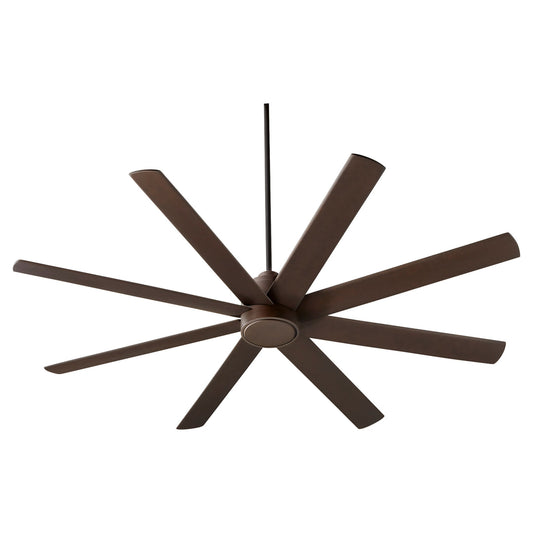
Gone are the days of clunky, uninspired designs. Today’s market is filled with models that are as much a piece of art as they are an air-moving machine. Brands like Monte Carlo, Fanimation, and Minka-Aire have turned these fixtures into stunning focal points that blend superior craftsmanship with seriously good style.
Investing in Style and Performance
When you see a fan priced at $300 or more, you’re not just paying for a brand name. You're investing in higher-quality materials, whisper-quiet motors, and designs that are built to last and impress. These fans offer a level of sophistication that can tie a whole room together.
Take the Monte Carlo Maverick, a fan celebrated for its sleek, minimalist profile. With its gracefully curved blades and elegant finishes, it's a perfect fit for modern, contemporary, or even transitional spaces. A model like this, which often costs around $600, becomes a subtle yet powerful design element.
Another standout is the Minka-Aire Artemis XL5. Its unique, sculptural design is a guaranteed conversation starter, blending artistry with aerodynamic efficiency. This fan, often priced above $700, doesn't just cool a room; it adds a major dose of visual interest and high-end flair.
By choosing a high-quality fan, you're making a long-term investment in your home's comfort and aesthetic. It's a fixture you'll see and use every day, so it's worth selecting one that you truly love and that complements your personal style.
Matching Finishes to Your Existing Decor
The final touch is choosing the right finish. The goal is for the fan to feel like an intentional part of your design scheme, whether it blends in seamlessly or provides a bold, beautiful contrast.
Here are a few popular options and how to use them:
- Matte Black: This finish offers a dramatic, modern edge that really pops against a white ceiling. It pairs beautifully with industrial hardware and minimalist furniture.
- Brushed Brass or Gold: For a touch of warmth and luxury, a brass finish can complement other metallic accents in your room, like light fixtures, cabinet pulls, or picture frames.
- Polished Nickel: A versatile and timeless choice, polished nickel works well in both traditional and contemporary settings, offering a clean, reflective look.
- Wood Tones: Fans with blades in finishes like walnut, koa, or driftwood add an organic, natural element to the room, perfect for creating a cozy and inviting atmosphere.
By thoughtfully coordinating the fan's finish with your existing decor, you ensure it becomes a beautiful and functional focal point rather than a design afterthought. To get more ideas on what's current, explore the latest ceiling fan design trends and find the perfect style to complete your space.
Dealing With Tricky Installation Scenarios
Let's be real—not every room is a perfect little box with standard eight-foot ceilings. Homes are full of character, which often means dealing with architectural quirks like soaring vaulted ceilings, sprawling open-concept spaces, or even cozy, low-ceilinged nooks. These unique situations aren't problems; they just require a bit of extra thought to get the right fan.
Figuring out the right ceiling fan size and mounting for these spaces is what separates a good installation from a great one.

With the right hardware, you can guarantee great airflow and total safety, no matter what your room throws at you.
Tackling Low Ceilings
If you're working with ceilings under eight feet tall, your choices get a little more specific, but for a very important reason: safety. A standard fan hanging from a downrod just won't work here.
You’ll need to look for a flush-mount fan, sometimes called a "hugger" fan. These are designed to mount right up against the ceiling, which gives you the most headroom possible. The goal is to keep the fan blades at least seven feet off the floor. It's a non-negotiable safety clearance to make sure no one gets accidentally smacked by a spinning blade.
Managing High or Angled Ceilings
Those beautiful high or vaulted ceilings can make a room feel grand, but they can also make a standard fan feel completely useless if it's installed too high up. The air movement just won't reach you.
The fix is a downrod—an extension pipe that lowers the fan into the main living area. This brings it down to the sweet spot, about eight to nine feet from the floor, where you can actually feel the breeze.
For sloped or angled ceilings, you'll need one more piece of hardware: a special angled mounting kit. This lets the fan hang perfectly level, which is critical for preventing wobbling and putting unnecessary strain on the motor.
Pro Tip: Don't just eyeball the downrod length. As a rule of thumb, a 12-foot ceiling usually needs a 36-inch downrod. For a 14-foot ceiling, you’re likely looking at a 48-inch downrod. Always double-check the manufacturer's guide to ensure you get a stable, high-performing setup.
Great Rooms And Open-Concept Spaces
When you have a massive, open-concept area, a single, average-sized fan often isn't enough to get the job done. This brings up the age-old debate: should you go with one huge fan or two smaller ones?
-
One Large Fan: A single, oversized fan can be a stunning focal point. A premium model like the 72-inch Monte Carlo Maverick Max, which can run around $800, moves a serious amount of air and makes a powerful design statement. This approach works best if the room has a natural center point.
-
Two Smaller Fans: If your great room is long and rectangular, two strategically placed fans will almost always give you more balanced and consistent airflow. This lets you create different comfort zones and eliminates those dead-air spots a single fan might miss. Two evenly spaced 54-inch fans can cover the area far more effectively and create a beautifully symmetric look.
There's no single right answer here—it really comes down to your room's layout and the look you're going for. By thinking through these tricky scenarios ahead of time, you can pick a fan that not only looks great but also makes your home feel amazing, no matter the architectural challenge.
Answering a Few Lingering Questions
So, you've measured your space and have a style in mind, but a few final questions are probably bouncing around in your head. It's totally normal. Getting these last details sorted out is what takes you from just browsing online to confidently clicking "buy."
Let's clear up some of the most common things people ask right before making a final decision.
What's the Most Common Fan Size People Buy?
For most homes, the sweet spot is a fan with a blade span somewhere between 48 and 60 inches. There's a reason this size is the industry standard—it’s just incredibly versatile.
This range is a perfect match for the rooms we live in most, like living rooms, primary bedrooms, and dining areas that usually fall between 200 and 400 square feet. Because it's such a popular size, you'll find the widest variety of styles and features available, from sleek, modern designs like the Minka-Aire Artiste (starting at $850) to more traditional looks.
Can I Just Install a Ceiling Fan Myself?
This is a big one, and the honest answer is: it depends. If you're just swapping out an old light fixture for a new fan and the existing electrical box is already fan-rated and properly secured to a ceiling joist, a DIY install is often doable for someone with a bit of experience.
But for true peace of mind, hiring a licensed electrician is always the smartest move. They’ll make sure the mounting is rock-solid, the wiring is completely up to code, and the fan is perfectly balanced to run without a single wobble. This is non-negotiable if you’re installing a fan where there was no fixture before, as a new, fan-rated brace box has to be installed in the ceiling.
Our Takeaway: An electrician's expertise is a small price to pay for the assurance that your beautiful new fan is installed safely and correctly. It protects your investment, your home, and your family.
How Do I Pick a Fan for an Outdoor Patio?
When you’re shopping for an outdoor space, you can't just pick any fan that looks good. You absolutely have to choose one with the correct UL rating for the conditions it will face.
Here are the two ratings you need to know:
- Damp-Rated Fans: These are built for covered outdoor areas, like a screened-in porch or a patio with a solid roof. They can handle humidity and ambient moisture but are not designed to be hit directly by rain.
- Wet-Rated Fans: Think of these as the heavy-duty option. They are engineered to withstand direct exposure to the elements—rain, snow, you name it. If your fan is going in an open-air pergola, an uncovered deck, or a gazebo, a wet-rated model is the only choice.
Putting an indoor fan outside is a huge mistake. The internal parts aren't sealed against moisture and will quickly rust and corrode, leading to failure and creating a serious safety hazard.
At Fan Connection, we make it easy to find the perfect fan, whether you need a tough wet-rated model for your patio or a stunning statement piece for your great room. Explore our curated collections and find the ideal fan for your home at https://www.fanandlights.com.


