

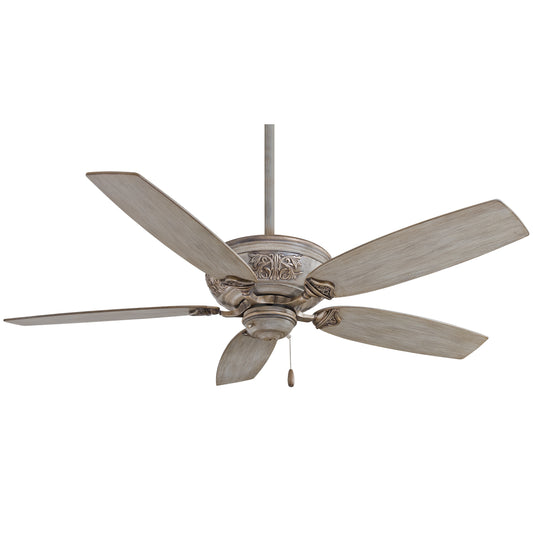

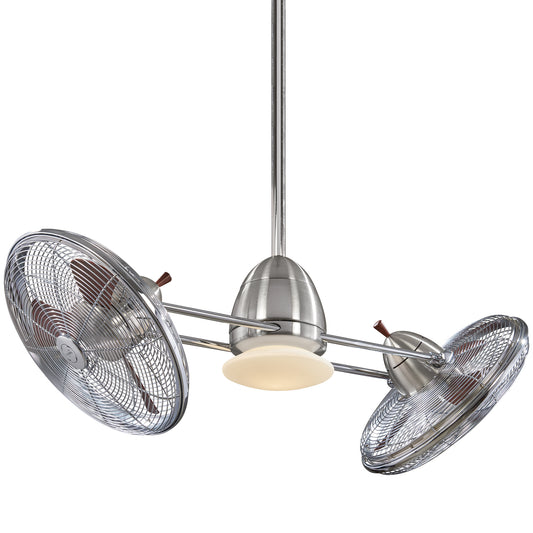


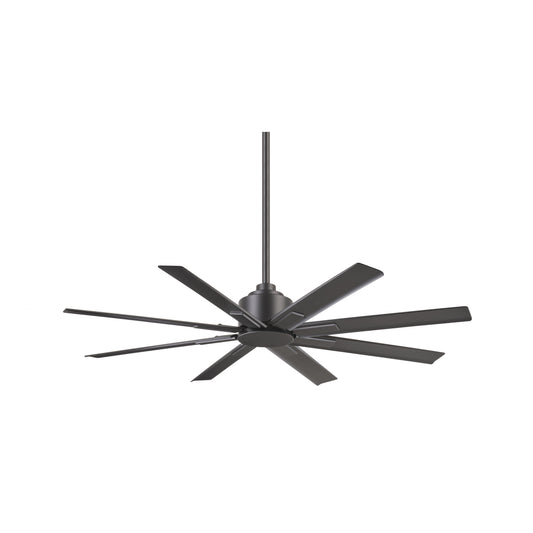







A Complete Guide to Modern Ceiling Fans
When you picture a ceiling fan, what comes to mind? For a long time, they were clunky, wobbly, and noisy—a purely functional appliance you tolerated. But that's a thing of the past. Today's ceiling fans are sophisticated design pieces, blending stunning aesthetics with quiet, powerful technology. They've evolved from a simple utility into a central element of home design.
Redefining Comfort and Style
Let's be real: the ceiling fans of yesterday were often a design compromise. You needed the airflow, so you put up with the uninspired look. Modern ceiling fans have completely flipped that script. They aren't an afterthought anymore; they're celebrated as integral parts of a room's decor, enhancing both comfort and ambiance in a way older models never could.
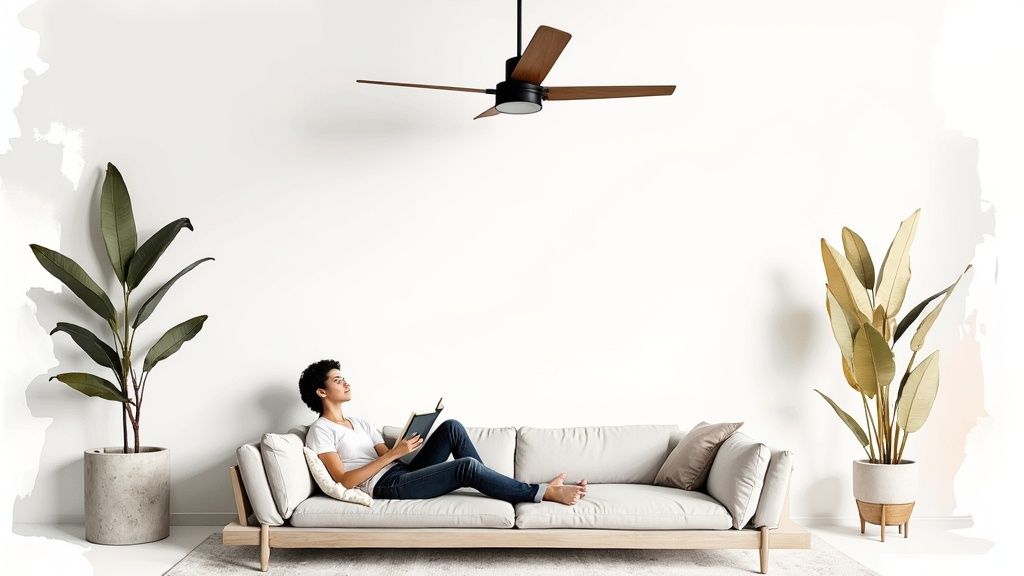
This shift is all thanks to huge leaps in technology and design. Engineers have developed whisper-quiet motors that get rid of that annoying hum, while designers are using new materials and minimalist forms to create what is essentially functional art. It’s this focus on the complete experience that truly sets them apart.
The New Standard in Home Climate
While the main job of a ceiling fan is still to move air, modern fans do it with far more finesse and control. The goal isn't just to blast you with a breeze anymore; it's about fine-tuning your home's climate with precision.
Think of it like the difference between a clunky old window AC unit and a modern central air system. Both cool a room, but one does it with loud, brute force, while the other works quietly and intelligently in the background. Modern fans are the central air of ceiling fixtures—effective, discreet, and seamlessly part of your life.
A high-quality modern ceiling fan isn't just an appliance; it's an investment in your home's atmosphere. It enhances the visual appeal of a space while improving air circulation, which can lead to energy savings year-round by complementing your heating and cooling systems.
What Makes a Ceiling Fan Truly Modern
So, what are the key ingredients that elevate a fan from a basic fixture to a premium home upgrade? These are the features you'll typically find in models priced at $300 or more, and they make all the difference.
- Architectural Design: We're talking clean lines, sculptural forms, and often fewer blades. Aesthetics are a top priority, with popular finishes like matte black, brushed brass, and beautiful natural woods.
- DC Motor Technology: This is the secret sauce. These advanced motors are behind the silent operation and incredible energy efficiency, using up to 70% less energy than old-school AC motors.
- Smart Home Integration: Many premium fans connect right to your Wi-Fi. That means you can control them with a smartphone app or just your voice using assistants like Alexa and Google Assistant.
- Integrated LED Lighting: Say goodbye to bulky, screw-on light kits. Modern fans often feature sleek, dimmable LED lights built right in, some even letting you adjust the color temperature from warm to cool.
Choosing a modern ceiling fan is about prioritizing both how it performs and how it looks. It's about finding a fixture that not only keeps you comfortable but also elevates your living space, making it a smarter, more beautiful place to be.
The Technology Behind Superior Performance
So, what really sets a sleek, modern ceiling fan apart from a basic air mover? While the design is what catches your eye, the real magic is happening under the hood. It’s the technology driving that powerful performance, whisper-quiet operation, and incredible efficiency that makes all the difference.
Think of it like the jump from a classic muscle car to a new electric vehicle. Sure, both get you from A to B, but the experience—the sound, the control, the efficiency—is a world apart. That same engineering leap has happened with ceiling fans, and it all starts with the motor.
Here’s a quick look at how far we’ve come:
Modern vs Traditional Ceiling Fans at a Glance
| Feature | Traditional Ceiling Fan | Modern Ceiling Fan |
|---|---|---|
| Motor | AC (Alternating Current) - Bulky, less efficient, can be noisy. | DC (Direct Current) - Compact, up to 70% more efficient, virtually silent. |
| Control | Usually a pull chain with 3 speeds (Low, Medium, High). | Remote or wall control with 6+ speeds, reverse function, and smart features. |
| Blades | Often flat, stamped metal or basic wood veneer. | Aerodynamically designed; carved balsa wood or molded acrylic for max airflow. |
| Lighting | Bulky, screw-on light kits with visible, replaceable bulbs. | Seamlessly integrated, dimmable LED lights with adjustable color temperature. |
| Noise Level | Audible hum, especially at higher speeds. | Near-silent operation, even at top speed. Perfect for bedrooms. |
| Energy Use | Higher energy consumption, less efficient at moving air. | Extremely low energy use, leading to lower electricity bills. |
This table gives a great snapshot, but let's dive into what these differences really mean for your home.
The Heart of the Fan: DC vs. AC Motors
The single biggest game-changer in modern ceiling fan tech is the switch from old-school AC (Alternating Current) motors to cutting-edge DC (Direct Current) motors. For decades, AC motors were the only option. They did the job, but they were heavy, prone to humming, and pretty inefficient.
DC motors, on the other hand, are the powerhouse behind today's best fans. They use a more sophisticated system of magnets and brushes to create a controlled, efficient spin. This translates into some seriously impressive benefits:
- Near-Silent Operation: Forget that distracting whirring sound from old fans. DC motors are practically inaudible, which is why they’re a go-to for bedrooms and quiet living spaces where peace is a priority.
- Greater Energy Efficiency: This is a big one. DC motors use up to 70% less energy than their AC cousins. That’s not just a small difference—it’s a noticeable drop in your electricity bills.
- More Speed Options: An old AC fan typically gives you three speeds: low, medium, and high. A DC motor offers much finer control, often with six or more speeds plus a reverse function, all accessible right from the remote.
This advanced technology is a smart upgrade for comfort and cost savings. For homeowners looking to make wider improvements, learning how to improve home energy efficiency can reveal other impactful ways to cut down on costs.
Blade Aerodynamics: Shape and Substance
It’s not just about the motor. The design of the fan blades plays a massive role in performance. It isn't just a question of how many blades a fan has; it's about their material, pitch, and aerodynamic shape. Modern fans have moved far beyond the standard flat, stamped-metal blades of yesterday.
Instead, you’ll find blades crafted from materials like lightweight carved balsa wood or aerodynamically molded acrylic. These designs are engineered to slice through the air with minimal drag. The result? Maximum airflow (measured in CFM, or Cubic Feet per Minute) with minimal noise. The blade pitch—or the angle of the blades—is also precisely calculated to scoop up and move the perfect amount of air with every turn.
If you want to get nerdy about it, you can learn more about how blade count and design affect performance in our detailed article about the impact of fan blade count and fan efficiency.
Integrated LED Lighting: The Final Touch
Gone are the days of clunky, screw-on light kits with ugly exposed bulbs. Modern ceiling fans feature seamlessly integrated LED lighting that perfectly complements their minimalist look. But this isn't just about style—it's a huge functional upgrade.
Integrated LED lights in modern fans offer more than just illumination. They provide customizable ambiance control, allowing you to tailor the light to fit any mood or activity, from bright task lighting to a warm, relaxing glow.
These advanced LED systems often come packed with premium features that give you total control over your room’s atmosphere:
- Dimming Capabilities: Smoothly adjust the brightness from a full 100% down to a soft glow, all from your remote or wall control.
- Adjustable Color Temperature: Many high-end models let you shift the light's color from a warm, cozy white (around 2700K) to a crisp, cool daylight (5000K or higher).
- Long Lifespan: Integrated LEDs are built to last, often rated for 25,000 to 50,000 hours. That means you might never have to change a "bulb" again.
This dedication to better technology is what's fueling incredible growth in the industry. The global ceiling fan market is projected to skyrocket from USD 14.6 billion in 2025 to USD 31.6 billion by 2035, driven largely by innovations like brushless DC motors that slash energy use. By understanding the tech behind the performance, you can pick a modern fan that truly delivers on its promise of style, silence, and savings.
Finding the Perfect Fan for Any Room
Choosing the right modern ceiling fan is less about picking a fixture and more about creating a perfectly balanced environment. It's a blend of science and style where size, placement, and the room itself all play a critical role. Get it right, and your fan becomes an unsung hero of comfort; get it wrong, and you're left with an overpowering wind tunnel or a barely-there breeze.
The first, most important step is matching the fan's blade span to your room's square footage. This isn't just a suggestion—it's the absolute foundation for effective air circulation. A fan that's too small for the space will just spin its wheels, struggling to move air. On the flip side, one that's too large can make a cozy room feel chaotic.
A Simple Sizing Guide
Think of your fan's blade span like the engine in a car—it needs to be properly sized for the vehicle it's moving. You wouldn't put a motorcycle engine in a semi-truck, right? The same logic applies here, ensuring your fan can efficiently handle the volume of your space.
To get a clear picture of what you need, here's a quick guide:
- For Small Rooms (Up to 75 sq. ft.): Think home offices, laundry rooms, or walk-in closets. A blade span of 29-36 inches is your sweet spot.
- For Medium Rooms (76-175 sq. ft.): This covers most standard bedrooms and smaller living rooms. Look for a blade span between 42-48 inches.
- For Large Rooms (176-350 sq. ft.): Great rooms, master bedrooms, and open-concept living areas need more power. A 52-56 inch blade span is ideal.
- For Extra-Large Spaces (Over 350 sq. ft.): For vaulted great rooms or commercial spaces, you'll want a fan with a blade span of 60 inches or more to ensure proper airflow.
For a deeper dive, our guide on choosing the right ceiling fan size for maximum efficiency offers a complete breakdown.
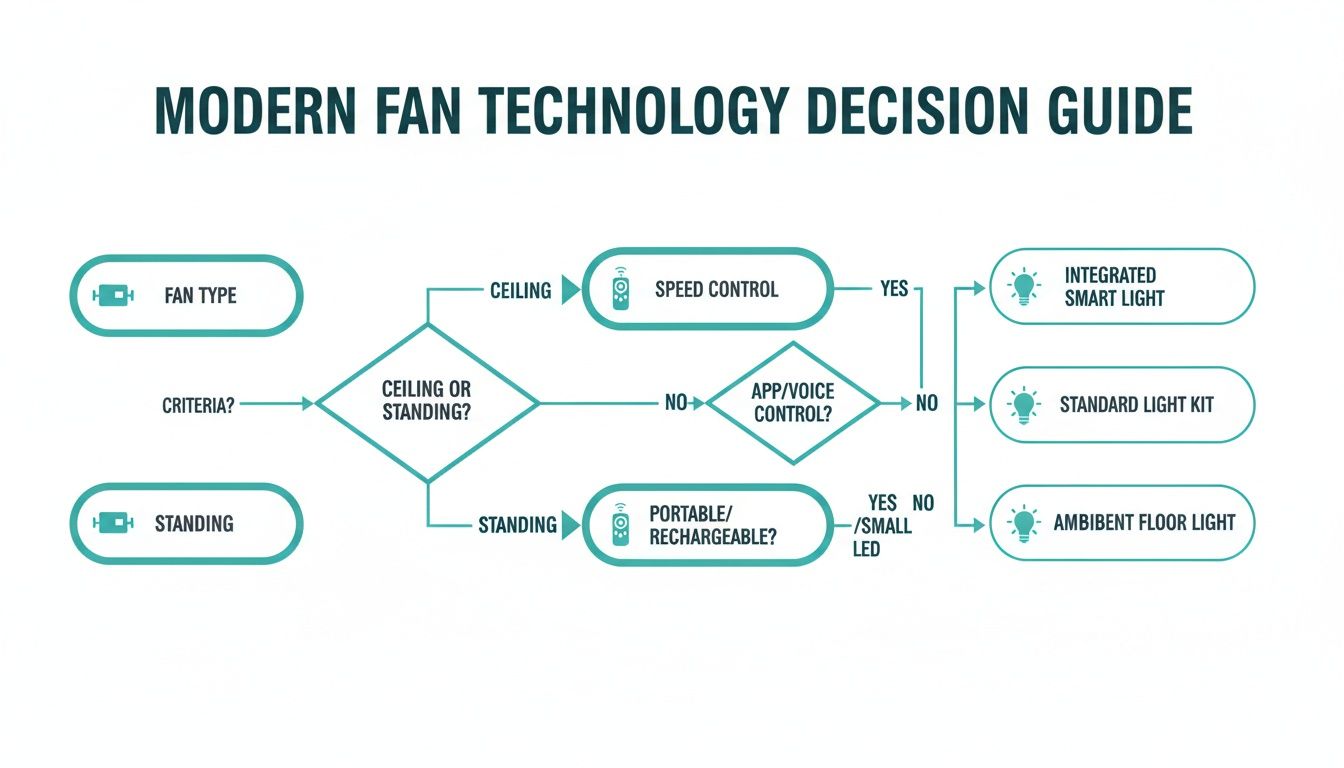
This visual shows how every choice—from the motor to the lights—leads you to the perfect fan. As you can see, the path to the best performance often points toward DC motors and integrated LEDs, which represent the most efficient, premium options available today.
Placement Rules for Peak Performance
Once you've nailed down the size, where you hang the fan is just as important. Proper placement is all about safety and maximizing that beautiful airflow. You have to give the blades enough room to work their magic.
The gold standard for ceiling fan placement is 8 to 9 feet above the floor. This height provides the optimal balance between safety and effective air circulation, creating a comfortable breeze without being disruptive.
For ceilings higher than 9 feet, you'll need a downrod—an extension pipe that lowers the fan to that ideal height. Many premium models, like the sleek Artemis IV (priced around $780), come with various downrod options to fit your space perfectly. Just be sure the blades are at least 18 inches away from any walls or obstructions to prevent choppy airflow.
Solutions for Every Space
Not all rooms are simple squares with flat ceilings. Thankfully, modern ceiling fans are designed with versatility in mind, offering solutions for even the trickiest installations.
- Low Ceilings (Under 8 feet): A "hugger" or flush-mount fan is your best friend here. These models, like the elegant Clarity fan (around $480), mount directly against the ceiling to maximize headroom while still providing excellent airflow.
- Sloped or Vaulted Ceilings: Don't worry, you can still have a fan! Look for models that come with a sloped ceiling adapter or canopy. This allows the fan to hang perfectly level and operate without wobbling, even on an angle.
- Bedrooms: Quiet is non-negotiable in the bedroom. This is where a DC motor truly shines. Sleek, low-profile fans with three blades and dimmable, integrated lighting are perfect for creating a serene retreat.
- Bathrooms and Patios: Moisture is the enemy of standard electronics, so you have to choose a fan that is damp-rated or wet-rated. A damp-rated fan can handle humidity, making it perfect for bathrooms or covered porches. A wet-rated fan is built to withstand direct exposure to rain, ideal for pergolas and open patios.
By carefully considering your room's specific needs—from its size and ceiling height to its purpose—you can select a modern ceiling fan that performs flawlessly and looks stunning. It’s a functional upgrade that promises comfort and style for years to come.
Integrating Your Fan with Your Home Decor
A modern ceiling fan shouldn't just be an appliance—it's a design choice, a piece of functional art that can tie an entire room together. The goal isn't just to move air; it's to pick a fan that feels like a natural extension of your decor, not a clunky afterthought bolted to the ceiling.
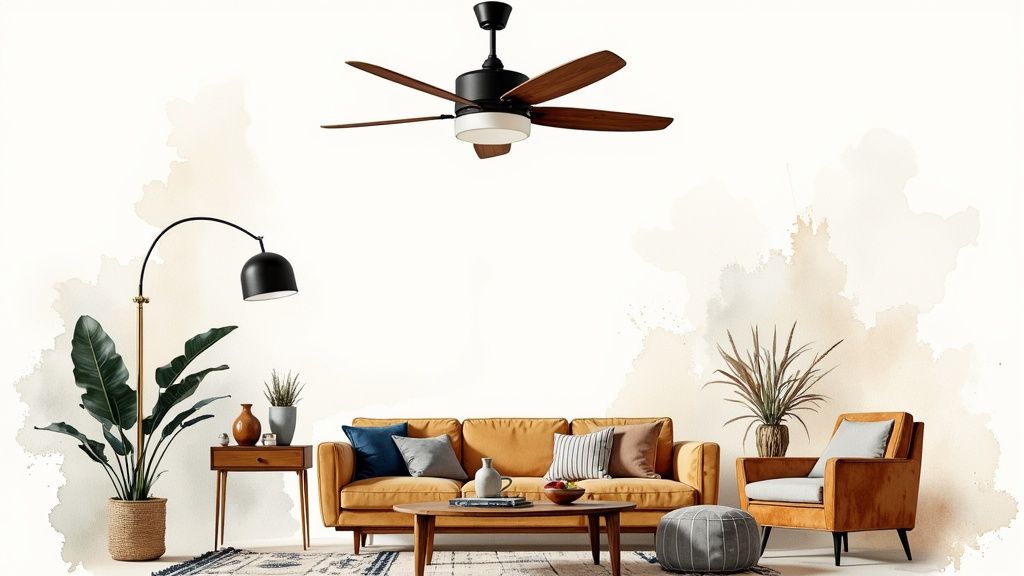
You wouldn't hang a random painting that clashes with your furniture, right? The same logic applies here. The right fan elevates your space, while the wrong one can become a distracting eyesore. Let’s break down how to make the perfect style match.
Matching Fans to Popular Design Styles
Every interior design style has its own visual language, and the best modern ceiling fans speak it fluently. It's all about choosing a fan whose shape, materials, and finish line up with the room's overall vibe.
Here are a few popular styles and the fans that just work:
- Scandinavian & Minimalist: This style is all about "less is more." Think clean lines and an uncluttered feel. A sleek, three-blade fan in matte white, like the Clarity (around $480), is perfect. It blends right into a white ceiling, preserving that airy, open aesthetic.
- Industrial Loft: Industrial design loves raw materials and bold, functional shapes. Go for a larger fan in matte black or brushed nickel with sharp, clean lines. A model like the Aviation (approximately $700) makes a strong statement that complements exposed brick, concrete floors, and metal accents.
- Mid-Century Modern: Known for its organic curves and love of natural wood, this style calls for a fan with beautifully carved wood blades. The iconic Artemis IV (priced around $780) is an ideal fit, with a sculptural quality that echoes classic furniture from the era.
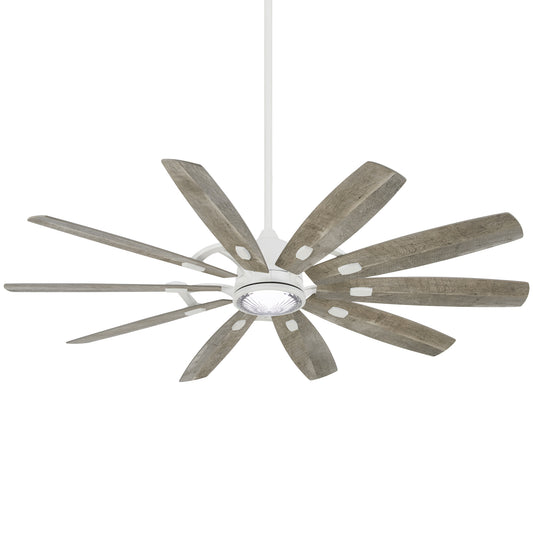
- Modern Farmhouse: This look mixes rustic charm with clean, modern simplicity. A fan that combines wood-finished blades with a simple black or white motor housing, such as the Barn fan (about $560), hits that sweet spot perfectly.
The Power of Materials and Finishes
Beyond the overall shape, the fan’s materials and finishes are what really create a cohesive look. These little details should echo other elements in the room—from the cabinet hardware and light fixtures to your furniture and flooring.
For instance, if your kitchen has brushed brass faucets and drawer pulls, choosing a fan with a matching brushed brass motor creates a beautiful, unified look. In the same way, warm walnut blades can perfectly complement a wooden dining table or hardwood floors. If you want to see what's trending now, you can explore the latest ceiling fan design trends.
When in doubt, aim for cohesion. The goal isn't to make the fan invisible, but to make it feel like it belongs. A simple rule of thumb: choose a finish that complements at least two other elements in the room. This ensures your fan enhances the decor instead of competing with it.
If you're in the middle of a major redesign, tools like 3ds Max for interior design can help you meticulously visualize how your chosen fan will integrate into the overall plan.
Statement Piece or Subtle Accent?
Finally, you need to decide what role you want the fan to play. Do you want it to be a dramatic centerpiece or a quiet, supportive element? There’s no wrong answer; it just depends on your style and the room itself.
A fan can easily blend in by matching the ceiling color—usually a matte white—which allows other design elements to take center stage. On the flip side, it can make a bold statement with contrasting colors, unique blade shapes, or a striking metallic finish. Imagine a large, sculptural fan in a two-story great room. It becomes a stunning focal point, drawing the eye upward and accentuating the room’s grand height.
Unlocking Smart Home Convenience and Control
This is where today’s best ceiling fans really shine. A beautiful design and a quiet motor are great, but the real game-changer is how seamlessly they fit into a smart home. We've officially left the days of fumbling for a pull chain in the dark behind us. The level of control you can get now was basically science fiction a decade ago.
Just imagine lying in bed and adjusting your fan’s speed or dimming its light with a quick tap on your phone. That’s the new normal for high-end modern ceiling fans. They connect right to your home's Wi-Fi, putting total control in the palm of your hand through a dedicated mobile app.
This app control isn't just a glorified remote, either. It opens up a whole world of features to fine-tune your comfort. You can create custom schedules—like having the fan gently start up an hour before you go to bed—or try out special modes like a "natural breeze" setting that varies the speed to feel like a gentle wind.
Hands-Free Operation with Voice Assistants
Let's be honest, the ultimate convenience is not having to lift a finger at all. Many of the best models, especially those in the $300 and up price range, integrate perfectly with popular voice assistants. Getting your fan hooked up to Amazon Alexa or Google Assistant is usually a quick, straightforward process right inside their apps.
Once you’re set up, you can run the show with simple voice commands.
- "Alexa, set the living room fan to 50 percent."
- "Hey Google, turn on the bedroom fan light."
- "Alexa, turn off the fan."
This kind of hands-free control is a lifesaver, especially when your hands are full or you're already cozy on the couch. It turns your ceiling fan from a simple appliance into an active, responsive part of your smart home.
The Rise of Intelligent Climate Control
The most sophisticated modern fans are now smart enough to manage your comfort for you. Top-tier models like the Aviation fan (which runs around $700) come with built-in temperature sensors that keep an eye on the room's climate in real time.
Smart fans with temperature sensors represent a shift from reactive to proactive comfort. Instead of you adjusting the fan when you feel warm, the fan anticipates the need and adjusts itself, creating a consistently comfortable environment while optimizing energy use.
This means your fan can automatically kick into a higher gear when the afternoon sun heats up the room, then slow down as things cool off in the evening. It’s a set-it-and-forget-it approach that not only keeps you comfortable without a second thought but also makes sure the fan is only using the energy it needs, helping trim your electricity bill.
This smart revolution is happening fast. The global market for smart ceiling fans is expected to reach USD 993.6 million by 2025, a huge jump driven by our growing love for AI, cloud connectivity, and voice control at home. With homeowners making up over 80% of this market, it's clear that this new wave of automated comfort is here to stay. You can discover more insights about these smart ceiling fan trends and their market growth.
Common Questions About Modern Fans
Diving into the world of modern ceiling fans can bring up a few questions. To make sure you feel totally confident in your choice, we’ve put together some of the most common things people ask, along with clear, simple answers. This should help clear up any last-minute doubts and lock in what we've already covered.
Is It True That More Blades Are Better?
Not really. It’s a common myth that a five-blade fan is automatically better than a three-blade one. Back in the day, that might have been closer to the truth, but modern fan performance is all about the motor's power, the blade's pitch, and its aerodynamic shape.
Today, the number of blades is mostly a style choice. You’ll find plenty of stunning minimalist fans with just two or three blades that move air more efficiently—and more quietly—than clunky old models. The real measure of a fan’s power is its CFM (Cubic Feet per Minute) rating. That number tells you everything you need to know about its airflow.
What’s a DC Motor and Why Does It Matter?
Think of a DC (Direct Current) motor as a major upgrade for ceiling fans. It's newer tech, and you'll find it in most high-quality modern fans for a good reason. Compared to the old-school AC motors, DC motors are incredibly energy-efficient, using up to 70% less electricity.
They’re also practically silent, which is a huge plus for bedrooms and quiet living spaces. Because they're smaller, they allow for those sleek, modern fan designs we love. On top of that, you get more control—usually six or more speed settings and a handy reverse function right on the remote. It's just a smarter, better-performing motor all around.
Can I Install a Modern Ceiling Fan Myself?
If you're comfortable with basic electrical work, you can probably tackle this as a DIY project. But safety is everything here. You absolutely have to make sure the electrical box in your ceiling is rated to hold the weight of a fan, and always, always turn off the power at the circuit breaker before you start.
If you’re even a little unsure about the wiring, have high ceilings, or just don't feel confident securing the mounting bracket, your best bet is to call a licensed electrician. It’s worth the peace of mind to know it’s installed safely and correctly.
Are Expensive Modern Fans Actually Worth the Price?
Yes, and here's why. When you invest in a premium fan—typically one over $300—you're paying for better materials like solid carved wood, a whisper-quiet DC motor, and smarter technology. The result is a fan that not only looks better but performs better and lasts longer.
While the upfront cost is higher, you really do get what you pay for. That investment comes back to you in the form of lower energy bills, a fan that won't need replacing in a few years, and a more comfortable and stylish home. It’s a purchase that adds real, lasting value.
Ready to find the perfect modern ceiling fan that brings together style, silence, and smart technology? Explore our curated collections and discover a model that will elevate your space for years to come.


