











Quiet Ceiling Fans for Bedroom: Your Ultimate Guide to Silent, Blissful Sleep
Share
A truly restorative night's sleep is one of life's greatest luxuries, and the secret often lies in crafting the perfect bedroom environment. A key player in this sanctuary is the unsung hero of comfort: the quiet ceiling fan for your bedroom. We're not talking about any old fan; we're talking about a premium, whisper-quiet machine that delivers a refreshing breeze without the maddening hum, rattle, or wobble that can sabotage your sleep. Investing in a top-tier, silent fan isn't just an upgrade; it's a profound commitment to your well-being.
Why a Whisper-Quiet Fan is Your Sleep Sanctuary's Best Friend
Imagine your bedroom as a five-star retreat, where the only sound is the gentle, barely-there whisper of air. A noisy fan shatters that illusion, creating a constant, low-level buzz that can disrupt your sleep cycles, even if you're not consciously aware of it. This is why a truly silent ceiling fan is more than a luxury—it’s an essential component for creating a genuinely restorative sleep environment.
Finding the right fan means zeroing in on models specifically engineered for silence. These aren't your typical, off-the-shelf budget options. We're talking about premium fans that generally start at $300 or more, a price point that reflects the superior technology, precision engineering, and high-quality materials required to perform without making a peep. Think of it as an investment in countless nights of uninterrupted rest.
The New Standard for Bedroom Bliss
It's no secret that the demand for quiet, efficient cooling is soaring. The global ceiling fan market, currently valued at around $11.2 billion, is projected to climb to nearly $14.7 billion by 2033. This incredible growth is fueled by discerning homeowners like you, who are seeking smarter, quieter, and more stylish solutions for their personal spaces. You can discover more insights about ceiling fan market growth and see how priorities have shifted. Today, it’s all about silent operation and smart features, especially for the bedroom.
This trend underscores a simple truth: a bedroom fan should cool you down, not stress you out. The most critical factors that contribute to a fan's silence boil down to a few key elements:
- Advanced Motor Technology: Whisper-quiet DC motors are the undisputed champions, eliminating the electrical hum common in older AC fans.
- Aerodynamic Blade Design: The blades are masterfully shaped to slice through the air with minimal resistance, which drastically reduces that "whooshing" sound.
- Flawless Installation: A fan that’s securely mounted with perfectly balanced blades simply won't rattle or wobble. It's the foundation of silence.
To make your search easier, here’s a quick rundown of what truly matters when you're on the hunt for a silent fan.
At a Glance: Key Features of a Whisper-Quiet Fan
| Feature | Why It's Essential for Silence | What to Look For |
|---|---|---|
| DC Motor | These motors are virtually silent because they use magnets and electronics, eliminating the electrical "hum" of AC motors. | Look for "DC Motor" or "Direct Current Motor" in the product specs. They're the top choice for bedrooms and quiet spaces. |
| Quality Materials | Well-made blades and solid housing absorb vibrations instead of amplifying them into annoying rattles or hums. | Solid wood blades, heavy-duty metal components, and a sturdy overall build. Avoid flimsy, lightweight materials. |
| Aerodynamic Blades | Blades designed to cut through air smoothly create less turbulence, which means less "whooshing" noise. | Contoured, airfoil-shaped blades. The number of blades is less important than their design and balance. |
| Secure Mounting System | A robust mounting bracket and downrod prevent the fan from wobbling, which is a major source of clicking and rattling. | Look for fans with multiple downrod options and a heavy-duty canopy and hanger bracket. |
Think of these features as your checklist for serenity. When a fan checks all these boxes, you know you're getting a product designed from the ground up for peaceful, silent operation.
A premium quiet ceiling fan is a strategic investment in your health. By eliminating disruptive noise, you're not just buying an appliance—you're creating an environment that promotes deeper, more restorative sleep every single night.
In the rest of this guide, we'll dive deeper into each of these aspects, helping you pick a fan that will turn your bedroom into the ultimate sanctuary for rest and relaxation.
The Power Behind the Peace: Why DC Motors Reign Supreme
The secret to a truly silent bedroom fan isn't just in the blades—it’s in the engine that drives them. Think of it like comparing a rumbling classic car engine to the smooth, almost soundless glide of a modern electric vehicle. That's the real-world difference between old-school AC (alternating current) motors and the advanced DC (direct current) motors you'll find in virtually every premium, quiet-rated fan today.
Choosing a fan with a DC motor is the single most important decision you can make for a peaceful bedroom. Unlike their AC counterparts that often produce that noticeable electrical "hum," DC motors operate in near-perfect silence. They use an elegant system of magnets and electronics to create motion, which gets rid of the noisy friction and vibration that can completely wreck a good night's sleep.
Why DC Is the Only Real Choice for Silence
But the benefits of DC motors go way beyond just being quiet. They're engineered from the ground up for efficiency and precision, which translates into a better experience all around.
- Unbeatable Energy Efficiency: A DC motor sips power, using up to 70% less energy than a traditional AC motor. This means that fan you invested in will actually start paying you back on your electricity bills over its lifetime.
- Way More Speed Options: An AC fan might give you three rigid speed settings—low, medium, and high. A DC fan, on the other hand, typically provides six or more. This lets you fine-tune the airflow from a barely-there, whisper-soft breeze to a powerful gust, all without any change in motor noise.
- Smarter by Design: DC technology is what makes advanced features possible, like reversing the airflow for winter use with just the push of a button on your remote or smart device.
This commitment to superior technology is pushing the whole industry forward. The global ceiling fan market is predicted to grow with a CAGR of 8.1% in the coming years, largely because of these advancements in motor design that slash noise and boost performance. As more of us demand quieter, more versatile fans for our homes, manufacturers are doubling down on DC motors and smart features to meet that need. Learn more about how fan technology is evolving.
Investing in a DC motor fan is an investment in tranquility. The quiet operation ensures your sleep is never disturbed, while the energy savings provide long-term value, making it a smart choice for any modern bedroom.
To put it simply, if silence is your goal, a DC motor isn't just a feature—it's a flat-out necessity. It’s the powerful, peaceful heart of a truly great bedroom fan.
Motor Showdown: DC vs. AC Ceiling Fans
When you look at them side-by-side, it's clear why DC motors are the gold standard for bedrooms where peace and quiet are non-negotiable. AC motors get the job done, but DC motors do it better, quieter, and more efficiently.
| Feature | DC Motor (Premium Choice) | AC Motor (Standard Choice) |
|---|---|---|
| Noise Level | Virtually silent; no audible "hum" from the motor. | Can produce a low-level electrical hum. |
| Energy Use | Highly efficient, uses up to 70% less power. | Standard efficiency, higher electricity consumption. |
| Speed Control | Precise control with 6+ speed settings. | Limited to 3-4 basic speed settings. |
| Advanced Features | Easily supports reverse function, smart controls, and more. | Basic functionality; reverse is often a manual switch. |
| Size & Weight | Lighter and more compact, allowing for sleeker designs. | Heavier and bulkier, which can limit fan design. |
| Cost | Higher initial investment (typically $300+). | Lower upfront cost. |
While an AC motor fan might be easier on the wallet initially, a DC motor fan is a long-term investment in a better, quieter, and more cost-effective experience. For a bedroom, there’s really no contest.
Decoding the Numbers: What CFM and Decibels Really Mean for You
When you start digging into the specs for a quiet ceiling fan for your bedroom, you’ll immediately see acronyms like CFM and dB. It might look like a foreign language at first, but these two numbers are your secret weapon for finding a fan that cools powerfully without making a racket. They tell you exactly what to expect from a fan's performance and how it will impact your sleep sanctuary.
Think of CFM (Cubic Feet per Minute) as the fan's raw power—its "breathing capacity," if you will. It’s a straightforward measurement of how much air the fan actually moves. A higher CFM means you'll feel a stronger, more refreshing breeze. For a bedroom, you'll definitely want a fan with enough oomph to keep you comfortable on those sticky summer nights.
But a powerful motor is only half the equation. What good is a strong breeze if it sounds like a helicopter is trying to land in your bedroom? That's where decibels (dB) come in. Decibels measure sound intensity, and when it comes to a bedroom fan, the lower this number, the better. Simple as that.
Finding the Silent Sweet Spot
The perfect bedroom fan lives in that sweet spot where high performance meets whisper-quiet operation. You’re looking for a fan that can push a lot of air (high CFM) while barely making a sound (low dB). This magic combination gives you the cooling you crave without disrupting the peace and quiet you need for a good night's sleep.
For a little perspective, a soft whisper is around 30 dB, and a normal conversation clocks in at about 60 dB. The best quiet ceiling fans, particularly those with modern DC motors, can operate well below 35 dB on their lower settings. That’s so quiet, you’ll barely know it’s on.
This chart breaks down the key differences between the two main motor types, DC and AC, showing how they stack up on energy use, noise, and speed control.
As you can see, DC motors are the clear winner for bedrooms. They run quieter, sip energy, and give you far more control over the fan's speed.
As you shop, treat the CFM and dB ratings as your most trusted guides. A fan with a CFM over 5,000 is a real powerhouse, but the decibel level at its different speeds is what ultimately decides if it’s right for a quiet space. Once you know how to read these numbers, you can confidently pick a fan that delivers that perfect, silent breeze.
If a powerful DC motor is the heart of a quiet fan, then the blades are its soul. The physical design of a ceiling fan is a masterclass in aerodynamics, where every curve and angle is engineered to slice through the air with grace rather than brute force.
This careful design is what separates a whisper-quiet breeze from a disruptive "whooshing" sound that can ruin a peaceful night.
It all starts with the blade material. Premium fans often use solid wood or high-quality composites that are perfectly balanced and dense. Unlike flimsy materials that can warp and vibrate over time, these robust blades absorb minor oscillations, preventing them from turning into audible rattles or hums.
The Art of Aerodynamic Silence
Beyond the material, the shape, count, and pitch of the blades all work together to keep things quiet. Think of a high-end fan blade like an airplane wing—it's designed for maximum efficiency.
- Blade Count: While it seems like more blades would be better, it's really about balance. A well-engineered 3-blade fan can be quieter and move more air than a poorly designed 5-blade model. The goal is to create consistent airflow without making the motor work harder than it needs to.
- Blade Pitch: This is just the angle of the blades. A higher pitch (typically 12-15 degrees) can move more air, but it also creates more resistance. The best quiet fans for a bedroom have a pitch that’s perfectly matched to the motor's power, ensuring you get a great breeze with minimum strain and noise.
- Aerodynamic Shape: Many of the best blades are contoured or have airfoil shapes. This lets them cut through the air cleanly, drastically reducing the turbulence that generates that classic fan "whoosh."
A fan's silence is a direct result of its design harmony. When the motor, blade material, pitch, and shape are all perfectly calibrated, the fan moves air almost invisibly, creating a silent, comfortable environment.
Matching Fan Size to Your Bedroom
Getting the right fan diameter is absolutely crucial for both performance and silence. An undersized fan has to work overtime to cool a large room, which leads to motor strain and noise. On the flip side, an oversized fan in a tiny room can create an overwhelming, turbulent gust.
The goal here is to move air effortlessly. For a deeper dive, choosing the right ceiling fan size for maximum efficiency is a critical step that ensures your fan operates at its quietest and most effective level.
As a general rule, follow these simple guidelines:
| Bedroom Size (sq. ft.) | Recommended Fan Diameter |
|---|---|
| Up to 75 sq. ft. (Small) | 36" – 44" |
| 75 – 150 sq. ft. (Medium) | 44" – 52" |
| 150 – 300 sq. ft. (Large) | 52" – 60" |
Finally, proper mounting is non-negotiable. A wobbly fan is a noisy fan, period. Using the correct downrod length for your ceiling height ensures the fan has enough clearance to circulate air properly and prevents instability. A secure installation anchors the fan, eliminating vibrations and ensuring it remains a silent partner in your pursuit of perfect sleep.
Smart Features for Effortless Serenity
True luxury today is less about fancy materials and more about technology that just works—making life simpler and more comfortable without a second thought. This is where the best quiet ceiling fans for bedroom really shine. They use smart features to turn simple air movement into an experience of effortless comfort. Gone are the days of fumbling for a noisy pull chain in the dark.
Imagine you're already tucked in bed and can just ask your fan to turn on, or better yet, schedule it to start a few minutes before you even walk into the room. This isn't science fiction anymore; it's a standard feature in high-quality fans. They sync up with your connected home, letting you control them with a remote, a wall panel, or even your voice through assistants like Alexa and Google Assistant. This kind of control means no more disruptive clicks or clanks, keeping your sanctuary peaceful.
Beyond Basic On and Off
The intelligence in these fans goes way beyond just turning them on and off. Many premium models include special modes designed to make your room feel more natural and comfortable. One of the most popular is a 'natural breeze' setting, which subtly changes the fan's speed to feel like the gentle, shifting wind you'd experience sitting outside. It's a small detail that makes a huge difference, preventing that monotonous drone and creating a more soothing environment perfect for sleep.
This move toward smarter home appliances is a big deal. The global smart ceiling fan market was recently valued at nearly $1 billion, and homes account for over 80% of that demand. Features like Wi-Fi and voice commands aren't just niche add-ons anymore; they’re what people expect from a top-tier appliance. You can see more on the growth of smart home tech over at Grand View Research.
The real magic of a smart fan is its ability to adapt to your life quietly and seamlessly. It anticipates what you need, so you can stay perfectly comfortable without ever having to think about it—or get out of bed.
Ultimately, these high-tech conveniences are a huge part of what makes investing in a modern ceiling fan so worthwhile. When you choose a premium model like the Artemis IV from Minka Aire or the stylish Aviation series from Fanimation—both priced over $300—you're not just buying a fan. You're upgrading your bedroom to a smarter, more responsive system that creates an uninterrupted, serene, and perfectly comfortable space. This is where modern technology meets total relaxation.
Installation Tips to Guarantee Lasting Silence
You’ve picked out the perfect, quiet ceiling fan for your bedroom—that’s a huge first step toward better sleep. But even the highest-quality fan can turn into a noisy nuisance if it isn't installed and maintained correctly. Think of it this way: a flawless setup isn’t just a nice-to-have, it’s the final piece of the puzzle that protects your investment and locks in that peaceful silence for good.
Often, the difference between a fan that whispers and one that clicks, rattles, or wobbles comes down to the smallest details during installation. It's a lot like building a luxury car—every single bolt needs to be torqued just right for a smooth, silent ride. The same idea applies here.
Securing a Stable Foundation
Nine times out of ten, fan noise comes from an unstable mounting. Even tiny vibrations can echo into annoying sounds if the fan isn’t anchored properly. A rock-solid installation is non-negotiable if you want silent operation.
Your absolute first priority is to make sure the fan's mounting bracket is attached directly to a solid ceiling joist or a fan-rated support brace. Drywall alone will never be enough to handle the weight and constant motion. This solid anchor is what stops the subtle movements that grow into rattles and hums over time.
On top of that, every single screw needs to be tightened to the manufacturer's specs—from the bracket to the downrod and the blades themselves. Loose parts are the number one cause of most clicking and ticking sounds.
A perfectly balanced and securely mounted fan is a silent fan. Taking the time to get the installation right—or hiring a pro to do it—is the single best thing you can do to ensure your fan runs as quietly years from now as it did on day one.
Simple Maintenance for Ongoing Peace
Once your fan is up and running, a little upkeep goes a very long way. The biggest enemy of a balanced fan is dust, which can build up unevenly on the blades and cause them to wobble.
A simple maintenance routine can prevent this from ever becoming an issue:
- Monthly Dusting: Gently wipe the blades with a soft, damp cloth. This stops the gradual buildup that can throw off the fan's balance.
- Seasonal Check-Up: A couple of times a year, check that all the visible screws on the fan body and blades are still snug. Vibrations can slowly work them loose over time.
By sticking to these simple installation and maintenance tips, you’re making sure your quiet fan stays that way. You'll get to enjoy a peaceful, comfortable bedroom for years to come.
Your Quiet Fan Questions Answered
Choosing the perfect quiet ceiling fan for your bedroom can feel like a big decision, but it doesn't have to be a complicated one. To help you feel completely confident in your final choice, we’ve put together answers to a few of the most common questions we get from customers. Think of this as your final checklist for making sure peaceful, silent nights are in your future.
Are Ceiling Fans with More Blades Quieter?
Not necessarily. It’s easy to assume more blades equal less noise, but that’s one of the biggest myths out there. While a fan with five or more blades can be very quiet at lower speeds, the real heroes of silent operation are the quality of the motor and the smart, aerodynamic engineering of the blades themselves.
A premium 3-blade fan spinning with a whisper-quiet DC motor will almost always be more silent than a clunky, poorly designed 5-blade fan running on a standard AC motor. Your best bet is to focus on the dB rating and motor type—those specs tell the real story, not the blade count.
Does Adding a Light Kit Make a Fan Noisier?
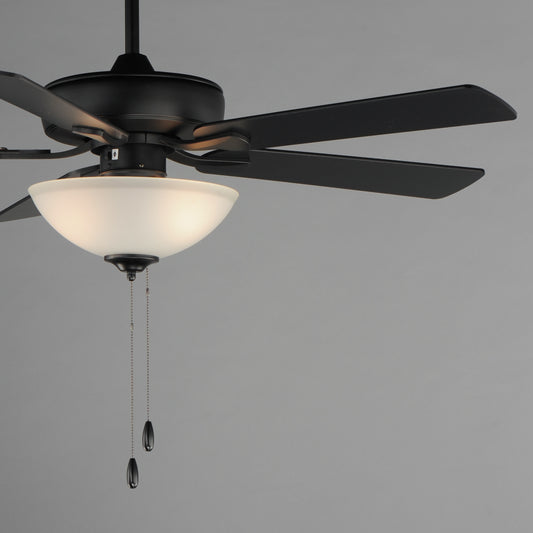
This is a common worry, but the short answer is no—as long as it's a high-quality, integrated unit. On premium fans, light kits aren't just an afterthought; they’re designed as a core part of the whole system. They are perfectly balanced and securely attached right at the factory to prevent any possibility of rattling or humming down the line.
For the absolute quietest performance, always choose a fan that comes with a factory-integrated LED light kit instead of trying to add a third-party one later. It’s the only way to guarantee a perfect, wobble-free fit.
Why Is My New Quiet Fan Making Noise?
So you've just installed your brand-new fan, and you hear a slight hum. Don't panic! Many new fans actually need a "break-in" period of 24 to 48 hours of continuous running. This gives the motor's internal lubricants time to settle and spread out evenly, which often smooths out any minor sounds.
If the noise hangs around after that break-in period, the fix is usually simple. Go back and double-check that every single blade and mounting screw is tightened down completely. Another common culprit is an incompatible wall switch. DC motors are picky and require their own specific controls, so always use the remote that came in the box or a wall switch specifically rated for DC fans.
Following these tips will help ensure your new fan delivers the silent, refreshing breeze you were hoping for, turning your bedroom into the ultimate sleep sanctuary.
Ready to find the perfect fan that blends silent operation with stunning design? Explore curated collections of premium fans and discover a model that will transform your bedroom into a peaceful retreat. Find your perfect quiet ceiling fan today.


