

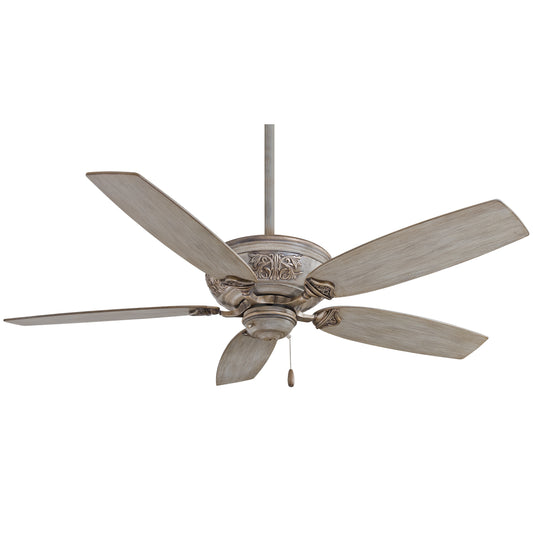


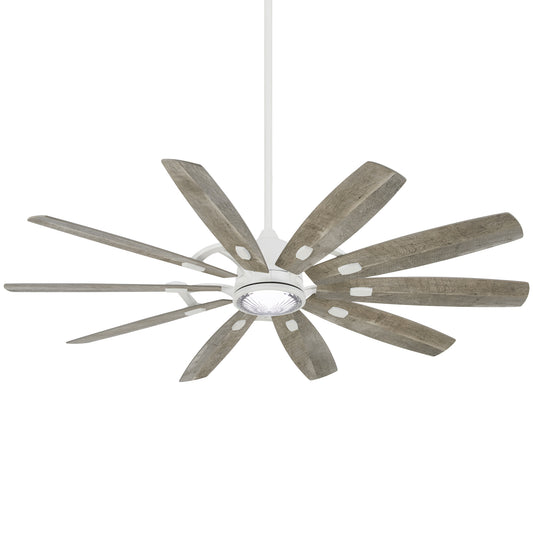

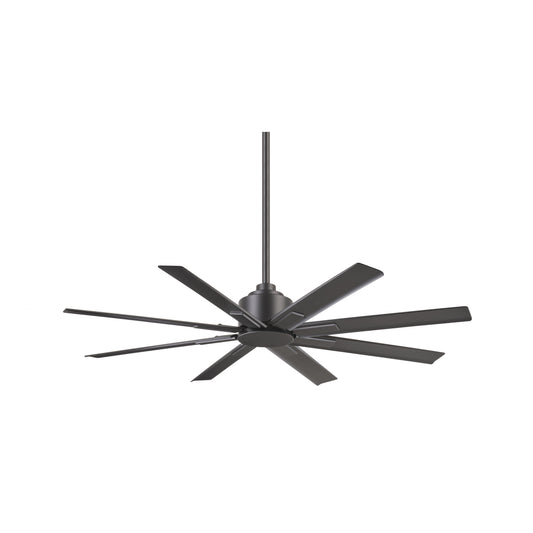

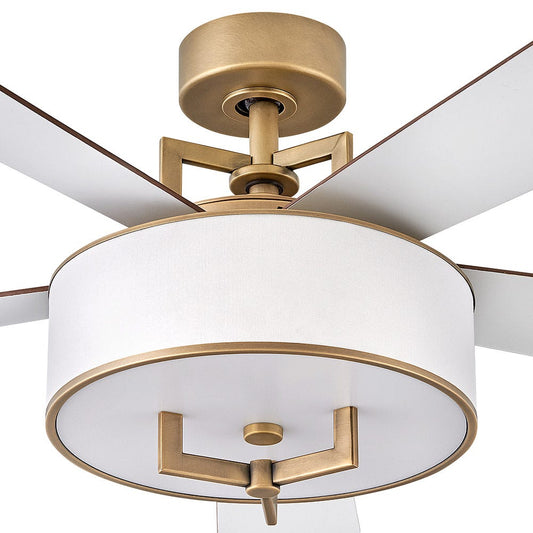


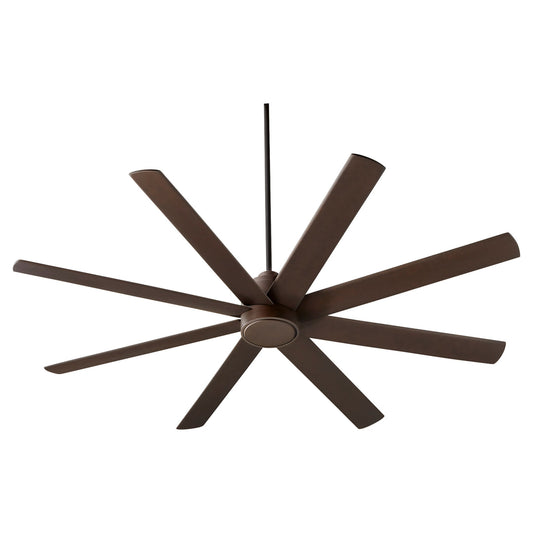


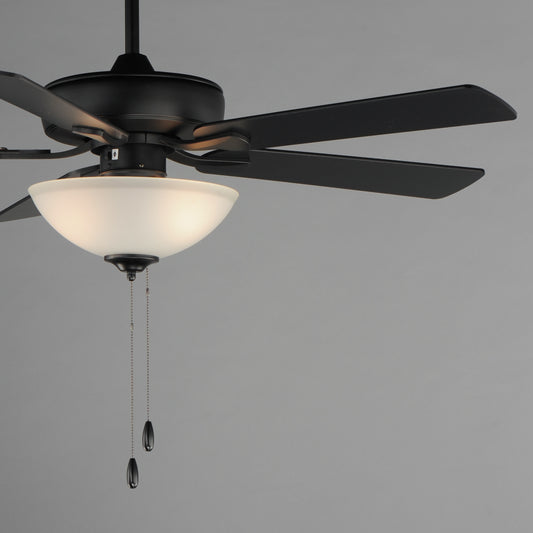


Best ceiling fan for bedroom: Quiet, efficient picks
Choosing the right ceiling fan for your bedroom isn't just about moving air—it's about creating a true sanctuary for rest. The perfect fan walks a fine line, delivering a gentle breeze without making a sound. In most bedrooms, this sweet spot is hit with a whisper-quiet DC motor, a fan diameter between 44 and 54 inches, and a clean design that almost disappears into the ceiling.
Your Blueprint for a Perfect Bedroom Oasis
Let's be honest, shopping for a bedroom ceiling fan can feel like a chore. You're hit with a wall of technical specs, styles, and features, and it's easy to get bogged down. But here’s the secret: only a handful of those details actually matter when it comes to creating a peaceful, comfortable space to unwind.
This guide is here to cut through that noise. We're going to focus on what you can actually feel and experience: whisper-quiet operation, just the right amount of airflow, and a size that fits your room like a glove. It’s not about finding the most powerful fan on the market, but the smartest one for your sleep sanctuary.
The Essentials of Bedroom Comfort
Before we dive into the nitty-gritty, think of your ideal fan as a silent partner in relaxation. Its only job is to create a gentle, steady breeze without ever reminding you it’s there. To get that, we need to nail three key pillars:
- Motor Technology: The motor is the heart of the fan, and it’s non-negotiable in a bedroom. A modern DC motor is the undisputed champion here, offering near-silent performance and incredible energy efficiency.
- Airflow and Sizing: It’s all about balance. We’ll show you how to match the fan’s diameter to your room’s square footage to guarantee a soothing breeze, not a disruptive gust.
- Style and Integration: A great fan should complement your décor, not scream for attention. A simple, minimalist design that blends into the ceiling keeps your space feeling clean and uncluttered.
One of the most common mistakes people make is buying a fan that's too big or powerful for their bedroom. The goal isn't to create a wind tunnel; it's about circulating the air gently to create a subtle cooling effect that actually improves sleep quality.
To help you get started, here's a quick reference table.
Quick Guide to Bedroom Fan Selection
This table gives you a starting point, matching common bedroom sizes with the fan specs that usually work best.
| Bedroom Size (sq. ft.) | Recommended Fan Diameter (inches) | Ideal CFM Range | Recommended Motor Type |
|---|---|---|---|
| Up to 100 sq. ft. | 42-48 inches | 1,000 - 3,000 | DC Motor |
| 100 - 225 sq. ft. | 48-56 inches | 2,500 - 4,500 | DC Motor |
| Over 225 sq. ft. | 56+ inches | 4,000 - 6,000+ | DC Motor |
Think of this as your cheat sheet. While every room is a bit different, these recommendations will put you on the right track for finding that perfect, quiet airflow.
By focusing on these fundamentals, you can confidently pick a high-quality fan—like the ones in the curated collections at Fan Connection—that will be a long-term investment in your comfort. This is about more than just cooling a room; it’s about perfecting your personal oasis for rest and rejuvenation.
Understanding Airflow for Silent Nights
When it comes to the perfect bedroom ceiling fan, raw power isn't the goal. You’re not trying to create a wind tunnel. The real prize is a consistent, silent breeze that keeps you comfortable without ever making its presence known. To get there, we need to look past just the fan’s size and start speaking the language of airflow.
The main term you’ll see is CFM, which stands for Cubic Feet per Minute. It’s just a fancy way of measuring how much air a fan can move. It's tempting to think that a bigger CFM number is always better, but that’s one of the most common mistakes people make when choosing a fan for their bedroom. A fan with a sky-high CFM is like a roaring waterfall—impressive, but way too loud and disruptive for a good night's sleep.
Think of it this way: for a bedroom, you want a gentle, flowing river of air, not a turbulent rapid. This is where the fan’s design—the blade pitch, motor speed, and overall engineering—all come together. A fan truly built for a bedroom is fine-tuned to move air efficiently and quietly, creating that soothing atmosphere you need to drift off.
The Unsung Hero: Brushless DC Motors
So, what's the secret sauce behind the quietest, most efficient ceiling fans on the market today? It’s the brushless DC motor. Unlike the clunky, old-school AC motors that often have a noticeable hum, DC motors are engineered to be practically silent. They work using magnets and sensors to create motion, which means way less friction and, therefore, way less noise.
For anyone who’s a light sleeper, this technology is a complete game-changer. A fan with a DC motor can spin all night long on its lowest setting, delivering a subtle, cooling breeze without any of those annoying mechanical sounds. As a bonus, they’re incredibly energy-efficient, using up to 70% less electricity than their AC cousins. That means a lower electricity bill for you over the long haul.
For a bedroom, a quiet DC motor is non-negotiable. The goal is to feel the air, not hear the fan. Investing in a fan with this technology is the single most important step toward ensuring peaceful, uninterrupted rest.
The global ceiling fan market is booming, and it's projected to hit USD 16.18 billion by 2032, thanks in large part to these kinds of tech upgrades. Innovations in Brushless Direct Current (BLDC) motors are producing fans that give you more air movement with less noise, making them a perfect fit for our homes.
Finding Your Perfect Airflow Balance
Getting that ideal airflow isn't just about the motor, though. The shape and angle (or pitch) of the fan blades play a massive role. Blades with a smarter, steeper pitch can push more air around even at lower, quieter speeds. The number of blades also changes how the air moves, which is a whole topic in itself. If you're curious, you can learn more by checking out our guide on fan blade count and efficiency.
Ultimately, the best ceiling fan for your bedroom is one where the motor, blades, and overall design are all working in perfect harmony to deliver silent, effective cooling.
Matching Fan Size and Style to Your Space
A ceiling fan is so much more than a spinning appliance; it’s a centerpiece. It can be the design element that ties your whole bedroom together or the one thing that just feels... off. Choosing the best ceiling fan for your bedroom is all about finding that sweet spot where practical performance meets visual harmony. When you get it right, the fan feels like it was always meant to be there, not like a last-minute addition.
Think of it like hanging a piece of art. A fan that’s too big can visually shrink the room, making the ceiling feel heavy and low. This is something designers call ‘visual weight’. On the other hand, a fan that's too small for the space will look awkward and won't move nearly enough air to make a difference. The real goal is to find a fan that fits the room’s scale, creating a balanced, breezy atmosphere.
Finding the Right Fan Diameter
First things first, let’s match the fan's diameter—that’s the full wingspan, from the tip of one blade to the tip of the opposite one—to your room's square footage. This simple step is crucial for getting great air circulation without feeling like you're in a wind tunnel.
Here’s a quick guide to get you pointed in the right direction:
- Medium Rooms (up to 175 sq. ft.): A fan with a blade span of 42-48 inches is usually the perfect fit for most standard bedrooms.
- Large Rooms (175 - 300 sq. ft.): You'll want to step up to a 48-56 inch blade span to keep the air moving effectively.
- Extra-Large Master Suites (over 300 sq. ft.): Go big with a fan that's 56 inches or larger. This ensures every corner of your spacious retreat gets a comfortable breeze.
If you want to get really granular with your measurements, we've got you covered. Check out our detailed guide on choosing the right ceiling fan size for maximum efficiency for more on ideal placement and clearance.
A quick look at our sizing recommendations:
Ceiling Fan Size and Placement Guide
This table breaks down the essentials for finding the perfect fan size and ensuring it has enough room to operate safely and effectively.
| Room Size (sq. ft.) | Recommended Fan Diameter (inches) | Minimum Ceiling Clearance (inches) | Minimum Wall Clearance (inches) |
|---|---|---|---|
| Up to 75 | 29 - 36 | 84 (7 feet) | 18 |
| 76 - 144 | 36 - 42 | 84 (7 feet) | 18 |
| 145 - 225 | 44 - 50 | 84 (7 feet) | 18 |
| 226 - 400 | 50 - 54 | 84 (7 feet) | 18 |
| Over 400 | 54 - 72 (or two smaller fans) | 84 (7 feet) | 24 |
Getting these numbers right is the foundation for a fan that not only looks great but performs beautifully.
This simple decision tree really boils it all down, putting quiet operation, proper airflow, and energy efficiency at the forefront of choosing the best fan for your bedroom.

At the end of the day, a quiet, efficient fan with the right amount of airflow is what makes a bedroom truly comfortable.
Merging Function with Form
Size is only half the battle; the fan's style is what brings the personality. The number of blades, for example, can completely change the vibe of the room. A sleek, three-blade fan gives off a clean, modern aesthetic that disappears into minimalist decor. In contrast, a fan with five or more blades feels a bit more traditional and tends to deliver a gentler, less "choppy" breeze.
The materials and finish are just as critical. A fan with rich, dark walnut blades can bring a touch of organic warmth to a room, while a crisp white fan can blend right into a white ceiling, making the space feel more open and airy. When you pay attention to these details, your fan stops being just an appliance and becomes a seamless part of your bedroom's design story.
Embracing Smart Tech for Effortless Comfort
The best ceiling fan for a bedroom isn't just a motor with blades anymore; it's a central part of your smart home. Today’s premium fans have evolved into intelligent devices designed to make your life easier and your sleep way more comfortable. Let's be real—fumbling for a pull chain in the dark or getting out of a perfectly warm bed to tap a wall switch is a thing of the past.
Instead, picture this: you’re settled in for the night and just say, "Alexa, set the bedroom fan to low." Or even better, your fan is already scheduled to start a gentle, cooling breeze an hour before your alarm goes off, helping you wake up naturally and feeling refreshed. This isn't some far-off futuristic idea—it's the new standard for high-quality bedroom comfort.
The Power of a Connected Bedroom
Smart fans put total control right at your fingertips, usually through a dedicated app on your phone. This opens up a world of possibilities that a simple remote could never offer.
- Custom Scheduling: You can create personalized schedules that sync with your daily routine. Think: having the fan turn on to a low setting in the evening and ramp up slightly during the warmest part of the night.
- Voice Control Integration: Syncing your fan with voice assistants like Amazon Alexa or Google Assistant for hands-free adjustments is a small luxury that makes a huge difference.
- Thermostat Synergy: Some of the more advanced models can even link up with your smart thermostat, working together to maintain the perfect temperature and save energy all year round.
This move toward intelligent home comfort is more than just a passing trend. The smart ceiling fan market is growing fast, with a projected value of nearly USD 994 million by 2025. This boom is fueled by people wanting features like remote controls, voice commands, and energy-saving motors, especially in homes, which make up over 80% of the market. You can dive deeper into these smart fan technologies at Grand View Research.
Why Smart Features Matter for Sleep
At the end of the day, the goal of any bedroom fan is to help you sleep better. Smart features get you there by removing all the little frustrations and distractions.
The ability to fine-tune your environment without disrupting your rest is what sets a modern smart fan apart. It’s about creating a responsive, personalized atmosphere that adapts to your needs, ensuring your bedroom remains a true sanctuary for relaxation.
When you invest in a fan with these capabilities, you’re not just buying a cooling device. You’re upgrading your entire sleep experience, turning your bedroom into a seamlessly comfortable and responsive space.
Why Investing in a Premium Fan Pays Off
When you’re hunting for the perfect ceiling fan, it’s tempting to let the price tag do all the talking. But a high-end fan isn’t just another purchase—it's a real investment in your home’s comfort, style, and your own peace of mind. A premium fan, which typically starts around $300, offers a totally different experience that pays you back for years.
Think of it like buying a mattress. You could grab a cheap one that gets the job done for a while, or you can invest in one that guarantees restful sleep for a decade. It's the same deal with premium fans; they're engineered for flawless, silent performance, night after night.
The Hallmarks of a Superior Fan
So, what really sets a premium fan apart? It all comes down to better materials, smarter engineering, and an old-school commitment to quality. Once you step into this tier, you leave the world of mass-produced plastic and enter the realm of true craftsmanship.
You'll start seeing fans made from exceptional materials chosen for both their looks and their durability:
- Solid Wood Blades: Forget composite or plastic. Blades carved from woods like walnut or koa have natural acoustic properties and an organic warmth that manufactured materials just can't match.
- Die-Cast Metals: The motor housings and other structural parts are often made from die-cast zinc or aluminum. This gives them incredible stability, which means no rattles or vibrations, even years down the road.
- Aerodynamic Design: The blades on these fans aren't just shaped to look good. They’re aerodynamically contoured to slice through the air more efficiently and with less noise—a small detail that makes a world of difference in a quiet bedroom.
Investing in a premium fan means you’re buying a piece of functional art, engineered to perform silently and reliably for decades. It's the difference between a temporary fix and a permanent solution for your bedroom's comfort.
This growing appreciation for quality is why the global ceiling fan market was valued at USD 11.2 billion in 2024 and is still on the rise. More and more, people are demanding cooling solutions that are built to last and designed with care. You can dig into this trend further with the IMARC Group's market analysis.
Engineering That Lasts a Lifetime
Beyond the beautiful materials, the real magic of a premium fan is hidden inside. The internal engineering is where you see the biggest leap in performance and longevity, and it's what directly impacts your day-to-day (and night-to-night) experience.
The heart of it all is the advanced DC motor. These motors are the gold standard for good reason. They're precision-balanced, built with higher-quality bearings, and run almost silently. They also run cooler, last longer, and sip energy compared to their old-school AC counterparts.
On top of that, premium fans almost always come with comprehensive warranties, sometimes even for the lifetime of the motor. That’s not just a marketing gimmick; it’s a sign of the manufacturer’s confidence. They know their fan is built with impeccable precision, from the wiring to the final finish. This kind of quality means you can install it and forget it, enjoying silent, reliable comfort for years. And that peace of mind? That’s the ultimate payoff.
Simple Installation and Maintenance Tips

So, you’ve picked out the perfect fan—congratulations! Now comes the part that ensures it runs smoothly and silently for years to come. A proper installation and a tiny bit of upkeep are the secrets to a long-lasting, wobble-free fan that delivers comfort without any annoying clicks or shakes.
Before you even open the box, there's one critical safety check you can't skip. You need to confirm the electrical junction box in your ceiling is fan-rated. A standard box made for a light fixture just isn't built to handle the weight and constant motion of a ceiling fan. This is a non-negotiable step for a safe and secure setup.
Getting the Placement Perfect
Once you know the box is solid, it's all about height. If you're working with vaulted or high ceilings, a downrod is your best friend. This simple extension pole lowers the fan to the sweet spot—usually 8 to 9 feet above the floor—where you can actually feel the breeze. Without one, the fan is just spinning way up high, doing you no good.
A correctly installed fan shouldn't just look good; it should feel like an integrated part of the room. Taking the time to secure the mounting and balance the blades ensures it remains a source of comfort, not a distraction.
For a more detailed walkthrough, our guide on how to install a ceiling fan offers clear, step-by-step instructions to help you or your electrician get the job done right the first time.
A Simple Maintenance Checklist
Keeping your fan in top shape is surprisingly easy. Just a few minutes of attention twice a year will go a long way in preserving its quiet performance and extending its life.
- Clean the Blades: Dust loves to collect on fan blades, and that extra weight can throw them off balance and cause wobbling. A quick wipe with a soft, damp cloth is all it takes.
- Check All Screws: Over time, vibrations can work screws loose. Give the screws connecting the blades to the brackets and the downrod to the motor a quick check, and tighten any that have wiggled free.
- Lubricate If Needed: Most modern DC motors are sealed and maintenance-free, so they don't need oiling. However, it's always smart to check your fan's manual, just in case. An older model might need a few drops of oil in the designated port to keep it running smoothly.
Got Questions? We've Got Answers
Picking out the perfect ceiling fan for your bedroom can bring up a few last-minute questions. To help you feel completely confident in your choice, we’ve put together answers to some of the things we hear most often.
What’s the Single Most Important Feature for a Bedroom Fan?
Hands down, it's quiet operation. Style is great and smart features are fun, but none of that matters if your fan hums, clicks, or buzzes you awake at 2 a.m. A noisy fan completely defeats the purpose of creating a peaceful bedroom sanctuary.
If you remember one thing, make it this: prioritize a fan with a high-quality DC (Direct Current) motor. These modern motors are engineered to be practically silent. They’re also way more energy-efficient than the clunky old AC motors. A quiet motor is the non-negotiable foundation of a good night's sleep.
How Many Blades Should My Bedroom Fan Have?
Honestly, the number of blades is more about style than anything else in a bedroom. A fan with three blades usually gives off a clean, modern vibe that fits perfectly with minimalist decor. On the other hand, fans with four or five blades tend to look a bit more traditional.
While some people say more blades create a gentler breeze, the truth is that the motor's quality and the angle of the blades (the pitch) have a much bigger impact on how well the fan performs. Instead of getting hung up on the blade count, focus on finding a fan with a whisper-quiet DC motor and a design that moves air efficiently.
Can a Ceiling Fan Actually Make a Room Colder?
This is a great question, and one we get all the time! A ceiling fan doesn't actually lower the room's temperature like an air conditioner does. What it does do is create a "wind-chill" effect. By circulating air across your skin, it helps speed up the natural process of evaporation, which is your body's built-in cooling system.
It’s a simple trick, but it can make a room feel up to 8 degrees cooler. This means you can nudge your thermostat up a few degrees in the summer and save a surprising amount on your AC bills.
And it’s not just a summer tool. In the winter, you can flip a switch to reverse the fan's direction. This pushes the warm air that naturally rises and gets trapped at the ceiling back down into the room, keeping you cozy without cranking up the heat. It’s a true year-round workhorse for comfort.
Ready to find the fan that will turn your bedroom into the tranquil oasis you deserve? The curated collections at Fan Connection make it easy to discover premium, stylish, and whisper-quiet options designed for ultimate comfort. Explore our collections and find your perfect match today!


