







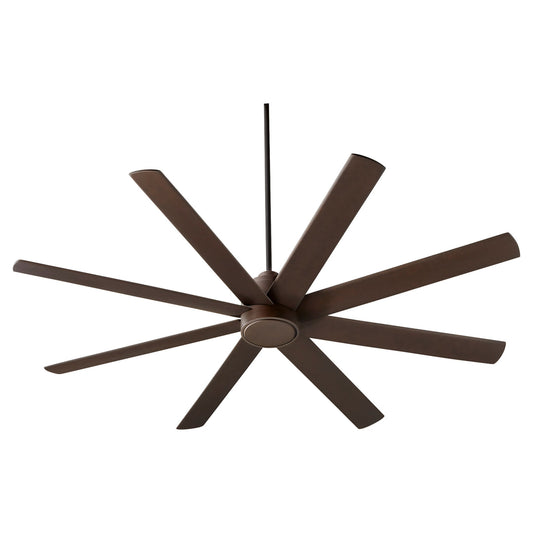


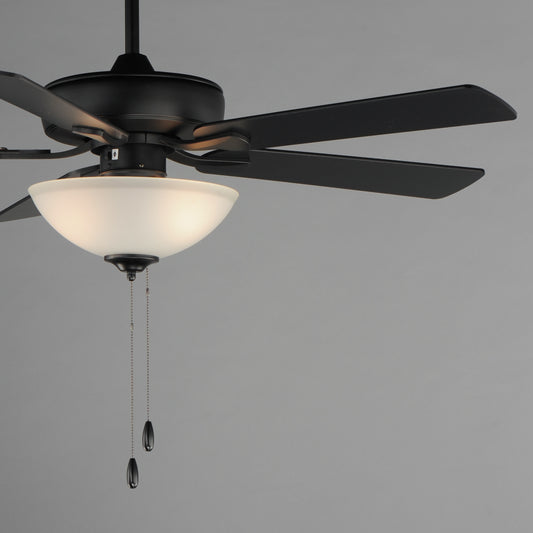


Finding the Best Ceiling Fan for Your Living Room: A Fun & Informative Guide
The best ceiling fan for your living room has to do more than just move air around. It's a real centerpiece, a fixture that needs to nail the balance between size, performance, and style. The goal is to find a fan with the right blade span for your space, powerful but quiet airflow (that's the CFM number), and a design that actually enhances your decor. When you invest in a premium fan over $300, you’re getting a beautiful piece that’s also a powerhouse of comfort all year long.
What Really Makes a Great Living Room Ceiling Fan?
Your living room is where life happens. It’s where you unwind, entertain guests, and make memories, so the right ceiling fan needs to do more than just spin. It sets the whole mood. A basic, off-the-shelf fan might create a little breeze, but a high-quality model truly transforms the room, delivering quiet, efficient comfort without sacrificing an ounce of style.
So, what separates a forgettable fan from the best ceiling fan for your living room? It really comes down to a few key ingredients working together. Think of it like buying a car—you wouldn't just pick one based on the color. You'd check out the engine's power, its fuel efficiency, and how it feels on the road. A great fan is no different; it has to deliver on performance, efficiency, and looks.
The Hallmarks of a Premium Fan
When you step into the $300+ price range, you're not just paying for a logo. You're investing in better engineering and design that you can actually feel. These fans are built with superior materials, more advanced motors, and thoughtful features that make a real difference day in and day out. You're looking for a fan that feels like it was always meant to be part of your home.
Here are the non-negotiables that define a top-tier living room fan:
- Whisper-Quiet Operation: Your living room is for conversation and movie nights, not for listening to a humming motor. Premium fans use advanced DC motors, which are worlds quieter and more energy-efficient than their old-school AC counterparts.
- Powerful, Measured Airflow: A fan's real muscle is measured in Cubic Feet per Minute (CFM). A higher CFM rating means it moves more air, creating that satisfying cooling effect. For a living room, strong CFM is essential.
- Elevated Design and Materials: A great fan should feel like a deliberate part of your decor. High-end models often feature materials like solid wood, aircraft-grade aluminum, and designer finishes that turn a functional appliance into a true statement piece.
- Smart and Convenient Controls: Forget about fumbling with pull chains. Modern fans come with handy remote controls and often connect with smart home systems like Amazon Alexa or Google Assistant, letting you adjust the speed and lighting with just your voice.
A ceiling fan should be a design choice, not just a utility. The best ones blend so seamlessly with your ceiling and decor that they feel like an intentional, architectural element of the room.
This guide will walk you through each of these pieces. We’ll break down the technical specs and show you exactly how to match a fan to your living room's unique needs, making sure your investment pays off in both comfort and style.
Matching Fan Size and Airflow to Your Space
When you're hunting for the perfect living room ceiling fan, it’s tempting to just go for the biggest or most powerful one you can find. But it’s not that simple. The real secret is finding the perfect balance between the fan’s performance and your room's actual size. The two numbers that matter most here are blade span (the fan's diameter from blade tip to blade tip) and CFM (Cubic Feet per Minute).
Think of CFM as the fan's raw power—it’s a measure of how much air it can actually move. But just like you wouldn't drop a race car engine into a golf cart, you don't need an industrial-strength fan for a cozy den. Nailing this balance is what gives you that perfect, refreshing breeze instead of a gale-force wind or a stir that you can barely feel.

It’s all connected: the right fan size allows for effective airflow, and both need to fit the style of your home.
Finding Your Ideal Fan Blade Span
Before you get carried away with a fan's design, grab a tape measure. Your first move should be to figure out your living room's square footage—just multiply its length by its width. This simple number is your North Star for choosing the right blade span, making sure the fan can push air to every corner without being overwhelming.
A fan that’s too small for a big great room, for instance, will just spin its wheels, struggling to create any noticeable breeze where you're sitting. On the flip side, a massive fan in a small living room can create a weirdly turbulent wind tunnel. It's all about finding that "just right" fit.
A correctly sized fan does more than just cool the spot right underneath it. It creates a complete circulation pattern, pulling air up and pushing it down and out across the room for consistent comfort everywhere.
For a deeper dive, check out our guide on how to choose a ceiling fan size, which has detailed charts and tips to make sure you get it right.
Use this quick reference to choose the correct fan blade span based on your living room's square footage.
| Living Room Size to Fan Blade Span Guide | |
|---|---|
| Living Room Size (Square Feet) | Recommended Fan Blade Span (Inches) |
| Up to 75 | 29 - 36 |
| 76 to 144 | 36 - 42 |
| 145 to 225 | 44 - 50 |
| 226 to 400 | 50 - 54 |
| Over 400 | 54 or larger |
Matching the fan's power to the room size is what it's all about.
Decoding CFM for Real-World Comfort
Once you've nailed down the right blade span, the next number to look at is the CFM rating. This tells you exactly how much air the fan moves on its highest speed. Simply put, a higher CFM means more powerful airflow and a stronger cooling effect.
So, what’s a good number? For a living room, you want a fan that can really perform. Here’s a quick rundown of what those numbers actually feel like:
-
CFM Below 4,000: This is pretty low airflow. It might work for a tiny utility room or a walk-in closet, but in a living room, you'll barely notice it's on.
-
CFM Between 4,000 - 6,000: This is the sweet spot for most small to medium-sized living rooms. A fan in this range will create a pleasant, noticeable breeze that stops the air from feeling stuffy.
-
CFM Above 6,000: Now we're talking. This is what you want for large living rooms, great rooms, or any space with high or vaulted ceilings. These high-performance fans, often powered by strong DC motors, can move a serious amount of air, making sure even the far corners of the room stay cool.
You'll find that fans in the $300+ range almost always come with impressive CFM ratings, backed by better motor technology. When you pair the right blade span with a strong CFM, you’re making sure your investment pays off with the quiet, powerful, and refreshing airflow your living room deserves.
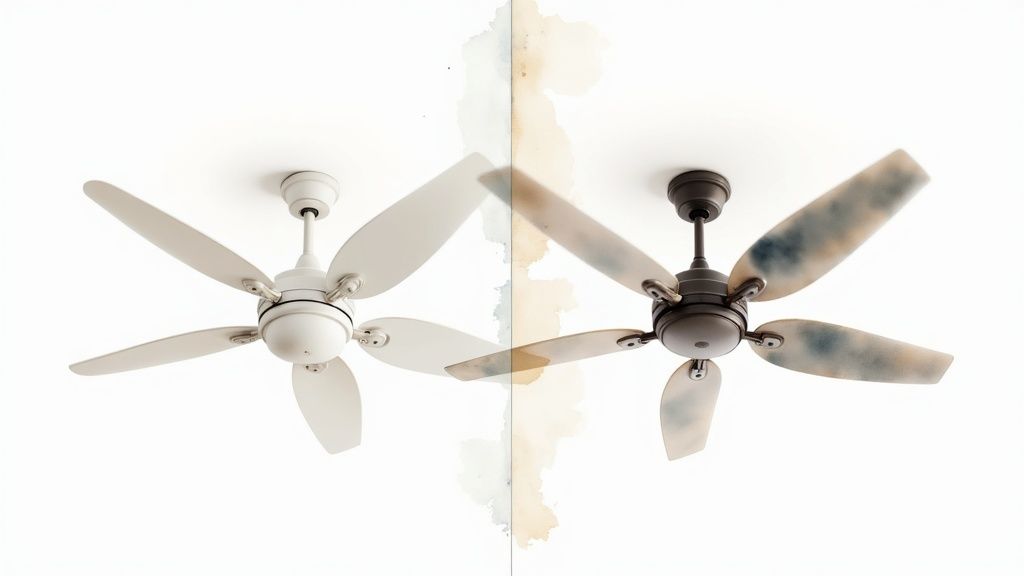
The Difference Between AC and DC Fan Motors
If you’ve ever wondered what separates a good ceiling fan from a great one, the answer is often hiding inside. The motor is the heart of any fan, and it's where the biggest leaps in technology have happened. Getting to know the difference between old-school AC motors and modern DC motors is the key to choosing the best ceiling fan for your living room, especially if you’re investing in a fan you’ll love for years.
Think of it like comparing a classic, gas-guzzling muscle car to a sleek new electric vehicle. The muscle car—your AC motor—has been a reliable workhorse for decades. It gets the job done, but it’s often loud, a bit clunky, and not exactly efficient. The electric vehicle—the DC motor—is a total game-changer. It’s whisper-quiet, incredibly energy-efficient, and packed with smart, responsive features.
Why DC Motors Dominate in High-End Fans
Direct Current (DC) motors are a major step forward in fan engineering. They use magnets and brushes to generate force, which brings a ton of benefits perfectly suited for a living room. The most obvious one? They’re quiet. A DC motor fan runs at a near-silent hum, even on its higher settings, so your movie nights or conversations will never be drowned out by a noisy motor.
Beyond the peace and quiet, DC motors are the undisputed champs of energy efficiency. They sip electricity compared to their AC counterparts. This isn't just a tiny improvement; a fan with a DC motor can use up to 70% less energy while creating the same powerful airflow as a traditional AC fan.
A quiet, efficient motor is the foundation of a luxury fan experience. It’s the feature you’ll appreciate every single day, from the peaceful ambiance it creates to the savings you'll see on your utility bills.
This efficiency is a huge deal. The latest and greatest living room fans almost all feature these energy-saving motors, which can cut electricity use by up to 30% compared to older models. With government standards pushing for better efficiency, ENERGY STAR-rated fans are becoming the new normal as more and more people look for greener home solutions.
The Added Control and Versatility of DC
Another huge win for DC motors is the level of control they give you. A standard AC fan might have three speeds you toggle with a pull chain, but a DC fan usually comes with a remote offering six or more precise speed settings. This lets you dial in the airflow to your exact comfort level.
Plus, DC motors make features like reversing the blade direction for winter use ridiculously simple—it's usually just the push of a button on the remote. This kind of versatility is a hallmark of the premium fans you'll find in the $300+ category.
Let's break down the key differences:
| Feature | AC Motor (Alternating Current) | DC Motor (Direct Current) |
|---|---|---|
| Noise Level | Audible hum, can be distracting | Virtually silent operation |
| Energy Use | Higher consumption, less efficient | Up to 70% more energy efficient |
| Speed Options | Typically 3 speeds | Often 6 or more precise speeds |
| Control | Pull chains, basic wall controls | Remote control, smart features |
| Cost | Generally less expensive upfront | Higher initial investment |
While an AC motor fan might seem like a bargain at first, the long-term benefits of a DC motor—from lower energy bills to superior comfort and quiet—make it a wise investment for any living room. That quiet performance and enhanced control are exactly what make a fan feel less like an appliance and more like a luxury. For more on how this translates to your wallet, check out our guide on energy efficiency and cost savings with ceiling fans.
Choosing a Style That Complements Your Decor
Once you’ve nailed down the technical details like motor type and CFM, you get to the fun part—choosing a fan that actually looks incredible in your living room. The best ceiling fan doesn't just fade into the background; it should feel like a deliberate design choice that pulls the whole space together. Think of it as the finishing touch that transforms a purely functional appliance into a celebrated feature.
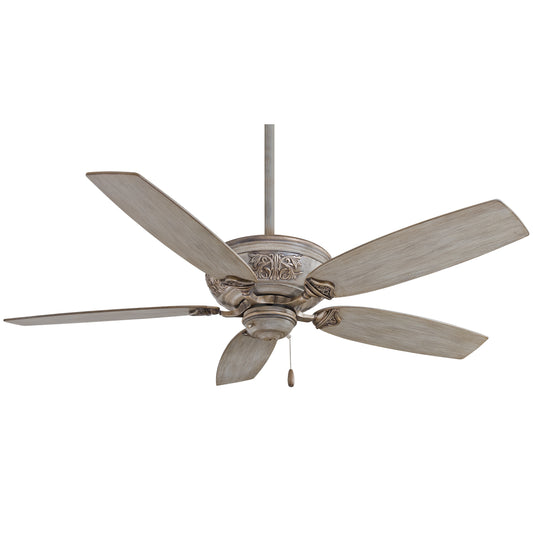
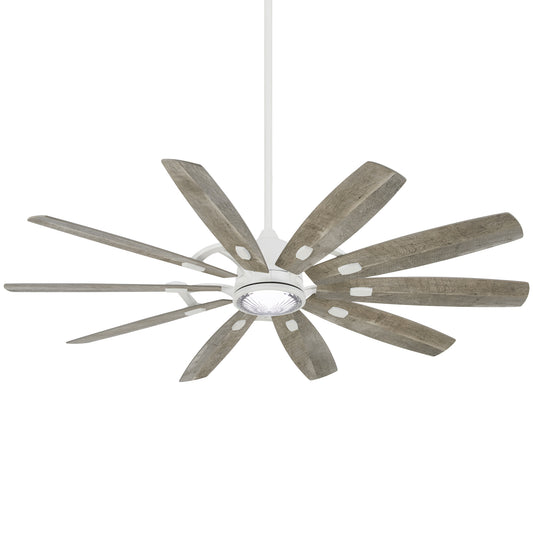
This is where you move beyond the spec sheet and into pure aesthetics. The goal is to find a fan that feels like it was always meant to be there, whether it's a sleek, modern piece for a minimalist setup or a rustic wooden fan that adds warmth to a farmhouse living room.
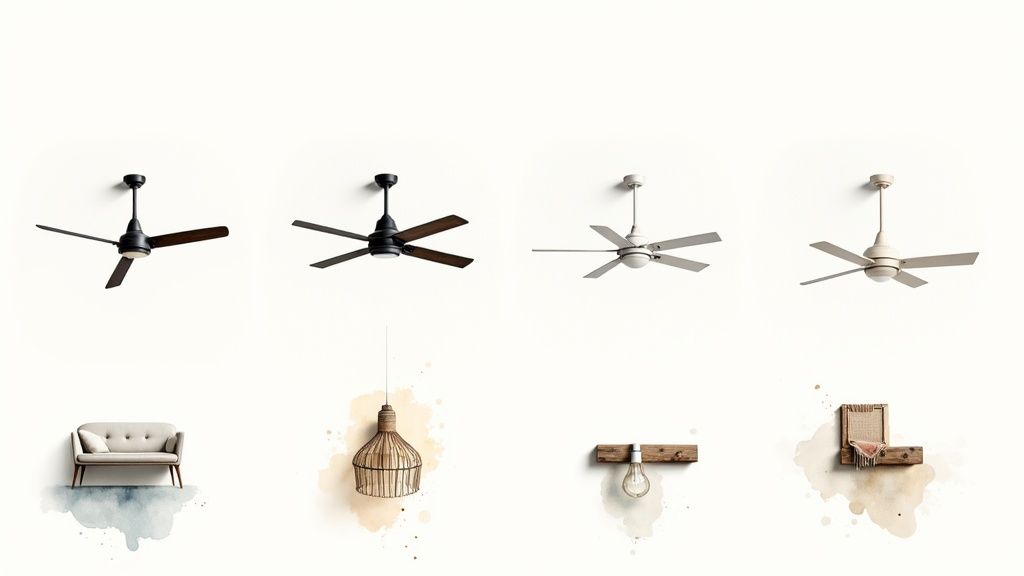
Finding Your Fan's Aesthetic Identity
Your living room already has a personality. Is it modern and clean, cozy and traditional, or maybe a bit bold and industrial? The fan you choose should speak the same design language. Luckily, the days of clunky, uninspired fans are long gone, especially in the premium $300+ market where design is a top priority.
Think about the overall mood you're trying to create:
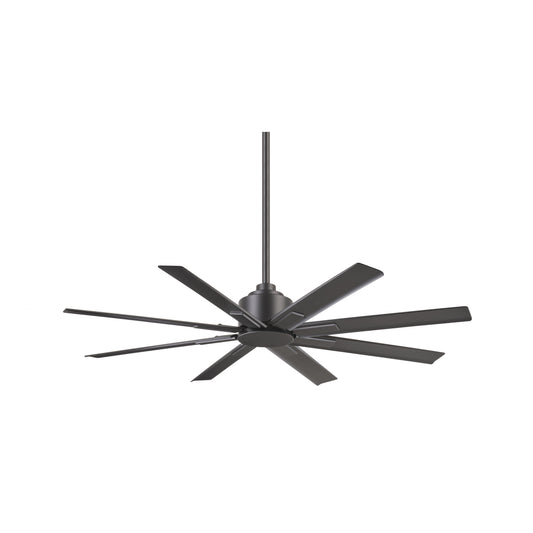
- Modern and Minimalist: Look for fans with three sleek blades, simple geometric shapes, and clean finishes like matte white, brushed nickel, or matte black. Models like the Minka-Aire Roto 52" Ceiling Fan (retailing around $320) deliver this kind of understated elegance, designed to blend in without a fuss.
- Rustic and Farmhouse: Rich wood tones are your best friend here. Fans with blades that look like reclaimed wood or have a warm, natural finish add a cozy, inviting feel. Textures like weathered oak or dark walnut are perfect for this style.
- Industrial and Urban: For a bolder statement, consider fans with metal cages, exposed hardware, and finishes like dark bronze or galvanized steel. These fans make a strong impression and pair beautifully with loft-style spaces or rooms with exposed brick.
- Coastal and Breezy: Light-colored woods, whitewashed finishes, and blades shaped like palm leaves can bring a relaxed, coastal vibe to your living room. They’re perfect for creating a light and airy atmosphere.
For more ideas, you can explore the latest in ceiling fan design trends to see how different styles are being used in modern homes.
The Impact of Blade Materials and Finishes
The materials that make up a fan do more than just ensure it lasts—they define its character. This is another place where high-end fans really set themselves apart.
Choosing the right blade material is like selecting the right fabric for a sofa. A warm walnut wood creates a completely different feeling than a sleek, polished aluminum, even if the fan's shape is identical.
Think about how different materials contribute to the overall look:
| Blade Material | Typical Style | Best For Creating a... |
|---|---|---|
| Solid Wood | Rustic, Traditional, Modern | Warm, natural, and inviting atmosphere. |
| Polished Metal | Industrial, Modern | Sleek, sophisticated, and edgy look. |
| Acrylic/Composite | Contemporary, Minimalist | Understated, almost invisible appearance. |
Integrated Lighting That Sets the Mood
Many living room fans come with built-in lights, and this is another crucial design choice. A poorly chosen light kit can make an otherwise beautiful fan look dated. Premium models, on the other hand, offer sophisticated lighting solutions that enhance both form and function.
When looking at a fan's light, keep an eye out for these features:
- Integrated LED Lights: These are more energy-efficient, last way longer, and are often designed to sit flush with the fan's housing. This creates a clean, seamless look without the bulky "light kit" feel of older fans.
- Dimmability: The ability to dim the light is a must-have for a living room. It lets you go from bright, functional light for reading to a soft, ambient glow for relaxing in the evening.
- Color Temperature (Kelvins): Look for fans that offer adjustable color temperatures. A warm white (2700K-3000K) is perfect for a cozy, relaxing ambiance, while a cooler, brighter light (4000K-5000K) is better for tasks.
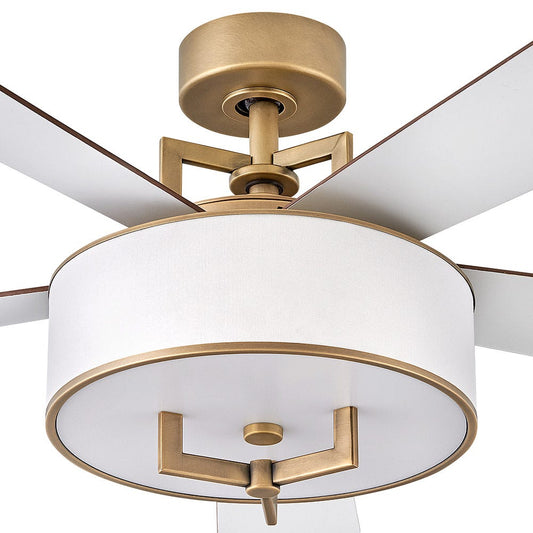
A fan like the Hunter Hepburn Ceiling Fan (around $350), with its attractive globe light and stylish brass accents, is a perfect example of how lighting can be beautifully integrated into a fan's design without compromise. When you carefully consider style, materials, and lighting, you can choose a ceiling fan that is not just an appliance, but a true centerpiece for your living room.
Smart Features: The Future of Home Comfort
Ready to step into the future of home comfort? Upgrading to a "smart fan" means your ceiling fan is no longer just a fixture—it’s a connected, intelligent part of your home. It’s time to say goodbye to fumbling for pull chains or losing that tiny remote in the sofa cushions. We’re talking about a seamless experience that puts you in total control.
At its heart, a smart fan simply uses Wi-Fi to connect to your home network. This one feature opens up a world of possibilities, letting you manage everything from a smartphone app, whether you're on the couch or across town. Imagine turning on your living room fan a few minutes before you get home on a hot day, so you walk into a perfectly cool, welcoming space. That's the kind of effortless living that premium models deliver.
This isn't just a niche trend; it's a major shift. The global smart ceiling fan market is on track to hit USD 993.6 million by 2025, and the residential sector makes up over 80% of that. Homeowners are catching on fast: features like remote operation and climate control are becoming must-haves for modern living. You can discover more insights about this growing market and see just how big this shift is.
Voice Commands and Smart Home Integration
The real magic kicks in when your smart fan joins the rest of your smart home. Most high-end smart fans are built to play nice with popular platforms like Amazon Alexa, Google Assistant, and Samsung SmartThings. Once it's connected, controlling your fan is as easy as saying it out loud.
Instead of hitting pause on your movie, you can just say, "Alexa, set the living room fan to medium." That kind of hands-free convenience feels like something out of a sci-fi movie, but it’s a standard feature in many of the best ceiling fan for living room options today.
This integration lets you do some pretty cool things:
- Voice Control: Adjust the speed, turn the light on or off, and even change the fan’s direction without lifting a finger.
- Grouping Rooms: Tie multiple devices together. A simple command like, "Hey Google, turn on the living room," can activate your fan and smart lights at the same time.
- Routine Integration: Add your fan to your "Good Morning" or "Goodnight" routines. It’ll turn on or off automatically with your other smart devices as you start or end your day.
Advanced Features That Justify the Investment
The tech in premium fans (those over $300) isn't just for show. It offers genuinely useful features that make your life more comfortable day in and day out. These are the thoughtful additions that separate a basic fan from a true home upgrade.
Take the Collins Smart Ceiling Fan, for instance, which is an excellent value at $450. It lets you schedule when it turns on and off. You can program it to circulate air while you're at work or keep a room cool while you sleep. It's not just convenient—it’s energy-efficient, too.
Smart fans transform an everyday appliance into a responsive part of your home's climate control system. It's about proactive comfort, not just reactive adjustments.
Another feature you’ll love is "breeze mode," which intelligently varies the fan's speed to mimic a natural wind. Instead of a constant, monotonous airflow, it creates a more organic and refreshing sensation—perfect for relaxing on a lazy afternoon. These are the kinds of details that elevate the experience and make a high-end smart fan a worthwhile investment for your living room.
Your Burning Questions Answered
Alright, let's tackle those last few questions that always seem to pop up right when you think you've found the perfect fan. This is the stuff that separates a good choice from a great one, making sure you feel completely confident when you hit that "buy" button.
How Many Blades Are Actually Best for a Living Room Fan?
This one surprises a lot of people: the number of blades is really more about the look you're going for than how much air the fan moves. A well-designed three-blade fan with a powerful motor can easily outperform a five-blade model with a weak one. The real magic comes from the motor's strength and the pitch (or angle) of the blades. Always let the CFM rating be your guide for performance.
So, how do you choose? Think about your room's style.
- For a clean, minimalist, or modern vibe, fans with two or three blades look sharp and uncluttered.
- If your living room has a more traditional or transitional feel, four or five blades often feel more classic and substantial.
What’s the Ideal Height to Hang a Ceiling Fan?
For safety and the best possible airflow, your fan’s blades need to hang at least seven feet off the floor. But the sweet spot for actually feeling that nice breeze is usually between eight and nine feet. Getting this right is key to creating that perfect circulation pattern.
- Got standard 8-foot ceilings? You'll need a low-profile or "hugger" fan that mounts flush against the ceiling.
- Ceilings over 9 feet? A downrod is a must. A good rule of thumb is to add one foot of downrod for every foot of ceiling height above nine feet. This brings the fan down to that ideal eight-to-nine-foot level where it can do its best work.
Can a Ceiling Fan Really Lower My Energy Bills?
Yes, absolutely—and the savings can be pretty significant. A ceiling fan doesn't actually lower the room's temperature, but it works with your HVAC system to make you feel more comfortable, which is what really matters. It’s all about the "wind-chill effect."
In the summer, that gentle breeze can make you feel 4-6 degrees cooler. That means you can bump your thermostat up without breaking a sweat, potentially slashing your AC costs. A fan with an energy-efficient DC motor can cut cooling expenses by up to 30%.
And it’s not just a one-season wonder. In the winter, you can reverse the fan's direction to run clockwise on a low speed. This simple switch gently pushes all that warm air that's pooled up at the ceiling back down into the room. This helps your furnace work a lot less hard, saving you up to 15% on heating costs. It's a year-round workhorse that makes a quality fan a genuinely smart investment.
At Fan Connection, we believe the perfect fan is one that pairs powerful, quiet performance with a design that makes you smile every time you walk into the room. Take a look through our collections to find the fan that will transform your living room.
Find your ideal living room fan today at https://www.fanandlights.com.


