

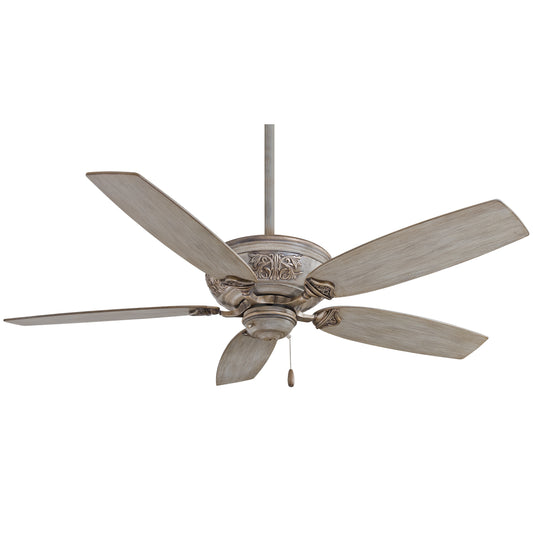


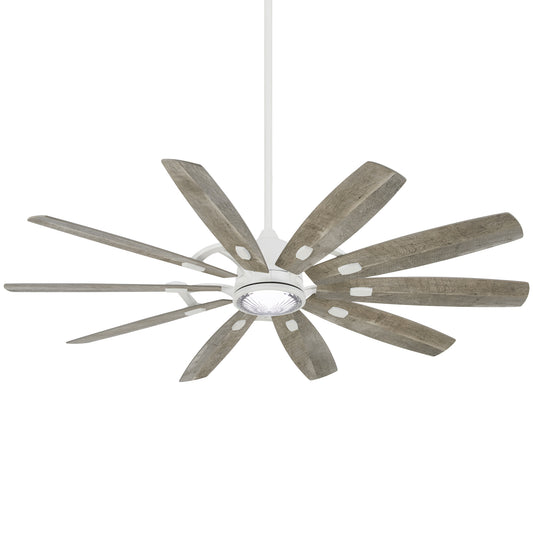








Finding the Best Ceiling Fan Stores Near Me: A Practical Guide
That initial search for "best ceiling fan stores near me" is really just the first step on a fun adventure. More often than not, it just brings up the big-box retailers, leaving you to wonder where the real experts—the fan gurus—are hiding. The best local stores, the ones with a true passion for what they do, offer carefully selected models, genuinely helpful advice, and the all-important chance to see and hear a fan before you commit.
Beyond the Search Bar: How to Find the Right Local Fan Store
Let's be honest, that first page of search results can feel like a maze. You see the usual suspects—huge hardware chains that sell everything from lightbulbs to lawnmowers. They’re convenient, sure, but they often lack the deep product knowledge and high-end inventory that can truly elevate a room into a stylish, breezy oasis.
This guide is your playbook for cutting through that clutter. We're zeroing in on dedicated showrooms that do more than just sell a fan in a box. These are the places that understand the difference a premium, stylish fan can make, especially when you're ready to invest $300 or more into your home's comfort and aesthetic. Think of it as upgrading from fast food to a fantastic sit-down dinner; the experience and the result are worlds apart.
Uncovering Specialized Showrooms
The goal here is to find local partners who can actually guide you to the perfect ceiling fan. Think of them as design consultants, not just cashiers. A good one can explain the real-world benefits of a silent DC motor, walk you through smart home integrations, and help you match a fan's finish to your room's decor with a smile. If you want to get a little savvier about how these smaller gems show up in your search, understanding local SEO can give you some interesting insights.
Here’s what really sets these specialty stores apart from the pack:
- Curated Inventory: They stock high-quality brands known for performance and design, not just the basic, budget models. They've done the pre-shopping for you!
- Expert Staff: Their team can answer tough questions about airflow (CFM), different motor types, and tricky installations on sloped ceilings.
- Display Models: You can actually see, hear, and feel the fans in action—a crucial step you just can't replicate by looking at pictures online.
Creating Your Shortlist
Your mission, should you choose to accept it, is to use online tools not just to find names, but to gather intelligence. Go beyond the star rating and actually read the reviews. Look for comments that mention customer service, product selection, and any post-purchase support.
A store's website is also a goldmine of information. Do they highlight premium brands you recognize? Do they have a blog with helpful buying guides or project photos? These are all good signs that you're dealing with pros who love what they do.
To make things easier, here's a quick checklist to help you vet potential stores before you even leave the house. It's a simple way to compare your options at a glance.
Quick Checklist for Vetting Local Ceiling Fan Stores
| Key Evaluation Area | What to Look For | Why This Is Crucial |
|---|---|---|
| Brands & Selection | Do they carry reputable, high-end brands? Is there a good mix of styles? | A curated selection shows they've already filtered out the low-quality options for you. |
| Online Reviews | Look for mentions of staff knowledge, service, and problem-solving. | High star ratings are good, but detailed reviews tell the real story about the customer experience. |
| Website Quality | Is the site professional? Does it show actual inventory and helpful info? | A good website suggests a professional, customer-focused operation that's proud of what it sells. |
| Services Offered | Do they mention installation services, design help, or special orders? | This indicates they are specialists who offer solutions, not just products in a box. |
Using this framework helps you move from a generic list to a solid shortlist of places actually worth your time.
The best local fan stores don't just sell products; they sell solutions. They understand that a ceiling fan is a long-term investment in your home's comfort, efficiency, and style.
By focusing your search on these details, you transform that simple "near me" query into a targeted hunt. You’ll build a list of stores worth visiting in person, saving you time and ensuring you connect with a retailer who can help you choose a fan that perfectly fits your home.
What to Look For in a Premium Ceiling Fan
Walking into a showroom filled with dozens of spinning fans can feel a little overwhelming. Let's cut through the noise and focus on what really matters in a modern, high-quality ceiling fan—specifically, the models in the $300+ price range where you start to see benefits that truly justify the investment and turn a simple appliance into a statement piece.
The Heart of the Fan: Its Motor
The single biggest difference in a premium fan is hiding inside: its motor. For years, fans relied on AC (alternating current) motors, which tend to be noisy and guzzle electricity. Today, the best models have made the leap to Brushless DC (BLDC) motors, and it's a huge upgrade.
These modern motors are whisper-quiet and can slash energy consumption by up to 70% compared to their old-school AC counterparts. That's good for your wallet and the planet!
This push for efficiency is a major reason the industry is growing so quickly. In fact, the global ceiling fan market is expected to jump from USD 14.6 billion in 2025 to a massive USD 31.6 billion by 2035. It's all being driven by people like you demanding smarter, energy-saving features like BLDC motors that provide powerful cooling without the high cost.
Performance and Airflow, Decoded
Beyond the motor, two specs tell you almost everything you need to know about how well a fan will actually perform: CFM and blade pitch.
- CFM (Cubic Feet per Minute): This is the big one. It measures how much air the fan is actually moving. A higher CFM means more powerful airflow, which is what creates that cooling wind-chill effect you're looking for.
- Blade Pitch: This is simply the angle of the blades. A steeper pitch, usually between 12-15 degrees, lets the blades "scoop" and push more air with every spin, directly contributing to a higher CFM.
These are the technical details that matter, but if you want a deeper dive into matching these specs to your specific room size, check out our complete guide on how to choose a ceiling fan.
Smart Features and Superior Materials
Another thing that sets a premium fan apart is how it fits into a modern home. Smart fans connect to your Wi-Fi, letting you control everything from a smartphone app or with your voice through Alexa or Google Home. This isn't just a party trick—it's incredibly practical. Think about adjusting the fan speed without getting out of bed or setting schedules to save energy automatically.
A premium fan isn't just an appliance; it's a piece of functional furniture. The materials should reflect that, offering both durability and style that cheap, stamped-metal fans simply can't match.
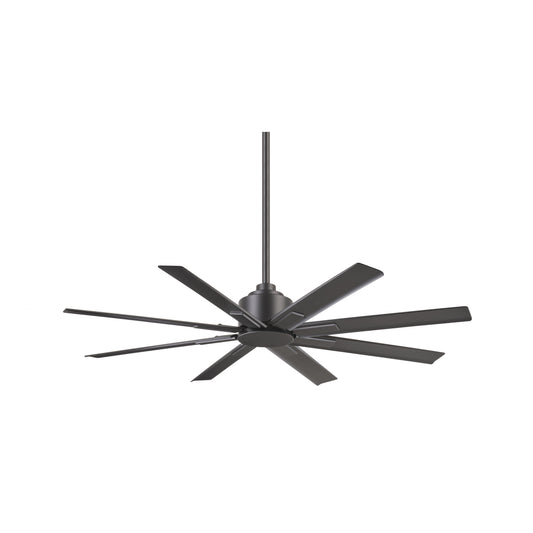
You can also feel the quality in the materials. Look for fans with blades made from solid wood or durable, all-weather composites. The motor housing should be made from heavy, die-cast metal—this is what prevents the wobbling and rattling that plague cheaper models. A gorgeous, high-end fan like the Minka-Aire F844-DK Light Wave is a perfect example, blending sleek design with a powerful DC motor for just over $300.
And while you're thinking about materials, it's a good idea to consult an ultimate interior design styles guide to make sure the fan's look complements your home's aesthetic. These better materials don't just look good; they're the foundation for a stable, silent performance that will last for years.
Vetting Your Local Store Options Before You Visit
You’ve got a list of potential stores from your search, but driving all over town is a huge waste of time. The real work happens now—whittling that long list down to a handful of promising contenders you can check out from your couch. This is the step that separates a frustrating Saturday of store-hopping from a quick, successful purchase.
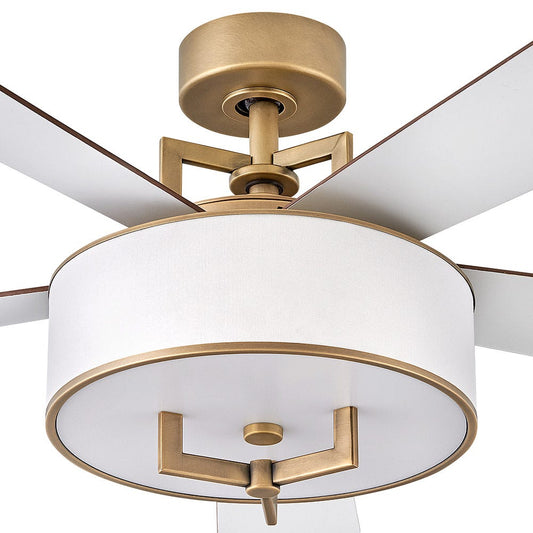
Your first move should be a quick digital recon mission on the store’s website. Seriously, a five-minute scan can tell you almost everything you need to know. Are they proudly showcasing premium, designer-friendly brands like Minka-Aire, Fanimation, or Hunter? Or is it a sea of generic, big-box models you could find anywhere? A store that invests in quality inventory, like the stunning Fanimation Odyn Custom (which starts around $800), will make sure you see it front and center.
Decoding Customer Reviews
Next up, it's time to play detective with their Google and Yelp reviews. Don't just glance at the star rating. Ignore the generic five-star "Great service!" comments and hunt for the nitty-gritty details.
Look for reviews that specifically mention:
- Staff Expertise: Do customers talk about employees who actually solved a problem? Think finding the perfect fan for a tricky sloped ceiling or a specific design style. That's a huge plus.
- Post-Sale Support: Are there stories about the store helping with a warranty claim or a confusing installation question after the sale was made? This tells you they stand by their products.
- Installation Services: Positive shout-outs for a store’s recommended electricians are a massive green light. It means they’ve built a network of trusted pros.
These specifics paint a much clearer picture of the experience you’re likely to have.
This diagram breaks down the core features that define a premium fan, which is exactly what you should be looking for in a specialty store's inventory.
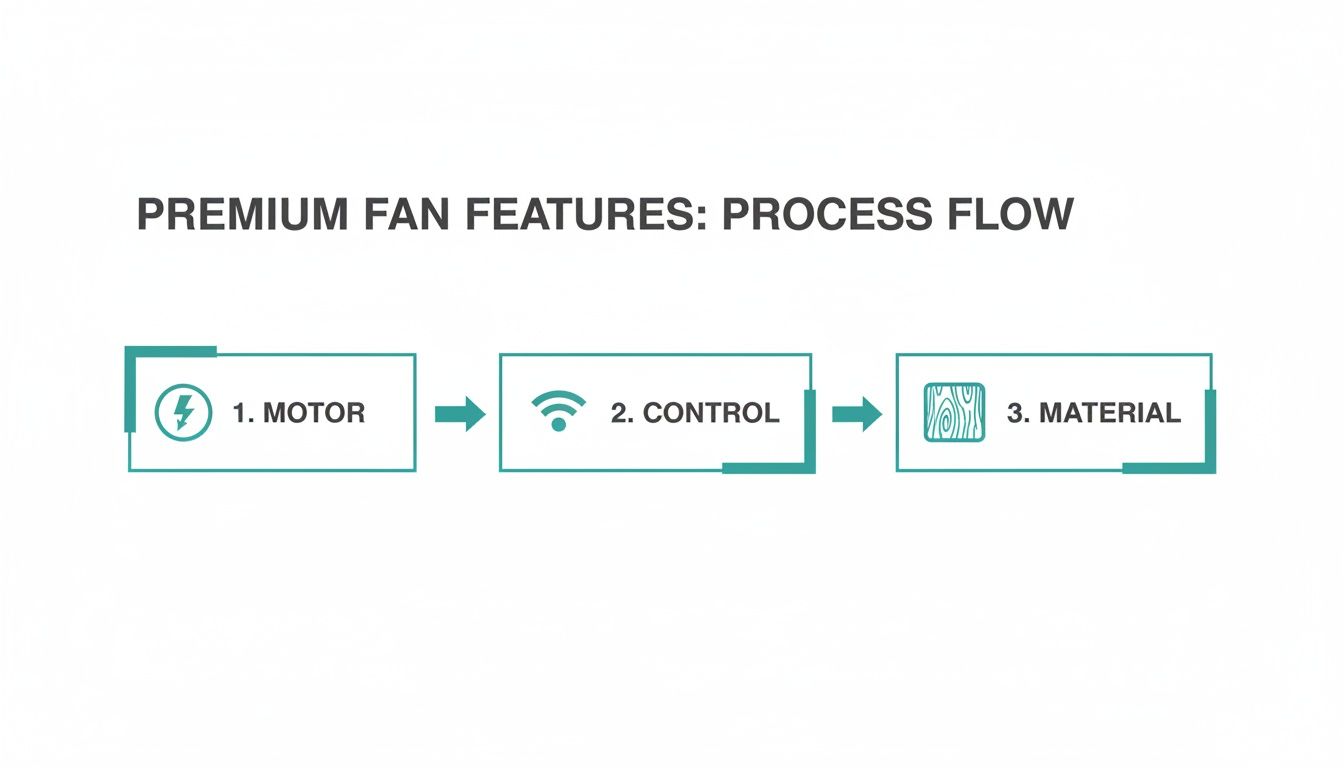
As you can see, a top-tier fan isn't just about looks. It’s a combination of a powerful motor, smart controls, and high-quality materials that justify the investment.
Making the Call
Finally, before you grab your car keys, just pick up the phone. A quick call can save you a trip and give you an immediate feel for their customer service. You’re not trying to get a full consultation over the phone, just gathering some key intel.
Here are a few smart questions to ask that go beyond the basics:
- "I'm interested in a smart fan with a DC motor. Do you have any display models I can actually see running in your showroom?"
- "Could you tell me about the warranty details on a premium brand like Fanimation?"
- "Do you partner with any certified electricians for installation, and what does that process typically look like?"
Taking this methodical approach ensures that every store you decide to visit is a strong candidate, already vetted for quality products and genuine expertise. For a deeper dive into all the technical specs, our comprehensive ceiling fan buying guide covers everything from sizing to style.
Making the Most of Your Showroom Visit
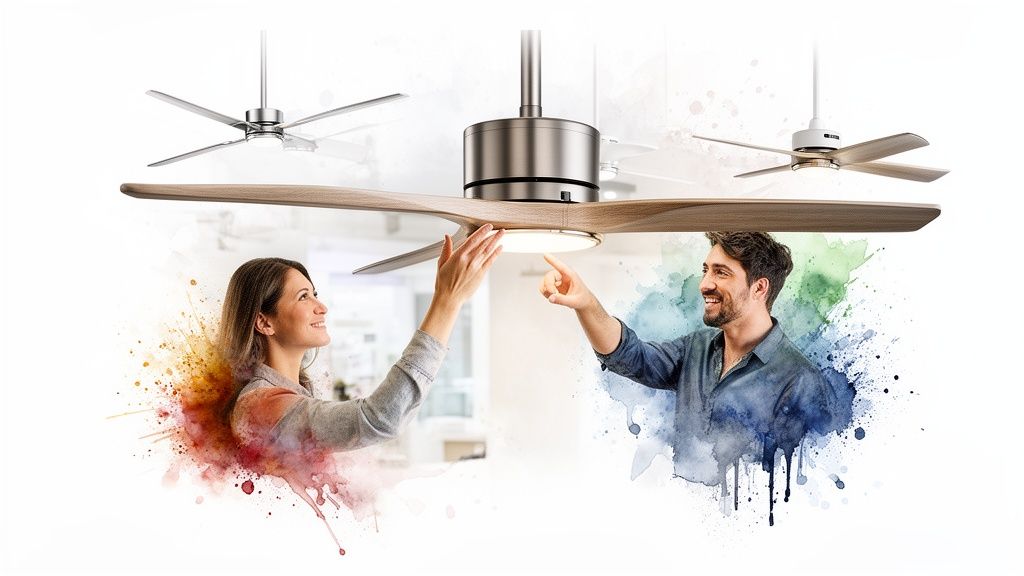
This is it—the moment where all that online research pays off. Walking into one of the "best ceiling fan stores near me" you've shortlisted is your chance to see, hear, and actually touch your potential investment.
This physical interaction is the single biggest advantage you have over just clicking "buy now" on a website, so let's make it count.
Your first mission is a tactile one. Don’t be shy; get right up to the display models. Gently feel the fan blades. Do they feel like solid, quality wood, or are they a flimsy composite? Look closely at the finish on the motor housing. Is it a deep, even coat of paint or something that looks like it might chip after a year?
Next, give the hardware a good look. Pay close attention to the sturdiness of the blade brackets (you might hear them called "blade irons"). These little pieces are absolutely critical for a wobble-free performance. A premium fan in the $300 to $500 range should feel substantial and well-engineered, not lightweight and cheap.
Listen and Test the Tech
Now, it's time to use your ears. Most decent showrooms will have display models running. Just stand underneath one and listen. Can you hear a faint hum or buzz from the motor? A high-quality DC motor should be virtually silent. This simple test can save you from years of annoying background noise in your bedroom.
If the fan has a remote or smart features, ask a staff member if you can give it a spin. Cycle through the different speeds. Is the response instant, or is there a noticeable lag? Does the light dim smoothly? Testing the user interface is just as important as checking the physical build.
Visiting a showroom transforms an abstract purchase into a tangible decision. It allows you to confirm that the fan's real-world quality, noise level, and scale live up to the online description and your expectations for a premium product.
Questions for the Experts
Once you have a feel for the products, it's time to talk to the sales staff. Their expertise is a huge part of why you chose a specialty store in the first place.
Here are a few essential questions to have ready:
- Motor Warranty: "What is the specific warranty on the motor for this model, and what exactly does it cover?" (Lifetime motor warranties are a common sign of quality).
- Installation Details: "Do you offer installation, and who does the work—your own employees or a third-party contractor?"
- Sloped Ceilings: "My ceiling has a pretty steep slope. What are my options for downrods or mounting kits with this fan?"
- Total Cost: "Could you give me an itemized breakdown of the total cost? I want to see the price for the fan, any necessary accessories like a longer downrod, and the installation fee."
By approaching your visit with this checklist, you move beyond just looking at fans. You’re actively gathering the crucial data needed to make a confident, informed decision, ensuring there are absolutely no surprises when it comes time to buy and install.
Global Fan Trends You'll See in Local Showrooms
Ever walked into a local fan store and wondered why almost every new model seems to be "smart" or has a sleek, minimalist design? That's no accident.
What you're seeing in the aisles of even the smallest local shops is a direct reflection of powerful global manufacturing and design trends. The inventory isn't just a random collection—it’s a carefully curated snapshot of what’s happening on a worldwide scale.
Understanding what drives these trends makes you a much smarter shopper. It helps you see beyond the price tag and appreciate the technology you're investing in. When you can connect a fan's features to larger industry movements, you can ask better questions and pick a model that's genuinely built for the future.
The Asia-Pacific Manufacturing Powerhouse
A huge driver of all this innovation comes from the Asia-Pacific region. This area has become the absolute epicenter of ceiling fan production, influencing everything from cost to the features you see in your local showroom.
The sheer scale of manufacturing there has made high-end technologies, like ultra-efficient DC motors and smart home integrations, more accessible and affordable than ever before.
Just how massive is this influence? The Asia-Pacific region commands over 52% of the global ceiling fan market. The market is projected to grow from USD 12,293 million in 2024 to over USD 17,263 million by 2030, a surge driven largely by innovation in countries like China and India. If you're curious, you can dive deeper into these numbers with this in-depth ceiling fan market analysis.
Efficiency Is the New Standard
Another major trend you can't miss is the industry-wide push for energy efficiency. Governments around the world are setting stricter standards and offering incentives, which has basically forced manufacturers to get creative.
The result? The widespread adoption of superior tech like Brushless DC (BLDC) motors, which are now pretty much standard in any premium model.
These motors are the reason a modern fan priced over $300 can be whisper-quiet while using up to 70% less energy than older models. This isn't just a slick selling point; it's a direct response to global demand for more sustainable, cost-effective home products.
When you see a sleek fan with smart capabilities, you're looking at the result of global competition and a worldwide focus on energy efficiency. It’s why today’s premium fans offer more value than ever before.
Ultimately, knowing this backstory gives you context. That stylish, high-tech fan you’re admiring didn’t just appear out of nowhere. It's the product of international manufacturing shifts and a collective drive for smarter, more efficient living.
As you explore the latest models, be sure to check out our guide on the latest ceiling fan design trends to see how these global movements are shaping home decor.
A Few Common Questions We Get All the Time
As you narrow down your search for the perfect local fan store, a few questions always seem to pop up. It's totally normal to want to be sure about your choice before you commit, especially when you're investing in your home's comfort. Let’s clear up some of the most common things people ask when they're about to buy.
Is It Really Better to Buy From a Local Store or Just Order Online?
This is a big one. For premium fans, especially those in the $300+ range, heading to a local showroom gives you an advantage you just can’t get from a website.
Photos and videos online can only show you so much. In person, you can really see the quality of the finish, get a true sense of the fan's scale, and feel how solid the construction is. It’s the difference between guessing and knowing.
But the real game-changer? You can hear it run. A quick flip of a switch in the showroom tells you everything you need to know about motor hum. That simple test is crucial, especially if the fan is going in a bedroom or a quiet office. Plus, you get to talk to an actual expert who can point you toward the right model for your specific room and even connect you with a trusted local installer.
What’s the Real Difference Between a $100 Fan and a $400 Fan?
It’s easy to look at the price tag and wonder what you’re really paying for. The jump from a basic $100 fan to a $400 model isn't just about looks—it's a massive leap in engineering, materials, and long-term performance.
Think of it this way:
- The Motor Matters: You're upgrading to a whisper-quiet, incredibly efficient Brushless DC (BLDC) motor. These are engineered to use up to 70% less electricity than the clunky, noisy AC motors you find in cheaper fans.
- Built to Last: Instead of flimsy materials, you get things like solid wood blades, wobble-free die-cast metal parts, and durable finishes that won't chip or fade after a year.
- Smarter Features: This is where modern tech comes in. Premium fans often include app controls, voice commands through Alexa or Google Home, and multi-speed remotes with all the bells and whistles.
This shift toward smarter tech is a huge trend. The smart ceiling fan market is on track to hit USD 993.6 million by 2025, largely because homeowners want that seamless IoT integration. With smart features already in about 25% of new U.S. homes, a smart fan is an investment that’s ready for the future. You can discover more insights about the smart fan market and see just how fast it's growing.
How Do I Figure Out the Right Fan Size for My Room?
Getting the size right is probably the most important decision you'll make. A fan that's too small won't move enough air to make a difference, and one that's too big will feel like a wind tunnel. Luckily, it’s a pretty straightforward calculation based on your room's square footage.
The Golden Rule: Match the fan's blade span to your room's size. Getting this right is the key to efficient, comfortable airflow without wasting energy or overwhelming the space.
Here’s a simple cheat sheet we use all the time:
- Small Rooms (Up to 75 sq. ft.): Perfect for a home office, laundry room, or walk-in closet. Stick with a blade span under 36 inches.
- Medium Rooms (76-144 sq. ft.): This is your standard bedroom or kitchen. A 36- to 42-inch fan is usually the sweet spot.
- Large Rooms (145-225 sq. ft.): For most living rooms or the primary bedroom, look for a 44- to 52-inch model.
- Great Rooms (Over 225 sq. ft.): If you have a big, open-concept space, you’ll definitely need a fan with a blade span of 52 inches or more to get the job done.
And if you’re ever on the fence, that's what the experts at a specialty fan store are for. They can help you confirm the perfect size for your exact layout.
At Fan Connection, we make it easy to find a fan that perfectly balances style and performance. Explore our curated collections of premium fans and discover the ideal centerpiece for your room.
Browse Our Designer Ceiling Fan Collections at Fan Connection


