











The Best DC Motor Ceiling Fans for Your Home
If you’re hunting for the best dc motor ceiling fans, you’ve probably noticed they promise a whole new world of whisper-quiet operation, serious energy savings, and smart controls that feel like they’re from the future. The top-tier models often start around $300, and for good reason—they’re a quantum leap forward in performance and style, delivering a hurricane of airflow while sipping up to 70% less energy than those old, clunky fans.
The Future of Home Comfort Is Already Here
Let's be honest: the ceiling fans of yesteryear were often noisy, wobbly contraptions that just seemed to shove hot air around. Today's DC motor fans are in a completely different league. They’re the rockstars of home cooling and design, and this guide is your backstage pass to understanding how these advanced, energy-saving fixtures can completely transform your living space.
We'll take a fun journey from clunky AC motors to sleek, modern DC technology, uncovering the magic that makes them so incredibly quiet and efficient.
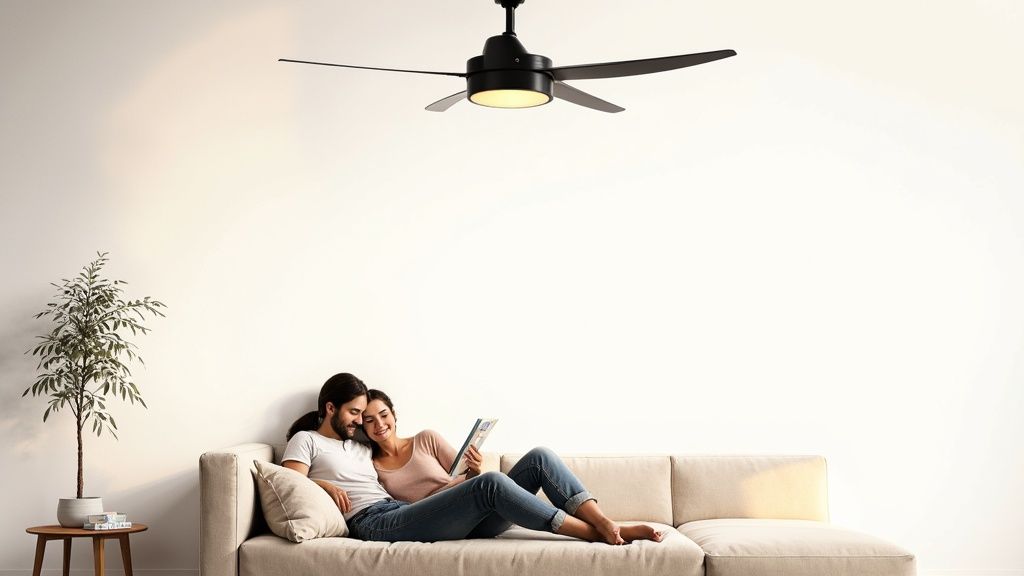
Think of this as your playbook for making a brilliant investment in your home—one that slashes your energy bills while seriously upgrading your daily comfort. We’ll focus on premium models that deliver where it counts, helping you choose the perfect DC motor ceiling fan with the confidence of a pro.
A New Standard in Cooling
The allure of a DC motor fan goes way beyond just moving air. It’s a fundamental shift in how we approach home climate control, blending high-octane performance with smart, savvy efficiency. This new standard is built on a few key pillars that set these fans leagues apart.
-
Unmatched Energy Efficiency: By using magnets and a direct electrical current, these fans sip electricity like a fine wine. An Energy Star-rated DC fan might use just 5 to 50 watts, while a standard AC fan can guzzle over 100 watts.
-
Whisper-Quiet Operation: The smart motor design vaporizes the annoying hum and buzz you hear from older fans. This makes them the undisputed champion for bedrooms, nurseries, or any space where peace and quiet are golden.
-
Precision Control: Most DC motor fans come with a slick remote that gives you six or more speed settings, plus a reverse function for all-season use. That's a level of control that lets you dial in your perfect comfort zone.
More Than Just a Fan
Choosing a premium DC motor fan is about more than just cooling a room; it’s about giving your home's infrastructure a major upgrade. These days, fans are central to interior design, with styles that can complement any decor. To see how form and function are coming together in beautiful harmony, you can explore the latest ceiling fan design trends.
A DC motor fan is an investment in both comfort and efficiency. While the initial cost may be higher, the long-term savings on energy bills, combined with superior performance and a longer lifespan, provide a clear return on investment.
Beyond your own comfort, a DC fan aligns with bigger goals for home energy efficiency. It works hand-in-hand with other smart tips for saving electricity at home to reduce your overall footprint. This guide will help you navigate all the features and benefits, ensuring you find the perfect model to match your needs.
Understanding the Magic Behind DC Motors
So, what exactly sets the best DC motor ceiling fans apart from the ones we all grew up with? The easiest way to think about it is like comparing a sleek, modern electric car to an old gas guzzler. Both will get you from A to B, but one does it with incredible efficiency, near-total silence, and a ton of precise control.
That’s really the core difference between today’s DC motors and old-school AC motors.
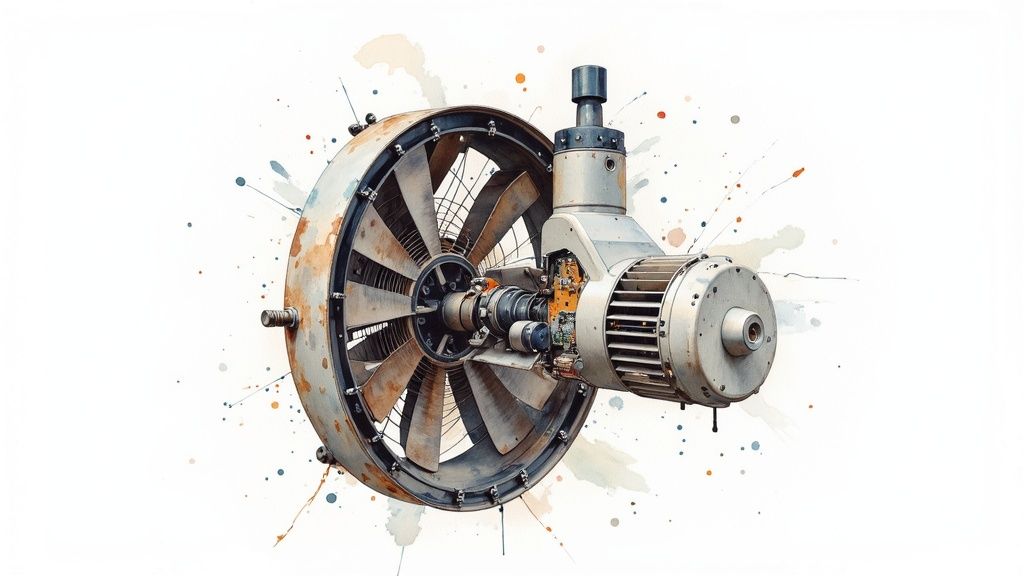
Instead of just using the raw alternating current from your wall outlet, a DC motor is a bit of a genius. It has an internal transformer that converts your home’s AC power into DC (Direct Current). This steady current then works with a system of magnets to create a smooth, consistent turning force that wastes almost no energy. It's engineering so smart, it's practically showing off.
And that precision is something you can immediately feel and hear—or, more accurately, not hear.
The Power of Precision Engineering
The real beauty of a DC motor is just how ridiculously efficient it is. Because it uses magnets and a direct, stable current, almost no energy gets wasted as heat or noise. This is a huge departure from traditional AC motors, which create that familiar electrical hum as the current constantly flips back and forth.
This smarter design leads to some game-changing benefits:
- Radical Energy Savings: We're not talking small potatoes here. DC motors use up to 70% less electricity than their AC cousins. A typical Energy Star DC fan might sip just 5 to 50 watts, while an older AC model can easily chug over 100 watts on its highest setting.
- Virtually Silent Operation: Without that electrical hum and with the smooth magnetic rotation, DC fans are unbelievably quiet. This makes them the obvious choice for bedrooms, home offices, or any room where you want a little peace and quiet.
- Enhanced Control and More Speeds: DC motors react almost instantly. This lets manufacturers build in more speed options—often six or more—compared to the classic three-speed AC fan. You also get a handy reverse function right on the remote, making it a breeze to switch from summer to winter mode.
The bottom line is that a DC motor does more with less. It moves more air, gives you more speeds, and runs quieter, all while using a tiny fraction of the electricity.
Unpacking the Energy Efficiency
The energy savings aren't just a small bonus; they're one of the biggest reasons people upgrade to the best DC motor ceiling fans. While you might pay a bit more upfront for a premium model—often $300 or more—the savings on your electric bill really add up over time.
Let’s put that into a real-world context. A standard AC fan on high can chew through about 100 watts. A comparable DC fan might only use 30 watts to move the same amount of air. When you think about running that fan for thousands of hours, the difference in your monthly bill becomes pretty clear. It's a big part of what makes them a smart, eco-friendly choice. To learn more, check out our guide on the energy efficiency and cost savings of eco-friendly ceiling fans.
Sleeker Design Possibilities
The benefits aren't just about performance. The technology inside a DC motor actually changes how the fan looks. Since DC motors are smaller and lighter than bulky AC motors, designers have a lot more creative freedom.
This compact motor allows for:
- Minimalist Aesthetics: Fan housings can be much slimmer and more streamlined, a perfect fit for modern and contemporary homes.
- Lighter Overall Weight: A lighter fan can be a little easier to install and allows for designs that aren't dragged down by a heavy, clunky motor.
- Integrated and Stylish Looks: The smaller motor can be seamlessly integrated into the fan's design, making it look like a piece of art rather than just a functional appliance.
This mix of top-tier performance, quiet operation, and design flexibility is why DC motor fans have become the new standard for homeowners who want the best of both worlds: comfort and style. It's an upgrade that truly improves your home's atmosphere in every way.
Putting AC and DC Fans Head to Head
To really get why an upgrade to one of the best DC motor ceiling fans is such a big deal, it helps to put the old and new technologies side-by-side. Think of it like comparing a modern, high-efficiency hybrid car to a classic muscle car—both get you down the road, but one is clearly built for today's world of performance and savings.
When you look at a traditional AC (Alternating Current) fan next to a modern DC (Direct Current) fan, the differences are huge. It goes way beyond just the motor, impacting everything from your energy bill and the noise in your bedroom to the sheer number of speeds you get to choose from.
The Core Differences That Matter
The biggest distinction is how they use electricity. An AC motor plugs right into your home's power and uses that raw, alternating current to spin the blades. It’s a tried-and-true design, but it's not very efficient and almost always produces that familiar electrical hum.
A DC motor, on the other hand, is a lot smarter. It takes that same AC power from your wall but uses an internal converter to turn it into a stable, direct current. This allows the motor to use magnets and sophisticated electronics for incredibly precise, smooth rotation, wasting almost no energy as heat or noise.
This efficiency isn't just a marketing gimmick; it's a fundamental shift in design that leads to real, tangible benefits in your home. From whisper-quiet operation to serious long-term savings, the DC motor proves its worth day in and day out.
This leap in technology is why the market is growing so fast. The brushless DC (BLDC) fan market, which includes these advanced ceiling fans, was valued at USD 1.58 billion in 2024 and is expected to rocket to USD 3.03 billion by 2031. This explosive growth is driven by rising energy costs and homeowners demanding appliances that are both quiet and built to last.
AC vs DC: A Clear Comparison
To make the choice even clearer, let's break down the key differences in a simple table. This really helps visualize what you’re getting when you invest in a premium fan that costs $300 or more.
AC vs DC Ceiling Fan Feature Comparison
Here’s a direct showdown between the two motor types. As you’ll see, the advantages of DC motors quickly stack up, justifying the higher initial cost with superior performance across the board.
| Feature | AC Motor Fans | DC Motor Fans |
|---|---|---|
| Energy Usage | Typically uses 50-100 watts on high speed. | Highly efficient, using only 5-50 watts, saving up to 70% more energy. |
| Noise Level | Produces a noticeable electrical hum, especially on higher settings. | Virtually silent operation, making them ideal for quiet spaces. |
| Speed Control | Limited to 3-4 speed settings, controlled by a pull chain or wall switch. | Offers 6 or more precise speed settings, plus a reverse function, all on a remote. |
| Motor Size & Design | Bulky and heavy, which can limit aesthetic options and make installation harder. | Compact and lightweight, allowing for sleek, modern, and minimalist fan designs. |
| Lifespan | Good lifespan, but the motor can run hot, leading to wear over time. | The cooler-running motor often contributes to a significantly longer operational life. |
| Initial Cost | Generally more affordable upfront, with many models under $200. | Higher initial investment, with premium models typically starting at $300. |
The table makes it pretty obvious—while AC fans are cheaper upfront, DC fans offer a far more refined experience.
For a deeper dive into the technical nitty-gritty, you can check out this detailed comparison of DC fans vs AC fans.
Why the Investment Pays Off
Looking at that table, it's easy to see why DC fans come with a higher price tag. You're not just paying for a fan; you're investing in superior technology that offers a much better day-to-day experience. The quiet operation alone is a massive selling point for bedrooms and studies. If you're trying to create the perfect sleep environment, our guide on quiet ceiling fans for bedrooms has some great tips.
While the initial cost is higher, the long-term energy savings help make up for that investment over the fan's life. More importantly, the enhanced comfort, greater control, and quiet performance deliver daily value that older AC models just can't touch. It’s a classic case of getting what you pay for, making a DC fan the clear winner for any modern home.
How to Select Your Ideal DC Motor Fan
So, you’re ready to find the perfect fan. Picking one of the best DC motor ceiling fans isn’t just about the looks—it's about making a smart investment in your home's comfort. With top-tier models often starting around $300, you want to be sure you're getting the right mix of performance, features, and style for your space.
Let’s walk through the key things to consider, step by step. We'll break down everything from airflow power to smart controls, so you can choose a fan that you'll love for years to come.
Matching Fan Power to Your Room Size
The single most important number to know when buying a fan is its CFM, or Cubic Feet per Minute. This isn't just technical jargon; it's a direct measure of how much air the fan actually moves. A higher CFM means a more powerful breeze.
But bigger isn't always better. You need the right amount of airflow for your room. A fan that’s way too powerful for a small office will feel like a wind tunnel, while an underpowered fan in a big living room will hardly be noticed.
Here’s a simple cheat sheet to get it right:
- Small Rooms (up to 100 sq. ft.): Look for a fan with a CFM rating between 1,000 and 3,000. This is perfect for home offices, laundry rooms, or even a walk-in closet.
- Medium Rooms (100-250 sq. ft.): Aim for a CFM between 3,000 and 5,000. This is the sweet spot for most standard bedrooms, kitchens, and dining areas.
- Large Rooms (250-400 sq. ft.): You’ll need a fan with some serious power—think 5,000 CFM or higher. This ensures you get proper air circulation in big living rooms, master suites, and open-plan spaces.
Nailing the CFM is the first step to a great fan experience. It's how you guarantee you'll feel that refreshing breeze you paid for.
Decoding Blade Design and Performance
While CFM is the headliner, the fan's blades are the crucial supporting act. The number of blades, their angle (pitch), and even their shape all tweak how a fan performs and sounds.
In the old days, more blades meant more drag and less airflow. But DC motor technology has completely changed the rules. The powerful, hyper-efficient motors in modern fans can easily handle five, six, or even more blades without breaking a sweat. This gives designers the freedom to create some truly stunning looks without sacrificing performance.
So, what should you really focus on?
- Blade Pitch: The angle of the blades is key. A steeper pitch—usually around 12-15 degrees—scoops up and moves more air. This requires a stronger motor, which is exactly where premium DC fans shine.
- Blade Count and Style: A classic three-blade fan is often the most efficient at moving air. However, fans with five or more blades can deliver a smoother, quieter, and more consistent breeze. At this point, the choice often comes down to what looks best in your room.
The bottom line is this: with a quality DC motor fan, you don't have to choose between style and substance. That advanced motor ensures that even the most architecturally interesting designs deliver the airflow you need.
This infographic breaks down the core advantages of a DC fan over an old-school AC fan.

It’s easy to see why DC fans have become the go-to for anyone building a quiet, energy-conscious home.
Smart Features and Lighting Integration
Today’s DC motor fans are more than just air movers; they’re connected home devices. As you browse different models, think about how you want to actually use the fan day-to-day.
- Remote Controls: A good remote is a must. Most DC fans come standard with a multi-speed remote that includes a reverse function, letting you fine-tune your comfort from the couch or bed.
- Smart Home Integration: Many of the best models now come with Wi-Fi, connecting to a smartphone app or voice assistants like Amazon Alexa, Google Home, or Apple HomeKit.
- Integrated LED Lighting: A great fan often includes a great light. Look for models with integrated LED kits that offer adjustable brightness (dimming) and even color temperature controls, so you can shift from a warm, cozy glow to a cool, bright daylight.
This demand for smarter, more efficient fans is driving huge growth in the market. The North American ceiling fan industry, valued at USD 2.98 billion in 2024, is expected to climb to USD 3.77 billion by 2033. That growth is coming from homeowners like you who are renovating and looking for cooling solutions that are both cost-effective and eco-friendly. You can read more about these market trends and projections on IMARC Group.
By keeping room size, blade design, and smart features in mind, you can confidently pick the perfect DC motor fan to upgrade your home’s comfort and style.
Our Top Picks for Premium DC Motor Ceiling Fans
Alright, let's get to the fun part—exploring the fans that really stand out from the crowd. We’ve hand-selected a few exceptional DC motor models that deliver on the promise of premium performance, style, and technology. Each of these fans is priced at $300 or more, which reflects a real investment in top-tier quality, whisper-quiet operation, and a design that's built to last.
Think of these fans less as appliances and more as personalities, each designed to fit a specific lifestyle. Let's meet the contenders and find the perfect match for your home.

The Smart Home Powerhouse
For the tech-savvy homeowner who lives for automation and seamless control, this fan is an absolute dream. It’s been engineered from the ground up to slide right into your connected home ecosystem, making it a whole lot more than just a way to move air.
This fan is all about convenience. With built-in Wi-Fi, it connects straight to a smartphone app, giving you total control from anywhere. Forget to turn the fan off before you left? Just tap your screen. Want to schedule it to turn on an hour before you get home? Easy.
- Standout Features: Voice control compatibility with Amazon Alexa, Google Home, and Apple HomeKit comes standard. You can adjust the speed, tweak the light's color temperature, or even reverse the blade direction with a simple voice command.
- Ideal Scenario: Perfect for living rooms, kitchens, and master bedrooms where convenience is king. If you already use smart speakers and automated routines, this fan will feel like a natural extension of your home's brain.
- Price Point: Expect this level of integration to start at around $450.
The investment here is in a fan that truly adapts to your life. It’s a set-it-and-forget-it solution that keeps you comfortable without you ever having to lift a finger.
The Architectural Statement
Some ceiling fans are made to blend in. This one is made to be noticed. The Architectural Statement is for the design-conscious individual who sees a ceiling fan as a central piece of décor—a kind of functional sculpture that elevates the entire room.
Crafted from high-end materials like solid carved wood, brushed metals, and sleek polymers, this fan is where form truly meets function. Its minimalist motor housing—a direct benefit of that compact DC motor—lets the beautifully sculpted blades take center stage.
This fan proves you don't have to sacrifice performance for stunning aesthetics. Its powerful yet silent motor delivers impressive airflow, ensuring the room feels just as good as it looks.
And that design isn't just for show. The aerodynamic shape of the blades is optimized to move air efficiently, generating a powerful breeze without creating a lot of noise. It’s a perfect example of how the best DC motor ceiling fans strike a balance between artistry and engineering.
- Standout Features: Unique blade designs, premium finishes (like matte black, brushed nickel, or aged brass), and an integrated, dimmable LED light that feels intentional, not like an afterthought.
- Ideal Scenario: Ideal for great rooms with high ceilings, minimalist lofts, or any space where design is a top priority. It's the perfect finishing touch for a carefully curated interior.
- Price Point: Premium design comes at a premium, with these models often ranging from $500 to $900 or more.
The Bedroom's Silent Partner
When it comes to the bedroom, one feature rules them all: silence. The Bedroom's Silent Partner is engineered for one primary purpose—to move air without making a sound. It combines a precision-balanced DC motor with acoustically optimized blades to achieve a level of quiet you have to hear to believe.
This obsessive focus on silent operation makes it the ultimate fan for light sleepers, nurseries, and even home offices where concentration is key. Even on its higher settings, the only sound you'll hear is the gentle whisper of moving air, not the distracting hum of a motor.
The fan's remote gives you multiple speed settings, so you can dial in the perfect, gentle breeze for a restful night's sleep. That level of precise control is a hallmark of DC motor technology.
This growing preference for high-end, feature-rich fans is part of a global trend. The worldwide ceiling fan market is projected to expand from USD 13.58 billion in 2025 to USD 19.61 billion by 2033, a testament to more people choosing premium models with energy-saving DC motors and smart features. You can learn more about what's driving this growth in the ceiling fan market report from Straits Research.
- Standout Features: A virtually inaudible DC motor, multiple gentle speed settings, and often a "sleep" or "breeze" mode that varies the airflow to simulate a natural, calming wind.
- Ideal Scenario: The absolute best choice for bedrooms, nurseries, or any space where peace and quiet are non-negotiable.
- Price Point: Expect these ultra-quiet models to start around $350.
By choosing one of these premium models, you're not just buying a fan; you're investing in an experience tailored to your lifestyle.
Protecting Your Investment with Proper Care
A premium ceiling fan is a real upgrade for your home, and with a little bit of care, you can make sure it stays that way for years. While the best DC motor fans are built to last, getting the installation right and doing some simple maintenance is the key to protecting an investment that often starts at $300 or more.
While some of us are comfortable with a weekend DIY project, professional installation is usually the best call for safety and getting the most out of your fan. This is especially true if you’ve picked a model with smart features that need to talk to your home’s Wi-Fi. A licensed electrician will make sure the fan is mounted securely and wired correctly, so you can be confident it’s running exactly as it was designed to from day one.
Simple Steps for Long-Term Performance
Once your fan is up and running, keeping it in great shape is surprisingly simple. A few quick checks a couple of times a year will keep it spinning silently and moving air just like it should. This isn't about heavy-duty work; it's just about making sure you continue to get that quiet, powerful airflow you paid for.
Regular upkeep is the easiest way to prevent common issues and keep the motor happy. Here’s a quick checklist to follow:
-
Gentle Blade Cleaning: Dust has a way of building up on the blades, which can cause them to get unbalanced and reduce airflow. Just grab a soft cloth or a duster with a long handle and give them a quick wipe-down every few months. Try to avoid any harsh chemical cleaners that could mess up the blade finish.
-
Check for Wobble: Turn the fan on its highest setting and just watch it for a second. If you notice any wobble, it’s probably a sign that the blades are a little out of balance. Don't worry—most high-quality fans come with a balancing kit that makes this an easy fix.
-
Remote Control Care: Keep the remote in a spot where it won’t get lost, and swap out the batteries once a year. It's a tiny thing, but it saves you the frustration of a dead remote right when you want to change the fan speed.
Honestly, maintaining a DC motor fan isn't complicated. These simple habits are all it takes to ensure your fan remains a valuable, high-performing part of your home for the long haul.
By following these straightforward tips, you can just sit back and enjoy the quiet comfort and style of your fan. It’s a small bit of effort that protects your investment and makes sure it remains one of the best parts of your home's comfort system.
Common Questions About DC Motor Fans
Let's clear the air on a few final questions. I get it—choosing one of the best DC motor ceiling fans is a real upgrade, and you probably have a few things you're wondering about before you commit. We'll tackle the most common ones so you can feel completely confident in your decision.
Is the Higher Cost Really Worth It?
Absolutely. While it's true that a premium DC fan often starts around $300 or more—higher than a basic AC model—the value comes back to you in more ways than one. The most obvious return is on your energy bill, since a DC fan can use up to 70% less electricity.
But it's not just about the numbers. You're also investing in a higher level of comfort. The whisper-quiet operation and the ability to fine-tune the speed create a peaceful, pleasant environment that older fans just can't touch. When you consider the fan's long lifespan, that initial cost starts to look like a very smart investment.
Just How Quiet Is a DC Fan?
The difference is night and day. Think about the constant, low-grade hum of an old refrigerator—that's basically what a typical AC fan motor sounds like. Now, imagine the gentle rustle of leaves in a light breeze. That's a DC fan, even on a medium setting. The only thing you hear is the air moving, not the motor struggling to do its job.
For light sleepers or anyone who values a quiet, calm space, the near-silent operation of a DC motor fan is its single most compelling feature. It's a level of peace that truly transforms a room.
Can I Install It Myself?
This is a big one. While plenty of handy homeowners can handle a standard fan installation, it's often best to call in a professional for a DC motor fan.
- When to DIY: If you're experienced with electrical work and are just swapping out an old fan for a new one in the same spot, you might be able to tackle it yourself.
- When to Call a Pro: If you're installing a fan where there wasn't one before, dealing with old or tricky wiring, or setting up a smart fan with Wi-Fi, a licensed electrician is your safest bet. They'll make sure it's mounted securely and wired correctly for peak performance and, most importantly, safety.
Do DC Motor Fans Last Longer?
Yes, they generally do. The secret is in the motor's design. A DC motor runs much cooler than a traditional AC motor, which wastes a lot of energy as heat. This cooler operation puts far less stress on the internal parts over the years. That efficiency translates directly into a longer, more reliable lifespan, protecting your investment for a long time to come.
Ready to experience the quiet power and efficiency of a DC motor fan for yourself? At Fan Connection, we’ve hand-picked a stunning collection of top-tier models to fit every style and space. Explore our premium selection and find the perfect fan to elevate your home's comfort and design.


