







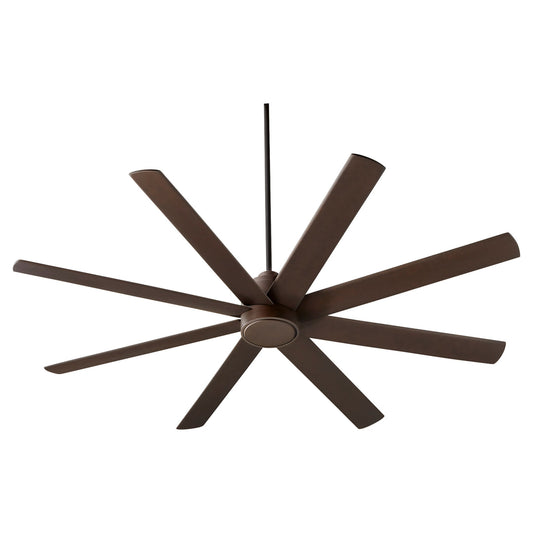




The Essential Guide to Buying a Ceiling Fan for Outside
An outdoor ceiling fan is so much more than a simple fixture. It’s the single best upgrade you can make for your porch, patio, or veranda, turning an often-unused area into your favorite spot to relax. This guide is your complete roadmap to finding the right ceiling fan for outside—one that will deliver comfort, style, and real value for years to come.
Why an Outdoor Ceiling Fan Is Your Best Investment

Picture your patio on a sweltering, sticky summer afternoon—still, hot, and pretty uninviting. Now, imagine that same space with a quiet, cooling breeze circulating overhead. Suddenly, it’s the perfect place for dinner with friends, a morning coffee, or just kicking back with a good book. That’s the difference a quality outdoor ceiling fan makes.
When you invest in a premium fan, especially one costing $300 or more, you’re not just buying a piece of hardware. You’re upgrading your entire lifestyle. These models are built to last for years, delivering consistent comfort that makes your outdoor spaces a true extension of your home. They’re made with superior materials that won’t rust or warp, so they stay beautiful and functional season after season.
More Than Just a Breeze
A good outdoor ceiling fan brings a lot more to the table than just airflow. It’s one of the smartest upgrades a homeowner can make, offering benefits that go way beyond simple comfort.
Here’s what you really get:
- More Livable Space: A fan keeps your porch or patio comfortable for more hours of the day and more months of the year.
- A Resort-Like Vibe: The gentle movement of the blades and a stylish design create an atmosphere that feels like a vacation getaway.
- Natural Pest Control: That constant breeze does a surprisingly good job of keeping mosquitoes, flies, and other pests from bothering you.
- A Boost in Home Value: A well-designed outdoor living area is a huge selling point and a solid investment in your property.
A fan is a key architectural element that ties the whole look together. For more ideas, a good guide on designing an outdoor living space can help you integrate it perfectly.
The Value of Quality Construction
When you start shopping, you’ll see outdoor fans at all kinds of prices. While it can be tempting to grab a cheaper model, investing in a high-quality product really does pay off. The premium fans in our collections are built to handle whatever the weather throws at them, using materials specifically chosen for durability.
A premium outdoor fan isn't an expense; it's a long-term investment in your home's comfort and appeal. It's the difference between a patio you occasionally use and an outdoor oasis you enjoy every day.
This guide will walk you through everything you need to know, from the UL safety ratings that are crucial for wet environments to the motor technology that ensures quiet, powerful performance. Once you understand these key features, you'll be ready to choose a ceiling fan for outside that not only looks fantastic but works flawlessly. To dive deeper, check out our article on the breezy benefits of having a ceiling fan anywhere in your home.
Understanding Damp Rated Vs. Wet Rated Fans
Picking the right weather rating for an outdoor ceiling fan isn't just some technical jargon—it's the single most important decision you'll make to protect your investment. Get it wrong, and you're looking at warped blades, a corroded motor, and even serious electrical hazards down the road. To make it simple, Underwriters Laboratories (UL) gives us two ratings to follow: damp-rated and wet-rated.
Think of it like picking the right jacket. A damp-rated fan is your trusty water-resistant windbreaker—perfect for a misty morning on a covered porch, but not what you'd wear in a full-blown rainstorm. A wet-rated fan, on the other hand, is your heavy-duty rain slicker, built to handle whatever Mother Nature throws at it.
The Damp-Rated Fan: For Covered Spaces
Damp-rated fans are built for covered outdoor areas. These are spots that won't get hit by direct rain but will definitely deal with humidity and ambient moisture. They’re the perfect fit for places like:
- Covered patios and porches
- Screened-in decks
- Garages
- Sunrooms
These fans use moisture-resistant motors and all-weather blades, often made from a tough ABS composite that won’t droop or warp when it gets humid. However, their inner workings aren't sealed against direct water. That’s why having a solid roof over their head is an absolute must.
The Wet-Rated Fan: For Exposed Areas
When your fan is going to be out in the open, you absolutely need a wet-rated model. These are the workhorses of the outdoor fan world, designed to stand up to direct rain, snow, and even the salt spray you get in coastal areas. They’re essential for:
- Pergolas
- Gazebos
- Open-air decks
- Outdoor kitchens without a full roof
A wet-rated fan is a completely different beast. It has a fully sealed, waterproof motor housing protected by gaskets and industrial-grade seals. Every piece of hardware, from the tiny screws to the downrod, is made from corrosion-proof materials like stainless steel to stop rust in its tracks.
This tough-as-nails construction ensures the fan runs safely and reliably for years, no matter the weather. Choosing a high-quality wet-rated fan from our collections means you're investing in durability for the most challenging spots.
The UL rating isn't a friendly suggestion—it's a critical safety standard. Putting a damp-rated fan in a wet location will void your warranty and creates a serious risk of electrical failure or fire.
Damp-Rated vs. Wet-Rated Fans At a Glance
Getting the difference is crucial. A wet-rated fan can always be used in a damp location (it’s just over-qualified for the job), but a damp-rated fan can never be safely installed in a wet-rated spot.
This quick table breaks it down.
| Feature | Damp-Rated Fans | Wet-Rated Fans |
|---|---|---|
| Best Location | Covered patios, screened porches | Pergolas, gazebos, open decks |
| Water Exposure | Handles humidity and moisture | Withstands direct rain, snow, ice |
| Motor Housing | Moisture-resistant | Gasket-sealed and waterproof |
| Hardware | Corrosion-resistant | Corrosion-proof (e.g., stainless steel) |
| Blades | All-weather, anti-warp (ABS) | All-weather, waterproof (ABS) |
| Safety | Safe only in covered areas | Safe in fully exposed environments |
When you pick a fan from our curated collections, where premium models start at $300, you know you're getting a product built to these exacting standards. Some models come in both damp and wet-rated versions, so you can keep the same great style across different areas of your home.
Ultimately, your fan's location makes the decision for you. Just take an honest look at your space. Is it completely protected from rain, or could a driving storm get to it? Answering that question is the first and most important step to enjoying years of safe, breezy comfort.
For more tips on choosing the perfect model, check out our guide to the best ceiling fans for exterior spaces.
The Power and Science Behind a Durable Outdoor Fan
Ever wondered what separates an outdoor fan that becomes a beloved fixture from one that’s a rusty mess after a single season? It’s not just luck—it’s all about what’s going on under the hood. A truly durable ceiling fan for outside boils down to two key things: the materials it’s built with and the motor that powers it.
When you hang a fan in your outdoor space, you're asking it to face a daily battle with humidity, rain, and wild temperature swings. Cheaper fans that use basic painted steel and standard wood blades simply can't hold up. They quickly fall victim to rust, corrosion, and warping. A high-quality fan, on the other hand, is built from a completely different playbook.
Materials Built for the Elements
For a fan to survive and thrive outdoors, it needs to be made from materials that are inherently weather-resistant. Think of it as the fan's built-in armor. These aren't just cosmetic choices; they're absolutely essential for long-term performance and safety, especially in our premium collections priced at $300 and up.
Here’s what you should be looking for:
-
Powder-Coated Finishes: This is light-years ahead of standard paint. Powder coating is baked onto the fan's housing, creating a thick, durable shell that’s tough against scratches, chipping, and fading from UV exposure.
-
Marine-Grade Stainless Steel: If you're in a coastal area or a particularly humid climate, 316 marine-grade stainless steel is the undisputed champion. It contains an element called molybdenum that gives it exceptional resistance to salt spray and corrosion, preventing the ugly pitting and rust that can destroy lesser metals.
-
UV-Resistant ABS Blades: While natural wood is beautiful, it's a terrible choice for the outdoors because it warps and cracks. All-weather blades made from ABS composite are the perfect solution. This tough polymer is lightweight, strong, and won't droop in the summer humidity, ensuring your fan stays perfectly balanced and whisper-quiet for years.
This simple flowchart shows how your outdoor space's exposure to weather determines the right fan type to choose.

As you can see, the rule is straightforward: any spot that gets hit with rain needs a wet-rated fan. Covered areas that are just damp can get by with a damp-rated model.
The Heart of the Fan: AC vs. DC Motors
Beyond the fan's tough exterior, the motor is the engine that drives its performance. For a long time, all ceiling fans used AC (Alternating Current) motors. They're reliable workhorses, but modern technology has given us a far superior option: the DC (Direct Current) motor.
An AC motor works by connecting directly to your home's power to spin the blades. A DC motor, however, is a bit smarter. It uses an internal transformer to convert that AC power into DC power first, and this seemingly small step makes a world of difference.
A DC motor is the modern powerhouse of the fan world. It delivers more power with less effort, resulting in near-silent operation, remarkable energy savings, and a level of control that AC fans simply can't match.
The benefits are impossible to ignore. DC motors are smaller and lighter, which allows for much sleeker and more modern fan designs. They also offer a much wider range of speed settings—often six or more, compared to the typical three on an AC fan. This lets you fine-tune your airflow from a barely-there whisper to a powerful gust.
Most importantly, that advanced tech translates to real savings on your energy bill. A DC motor fan can reduce energy consumption by up to 70% compared to a traditional AC model. This is a huge reason why they've become the top choice for eco-conscious homeowners and a major focus in our curated collections.
And remember, the number of blades also plays a role in how a fan performs. You can learn more about that in our article exploring the impact of fan blade count on efficiency.
How to Size and Place Your Fan for Perfect Airflow

When it comes to picking an outdoor ceiling fan, size is everything. This isn’t just about looks—it’s about pure, unadulterated performance. A fan that’s too small will just spin its heart out without moving much air, leaving you sweating. Go too big, and you risk creating a wind tunnel that sends paper plates and napkins flying across the yard.
Finding that sweet spot is a science, but a simple one. The idea is to match the fan's blade span (the total diameter from one blade tip to the other) to the square footage of your outdoor space. A correctly sized fan works smarter, not harder, giving you the most airflow with the least amount of noise and effort.
Matching Fan Size to Your Outdoor Space
First things first, grab your tape measure. To get your patio's square footage, just multiply its length by its width. If you have an L-shaped area, measure each rectangular section on its own and then add the two numbers together. Easy.
Once you have that magic number, finding the right fan is a breeze.
- Small Patios (Up to 144 sq. ft.): For cozier spots like a breakfast nook or a small balcony, a fan with a 36 to 42-inch blade span is perfect.
- Medium Patios (144-225 sq. ft.): This is your standard covered porch or deck. Look for a versatile fan in the 44 to 50-inch range.
- Large Patios (225-400 sq. ft.): When you've got more room to stretch out, you need more air. A fan with a 50 to 54-inch blade span will do the trick nicely.
- Expansive Patios (Over 400 sq. ft.): For those truly grand outdoor living rooms, go big or go home. You'll need a fan with a blade span of 60 inches or more.
If you're dealing with a massive area, don't hesitate to use two smaller fans instead of one giant one. Just space them about 8 to 10 feet apart. This creates overlapping columns of air that eliminate hot spots and keep the entire space consistently comfortable.
Getting the Placement Just Right
Okay, you've got the size figured out. Now, where do you hang the thing? Proper placement is non-negotiable for both safety and getting that perfect airflow. Think of your fan as a fountain of air—you want to put it right where it can do the most good without getting in anyone's way.
The golden rule for height is to have 7 to 9 feet of clearance between the floor and the fan blades. This is the sweet spot. It's low enough that you can actually feel the breeze but high enough to be safely out of arm's reach. For ceilings taller than 8 feet, you'll need what’s called a downrod to lower the fan into this ideal zone.
A downrod isn't just a piece of pipe; it's a tool for perfecting airflow. It positions your fan in the optimal air-circulation zone, ensuring the breeze reaches you instead of getting lost high above.
Picking the right downrod length is simple math. For every foot of ceiling height over 8 feet, add about 6 inches to your downrod. For instance, a 12-foot ceiling would need a 24-inch downrod to bring the fan down to a comfortable 10-foot height.
Horizontally, always leave at least 18 inches of clearance between the tips of the fan blades and any walls, posts, or beams. This gives the fan the breathing room it needs to circulate air smoothly instead of creating choppy, inefficient currents.
Choosing Your Fan's Style and Smart Features
Alright, once you've sorted out the technical side of things, we get to the fun part: picking a ceiling fan for outside that looks great and fits how you live. Modern outdoor fans are so much more than just blades spinning overhead. They're design statements, and they come packed with features that can make your outdoor space feel like a true extension of your home.
This is where you really get to dial in the personality. Are you picturing something sleek and understated for a modern patio? Or maybe a more relaxed, tropical vibe is your speed. For that breezy, coastal feel, a fan with big, palm-like blades can make any porch feel like a vacation spot. If your home leans more contemporary, the clean, sharp profile of a modern fan is a perfect match.
Integrated Lighting for Perfect Ambiance
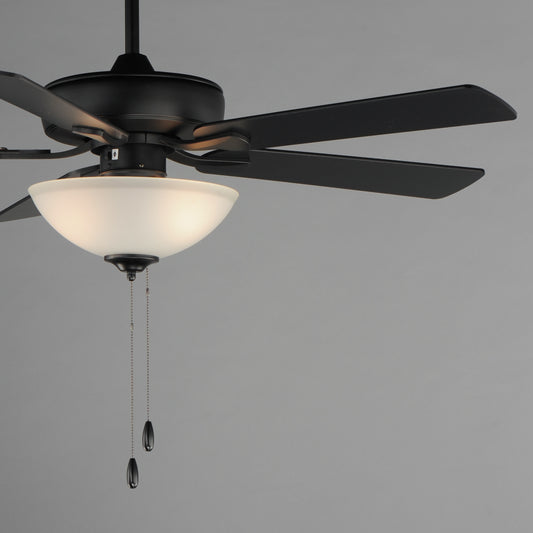
One of the most practical features you can get is built-in lighting. An outdoor fan with its own light kit does double duty, giving you a cooling breeze during the day and beautiful, warm light for your evenings. It's a clean, simple solution that means you don’t have to clutter your ceiling with extra fixtures.
Most quality fans today have moved to integrated LED lights, and for good reason. These aren't your old-school bulbs. They’re powerful, efficient, and bring some serious benefits:
- Energy Efficiency: LEDs sip electricity compared to old incandescent bulbs, which is great news for your power bill.
- Long Lifespan: A good integrated LED can run for tens of thousands of hours. You won't be climbing a ladder to change a burnt-out bulb anytime soon—we're talking years of use.
- Dimmability: Most models let you dim the lights. You can go from a soft, moody glow for relaxing to bright, functional light for a late-night card game, all with the push of a button.
Smart Controls and Seamless Integration
The days of fumbling for a pull chain in the dark are pretty much over. Today’s premium outdoor fans, especially those in the $300+ range, offer some seriously slick control options. While a basic wall control is still an option, most high-end models ship with a remote that lets you manage fan speed, direction, and lighting from your favorite patio chair.
But the real game-changer is smart technology. Smart fans connect to your home’s Wi-Fi, letting you control everything from an app on your phone or with voice commands through assistants like Amazon Alexa or Google Assistant.
Imagine this: you're heading home on a hot day and, with a quick tap on your phone, you turn on your patio fan. By the time you arrive, your outdoor space is already cool and waiting for you. That's the power of smart integration.
This kind of control just makes life easier. You can set schedules for your fan to turn on before you get home from work or just tell your smart speaker, “Alexa, set the patio fan to level three.” It’s the ultimate convenience and a feature that truly elevates your outdoor living experience.
It’s no surprise that homeowners are demanding these features. In fact, this demand is a key reason the residential sector leads the market. The global ceiling fan industry is set to grow from $12.31 billion in 2026 to $17.98 billion by 2034, and it’s largely because of these incredible advances in efficiency and smart home connectivity. Discover more insights about these ceiling fan market trends.
Shop Our Curated Collections of Premium Outdoor Fans
Alright, you've got the know-how to pick the right fan. Now for the fun part. To make your search a little easier, we've sorted our best outdoor models into collections based on style and function. This is where you can stop hunting and start finding the perfect fan to bring your outdoor space to life.
We’ve already gone through the endless options for you, picking out the fans that we know deliver on quality and durability. Think of these collections as your shortcut to a better outdoor living experience.
Sleek and Modern Outdoor Fans
If your home has a clean, contemporary feel, our Sleek & Modern collection is where you should start. These fans are all about minimalist design, sharp lines, and sophisticated finishes. They do more than just cool the air—they act as a statement piece that completes a modern patio or deck.
A perfect example is the Artemis IV. It’s a true blend of sculptural art and serious performance. With a price tag over $800, its unique, flowing blades are a conversation starter, while its powerful DC motor moves a ton of air without making a sound. It's an ideal fit for a chic, minimalist outdoor lounge.
Coastal and Tropical Inspired Fans
Looking to create that laid-back, resort vibe at home? Our Coastal & Tropical collection is your ticket. These fans often have large, leaf-shaped blades and finishes that look like natural wood or weathered bronze, instantly giving off a breezy, oceanside feel. They can turn any porch into your own private escape.
For that relaxed atmosphere, you can't go wrong with models like the Andros or Cabana. Their broad, sweeping blades look like palm fronds and produce a gentle, widespread breeze that just feels right. Starting in the $400-$600 range, they are a fantastic centerpiece for any home aiming for that touch of the tropics.
For Large and Commercial Spaces
Some outdoor areas just need more. For huge patios, restaurant decks, or big commercial spots, a standard fan isn't going to cut it. You need a fan built on a bigger scale with the power to move massive amounts of air across a wide-open space.
The clear winner here is the Artemis XL5. With its commanding blade span and a price over $1,000, this fan is an absolute powerhouse. It's a premium investment for anyone who needs maximum airflow and won't settle for less, ensuring every inch of a large area stays comfortable.
The growing popularity of high-performance outdoor models like these is part of a bigger picture. The global ceiling fan market is expected to reach $12.61 billion by 2030, thanks to innovations like rust-proof materials and damp-rated designs built for the outdoors. You can discover more insights about these global fan market trends on The Business Research Company.
Shopping our collections is straightforward. You’ll find clear pricing and all the specs you need on each product page. Once you've found the one, our secure checkout accepts all major payment methods, including Visa, PayPal, and Apple Pay, so you can buy with confidence. If you'd like a little more inspiration, you might find our guide to the best outdoor ceiling fans helpful, too.
Still Have Questions? We’ve Got Answers.
Alright, even after you've got the basics down, a few specific questions always seem to pop up. We get it. So, let’s tackle the ones we hear most often to clear up any lingering doubts and get you one step closer to that perfect outdoor breeze.
Can I Use an Indoor Fan on My Covered Porch?
Let’s get straight to it: The answer is a hard no. It’s a common temptation, especially for a fully covered spot that never gets rained on, but it’s a shortcut that will only lead to trouble.
Indoor fans just aren't built for the outdoors. Even without direct rain, the constant humidity in the air is enough to wreak havoc. The fan's blades, often made from particleboard or basic wood, will absorb that moisture and start to warp, sag, and droop. Even worse, the internal motor parts will corrode, leading to inevitable failure and creating a serious electrical fire hazard. Always, always stick with a proper damp- or wet-rated ceiling fan for outside—it’s about safety as much as it is about durability.
How Do I Clean My Outdoor Fan?
Keeping your outdoor fan looking sharp is easier than you think. First, always cut the power at the circuit breaker for safety. Then, just wipe down the blades and housing with a soft, damp cloth and a mild, non-abrasive cleaner. For any stubborn spots, a simple mix of gentle dish soap and water does the trick.
One word of caution: steer clear of harsh chemical sprays or abrasive sponges. They can strip the fan’s protective powder-coated finish. A quick, gentle cleaning once or twice a season is all it takes to keep it looking like new.
What Is the Best Height to Hang My Fan?
This is all about finding that sweet spot between safety and performance. For the best airflow, you’ll want the fan’s blades to hang somewhere between 7 and 9 feet from the floor. This keeps the breeze right where you can feel it but ensures the blades are safely out of reach.
If your ceiling is higher than 8 feet, you'll definitely need a downrod to bring the fan down into that ideal zone.
How Much Wind Can an Outdoor Fan Handle?
It’s a great question, but it’s important to remember what these fans are designed for. An outdoor ceiling fan is built to create a breeze, not fight a hurricane. They don't have a rating for high-wind resistance.
If you live in an area that gets severe storms, it’s a good idea to either take the fan down seasonally or find a way to secure the blades so they can’t spin wildly. Uncontrolled spinning in a storm can easily damage the motor or even rip the fan from its mounting bracket.
At Fan Connection, we believe the perfect fan is waiting for you. Explore our curated Tropical Collections to find a stunning centerpiece like the Andros or Cabana, both starting above $400 and designed to bring a resort-style feel to your home.


