











Ultimate Guide To Ceiling Fans 30 Inch
Why Choose A 30 Inch Ceiling Fan
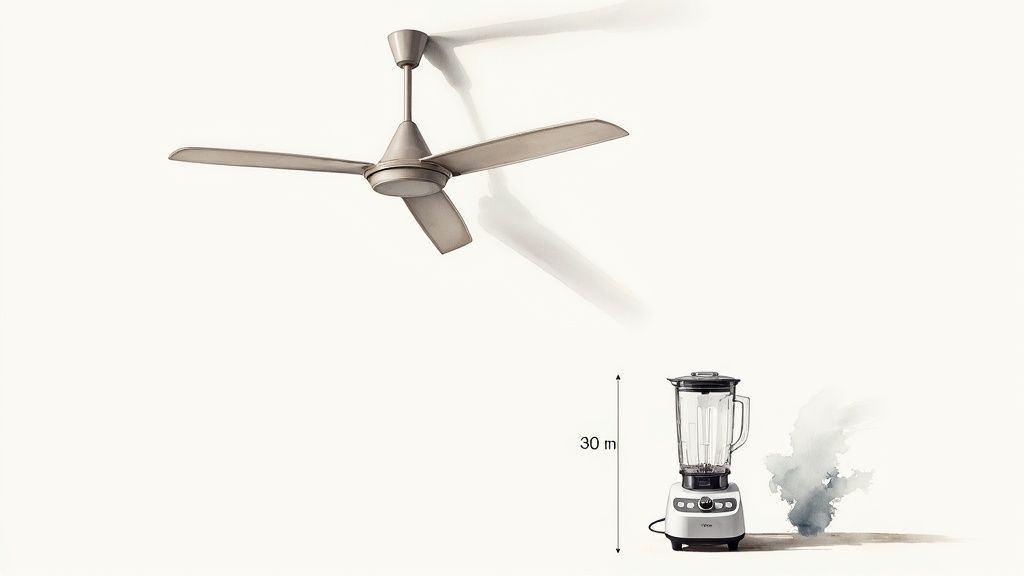
When you need solid airflow in a cozy spot, a 30-inch ceiling fan is your secret weapon. It’s like a mini tornado for your living room—compact yet powerful enough to move air across up to 150 sq ft without cramping your style.
Key Benefits
- Performance: Moves up to 4,000 CFM to keep the room feeling fresh.
- Style: Low-profile design that pairs well with any décor—modern, rustic, or eclectic.
- Savings: Draws only 30–50 watts on high, slashing energy bills compared to window AC units.
Recommended Room Sizes And Airflow Coverage
Match your fan’s airflow to your room’s footprint so you get the perfect breeze:
| Room Size (sq ft) | Recommended CFM Range | Fan Coverage Area |
|---|---|---|
| Up to 75 | 2,000–3,000 | Small bedroom |
| 76–144 | 3,000–4,000 | Medium room |
| 145–150 | 3,500–4,000 | Kitchen or nook |
Space And Ceiling Height
Flush-mount your fan on ceilings as low as 7 ft—no wobble, no drama. For ceilings 9 ft and above, add a 6–12 inch downrod to let the blades spin freely and reach you exactly where you’re lounging.
Cost Savings In Practice
Swap a dusty window AC for a 30-inch ceiling fan and you’re looking at $20–$30 monthly savings in moderate climates:
- Home office: 8 hours daily ≈ $0.40
- Bedroom: 6 hours daily ≈ $0.30
- Kitchen: 4 hours daily ≈ $0.20
Quality 30-inch ceiling fans at Fan Connection start around $300, blending sturdy construction with modern smart features.
Fun fact: a 30-inch fan is the “Goldilocks” size—just right for snug spaces that still need a breeze boost.
Market Trends And Growth
Compact ceiling fans are booming worldwide—especially in Asia-Pacific. In 2024, 30-inch models held 63% of the regional market, helping push the sector to USD 12.97 billion. Analysts forecast growth to USD 19.61 billion by 2033. Read the full market report by Straits Research.
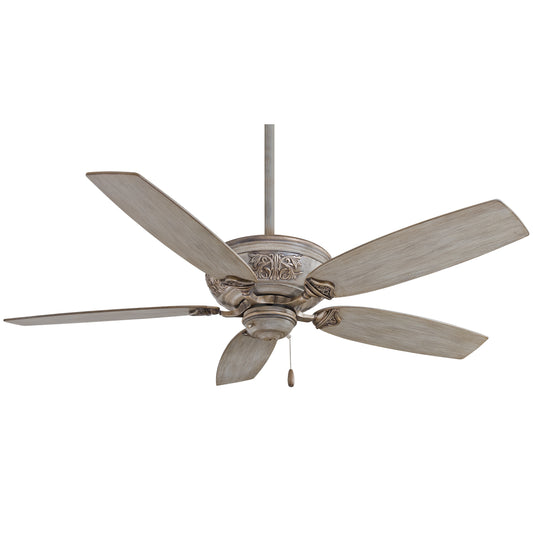
That classic blade sweep and motor housing prove why a 30-inch fan punches above its weight—delivering airflow that belies its size.
Understanding 30 Inch Ceiling Fans
A 30-inch ceiling fan’s blade sweep (tip-to-tip) dictates its cooling prowess. Compare specs carefully so you know exactly how much breeze you’re getting:
- Blade Sweep: Ideal for rooms up to 150 sq ft.
- Total Diameter: Includes motor housing and trim.
- Blade Pitch: Steeper angles (around 20°) boost airflow by roughly 20%, hitting up to 4,000 CFM.
Blade Sweep And Airflow
A 30-inch sweep is perfect for home offices, guest rooms, or breakfast nooks. Air movement is measured in CFM (cubic feet per minute). The higher the CFM, the bigger the gust you’ll feel.
- CFM Performance: Up to 4,000 CFM on well-pitched blades
- Power Draw: 30–75 watts, versus 1,000+ watts for a small AC
Dive deeper into global demand for compact fans here.
| Sweep Size | Approx. Airflow | Ideal Room Size |
|---|---|---|
| 24" | 3,200 CFM | Up to 100 sq ft |
| 30" | 4,000 CFM | Up to 150 sq ft |
| 42" | 5,200 CFM | 200–300 sq ft |
Mounting Options And Clearances
- Flush Mount: Best for ceilings under 8 ft.
- Downrod Mount: Use a 6–12 inch downrod for ceilings 9 ft+.
- Clearances: Keep blades at least 7 ft from the floor and 18 in from walls.
Check your electrical box is fan-rated and grounded. If wiring looks tricky, call a pro.
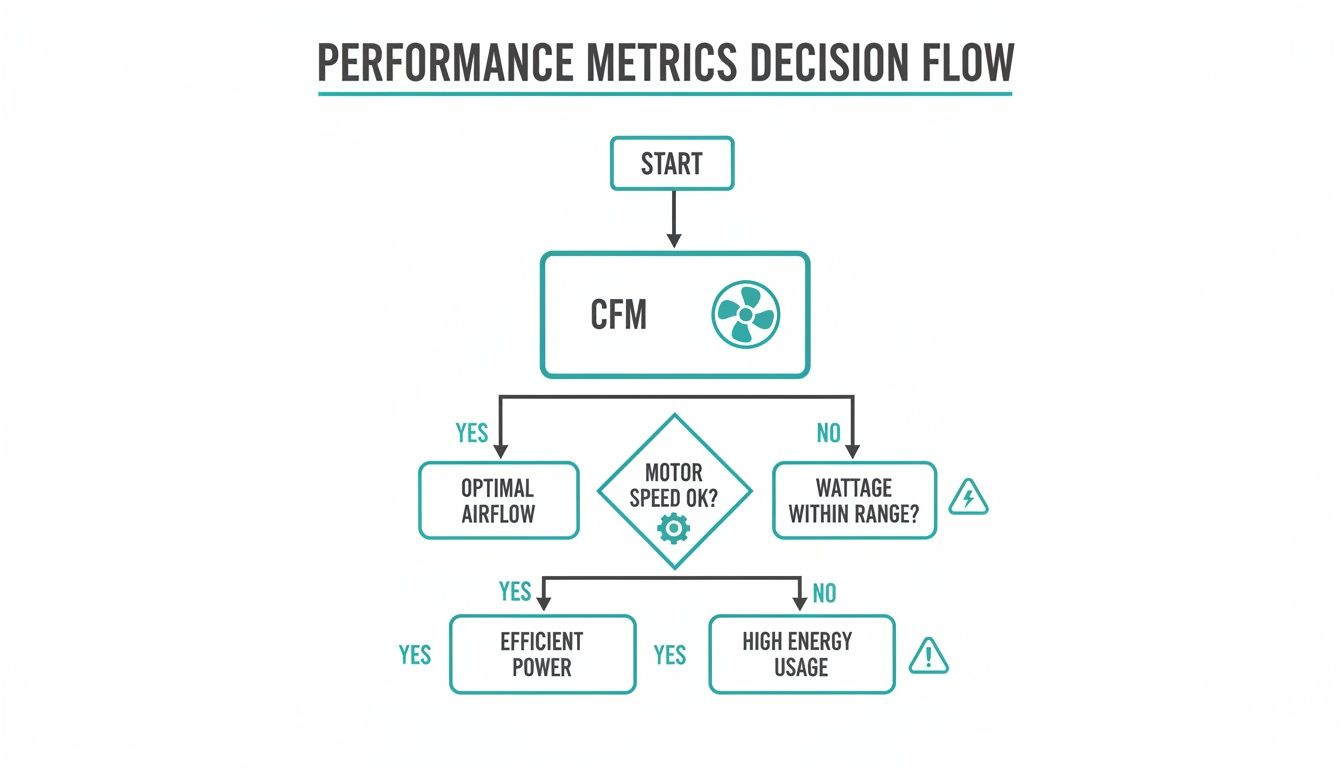
Performance Metrics For 30 Inch Ceiling Fans
CFM (cubic feet per minute) is like GPM in plumbing—the bigger the number, the stronger the breeze. Here’s how specs usually break down:
- CFM (airflow)
- Wattage (power draw)
- Blade Pitch (angle)
- Noise Level (sones)
- Energy Star Status
- Motor Type
Most 30-inch fans push 4,000 CFM (around a 40 GPM water stream) while pulling 30–75 watts—a fraction of what an AC uses.
| Motor Type | Power (Watts) | Efficiency Improvement |
|---|---|---|
| AC Motor | 35–50 | Baseline |
| BLDC Motor | 20–30 | Up to 60% savings |
One BLDC model at Fan Connection costs $320, spins 3,800 CFM, and sips just 28 watts on high—half of many AC-based units.
Installation Choices For 30 Inch Ceiling Fans
Choosing flush vs. downrod depends on ceiling height:
- Flush Mount – ceilings under 8 ft.
- Downrod – ceilings 9 ft+ (6–12 inch rods work best).
- Clearances – blades at least 7 ft above floor, 18 in from walls.
Step By Step Preparation
- Confirm electrical box is fan-rated.
- Ensure neutral and ground wires are present.
- Test ceiling joist load capacity.
If you’re ready for a breeze in a flash, check out the Apex 30" fan kit for $329—balanced bracket included.
Learn more about installation steps in our guide.
Lighting Controls And Noise Efficiency
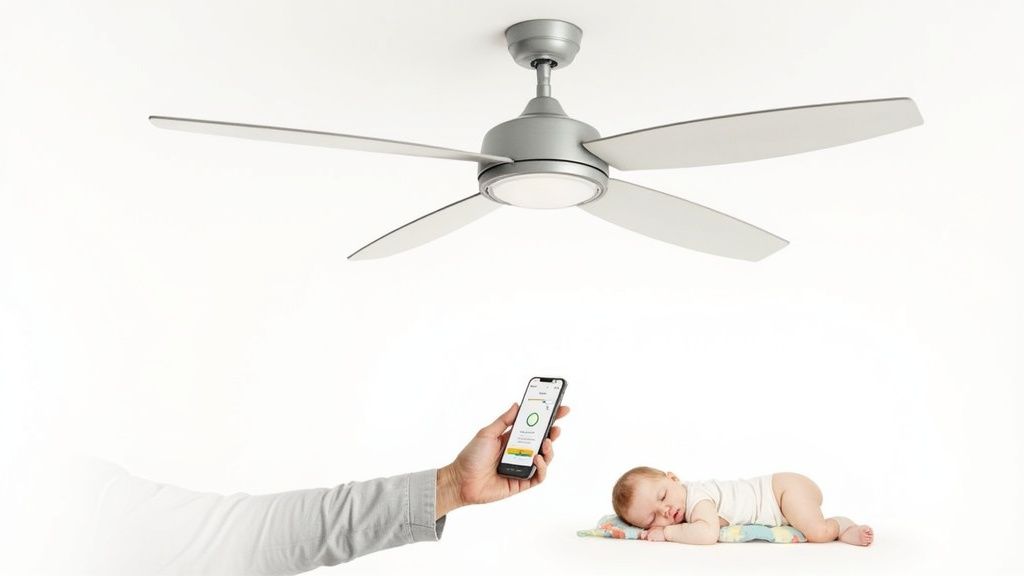
Selecting a light kit is more than flair—it’s about function. Integrated LEDs last 50,000 hours, while clip-on kits start around $320 so you can swap styles anytime. Remotes, wall panels, or smart hubs put control at your fingertips.
| Sones | Sound Equivalent |
|---|---|
| 0.5 | Quiet whisper |
| 1.0 | Gentle rain |
| 2.0 | Soft conversation |
The Artemis IV, at $350, uses rubber-gasket dampeners for sub-1.0 sone operation—practically inaudible.
Practical Buying Guide And Maintenance Tips
When shopping for a 30-inch fan, set your budget at $300+ to unlock reversible blades, humidity sensors, and app controls. Look for:
- Brand reputation (Artemis IV at $350).
- BLDC vs. AC motor.
- Warranty (aim for 6 years).
- Smart sensors for real-time monitoring.
Maintenance Routine
Every 6 months, dust blades, tighten screws, and add a drop of light machine oil. Replace remote batteries annually. A little care extends fan life by 30%.
Dive into our ceiling fan buying guide for deeper tips.
Additional Buying Tips
- Free shipping thresholds.
- Restocking fees on returns.
- Bundled remotes or downrods.
- Transparent pricing on all $300+ models at Fan Connection.
Frequently Asked Questions
What Room Size Is Ideal For A 30-Inch Ceiling Fan
A 30-inch sweep serves up to 150 sq ft. In snug rooms (≤75 sq ft), expect 2,500 CFM. In mid-sized spaces, airflow can hit 4,000 CFM.
CFM Calculation Example
Multiply square footage by 1.5 for a baseline breeze or 2 for extra oomph:
- 120 sq ft × 1.5 = 180 CFM (minimum)
- 120 sq ft × 2 = 240 CFM (optimal)
Can I Install A 30-Inch Fan On A Sloped Ceiling
Use an angled adapter kit (up to 30°) to keep blades level. Always verify your box is fan-rated and maintain 7 ft clearance.
How Often Should I Service My 30-Inch Fan
Perform a quick tune-up every 6 months: dust, tighten, oil. Swap remote batteries yearly for smooth operation.
Discover premium ceiling fans 30 inch models over $300 and more at Fan Connection.


