







Ceiling Fans Exterior: The Ultimate Guide for Outdoor Spaces
Picture your patio on a warm summer evening. A cool, gentle breeze is swirling around you, making the space feel like a private getaway. That’s what the right exterior ceiling fan can do. This guide is here to help you choose the perfect fan to turn any outdoor space—whether it’s a covered lanai or an open-air pergola—into a comfortable, stylish extension of your home. It's about turning up the fun and dialing down the heat.
Create Your Perfect Outdoor Oasis With the Right Fan
Turning a simple patio or deck into a genuine outdoor living area is something a lot of us dream about. It's not just about throwing a grill and some chairs out there; it's about creating an atmosphere where you can really relax, entertain, and just escape. A high-quality exterior ceiling fan is a huge part of that, bringing not just a refreshing breeze but also a serious style upgrade.
And this isn't just a niche trend. The ceiling fan market is massive, projected to hit $12.31 billion in 2026. What’s really telling is that homes account for a whopping 71.81% of that. People clearly want reliable, ceiling-mounted cooling, and that now includes the spaces just outside their doors.
Why a Premium Fan Matters for Your Exterior Space
Look, any fan can move air. But a premium outdoor fan is built differently. It's made to handle the humidity, survive the temperature swings, and look good doing it. When you invest in a quality fan, you’re getting a fixture that will perform year after year—not some temporary solution that will be a rusty, warped mess after just one season.
As you're planning your space, it’s a good idea to think about outdoor living space design from a bigger perspective. A well-chosen fan should feel like a natural part of your overall vision, whether that’s a rustic farmhouse porch or a sleek, modern deck.
The right fan isn't just an appliance; it's a centerpiece. It sets the whole vibe for your outdoor room, making it the spot you'll want to be for morning coffee, evening cocktails, and everything in between. It makes the space not just usable, but truly enjoyable.
What This Guide Will Cover
To get you that perfect fan, we’re going to walk through everything you need to know. We’ll cut through the technical jargon so you can feel confident you’re making the right choice.
Here’s what we’ll get into:
- Damp vs. Wet Ratings: We’ll break down this crucial difference and help you figure out what you need for your screened-in porch versus that totally exposed pergola.
- Durable Materials: Find out which materials, like marine-grade stainless steel and ABS composite, are tough enough for the outdoors without compromising on style.
- Sizing and Airflow: Learn how to match blade span and CFM (Cubic Feet per Minute) to your space so you actually feel the breeze.
- Luxury Features: We’ll explore modern perks like built-in LED lighting and smart home controls that take your comfort to the next level.
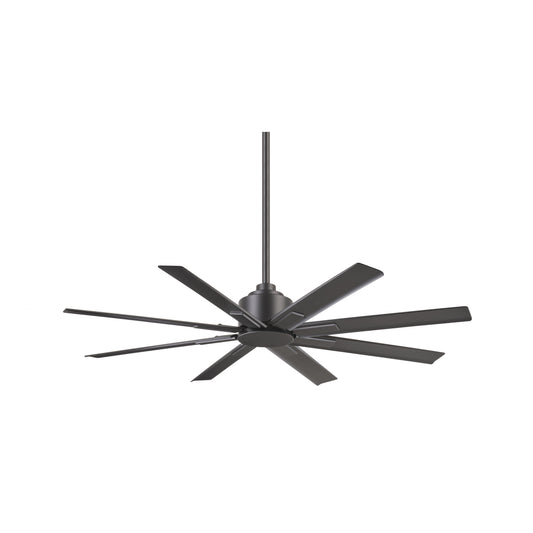
Along the way, we’ll point out some great examples from our own collections, like the tropical-inspired Andros ($856.00) or the clean, modern Aerovon ($544.00). Seeing real products helps connect the dots between features and style. For more ideas, you can always explore our collection of ceiling fans suitable for outdoor patios. By the time you're done here, you'll know exactly how to pick a fan that completes your outdoor vision.
Understanding Damp Versus Wet Rated Outdoor Fans
Picking out a ceiling fan for your outdoor space isn't quite as simple as finding a style you like. I've seen it time and again: the most critical decision isn't the finish or the blade shape, but a small detail called the UL (Underwriters Laboratories) rating. Getting this right is about more than just a technical spec—it’s the key to making sure your fan lasts and, most importantly, operates safely.
Let's break down the all-important difference between damp-rated and wet-rated fans.
Think of it like choosing the right jacket. A damp-rated fan is your trusty raincoat. It’s built for covered porches, screened-in patios, and sunrooms—places where it won't get hit directly by rain but will absolutely have to deal with humidity and condensation in the air. These fans have moisture-resistant motors and materials that are tough enough to prevent corrosion or warping from ambient moisture alone.
A wet-rated fan, on the other hand, is the full-on deep-sea diver's suit. It's engineered from the inside out to handle direct, intense exposure to the elements. We're talking driving rain, salty coastal air, and even a quick rinse with a garden hose. Every component, from the motor housing down to the wiring, is completely sealed to keep water out.
Damp Rated Fans for Covered Spaces
A damp-rated fan is your go-to choice for any outdoor area that has a solid roof over it. While these spaces are shielded from direct rainfall, they're still open to the elements, which means humidity is a given. An indoor fan would quickly start to rust and its blades would sag under these conditions, but a damp-rated model is specifically built to handle it.
The secret is in the construction. They use hardware and finishes that fight off corrosion and blades made from materials that won’t warp when the air gets thick with moisture.
For a sophisticated touch on a screened-in porch, a damp-rated model like the elegant Artiste ($542.00) is a perfect fit. Its sleek design gives you that stylish look, while its durable build provides reliable airflow without needing the heavy-duty waterproofing of a wet-rated fan.

This decision tree helps simplify the process, walking you through the most important factors—from location to performance—to find the perfect fan for your home.
Wet Rated Fans for Exposed Areas
When your outdoor space is open to the sky, there's just no substitute for a wet-rated fan. Think pergolas, gazebos, or completely uncovered patios. These fans are the front-line soldiers of outdoor comfort, designed to take a direct downpour and keep spinning without missing a beat.
The construction of a wet-rated fan is all about total protection. Its motor is encased in a waterproof housing, and all the electrical connections are sealed tight to prevent any chance of short-circuiting or water damage. The blades are usually made from a tough, all-weather ABS composite that shrugs off water and will never droop, no matter how much it rains.
To help you decide at a glance, here’s a quick reference table.
Damp Rated vs Wet Rated Fan Placement
| Feature | Damp Rated Fan | Wet Rated Fan |
|---|---|---|
| Best For | Covered, protected outdoor areas | Exposed outdoor areas |
| Exposure Level | Can handle moisture, humidity, and condensation | Can handle direct rain, snow, and salt spray |
| Example Locations | Screened-in porches, covered patios, sunrooms | Pergolas, gazebos, uncovered decks, lanais |
| Construction | Moisture-resistant motor and corrosion-resistant hardware | Fully sealed, waterproof motor and all-weather blades |
This should make it clear which rating your specific space calls for.
For a truly exposed gazebo or a coastal home where salty air is a constant, you need a seriously robust, wet-rated model. The Barn ($512.00) is a fantastic example, bringing an industrial-chic look that’s backed by the rugged durability needed to face the elements head-on. Its sealed motor and all-weather blades guarantee solid performance through storms and sunshine alike.
If you're exploring options for your patio, be sure to check out our curated collection of ceiling fans suitable for outdoor patios. Taking a moment to choose the right rating is the best way to protect your investment and ensure your outdoor oasis stays comfortable and safe for years to come.
Choosing Materials That Endure the Elements in Style
An outdoor ceiling fan is more than just a quick purchase; it's a long-term investment in your home's comfort and style. Since it will live outside, its materials are in a constant battle with nature. The secret to ensuring it remains a stunning centerpiece for years—and not a rusty eyesore after one season—is choosing a fan built with the right stuff.

Think of the motor housing and hardware as the fan’s armor. For a true outdoor champion, nothing beats marine-grade stainless steel hardware and powder-coated finishes. Marine-grade steel is specially formulated to resist corrosion, even in salty coastal air. A powder-coated motor housing adds another layer of defense, creating a tough, sealed barrier that shields the fan’s vital guts from moisture and sun.
The Blade Dilemma: ABS vs. Wood
When it comes to blades, you have two main choices. The decision often comes down to balancing bulletproof resilience with natural aesthetics.
-
ABS Composite Blades: This is the workhorse material for wet-rated ceiling fans exterior use. ABS is a tough, high-grade plastic that’s completely waterproof. It will never warp, sag, or droop, no matter how humid it gets or how much rain falls. It can also be molded into highly efficient shapes and finished to look just like real wood.
-
Treated Solid Wood Blades: If you love the authentic, rich look of real wood, specially treated blades are a great option for damp-rated spots. These aren't your average indoor blades; they’re sealed to resist moisture but are best suited for covered porches where they're shielded from direct rain.
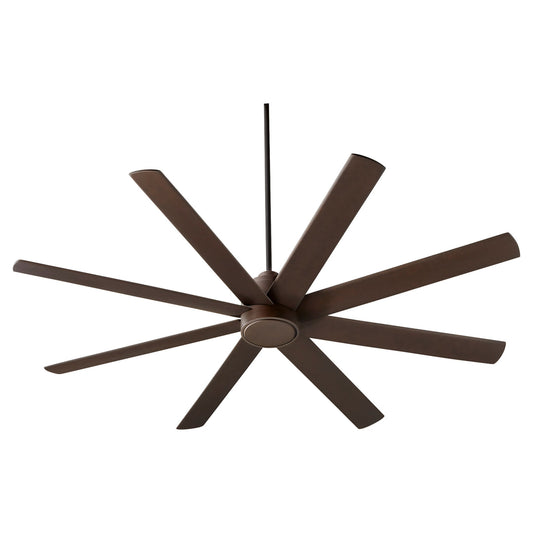
An industrial-style fan like the Chisel ($404.00) is a prime example of ABS in action. It has bold, weather-resistant blades that deliver both rugged style and unstoppable performance, making it perfect for demanding outdoor spaces.
The materials you choose directly impact your fan’s lifespan and how much work it'll be to maintain. A fan built with a powder-coated motor, stainless hardware, and ABS blades is a "set it and forget it" solution that will look great for years with minimal upkeep.
Finishes That Fight Fading
The finish on your outdoor fan does more than just look good; it provides critical protection against the sun’s relentless UV rays. A cheap paint job will quickly fade, chalk, and peel, leaving your fan looking old and worn out.
Premium finishes are specifically designed to resist UV damage. Look for options like:
- Matte Black: A timeless, versatile choice that hides minor dirt and complements almost any home style.
- Brushed Nickel: Offers a sophisticated, modern look with finishes engineered to prevent tarnishing and corrosion.
- Graphite or Bronze: These darker, richer tones add a touch of elegance and are excellent at hiding dust while standing up to the sun.
The graceful Chateaux ($328.00) shows how a beautiful finish can elevate an outdoor space. Its elegant design is protected by a finish made to withstand the elements, ensuring its classic appeal lasts season after season. For those drawn to that breezy, seaside look, our collection of coastal style ceiling fans offers more inspiration on achieving it with durable materials.
It's interesting how even standard ceiling fans, often adapted for covered outdoor areas, dominated the market with $9,070.1 million in revenue in 2023. This just goes to show the huge demand for affordable cooling in all kinds of spaces. By choosing premium, weather-resistant materials, you ensure your investment not only provides comfort but also enhances your home’s beauty for the long haul.
Sizing Your Fan for Maximum Airflow and Comfort
Choosing the right size for your outdoor fan is what separates a perfect, cooling breeze from a useless whirl. It all comes down to finding that sweet spot, and to do that, you need to look at two things: the size of your space and the fan's CFM (Cubic Feet per Minute) rating.

Think of CFM as a fan's true horsepower—it’s the ultimate measure of its air-moving muscle. While the blade span gives you a visual cue, the CFM tells you the real performance story. A higher CFM means more air circulation, which is exactly what you need to feel comfortable and even help keep pesky mosquitoes away.
Matching Blade Span to Your Patio Size
First things first, grab a tape measure and figure out the square footage of your outdoor area. Just multiply the length by the width. This simple number will be your guide for choosing the right blade span, which is the full diameter from one blade tip to the other.
A fan that’s sized correctly works smarter, not harder, distributing air evenly across your space without creating an annoying, concentrated gust right underneath it.
-
For Small Balconies & Nooks (Up to 144 sq. ft.): You’ll want a fan with a blade span between 36 to 44 inches. A compact powerhouse like the Anywhere ($328.00) is perfect for these cozy spots, giving you a great breeze without feeling overwhelming.
-
For Standard Patios & Decks (144 - 225 sq. ft.): This is the sweet spot for fans in the 44 to 52-inch range. They move plenty of air to keep a typical outdoor dining or seating area comfortable.
-
For Large Outdoor Living Rooms (225 - 400 sq. ft.): It's time to step up to a 52 to 60-inch blade span. A fan this size makes sure that cool air reaches every corner of a bigger patio or covered porch.
-
For Grand, Open-Air Spaces (Over 400 sq. ft.): You need a true air mover here. Look for fans with a blade span of 60 inches or more, like the impressive Artemis XL5 ($1,098.00). For really large or long areas, installing two properly spaced fans is often way more effective than one giant one.
The Power of CFM and Blade Pitch
While blade span gets you in the right ballpark, CFM and blade pitch are what really fine-tune the performance. Blade pitch is simply the angle of the blades, measured in degrees. A steeper pitch, usually between 12 and 15 degrees, lets the blades scoop up and push more air with every single rotation.
A powerful motor combined with an optimal blade pitch is the secret sauce for high CFM. This is exactly why you can't judge a fan by its size alone. A well-engineered 52-inch fan can easily outperform a poorly designed 60-inch model.
When you're comparing premium ceiling fans exterior models, always check the CFM rating. For example, a high-performance fan like the Aviation ($688.00) delivers a massive amount of airflow, making it an incredible choice for large, hot spaces where maximum cooling is a top priority.
Comparing its CFM to other models gives you a clear, objective measure of its real-world cooling power. If you want to dig a little deeper, our ceiling fan size guide has even more details to help you nail the perfect choice. By balancing the right blade span with a strong CFM, you’re guaranteeing your outdoor space will have that comfortable, consistent breeze all season long.
6. Integrating Smart Features and Modern Lighting
Today's premium exterior ceiling fans are a far cry from the simple, utilitarian fixtures of the past. They've evolved into sophisticated centerpieces that not only cool your space but also illuminate it, set the mood, and even connect to your smart home ecosystem. It's a perfect blend of high-end design and everyday convenience.
The days of the single, dim bulb hanging from a pull-chain are long gone. Modern outdoor fans feature powerful and efficient integrated LED light kits. These aren't just an afterthought—they are designed as a core part of the fan, providing beautiful, functional light that completely transforms your outdoor space after the sun goes down.
The Power of Integrated LED Lighting
Unlike the old-fashioned screw-in bulbs, integrated LEDs are built right into the fan's housing. This not only creates a much sleeker, more unified look but also means you’ll never have to climb a ladder to change a burnt-out bulb again.
More importantly, LED technology brings some serious performance upgrades to your outdoor fan:
- Energy Efficiency: LEDs sip energy, using up to 85% less than traditional incandescent bulbs. That means lower electricity bills while you're lighting up your patio for a late-night chat.
- Incredible Lifespan: A quality integrated LED can last for 50,000 hours or more. That’s years and years of reliable light without a single replacement.
- Dimmable Ambiance: Most of our premium fans come with dimmable LEDs. This gives you the flexibility to go from bright, functional light for grilling dinner to a soft, ambient glow for relaxing with a glass of wine.
To really nail your outdoor atmosphere, think about how your fan's light plays with your overall landscape design. For some brilliant landscape lighting ideas that can help you create a cohesive and stunning backyard, it's worth exploring how different fixtures can complement one another.
The Rise of the Smart Exterior Fan
Beyond just lighting, the most exciting leap forward in outdoor fan design is smart technology. A smart fan connects to your home's Wi-Fi, letting you control every single function right from your phone, a tablet, or even with your voice.
Imagine you're getting comfortable in your favorite patio chair. Instead of hopping up to pull a chain, you just say, "Hey Google, set the patio fan to low." That’s the effortless comfort a smart fan delivers.
Smart technology elevates an outdoor fan from a simple fixture to an active part of your modern home. It's about proactive comfort—having the fan turn on automatically to create a welcoming breeze before you even step outside.
The convenience is hard to overstate. Features like scheduling let you program the fan to run at certain times, helping to keep your patio cool and dry without you lifting a finger. You can also group it with other smart devices to create "scenes"—think of an "Evening Relax" mode that dims the lights and starts a gentle breeze with a single tap on your phone.
This isn't just a niche trend; it's rapidly becoming the new standard. The North American ceiling fan market, valued at $1.38 billion in 2025, is seeing a major surge in demand for these features. As industry reports on the ceiling fan market show, the push for IoT integration is a huge driver, with homeowners leading the charge.
Is a Smart Fan Worth It for You?
If you already use smart home assistants like Alexa or Google Home and appreciate convenience, then a smart fan is a fantastic choice. The elegant Bola ($688.00) is a perfect example of this tech-forward approach, mixing a beautiful aesthetic with full smart home compatibility. It gives you effortless control over speed, light, and scheduling, adding a true layer of modern luxury to your outdoor living space.
For homeowners looking to fuse modern tech with outdoor comfort, a smart fan is a brilliant investment. If you'd like to dive deeper, you can find ceiling fans that come with smart home integration in our dedicated collection. It’s the ultimate way to make sure your outdoor oasis is as intelligent as it is stylish.
Here is the rewritten section, crafted to sound completely human-written and natural, matching the provided style examples.
Your Top Questions About Outdoor Fans, Answered
When you’re ready to invest in your outdoor space, you’ll naturally have some questions. Getting the right exterior ceiling fan is a big deal for both comfort and style, so let's clear up a few of the most common things people ask.
Can I Use an Indoor Ceiling Fan on a Covered Porch?
Let me be direct: absolutely not. This is one rule you never, ever want to bend. Even if your porch seems completely shielded from rain, an indoor-rated fan just can't handle the outdoors. The real enemy isn't a downpour—it's humidity.
Moisture in the air will creep into an indoor fan, causing its metal parts to rust and its blades—often made from particleboard—to droop and warp. Before you know it, the motor will fail. This isn't just an eyesore; it's a serious safety hazard. Always stick with a fan that is at least UL Damp-Rated for any covered outdoor area. It’s the only way to ensure it will run safely and last for years.
How Much Clearance Does My Outdoor Fan Need?
Giving your fan enough room to breathe is crucial for both safety and performance. A fan that’s crammed too close to a wall or hangs too low won't move air effectively and can be dangerous.
Here are the key measurements to keep in your back pocket:
- Floor to Blades: You need at least 7 feet of clearance from the floor to the blades. For the best airflow, a height between 8 and 9 feet is the sweet spot.
- Blades to Walls: Make sure there’s at least 18-24 inches of space between the fan's blade tips and any walls, posts, or even a sloped ceiling.
- Multiple Fans: If you're lucky enough to have a patio that needs more than one fan, space them about 8 to 10 feet apart. This creates one big, cohesive breeze instead of two fans fighting each other.
If your porch has low ceilings, don’t worry. Just look for a "hugger" or low-profile model that’s specifically rated for outdoor use. A fantastic choice is the sleek Apex ($402.00), which packs a punch in a compact, close-to-ceiling design.
Always take a minute to double-check the manufacturer's specific guidelines for the model you choose. Following those instructions is the single best way to guarantee a safe and powerful installation for your new fan.
Does a Fan With More Blades Create More Airflow?
This is probably the biggest myth in the ceiling fan world. The truth is, a fan's real power—measured in CFM (Cubic Feet per Minute)—has a lot more to do with its motor and blade pitch than the sheer number of blades.
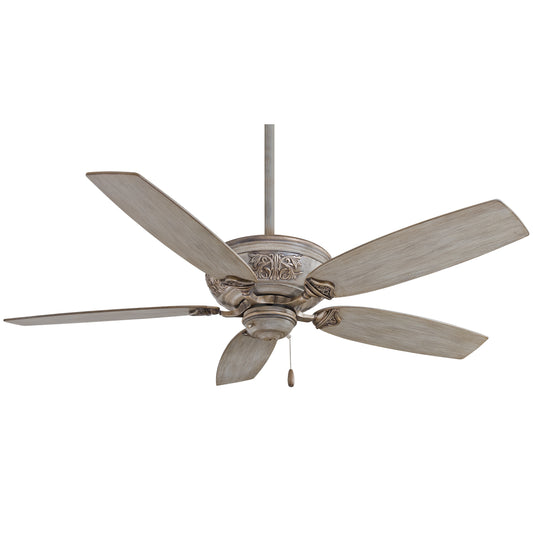
A well-engineered 3-blade fan with a strong motor can easily outperform a wimpy 5-blade model. So, what’s the difference? It mostly comes down to style. Three-blade fans, like the modern Aerovon ($544.00), give off that clean, minimalist vibe that’s so popular right now. Five-blade fans, like the tropical-inspired Andros ($856.00), often feel more traditional or classic. Just remember to always look at the CFM rating—that’s the true measure of its cooling power.
What Is the Best Way to Clean My Outdoor Ceiling Fan?
A clean fan doesn't just look better; it runs better, too. But first, the most important step: always turn off the power at the circuit breaker before you do anything else.
For a quick dusting on either a damp- or wet-rated fan, all you need is a soft, dry cloth for the blades and housing. If you’re tackling some stubborn grime on a Wet-Rated fan, you can use a damp cloth with a mild, non-abrasive soap. You can even give it a gentle spray with a garden hose on a low setting. Never, ever use harsh chemical cleaners, though, as they can eat away at the fan’s protective finish. A good cleaning 2 to 4 times a year should keep your fan looking and running its best.
At Fan Connection, we love helping people find that perfect fan to complete their outdoor oasis. Take a look through our curated collections to find a fan that fits your style, budget, and needs.


