











Finding Ceiling Fans Installed Near Me: A Pro's Guide to a Perfect Breeze
Typing "ceiling fans installed near me" into a search bar is the easy part. Finding the right person for the job, someone who can turn that box in the corner into a silent, wobble-free centerpiece? That’s where the real adventure begins. You've invested in a fantastic fan, and a professional installation is the final, crucial step to ensure it runs flawlessly, safely, and beautifully for years. This guide will help you navigate the search for a top-notch local installer so your new fan is set up perfectly from day one.
Why Bother With a Pro Installer?
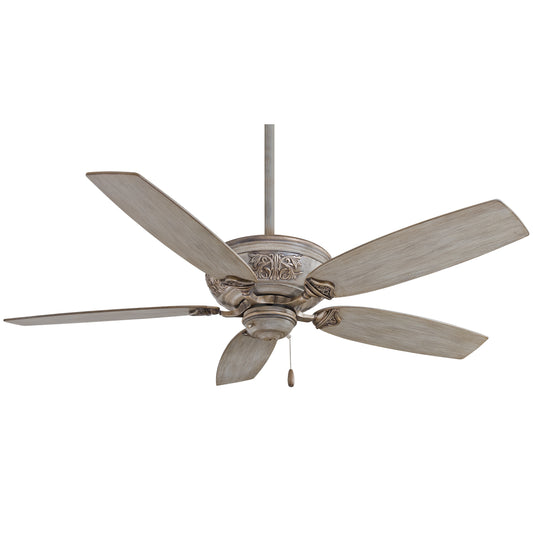
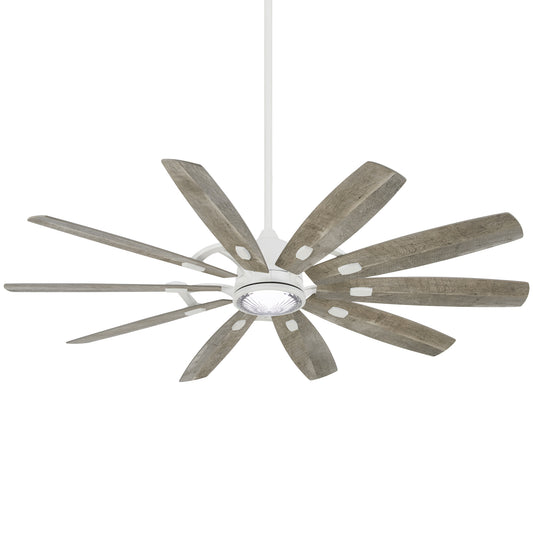
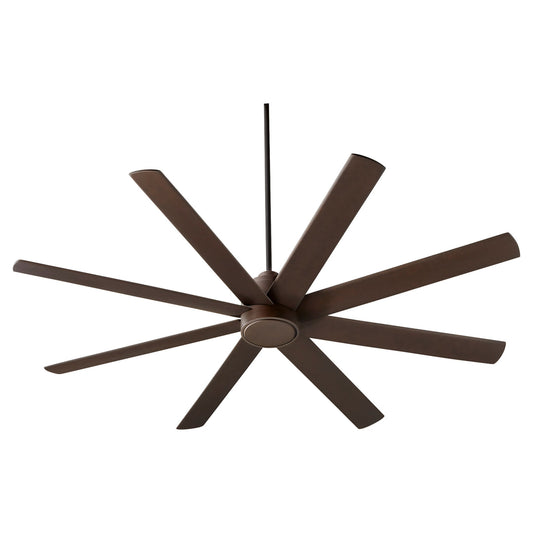
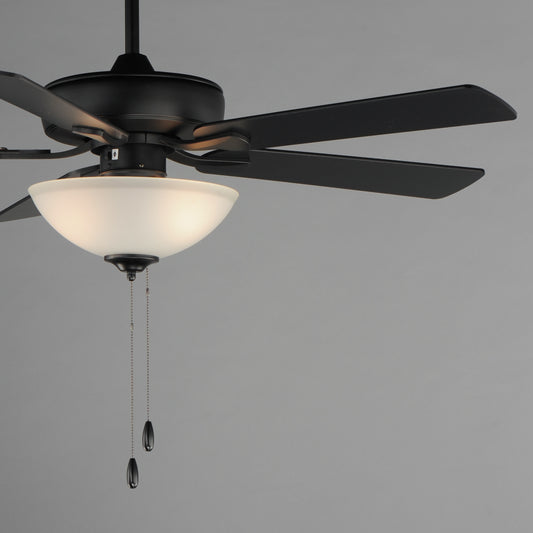
Let's be real: after splurging on a stunning fixture like the elegant Chateaux model ($399) or the sleek, modern Aerovon fan ($429), the last thing you want is a DIY disaster. A wobbly fan making weird clicking noises is not the relaxing vibe you were going for. The DIY route can look tempting, but a seasoned pro brings a level of expertise that protects your home, your investment, and your peace of mind.
A proper installation is about more than just getting the fan to turn on—it's about safety. A pro will make sure the electrical box in your ceiling is actually rated to hold a fan, which prevents it from coming crashing down. It's a small detail that makes a huge difference.
This is a massive deal if you're replacing an old light fixture with a ceiling fan. The junction box for a simple light isn't built to handle the weight and constant motion of a fan. Having an expert inspect and upgrade it is a non-negotiable step for a secure installation.
Finding The Right Local Experts
So, how do you find these installation wizards? Your online search is a fantastic starting point. When you look up 'Ceiling Fans Installed Near Me,' you'll notice that the most reputable local companies often pop up first. That’s not by accident. Many use smart digital strategies, like Local SEO for Home Services, to make sure homeowners like you can find them easily.
As you vet potential hires, keep these points in mind:
- Their Specialty: Do they install ceiling fans all the time, or is it just a side gig? You want someone who knows the ins and outs of every model and brand.
- Credentials: Are they a licensed electrician or an insured handyman? For simple swaps, a good handyman might suffice. For anything involving new wiring, you'll want a licensed electrician.
- Reputation: What are people saying online? Check recent reviews and don't be shy about asking for references. It’s the best way to get an honest feel for their work.
Picking out the fan is the fun part, but finding a great installer is what ensures it performs beautifully for years. If you're still on the hunt for the perfect model, our guide to the best ceiling fan stores near me can help you find a style that wows before you book the installation.
How To Prepare Your Home For A Seamless Installation
A little prep work can make a world of difference when it comes to getting a new ceiling fan installed. By taking a few simple steps before your pro arrives, you can help the job go faster, sidestep any surprise costs, and make the whole process as smooth as your new fan's spin. Think of it as rolling out the red carpet for a perfect installation.
When your installer arrives, the first thing they'll need is a clear, safe space to work. That means moving any furniture—like beds, couches, or tables—directly out from under the installation spot. It's also a smart move to clear the room of any fragile items like lamps or picture frames just to be safe.
Check The Essentials Before They Arrive
Beyond clearing the room, a couple of quick technical checks can be incredibly helpful. First, know where your circuit breaker box is and ensure it’s easily accessible. Your installer will need to cut the power to that room, and pointing them to the right breaker saves time right off the bat.
Next, give the ceiling a quick once-over.
- Confirm Your Ceiling Height: Knowing this helps ensure you have the correct downrod for your fan. For safety, a fan should always hang at least 7 feet from the floor, and the right downrod ensures it looks right and performs its best.
- Measure Twice, Install Once: This is especially true for larger, more dramatic fans like the stunning Artemis XL5 ($759). You need to make sure there's enough clearance from walls or sloped ceilings for both safety and optimal airflow.
The Most Important Check: The Junction Box
This is the big one. The most critical pre-installation check involves the electrical box in your ceiling, often called a junction box. This is what your new fan will hang from, and it absolutely must be strong enough for the job. Not all electrical boxes are created equal.
A standard box designed for a simple light fixture can't handle the weight and constant motion of a ceiling fan. The vibration and torque can cause a standard box to fail over time, which is a serious safety hazard.
You need a fan-rated junction box. These are specifically designed and braced to handle that dynamic load. If you're swapping out an old light fixture for a fan, it's almost a guarantee that the box will need to be upgraded. Giving your installer a heads-up about this allows them to bring the right parts and plan their time accordingly.
Choosing The Right Pro: Electrician vs. Handyman
So, you've picked out the perfect ceiling fan. Now comes the big question: who do you call? It’s a classic homeowner dilemma—do you need a licensed electrician, or can a skilled handyman handle it? The truth is, the right answer depends entirely on your specific situation. Getting this choice right is the key to a safe, wobble-free installation that will last for years.
If your project is anything more than a simple, direct swap, an electrician isn't just a good idea—it's a must. Think of it this way: any time new wiring is involved, you need a pro who is licensed to do that work. This includes running wires to a spot that's never had a fixture, adding a new circuit, or dealing with the quirks of an older home's electrical system.
But what if it's a basic replacement? If you're taking down an old fan and putting a new one in the exact same spot with modern wiring, a reputable and insured handyman can be a great, cost-effective option.
When To Call An Electrician
A licensed electrician's job goes way beyond just hanging a fan. They're ensuring the entire system supporting it is safe and sound.
- Brand New Installations: If you're adding a fan to a blank ceiling, an electrician will run the necessary wiring, install a new, fan-rated electrical box (this is critical!), and wire up a new wall switch.
- Wiring Headaches: Got an older home? If you suspect you have old aluminum wiring or ungrounded circuits, stop and call an electrician. They must assess the situation and make it safe.
- High-Tech & Smart Fans: Installing a premium smart fan with all the bells and whistles, like the Andros model ($350)? An electrician can ensure its complex controls are wired properly to integrate with your smart home setup.
This quick visual guide can help you map out those first few crucial steps.
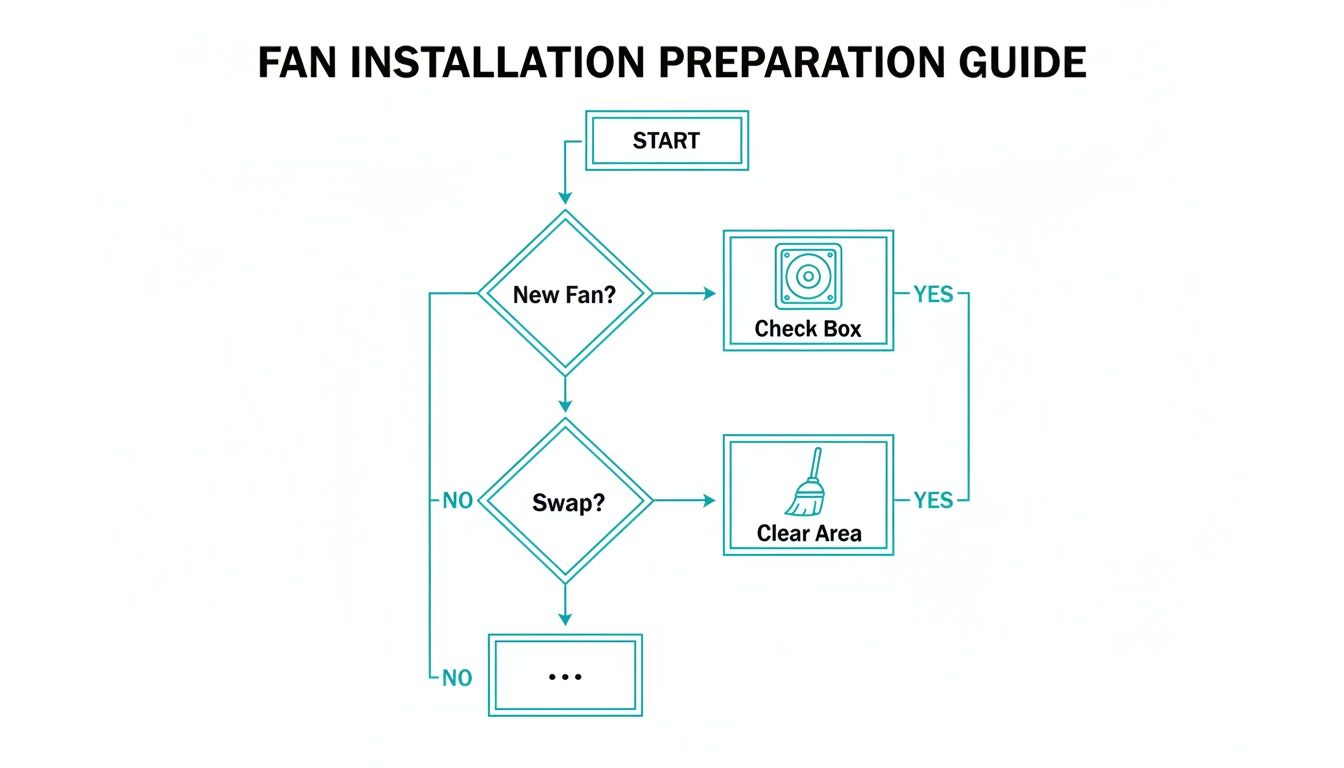
As the flowchart shows, the first question is whether you're replacing an existing fan or adding a new one. That simple distinction points you in the right direction.
To make the decision even clearer, here’s a quick breakdown.
Installer Comparison: Electrician vs. Handyman
| Installation Scenario | Recommended Pro | Key Considerations |
|---|---|---|
| Simple Replacement (like-for-like) | Handyman or Electrician | If wiring is modern and the box is fan-rated, a handyman is usually more cost-effective. |
| New Installation (no existing fixture) | Electrician | Requires new wiring, a new box, and likely a new switch—this is non-negotiable electrical work. |
| Old or Unknown Wiring | Electrician | Safety first. An electrician must assess and update any outdated or unsafe wiring. |
| Replacing a Light with a Fan | Electrician | The existing box is likely not rated for a fan's weight and vibration. An electrician will know for sure. |
| High Ceilings (10ft+) | Handyman or Electrician | This is about equipment and safety. Ensure they have the right ladders and experience working at height. |
| Installing a Smart Fan | Electrician | Recommended for complex wiring and smart home integration to ensure all features work correctly. |
Ultimately, if there's any doubt in your mind about the wiring or structural support, defaulting to a licensed electrician is always the safest bet.
Decoding Quotes And Understanding Installation Costs
Receiving quotes for a ceiling fan installation can feel like comparing apples and oranges. One person gives you a single number, while another provides a detailed list. To find a pro who offers real value—not just a cheap price—you need to understand what goes into a good quote and what factors drive the cost.
Always start by getting at least three detailed quotes from local professionals. This helps you see the average market rate and spot any outliers that are either too high or suspiciously low. Insist on an itemized breakdown so you can see exactly where your money is going.
What Goes Into The Price
The final cost to get a ceiling fan installed is influenced by several key factors.
- Labor (Hourly vs. Flat-Rate): Some pros charge by the hour, while others offer a flat rate. A flat rate provides cost certainty, which is great for peace of mind.
- Materials: This includes all the necessary hardware, like a new fan-rated bracket (a must!), extra wiring, or a new wall switch. These costs should be clearly spelled out.
- Upcharges for Complexity: Got high or vaulted ceilings? Expect to pay more. The job requires taller ladders, extra safety precautions, and more time. The same goes for assembling a complex designer fan—an intricate model like the Artiste ($550) will take much longer to put together than a standard fan.
A suspiciously low bid is almost always a major red flag. It could mean the installer is cutting corners, isn't properly insured, or plans to surprise you with hidden fees. True value comes from fair pricing for quality, safe work—not just the rock-bottom price.
There’s a huge difference in cost between a simple swap and a new installation. A swap is the most affordable scenario. A new installation is a much bigger project, involving new electrical lines, a new box, and a wall switch, which costs significantly more. For a clearer picture, check out our guide on choosing the right ceiling fan size, as larger models might require extra support. Comparing different types of projects, like this guide on recessed lighting installation costs, can also help you understand the labor and materials involved in professional electrical work.
Getting Ready for Install Day: Your Final Checklist
The big day is here! Your research and planning are about to pay off. To make sure everything runs smoothly, a little prep on your end can make a world of difference. This isn't about micromanaging; it's about clear communication and a final quality check to ensure you're thrilled with the result.
Before your installer even opens their toolbox, have a quick huddle to confirm the plan and make sure you’re both on the same page.
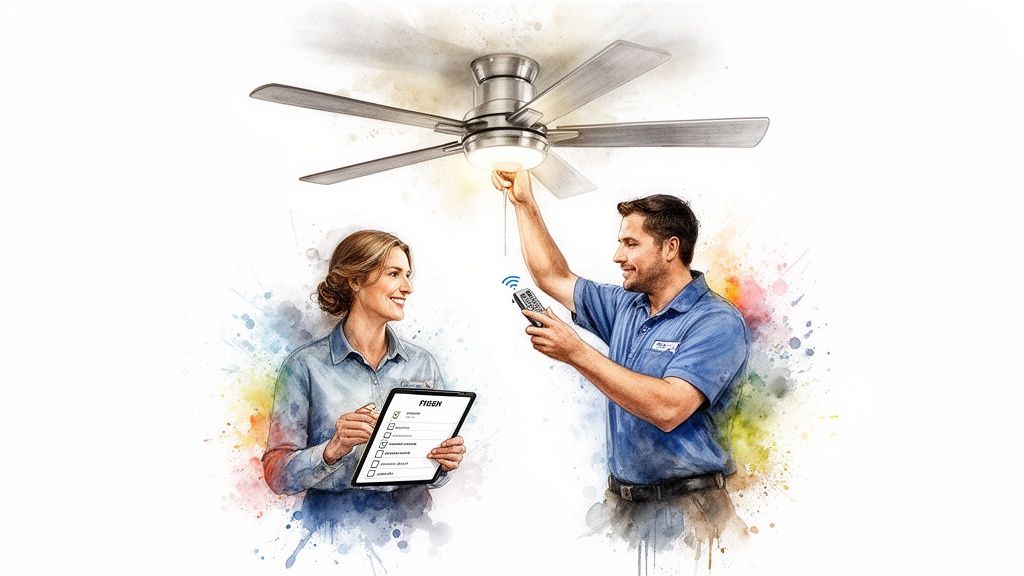
The Pre-Installation Huddle
Start by pointing to the exact spot on the ceiling. Confirming the placement now avoids any "Oh, I thought you meant over there" moments. It’s also a great chance to review the plan.
- Go Over the Work Order: Quickly run through the agreed-upon tasks. Is this a simple swap or are they running new wiring?
- Talk About Cleanup: It never hurts to clarify how the workspace will be left. Most professionals are fantastic about tidying up, but it's good to have that conversation upfront.
- Double-Check the Fan: Make sure the fan you have ready is the one they're expecting. This is especially important for a premium model with a specific look, like the sleek Aviation fan ($489).
What to Look for During the Installation
You don't need to hover, but it’s smart to be aware of a few key things. The most critical part is the foundation. Make sure they're using a sturdy, fan-rated electrical box and proper bracing. This is a non-negotiable safety step. You should also see them making secure wire connections, usually sealed tight with wire nuts.
The real mark of a pro is how they treat the fan itself. They should handle your investment with care, avoiding any scratches or damage. That attention to detail is what separates a true craftsperson from someone just trying to get the job done fast.
The Final Walkthrough and Sign-Off
Once the fan is up and spinning, the job isn't quite finished. Before making that final payment, do a thorough walkthrough with your installer.
- Test All the Speeds: Run the fan on its low, medium, and high settings.
- Check for Any Wobble: Look for noticeable shaking. A well-installed fan should be almost completely still.
- Listen for Strange Noises: The fan should be quiet. Listen for any clicking, humming, or grinding sounds.
- Verify the Controls: Test out the remote, the wall switch, and any smart features to make sure everything works perfectly.
Running through this quick checklist confirms the job was done right and ensures you can start enjoying that perfect breeze with total peace of mind.
Got Questions About Local Fan Installation?
Even after all your homework, a few questions always pop up. Getting clear answers is the final step to feeling confident about your project. Here are the most common questions we hear from homeowners.
So, How Much Does It Cost to Have a Ceiling Fan Installed?
This is always the first question! For a simple replacement—taking down an old fan and putting a new one in its place—you can expect to pay a professional between $100 and $300 for labor.
But if the project involves running new wiring to a spot that's never had a fixture, the cost can easily climb to $300 to $600, or more. This covers the extra time and materials needed to run a new electrical line, install a fan-rated box, and add a wall switch.
Remember, other factors can add to the bill. High ceilings, or a complex designer fan like the Chisel ($389) that needs extra assembly time, can increase the final price. Always get at least three detailed quotes to compare.
Do I Really Need a Licensed Electrician to Install a Ceiling Fan?
You absolutely need a licensed electrician if your project involves new wiring, adding a circuit, or making any changes to your home's electrical system. This is about safety and meeting local building codes.
For a direct swap, an experienced and insured handyman might be an option. But even then, an electrician brings an extra layer of security by confirming the junction box is properly braced and rated for your new fan. For total peace of mind, especially with a high-end model, a licensed electrician is always the safest bet.
How Long Does It Take to Install a Ceiling Fan?
A standard fan replacement usually takes an experienced pro about 1 to 1.5 hours. They’ve done this hundreds of times, so they're in and out.
A new installation is much more involved and can take anywhere from 3 to 5 hours. That extra time accounts for running wires through walls or attics, installing the electrical box, and setting up the switch. An intricate fan model can easily add another 30-45 minutes just for assembly.
Can I Install a Ceiling Fan Where a Light Fixture Is?
Yes, but—and this is a big but—it's not a simple swap. The electrical box holding a light fixture is often not strong enough to support the weight and force of a moving ceiling fan.
You must replace it with a fan-rated junction box that is securely braced to the ceiling joists. This is a non-negotiable safety step to prevent the fan from falling. A qualified electrician will know exactly what to do to ensure your new fan is mounted safely for years to come.
Ready to find the perfect fan for your professional installation? At Fan Connection, we offer a curated collection of stylish and high-performance ceiling fans to transform any room.
Explore our stunning models like the modern Aerovon or the elegant Chateaux and find the perfect centerpiece for your home today. Shop the collection at Fan Connection.


