











A Homeowner's Guide to Energy Efficient Ceiling Fans
Imagine trimming your home's cooling costs without ever touching the thermostat. That's exactly what modern energy-efficient ceiling fans deliver. These aren't the wobbly, noisy fixtures you might remember from childhood; today’s premium models are sophisticated, whisper-quiet design pieces engineered to save you some serious cash. Get ready to upgrade your comfort and slash your energy bills—it’s a win-win!
Your Smartest Home Upgrade This Year
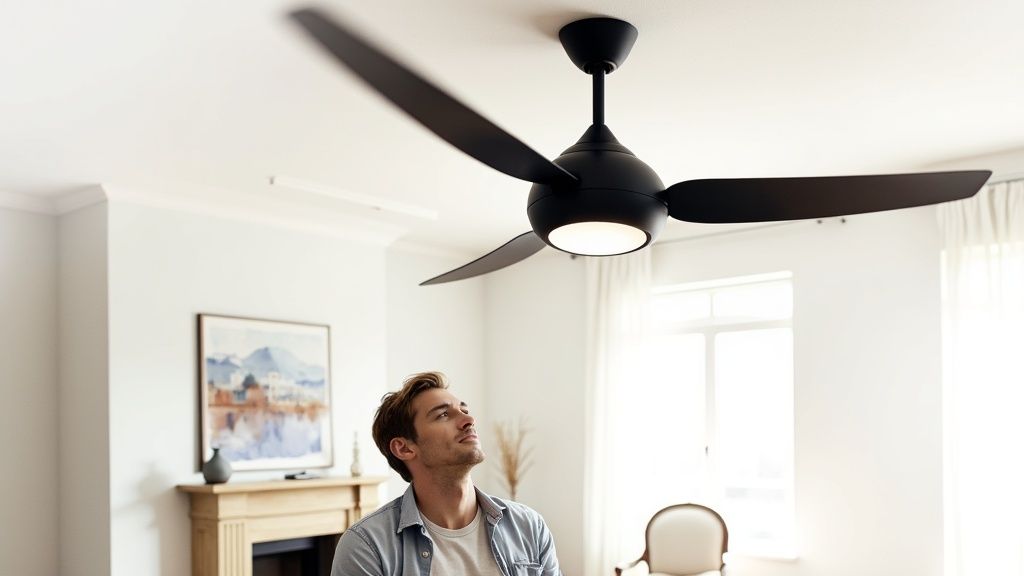
Upgrading to a high-performance ceiling fan, especially a premium model like the $359.00 Kute 44 or the stunning $589.00 Artemis XL5, is more of a long-term investment in your home than a simple purchase. Think of it like swapping a gas-guzzling sedan for a sleek electric car. Both get you from point A to point B, but one does it with far better efficiency, lower running costs, and more advanced tech under the hood.
This isn't just a niche trend; it's a global shift. The market for energy-efficient ceiling fans, valued at $5 billion in 2025, is set to grow at a healthy 7% each year through 2033. This boom is fueled by rising energy costs and a collective push for smarter, more sustainable homes. In fact, residential upgrades make up about 75% of the market as homeowners ditch old models for new ones that can slash electricity use by up to 70%.
Why Make the Switch Now
So what’s the secret sauce? It all comes down to powerful DC motors and smart controls. These components are turning energy-efficient ceiling fans into an essential upgrade for anyone looking to boost comfort while shrinking their energy bills.
A modern fan does more than just push air around. It creates a "wind chill" effect that makes you feel cooler without actually changing the room's temperature. It's a simple principle with a huge impact on your energy usage.
By using your fan to feel more comfortable, you can raise your thermostat setting during the summer. This lets your air conditioner run a lot less, dramatically cutting down on your home's biggest energy expense.
More Than Just Savings
Beyond the numbers on your utility bill, these fans offer a blend of style and function that can elevate any room. Here’s what really sets a premium, energy-efficient model apart:
- Whisper-Quiet Operation: Advanced motors have eliminated the annoying hum and wobble that plagued older fans. You'll barely know it's on.
- Smart Home Integration: Many new models sync up with systems like Alexa or Google Assistant, giving you voice-activated control and scheduling.
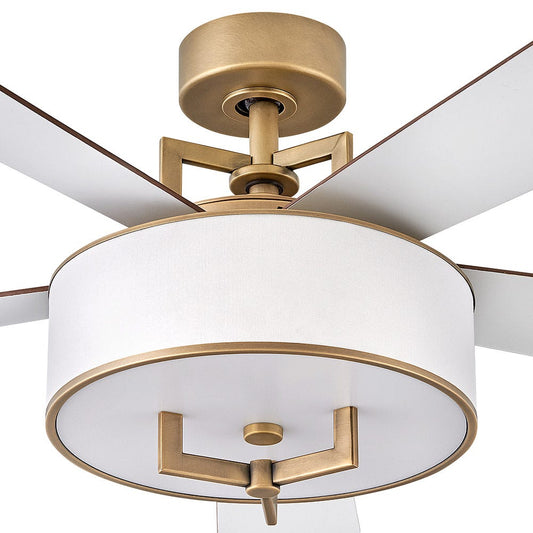
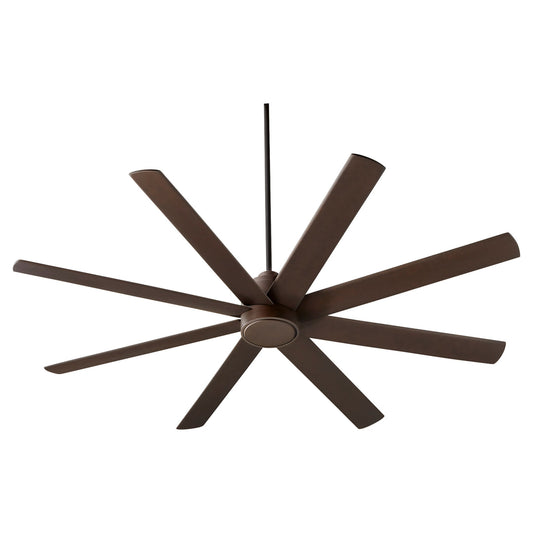
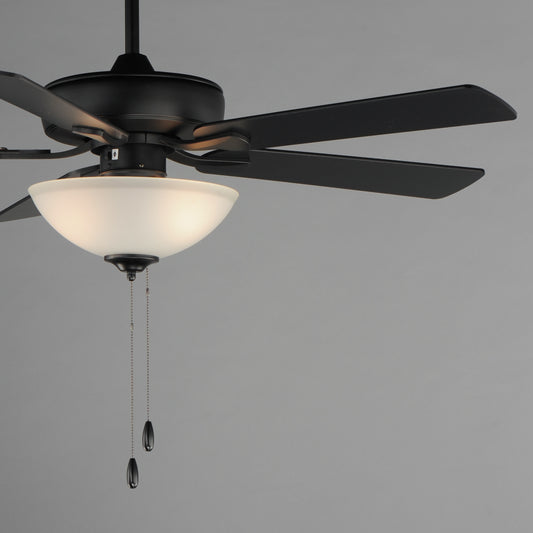
- Superior Design: With finishes ranging from matte black to warm woods, these fans act as a design centerpiece, not just a functional appliance.
To truly get the most out of your home's performance, it helps to understand broader energy efficiency considerations for your entire household. Investing in an energy-efficient fan is a fantastic first step toward creating a smarter, more comfortable, and cost-effective home.
The Tech Behind Better Airflow and Lower Bills
Ever wondered what really separates a modern, energy-efficient ceiling fan from that wobbly old one you grew up with? It’s not just the sleek designs or fancy remotes. The real magic is deep inside the motor. Getting a handle on this core technology is the key to understanding why a high-quality fan is one of the smartest investments for your home.
The workhorse behind older, power-hungry fans is the AC (Alternating Current) motor. This is classic, reliable tech that’s been around for over a century. It taps into the alternating current from your home’s wiring to create a magnetic field that gets the blades spinning. It works, but AC motors are pretty old-school—they tend to be bulky, generate a lot of waste heat, and pull a steady, significant amount of energy.
The DC Motor Difference
Contrast that with today's best energy efficient ceiling fans, which run on advanced DC (Direct Current) motors. Think of it like swapping an old incandescent bulb for a new LED. Both make light, but one does it with way more precision and a fraction of the energy. A DC motor takes the AC power from your wall, converts it to DC, and then uses a slick system of magnets and electronics for a much more controlled and powerful spin.
This leap in technology gives you a few massive advantages:
- Serious Energy Savings: DC motors are the undisputed champs of efficiency. They use less energy to generate more power, often consuming up to 70% less electricity than a comparable fan with an AC motor.
- Whisper-Quiet Performance: Because they run with less friction and create less heat, DC motors are incredibly quiet. You get all of the breeze with none of the distracting hum.
- More Control, More Comfort: This advanced motor lets designers pack in more speed settings—often six or more—so you can dial in your perfect comfort level, from a gentle stir to a powerful gust.
To give you a better idea of how they stack up, here’s a quick side-by-side look.
AC vs DC Motor Ceiling Fans at a Glance
This table provides a clear, side-by-side comparison of the key differences between traditional AC motor fans and modern DC motor fans, helping you quickly understand the benefits of upgrading.
| Feature | AC Motor Fans (Traditional) | DC Motor Fans (Energy Efficient) |
|---|---|---|
| Energy Consumption | Higher | Up to 70% lower |
| Noise Level | Audible hum, can be noisy | Virtually silent |
| Speed Options | Typically 3 speeds | 6 or more speeds, plus reverse |
| Control | Usually pull chains | Remote or wall control standard |
| Size & Weight | Larger and heavier | More compact and lightweight |
| Cost | Lower initial purchase price | Higher initial investment |
| Lifespan | Good | Often longer due to cooler operation |
As you can see, while the upfront cost might be a bit more, the long-term benefits in energy savings, performance, and quiet operation make DC motor fans a clear winner.
The superiority of DC motors is backed by hard data. These motors simply use less power to move the same amount of air. An Energy Star-rated fan, for example, can help cut cooling costs by 30% when used with an AC system. This efficiency is driving a 4.9% annual growth in ceiling fan sales in the U.S., a trend expected to continue through 2035. If you really want to get into the details, you can discover more insights about these market trends and the impact of energy regulations on fan technology from Renub Research.
How to Decode Efficiency: What Really Matters
When you start comparing fans, you’ll see a few key specs. The most common one is CFM (Cubic Feet per Minute). This number tells you exactly how much air the fan moves. A higher CFM generally means a more powerful fan that can handle a larger space.
But CFM alone doesn’t paint the full picture. A powerful fan that’s also an energy hog isn’t truly efficient. The real gold standard for measuring an energy efficient ceiling fan is its CFM-per-watt rating.
This simple but crucial metric tells you how much airflow you get for every single watt of electricity you use. A higher CFM-per-watt rating means you're getting more breeze for your buck, making it the ultimate indicator of true performance and long-term value.
Let’s break it down. One fan might boast a high CFM of 6,000 but use 100 watts to get there (that’s 60 CFM/watt). Another fan might produce 5,000 CFM while only sipping 25 watts (a whopping 200 CFM/watt). That second fan is vastly more efficient, delivering a strong breeze for a fraction of the energy cost.
As you browse our collections, you'll find that our premium models priced over $300 are engineered to maximize this all-important efficiency rating. If you're looking for top performers, you might be interested in our guide on the best DC motor ceiling fans. This focus on efficiency ensures that your investment not only elevates your room's style but actively works to lower your energy bills for years to come.
How to Choose the Perfect Fan for Your Space
Picking out the right fan isn't just about finding a style you like—it's about getting the perfect mix of size, features, and design to fit your room and your life. A fan that’s too small for your living room will just spin its blades without doing much good. On the other hand, a huge fan in a small bedroom can feel like a wind tunnel. Getting that balance right is the key to making sure your energy-efficient ceiling fan actually pays off in comfort and performance.
The first and most important step is getting the size right. This isn’t guesswork; it’s a simple calculation that matches the fan’s blade span to your room’s square footage. Nailing the size ensures you get that perfect breeze without wasting a dime on electricity.
Sizing Your Fan Like a Pro
Think of a fan's blade span like the engine in a car. You wouldn't drop a tiny engine in a massive truck and expect it to handle a heavy load. It's the same idea here—the fan's size has to be powerful enough for the space it needs to cool.
Here’s a quick guide to get you started:
- Small Rooms (Up to 75 sq. ft.): For spots like home offices, laundry rooms, or walk-in closets, a fan with a 36-inch or less blade span is all you need.
- Medium Rooms (76 to 144 sq. ft.): Your typical bedrooms and kitchens will feel great with a 42 to 48-inch blade span.
- Large Rooms (145 to 225 sq. ft.): In bigger spaces like living rooms or master bedrooms, you'll want a 52 to 56-inch fan to keep the air moving.
- Great Rooms (Over 225 sq. ft.): For those large, open-concept areas, go big with a blade span of 60 inches or more. You might even consider installing two fans to ensure even, balanced airflow.
To make it even easier, this flowchart walks you through the selection process based on your room's size.
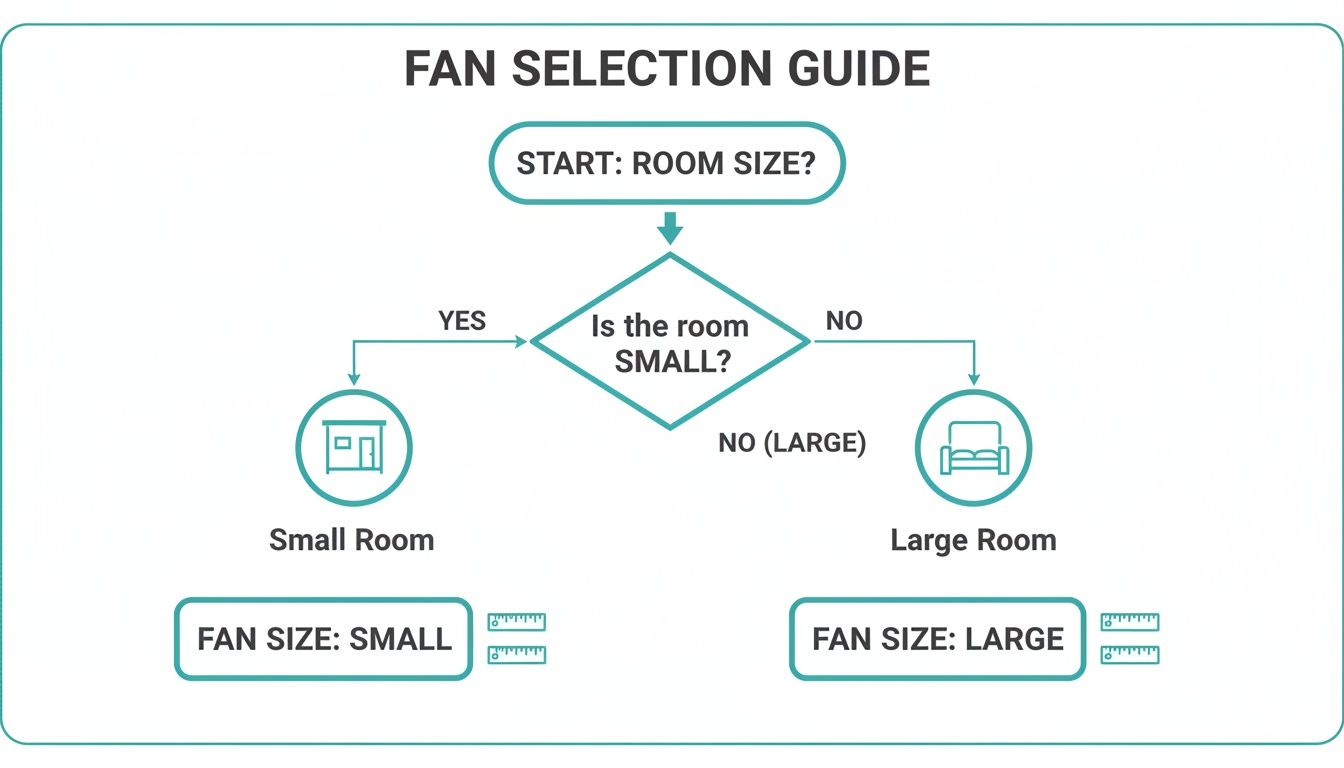
The takeaway here is simple: always start with your room's dimensions. It's the foundation for an efficient fan that will keep you comfortable.
Beyond the Blades: Premium Features to Look For
Once you've got the size figured out, it's time for the fun part—exploring the features that turn a good fan into a great one. The best energy-efficient ceiling fans, especially those in the $300 and up range, are loaded with tech built for convenience and comfort. These aren't just appliances anymore; they’re sophisticated fixtures that can define a room.
An ENERGY STAR® certified ceiling fan is a fantastic indicator of quality and efficiency. These models are up to 60% more energy efficient than their non-certified counterparts, ensuring your initial investment delivers long-term savings on your electric bill.
Look for models that blend high performance with modern living. Here are a few premium features worth considering:
- Integrated LED Lighting: Modern fans often come with built-in, dimmable LED lights. They're incredibly efficient, last for ages, and save you the hassle of ever changing a bulb.
- Smart Home Compatibility: Imagine adjusting your fan with a simple voice command. Many high-end models now sync with Amazon Alexa and Google Assistant, letting you control the speed, light, and direction without lifting a finger.
- Remote and Wall Controls: Forget fumbling with pull chains. A multi-function remote or wall control gives you precise command over multiple speed settings and lighting, often with handy features like a timer or scheduler.
Marrying Function with High-End Style
Finally, your fan should look as good as it feels. Today’s market is full of stunning designs that can act as a room's centerpiece. The days of choosing between just plain white or brown are long gone.
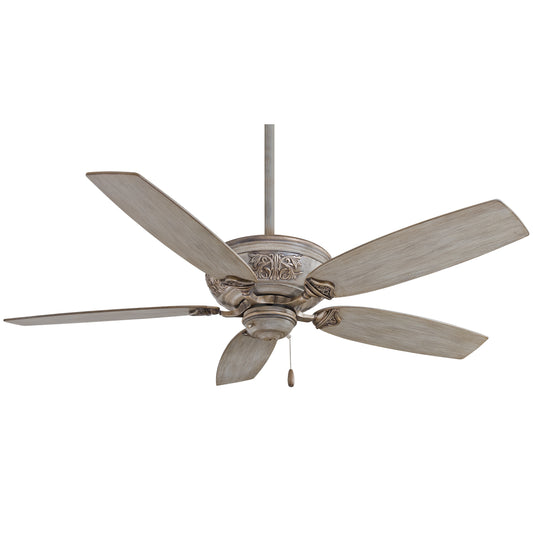
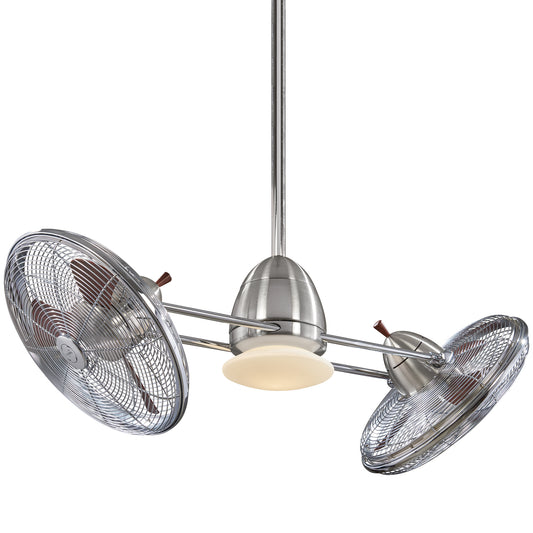
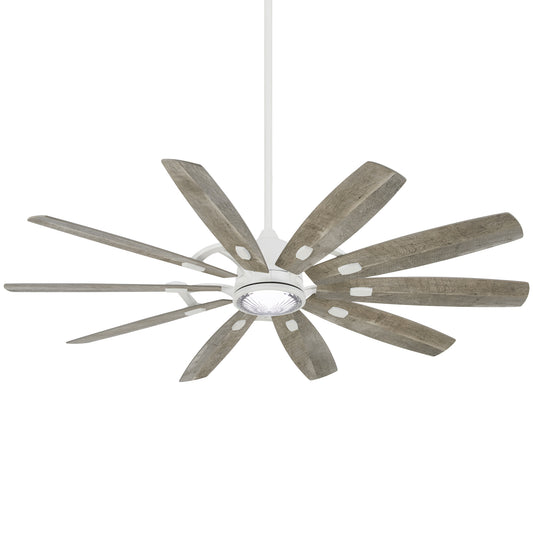
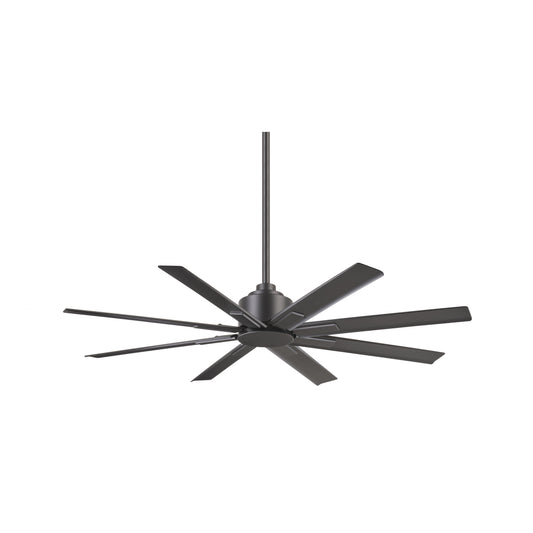
High-quality finishes can completely transform the look of your space. Consider a sleek brushed nickel or a bold matte black for a contemporary vibe. Or, if you’re after something cozier, warm woods and rustic finishes can create a more traditional atmosphere. The goal is to find a fan that doesn't just cool your room, but completes it.
At Fan Connection, we’ve put together collections like the modern Aerovon, priced at $699.00, or the statement-making Artemis XL5 for $589.00 to help you find that perfect match. Choosing the right fan is about creating a seamless blend of peak performance, everyday convenience, and a design you'll love for years to come.
Calculating Your Return on Investment
Investing in a premium energy-efficient ceiling fan might seem like a big purchase upfront, but this is where the numbers get really exciting. Don't think of it as just another expense. Instead, picture it as a high-yield savings account for your home's energy costs. Once you see how a few simple factors add up, you'll realize how quickly that initial investment comes back to you—often in just a few years.
The real value becomes crystal clear when you compare an old, power-hungry fan to a modern DC model. Let's say your current fan is a standard 100-watt AC model. Upgrading to a sleek, 30-watt DC fan isn't just about getting a quieter, more stylish fixture. You're slashing that specific energy use by a whopping 70%. This is exactly how a smart purchase today turns into real, tangible savings month after month.
The Simple Savings Formula
You don't need to be a math whiz to figure out your potential savings. It all comes down to a straightforward calculation that puts your return on investment into clear perspective.
Here’s the basic formula to estimate your annual savings:
- Find the Wattage Difference: Subtract the new fan's wattage from the old fan's wattage. (e.g., 100 watts - 30 watts = 70 watts saved)
- Calculate Daily Savings: Multiply the watts saved by the hours you use the fan daily, then divide by 1,000 to get kilowatt-hours (kWh). (e.g., 70 watts x 8 hours/day = 560 watt-hours / 1,000 = 0.56 kWh saved per day)
- Determine Annual Savings: Multiply your daily kWh savings by your local electricity rate, then multiply by 365. (e.g., 0.56 kWh x $0.15/kWh x 365 days = $30.66 saved per year, per fan)
While that might not sound like a fortune at first, remember this is for just one fan. If you upgrade three fans in your home, you're suddenly looking at nearly $100 in savings every single year. Over the fan's lifespan, those savings can easily add up to more than its initial purchase price, making it a truly smart financial move.
To put this into perspective, let's look at a simple comparison.
Estimated Annual Savings with an Energy Efficient Fan
This table illustrates the potential cost savings over one year when replacing a standard AC fan with a modern, energy-efficient DC fan, based on average daily usage.
| Fan Type | Average Wattage | Estimated Annual Cost (8hrs/day @ $0.15/kWh) | Potential Annual Savings |
|---|---|---|---|
| Standard AC Fan | 100 watts | $43.80 | - |
| Energy Efficient DC Fan | 30 watts | $13.14 | $30.66 |
As you can see, the switch to a DC fan delivers significant savings that only grow over time, especially when multiplied across several rooms in your home.
The Energy Star Advantage: When you see that ENERGY STAR® label, you can trust you're getting a proven performer. These certified models are up to 60% more efficient than conventional fans because they meet strict guidelines set by the U.S. Environmental Protection Agency. It's a clear symbol that you're investing in guaranteed efficiency and long-term savings.
More Than Just Money in Your Pocket
Your return on investment goes way beyond your electricity bill. By choosing an energy-efficient model, you're making a positive impact on the environment. Less energy consumption means a smaller carbon footprint for your household, contributing to a healthier planet one spin at a time. It’s a clear win for both your wallet and the world. To learn more about this dual benefit, check out our guide on energy efficiency and cost savings with eco-friendly fans.
On top of that, these kinds of upgrades add real, tangible value to your home. Beyond your own savings, think about how modern, efficient features can also help to increase property value. Potential buyers see these thoughtful additions as major perks, making your home more attractive on the market. This long-term value proves that investing in a high-quality, energy-efficient ceiling fan is one of the wisest upgrades you can make.
Installation and Care for Lasting Performance

You’ve found the perfect energy efficient ceiling fan—a stylish fixture that promises years of comfort and savings. But getting that fan from the box to the ceiling correctly is just as crucial as the technology inside. Proper installation and a little bit of upkeep are what will keep it performing flawlessly and quietly for its entire lifespan.
Think of it like buying a high-performance car. You wouldn't just drive it off the lot without making sure everything is tuned and aligned. A ceiling fan is no different. It needs to be installed perfectly to deliver that smooth, silent airflow you're looking for. While some homeowners might tackle it themselves, we always suggest hiring a licensed electrician, especially for models over $300, to ensure it's done safely and securely.
Setting the Stage for Success
Before a single blade goes up, there are a couple of non-negotiable checks. The most important one? Confirming your ceiling's electrical box is fan-rated. This is a huge deal. A standard light fixture box is only meant to hold a few pounds. A ceiling fan, on the other hand, exerts a lot of weight and torque when it's spinning. A fan-rated box is built to handle that dynamic load, preventing dangerous wobbling or, worse, a total collapse.
Your electrician will make sure this box is anchored securely to a ceiling joist or a support brace, creating a solid foundation for a stable, silent fan.
Another step that separates a serene experience from an annoying distraction is blade balancing. Even a tiny imbalance can create noise and put extra wear on the motor. Most quality fans come with a balancing kit to help you make those small adjustments, ensuring the blades spin in perfect harmony.
Your Professional Installation Checklist
Even when you hire a pro, it helps to be in the loop. Knowing what to look for ensures the job gets done right. Here are a few things to go over with your installer:
- Confirm the Fan-Rated Box: It's worth asking them to double-check that the electrical box is properly rated and secured before they begin.
- Get the Downrod Right: Talk about your ceiling height to choose the best downrod length. You want the fan to hang at the ideal height for airflow—usually 8 to 9 feet from the floor.
- Secure All Connections: Ask them to make sure all hardware and electrical connections are tightened down to prevent any rattles or wobbles later on.
- Test Everything: Before they pack up, have them run the fan through all its speeds, test the reverse function, and check the light kit to make sure it all works perfectly.
If you’re confident in your DIY skills and want to give it a shot, following a good guide is essential. You can learn how to install a ceiling fan safely and easily with our step-by-step instructions.
Keeping Your Fan in Peak Condition
Once your fan is up and running, a little TLC will go a long way. The good news is that maintaining an energy-efficient fan is incredibly simple, but it makes a real difference in performance and longevity.
The most important task is keeping the blades clean. A layer of dust doesn't just look messy; it creates drag, making the motor work harder and wasting energy. A quick wipe-down with a soft cloth every month or two is usually all it takes to keep the air moving freely.
About twice a year, give the fan a quick visual check. See if any screws on the blade brackets or motor housing have come loose over time. A simple tightening is often all that's needed to keep your fan running as quietly and smoothly as the day it was installed. A few minutes of care protects your investment and keeps you enjoying that perfect breeze.
Answering Your Top Questions
Making a smart investment in your home usually comes with a few questions, and that’s a good thing. When it comes to something as important as comfort and energy savings, you deserve clear, straightforward answers. We've gathered the most common questions we hear about energy-efficient ceiling fans to help you feel completely confident in your decision.
Are Energy Efficient Ceiling Fans Really Worth the Higher Price?
It’s a fair question. You see a premium model costing $300 or more and wonder if it’s really worth it. The short answer? Absolutely. Think of it as a long-term investment, not just a purchase.
That higher price tag gets you a superior DC motor that can use up to 70% less electricity than a standard AC fan. This isn't just a number on a box; it translates directly into lower utility bills, month after month.
But the real value goes beyond just the energy savings. You're also investing in:
- Whisper-Quiet Operation: Forget that annoying hum. Advanced motors are engineered to be practically silent.
- Better Control: You get far more speed settings, so you can dial in the perfect amount of breeze.
- Smart Features: Many models come with handy scheduling and voice control for next-level convenience.
- Lasting Quality: These fans are built with better materials, meaning they're designed to last for years.
When you add it all up, the initial cost is quickly offset by the financial savings, improved comfort, and durability. It's a true upgrade for your home's efficiency and style.
Can a Ceiling Fan Replace My Air Conditioner?
Not exactly—they’re more like teammates. A ceiling fan and an air conditioner have two different but complementary jobs. A fan creates a "wind-chill" effect, making the air feel several degrees cooler on your skin, but it doesn't actually lower the room's temperature. An AC, on the other hand, actively cools the air.
The smartest strategy is to use them together. By circulating the cool air your AC produces, the fan lets you raise your thermostat setting by a few degrees without even noticing a difference in comfort. That simple adjustment means your air conditioner—one of your home's biggest energy hogs—runs far less often, leading to some serious energy savings. And on milder days, the fan alone is often all you need.
How Does a Ceiling Fan Save Energy in the Winter?
This is one of the most overlooked perks of a high-quality, energy-efficient ceiling fan. Most premium DC motor fans have a reversible motor, turning them into a year-round savings tool. It’s pretty clever how it works:
- Reverse the Blades: In the winter, you just flip a switch to make the fan run in a clockwise direction.
- Run it on Low: All you need is a gentle, slow spin.
- Circulate Warm Air: This motion gently pulls the cooler air from the floor up and pushes the warm air that’s naturally risen to the ceiling back down into your living space.
By continuously circulating this trapped heat, the fan helps your room feel warmer and more comfortable. This lets you lower your thermostat by a degree or two, reducing your heating costs without ever feeling a chill. It’s a simple trick to get more out of your fan all year long.
Do Smart Features Actually Save More Energy?
Yes, they really do. Smart features are all about automating efficiency, taking forgetfulness out of the equation. For instance, scheduling and timers ensure your fan only runs when you actually need it to, preventing it from spinning all day in an empty room and wasting energy.
When you connect the fan to a smart home system like Alexa or Google Assistant, you can take things even further. The fan can work in sync with your smart thermostat to automatically maintain your home's ideal climate. This kind of intelligent automation fine-tunes your energy use for maximum savings and convenience, making sure you never use more electricity than necessary. It's the ultimate set-it-and-forget-it approach to a more efficient home.
At Fan Connection, we believe the right fan does more than just move air—it enhances your home's comfort, style, and efficiency. We've curated a collection of the finest energy-efficient ceiling fans to help you find the perfect match for any space. Ready to experience the difference a premium fan can make? Explore our collections today and find your perfect fan at Fan Connection.


