







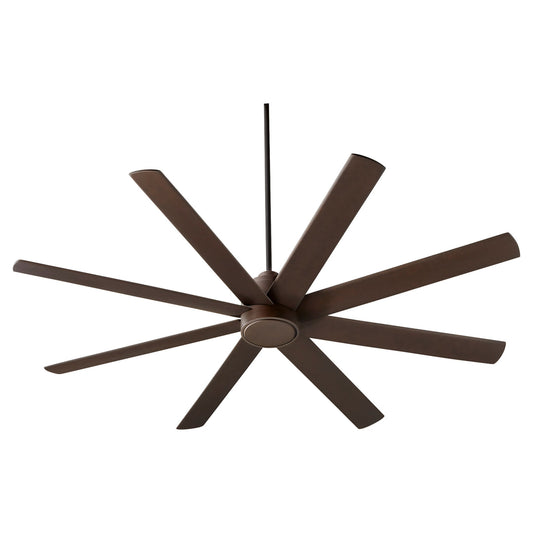


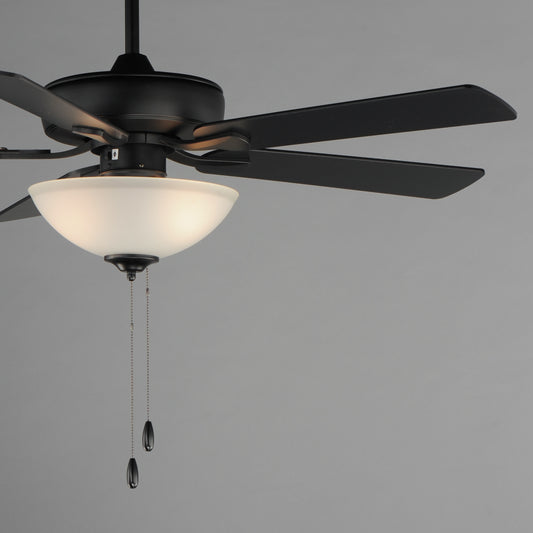


Best Guide 2026: is a 52in can better than a 60 inch fan?
So, is a 52-inch fan better than a 60-inch fan? Honestly, there’s no single right answer, but it's a fantastic question that gets to the heart of home comfort. The real answer all comes down to your room size. A 52-inch fan is almost always the perfect partner for standard rooms up to 300 square feet, like your cozy bedroom or bustling home office. For anything larger, a 60-inch fan isn't just a nice-to-have; it's the undisputed champion you need for moving enough air to make a real difference.
The Great Fan Debate: Does Size Really Matter?
Picking between a 52-inch and a 60-inch fan might feel like a minor detail, but it’s one of the most critical decisions you'll make for your home's comfort. Get it wrong, and you'll be disappointed. You’ll either end up with a fan that barely stirs the air or one that feels like a helicopter trying to land in your living room. It's the ultimate home decor showdown!
When it comes to ceiling fans, size is everything. It’s all about matching the fan's power to your room’s square footage.

A Tale of Two Rooms
Let's get practical. Imagine a typical 12'x15' bedroom (180 sq ft). A 52-inch fan is the hero here. It moves air efficiently, creating a comfortable breeze without being too loud or visually overwhelming. It’s designed for exactly this kind of space.
Now, picture a spacious 20'x20' great room (400 sq ft) with high ceilings. Sticking a 52-inch fan in this room would be a classic mistake. It would have to run on its highest setting 24/7, making more noise than breeze and leaving the corners of the room feeling stuffy. It's like sending a rowboat to do a battleship's job!
This is where a 60-inch fan isn't just an option—it's the only real choice. Its longer blades are built to circulate a much higher volume of air over a wider area. It’s a job a smaller fan simply can’t do.
Quick Comparison: 52-Inch vs. 60-Inch Fans
To make it even clearer, here’s a quick breakdown of where each fan size shines. This table should help you see at a glance which one is right for you.
| Attribute | 52-Inch Fan | 60-Inch Fan |
|---|---|---|
| Best For Room Size | Up to 300 sq. ft. | Over 300 sq. ft. |
| Ideal Room Types | Standard bedrooms, kitchens, home offices. | Great rooms, large living areas, lofts. |
| Airflow Profile | Focused and efficient for smaller areas. | Broad, high-volume circulation. |
| Typical Use Case | Provides comfortable, direct cooling. | Prevents stagnant air in large spaces. |
At the end of the day, picking the right fan isn’t that complicated if you follow one simple rule.
The golden rule is simple: don't under-size for a large room or over-size for a small one. A fan matched correctly to its environment operates more efficiently, quietly, and effectively, maximizing your investment in both comfort and style.
While these guidelines are a great place to start, there’s more to the story than just blade span. Things like motor type, blade pitch, and energy ratings also play a huge part in how well a fan performs. To explore our fan collections, dive into our 52-inch and 60-inch ceiling fan collections to make sure you’ve covered all your bases.
When it comes to picking a ceiling fan, it's easy to get hung up on size. But thinking a 60-inch fan is automatically more powerful than a 52-inch one is a trap many people fall into. The truth is, the specs inside the fan matter way more than the blade span.
The real measure of a fan's performance is its CFM (Cubic Feet per Minute), which tells you exactly how much air it moves. A top-notch 52-inch fan with a great motor can easily outperform a poorly designed 60-inch model. It all comes down to the quality of the motor and the angle of the blades.
The Powerhouse Behind the Blades
The motor is the heart and soul of your fan, and there are two main players on the field:
- AC (Alternating Current) Motors: These are the old-school standard. They're dependable and cheaper upfront, but they use more energy and usually only offer a few speed settings.
- DC (Direct Current) Motors: This is where modern fan technology shines. DC motors are whisper-quiet and incredibly efficient, using up to 70% less energy. Plus, they often come with six or more speeds, giving you total control over your comfort.
This is why a 52-inch fan with a solid DC motor can blow a bigger, 60-inch fan with a basic AC motor right out of the water. It’s a perfect example of smart engineering winning out over sheer size.
Don't just shop by diameter; shop by CFM and motor type for guaranteed performance. A powerful motor on a 52-inch fan often delivers more comfort than an underpowered 60-inch model.
Blade Pitch: The Unsung Hero of Airflow
Another detail that makes a huge difference is blade pitch—the angle of the blades. Think of it like a propeller. A steeper angle, usually between 12 and 16 degrees, lets the blades grab more air and push it down with every spin.
A fan with a good blade pitch will feel much stronger, even if it’s smaller. This is why a premium 52-inch fan with aggressively angled blades can create a better breeze than a cheap 60-inch fan with flat, flimsy ones. If you're ready to get nerdy about it, you can explore the relationship between fan blade count and fan efficiency in more detail on our other blogs.
Take a look at the Fan Connection 'Artiste' 52-inch fan (priced over $400). It’s a fantastic example of a fan that gets it right. By pairing a high-efficiency DC motor with a smart blade design, it generates some serious airflow. For a standard bedroom, it’s a much better pick than many larger, less powerful fans, proving that when you ask "is a 52-inch fan better than a 60-inch," the answer is almost always in the details.
Matching Fan Size to Your Room's Dimensions
Let’s be real: choosing the right fan size is about more than just picking a design you like. It’s the first—and most important—step to ensure your fan actually does its job, keeping you comfortable without looking out of place or creating a safety hazard. Get this part right, and you're well on your way to home comfort nirvana.

Everything starts with accurately measuring your room. While it seems simple, there are some great tips on how to measure a room for furniture that work just as well here. Taking a moment to get precise dimensions will save you a lot of headaches later.
Non-Negotiable Placement Rules
Before we even get into aesthetics, let's cover safety. There are two hard-and-fast rules for any ceiling fan installation, no matter the size.
- Floor Clearance: The blades have to be at least 7 feet off the ground. This isn't a suggestion; it’s a critical safety standard to keep everyone safe from spinning blades.
- Wall & Ceiling Clearance: You need a minimum of 18-24 inches of space between the fan's blade tips and any walls or sloped ceilings. This ensures the fan has enough room to pull in air and circulate it properly.
These two measurements are your go/no-go criteria. They'll immediately tell you if a larger fan is even an option for your space.
Finding the Visual Sweet Spot
Proportion is everything. A fan that’s too big or too small can throw off the entire look and feel of a room, making it feel unbalanced.
Think about it: sticking a massive, 60-inch fan like the impressive Fan Connection ‘Andros’ (starting over $500) in a cozy 12'x12' bedroom would be completely overwhelming. It would make the ceiling feel lower and the room seem cramped. Just way too much fan for the space.
On the flip side, putting a standard 52-inch fan in a huge 20'x25' great room would make it look like an afterthought. It would appear comically small and struggle to move enough air to make a difference, getting visually lost up there.
If you want to dig deeper into the numbers, you can find more guidance in our various product collections. When you're deciding if a 52-inch fan is better than a 60-inch fan, getting the scale right is just as important as checking the specs.
The Aesthetic Impact On Your Home Decor
A ceiling fan is more than just a motor with blades; it’s a functional centerpiece that can define the entire feel of a room. The size you pick—whether it's a trusty 52-inch or a dramatic 60-inch model—plays a huge role in your home's visual balance. It's really a decision between blending in seamlessly or making a bold statement.

It’s a lot like figuring out what size air conditioner do I need for proper cooling—getting the scale right is everything. The right size ensures your fan complements your decor instead of clashing with it.
The Bold Statement of a 60-Inch Fan
Let's be clear: a 60-inch fan is meant to be seen. Its massive diameter makes it an instant focal point, perfect for grand rooms with high or vaulted ceilings where a smaller fan would just look lost. This size commands attention and really shines in a few specific design styles.
- Modern Industrial: The impressive scale of a 60-inch fan is a perfect match for the raw, open spaces of an industrial loft. When you pair a large fan like the Fan Connection 'Aviation' ($599) with exposed brick and metal, it becomes a powerful architectural feature.
- Spacious Coastal: In a breezy, light-filled great room with a coastal theme, a big fan amplifies that sense of openness. The Fan Connection 'Artemis XL5' (over $850), with its broad, sweeping blades, feels like a gentle sea breeze and anchors the room’s relaxed vibe.
The Versatile Integration of a 52-Inch Fan
While a 60-inch fan goes for drama, the 52-inch fan is the master of versatility. Its more modest size lets it fit into a much wider range of design styles without overpowering the room, making it the go-to choice for the vast majority of homes.
For most standard bedrooms, offices, and kitchens, a 52-inch fan is the superior aesthetic choice. It provides perfect functional scale without visually lowering the ceiling or cluttering the sightlines, allowing your other decor to shine.
This adaptability is its true strength. For instance, a sleek, minimalist fan like the Fan Connection 'Basic Max' (around $300) is an ideal fit for mid-century modern or Scandinavian decor. Its clean lines and unobtrusive size add function without messing with the intentional simplicity of the design.
Ultimately, when you're deciding if a 52-inch fan is better than a 60-inch fan for your space, just ask yourself: do you want your fan to be a standout piece or a quiet, supporting player?
Analyzing the Total Cost of Ownership
When you’re weighing a 52-inch fan against a 60-inch one, it's easy to get hung up on the price tag. But the sticker price is just the first chapter of the story. To really figure out the best investment, you have to look at the total cost over the fan’s entire life—that means the initial purchase, the installation, and what it costs to run year after year.
Right off the bat, the upfront cost difference is pretty clear. A versatile and stylish 52-inch fan like the Fan Connection 'Basic Max' will often run you somewhere around the $300 mark. Step up to a premium 60-inch model designed for large spaces, like the impressive Fan Connection ‘Andros’, and you could be looking at $500 or more, especially if it has a high-end DC motor.
Factoring in Installation Costs
Beyond what you pay at checkout, you have to think about getting the fan installed. A standard 52-inch fan is usually a straightforward, one-person job for a qualified electrician. They’re relatively lightweight and designed to fit standard ceiling electrical boxes without any fuss.
A bigger 60-inch fan, on the other hand, is often heavier and a bit more awkward to handle. It might need a heavy-duty, reinforced ceiling box to manage the extra weight and torque. This can turn the installation into a more complex, two-person job, which could bump up your labor costs.
The bigger and heavier the fan, the more critical a properly reinforced ceiling mount becomes. Skimping on this can lead to serious safety issues and expensive repairs down the road, turning a simple upgrade into a major headache.
The Long Game of Energy Efficiency
Here’s where the math really gets interesting. While a 60-inch fan often costs more to buy, it can actually be cheaper to run over time. This is especially true for models equipped with high-efficiency DC motors.
Think about it this way:
- Scenario 1: A 52-inch fan in a large room has to run on its highest speed just to move enough air. It's working overtime and guzzling energy.
- Scenario 2: A 60-inch DC fan in that same room can run on a quiet, low setting while moving the same amount of air—or even more—using way less electricity.
Those long-term savings can eventually make up for the higher initial price. If you’re focused on keeping your utility bills down, exploring the world of energy-efficient ceiling fans is a no-brainer. A high-efficiency 60-inch fan in the right room is a perfect example of how a bigger initial investment can deliver bigger savings and better comfort in the long run.
Your Decision Guide: Product Recommendations for Every Space
Alright, we’ve covered the technical details. Now, let's get practical and figure out which fan actually belongs in your home. Choosing between a 52-inch and a 60-inch fan is all about matching the right size to your specific room and needs. To make it simple, we've put together our top recommendations for the most common spaces in a home.
First, let's look at the total cost of ownership. It's not just about the sticker price.

As you can see, a 60-inch fan might cost more upfront, but a high-efficiency model can make up for it with long-term energy savings. The total investment often ends up being more comparable than you’d think.
For the Modern Master Bedroom
In a typical master bedroom—usually under 300 sq. ft.—a 52-inch fan is the sweet spot. It delivers a comfortable breeze without overwhelming the space or creating an annoying wind tunnel effect. You get just the right amount of airflow for a relaxing environment.
Our go-to for this space is the Fan Connection 'Artiste' 52-inch fan, which goes for over $400. Its ultra-quiet DC motor and clean, modern lines make it a perfect fit for a peaceful retreat. You get powerful cooling without any of the distracting noise.
When you're weighing a 52-inch vs. a 60-inch fan for a bedroom, the 52-inch model almost always wins. Its focused airflow and quiet operation are exactly what you want for a restful space.
For the Open-Concept Living Room
If you have a large, open-concept living area or a great room over 300 sq. ft., you need a fan with some serious air-moving power. This is where a 60-inch fan isn’t just a nice-to-have; it's a necessity. The larger blades are designed to circulate air across a much wider area, making sure no corner feels stuffy.
For these bigger rooms, we highly recommend the Fan Connection 'Aviation' 60-inch fan, priced at $599. This fan is an absolute workhorse, boasting a massive CFM rating that ensures true room-wide comfort. Its bold, industrial style also turns it into a striking design feature. For more style inspiration, take a look at our curated 52-inch ceiling fan design ideas.
For the Vaulted Great Room
Have a great room with soaring vaulted ceilings? You need a fan that delivers on both performance and design, with a strong focus on efficiency to keep energy costs down.
Look no further than the Fan Connection 'Artemis XL5' 60-inch fan. It’s a premium choice, starting at $850, but it's engineered for exactly this kind of space. Its superior DC motor and aerodynamic blades push an incredible amount of air with minimal energy use, making it a smart, long-term investment for any energy-conscious homeowner.
Answering Your Top Questions
Deciding between a 52-inch and a 60-inch fan often brings up a few specific "what if" scenarios. You're not the first to ask! Let's clear up some of the most common questions we hear from homeowners.
Can I Put a 60-Inch Fan in a Medium Room If My Ceilings Are High?
Absolutely, but it’s all about control. In a room that’s on the smaller side for a 60-inch fan (think 250-300 sq. ft.) but has ceilings over 10 feet, a larger fan can actually be a great choice. You just need to run it on a lower speed.
The extra height gives that powerful airflow room to spread out and circulate gently, rather than creating a wind tunnel directly underneath. A model with a modern DC motor, like the Fan Connection 'Aviation' 60-inch Fan (priced at $599), is ideal here because its multiple speed settings let you fine-tune the breeze perfectly.
Think of it this way: the tall ceiling acts like a buffer, softening the downdraft so you get broad, even air movement instead of an overwhelming gust.
Do More Blades Automatically Mean More Airflow?
It’s a common myth, but no. While a fan with five or six blades might look impressive, more blades can sometimes create more drag, forcing the motor to work harder for less output. The real magic comes from a combination of a powerful motor, the right blade pitch, and smart aerodynamic design.
Don't get caught up in counting the blades. A well-engineered 3-blade fan will easily outperform a clunky 5-blade model every time. Always check the CFM rating and motor specs first—that's where you'll find the truth about performance.
How Much Does It Really Cost to Run a High-End DC Motor Fan?
This is where modern fans really shine. A high-efficiency fan with a DC motor is incredibly light on your electricity bill. Even with regular use, you can expect to spend as little as $5 to $15 per year to run it.
That’s a massive drop from older AC motor fans, which could easily set you back $50 or more annually. The initial investment in a quality DC fan quickly pays for itself, one tiny energy bill at a time.
Ready to find that perfect centerpiece for your room? The experts at Fan Connection have put together collections to match any style and space. Take a look at our premium 52-inch and 60-inch ceiling fan collections and find your perfect fit today.


