











Why Retailers Offer Ceiling Fans with Energy Efficient Certification
Yes, many leading retailers offer ceiling fans with energy efficient certification, making it easier than ever to find stylish models that also happen to lower your electricity bills. Finding the right fan is a blast—it’s like picking the perfect piece of art that also saves you money. Retailers are tuning in to what homeowners really want these days: performance and sustainability.
Why Smart Retailers Champion Energy Efficient Fans
Ever notice how ceiling fans with labels like ENERGY STAR are getting prime real estate in showrooms? It's not just a marketing trick. It's a direct response to a major shift in what homeowners, designers, and builders are looking for.
Today’s buyer is more informed than ever. They want products that deliver long-term value, and certified fans are quickly becoming the new standard for home comfort. This isn’t about sacrificing style; it's about upgrading your home with a fixture that's as smart as it is beautiful.

This isn't just a fleeting trend—it’s a powerful market force. In 2025, the global market for energy-efficient ceiling fans hit an impressive $5 billion valuation. Projections show it growing at 7% annually through 2033. What's driving this? Rising energy costs and a bigger focus on sustainability, pushing people toward advanced DC motor fans that can slash electricity use by up to 70%.
A Response to Consumer Demand
Smart retailers get it. Stocking these fans isn't just about being eco-friendly; it's good business. They see that more and more people are interested in understanding energy efficiency in their homes. When a shopper sees that certification logo, they see a promise of quality and savings.
Choosing a certified fan is an investment in superior performance, quieter operation, and lasting quality. It’s a guarantee that the product has passed rigorous testing for both airflow and energy consumption, giving you peace of mind.
More Than Just a Sticker
For retailers, offering certified fans elevates their entire inventory. Instead of competing only on price, they can highlight real benefits that savvy customers actually care about.
- Superior Technology: These fans often feature advanced DC motors. They aren't just more efficient—they also offer more speed settings and run whisper-quiet.
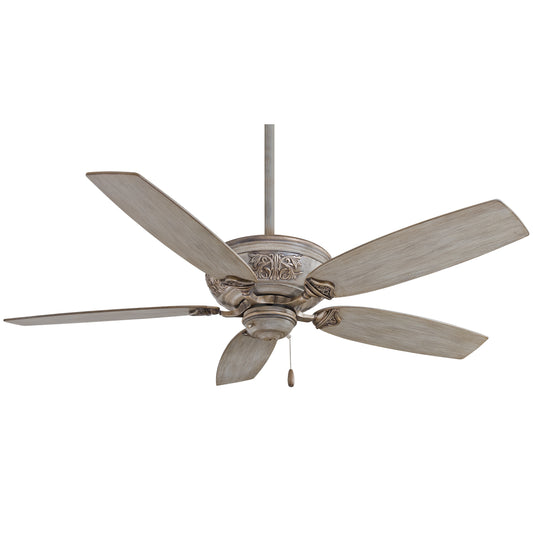
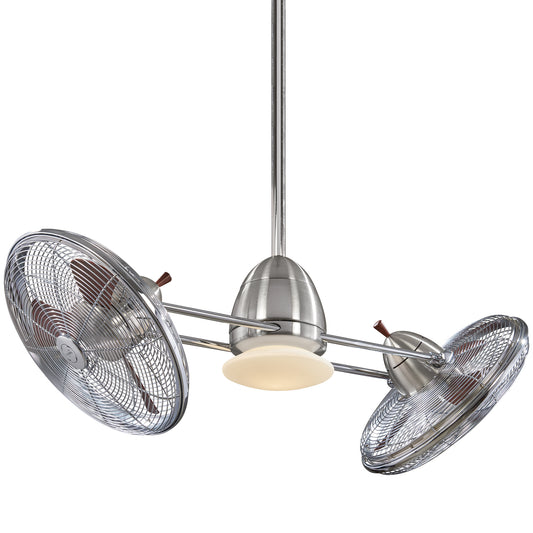
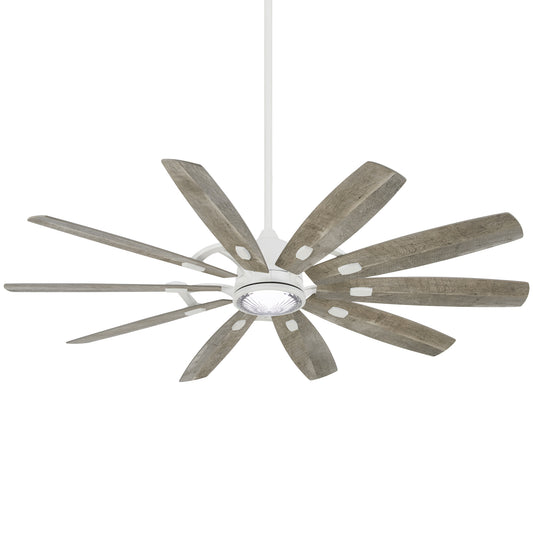
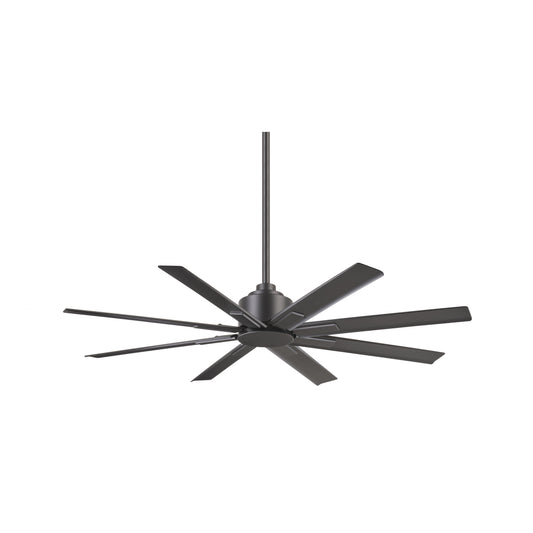
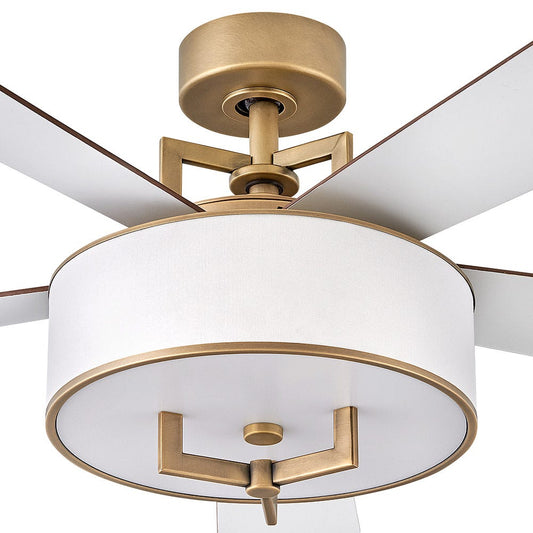
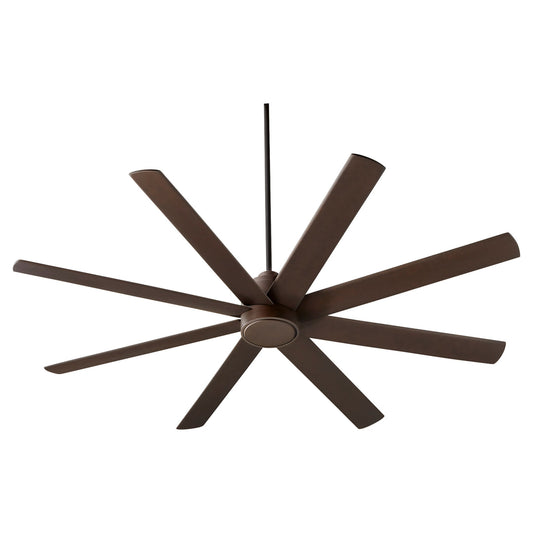
- Curated Style: Efficiency now comes in stunning designs. Think of the sleek, modern lines of the Aerovon fan ($450) or the rugged charm of the Barn fan ($520).
- Verified Performance: Certifications provide third-party validation that a fan delivers on its promises. That builds trust and keeps customers coming back.
Ultimately, specialized retailers make it easier to find a premium, high-performance model that elevates your space. By guiding customers toward these smarter choices, they position themselves as trusted advisors. If you want to find these experts, you might find our guide on the best places to buy ceiling fans helpful.
Making Sense of Energy Certifications
When you're shopping for a ceiling fan, energy certifications can feel like trying to read a foreign language. But trust me, learning to spot these labels is your best tool for cutting through the marketing noise and finding a fan that's genuinely high-quality and efficient.
The one you really want to look for? The ENERGY STAR label.

When you see that little blue logo, it’s not just a sticker. It's proof. It means the fan has gone through rigorous, independent testing for both its performance and its efficiency, meeting the strict standards set by the U.S. Environmental Protection Agency (EPA).
To earn that seal of approval, certified fans must be at least 60% more efficient than conventional fan and light units. That's a huge jump in performance, and it translates directly into real savings on your electricity bill.
What Is CFM Per Watt, Anyway?
The secret sauce behind this efficiency is a metric called airflow efficiency, measured in cubic feet per minute (CFM) per watt. Think of it like a car's miles-per-gallon rating. It tells you exactly how much air a fan can move for every single watt of energy it uses.
A higher CFM-per-watt number is always better—it means more cooling power for less cost. Standard fans often just chew up energy without producing great airflow, but an ENERGY STAR model is engineered to squeeze maximum performance out of every watt.
We’ve found that this focus on efficiency almost always leads to a better-built fan overall. To hit those strict targets, manufacturers have to use superior motors and more aerodynamic blade designs. The result? A fan that’s not just cheaper to run, but also quieter and built to last.
From Your Bill to Your Room
So, what does all this tech talk actually mean for you? It means you can run your fan 24/7 during a heatwave without dreading your next utility bill. Better yet, the wind-chill effect from a good fan allows you to bump your thermostat up a few degrees, saving even more on your air conditioning costs.
This is especially true with premium models that don't compromise on style. A fan like the gorgeous Artemis IV ($700+) is more than just a design piece; its certification guarantees it performs as beautifully as it looks. In the same vein, a powerhouse like the Aviation fan ($630+) can move a massive volume of air in a large, open room without guzzling electricity.
Thankfully, you don't have to be an expert to find one. All reputable retailers offer ceiling fans with energy efficient certification clearly marked, because they know it’s a huge selling point for anyone who cares about performance and long-term value. To dive deeper, you can learn more about energy efficient ceiling fans right here on our blog.
Finding Certified Fans on Retailer Websites
So, you're ready to find the perfect energy-saving fan without the headache? I get it. Navigating retailer websites can feel like a chore, but with the right game plan, you can quickly zero in on the best certified models. Most reputable online stores that specialize in high-quality fans actually make it pretty simple to find what you need.
The trick is knowing how to use their search and filtering tools to your advantage. Instead of endlessly scrolling through hundreds of options, you can use specific features to instantly shrink the selection to only those fans with an energy-efficient certification. This saves a ton of time and guarantees you're looking at products that meet high standards for both performance and savings.
Master the Search Filters
Your best friend when shopping for fans online is the filter menu. You’ll usually find it on the side or top of a product category page. This is where retailers make it easy to find ceiling fans with an energy efficient certification by letting you select it as an option.
Just look for a filter section labeled something like "Certifications," "Features," or "Standards." Inside, you should find a checkbox for ENERGY STAR. Give that a click, and the page will immediately refresh to show you only certified models. It's that easy.
- Here's a real-world example for a designer: An interior designer sourcing a fan for a green-certified building project needs a statement piece that also meets strict efficiency codes. They can filter for ENERGY STAR and then narrow it down further by style, like "Modern," to find a fan like the stunning Bowie ($540). This ensures both aesthetics and compliance are locked in.
- And for a homeowner: Someone looking to upgrade their living room for better comfort and lower bills can apply the exact same filter. This instantly weeds out all the underperforming models, leaving them with top-tier options that promise long-term savings.
Digging into Product Specifications
Once you’ve filtered the results, don't stop there. The next step is to click into a few product pages and get into the nitty-gritty details. This is where you confirm the certification and really understand the fan's performance metrics.
Scroll down to the "Specifications," "Details," or "Downloads" section on the product page. Here, you'll find the hard data that confirms the fan's efficiency claims.
A Buyer's Checklist for Verifying Fan Efficiency Before you hit "add to cart," run through this quick checklist to be absolutely sure a ceiling fan meets your energy-saving requirements.
| Verification Step | What to Look For | Where to Find It |
|---|---|---|
| Certification Logo | The official ENERGY STAR logo displayed prominently. | Product images or specification sheet. |
| Airflow Efficiency | The CFM per Watt rating—higher is always better. | "Specifications" or "Performance Data" tab. |
| Motor Type | Look for DC Motor for the highest efficiency. | "Features" or "Technical Details" section. |
| Downloads | Check for a downloadable specification sheet (PDF). | "Downloads" or "Resources" link on the page. |
Going through this process ensures you're making a smart decision based on verified data, not just flashy marketing. For more hands-on advice, you can also explore our guide that helps you locate retailers with energy-efficient ceiling fans near you.
Calculating the Real-World Savings of Your Fan
Let's move beyond promises and talk about real numbers. It’s one thing to hear that a fan is "energy-efficient," but what does that actually mean for your wallet? Understanding the real financial return is key to making a confident purchase.
The difference between a clunky old AC motor fan and a modern DC motor model is staggering. A typical AC fan can easily gobble up 75-100 watts on its highest setting. In sharp contrast, a premium DC fan, like the sleek Alto ($380), often uses less than 30 watts to generate the same, if not better, airflow.
AC vs. DC: A Quick Comparison
Now, imagine you replace three of those power-hungry fans with efficient models. The cumulative impact on your yearly electricity budget can be huge. The first step is figuring out what your current fan is costing you; this guide on how to calculate energy consumption is a great resource for pinpointing where those savings will come from.
An efficient fan also gives you more control over your thermostat. The U.S. Department of Energy points out that you can raise your thermostat by about 4°F and feel just as comfortable when a ceiling fan is running. That simple adjustment can lead to major savings on your air conditioning bill, which is often the biggest energy hog in any home.
The real value of an energy-efficient fan isn't just about its own low power draw. It's the ripple effect it has on your entire home's cooling strategy, allowing your AC to take a much-needed break while you stay perfectly comfortable.
The Bigger Picture: Environmental and Market Impact
Your personal savings are part of a much larger movement. The global push for sustainability is transforming what retailers offer; ceiling fans with energy efficient certification are now front and center. This trend is set to propel the market from an estimated $12.9 billion in 2026 to over $18 billion by 2035, driven by a nearly 4.5% compound annual growth rate. In North America and Europe, where energy regulations are tight, these certified fans are already dominating the market.
The infographic below breaks down the simple steps—filtering by certification, using specific keywords, and double-checking the specs—that empower you to find these top-tier fans.

This visual guide shows just how straightforward it is for shoppers to zero in on certified models, ensuring they invest in genuine efficiency.
Choosing a model like the powerful Amped ($425) not only lowers your bills but also shrinks your household's carbon footprint. It’s a direct, measurable way to contribute to a greener future while making your home a more comfortable place to be. For a deeper dive into these benefits, check out our guide on energy efficiency and cost savings with ceiling fans.
Choosing the Right Certified Fan for Your Space
Even the most efficient fan on the planet won’t do you much good if it’s the wrong size for your room. It’s easy to get caught up in a fan’s design, but picking the perfect one is a real balancing act between airflow science and your personal style.
When retailers offer ceiling fans with energy efficient certification, the goal is to match that performance with your specific needs. You have to consider things like room size, ceiling height, and what you actually use the room for. Get this right, and you'll get a fan that doesn't just look good, but feels great, too.

Matching Blade Span to Room Size
The single most important technical decision you'll make is getting the blade span right. A fan that’s too small will just spin without moving much air, leaving you underwhelmed. Go too big, and you can create an uncomfortable, hurricane-like gust every time you turn it on.
Here’s a quick guideline to get you started:
- Small Rooms (up to 100 sq. ft.): Think home offices, laundry rooms, or walk-in closets. A compact fan with a 44–50 inch span, like the Basic Max ($310), is perfect.
- Medium Rooms (100–200 sq. ft.): For most bedrooms or kitchens, a 52–56 inch blade span will give you that even, gentle airflow you’re looking for. A fan like the Maverick II ($560) is a fantastic choice for these spaces.
- Large Rooms (200-400+ sq. ft.): In open-concept living areas or great rooms, you need a fan that can move some serious air. Look for an expansive 6-blade model like the Andros ($460) with a span of 60 inches or more.
Getting the size right isn't just about comfort; it's about efficiency. A correctly sized fan doesn't have to work as hard, which means it uses even less energy to keep you cool.
Beyond the Blades: Premium Features
Certified energy-efficient fans often come packed with features that make life easier and more comfortable. Because they’re built with better technology—like those whisper-quiet DC motors—manufacturers can bake in more advanced capabilities. These aren't just gimmicks; they add real value.
- Smart Home Compatibility: Many high-end models sync up with systems like Alexa or Google Assistant, so you can control speed and lighting with your voice.
- Integrated LED Lighting: Say goodbye to clunky, inefficient light kits. Modern certified fans often include dimmable, energy-saving LED lights that give you brilliant illumination without hiking up your energy bill.
- Multi-Speed Reversible Motors: DC motors do more than save energy. They offer up to six speeds for precise airflow control and are easily reversible for year-round use—cool in the summer, warm in the winter.
This global shift toward smarter, more efficient fans is undeniable. The market in Asia-Pacific alone is projected to hit $7.55 billion in 2025, with tightening mandates in the USA and EU driving a 6.22% annual growth rate for advanced BLDC motors through 2031. Residential use still dominates the market at around 71%, but commercial spaces are quickly adopting innovations that cut energy use. For an in-depth look at these market trends, you can explore the full ceiling fan market report.
Curated Collections for Effortless Style
Finally, don't forget aesthetics! The right fan should be a centerpiece, not an afterthought. To make finding the perfect look easier, we've organized our fans into curated collections.
Whether you’re creating a breezy, coastal vibe with our Tropical collection or a minimalist, clean look with our Modern series, you can find a fan that’s both an energy-saver and a showstopper. The number of blades also plays a huge role in both performance and style, and you can learn more about the impact of fan blade count on efficiency in our detailed guide.
Common Questions About Energy Efficient Fans
When you're ready to invest in a premium ceiling fan, it's natural to have questions. You want to make sure you're making a smart choice for your home's style and your energy bills. After all, a great fan is an upgrade that should last for years.
Here are some of the most common things we hear from shoppers, answered directly to help you buy with confidence.
Are ENERGY STAR Certified Ceiling Fans More Expensive Upfront?
Sometimes, yes. It’s true that some high-performance models with advanced DC motors can carry a higher initial price tag. But it’s more accurate to think of this as an investment, not just an expense.
The incredible long-term savings on electricity often recover that initial cost within just a few years. When you see a premium model over $300, you’re not just paying for a fan. You're paying for superior durability, whisper-quiet performance, and significantly lower operating costs that add up over the fan's entire lifespan.
Do I Have to Sacrifice Style for Energy Efficiency?
Absolutely not! This is probably one of the biggest myths out there. Gone are the days when "efficient" meant "boring."
Today's leading retailers offer ceiling fans with energy efficient certification across every design aesthetic imaginable. Whether your taste leans toward the sculptural and dramatic, like the Artemis XL5 ($1,000+), or you prefer the timeless elegance of the Chateaux ($650), there’s a certified fan that will perfectly complement your decor. Great design and peak efficiency now go hand in hand.
An energy-efficient fan can actually become the centerpiece of your room's design. It's a functional piece of art that also happens to work tirelessly to keep you comfortable and your bills low—a win-win for any homeowner.
How Much Can I Realistically Save?
The savings are real, and they can be significant. ENERGY STAR certified fans are independently verified to be up to 60% more efficient than conventional models. If you opt for a top-tier fan with a DC motor, that figure can jump to over 70% more efficient.
That translates directly into lower utility bills. But the savings don't stop there. By creating a gentle wind-chill effect, a good fan lets you raise your thermostat by about 4°F without feeling any warmer. That simple adjustment compounds your savings by reducing the workload on your air conditioning system.
Is a DC Motor Really That Much Better Than an AC Motor?
When it comes to performance and efficiency, yes. DC (Direct Current) motors represent a major leap forward in fan technology. They consume far less energy, operate in near silence, and typically offer more speed settings and convenient features like remote controls.
While traditional AC motors have been dependable workhorses for decades, DC motors are the modern standard for any premium, energy-saving ceiling fan. They provide the power, control, and efficiency that savvy homeowners now expect.
At Fan Connection, we make it simple to find the perfect blend of style and efficiency for your home.


