







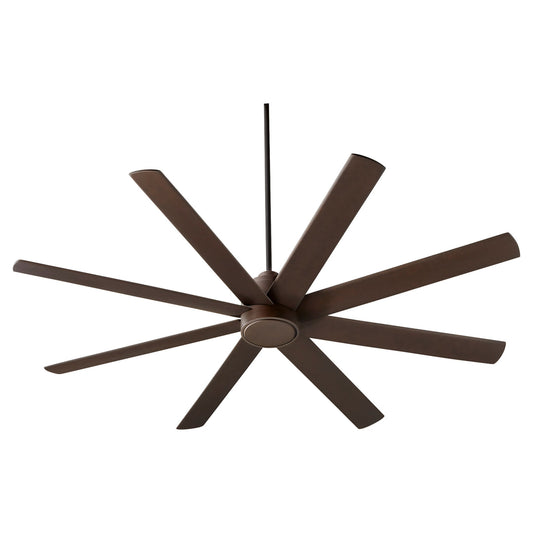


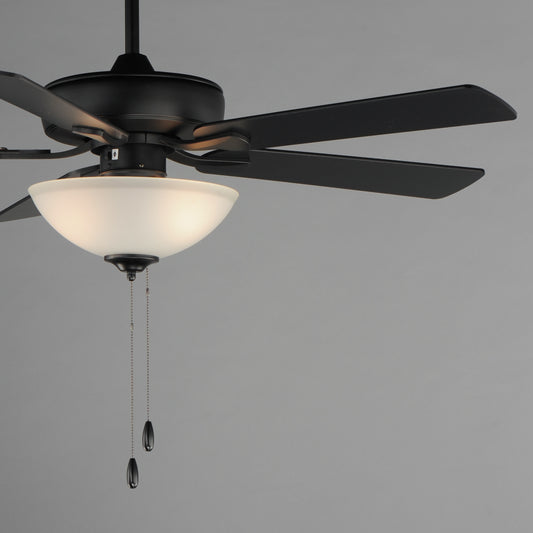


Your Guide to the Perfect 30 Inch Ceiling Fan
A 30 inch ceiling fan is the go-to cooling solution for small spaces, built specifically to deliver perfect airflow in rooms up to 100 square feet. While bigger fans can create an overwhelming wind tunnel effect in tight areas, these smaller models provide a steady, gentle breeze that’s just right for home offices, laundry rooms, or walk-in closets.
Why A 30 Inch Fan Is Your Small Space Solution
Ever been in a small room where the ceiling fan feels like it's trying to launch you into orbit? It's a common issue. Sticking a large fan in a tiny space is like using a firehose to water a potted plant—it’s just way too much. The result is a choppy, uncomfortable gust of air that makes the room feel chaotic instead of cool.
This is exactly where the thoughtful design of a 30 inch ceiling fan shines. These aren't just shrunken-down versions of their bigger siblings; they are engineered from the ground up to move air efficiently in a confined area. They create a soft, circulating breeze that keeps you comfortable without sending papers flying off your desk or giving you a permanent chill.
To make it even clearer, here's a quick rundown of why a 30-inch fan is the smart choice for your smaller rooms.
Quick Guide 30 Inch Ceiling Fan Benefits
| Benefit | Ideal Application | Key Advantage |
|---|---|---|
| Space-Saving Design | Home offices, laundry rooms, small kitchens, walk-in closets | Fits perfectly without overwhelming the room's proportions. |
| Targeted Airflow | Rooms up to 100 sq. ft. | Delivers a comfortable, gentle breeze instead of a turbulent gust. |
| Energy Efficiency | All small spaces | The motor doesn't have to overwork, saving on electricity bills. |
| Aesthetic Balance | Bedrooms, nurseries, hallways | Looks intentional and stylish, complementing the room's scale. |
Ultimately, picking the right size ensures you get all the benefits of a ceiling fan without any of the drawbacks of an oversized fixture.
The Perfect Fit for Compact Rooms
Choosing the right fan size is about so much more than just how it looks—it's all about performance. A 30-inch model is the gold standard for smaller rooms, and for a few very good reasons:
- Optimized Airflow: They're designed to produce just the right amount of air movement (measured in CFM, or Cubic Feet per Minute) to cool a small space without being a nuisance.
- Proportional Design: Let's be honest, a massive fan in a tiny room just looks wrong. A compact fan, on the other hand, looks balanced and feels like it was meant to be there.
- Energy Efficiency: A fan that’s properly sized for the room doesn’t have to struggle. It runs more efficiently, which means it uses less energy to keep you cool.
Far from being a compromise, a premium 30 inch ceiling fan is a savvy investment in both comfort and style. You don’t have to sacrifice power for size, either. Models like the stunning Minka-Aire F510-WH Gyro Twin Turbo Ceiling Fan (which can retail for over $1,000) prove that small fans can pack a serious performance punch with a design that's pure art. It’s simply about picking the right tool for the job.
If you're looking for more ideas, our guide to the best ceiling fans for small rooms is a great place to explore other top-notch options.
Key Takeaway: A 30 inch ceiling fan isn't just for small rooms—it's engineered for them. It delivers targeted, comfortable airflow that larger fans just can't match in a compact space, turning stuffy corners into pleasant, breezy retreats. When you match the fan to the room, you get maximum comfort and efficiency every time.
Getting the Size Right: Matching Your Fan to Your Room
Picking the right ceiling fan isn't just about looks—it's about physics. A fan that’s too big for a room will feel like a wind tunnel, while one that’s too small will barely stir the air, making it pretty much useless. Nailing the dimensions is your first and most important step to getting that perfect, comfortable breeze.
So, where does a 30 inch ceiling fan fit in? It's the perfect match for rooms up to 100 square feet. We're talking about home offices, smaller bedrooms, laundry rooms, or even those surprisingly spacious walk-in closets. Think of any room that's around 8'x10' or 10'x10'. In these cozier spots, a 30-inch fan delivers just the right amount of air circulation without overpowering the space.
If you're not sure, just grab a tape measure. Multiply the room's length by its width to find the square footage. If you land at 100 square feet or less, you’re in the sweet spot for a 30-inch model.
Don't Forget Ceiling Height
Room size is only half the battle; ceiling height is just as critical for both safety and performance. You want the fan blades to hang somewhere between 7 and 9 feet from the floor. This is the ideal height to get the best airflow without the blades getting dangerously close to anyone's head.
- Low Ceilings (Under 8 feet): If you're working with lower ceilings, you absolutely need a hugger mount or flush mount fan. Just like the name suggests, these fans sit right up against the ceiling, giving you maximum headroom.
- Standard Ceilings (8-9 feet): Most 30-inch fans come right out of the box with a short downrod (usually 3-5 inches) that’s perfect for this height. It's the standard for a reason—it gives the fan just enough space to breathe and circulate air effectively.
- High or Vaulted Ceilings (10 feet or more): Got tall ceilings? You'll need a longer downrod to bring the fan down into that ideal 7-9 foot zone. This ensures the fan is actually moving air where you can feel it, not just spinning it around way up high.
This quick decision tree can help you visualize if a 30-inch fan is the right call for your room.
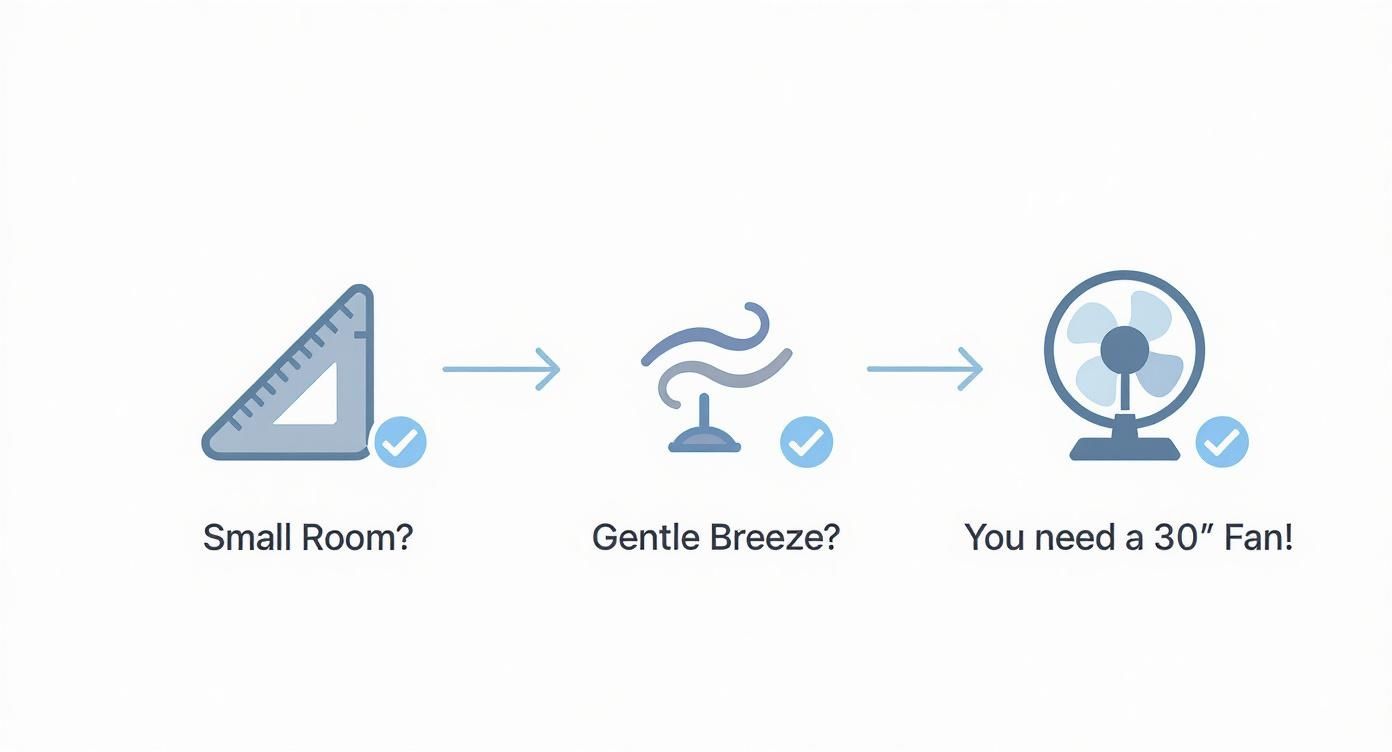
As you can see, for those smaller spaces where you just want a gentle, steady breeze, a 30-inch fan is tough to beat.
Small Fans Are a Big Deal
This isn't just our opinion—the numbers back it up. The ceiling fan market is booming, growing from USD 14.24 billion in 2023 to a projected USD 19.92 billion by 2030. A huge chunk of that growth, nearly 70% of it, comes from homes just like yours.
And here's the real kicker: medium-sized fans, which include our 30-inch models, accounted for a massive 54.71% revenue share. That tells you just how popular these fans are for the small-to-medium rooms found in most modern homes. You can dig into the numbers yourself in this ceiling fan market analysis.
Expert Tip: One last measurement to take! Make sure you have at least 18 inches of clearance between the tip of the fan blades and any walls or tall furniture. For a 30-inch fan, this means the narrowest part of your room where the fan is centered should be at least 66 inches (or 5.5 feet) wide.
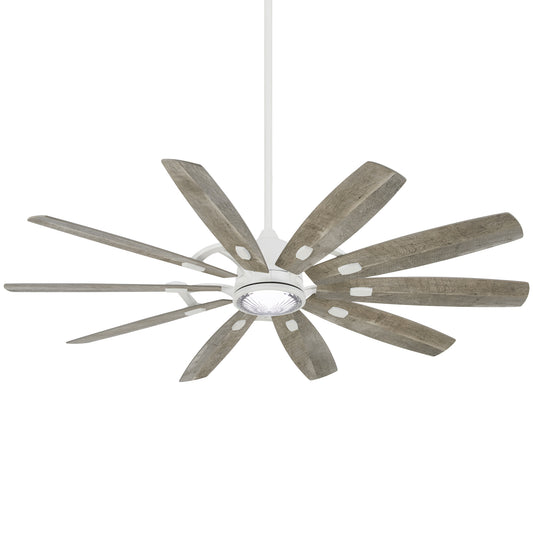
By taking a few minutes to measure your room's square footage and ceiling height, you can pick a 30 inch ceiling fan that fits and performs perfectly. And don't think small means sacrificing style or power—models like the incredible Fanimation Brewmaster Belt-Drive Fan can cost over $3,000, proving that compact fans can be serious statement pieces. Taking the time to get the dimensions right is the first step toward years of comfort, efficiency, and great style.
Understanding Airflow and Advanced Motor Tech
When you start shopping for a high-quality 30 inch ceiling fan, you'll quickly run into technical terms like CFM and DC motors. It’s easy to get lost in the jargon, but trust me, getting a handle on these concepts is the key to choosing a fan that not only looks great but performs beautifully for years to come.
Let's break down what really matters.
Think of a fan's airflow like the water pressure from a showerhead. You don't want a weak trickle that barely gets the job done, but you also don't want a harsh blast that’s just uncomfortable. You're looking for that perfect, steady stream that feels just right. That's essentially what CFM helps you figure out.
Demystifying CFM: The Power Behind The Breeze
CFM stands for Cubic Feet per Minute, and it’s the single most important number for a fan's cooling power. In simple terms, it tells you exactly how much air the fan moves every single minute.
For a smaller space that a 30-inch fan is perfect for, you don't need a hurricane-force rating. The sweet spot for rooms up to 100 square feet is typically between 1,000 and 3,000 CFM. This range provides a consistent, gentle breeze that circulates air effectively without turning your home office into a wind tunnel.
A fan in this range keeps the air from feeling stagnant and stuffy, creating a comfortable environment for work or relaxation. The number of blades also plays a role here, a topic we dive into in our article on the impact of fan blade count on efficiency.
Key Insight: Don't just chase the highest CFM for a small room. The goal is balanced, comfortable airflow, not maximum wind speed. A well-engineered fan with a moderate CFM will always feel better than a poorly designed, overpowered one in a compact space.
The Heart of the Fan: AC vs. DC Motors
The motor is the engine of your ceiling fan, and this is where premium models truly separate themselves from the pack. While standard fans often use traditional AC (Alternating Current) motors, you'll find that high-end fans—especially those over $300—almost exclusively feature advanced DC (Direct Current) motors.
Investing in a fan with a DC motor is one of the smartest upgrades you can make. These modern marvels are technological powerhouses, offering benefits that go far beyond just moving air.
You can see this trend everywhere. Newer BLDC (Brushless Direct Current) motor fans are a huge step up, delivering up to 20% greater air thrust while being much quieter and more efficient. These advanced motors are a perfect match for compact 30-inch fans designed for modern, smaller living spaces.
Here’s a quick comparison of why a DC motor is worth the investment.
AC vs. DC Motor Ceiling Fans: A Comparison
Choosing between a standard AC motor and a modern DC motor really comes down to performance and long-term value. While AC motors have been the standard for years, DC technology has changed the game.
| Feature | AC Motor (Standard Fans) | DC Motor (Premium Fans > $300) |
|---|---|---|
| Energy Efficiency | Standard consumption | Up to 70% more efficient, saving you real money on electricity bills. |
| Noise Level | Audible hum, especially on high | Virtually silent operation, perfect for bedrooms and offices. |
| Speed Control | Typically 3 speed settings (Low, Medium, High) | Often 6 or more speed settings for precise comfort control. |
| Reversibility | Manual switch on the motor housing | Conveniently reversible with the remote control for year-round use. |
| Size & Weight | Larger and heavier motor | More compact and lightweight, allowing for sleeker fan designs. |
When you choose a fan with a DC motor, you’re not just buying a fan; you're investing in superior technology that makes a noticeable difference. The long-term energy savings, whisper-quiet performance, and precise control create a much better experience that you’ll appreciate every single day.
Choosing a Style That Complements Your Decor
Let's be honest, a ceiling fan is more than just a motor with blades. It’s a major piece of decor hanging right in the middle of your room. It can either be the perfect finishing touch that pulls everything together or an awkward afterthought that just feels… off. When you’re looking at a premium 30 inch ceiling fan, you're really choosing a fixture that helps define the room's personality. This is where practicality meets style, and it’s why a high-end fan is a genuine investment in your home's look and feel.
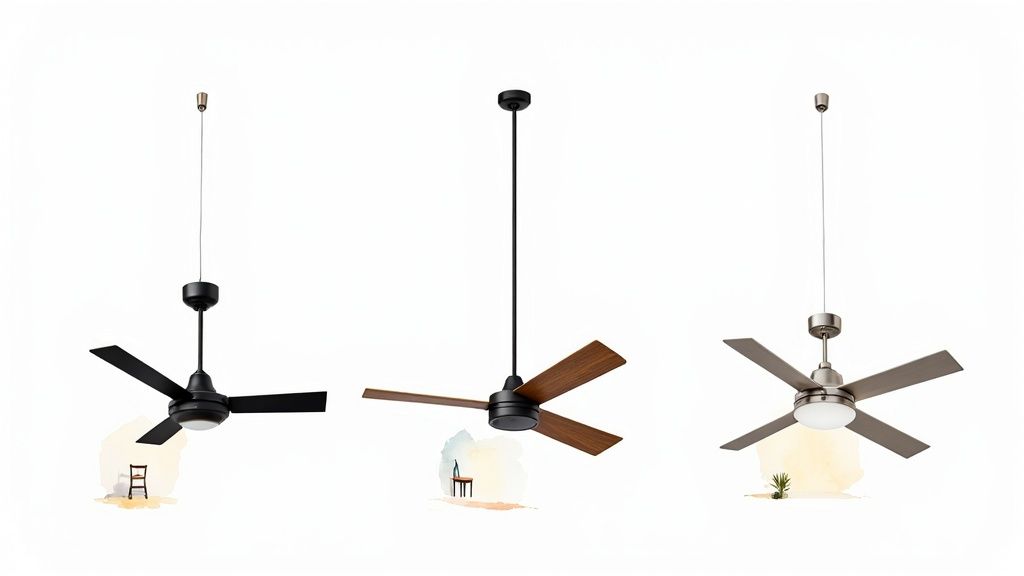
One of the first style decisions you'll make is about the number of blades. Now, more blades don't automatically equal more airflow—that’s a common myth. The blade count is really all about aesthetics. Think of it like choosing a car: a sleek sports car and a classic sedan will both get you down the road, but they make completely different statements about your style.
Blade Count: Modern Sleekness vs. Traditional Charm
The choice between a fan with three, four, or five blades really boils down to the atmosphere you're trying to create. Each one brings its own distinct vibe to the space.
-
Three-Blade Fans: These are the rockstars of modern, minimalist, and industrial interiors. With fewer blades, you get a clean, sharp, and uncluttered profile. A three-blade fan like the Artemis IV, which retails for over $600, has an almost sculptural quality that looks fantastic in a contemporary loft or a streamlined home office.
-
Four and Five-Blade Fans: This is your classic, traditional look. The extra blades give the fan a fuller, more substantial appearance that fits right in with transitional, modern farmhouse, or colonial decor. They tend to feel more balanced and blend beautifully with existing furniture and fixtures.
The trick is to match the blade count to your room's overall vibe. A super-sleek three-blade fan might look a little jarring in a cozy, rustic room, just as a traditional five-blade fan could feel too heavy in a spare, modern space.
Finding the Perfect Finish
Once you've landed on a blade count, the next fun part is picking a finish that works with what you've already got going on. This is your chance to create that cohesive, professionally designed look. A good rule of thumb is to coordinate the fan's finish with other metal accents in the room—think drawer pulls, lamp bases, or even window hardware.
Here are a few popular premium finishes to consider:
- Matte Black: A bold, high-contrast choice that screams modern. It looks especially sharp against light-colored walls and pairs beautifully with natural wood tones.
- Brushed Nickel: This one is a true chameleon. Sophisticated and versatile, its soft metallic sheen works with just about any style, from modern to traditional, without being too flashy.
- Aged Bronze or Oil-Rubbed Bronze: Perfect for adding warmth and character. These deep, rich finishes are right at home in rustic, farmhouse, or Mediterranean-style rooms, giving them a touch of old-world charm.
- Polished Chrome: If you're going for a bit of glam, polished chrome delivers. It’s a fantastic choice for Art Deco or Hollywood Regency spaces where a little shine is welcome.
Designer's Insight: Don't be afraid to mix metals, but do it with intention. A matte black fan can look incredible with brass light fixtures, as long as the overall style feels consistent. The key is to pick one dominant metal and let the others play a supporting role.
Premium Styles for Every Aesthetic
Investing in a premium 30 inch ceiling fan means you never have to settle for a style you don't love. High-end models, like the Minka-Aire F534L-BNW Concept I which goes for around $400, bring a level of craftsmanship and design that can elevate an entire room.
Whether your goal is an industrial loft with exposed metal and clean lines or a cozy, modern farmhouse with warm wood accents, there’s a quality fan out there for you. By thinking through the blade count and finish, your ceiling fan stops being just an appliance and becomes the stylish centerpiece that truly completes your vision.
More Than Just a Breeze: Smart Features and Lighting
Let's be honest, a modern 30-inch ceiling fan is so much more than just a set of spinning blades. It's the command center for your room's comfort and mood, packed with features that make life a little easier. These aren't just flashy add-ons; they’re genuine upgrades that make a high-quality fan an essential part of a modern home.
The days of yanking a pull chain in a dark room are officially over. Today’s best fans give you a whole suite of ways to take control. A handheld remote is pretty much standard, but a dedicated wall-mounted control panel gives you a permanent, easy-to-find spot to make adjustments.
Even better, many of our favorite fans tie right into your smart home setup. Picture this: you walk into your office and just say, "Alexa, turn on the fan." That kind of voice control through assistants like Alexa and Google Home adds a touch of everyday magic and effortless comfort.
The Secret Weapon: A Reversible Motor
One of the most valuable features—and one that people often forget about—is the reversible motor. This simple but brilliant bit of engineering makes your ceiling fan a year-round MVP, saving you cash in both summer and winter.
- Summer Mode: The fan spins counter-clockwise, pushing air straight down to create a cool, refreshing breeze. This little trick lets you bump your thermostat up a few degrees without even noticing the difference.
- Winter Mode: Flick a switch (usually right on the remote), and the fan spins clockwise. Instead of a direct breeze, this creates a gentle updraft that pulls cool air up. This forces the warm air that’s naturally risen and gotten stuck at the ceiling back down, mixing it evenly throughout the room.
That simple change of direction can take a serious load off your heating system, and you'll definitely see the difference in your energy bills when the cold weather hits.
Setting the Mood with Integrated Lighting
Good lighting is just as crucial as good airflow, and this is another area where today's fans really shine. Most top-tier models come with integrated, dimmable LED light kits. We’re not talking about a dinky overhead bulb; this is a powerful, efficient lighting solution designed to create the perfect vibe for any occasion.
LEDs are a total game-changer. They sip energy compared to old-school incandescent bulbs and can last for tens of thousands of hours. You might never have to climb a ladder to change a lightbulb in your fan again. Plus, the dimming feature lets you go from bright, focused light for getting work done to a soft, warm glow for unwinding at the end of the day.
Key Insight: The move toward smart fans and integrated LEDs is a huge deal. The global ceiling fan market was valued at around USD 12.3 billion in 2024 and is projected to hit USD 17.3 billion by 2030. A massive part of that growth comes from people wanting fans—like these 30-inch models—that blend smart tech with energy savings. You can read more about these market trends and see where the industry is headed.
When you choose a 30 inch ceiling fan with these kinds of features, you're not just buying an appliance. You're investing in a sophisticated piece of your home that boosts comfort, adds convenience, and completely elevates the atmosphere. It’s a smart move that pays off in style and function, every single day.
Getting it Installed and Keeping it Humming
You’ve found the perfect 30 inch ceiling fan—great! Now, let's make sure it's installed correctly and taken care of so it runs smoothly for years. Getting the setup right is non-negotiable for both safety and performance. A solid installation is the secret to a fan that's silent, steady, and effective.
We’ll always recommend hiring a licensed electrician for a truly worry-free installation. But we also know some of you are confident DIYers. If you're tackling this yourself, the absolute most important thing to check is the foundation.
Nailing the Installation
Before you even crack open the fan's box, look up. Your number one priority is the electrical box in the ceiling. Is it just a regular old box for a light fixture, or is it actually fan-rated? A ceiling fan creates a surprising amount of downward force and vibration when it’s spinning, and a standard light box just isn't built for that kind of stress.
Safety First: Always double-check that your ceiling box is stamped with "Rated for Fan Support." This is the only way to know it can handle the weight and motion of your new fan, preventing a dangerous wobble or, worst-case scenario, the fan falling.
Once your fan is up, balancing the blades is the final touch for whisper-quiet operation. Even a tiny imbalance can create an annoying wobble and put extra strain on the motor. Most quality fans include a balancing kit for this very reason—don't skip it! It’s a small step that pays off big time. For a full walkthrough, check out our guide on how to install a ceiling fan.
A Little Maintenance Goes a Long Way
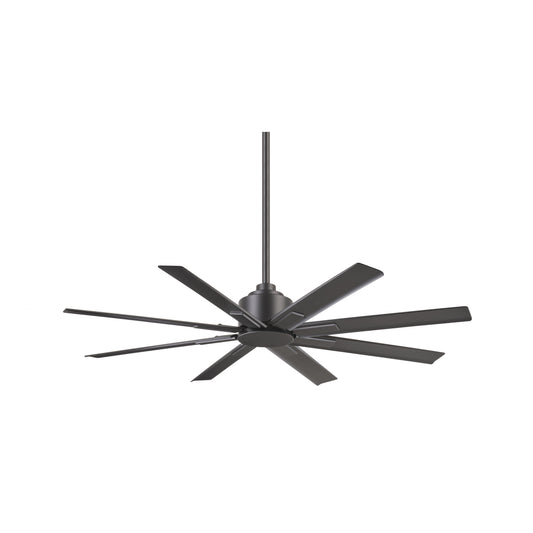
Your fan doesn't need much, but a little bit of routine care will keep it in prime condition. Think of it as a quick tune-up to protect a high-end appliance, like the gorgeous Minka-Aire F888L-BNW Xtreme H2O 8-Blade Fan, which can run over $500.
Here’s a simple checklist to run through every six months or so:
- Clean Those Blades: Dust buildup doesn’t just look messy; it can actually throw the blades off balance and force the motor to work harder. A soft cloth or a duster on an extendable handle usually does the trick. If you've got stubborn grime, a lightly damp cloth will work, but steer clear of harsh chemicals that could ruin the blade finish.
- Check for Loose Screws: Over time, vibrations can wiggle things loose. Gently check the screws that hold the blades to the brackets and the ones that secure the fan to the ceiling mount. A quick tighten can stop future wobbles and noises before they start.
- Wipe Down the Housing: Give the motor housing and any light fixtures a quick wipe to keep everything looking sharp.
These simple habits only take a few minutes but are key to maintaining the quiet efficiency and good looks of your 30 inch ceiling fan. Proper installation followed by a tiny bit of upkeep ensures your fan stays a stylish and reliable part of your home.
Answering Your Top Fan Questions
Even after you've narrowed down the style you want, a few practical questions always seem to pop up. Let's tackle some of the most common things people ask about 30 inch ceiling fans so you can feel totally confident in your choice.
Are 30 Inch Ceiling Fans Noisy
This is a big one, especially if you're thinking about putting a fan in a bedroom or home office. The good news is that high-quality, modern fans are engineered to be whisper-quiet. Any noise you hear usually comes down to one of two things: a cheap motor or an unbalanced installation.
Premium fans, particularly those with DC motors, are virtually silent. The only sound you should hear is the gentle whoosh of the blades slicing through the air—not some annoying mechanical hum. If you ever do hear a rattling or clicking, it’s almost always just a sign the blades are a little wobbly and need to be balanced. It's a simple fix that brings back the peace and quiet.
How Much Energy Do They Use
You'll be happy to know that a 30 inch ceiling fan is incredibly energy-efficient. Because they're built for smaller rooms, they don't need a massive, power-guzzling motor to get the job done. The actual energy they pull is surprisingly low.
- On its lowest speed, a small fan might sip as little as 15–30 watts of power.
- Cranked up to high speed, it still typically won't pull more than 50 watts.
To put that into perspective, running a 50-watt fan for 8 hours a day costs just a few pennies. Compare that to a central air conditioner, which can devour 3500 watts or more, and you can see why a ceiling fan is such a low-cost way to stay comfortable.
Are They Powerful Enough for a Small Bedroom
Absolutely! In fact, this is precisely what they're made for. In a room up to 100 square feet, a 30 inch ceiling fan delivers the perfect amount of airflow. It gets the air moving just enough to create a pleasant breeze, making the room feel several degrees cooler without turning it into a wind tunnel.
For a small bedroom, this kind of targeted cooling is exactly what you want for a comfortable night's sleep. It moves enough air to keep things from feeling stuffy but won't create that turbulent, drafty feeling you’d get from an oversized fan. It strikes the perfect balance.
Ready to find the perfect fan for your space? The Fan Connection team has curated an amazing collection of high-performance and stylish fans to fit any decor. Explore our full range of options and discover the ideal 30 inch ceiling fan for your home today at https://www.fanandlights.com.


