











The Ultimate 44 Ceiling Fan Buyer's Guide for 2026
You’re probably standing in a bedroom, guest room, or home office that feels almost right. The paint works. The furniture fits. But the air feels stale, and every ceiling fan size chart seems to push you toward something either too small to matter or too big to look comfortable.
That’s where the 44 ceiling fan earns its reputation as the quiet problem-solver. It sits in the middle, which is exactly why so many shoppers skip past it. Bigger sounds better. Smaller feels safer. But in many real homes, a 44-inch fan is the size that matches the room instead of fighting it.
A good fan should feel like the right lamp or rug. It should belong there. It should move air well, look balanced, and fit the ceiling conditions you’re working with. If you’re also trying to reduce how hard your AC works, these tips to beat the heat and keep your home cool are a practical companion to smart fan selection.
If you want a broader primer before narrowing in on this size, this guide on choosing the right ceiling fan size for maximum efficiency is useful: https://www.fanandlights.com/blogs/news/choosing-the-right-ceiling-fan-size-for-maximum-efficiency
Why Your Next Fan Might Be a 44 Inch Model
Walk through any home improvement aisle and you’ll see the same pattern. Oversized fans grab attention, while tiny utility models look easy to tuck anywhere. The 44 ceiling fan usually sits between those extremes, and that middle ground is exactly its strength.
Think about a typical secondary bedroom. It may not be large enough for a statement fan with a wide blade sweep, but it still needs better circulation than a compact fan can provide. The same goes for a home office where you want comfort during long work hours without turning the ceiling into the room’s main event.
The overlooked middle size
A 44-inch fan feels balanced in spaces that need real airflow but not visual bulk. It often suits rooms where people sleep, work, read, or host overnight guests. Those are spaces where comfort matters every day, not just when company visits.
A lot of shoppers get stuck on a simple question: “Should I size up just in case?” Usually, the better move is to match the fan to the room instead of buying the biggest model that fits physically.
A fan should suit the room the way the right pair of shoes suits your foot. Bigger is not always more comfortable.
Why this size feels easier to live with
A 44 ceiling fan tends to hit a nice balance between performance and appearance:
- It looks proportionate in many mid-sized rooms.
- It avoids the cramped look that can happen when a larger fan dominates the ceiling.
- It still gives useful airflow for daily comfort.
- It offers more style flexibility than many shoppers expect, especially in modern, classic, and low-profile designs.
This size also works well for people who want one fan type repeated across several bedrooms for a cleaner, more consistent look throughout the home.
Finding the Goldilocks Zone for a 44 Ceiling Fan
A 44 ceiling fan works best when the room itself falls into the sweet spot. The most reliable sizing guidance places 44-inch ceiling fans in rooms from 144 to 225 square feet, with blades mounted at least 7 feet above the floor (Home Depot sizing guide).
That range makes this size especially practical for many bedrooms, guest rooms, home offices, and smaller living spaces.

The importance of room size
The easiest analogy is a speaker. A tiny speaker in a larger room can sound weak. A huge speaker in a modest room can feel overpowering. Ceiling fans behave the same way.
If the fan is too small, air movement can feel underwhelming. If it is too large for the space, the room can feel visually crowded, and the fan may look out of place. A 44 ceiling fan sits in that “just right” range for many everyday rooms.
For a second opinion on matching blade span to room dimensions, this overview is a handy reference: https://www.fanandlights.com/blogs/news/how-to-choose-a-ceiling-fan-size
Ceiling height is the second half of the equation
People often focus only on blade span and forget the vertical space. Clearance matters because airflow needs room to circulate safely and effectively.
The core rule is simple. Keep the blades at least 7 feet from the floor. In practical terms, many rooms feel best when the fan has enough breathing room above and below it, rather than being squeezed tightly against the ceiling without thought.
If you know the square footage but ignore ceiling height, you only have half the sizing answer.
44-Inch Ceiling Fan Sizing Quick Guide
| Metric | Ideal Range for 44-Inch Fan |
|---|---|
| Room size | 144 to 225 square feet |
| Common room types | Bedrooms, home offices, guest rooms, small living areas |
| Blade clearance from floor | At least 7 feet |
A quick example helps. A room around the size of a standard bedroom often lands squarely in the range where a 44 ceiling fan feels natural. It doesn’t overwhelm the bed, dresser, and nightstands, but it still has enough presence to do its job.
That’s the Goldilocks zone. Not undersized. Not oversized. Just appropriately matched to the room.
Decoding Airflow CFM and Energy Efficiency
A fan can be the right size and still disappoint if you ignore performance. CFM is important here.
CFM means cubic feet per minute. In plain language, it tells you how much air the fan moves. Think of it as the fan’s breeze power. A 44-inch fan typically delivers varying levels of airflow, and high-performance ENERGY STAR models in this size can be significantly more efficient than conventional fans. ENERGY STAR also notes that ceiling fans can let homeowners raise the thermostat by 4°F, with AC savings of 3% to 5% per degree (Palm Fan Store overview).

Reading CFM without overthinking it
You do not need to turn into an engineer to shop wisely. Use CFM like a shorthand for how assertive the airflow will feel.
Consider it this way:
- Lower end of the range suits lighter circulation needs.
- Mid-range output often feels right for everyday bedroom comfort.
- Higher output helps when you want a stronger breeze from the same blade span.
CFM does not tell the whole story, but it gives you a quick way to compare fans that look similar on the outside.
Efficiency is where the smart buy happens
A fan is not an air conditioner. It makes people feel cooler by moving air across the skin. That matters because a more efficient fan can support comfort while helping you lean less on AC.
This homeowner-focused guide offers a useful companion if energy use is high on your list: https://www.fanandlights.com/blogs/news/a-homeowners-guide-to-energy-efficient-ceiling-fans
The year-round benefit gets even better when you use seasonal direction properly. If you want a clear explanation of summer downdraft and winter updraft, this article on understanding ceiling fan direction by season is worth bookmarking.
A well-chosen fan does two jobs. It improves comfort in summer, and it helps manage room air in winter.
A few specs worth caring about
When you compare a 44 ceiling fan, focus on these real-world questions:
- How much air does it move? CFM gives you the headline answer.
- How efficiently does it move that air? Better efficiency means more comfort for less energy use.
- Does it reverse direction? That adds cold-weather value.
- Is the fan designed for the room you have? Wet-rated, low-profile, or standard mount all matter depending on placement.
If you treat CFM like horsepower and efficiency like miles per gallon, fan shopping starts making much more sense.
Blades Aesthetics and Their Impact on Style
A ceiling fan is functional, but it also sits in one of the most visible places in the room. That means the blades matter for more than airflow. They shape the mood of the space.

Three blades for a cleaner look
A 3-blade fan often feels modern and architectural. It works well in spaces with simple lines, lighter furniture, and uncluttered surfaces.
If your room leans contemporary, a fan with fewer blades can feel crisp instead of busy. It’s the ceiling fan version of a sleek sneaker rather than a heavy boot.
Five blades for a familiar, classic presence
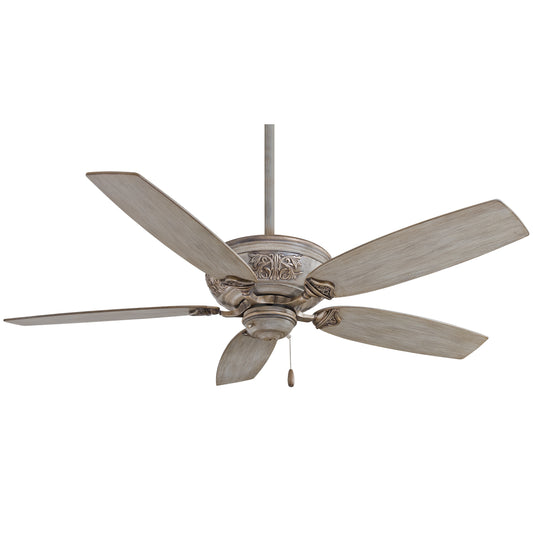
A 5-blade fan usually reads more traditional or transitional. It blends easily into bedrooms, guest rooms, and homes with layered textures like upholstered headboards, wood nightstands, and softer finishes.
That style tends to feel instantly familiar, which is part of its appeal. It doesn’t ask for attention, but it doesn’t disappear either.
For a deeper look at how blade count affects the overall fan experience, this article is helpful: https://www.fanandlights.com/blogs/news/the-impact-of-fan-blade-count-and-fan-efficiency
Material and finish change the personality
Blade shape and finish can make the same size fan feel completely different.
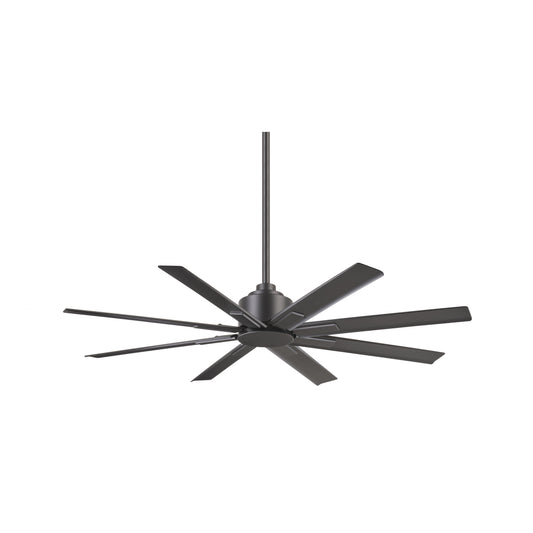
- Matte black blades feel sharp and modern.
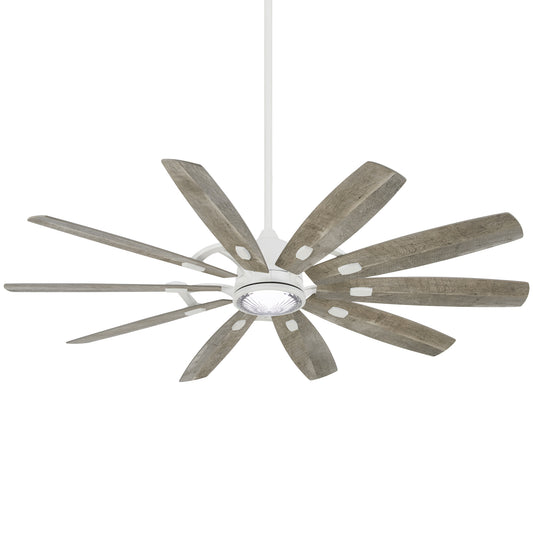
- Natural wood tones warm up the room and soften the look.
- White finishes blend into bright ceilings.
- Palm or leaf-inspired blades create a more relaxed, resort-like effect.
A 44 ceiling fan is especially versatile because this blade span works in both understated designs and more expressive ones. You can go minimalist in a home office, coastal in a guest room, or classic in a primary bedroom without changing sizes.
If the fan is the only dark object in the room, it can feel disconnected. Repeat that finish in hardware, furniture, or lighting so it looks intentional.
Mastering Installation Mounting and Placement
A great fan can still underperform if it is mounted the wrong way. Installation choices shape both safety and airflow, especially in rooms with low ceilings or sloped ceilings.

Many 44-inch fans can be installed on sloped ceilings up to 18 to 20 degrees with included hardware or an optional adapter. For low ceilings, a flush-mount or hugger model helps maintain the required 7-foot clearance from the floor (Hinkley installation guidance).
Low ceiling does not mean automatic success
A lot of people assume that if a fan physically fits, it will work well. That’s not always true.
A flush-mount fan solves a clearance problem, but there can be trade-offs in how the air circulates. In an 8-foot room, that may still be the right answer, but it should be a deliberate choice, not a guess.
When a hugger fan makes sense
Choose a hugger or low-profile fan when:
- Ceiling height is tight and safety clearance is your first priority.
- You need a clean silhouette with less visible hardware.
- The room is modest in scale and you want the fan to stay visually compact.
The compromise is simple. Bringing the motor and blades closer to the ceiling can affect how air spreads through the room.
Sloped ceilings need a closer look
Vaulted and angled ceilings add style, but they can complicate fan shopping fast. The challenge is not just whether the fan can hang there. It’s whether the fan can hang there with the right adapter, the right downrod, and enough blade clearance.
This guide to ceiling fan mounting bracket types is a solid reference if you want to understand the hardware side more clearly: https://www.fanandlights.com/blogs/news/ceiling-fan-mounting-bracket-types
A product page that clearly states slope compatibility saves a lot of frustration. If it doesn’t, ask before you buy.
Motor, box rating, and real-world safety
Beyond style and blade span, fan weight and mounting support matter. The Era 44" LED Ceiling Fan from Visual Comfort uses a 153 x 15mm AC motor, includes a 9W integrated LED fixture, has a 78-inch lead wire, an 8.1-inch housing diameter, and weighs 15.2 lbs (Visual Comfort Era 44 specs).
Those details matter for installers because the ceiling electrical box must be fan-rated. A decorative light box is not the same thing.
This walkthrough is a useful visual refresher before installation:
Placement affects comfort more than people expect
Try to center the fan in the activity zone of the room, not just the geometric center if furniture layout says otherwise. In a bedroom, that often means aligning the fan with the bed area. In an office, it may be better centered over the main workspace.
A well-placed 44 ceiling fan feels more effective because the breeze reaches the part of the room where people spend time.
Find Your Perfect 44 Inch Fan at Fan Connection
Once you know your room size, airflow needs, and mounting limits, the fun part starts. You can choose a fan that solves the comfort problem and lifts the room visually.
A strong example is the Hugh 44" Ceiling Fan. It delivers 3785 CFM airflow while using 50W and reaches 76 CFM/W efficiency, making it a standout option for shoppers who want strong performance in a compact hugger-style design (Fanimation Hugh 44 specs). Because it is also styled for indoor or outdoor use, it gives you more placement flexibility than many fans in this size.
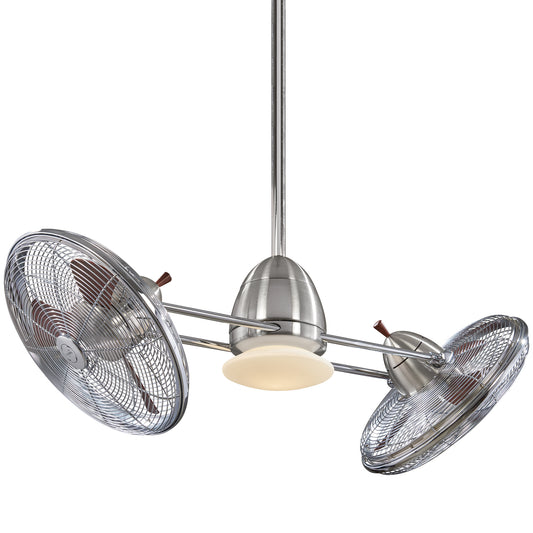
If your taste leans dramatic, the Artemis IV is worth a look for its sculptural presence. It turns the fan into part lighting fixture, part design object. In a room with simple furniture, that kind of fan can become the feature that makes the whole ceiling feel finished.
If you want a modern silhouette, browse the Modern Fans collection: https://www.fanandlights.com/collections/modern-ceiling-fans
If blade count is your main filter, the 5 Blade Fans collection gives you a more classic starting point: https://www.fanandlights.com/collections/5-blade-ceiling-fans
And if you want something with vacation-home energy, the Tropical collection is a fun direction: https://www.fanandlights.com/collections/tropical-ceiling-fans
For shoppers looking at premium options, models such as Aerovon, Alto, Andros, Artemis IV, and Axis are the kinds of names to watch. They bring the stronger materials, finish quality, and design character that make a fan feel like a long-term upgrade rather than a temporary fix.
A fan above $300 often starts to deliver more than basic utility. You’ll usually notice it in the motor quality, finish detail, lighting integration, and how well the fan fits a thoughtfully designed room.
Common Questions About 44 Inch Ceiling Fans
How do I clean a 44 ceiling fan without causing wobble
Use a soft cloth or duster and clean each blade gently from the inside edge toward the tip. Support the blade with one hand while wiping with the other so you’re not pushing it out of alignment.
If grime has built up, use a lightly damp cloth and dry the blade afterward. Avoid soaking blades or scrubbing aggressively.
What should I check first if the fan wobbles
Start with the basics. Make sure the blades are securely fastened, the mounting hardware is tight, and nothing was installed loosely at the canopy.
Dust buildup can also throw off balance over time. Clean all blades evenly before assuming a bigger problem.
Small installation issues create most wobble complaints. Tightening hardware and cleaning blades often solves the issue.
Can I add a light kit or remote later
Sometimes, yes. It depends on whether the fan model is designed to accept those accessories.
Check the product specifications before buying add-ons. Some fans come light-kit adaptable, some include integrated lighting, and others are meant to stay as-is.
Is a 44 ceiling fan too small for a bedroom
For many bedrooms, no. It is often a very sensible choice when the room sits in the mid-sized range and the ceiling height supports proper placement.
The key is matching the fan to the room instead of guessing based on appearance alone.
Are 3-blade fans better than 5-blade fans
Not automatically. A 3-blade fan often gives a cleaner modern look, while a 5-blade fan tends to feel more traditional.
The better choice is the one that fits your room’s style, your mounting needs, and the performance specs of the specific model.
Should I choose flush mount or downrod
Choose based on ceiling height first. If you need to protect floor clearance, flush mount may be the safer option.
If your ceiling allows it, a standard mount or short downrod can help the fan sit in a better position for air movement.
If you’re ready to compare stylish, premium 44-inch options in one place, Fan Connection makes it easy to shop by blade count, design style, and room feel. It’s a smart place to narrow down the right fan for comfort, performance, and a finish that suits your space.


