







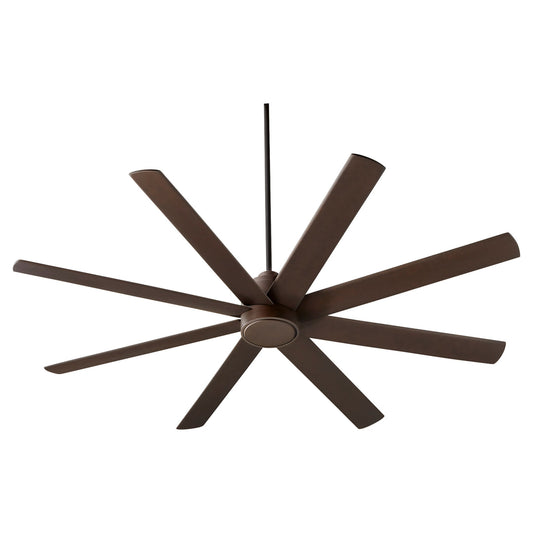


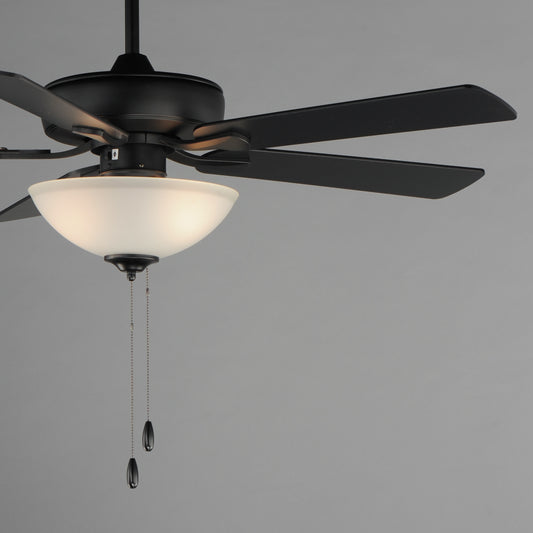


Top picks: best ceiling fan for small room
When you're trying to find the perfect ceiling fan for a small room, it's not just about picking a smaller model. It’s about finding that sweet spot of a gentle breeze, whisper-quiet operation, and a style that makes the space sing. The best options are often premium fans, usually priced over $300, because they’re engineered to move air efficiently without turning your cozy room into a wind tunnel. These fans are more than just appliances; they're functional centerpieces that add a serious dose of comfort and polish to any small space. Let's make your cozy corner the coolest spot in the house!
Finding The Perfect Breeze For Your Cozy Space

Choosing a fan for a small room is a bit of an art. Think about a guest bedroom, a home office, or that little reading nook you love. In these spaces, a standard-issue fan can feel like a noisy, oversized helicopter. The goal isn't just to move air—it's to create a serene, comfortable environment where you can actually relax or get stuff done. You want a fan that complements the room’s scale while delivering a consistently gentle breeze.
This is where investing in a quality model really pays off. Fans over the $300 mark aren't just prettier; they're engineered from the ground up for better performance in these exact kinds of intimate settings. They turn a stuffy room into a comfortable sanctuary, making the space more livable all year long. Think of it less like buying an appliance and more like a crucial (and fun!) upgrade to your home's overall comfort.
Why Quality Matters in a Small Room
In a tight space, you notice everything. A humming motor or a slight wobble isn't just a minor annoyance—it can become the star of its own horror movie. That’s why we always tell our customers that focusing on quality is non-negotiable when you’re looking for the best ceiling fan for a small room.
High-end fans deliver real, tangible benefits that you'll notice right away:
- Whisper-Quiet Operation: The best fans use advanced DC motors that are practically silent. This is a must-have for bedrooms and offices where your sanity depends on peace and quiet.
- Optimal Airflow: They’re built with just the right blade pitch and motor strength to create effective circulation without feeling like a hurricane. It’s all about a gentle, steady breeze, not a windstorm.
- Superior Aesthetics: These fans are designed to be seen. With clean lines and high-end finishes, they actually enhance your decor instead of clashing with it. They're the cool kids of the ceiling fan world.
A well-chosen ceiling fan does more than just cool you down. It actually improves air quality and circulation, making the entire room feel fresher and more inviting. Plus, you can reverse it in the winter to help push warm air down, adding to its year-round value.
At the end of the day, picking the right fan is about making your life better. It’s about that quiet hum that helps you focus at your desk or the gentle breeze that helps you sleep soundly through the night. As we dive deeper in this guide, we'll show you exactly how the right combination of blade span, motor tech, and design can turn your small room into the perfectly comfortable retreat you deserve.
Matching Fan Size and Airflow to Your Room
Choosing a ceiling fan for a small room can feel like a guessing game, but it’s really all about the numbers. When you're looking at specs, two numbers matter most: blade span (the fan's total diameter) and its CFM rating. Getting these right is the secret to creating that perfect, gentle breeze instead of a wind tunnel that sends your cat flying.
Blade Span: Finding the Right Footprint
Think of blade span as the fan's physical footprint. In a small room—which is typically anything under 150 square feet—a huge fan doesn't just look out of place; it can create a turbulent, overwhelming gust of air. The goal is circulation, not chaos.
That's why the ideal blade span for most small rooms is under 44 inches. This size moves air efficiently within the room's cozy dimensions without visually dominating the space or making you feel like you're caught in a storm.
Decoding CFM for Small Spaces
While blade span is about getting the fit right, CFM is all about function. CFM, or Cubic Feet per Minute, is the real measure of a fan's power—it tells you how much air it actually moves. Too low, and you won't feel a thing. Too high, and you'll be chasing papers across your desk.
For a small room, you don't need a fan with hurricane-force power. You’re looking for a sweet spot that creates a consistent, comfortable breeze.
- Ideal CFM Range: For rooms up to 150 sq. ft., a fan with a CFM rating between 3,000 and 4,500 is perfect.
- Why It Works: This range is strong enough to get the air moving and eliminate that stuffy feeling, but it won't create annoying drafts. It just keeps the room feeling fresh and cool, which is a game-changer in a home office or a small bedroom.
When you invest in a premium fan (priced at $300 or more), you're not just paying for a pretty design. You're paying for precision engineering—a motor and blade design that can generate this ideal airflow quietly and without a wobble.
Quick Guide to Fan Size for Small Rooms
To make things even easier, here’s a quick reference chart. Use it to match your room’s square footage with the right fan size and airflow for guaranteed comfort.
| Room Size (Square Feet) | Recommended Blade Span (Inches) | Ideal CFM Range |
|---|---|---|
| Up to 75 sq. ft. | 29" - 36" | 3,000 - 4,000 |
| 76 - 150 sq. ft. | 36" - 44" | 3,500 - 4,500 |
Just find your room size on the left, and you’ll see the recommended blade span and CFM range that will work best for your space.
Measuring Your Room for the Perfect Match
Before you fall in love with a particular fan, grab a tape measure. A quick calculation will give you the confidence you need to choose the right size. Just multiply your room's length by its width to get the square footage.
For example, a 10-foot by 12-foot bedroom is 120 square feet, which puts it squarely in the small room category. Right away, you know to focus your search on fans with blade spans of 44 inches or less. For a deeper dive, our comprehensive guide on how to choose a ceiling fan size breaks it down even further.
The demand for these smaller, more efficient fans is definitely on the rise, especially in cities where every square foot counts. In fact, in some metro areas, over 60% of new ceiling fan sales are for models under 42 inches. Manufacturers have responded by designing fans specifically with these spaces in mind, hitting that sweet spot of 3,000 to 4,500 CFM that's perfect for rooms up to 100 square feet.
Ultimately, by matching your room's measurements to the right blade span and CFM, you guarantee your new fan will be a perfect fit—both in how it looks and how it feels. You’ll get to enjoy that gentle, refreshing breeze that makes any small space feel incredibly comfortable.
Why a DC Motor Is a Non-Negotiable Upgrade
At the heart of every great ceiling fan is its motor. For a small room, this little engine is more important than you might think. Honestly, comparing an old, clunky AC motor fan to a modern DC motor model is like putting a 70s muscle car up against a silent, efficient EV. The upgrade isn't just a small tweak—it's a whole new world of comfort, quiet, and control.
If you're hunting for the best ceiling fan for a small room, especially a bedroom or office, the motor is the single most important part to get right. DC (Direct Current) motors are the gold standard in high-end fans today for a few really good reasons.
The Power of Silence
The first thing you’ll notice is the sound—or really, the lack of it. Traditional AC motors have that familiar, low-level hum. It's fine in a big, noisy living room, but in a quiet, cozy space, it can drive you crazy.
DC motors, on the other hand, are practically silent. This whisper-quiet performance is a must-have for bedrooms, nurseries, or any room where peace and quiet are the top priority. You get all the cooling power with none of the noise pollution.
This quick visual guide breaks down the key specs we've been talking about to help you find the right fit for your space.

As you can see, matching a blade span under 44 inches with an airflow of 3,000-4,500 CFM is the sweet spot for rooms under 150 square feet.
Unmatched Energy Efficiency
Besides being quiet, DC motors are champions of energy efficiency. They're built to do more with less power, making them a seriously smart investment for the long run. This isn't just marketing talk; it translates directly into lower electricity bills every month.
These days, homeowners want powerful performance without the high utility costs, and that’s where modern motor tech really shines. Ceiling fans with brushless DC (BLDC) motors have become the go-to for small rooms because they can deliver up to 70% energy savings compared to older induction motor fans.
It’s why we always recommend looking into the long-term energy and cost savings of eco-friendly fans, because the benefits really add up over the life of the fan.
Think of it this way: choosing a DC motor fan is like making a one-time investment that pays you back on every single energy bill. For a fan that runs all the time in a bedroom or office, those savings become pretty substantial over the years.
Precision Control and Versatility
Finally, DC motors give you a level of control that AC motors just can't touch. An old fan might have three speeds: low, medium, and high. A DC motor fan, however, often comes with six or more speeds. This lets you fine-tune the airflow with incredible precision.
You can dial it down to a barely-there stir on a cool evening or crank it up for a serious breeze on a hot summer afternoon. Many of the best models also put the reverse function right on the remote, so you can easily switch the blade direction to help circulate warm air in the winter.
All these benefits make the choice pretty clear. For a small room where comfort, quiet, and control are everything, investing in a fan with a DC motor isn't just an upgrade—it's essential for creating a truly peaceful space you'll love.
Choosing the Right Mounting Style and Design

In a small room, every vertical inch is precious real estate. The way a fan is mounted can make the difference between a spacious, airy feel and a cramped, crowded one. It’s not just about getting air moving—it’s about fitting the fan into your space without sacrificing headroom or style.
The mounting style you need is directly tied to your ceiling height. If your ceiling is on the lower side—typically under 8 feet—you’ll want a fan that gives you as much clearance as possible. This is where a specific type of fan becomes the hero of compact spaces.
Hugger Fans for Low Ceilings
For rooms with low ceilings, a 'hugger' or 'flush-mount' style is your best bet. These fans are built to install directly against the ceiling, getting rid of the downrod entirely. This low-profile design maximizes the space between the fan blades and the floor, making sure you meet that crucial 7-foot clearance required for safety.
A flush-mount fan is the perfect choice for a small room with standard or low ceilings because it keeps the space feeling open and uncluttered. If you want to dive deeper into this practical style, you can check out our guide on what a flush-mount ceiling fan is and why it's so effective.
For ceilings that are a bit taller (9 feet or more), a standard mount with a short downrod can work perfectly well. This positions the fan slightly lower, which can sometimes improve airflow circulation. Just remember to always keep that 7-foot safety clearance in mind.
Think of your ceiling fan as functional art. The goal is for it to blend with the ceiling, creating a clean, monochromatic look. If your ceiling is matte white, a matte white fan will virtually disappear, making the whole room feel larger.
Finding a Design That Complements Your Decor
Once you’ve sorted out the practical side of mounting, it's time for the fun part: design. A good ceiling fan is far more than a utility—it's a statement piece that can tie your whole room together. Gone are the days of boring, cookie-cutter fans. Today’s models are designed with aesthetics front and center.
First, consider the overall style of your room. Are you going for a modern, rustic, or traditional look? The fan's finish and blade design play a huge role in pulling it off.
- For a Modern Look: Sleek, three-blade fans with sharp lines are a great choice. Finishes like matte black, brushed nickel, or a clean white create a minimalist, sophisticated vibe that looks fantastic in a contemporary space.
- For a Rustic or Farmhouse Feel: Look for fans with natural wood blades or finishes that have a warm, organic texture. These designs add a touch of nature and coziness, a perfect match for more relaxed decor.
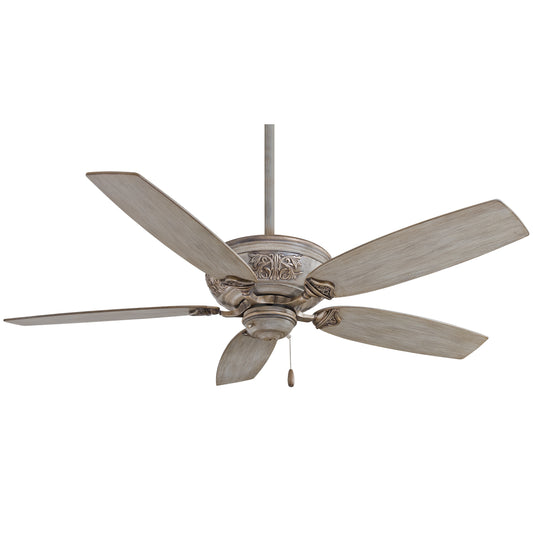
- For a Traditional or Classic Style: Fans with five blades and more classic finishes, like polished brass or antique bronze, can add a timeless elegance to the room.
The shape and material of the blades are just as important as the finish. Curved blades can offer a softer, more fluid look, while straight, angular blades feel more industrial and modern. By carefully choosing these elements, you ensure your fan isn't just an afterthought but a key part of your room's design story.
Alright, we've walked through all the nitty-gritty details—from measuring your room and understanding CFM to picking the right motor. Now for the fun part. Let's look at some fans that put all that theory into practice.
We've handpicked a few of our favorite premium models from the Fan Connection collection, all priced at $300 or more and designed specifically with smaller spaces in mind. Think of this as your personal gallery of high-end options where we'll highlight what makes each one a contender for the best ceiling fan for a small room.
The Modern Minimalist Pick: The Artemis IV
If your style is all about clean lines and a "less-is-more" vibe, the Artemis IV by Minka-Aire is a true masterpiece. Its four-blade, aerodynamic profile is so sleek that it’s become a go-to for interior designers who want a fan to blend in, not stick out. But it's more than just a pretty face; this fan is a quiet workhorse.
- Blade Span: A perfect 44 inches, making it an ideal fit for home offices or guest bedrooms up to 150 square feet.
- Motor and Airflow: It’s built around a high-performance DC motor that pushes out a surprising 3,500 CFM while staying whisper-quiet. You get a powerful, cooling breeze without any distracting hum.
- Standout Feature: The integrated LED light is a game-changer. It's fully dimmable and has an adjustable color temperature, letting you shift from a warm, cozy glow to a bright, cool light that's perfect for getting work done. At around $400, it’s a brilliant fusion of style and function.
The Artemis IV is a perfect example of how a functional appliance can double as a piece of art. Its simple form won't overwhelm a small room, making it a sophisticated choice for any modern home.
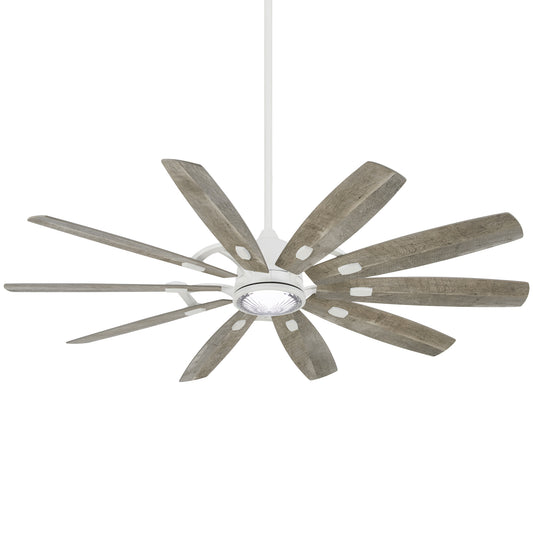
The Rustic Charm Selection: The Barn Fan
For those who lean more toward farmhouse or rustic interiors, the Barn by Quorum International brings an incredible touch of organic warmth. With its distinctive windmill-inspired design and rich, textured finishes, this fan doesn't just move air—it adds a ton of character. It’s a statement piece that feels both nostalgic and totally unique.
- Blade Span: The 44-inch span fits beautifully in cozy living areas or bedrooms where you want to create a focal point.
- Motor and Airflow: Don't let the rustic look fool you. This fan is packing a modern DC motor that keeps the air feeling fresh and comfortable with gentle, consistent circulation.
- Standout Feature: The blades are the real star here, often finished to look like reclaimed wood. Paired with its galvanized metal housing, the Barn fan (typically priced over $350) creates an inviting atmosphere that’s perfect for a relaxing retreat.
A fan like the Barn proves you never have to sacrifice style for function. In a smaller room, a fan with a strong design personality can act as the central anchor, tying together all the other rustic or industrial pieces in the space.
The Smart Home Innovator: The Basic Max
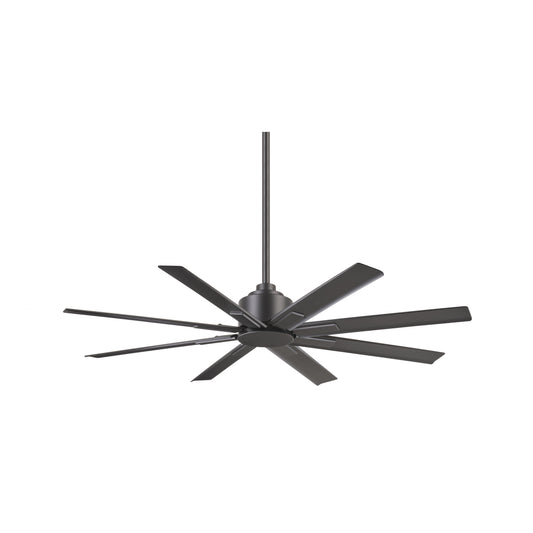
For the tech-savvy homeowner, the Basic Max by Modern Forms is a dream come true. This fan is the definition of smart, seamless comfort, designed to integrate perfectly into your connected home. Its ultra-clean, three-blade design makes it look visually light, so it delivers powerful, intelligent performance without ever overpowering a small room.
- Blade Span: The 44-inch model is expertly scaled for small rooms, offering a modern look that works with just about any decor.
- Motor and Airflow: Its super-efficient DC motor isn't just quiet; it's incredibly potent, churning out over 4,000 CFM. That’s a real testament to its engineering—maximum airflow from a compact design.
- Standout Feature: This is where the Basic Max truly shines. It comes with full smart home compatibility, so you can control fan speed, lighting, and schedules with your phone or voice commands through assistants like Alexa and Google Home. Starting around $330, it’s a smart investment for a truly modern lifestyle.
Choosing the right premium fan from our collections at Fan Connection means you’re not just buying an appliance; you're investing in the comfort, style, and feel of your space. Each of these models offers its own unique blend of quiet power and thoughtful design, making your search for the best ceiling fan for a small room both simple and exciting.
Smart Features That Take Comfort to the Next Level
A modern ceiling fan does a lot more than just move air around. It slips right into your daily life, adding a layer of convenience that you'll really feel, especially in a small room. The best ceiling fan for a small room is often packed with smart features that turn it from a simple appliance into a core part of your home's comfort system. Honestly, these are the thoughtful additions that make a fan worth $300 or more.
Two of the biggest game-changers are integrated LED lighting and smart home controls. The days of clunky, ugly light kits are long gone. Today's best fans have sleek, built-in LED modules that light up a room without messing up the fan's style. That dual-functionality is a huge win for a small room, since you don't need a separate light fixture taking up ceiling space.
Finding the Perfect Glow with Integrated LEDs
The right light can completely change the vibe of a room. Premium fans with integrated LEDs give you total control, letting you dial in the perfect atmosphere for any situation. To get it right, you just need to know two key terms: lumens and Kelvin.
-
Lumens (Brightness): Think of lumens as the "volume" of your light. For a small bedroom or office, an LED kit that puts out 800-1,600 lumens is usually the sweet spot—bright enough to read by, but not so harsh it feels like you're under a spotlight.
-
Kelvin (Color Temperature): Kelvin tells you the color of the light, from warm to cool. A lower Kelvin (2700K) gives off a warm, cozy, yellowish glow that’s perfect for winding down in the evening. A higher Kelvin (4000K-5000K) produces a crisp, bluish-white light that feels more like daylight, which is great for staying focused in a home office.
Many of our favorite high-end fans even let you adjust the color temperature on the fly. You can go from a productive work environment to a relaxing sanctuary with just the touch of a button.
"A ceiling fan is not the place to make a design statement. You don’t want to draw attention to the fan, so keep it simple... if you’re looking for a fan that includes a light, make sure it’s a single light with a warm temperature bulb."
While this is classic advice for traditional design, modern fans with tunable LEDs let you have it all: a minimalist design that blends in and light that's both functional and customizable.
Effortless Control with Smart Features
The ultimate upgrade is hands-down smart control. It’s a level of convenience that, once you get used to it, you’ll wonder how you ever managed without it. Just picture adjusting your fan’s speed and light without ever getting out of bed or leaving your desk.
Smart fans connect to your home's Wi-Fi, letting you control them with a smartphone app or simple voice commands. This means you can:
- Use Voice Assistants: Just say, "Alexa, turn the bedroom fan to low," or "Hey Google, dim the light to 50%."
- Set Schedules: Program your fan to turn on a few minutes before you wake up or to switch off after you've fallen asleep.
- Access Advanced Settings: The app often unlocks features you can't get with a standard remote, like creating custom lighting scenes or setting a timer.
This kind of effortless control really reinforces the idea that a great fan isn't just an appliance—it's a smart investment in a more comfortable home.
Alright, let's clear up some common questions that pop up when you're on the hunt for the best ceiling fan for a small room. Getting these details sorted will help you shop with confidence, making sure the fan you bring home is the perfect match for your space.
Can I Install a Ceiling Fan with a Low Ceiling?
You absolutely can. If your ceilings are under 8 feet, you'll want to look for a 'flush-mount' or 'hugger' style fan. These are designed to sit right up against the ceiling, getting rid of the downrod and giving you as much headroom as possible.
The golden rule is to make sure there's still at least 7 feet of clearance from the floor to the fan blades for safety.
Are More Fan Blades Better for a Small Room?
Not really. It's a common misconception, but the number of blades has more to do with style and noise than raw power. What truly matters is the fan's motor and the pitch (the angle) of its blades.
For a smaller space, a fan with three or four blades usually looks cleaner and less cluttered. These designs are also incredibly efficient at moving air, so you're not giving up any performance for that sleek, modern look.
The key takeaway is this: always prioritize the fan’s CFM rating and motor type. A strong DC motor paired with well-pitched blades will easily outperform a fan with more blades but a weaker motor.
Is a DC Motor Really Worth It for a Small Room?
Yes, we think it’s a game-changer, especially for bedrooms or a home office. The two biggest wins are its near-silent operation—a non-negotiable for quiet spaces—and its amazing energy efficiency, which you'll notice on your electricity bill.
Plus, DC motor fans give you more speed settings, so you can dial in the perfect amount of airflow.
Ready to find that perfect mix of style, silence, and smart performance for your cozy space? Check out the handpicked collections at Fan Connection to discover a premium fan that will completely transform your room's comfort and design.


