











Ceiling Fan Size for Room: How to Choose the Right Fit
When you’re picking out a ceiling fan, the first and most important decision you'll make is its size. It's the secret sauce to a breezy, comfortable room. The rule of thumb is simple: match the fan's blade span to the room's square footage. For a small space like a laundry room (up to 75 square feet), a fan under 42 inches is perfect. For a big, beautiful great room (over 400 square feet), you'll need something 60 inches or larger. Getting this right from the start is the key to creating a space that feels just right.
Why Fan Size Is Your First Big Decision
Think of choosing a ceiling fan like picking the right tool for a job. You wouldn't use a tiny hammer to build a house, and you wouldn't bring a sledgehammer to hang a delicate picture frame. It's the same idea here, but way more fun because it ends with you relaxing in a perfectly cool room.
A ceiling fan that’s too small for the room has to work way too hard. It will spin like a top but only manage to stir a sad little pocket of air right underneath it, leaving the rest of the room feeling stuffy and neglected. On the flip side, a fan that's too large can turn your cozy living room into a wind tunnel, creating an overpowering gust that's more "hurricane party" than "relaxing evening." The goal is a gentle, consistent breeze that circulates air throughout the entire room, and that all starts with the right size.
A Quick Guide to Get You Started
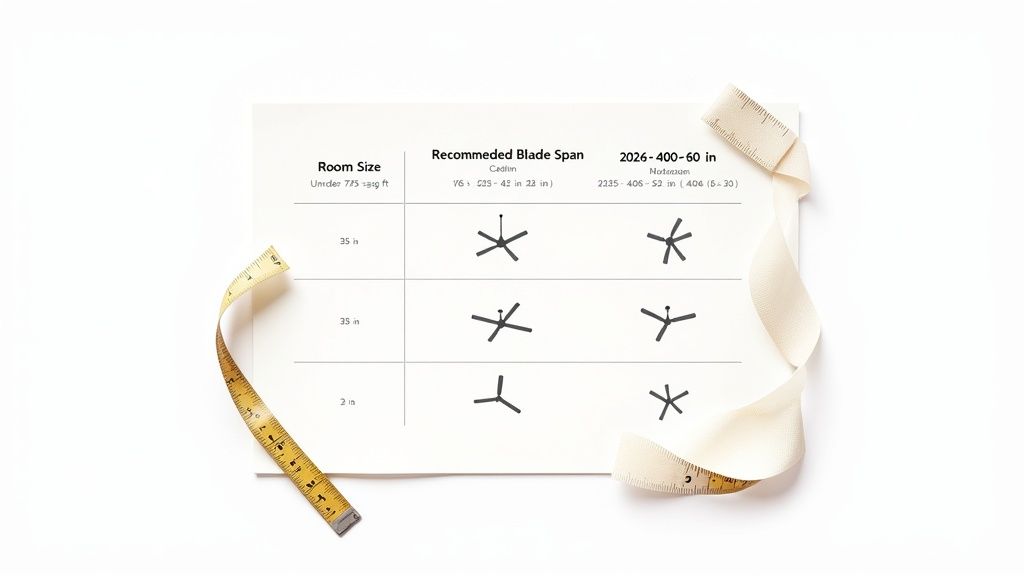
To make finding the perfect fit even easier, we’ve put together a simple cheat sheet. Just grab a tape measure, find your room's length and width, and multiply them to get the square footage. Then, find your match below.
- Small Rooms (Up to 75 sq. ft.): Think bathrooms, laundry rooms, or walk-in closets. Look for fans with a blade span of 42 inches or less.
- Medium Rooms (76 - 225 sq. ft.): This covers most standard bedrooms and home offices. A fan between 44 and 52 inches is your sweet spot.
- Large Rooms (226 - 400 sq. ft.): For living rooms, master bedrooms, or dining areas, you'll want a fan in the 52 to 60-inch range.
- Great Rooms (Over 400 sq. ft.): In those big, open-concept spaces or rooms with vaulted ceilings, go big with a fan that's 60 inches or larger.
Ceiling Fan Size by Room Dimensions
Use this quick reference chart to match your room's square footage with the recommended ceiling fan blade span for optimal air circulation.
| Room Size (Square Feet) | Recommended Fan Blade Span (Inches) |
|---|---|
| Up to 75 sq. ft. | 42" or less |
| 76 - 225 sq. ft. | 44" - 52" |
| 226 - 400 sq. ft. | 52" - 60" |
| Over 400 sq. ft. | 60" or larger |
This table is a great starting point, ensuring you have enough airflow without creating a windstorm.
It's Not Just About the Span
While matching blade span to room size is the most critical first step, it's not the whole story. Other factors, like your ceiling height and the fan's airflow rating (measured in Cubic Feet per Minute, or CFM), also play a huge role in how well your fan performs. We'll dive into those details later, but for now, you have the foundation you need to start your search with confidence. Once you've nailed the size, you’re already well on your way to a perfectly comfortable and stylish room.
Why the Right Fan Size Is a Game Changer
Ever walked into a huge living room and seen a tiny, sad little fan spinning for its life but moving absolutely no air? It’s like trying to cool a gymnasium with a personal desk fan. On the flip side, an oversized fan in a small room can feel like a helicopter is about to take off right above your head. It's a vibe, but probably not the one you're going for.
Choosing the right ceiling fan size for your room is all about finding that Goldilocks "just right" feeling. It’s the difference between a gentle, room-filling breeze and an irritating, noisy distraction.
Think of it this way: you wouldn't use a tiny Bluetooth speaker to provide music for a giant party, and you wouldn't install a concert-grade sound system in a small office. The same logic applies to moving air. A fan that’s too small for the job just spins inefficiently, burning electricity while only stirring a small pocket of air directly below it. The rest of the room stays stagnant and stuffy.
A fan that’s too big creates an uncomfortable vortex, sending papers flying and making the space feel chaotic instead of calm. Getting the size just right is the absolute first step to creating a perfectly comfortable room.
More Than Just Air: Superior Comfort
The whole point of a ceiling fan is to make a room feel better, and size is the biggest factor in getting that right. When a fan is properly sized, it circulates air evenly and gently throughout the entire space.
This creates a consistent, subtle breeze that works with your body's natural cooling process, making a room feel several degrees cooler without ever touching the thermostat. It’s the difference between a random, annoying draft and a pleasant, all-encompassing sense of relief on a hot day.
Smarter Energy Efficiency
Here’s a little-known secret: a correctly sized fan doesn't just feel better, it works smarter. When a fan's blade span is matched to the room's dimensions, it moves the most air with the least amount of effort. This means you don't have to crank it up to its highest setting all the time, which saves a surprising amount of energy.
In fact, the Department of Energy says that using a ceiling fan can let you raise your thermostat by about 4°F with no reduction in comfort. A properly sized fan is what makes this possible, leading to lower energy bills month after month.
An undersized fan running on high uses more energy to do less work than a correctly sized fan running on medium or low. It’s a simple equation: the right fit equals better performance and lower costs.
A Look That Just Works
Beyond performance, the right ceiling fan size for your room is critical for visual balance. A fan that’s proportionally correct for the space looks intentional, like it was chosen by a designer. A tiny fan in a room with vaulted ceilings just looks lost and awkward, while a massive fan can feel oppressive and visually shrink a smaller bedroom.
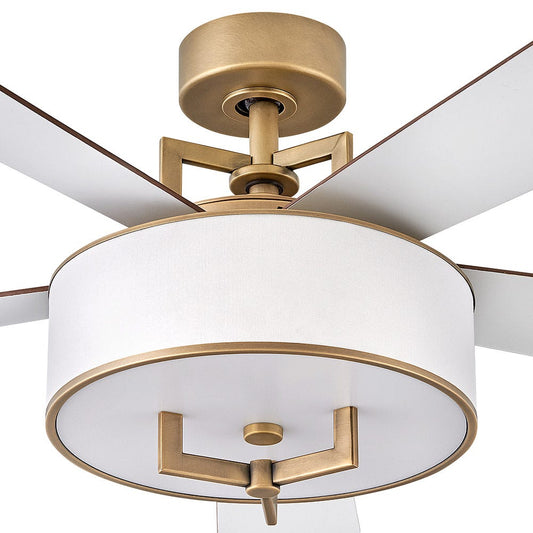
Choosing a fan that complements the room's scale ensures it acts as a stylish focal point rather than a design mistake. This is especially true for high-end models designed to be statement pieces, like the sleek Kute Brass 52" fan (around $495) or the bold Spitfire Dark Bronze 60" fan (priced near $699). Their visual impact is only fully realized when they are placed in a room that matches their scale, tying the entire design together.
How to Measure for Your New Ceiling Fan
Alright, let's roll up our sleeves and grab a tape measure. Picking the right ceiling fan size for your room isn't guesswork—it's about getting two simple measurements that give you all the confidence you need to make the perfect choice. Think of it less as a chore and more as the first step to guaranteeing comfort and style.
The whole process is refreshingly straightforward. We'll walk through exactly how to measure your room's square footage and then connect that number to the fan's "blade span," which is the single most important number when it comes to sizing.
Step 1: Measure Your Room's Square Footage
First things first, let's figure out how big your space actually is. Don't worry, you don't need to be a math whiz for this part.
- Measure the Length: Grab your tape measure and find the length of the room from one wall to the opposite one. Jot down this number in feet.
- Measure the Width: Now, do the exact same thing for the width of the room.
- Calculate the Area: Simply multiply the length by the width. The number you get is your room's square footage.
For example, if your bedroom is 12 feet long and 13 feet wide, your math is just 12 x 13 = 156 square feet. That's it! This number is your golden ticket to finding the right fan.
Step 2: Understand Blade Span
With your room's square footage in hand, the next piece of the puzzle is understanding what we mean by a fan's size. Officially, this is called its blade span or blade sweep. It's simply the full diameter of the circle the blades make as they spin.
How Blade Span is Measured: It’s the distance from the tip of one blade straight across to the tip of the opposite blade. For fans with an odd number of blades (like 3 or 5), you just measure from the center of the fan to the tip of one blade and then double that number.
This measurement, always in inches, directly tells you how much air the fan can move and is the main way fans are sorted by size.
Matching Your Measurements to the Right Fan
Now, let's put it all together. Using your square footage, you can confidently pick the ideal blade span that will give you balanced airflow without overpowering the room or looking out of place.
-
For Cozy Nooks and Small Rooms (Under 75 sq. ft.)
We're talking about home offices, laundry rooms, or small guest bedrooms. A fan with a blade span of 42 inches or less is perfect here. It'll provide a gentle breeze that won't feel like a wind tunnel in a compact space. -
For Standard Bedrooms and Living Areas (76 - 225 sq. ft.)
This is the sweet spot for most homes, covering everything from master bedrooms to family rooms. You'll want a fan with a blade span between 44 and 52 inches. This size range offers the ideal balance of performance and visual presence. -
For Large Master Suites and Open-Concept Spaces (226 - 400 sq. ft.)
When you've got more open areas, like a big master suite or a combined kitchen-and-dining room, you need more power to move the air around. Look for fans in the 52 to 60-inch range to make sure you get circulation from corner to corner. -
For Expansive Great Rooms and Lofts (Over 400 sq. ft.)
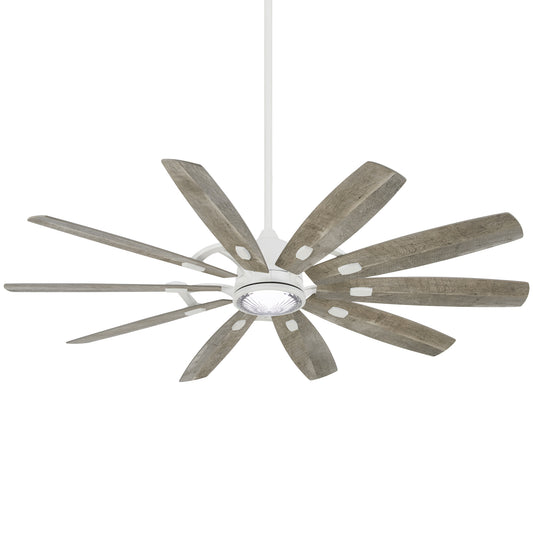
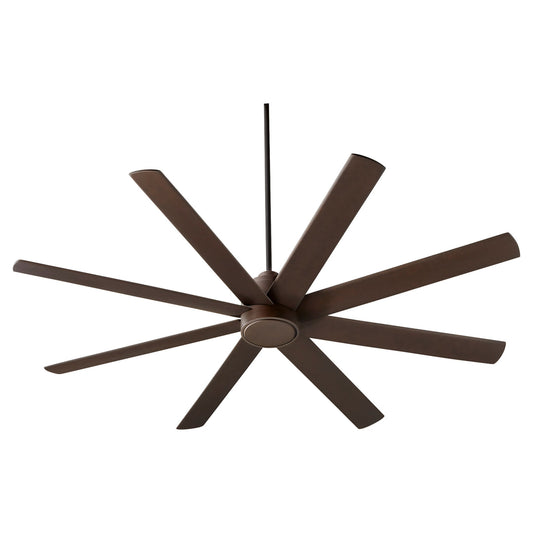
For those truly massive rooms, often with high or vaulted ceilings, you need a fan that can move a serious amount of air. A blade span of 60 inches or larger is a must. A great example is the powerful Barn 65" fan, which costs about $779 and is specifically designed to command large, open areas.
Globally, it's no surprise that medium-sized fans, typically 42 to 52 inches, dominate the market. They're the go-to choice for the most common room sizes, like bedrooms and living rooms around 144 to 225 square feet. They just hit that perfect balance of effective cooling and easy installation, which is why they have the leading market share. You can read more analysis on ceiling fan market trends if you're curious.
Understanding how to measure your room for a fan is a lot like figuring out other home systems. For example, if you want to calculate BTU per square foot for air conditioning, you're following the same core principle: matching the equipment's power to the size of the space.
Finally, don't forget that ceiling height also plays a huge role. While square footage determines your blade span, your ceiling height will tell you whether you need a standard mount, a low-profile "hugger" model for tight spaces, or a fan with an extended downrod for tall ceilings. Getting these measurements right from the start is the key to a successful installation. For a deeper look into this, check out our guide on choosing the right downrods for fans.
Looking Beyond Blade Span to Airflow and Height
Picking a ceiling fan based on blade span is a great first step, but it's only half the story. If you really want to master your home's climate, you have to look at two other crucial factors that dictate how a fan actually performs in the real world: its airflow rating and how it hangs with your ceiling height. These are the details that separate a fan that just spins from one that genuinely transforms a room.
Think of blade span like the size of a car’s tires. Sure, it matters, but the real power comes from the engine. For a ceiling fan, the engine's power is measured in CFM, which stands for Cubic Feet per Minute. This number tells you exactly how much air the fan moves, making it the most honest measure of its cooling power.
This is exactly why a well-designed 52-inch fan with a high CFM can run circles around a clunky, inefficient 60-inch fan. A powerful motor and an aggressive blade pitch—that’s the angle of the blades—are what really get the air moving. A higher CFM simply means a stronger, more satisfying breeze.
The Power of CFM and Blade Pitch
A fan’s motor is the heart of the whole operation. The blade pitch, on the other hand, acts like an airplane's propeller, slicing through the air and pushing it down. A steeper pitch, usually between 12 and 15 degrees, grabs and moves more air with every single spin.
When you pair a beefy motor with an ideal blade pitch, you get a high CFM rating. That synergy is what creates the room-filling breeze you can actually feel. It’s also worth noting that the number of blades doesn't automatically mean better performance. In fact, you can learn more about the impact of fan blade count on efficiency in our other guide. When you’re comparing models, always put CFM first.
To make things a bit simpler, this flowchart can help you visualize the process, guiding you from measuring your room to landing on the right fan size.
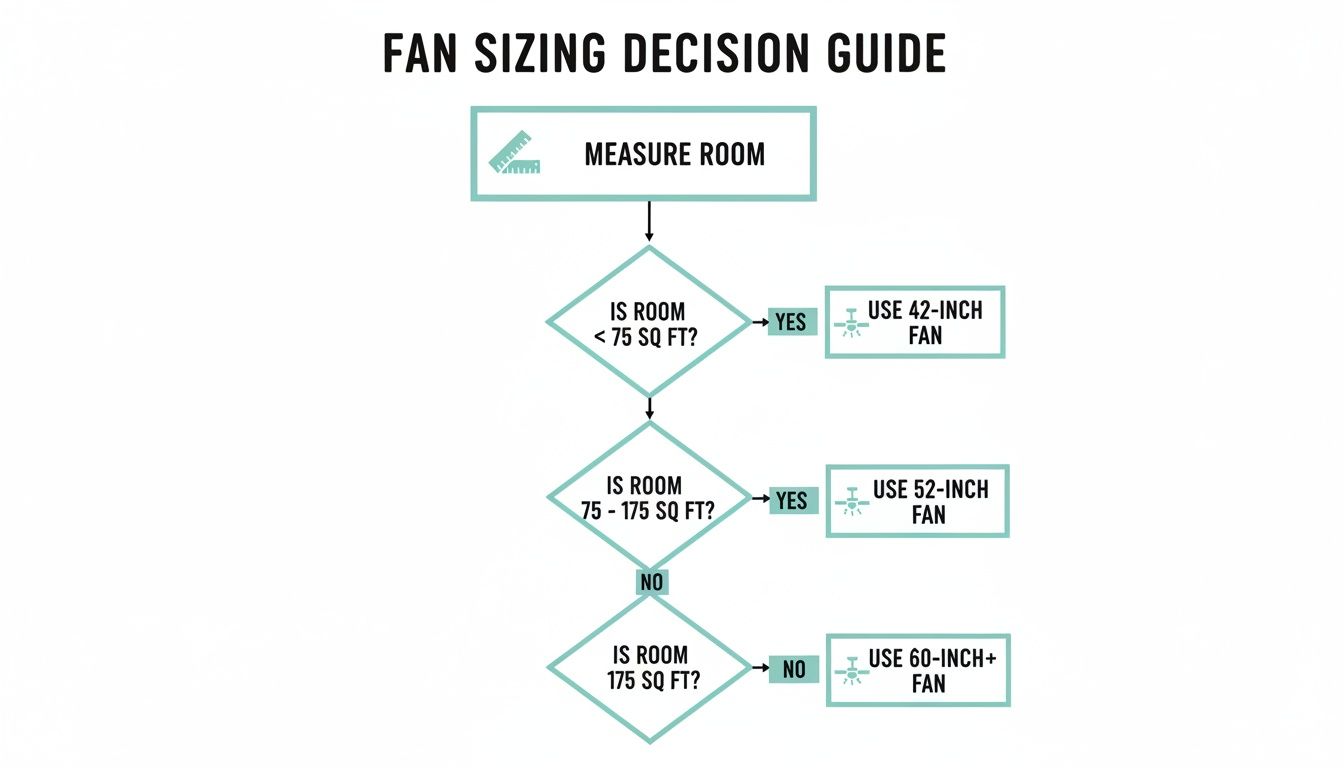
The key takeaway here is that your room's square footage points you directly to a recommended fan size, which makes that initial choice a whole lot easier.
Matching Your Fan to Your Ceiling Height
The second critical piece of the puzzle is ceiling height. Where you hang the fan vertically is just as important as how wide it is. The goal is to get it in that "sweet spot" where it circulates air most effectively, which is typically 8 to 9 feet above the floor.
Getting to that ideal height looks a little different depending on your ceiling.
-
For Low Ceilings (Under 8 Feet): You absolutely need a low-profile or "hugger" fan. These mount flush against the ceiling, making sure the blades are at least 7 feet off the floor—a standard safety requirement.
-
For Standard Ceilings (8 to 9 Feet): The standard mount that comes with most fans is perfect. It leaves just enough room between the ceiling and the blades for air to be pulled in and circulated properly.
-
For High or Vaulted Ceilings (Over 9 Feet): This is where downrods come into play. A downrod is just an extension pipe that lowers the fan into that ideal 8-to-9-foot zone. Without one, a fan on a high ceiling is just spinning uselessly, moving air far over your head.
A fan is only as good as its ability to get the breeze down to where you are. Using the right mount ensures that the air is delivered where you can feel it, maximizing both comfort and efficiency.
When you look beyond just the blade span and start considering CFM and ceiling height, you can make a much smarter choice. You're not just buying a stylish fixture; you're investing in a high-performance machine that will deliver the perfect airflow for your space.
Finding the Perfect Premium Fan for Your Home
Okay, you've got the technical side down—you know exactly what ceiling fan size your room needs. Now comes the fun part: picking a fan that doesn't just move air but also elevates your entire space. When you step into the premium category (think fans priced at $300 and up), you're not just buying an appliance. You're investing in a design centerpiece that marries serious performance with standout style.
These aren't your run-of-the-mill fans; they're conversation starters. Let's look at a few styles to see how a high-end fan can tie a room together while delivering that whisper-quiet, powerful breeze you're after.
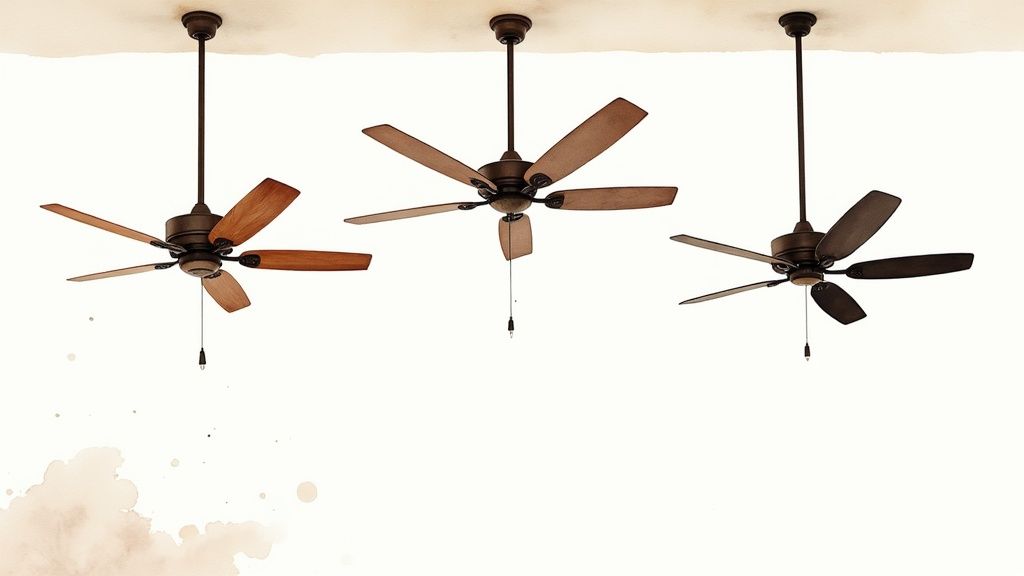
Modern Minimalist: The Art of Simplicity
Modern design is all about clean lines and the "less is more" philosophy. Fans in this style often have sleek, three-blade designs, metallic finishes, and integrated LED lights that blend right into the fan’s body. They’re the perfect fit for contemporary homes where you want powerful function without the visual clutter.
A great example is the Kute Brass 52" fan, which runs around $495. Its sharp, elegant blades and warm brass finish add a touch of sophistication that complements the room instead of overwhelming it. It’s a fantastic choice for a medium-sized living room or master bedroom where you need style and function to live in perfect harmony.
Industrial Chic: Bold and Unapologetic
Drawing inspiration from old factories and urban lofts, the industrial look celebrates raw materials—think exposed metal, reclaimed wood, and no-nonsense forms. Industrial fans are often bigger and bolder, with beefy motor housings and details like caged lights or rivet accents. They bring a strong, confident vibe to any room.
Take the Spitfire Dark Bronze 60" fan, priced near $699. With its massive blade span and rich, dark finish, this fan is built for large, open-concept rooms with high ceilings. It’s a true workhorse that combines raw power with a refined, edgy look that absolutely commands attention.
Rustic Farmhouse: Warm and Inviting
The rustic farmhouse style is all about creating a cozy, lived-in feel with natural textures and warm, earthy tones. Fans in this category often feature distressed wood blades, oil-rubbed bronze finishes, and maybe even a lantern-style light kit. They’re ideal for creating a welcoming atmosphere in a family room, kitchen, or even a covered porch.
The Barn 65" fan, costing about $779, is the perfect embodiment of this style. Its huge blade span is made for great rooms, and its design gives off a sense of sturdy, timeless comfort. It’s a beautiful and powerful choice for anyone wanting to add a touch of rustic charm.
Choosing a premium fan often means you're getting a superior DC motor. These motors are the gold standard for efficiency and quiet operation, using up to 70% less energy than old-school AC motors. For a deeper dive, check out our guide on the best DC motor ceiling fans.
Even with these stunning high-end fans, the sizing rules we discussed earlier still apply. It's interesting to note that standard fans still dominate the global market, fitting the majority of rooms between 100 to 225 square feet. This is because their affordable price and versatile size are a perfect match for the most common room dimensions, especially in new homes.
Once you’ve found the perfect premium fan, getting it installed correctly is key to its performance and safety. Using Expert Ceiling Fan Installation Services ensures your investment is secure, balanced, and ready to deliver perfect comfort for years to come.
Answering Your Toughest Ceiling Fan Sizing Questions
Even with the right charts, picking a fan can feel tricky. A few common scenarios always seem to pop up, leaving homeowners scratching their heads. Let's walk through the most frequent questions we get to make sure you're totally confident in your choice.
Can I Use Two Small Fans in a Large Room Instead of One Big One?
Absolutely—and honestly, it's often a brilliant move. For really long great rooms or L-shaped spaces, two well-placed fans can deliver far more balanced and effective airflow than one single massive fan. It’s all about creating dedicated comfort zones.
Think about how you actually live in the space. You could hang one fan over your main seating area and another over the dining table. The key is to size each fan for the specific zone it's serving, not the entire room. Just make sure there's enough clearance—give them at least 3 to 5 feet between the blade tips of each fan, and the same from the walls.
How Does the Number of Blades Affect Performance?
It’s one of the biggest myths out there: more blades equal more air. The real workhorses behind airflow are the fan’s motor and its blade pitch—the angle of the blades. A powerful motor paired with a steep, aerodynamic pitch is what truly whips up a strong breeze.
That said, modern, well-engineered fans with five or even eight blades can be just as powerful as their three-blade counterparts. The main difference you'll notice is that they often run quieter and produce a smoother, less choppy airflow.
Instead of counting blades, look at the CFM rating. Find a model with the right blade span and CFM for your room first. After that, you're free to pick any blade count or style that fits your home's vibe.
What Is the Minimum Safe Height from the Floor to the Fan?
This one is non-negotiable. Building codes are crystal clear: for safety, ceiling fan blades must be installed at least 7 feet off the floor. This clearance prevents any accidental contact and ensures everyone can walk underneath safely.
This single rule is what guides your mounting choice based on ceiling height.
- If you have a standard 8-foot ceiling, you'll need a low-profile "hugger" fan. These mount flush to the ceiling to give you that required 7-foot clearance.
- For ceilings 9 feet or higher, you’ll use a downrod. This lowers the fan into the sweet spot for airflow (8-9 feet from the floor) while easily keeping it above that 7-foot safety line.
Feeling ready to find the perfect statement piece for your space? At Fan Connection, we've curated a stunning collection of premium fans designed to deliver exceptional performance and style.


