











A Homeowner’s Guide To Downrods For Fans
When you hang a ceiling fan, that metal pipe connecting the fan’s motor to the ceiling mount is called a downrod. It might seem like a simple piece of hardware, but its job is critical. The downrod is what positions your fan at the perfect height for optimal airflow, stability, and safety. Think of it as the fan's neck—the right length determines how well it can "breathe" and move air around your room. It’s the unsung hero that makes your fan a cooling powerhouse instead of just a pretty ceiling ornament.
What Exactly Is A Fan Downrod?
Picture a beautiful, expensive ceiling fan mounted flush against a tall, 15-foot cathedral ceiling. The blades would just spin uselessly way up high, churning air that nobody can feel. Down on the ground, you'd still be sweating. This is exactly the problem downrods were designed to solve. They may look simple, but they’re essential for making sure your fan is a powerful tool for comfort, not just a decoration that mocks you from above.
A downrod bridges that empty space between the ceiling and your living area, lowering the fan into what engineers call the "sweet spot" for air circulation. Getting this placement right is key for feeling that glorious cool breeze in the summer and for cleverly pushing warm air back down where you need it in the winter.
The Core Functions of a Downrod
Without the right downrod, even the most expensive, high-powered fan will feel like it’s barely trying. Its importance really comes down to three things:
- Performance: A properly sized downrod gives the fan blades enough clearance to move a huge volume of air freely. This is what creates that noticeable breeze and improves circulation throughout the entire room.
- Stability: Downrods from the fan's manufacturer are engineered with precise threading and pre-drilled holes for locking pins. This is what prevents that dreaded fan wobble and keeps it running quietly and smoothly, so you can sleep in peace.
- Safety: The correct downrod ensures the fan blades are at a safe height—the standard is at least 7 feet from the floor. It also keeps them clear of any beams or angled surfaces on sloped and vaulted ceilings.
By putting the fan in the right spot, a downrod doesn't just improve your comfort. It can actually make your HVAC system more efficient, which can help lower your energy bills. When air is moving effectively, your thermostat doesn't have to work nearly as hard.
More Than Just a Pipe
While its main job is mechanical, a downrod also plays a big part in how the fan looks. One that’s too short can make a fan look squished and awkward on a high ceiling, like a tie that's too short. On the other hand, a downrod that's too long might feel like it's looming over you in a room with a lower ceiling.
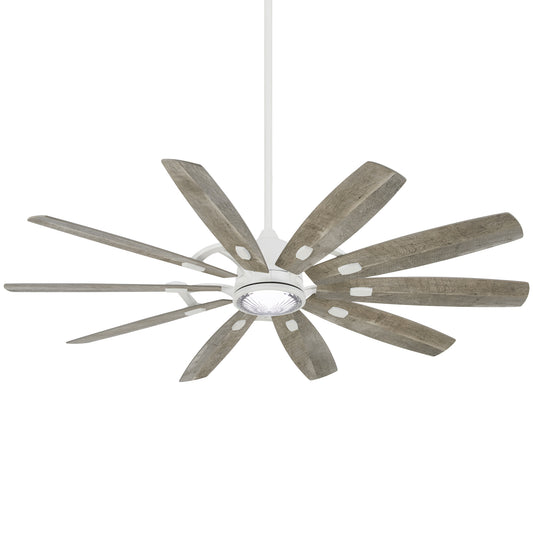
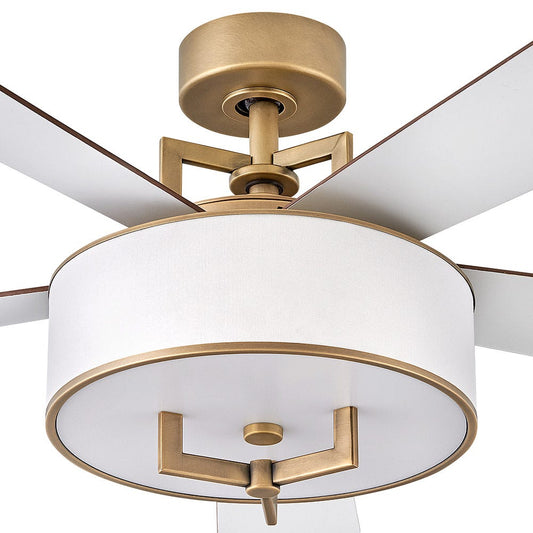
Choosing the right length and finish helps the fan blend in seamlessly with your room’s design. If you're investing in a premium fixture like the stunning Maverick II LED Ceiling Fan, which often sells for over $600, pairing it with the correct downrod is a must. It protects your investment and really shows off its incredible design, turning the fan from a simple utility into a true centerpiece.
Matching Downrod Length To Your Ceiling Height
Picking the right downrod for your ceiling fan isn't just about how it looks—it's the single most important decision for getting your fan to actually work well. Think of it like tuning a guitar; if the string isn't at the right tension, the note is all wrong. In the same way, if your fan hangs at the wrong height, the airflow will feel weak and disappointing.
The whole point is to get the fan blades into the room's "sweet spot," which is generally 8 to 9 feet above the floor. Hitting this magic number means the fan can powerfully and efficiently circulate air throughout your living space, creating that perfect breeze. Let's break down how to nail this calculation for any room.
The Goldilocks Principle: Too Short Or Too Long
So, what happens if you get the downrod length wrong? It's more than a minor annoyance; a bad choice can make an expensive fan feel almost useless.
- Too Short: When a fan is mounted way too close to a high ceiling, it creates what I call an "air-circulation dead zone." The blades can't pull in enough air from above, so they just spin around in a little bubble, unable to push a real breeze downward. You'll hear the motor humming, but you won't feel a thing.
- Too Long: On the flip side, a downrod that's way too long for the space can cause stability issues. That extra length can amplify even the smallest imbalance, leading to that annoying wobble that's not only loud but also a safety concern. In rooms with standard ceilings, it can also create a hazard by hanging too low.
This simple visual breaks down why getting the downrod length just right is so critical to your fan's core jobs.
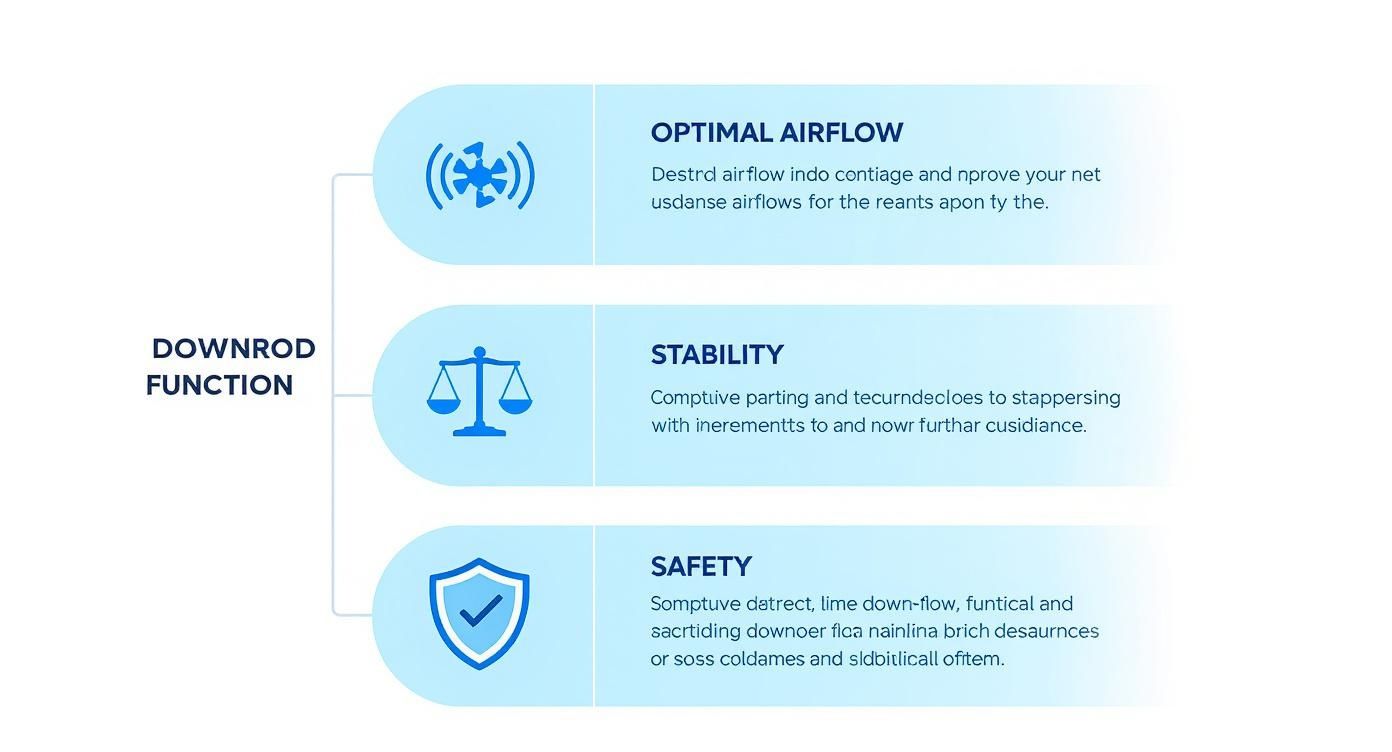
As you can see, the right downrod is the foundation for great airflow, a stable fan, and overall safety. It’s a non-negotiable part of a good installation.
A Simple Formula For The Perfect Height
You don't need to be a math whiz to figure out the ideal downrod length. It's really just a simple, two-step process:
- Measure Your Ceiling Height: Grab a tape measure and get an accurate reading from the floor all the way up to the ceiling.
- Use the Formula: Take your ceiling height (in feet) and subtract the target blade height (let's aim for 9 feet for the best circulation). The number you get is a fantastic starting point for your downrod length.
Example Calculation:
If your ceiling is 14 feet high:
14 ft (Ceiling Height) - 9 ft (Target Blade Height) = 5 ft
In this scenario, you’d be looking for a 60-inch (5-foot) downrod.
This quick math will get you incredibly close to the perfect length. Just remember to double-check the fan's specs, as the height of the motor housing itself can slightly change the final position of the blades.
Downrod Recommendations For Different Ceilings
While the formula is a great shortcut, sometimes you just want a quick reference. This chart simplifies matching downrods for fans to your specific room height.
Recommended Downrod Length By Ceiling Height
Use this guide to match your ceiling height with the correct downrod length. This ensures your fan operates safely and circulates air most effectively.
| Ceiling Height (Feet) | Recommended Downrod Length (Inches) | Resulting Blade Height From Floor (Approx.) |
|---|---|---|
| 8' | 3" - 6" (Standard Included Rod) | ~7.5' |
| 9' | 6" - 12" | ~8' |
| 10' | 12" | ~9' |
| 12' | 24" | ~9' |
| 14' | 48" | ~9' |
| 16' | 72" | ~9' |
As you can see, the downrod plays a huge part in how well a fan works, especially in those big rooms with tall or vaulted ceilings. Picking the right length based on your ceiling height is what makes the difference between a fan that just spins and one that actually cools you down.
Tackling Tricky Vaulted And Sloped Ceilings
Vaulted or sloped ceilings add a beautiful, dramatic touch to a room, but they demand extra care when installing a fan. Here, a downrod isn't just a good idea—it's absolutely essential.
The downrod ensures the fan hangs perfectly level, which allows the blades to rotate freely without smacking into the angled ceiling. For these jobs, you'll also need a sloped ceiling adapter or canopy, which is designed to mount securely on an angle. Many high-end fans, like the sleek Minka-Aire F844-DK Light Wave Ceiling Fan (which can cost around $350), include these adapters or offer them as an accessory.
When you're shopping for a fan for one of these unique spaces, check out our guide on the best ceiling fans for high ceilings to find models specifically built to handle these challenges.
Navigating Materials, Finishes, And Compatibility
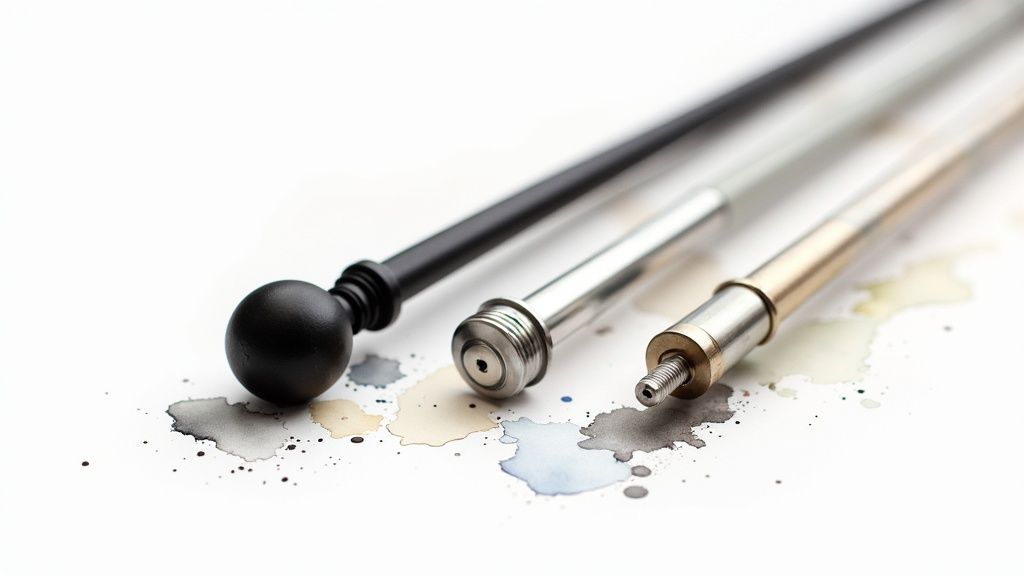
Once you’ve figured out the perfect downrod length, the next step is getting into the details that make for a safe, stable, and stylish setup. It’s easy to assume any old metal pipe will work, but the truth is, the material, finish, and—most importantly—brand compatibility are what separate a flawless installation from a wobbly, noisy disaster.
Trust me, not all downrods for fans are created equal. The materials and finishes are specifically engineered for different environments to ensure your fan not only looks great but also holds up over time.
Choosing The Right Material And Finish
Where you plan to install your ceiling fan is the biggest factor here. For an indoor spot like a living room or bedroom, a standard steel downrod is usually all you need. Steel provides the strength and rigidity required to keep the fan stable and wobble-free for years.
But if you're putting a fan on a covered porch, patio, or in a steamy bathroom, you’ll need something tougher. This is where specialized, element-resistant finishes come into play.
- Damp-Rated Finishes: These are perfect for covered outdoor spaces or high-humidity indoor areas like a laundry room. They’re treated with protective coatings to prevent rust and corrosion from all that moisture in the air.
- Wet-Rated Finishes: For any fan that will be directly exposed to rain or salt air, a wet-rated downrod is an absolute must. These typically feature powder-coated or marine-grade finishes that offer a superior barrier against corrosion and decay.
From an aesthetic standpoint, the finish is your chance to pull the whole look together. Matching the downrod finish—whether it's matte black, brushed nickel, or aged bronze—to your fan’s motor housing creates that seamless, professionally installed appearance. A premium fan like the Minka-Aire F870L-ORB Slant Ceiling Fan, which sells for over $400, really deserves a perfectly matched downrod to complete its modern industrial vibe.
The Critical Rule Of Compatibility
If you take away one thing from this guide, let it be this: you cannot mix and match downrod and fan brands. It’s the single most important lesson for any installer. Downrods might look similar, but they are not universal. Every manufacturer has its own precise specifications, and these are absolutely critical for safety and performance.
Using an incompatible downrod is the leading cause of wobbly, noisy, and unsafe fan installations. It will also immediately void your fan's warranty, leaving you without recourse if something goes wrong.
Trying to force a fit is just asking for trouble. The slightest variation in the specs can lead to a dangerously unstable fan.
What To Check Before You Buy
To guarantee a perfect, safe fit, you have to verify that the downrod you’re buying is made by the same brand as your fan. There are three critical measurements that differ between manufacturers:
- Diameter: Both the outer and inner diameter of the downrod tube have to match the fan's mounting bracket and motor coupling perfectly. A rod that’s too thin will rattle around, while one that’s too thick just won't fit at all. Common diameters are 1/2 inch or 3/4 inch, but there is no universal standard.
- Threading: The threads at the top of the downrod (where it screws into the ceiling mount) are brand-specific. If the threads don't match, you won't get a secure connection, creating a major weak point.
- Pinhole Placement: The pre-drilled holes for the cotter pin and set screws must align exactly with the holes on your fan's motor housing. These pins are the key safety mechanism preventing the fan from ever detaching.
Market data shows that fans with downrods make up over 60% of total ceiling fan sales in areas with higher ceilings, which just goes to show how important they are for both function and design. You can explore detailed ceiling fan industry insights to learn more about these trends. This popularity just highlights why it's so important for homeowners to get these crucial compatibility details right.
How To Safely Install Or Replace A Downrod
Swapping out a ceiling fan downrod might look a little intimidating, but it’s totally manageable if you’re careful and put safety first. This guide will walk you through the basic steps, so you can figure out if it’s a job you want to tackle yourself or if it’s time to call in a pro.
The process itself is pretty straightforward, but every little piece matters. A single loose screw or a forgotten pin can turn a silent, steady fan into a wobbly, noisy mess. Let’s break down how to do it right.
The First And Most Important Step
Before you even grab a screwdriver, you have to turn off the power. And no, just flipping the wall switch isn’t enough. Head to your home's circuit breaker and kill the power to the entire room where the fan is located.
This is a non-negotiable safety rule. The risk of electric shock is real, and disabling the power at the breaker is the only way to ensure the wiring is completely dead. Use a voltage tester on the fan's wires to be 100% certain the power is off before proceeding.
Once you’ve confirmed the power is off, you can get to work.
Preparing The Fan For The Swap
First things first, you need to get to the mounting hardware, which is tucked away behind the decorative canopy.
- Lower the Canopy: The canopy is that cone-shaped cover flush against the ceiling. It’s usually held up by a few small screws. Loosen them up, and the canopy should slide right down the existing downrod. This will expose the mounting bracket and the top of the downrod assembly.
- Support the Fan: That fan motor is heavier than it looks. Once you disconnect it, you'll need something to hold it up. You could ask a friend for help, but a great trick is to use a sturdy S-hook or even a bent metal coat hanger to temporarily hang the fan from the mounting bracket. This frees up both your hands for the next part.
Performing The Downrod Exchange
With the fan safely supported, you’re ready to remove the old downrod and install the new one. This is where you’ll need to pay close attention to the small but critical parts that hold everything together.
The main connection is at the fan’s motor housing. You’ll usually find a small pin (often called a cotter or clevis pin) and a set screw that lock the downrod in place.
- Detach the Old Rod: Carefully pull out the cotter pin and loosen the set screw. The old downrod should now be free from the motor.
- Feed the Wires: This is probably the most delicate step. Gently guide the fan's electrical wires out of the old downrod and carefully thread them through your new, longer one. Take your time here—you don't want to yank or damage the wire insulation.
- Secure the New Rod: Slide the new downrod into the motor housing and make sure the pinholes line up perfectly. Re-insert the cotter pin and tighten the set screw down firmly. This connection is what keeps the fan from wobbling, so make sure it's solid.
Once the new downrod is attached to the motor, you can re-hang the fan from the ceiling bracket, reconnect the wiring, and slide the canopy back into place. For a more detailed walkthrough, you might find it helpful to check out our guide on how to install a ceiling fan safely. Making sure every screw, pin, and wire connection is tight is the final, crucial step to a successful and safe installation.
Elevating Your Space With Premium Fan And Downrod Pairings
When you’re dealing with dramatic architecture—think great rooms with soaring cathedral ceilings or airy modern lofts—a standard, off-the-shelf ceiling fan just won’t do the job. These spaces need more than just a fan; they need a high-performance air mover that doubles as a stunning design centerpiece. This is where premium ceiling fans, often starting at $300 and up, and their specialized downrods really come into their own.
Choosing a high-end fan isn’t just about looks. It’s an investment in superior engineering, powerful motors, and sophisticated designs that can completely transform the feel of a room. These aren't just appliances; they become an integral part of your home's character.
The World of Large Diameter Fans
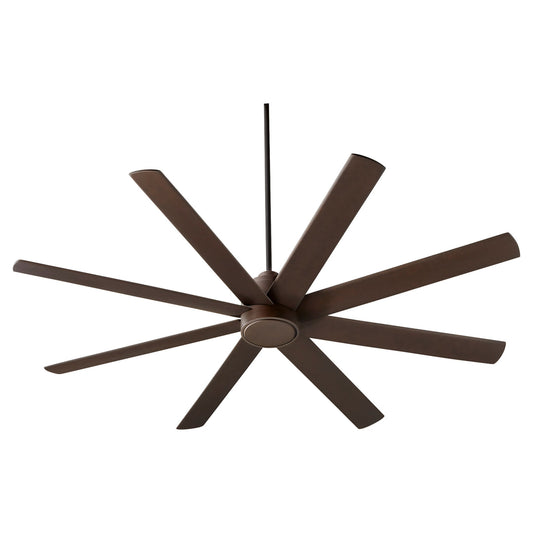
For truly grand spaces, you have to think big. Large-diameter fans with blade spans of 60 inches or more are a must. Models like the impressive Monte Carlo 60" Maverick Max Ceiling Fan are engineered specifically to move massive volumes of air quietly and efficiently, a feat smaller fans just can't match. But to work their magic, they have to be paired with equally long downrods for fans.
In rooms with ceilings hitting 16 feet or higher, it’s not uncommon to need downrods of 72 inches or even longer. For those exceptionally tall entryways or commercial lobbies, you can sometimes join two downrods with a manufacturer-approved coupler to get the perfect height. This ensures the fan hangs low enough to create a real, tangible breeze where you can actually feel it.
A premium fan is a significant investment in your home's comfort and style. Pairing it with the correct, brand-matched downrod is crucial for protecting that investment, ensuring safe operation, and maximizing airflow performance.
It's also worth noting how these kinds of upgrades can boost your home renovation return on investment. A well-chosen, professionally installed fan can be a major selling point.
Beyond Residential Spaces
The need for powerful, large-scale air circulation doesn't stop at home. The commercial and industrial worlds rely on it, too. We're seeing a huge uptick in large-diameter industrial ceiling fans—typically between 16 to 20 feet—that need long downrods for proper clearance in warehouses and factories. In fact, e-commerce sales for these workhorse fans have seen an estimated 6.9% annual jump, partly because customers are demanding detailed specs online, including downrod length and material.
Investing in Design and Engineering
What really sets a premium fan apart is the dedication to quality materials and flawless finishes. Top designer brands offer downrods in finishes like matte white, brushed bronze, and polished nickel to create a perfectly cohesive, high-end look. This kind of attention to detail makes sure the downrod is never an afterthought, but an elegant extension of the fan's design.
Ultimately, choosing a premium fan and the right downrod pays off in both performance and aesthetics. It’s an upgrade that boosts your daily comfort while making a bold statement. If you're ready to start looking, our guide on how to choose a ceiling fan can help you find the perfect model to become your room's new focal point.
Common Questions About Fan Downrods Answered
Even after you've picked out the perfect fan, a few questions always seem to pop up during installation. It’s totally normal to have some last-minute doubts, especially when you're dealing with something that affects both your home's look and its safety. Let's tackle those nagging questions right now.
We’ve pulled together the most common questions we hear about downrods for fans and laid out some clear, simple answers. Think of this as your go-to cheat sheet to get you through the final stretch with confidence.
Can I Use Any Brand of Downrod With My Fan?
This is probably the most important question of all, and the answer is a hard no. You absolutely must use a downrod from the same brand as your ceiling fan. Downrods are not universal parts, and trying to mix and match is just asking for a wobbly, unstable fan—which is a serious safety hazard.
Every brand has its own specific engineering, and these details have to line up perfectly:
- Diameter: The inside and outside measurements of the tube have to fit your fan's mounting gear just right.
- Threading: The threads at the top of the downrod are unique to each manufacturer.
- Pinhole Placement: The holes for the safety pin must align perfectly with the fan's motor housing.
Using the wrong downrod will almost always void your fan’s warranty. Stick with the manufacturer's recommendation by checking your fan’s manual or their website to get the right part.
Is A Downrod Necessary For An 8-Foot Ceiling?
Yes, for an 8-foot ceiling, you'll get the best performance by using the short downrod that comes in the box with most new fans. These are usually 3 to 6 inches long and are designed to hang the blades at the perfect height for moving air around the room.
You might be tempted to use a "hugger" or flush-mount fan, but their blades are often too close to the ceiling to circulate air effectively. This can create a dead air zone right under the fan, leaving you wondering why you're not feeling a breeze. That standard short downrod is your best bet for good airflow.
Can I Cut A Downrod To A Custom Length?
We strongly advise you to never cut a downrod. The moment you modify it, you've voided the warranty and created a real safety risk. Manufacturers use precision equipment to drill the holes for the mounting pins that hold the entire fan motor.
It's almost impossible to replicate those holes perfectly at home. An improperly drilled hole weakens the downrod's structure, which can lead to dangerous wobbling or, in a worst-case scenario, the fan completely detaching from the ceiling.
It’s always safer to just buy a downrod in the exact length you need. Brands make them in a huge range of sizes, so finding the right one is usually pretty easy.
What Is A Downrod Coupler And When Is It Used?
A downrod coupler is a special connector used to join two downrods together, creating one extra-long support. You'll only see these used in spaces with incredibly high or dramatic vaulted ceilings—think 20 feet or more.
If you do need one, it's critical to use a coupler made by the same manufacturer as your fan and downrods. A mismatched coupler creates a weak link in the whole setup, which is a major safety risk. For a high-end statement fan like the Kichler 65" Gentry LED Ceiling Fan, which can cost over $800, you want a flawless and secure installation. Always follow the manufacturer's guidelines to the letter.
At Fan Connection, we believe the right downrod unlocks your fan's true potential. For a perfectly matched, high-performance pairing that enhances your home's comfort and style, explore our curated collections at https://www.fanandlights.com.


