











Ceiling Fans 4 Inch: The Ultimate Guide to Downrods, Style, and Premium Performance
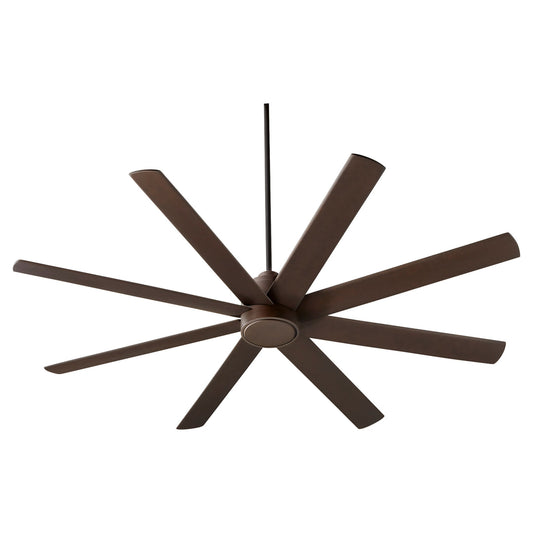
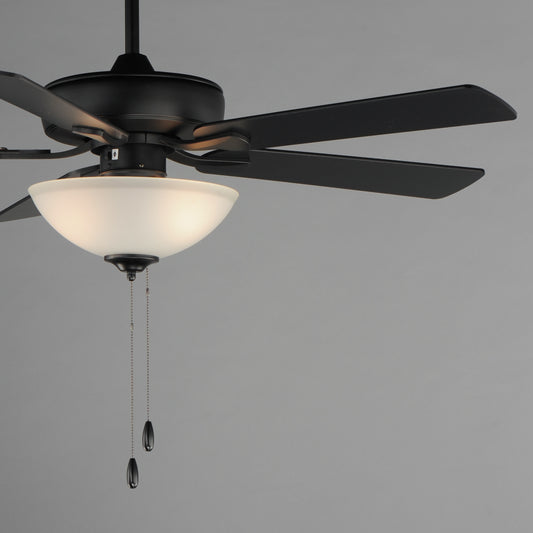
If you've ever typed “4 inch ceiling fan” into a search bar, you've probably been looking for a fan with a 4-inch downrod. It’s that short, sturdy pipe connecting the fan motor to the ceiling mount, and it’s the go-to choice for rooms with standard 8 to 9-foot ceilings. Why? It hits the absolute sweet spot for safety, style, and sensational airflow.
What a "4 Inch" Ceiling Fan Really Means
Let's clear the air on this, shall we? When you see "4 inch" in a fan's description, it's almost never about the blade size or the motor. It’s all about the downrod length.
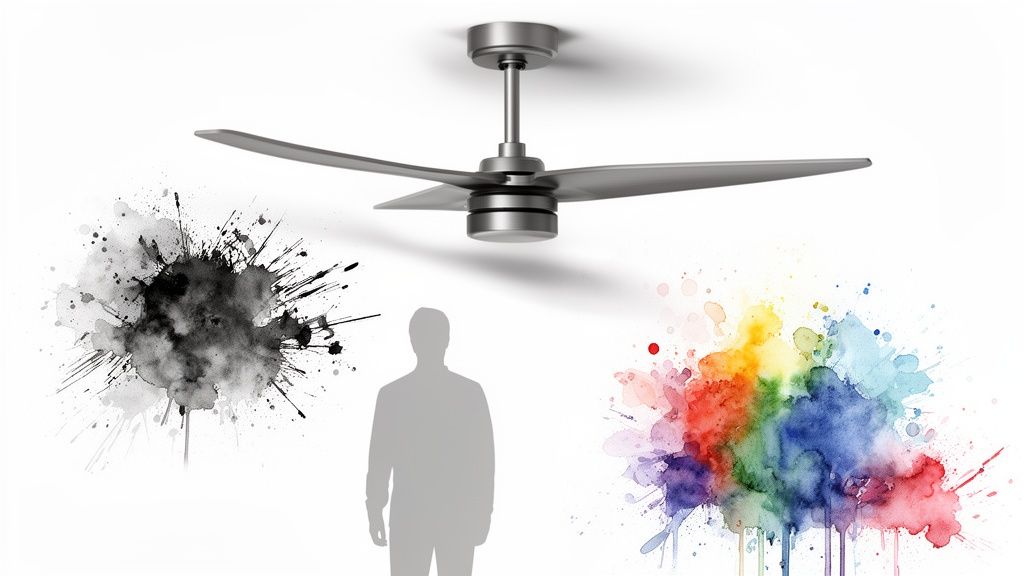
Think of the downrod as the fan's spine—it sets the distance between the blades and the ceiling. A 4-inch downrod is the industry standard for a very good reason. It positions the fan perfectly to circulate air without hanging so low that it feels like a hazard. This gives you plenty of headroom (the legal minimum is a strict 7 feet from the floor) while allowing the blades to work their magic effectively.
This setup is very different from the other two main types of ceiling fans you'll find.
Downrod vs. Hugger Fans
-
Hugger Fans: Also known as flush-mount fans, these are designed to sit right up against the ceiling, no downrod needed. They’re built for rooms with ceilings lower than 8 feet, where every last inch of space is precious.
-
Long Downrod Fans: Got high or vaulted ceilings? You'll need a fan with a much longer downrod—think 12 inches or more—to bring it down to a height where you can actually feel the breeze.
The 4-inch downrod is that perfect middle ground. It avoids the restricted airflow you can sometimes get with a hugger fan and doesn't look out of place like a long rod would in a standard room. It’s the "just right" solution that balances looks and performance. For a deeper dive, you can learn more in our complete guide on downrods for fans.
This kind of smart, practical design is why ceiling fans are such a staple in modern homes. According to Fortune Business Insights, the global ceiling fan market hit USD 11.39 billion in 2024 and is expected to climb to USD 16.18 billion by 2032. People are investing in well-designed fans that perform perfectly, which is why we focus on offering premium models like the Artemis IV or Apex with the right sizing for any room.
Why the 4 Inch Downrod Is the Design Standard
The 4-inch downrod is one of those unsung heroes in home design. It's the perfect supporting actor that lets your ceiling fan take center stage without a fuss. For most homes with standard 8-foot ceilings, this length isn't just a random number; it's a carefully calculated choice that hits the sweet spot between performance, safety, and style.
Think of it like getting a suit tailored. The right fit makes all the difference, and a 4-inch downrod is that perfect fit. It hangs the fan just far enough from the ceiling to let air move freely around the blades, which means better airflow and a more powerful breeze. At the same time, it keeps the fan high enough to meet that crucial 7-foot minimum clearance from the floor. No one wants to duck under their ceiling fan.
The Sweet Spot for Air Circulation
The science here is pretty simple. For a fan to really move air, it needs space to pull air from above its blades. If it’s mounted too close to the ceiling—like some flush-mount models—it can struggle, and the airflow feels weak. The 4-inch downrod is the solution, giving it just enough breathing room for optimal performance without dropping it too low.
This incredible efficiency is a big reason why ceiling fans are a fixture in homes everywhere. A properly installed fan can knock down your energy bills by up to 65% compared to an AC unit in milder weather. It just goes to show how a small detail can make a huge impact on both your comfort and your wallet.
Avoiding Common Design Pitfalls
From a design perspective, the 4-inch downrod just looks right. It helps you dodge that cramped, compressed feel you sometimes get with hugger fans. On the flip side, it also prevents the awkward, dangling look of a longer rod in a room with standard-height ceilings.
This standard size provides incredible versatility, allowing designers to create a cohesive look without compromising on function. It's the reliable foundation upon which great room design is built.
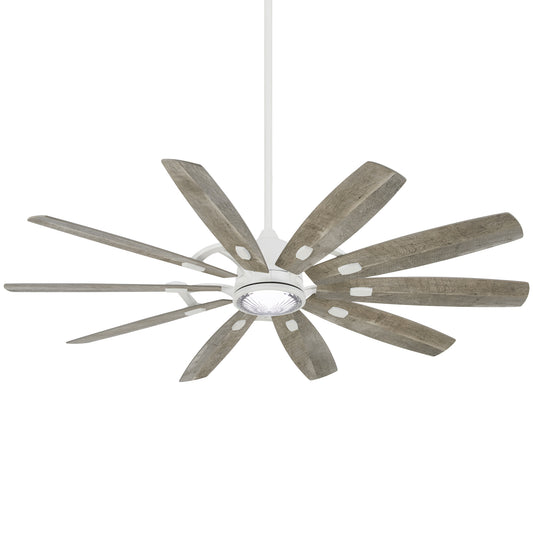
Even premium fans, which can easily cost $300 or more, lean on this standard to achieve their signature styles. Whether it's the sleek, modern lines of the Aerovon or the cozy, rustic vibe of the Barn fan, the 4-inch downrod ensures the fan complements the space perfectly. It’s proof that this seemingly minor component is essential for a polished, comfortable room, making it the go-to for homeowners and designers alike.
How to Select Your Premium Ceiling Fan
Alright, you understand why that 4-inch downrod matters. Now for the fun part: picking a fan that genuinely transforms your room. When you invest in a premium ceiling fan—think $300 or more—you're getting more than just a motor and some blades. You're choosing a design centerpiece, a piece of engineering that will run quietly and reliably for years.
Let's walk through three distinct styles from our collections to help you find the right fit. Whether your home calls for a dramatic, artsy vibe, a touch of classic elegance, or some cool industrial chic, there’s a high-end fan waiting for you. This should help you picture these models in your own space and make your choice with confidence.
And if you want a complete deep-dive into all the details, our full ceiling fan buying guide is always there to help.
The Architectural Statement: The Artemis XL5
For anyone who sees home decor as a form of art, the Artemis XL5 is a conversation starter. Starting at a cool $699, its bold, sweeping blades create a fluid, sculptural look that just owns the room. It’s perfect for modern great rooms or minimalist spaces where every piece counts. Honestly, it’s less of a fan and more like kinetic art for your ceiling.
But the Artemis XL5 is more than just a pretty face. It’s powered by a high-performance DC motor that’s not only whisper-quiet but also up to 70% more energy-efficient than old-school AC motors.
- Blade Span: A generous 62 inches or more, ideal for moving air through those big, open areas.
- Materials: Built with top-notch polymers and metals for a flawless finish that lasts.
- Finishes: Comes in sleek options like liquid nickel, matte black, and distressed Koa to match any modern design scheme.
The Elegant Traditionalist: The Chateaux
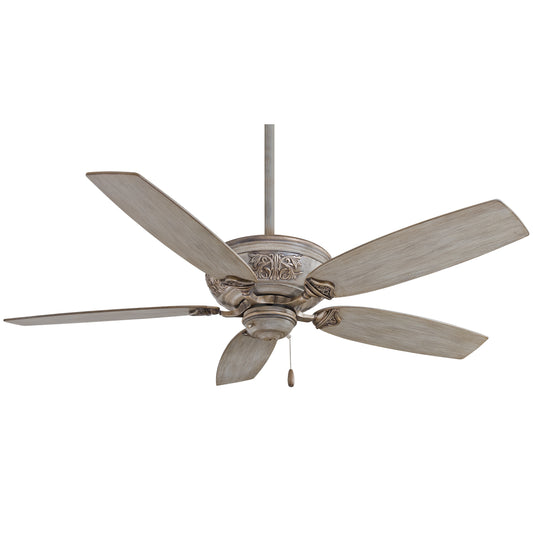
If your style leans more toward classic and sophisticated, The Chateaux delivers timeless grace. Starting at $459, this fan is all about the details—ornate scrollwork, warm finishes, and beautifully crafted blade irons that feel like they belong in a historic home. It’s a natural fit for a formal dining room, a cozy master bedroom, or any space where traditional elegance sets the tone.
The Chateaux masterfully blends this classic look with modern tech, often including a dimmable light kit and a quiet, efficient motor. It's proof you don't have to give up performance for a traditional aesthetic. To make sure you get the dimensions just right for your room, check out this excellent Your Ultimate Ceiling Fan Size Guide for some expert tips.
The real beauty of a fan like The Chateaux is how it can slip right into an established decor style while still giving you all the comfort and efficiency of a modern appliance. It’s a testament to design that never goes out of fashion.
The Industrial Powerhouse: The Aviation
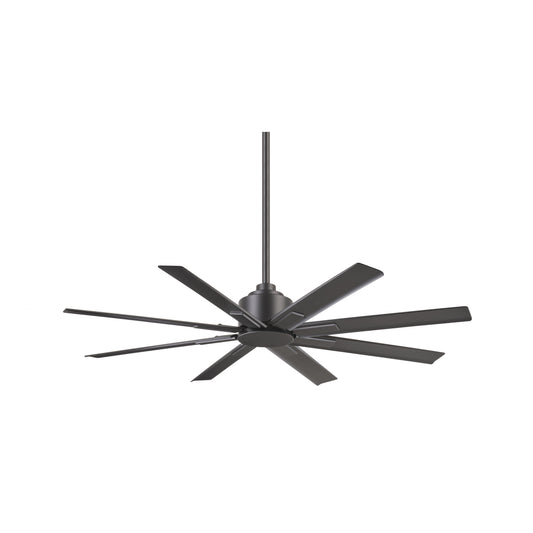
Inspired by the clean, powerful lines of vintage aircraft propellers, the Aviation fan is an industrial powerhouse. Starting at $399, its minimalist three-blade design and metallic finishes bring a cool, urban vibe to lofts, home offices, and contemporary living rooms. The stripped-down look is perfect for spaces that celebrate raw materials and function over frills.
The Aviation fan is built to perform, with a beefy motor that’s all about moving serious air. Its robust construction means it can handle everyday use without breaking a sweat, all while looking effortlessly stylish.
Premium Fan Showcase Over $300
When you're ready to invest in a fan that will define your space, it helps to see the options side-by-side. Here's a quick look at how our top-tier models stack up, each perfect for a standard 4-inch downrod installation.
| Fan Model | Style Profile | Ideal Room Type | Starting Price |
|---|---|---|---|
| Artemis XL5 | Architectural & Modern | Great Rooms, Open-Concept Spaces | $699+ |
| The Chateaux | Elegant & Traditional | Master Bedrooms, Dining Rooms | $459+ |
| Aviation | Industrial & Sleek | Lofts, Home Offices, Modern Living | $399+ |
Choosing a premium ceiling fan with a 4-inch downrod is really an investment in your home’s comfort and personality. When you match the fan's style to your own, you end up with a space that’s not just beautiful but works perfectly for you.
Installing Your Fan for Flawless Performance
A great fan is more than just an appliance; it's an investment in your home's comfort and style. To really get the most out of it, a flawless installation is key. Properly installing a ceiling fan, especially one with a 4 inch downrod, isn't just about hanging it up—it's about ensuring it runs safely, quietly, and efficiently for years.
Let's walk through the essential steps to get it right.
The first rule of any electrical project, without exception, is safety. Before you even think about opening the box, march over to your circuit breaker and cut the power to the room you're working in. Flip the wall switch a couple of times to be absolutely sure the power is off. If the lights stay dark, you're ready to start.
Pre-Installation Safety Checks
Once the power is confirmed off, a few quick checks will save you a world of headaches later. These steps make sure your ceiling can safely hold the fan and that the blades have enough room to do their job.
- Fan-Rated Electrical Box: Take a look at the electrical box in your ceiling. It absolutely must be rated to support the weight and motion of a ceiling fan. A standard box designed for a simple light fixture just won't cut it and could fail dangerously. If you don't have a fan-rated box, it needs to be replaced.
- Blade Clearance Rules: Grab a tape measure. For safety, the fan blades must be at least 7 feet from the floor. To ensure smooth, effective airflow, they also need at least 18 inches of clearance from any wall or other obstruction.
A wobbly or noisy fan is almost always the result of an installation error, not a faulty product. Taking your time to secure every component and balance the blades is the secret to silent, smooth operation.
Avoiding Common Installation Mistakes
That annoying wobble or hum you sometimes hear from a ceiling fan? It's almost always avoidable. Pay close attention to these details as you put your fan together:
- Secure All Connections: This is the big one. Make sure every single screw—on the mounting bracket, downrod, and motor housing—is tightened down completely. Loose connections are the number one cause of wobbling.
- Balance the Blades: Most quality fans come with a small balancing kit for a reason. Once the fan is installed, use this kit to correct any minor weight differences between the blades. This simple step is what eliminates shaking and noise.
- Correct Wiring: Follow the manufacturer's wiring diagram to the letter. Getting the wires crossed can damage the fan's motor or, worse, create a serious fire hazard.
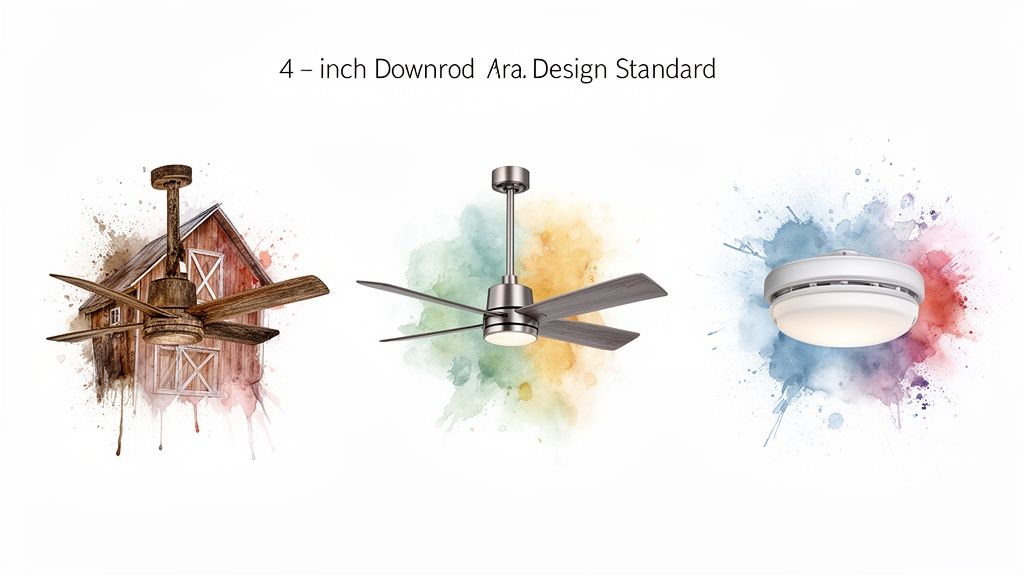
This process flow helps visualize how choosing the right style is the first step toward a successful installation.

The image above highlights that whether you land on a Modern, Traditional, or Industrial fan, the core installation principles don't change.
While many homeowners are perfectly capable of tackling this project, there's no shame in calling a professional electrician. If you're even slightly unsure about the wiring or the stability of your ceiling box, it's the smart move. A small investment in a pro install protects your much larger investment in a beautiful fan, making sure it performs perfectly from day one.
Diving Into Advanced Fan Features and Technology
Today’s ceiling fans do a lot more than just move air. They’ve become sophisticated pieces of home technology, and models designed for a standard 4 inch downrod are often packed with features that boost your home's comfort, efficiency, and even its IQ. These aren't just fans anymore; they're central players in a modern, connected home.
The biggest game-changer has been the shift to DC motors. Unlike their clunky old AC counterparts, DC (Direct Current) motors are practically silent and shockingly energy-efficient. We're talking about using up to 70% less electricity to run. That means you get powerful, quiet airflow without wincing when the energy bill arrives.
This focus on smarter, more efficient engineering is what's driving the whole industry. With global temperatures on the rise, people are looking for better cooling solutions. It's no surprise the ceiling fan market is on a steep upward trajectory. Fan Connection is right there at the forefront, with high-tech models like the Capri X 3 that pair perfectly with a 4 inch downrod.
Smart Home Integration
Imagine walking into a room and just asking for a breeze. That’s a reality now. Many high-end fans feature smart home integration, connecting seamlessly with systems like Amazon Alexa or Google Home. You can control the speed, light, and direction from an app on your phone or with a simple voice command.
Models like our Apex and Bola offer this kind of connectivity. It’s one of those conveniences that, once you experience it, you’ll wonder how you ever managed without it. This is where your fan stops being a simple fixture and becomes a dynamic part of your smart home.
Advanced Lighting and Reversible Motors
Modern fans have also seriously upped their lighting game. Integrated LED kits are now the norm, giving you bright, energy-sipping illumination. Many come with adjustable color temperatures and dimming, so you can switch from a crisp, cool light for working to a warm, ambient glow for relaxing at night.
A reversible motor is another must-have, making your fan useful all year long. In the summer, the blades spin counter-clockwise to create a cool downdraft. In the winter, flip the direction to clockwise. This pulls cool air up and gently pushes the warm air that's hugging your ceiling back down into the room where you can feel it.
Of course, a fan is just one piece of the puzzle. These models rely on sophisticated components, and for a deeper dive, you can explore a broader range of electrical and lighting solutions. When you put all these features together, a modern ceiling fan becomes a smart, future-proof investment in your home’s comfort.
A Few Common Questions About 4-Inch Downrods
Even after you've got the basics down, a few practical questions always seem to pop up when it's time to actually pick out a fan. I've heard them all over the years, so I've gathered the most common ones here to give you quick, clear answers.
Think of this as your final gut-check before you click "buy" and find that perfect fan for your space.
Can I Use a 4-Inch Downrod on a Sloped Ceiling?
In a word: no. A 4-inch downrod is just way too short for an angled or vaulted ceiling. As the fan spins, the blades would almost certainly smack into the higher side of the ceiling, which is not only dangerous but would stop the fan from working altogether.
For sloped ceilings, you're going to need a much longer downrod—usually 12 inches or more—and a special sloped ceiling adapter kit. This combo is crucial because it allows the fan to hang perfectly level and gives the blades plenty of room to spin freely and safely.
Is a Fan with a 4-Inch Downrod Better Than a Hugger Fan?
For a standard 8-foot ceiling, a fan with a 4-inch downrod is almost always going to give you better airflow. That little bit of space between the fan and the ceiling makes a surprisingly big difference. It lets air circulate over the top of the blades, which creates a much more powerful and effective breeze in the room.
Hugger fans, or flush-mounts, are really designed for ceilings under 8 feet, where every inch of headroom is precious. While they’re the safest pick for very low ceilings, their performance can feel a bit underwhelming because the airflow is so restricted. For most rooms, the 4-inch downrod is the hands-down winner for performance.
Do I Need to Buy the 4-Inch Downrod Separately?
Probably not. The vast majority of ceiling fans made for standard-height rooms—including premium models from top brands—come with a 4-inch or similar-sized downrod right in the box. It’s the industry standard for a reason: it fits the most common ceiling height in modern homes.
It’s always a good idea to quickly check the "What's Included" section on the product page before you buy. That one little step can save you a last-minute trip to the hardware store right in the middle of your installation.
Will a 4-Inch Downrod Make My Fan Wobble?
Nope, a 4-inch downrod won't cause a fan to wobble. A wobbly fan is almost always the result of an installation mistake, not a problem with the downrod itself. The usual suspects are a mounting bracket that isn’t screwed in tightly enough or blades that are out of balance.
When a fan is installed correctly and the blades are properly balanced, it should run smooth as silk, no matter how long the downrod is. Just be sure to follow the manufacturer’s balancing instructions carefully to get that whisper-quiet, steady performance you paid for.
Ready to find the perfect fan that brings together style, performance, and the right fit for your home? Take a look through the curated collections at Fan Connection and discover premium models designed to elevate any space.


