
Your Guide to Farmhouse Ceiling Fans
When you hear “farmhouse ceiling fan,” what comes to mind? It’s probably not just a fan, but a feeling. It’s all about natural materials, rustic finishes, and design details that feel warm, a little bit historical, and incredibly inviting. We’re talking distressed wood blades, oil-rubbed bronze metals, and charming touches like caged or lantern-style lights. It’s the perfect marriage of practical airflow and a cozy, welcoming style, turning an everyday appliance into a genuine conversation starter.
What Defines the Farmhouse Ceiling Fan Style?
A true farmhouse ceiling fan is so much more than a way to cool a room—it's a statement piece that can completely anchor your decor. It’s that perfect blend of rustic charm and solid engineering that turns a simple appliance into a stunning focal point. But what exactly gives these fans their signature look? It’s a thoughtful mix of materials, finishes, and design cues that all work together to create a sense of comfortable, lived-in elegance that feels both timeless and totally fresh.
Unlike the sleek, almost invisible fans of modern design, farmhouse models are all about texture and character. They’re designed to look like they have a story to tell, often pulling inspiration from old industrial fixtures, barn architecture, and classic country living. This style isn’t about being perfect; it’s about being authentic and full of personality.
The Core Elements of Farmhouse Design
The real soul of the farmhouse aesthetic is in its materials. These fans often have blades that look and feel like reclaimed or natural wood, from light pine and weathered oak to rich, deep walnut. That connection to nature is key. The metal parts are just as important, with finishes that feel aged and genuine, as if they've gracefully weathered the years.
- Natural Wood Tones: Blades often feature a distressed or reclaimed wood look, which adds a wonderful organic texture and warmth to any room.
- Aged Metal Finishes: You’ll see a lot of matte black, oil-rubbed bronze, and weathered pewter. These provide a rustic, almost industrial contrast to the wood.
- Exposed Hardware: Little details like visible bolts and brackets celebrate the fan's construction, adding an honest, mechanical charm that's central to the style.
These elements come together to create a look that feels both sturdy and welcoming. The goal is to get beyond a simple, functional object and give your space something with real personality.
Signature Features That Set Them Apart
While materials lay the groundwork, it’s the specific design features that give farmhouse ceiling fans their distinct personality. One of the most recognizable is the lighting. Many of these fans incorporate fixtures that feel like they were pulled straight from a rustic barn or a cozy cottage.
The most iconic farmhouse fans often integrate lighting that tells a story. Think of caged enclosures inspired by old factory lights or lantern-style fixtures that cast a warm, inviting glow reminiscent of a country evening.
The structure of the fan itself is another dead giveaway. You might see designs with a windmill-inspired look, featuring a dozen or more blades, or motor housings that have a robust, industrial feel. For example, the Minka-Aire Windmolen 65" Ceiling Fan, priced at $1,059.95, uses 12 blades to create a stunning windmill silhouette that perfectly captures the modern farmhouse vibe. On the other hand, the Craftmade Sonnet 52" Ceiling Fan, available for $318.00, offers a more classic look with its clean lines and beautiful flat black finish, showing just how versatile the style can be. These details aren't just for show; they’re essential to creating that authentic farmhouse atmosphere.
Choosing the Right Fan Size for Any Room
Picking the right size for your new farmhouse ceiling fan is a lot like choosing a hat—get it wrong, and it just looks off and doesn't do its job. A fan that’s too small for the room will barely stir the air, leaving you feeling stuffy. Go too big, and you can create an uncomfortable wind tunnel that visually overwhelms the space, completely disrupting that cozy farmhouse vibe you've worked so hard to create.
The goal is to find that sweet spot where performance meets proportion.
Getting it right is actually pretty simple. It all starts with a tape measure and a quick calculation. First, figure out your room's square footage by multiplying its length by its width. That number is the key to selecting the perfect fan blade span—which is the full diameter of the fan from the tip of one blade to the tip of the opposite blade. This measurement tells you exactly how much air the fan can effectively move.
Matching Blade Span to Room Size
Once you have your square footage, you can confidently find the ideal fan size. Even a small difference in blade span can have a huge impact on both airflow and how the fan looks in the room. A cozy home office, for example, needs a much smaller fan than a great room with vaulted ceilings.
Here’s a quick guide to get you started:
- Small Rooms (Up to 75 sq. ft.): Think laundry rooms, walk-in closets, or home offices. A fan with a 29-36 inch blade span is perfect here.
- Medium Rooms (76-175 sq. ft.): This covers most standard bedrooms and kitchens. Look for a blade span between 36-48 inches.
- Large Rooms (176-350 sq. ft.): For living rooms, master bedrooms, and dining areas, you'll want a larger fan with a 50-56 inch blade span to keep the air moving.
- Extra-Large Spaces (Over 350 sq. ft.): In open-concept living areas, lofts, or expansive great rooms, you’ll need a fan with a 60-inch or larger blade span. In some cases, two well-placed fans might be the best solution.
Remember, these are guidelines for performance. The visual balance is just as important. A fan should feel like a natural part of the decor, not something that dominates the room.
To make this even easier, here's a quick-reference chart to help you match your room size to the perfect fan blade span.
Ceiling Fan Size Guide by Room Dimensions
| Room Size (Square Feet) | Recommended Fan Blade Span (Inches) |
|---|---|
| Up to 75 sq. ft. | 29-36 inches |
| 76-175 sq. ft. | 36-48 inches |
| 176-350 sq. ft. | 50-56 inches |
| Over 350 sq. ft. | 60 inches or larger |
Using this table will help ensure your fan not only circulates air effectively but also fits the scale of your room beautifully.
The infographic below breaks down the core elements that give farmhouse fans their signature look.
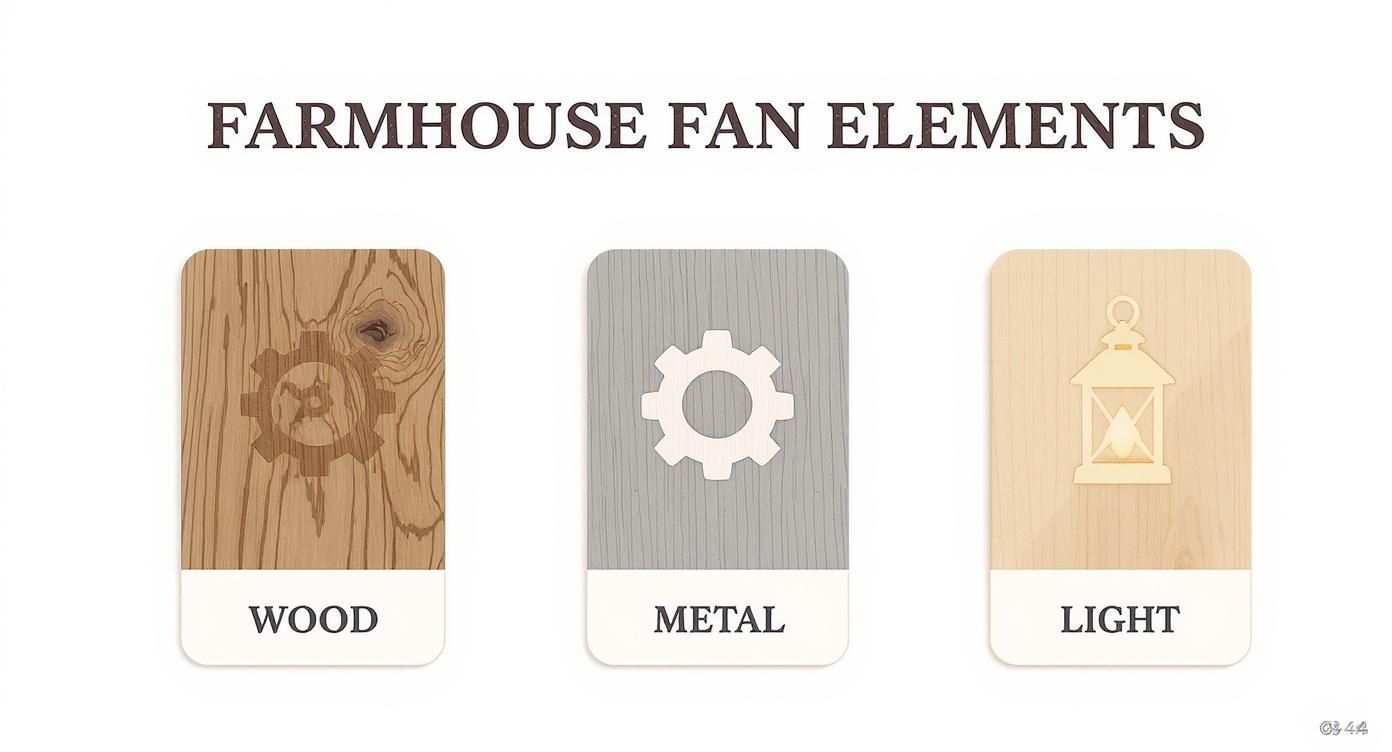
As you can see, it's that mix of natural wood, rustic metals, and character-filled lighting that creates the warm, inviting feel we all love.
Does Blade Count Really Matter?
So you've got the span figured out, but what about the number of blades? While it’s not as critical as the span for pure airflow, it definitely plays a big role in the style and even the sound of the fan. It's one of those details that can push your fan from simply functional to fabulously on-theme.
Fans with fewer blades (like three) tend to look more modern or industrial. On the other hand, fans with five or more blades lean into a more traditional, classic appearance.
For instance, a model like the Kichler Hatteras Bay 52" Ceiling Fan, priced at $675.00, uses five blades to achieve a timeless, coastal farmhouse vibe that’s perfect for a cozy living room. For a grander space, the Modern Forms Cervantes 72" Ceiling Fan, costing $849.00, makes a bold statement with its three sleek blades, blending industrial strength with modern farmhouse elegance.
Ultimately, the number of blades is a style choice, but it’s a detail that can really define the final look of your space.
Finding the Perfect Lighting for Your Fan
Let’s be honest, the light kit on a farmhouse ceiling fan is where the real magic happens. Sure, the fan's main job is to move air, but the lighting is what gives it personality. It’s the difference between a functional appliance and a genuine centerpiece that pulls the whole room together and makes you say, "Wow!"
This is why picking the right light is so important. Think of it as the final accessory that completes your farmhouse look. From rustic lantern fixtures casting a warm, welcoming glow to elegant candelabra styles that add a touch of vintage class, the options are as varied as the farmhouse aesthetic itself.
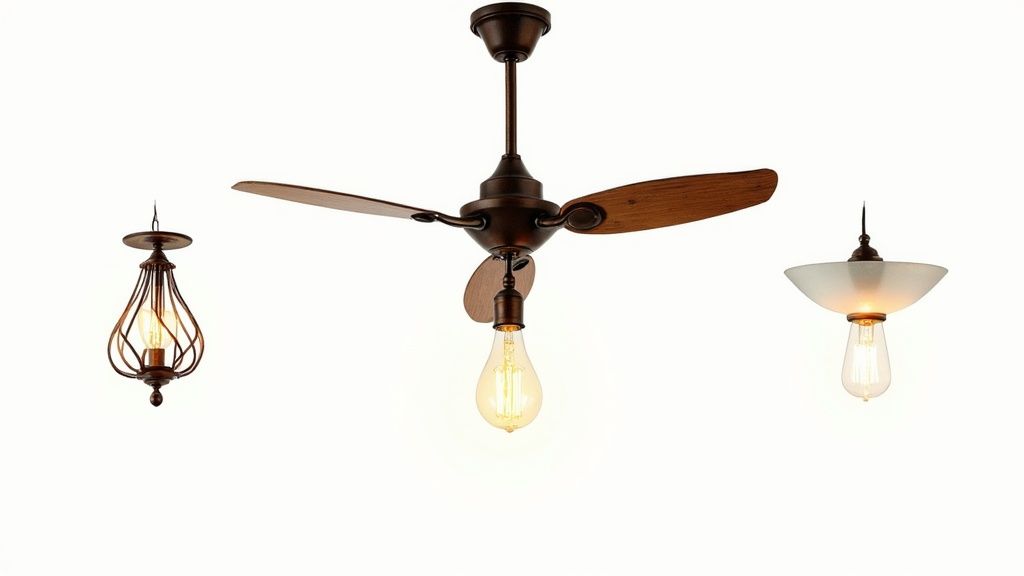
Popular Lighting Styles for Farmhouse Fans
The beauty of farmhouse design is how it effortlessly blends rustic charm with down-to-earth function. This is perfectly captured in the popular lighting styles you'll see on these fans. Each one has a unique way of enhancing that cozy, lived-in vibe we all love.
- Caged Fixtures: Inspired by old-school industrial and barn lights, metal cages around the bulbs add a wonderful layer of texture and a hint of rugged character. They’re a fantastic way to protect the bulbs while making a strong style statement.
- Lantern Styles: These fixtures often mimic the look of classic lanterns, creating an instant feeling of rustic history and warmth. They're perfect for casting an inviting, ambient light over a dining table or in a living room.
- Multi-Bulb Candelabras: For a touch more elegance, candelabra-style fixtures with multiple exposed bulbs bring a classic, almost old-world charm. When you pair them with Edison bulbs, the effect is absolutely stunning.
A great example is the Savoy House Alsace 52" Ceiling Fan, which sells for $450.00. It features a beautiful multi-light fixture that perfectly captures that refined-yet-rustic farmhouse look. It really shows how the right lighting can elevate the entire design.
And we're not the only ones who think so. The demand for these dual-function fans isn't just a passing trend. The market for ceiling fans with lights was valued at over USD 2.9 billion and is expected to more than double to USD 6.06 billion by 2031. That kind of growth shows just how much homeowners appreciate getting both style and utility in one package.
The Power of the Bulb
The fixture is only half the story—the bulb you choose has a massive impact on the room's atmosphere. It’s a small detail that can completely change the feel of your space, so it's worth thinking about.
Choosing a light bulb is like choosing a filter for a photograph. A warm, yellow-toned Edison bulb creates a cozy, nostalgic scene, while a crisp, white LED offers a clean, modern clarity. Neither is wrong, but each tells a very different story.
Here's what to consider:
- Edison Bulbs: These vintage-style bulbs, with their visible glowing filaments, are practically synonymous with farmhouse style. They give off a very warm, amber-hued light that’s perfect for creating a relaxing and intimate mood.
- LED Bulbs: Modern LEDs are incredibly versatile. You can find them in a huge range of color temperatures, from warm white (to mimic that classic incandescent glow) to cool white for brighter, task-oriented spaces. Plus, they're way more energy-efficient and last a whole lot longer.
Don't Forget Dimmability and Brightness
Beyond the style of the fixture and the bulb, a couple of practical features can make a world of difference. Dimmability is, in my opinion, one of the most important.
Being able to adjust the light’s intensity lets you go from bright, functional light for cleaning or cooking to a soft, ambient glow for relaxing in the evening. Many high-quality farmhouse fans now come with remote controls that make dimming effortless.
The fixture's design also plays a big role in brightness. An open, multi-bulb design will cast widespread, ample light. On the other hand, a fixture with a frosted glass shade or a more enclosed design will provide a softer, more diffused illumination. Getting a feel for the different types of a ceiling fan with light kit is key to finding the perfect one for your home.
Understanding Fan Motors and Energy Savings
The motor is the unsung hero of your farmhouse ceiling fan. Tucked away inside the housing, it's the powerful engine that determines everything from how quietly the blades spin to how much energy your fan uses. Getting the motor right is the key to choosing a fan that not only looks fantastic but also performs beautifully for years to come.
Think of it like choosing an engine for a car. You have reliable, traditional options and newer, high-efficiency models. In the world of ceiling fans, this choice comes down to two main types: AC (Alternating Current) and DC (Direct Current) motors.
The Classic Workhorse: The AC Motor
AC motors are the traditional standard for ceiling fans. They're reliable, cost-effective, and have been the go-to technology for decades. An AC motor typically offers three speed settings (low, medium, high) and is controlled by a simple pull chain or a basic wall switch.
While they are perfectly functional, AC motors are generally less efficient and can produce a slight humming noise—that’s the sound of the alternating current at work. For a basic, no-frills fan, an AC motor gets the job done without any fuss.
The Modern Marvel: The DC Motor
DC motors represent a huge leap forward in fan technology. While they often come with a higher initial price tag, the long-term benefits are substantial. DC motors are smaller, lighter, and way more energy-efficient than their AC counterparts.
A DC motor can consume up to 70% less energy than a traditional AC motor while producing the same—or even greater—airflow. This translates directly into lower electricity bills over the life of the fan.
This incredible efficiency is just the beginning. DC motors are also virtually silent, making them a perfect choice for bedrooms or quiet living spaces. They also allow for more speed options, often six or more, and a reverse function that can be easily controlled from a remote.
For example, a premium model like the Fanimation Kute 52" Ceiling Fan, priced at $431.98, uses a powerful DC motor to deliver exceptional airflow with whisper-quiet operation. This is the kind of performance that makes the investment in a DC motor fan a very smart choice.
Decoding Airflow and Efficiency Ratings
When you're comparing fans, you'll come across two important numbers that cut through the marketing and tell you exactly how a fan performs: CFM and Energy Star ratings.
- CFM (Cubic Feet per Minute): This measures airflow. Simply put, a higher CFM means the fan moves more air, making it more effective at cooling a room. A good CFM for a large living room might be 5,000 or higher.
- Energy Star Rating: A fan with an Energy Star label is certified by the EPA to be significantly more energy-efficient than standard models. These fans are, on average, 60% more efficient, saving you money and reducing your environmental footprint.
A fan's efficiency isn't just about the motor; it's a combination of motor power, blade pitch, and overall design. You can learn more about how these elements work together by exploring the impact of fan blade count and fan efficiency in our detailed guide.
Choosing a farmhouse ceiling fan with a high-quality DC motor and a strong CFM rating is an investment in comfort, quiet, and long-term savings. It ensures your beautiful new fixture works just as well as it looks.
Simple Installation and Maintenance Tips
Your gorgeous new farmhouse fan has arrived, and you're ready to get it spinning. Let's talk about getting it installed right, because proper setup isn't just about making it work—it's about making sure it's safe, stable, and wobble-free for years.
Think of it like building the foundation of a house. A shaky foundation creates problems down the road, and it's the same with a ceiling fan. A secure installation means you get a quiet, effective fixture that truly becomes part of your home.

Getting the Installation Right
Before you even open the box, a couple of quick checks can save you a world of headaches. The most important one? Make sure your ceiling's electrical box is fan-rated. A standard box for a light fixture just can't handle the weight and motion of a spinning fan. This isn't just a suggestion—it's a serious safety issue.
Next, look up. Your ceiling height is going to determine the downrod you need, which is the pipe connecting the fan to the ceiling mount.
- Standard Ceilings (8-9 feet): The 3 to 5-inch downrod that comes with most fans is usually a perfect fit.
- High or Vaulted Ceilings (10+ feet): You'll need a longer downrod. This brings the fan down to an ideal height—about 8-9 feet from the floor—so you can actually feel the breeze.
- Sloped Ceilings: Most fans can handle a slight slope, but for steeper angles, you'll want to grab a special sloped ceiling adapter to keep everything level and balanced.
Safety first, always. If you have any doubt about your home's wiring or the structural support in your ceiling, please hire a licensed electrician. They’ll make sure everything is up to code and perfectly secure.
For the confident DIY-er, having a clear plan is key. Our guide on how to install a ceiling fan gives you a detailed, step-by-step walkthrough of the whole process.
A Simple Maintenance Checklist
Once your fan is up, a tiny bit of care will keep it running beautifully. Farmhouse fans, especially with those handsome wood-look blades, are magnets for dust. A little routine maintenance is all it takes to prevent wobble, noise, and keep the motor happy.
Just run through this easy checklist a couple of times a year:
- Dust the Blades: Turn the fan off first! Use a microfiber cloth or duster to gently wipe both sides of the blades. The topside is the real culprit—dust buildup there is what throws a fan off balance and causes it to wobble.
- Check All Screws: Vibration can slowly loosen screws over time. Do a quick check and tighten any loose ones on the blades, light fixture, and downrod. This simple step stops rattling before it starts.
- Clean the Light Fixture: Gently wipe down any glass shades or metal cages. It keeps your light bright and clear, preserving that cozy farmhouse ambiance.
- Inspect the Motor Housing: Give the motor housing a quick wipe to get rid of dust. This helps prevent overheating and keeps your fan running as efficiently as possible.
Follow these simple tips, and your farmhouse ceiling fan will remain a safe, functional, and beautiful centerpiece in your home for a long, long time.
You’ve done the hard work—you know the materials, the right size, and the perfect lighting. Now for the fun part: bringing that ideal farmhouse ceiling fan home and letting it become the star of your room. This is where your vision truly comes to life, turning a practical fixture into a key part of your home’s story.
Styling a farmhouse fan is all about creating a sense of harmony. You want it to feel like it’s always belonged there, seamlessly pulling together all the other elements in the space. The easiest way to do this? Match its finish to your existing decor for a cohesive, thoughtfully designed look. Take a look at the hardware on your cabinets, your door handles, or even your picture frames. A fan with an oil-rubbed bronze finish will beautifully complement warm wood tones, while a matte black fan can create a striking contrast in a modern farmhouse kitchen with stainless steel appliances.
Curated Picks for Every Farmhouse Style
Finding the right fan can feel a bit like searching for a needle in a haystack. To make it easier, we've put together a curated collection of premium farmhouse ceiling fans at Fan Connection to guide your search. Each of these models is priced over $300, which reflects a real commitment to top-tier quality, powerful performance, and exceptional design. They each represent a different flavor of the farmhouse aesthetic, from ruggedly industrial to clean and contemporary.
-
For the Modern Farmhouse Enthusiast: The Savoy House Tavane 60" Ceiling Fan, at $430.00, is a masterpiece of modern design. Its sleek, three-blade profile blends right into contemporary spaces, while its wood-toned blades add that essential touch of rustic warmth. It’s perfect for a great room with clean lines and a neutral color palette.
-
For the Classic Rustic Look: If you lean toward a more traditional, charming vibe, the Craftmade Sonnet 52" Ceiling Fan for $318.00 is an incredible choice. Its five-blade design and timeless silhouette feel right at home in a cozy master bedroom or a welcoming living room. The beautiful finishes add a layer of classic elegance that just never goes out of style.
-
For a Bold Industrial Statement: The Minka-Aire Windmolen 65" Ceiling Fan, priced at $1,059.95, is a true showstopper. Inspired by the iconic shape of a windmill, its twelve-blade design makes a dramatic statement. This fan is built for large, open-concept spaces with high ceilings, where it can double as both a powerful air mover and a stunning piece of industrial art.
Integrating Your Fan Into Any Room
It’s a common myth that farmhouse fans only belong in living rooms or on covered porches. The truth is, they’re so versatile they can enhance almost any room in the house—as long as you match the style and scale correctly. In a kitchen, a fan improves air circulation while adding rustic character above an island. In a master bedroom, a quiet DC motor fan with a dimmable light creates a serene, comfortable retreat.
Think of your ceiling fan as the finishing touch that ties the room together. A well-chosen fan doesn't just hang there; it actively participates in the room's design, reinforcing the style and enhancing the atmosphere you've worked to create.
The growing love for these stylish fixtures is part of a bigger trend in home renovation. The global ceiling fans market was valued at around USD 12.97 billion and is expected to hit USD 19.61 billion by 2033. This boom is driven by homeowners who are investing in fixtures that offer both good looks and real-world function—a combination that farmhouse ceiling fans absolutely nail. You can dive deeper into these trends in this detailed ceiling fan industry report. By choosing a high-quality model, you're not just buying a fan; you're making a long-term investment in your home's comfort and style.
A Few More Questions We Hear a Lot
Even the best guides can leave a few questions unanswered. Here are some of the most common things people ask us when they're shopping for a farmhouse fan—the final details to help you choose with confidence.
Can I Put a Farmhouse Fan on My Sloped Ceiling?
You absolutely can! It’s a common setup. Most quality farmhouse fans are designed with vaulted or sloped ceilings in mind, but you'll usually need a couple of extra parts to get the job done right.
Look for a longer downrod and a sloped ceiling adapter, which is sometimes called an angled mount. The adapter is what lets the fan hang perfectly level, and the downrod gives the blades plenty of clearance so they don't hit the ceiling. Just be sure to check the fan's specs to see the maximum angle it can handle.
What's the Difference Between "Damp" and "Wet" Rated Fans?
This one is all about location, location, location. The rating tells you exactly where your fan can be safely installed, and it's a must-know detail if you're thinking about an outdoor or semi-outdoor space.
- Damp-Rated Fans: Think of these as perfect for covered porches, screened-in patios, or even large, steamy bathrooms. They are built tough enough to handle humidity and moisture in the air, but they aren't designed to take a direct hit from the rain.
- Wet-Rated Fans: These are the real workhorses for the outdoors. Made with weatherproof materials and totally sealed motors, wet-rated fans can stand up to direct rain, snow, and whatever else Mother Nature throws at them. They’re the go-to for exposed areas like pergolas and gazebos.
How Do I Pick a Fan Finish That Matches My Decor?
Getting the finish right is the secret to making your fan look like it was always meant to be there. The easiest way to start is by taking a look at the other metal finishes already in the room. Think about your cabinet pulls, door handles, faucets, and other light fixtures.
For that classic, cozy farmhouse vibe, you really can't go wrong with finishes like oil-rubbed bronze, matte black, or a nice weathered pewter. They just look fantastic next to natural wood tones. If your style leans a little more modern or coastal, a brushed nickel or a clean, crisp white finish might be the perfect fit. It's all about creating a sense of harmony.
Ready to find the one? Dive into the handpicked Fan Connection collections and discover a premium farmhouse ceiling fan that brings both incredible style and breezy comfort to your home. Visit us today at https://www.fanandlights.com.