











How to Improve Air Circulation in a Room: A Fun Guide
That back bedroom feels warm even when the AC is running. The office gets sleepy by midafternoon. The guest room smells fine at first, then starts feeling stale after the door stays shut for a few hours. Often, these situations are referred to as "just a stuffy room," but the actual problem is simpler. The air isn’t moving the way it should.
A room doesn’t need to be hot to have bad circulation. Stagnant air can hold odors, moisture, and that heavy feeling that makes a space seem tired. Fixing it is less about random hacks and more about matching the right airflow move to the actual problem. Sometimes that means opening the right windows. Sometimes it means clearing a blocked return. And sometimes the permanent answer is a properly chosen ceiling fan that moves air with purpose instead of just spinning overhead.
If you’ve been searching for how to improve air circulation in a room, stop guessing. Start diagnosing. When you know whether your issue is trapped heat, poor mixing, weak ventilation, or bad fan selection, the solution gets a lot easier and a lot more satisfying.
From Stuffy to Sanctuary Why Air Circulation Matters
A poorly circulating room has a very specific personality. It feels muggy after a shower. It hangs onto cooking smells. It develops warm pockets near the ceiling and dead zones in the corners. You can crack a window and still feel like nothing changed.
That’s why air circulation matters far beyond comfort. Good movement helps flush out stale indoor air, spreads conditioned air more evenly, and makes a room feel lighter and easier to live in. If you already pay attention to indoor air quality, you know comfort and freshness are tied together. A room that breathes better usually feels cleaner, even before you reach for any fancy equipment.
Some spaces are harder than others. Bonus rooms, bedrooms with one small window, converted garages, and interior offices tend to trap air. Windowless rooms are their own challenge, which is why this guide on ventilating a room without windows is useful if your room has almost no natural path for fresh air.
A comfortable room isn’t just cooler. It’s more even, less stale, and easier to spend time in.
The fun part is that airflow changes are tangible. You can feel them within minutes. Move one fan, open one second window, clear one return vent, and suddenly the room stops fighting you. That’s when a space shifts from stuffy to sanctuary.
Diagnose Your Room's Airflow Before You Act
Don’t buy anything yet. First, figure out what kind of bad airflow you have. A room can feel uncomfortable for very different reasons, and each one responds to a different fix.

Read the room like a comfort pro
Start with your body. Stand in the doorway, then walk to the far corner, then sit in the spot where you usually spend time. If the room feels different from one location to another, that’s a clue. Uneven comfort usually means the air is moving in some areas and stalling in others.
Then look for these signs:
- Lingering odors: If smells hang around long after cooking, sleeping, or cleaning, the room likely lacks enough air exchange.
- Sticky or damp feel: That often points to moisture buildup, especially in bathrooms, bedrooms, or lower-level rooms.
- Hot head, cool feet: Stratification is at work. Warm air collects high, while the occupied zone gets poor mixing.
- One side of the room feels dead: Furniture, curtains, or layout may be blocking the path of moving air.
A simple tissue test works well. Hold a tissue near a supply vent, return vent, doorway, and cracked window. You’re checking whether the tissue moves, and in which direction. Weak flutter near a vent can signal airflow loss. No movement at all in corners often means stagnant pockets.
Use simple tests to identify the real problem
If you want more than guesswork, use smoke from incense or another safe visual indicator and watch how it drifts. You’re not measuring lab-grade performance. You’re trying to see whether air exits cleanly, swirls in circles, or just hangs there.
Here’s a quick field guide:
| Symptom | Likely issue | Best first move |
|---|---|---|
| Air feels heavy everywhere | Little fresh air entering | Create a window-to-door path |
| Room is only bad near the ceiling | Stratification | Add overhead mixing |
| One corner stays warm | Layout blockage | Reposition furniture or fan |
| Room improves with door open | Poor return path | Keep door ajar or improve airflow route |
If you already suspect a ceiling fan is part of the answer, sizing matters more than people think. A fan that looks right can still perform poorly if it’s mismatched to the room. This ceiling fan size guide helps connect room dimensions to real-world fan selection.
Practical rule: Don’t treat every stuffy room like a cooling problem. Many are actually mixing problems.
Separate temporary relief from permanent correction
Portable fans can make you feel cooler fast. That’s useful, but it’s not always the same as fixing circulation. If a room only feels better when a fan is pointed directly at you, you may be masking stagnant air instead of correcting it.
Permanent relief usually comes from one of three things:
- A cleaner airflow path through windows, doors, and vents.
- Better room mixing so air doesn’t stall in layers.
- A fan designed for the room’s size and shape, not just its decor.
Once you know which problem you’re dealing with, the next steps stop being random.
Optimize Your Home's Built-In Ventilation
Use the free airflow tools your house already has before adding hardware. Windows, doors, supply vents, and return vents can change a room dramatically when they work together instead of fighting each other.

Build a real cross-breeze
One cracked window rarely solves much on its own. Air needs an entry point and an exit point. Open windows on different sides of the home, or open a window and the room door, so air has somewhere to travel. That creates a path instead of a puddle.
If the room has only one window, open the door to connect it to the rest of the house. Then use the rest of the home’s openings strategically. A breeze doesn’t have to start and end in the same room to help that room.
For spaces that overheat easily, timing matters too. Outdoor air works best when it’s cooler and drier than the air trapped inside. In hot climates or mixed-use spaces, equipment like an air curtain with heater can also help manage indoor comfort at openings where outside air regularly disrupts conditions.
Make your HVAC help instead of hinder
A lot of circulation issues come from a perfectly good HVAC system being blocked by the room itself. Furniture over a register, a rug over a return, or heavy drapes in front of a vent can sabotage the entire setup.
HVAC vent optimization enhances room airflow systematically. Ensure all supply and return vents are fully open and clear of obstructions, as furniture can block up to 50% of airflow. Replacing standard stamped-face registers with bar-type models can double airflow at the same pressure. Proper system balancing can achieve 85-95% of design airflow, improving comfort in over 90% of homes. A rug can cut CFM by 40%, severely hampering circulation, as noted in this HVAC airflow balancing guidance.
That’s a big reason rooms stay uncomfortable even when the thermostat setting looks fine. The system may be producing air, but the room isn’t receiving or returning it properly.
Quick HVAC circulation check
- Open every supply and return vent fully: Partially closed vents often create more imbalance than comfort.
- Pull furniture off vents: Sofas, beds, cabinets, and even baskets can disrupt the throw pattern.
- Check return paths: Closed doors can choke off air movement if the room lacks a strong return route.
- Look at the register style: Some stamped-face grilles throw air poorly compared with bar-style designs.
This short video gives a helpful visual on room-cooling basics before you start repositioning equipment:
Know when natural ventilation isn’t enough
Some rooms do not have a good passive path. That’s common in interior bedrooms, bonus rooms over garages, and closed-plan layouts. If you can’t get a reliable cross-current, and your HVAC layout is limited, you’ll need active air movement to mix and distribute air inside the space.
That’s where targeted fan strategy becomes much more than a comfort extra. If you’re trying to cool a room without AC, proper circulation is often the difference between “tolerable” and “I actually want to be in here.”
Clear path beats raw force. A room with a good air route often feels better than a room with a stronger system and blocked vents.
Select the Perfect Ceiling Fan for Ultimate Airflow
A ceiling fan is the cleanest long-term fix for many circulation problems because it doesn’t just cool people. It mixes the room. That matters when the issue is stale air, uneven temperature, trapped humidity, or conditioned air collecting in the wrong place.
A lot of homeowners shop by blade span alone. That’s understandable, but it leaves performance on the table. For airflow, the more useful metric is CFM, or cubic feet per minute. That tells you how much air the fan can move.
The CDC recommends aiming for at least 5 air changes per hour of clean air in indoor spaces through a mix of ventilation and supplemental devices. In a 20x20x8 ft room, that works out to about 267 CFM of airflow, while many homes provide only 0.35 ACH or less through natural means. High-performing ceiling fans such as Aerovon or Artemis models can move 5,000+ CFM, helping mix room air and push equivalent airflow toward that target when paired with open windows or exhaust support, according to the CDC’s guidance on aiming for 5 air changes per hour.

Shop for airflow, not just appearance
A fan can be gorgeous and still underperform. The sweet spot is finding one that fits the room visually and moves enough air to properly address the comfort issue.
Here’s the practical way to think about fan categories:
| Fan approach | What it does well | Where it can fall short |
|---|---|---|
| Basic decorative fan | Looks finished, adds some movement | Often chosen for style first |
| Smart fan | Adds convenience and automation | Performance varies widely |
| High-performance fan | Strong mixing, quieter operation, better circulation | Higher upfront cost |
If you want the room to feel consistently better, not just prettier, performance should lead the decision.
Blade count changes how the room feels
This is the part most generic guides skip. Blade count doesn’t just change style. It changes the character of the airflow.
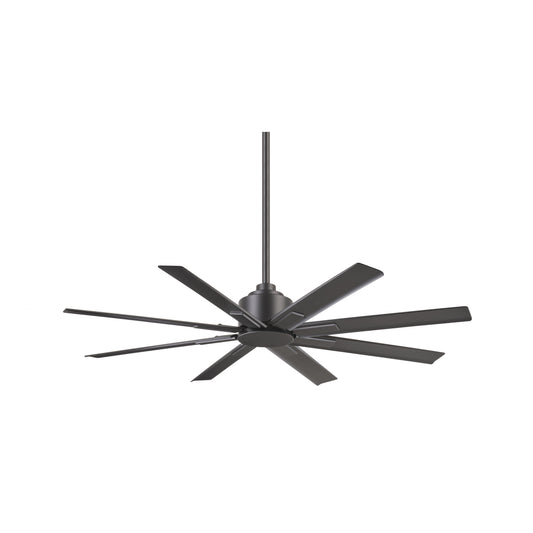
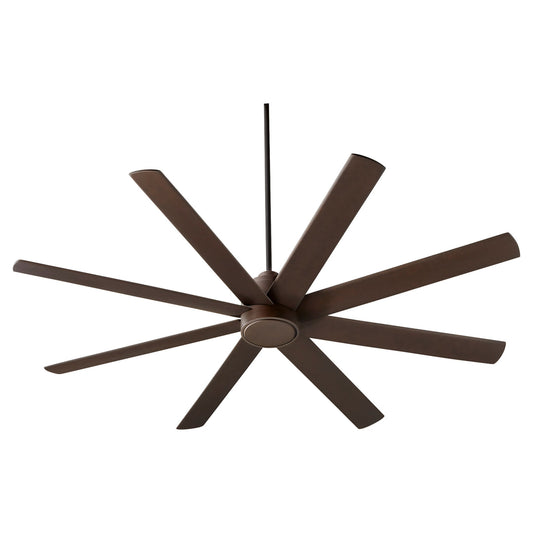
Three-blade designs tend to suit modern spaces and can create a more direct, energetic throw. They’re a strong match for compact rooms, cleaner-lined interiors, and lower ceilings where you want air to move with some snap. Models like Aerovon, Apex, or Axis fit that role well from a design standpoint and an airflow standpoint.
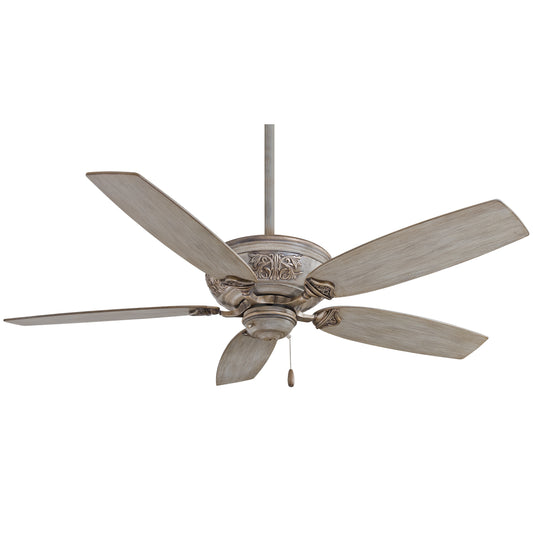
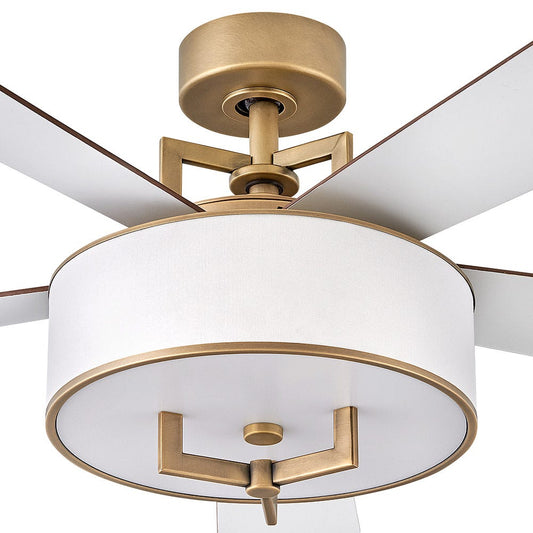
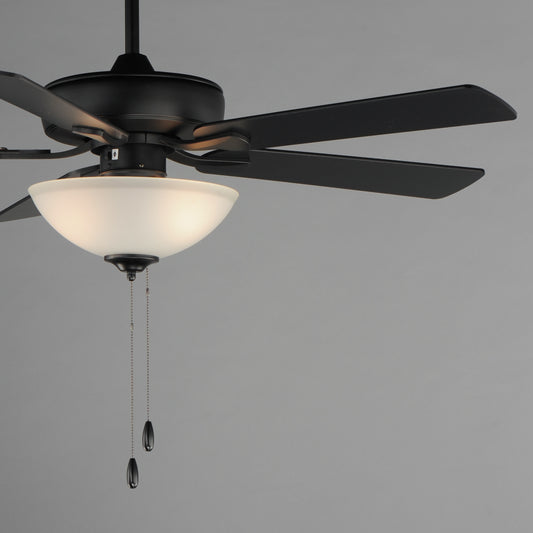
Five-blade and 6+ blade designs usually create a broader, smoother circulation pattern. That can feel better in larger living areas, open bedrooms, and high-ceiling rooms where harsh downward thrust isn’t the goal. Styles like Artemis XL5, tropical-inspired options, or statement fans from collections such as Cabana or Chateaux can spread movement more evenly across the occupied space.
If a room feels patchy, broad airflow often beats aggressive airflow.
That’s why the “best” fan isn’t universal. A sleek three-blade fan may be exactly right in a small office. The same fan can feel too concentrated in a big family room, where a five-blade design may create a more comfortable envelope.
Match the fan to the room's real job
Different rooms ask for different things.
Bedroom
Choose a fan that circulates quietly and evenly. You don’t want a harsh blast over the bed all night. Smooth coverage matters more than drama.
Living room
Look for broader movement that can support several seating zones. In open layouts, the fan should help blend the room, not just cool the coffee table.
Home office
A room where you sit still for hours benefits from steady air motion. You want relief from stale air without the sensation of a wind tunnel over your papers.
Covered patio or humid space
Tropical-style and outdoor-capable fans make sense where moisture resistance and strong movement matter as much as looks.
For shoppers comparing options by room and aesthetic, this guide to choosing the perfect ceiling fan for your home is useful because it connects performance choices to room type rather than treating every space the same.
Price matters, but value matters more
Cheap fans often get bought twice. First when you want a quick fix, then again when the quick fix wobbles, hums, or barely changes the room. If you’re investing in a circulation upgrade, premium models in the $300 and up range are where build quality, motor refinement, and design start to align.
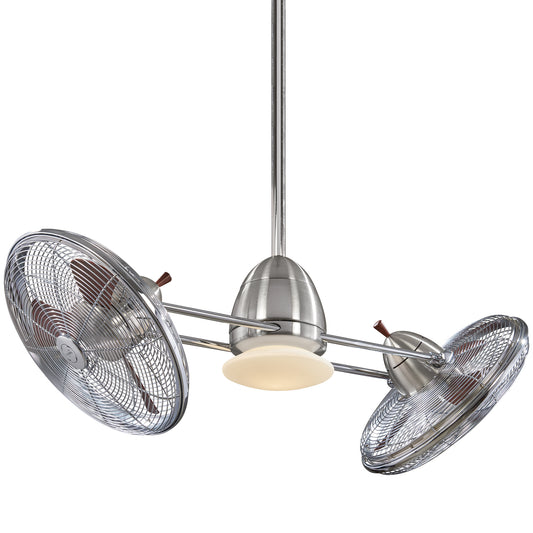
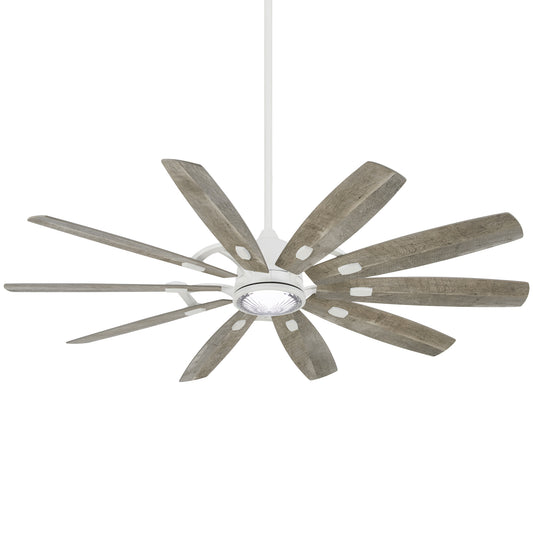
That’s where names like Artemis XL5, Axis, Barn, Bowie, Cabana, and Chateaux start making sense. You’re not just buying a fixture. You’re buying a long-term airflow tool that also upgrades the room visually.
A rustic room might call for a Barn model that anchors the decor while moving air with authority. A modern renovation may look cleaner with an Axis or Apex. A statement living room can carry an Artemis XL5 beautifully. Good fan selection solves two problems at once. The room looks finished, and the room finally breathes.
What works and what doesn't
What works
- Choosing by CFM and room behavior: You solve the actual airflow issue.
- Matching blade style to space: You get the kind of movement the room needs.
- Buying once at a higher quality level: Better motors, better stability, better day-to-day comfort.
What doesn’t
- Picking by blade span only: Size matters, but it doesn’t tell the whole story.
- Assuming every fan feels the same: A small room and a vaulted great room need different airflow personalities.
- Treating the fan like decor first and equipment second: The room may still feel stuffy.
Master Year-Round Comfort with Strategic Fan Use
A strong fan only reaches its full value when you use it intentionally. Direction, speed, support fans, and maintenance all matter. Attention to these details allows a good installation to become a great comfort system.
Use the right direction for the season
In warm weather, run the fan counterclockwise so it pushes air down into the occupied zone. In cool weather, reverse it so it helps destratify the room without creating a chilly draft. That one switch changes a fan from summer relief tool to year-round circulation machine.
The operating basics are straightforward. Ceiling fans work best when mounted properly and used with the room, not against it. A practical setup includes choosing a fan in the 4,000-6,000 CFM range for rooms up to 400 sq ft, installing it at the right height, running it counterclockwise in summer, and pairing it with a pedestal fan in the opposite corner when you need a cross-circulation loop. The same guidance notes that strategic use can improve perceived comfort by 20-30%, reduce AC load by 15-25%, and that dusty blades can reduce efficiency by 30% within 6 months if they aren’t cleaned, according to these air circulation fan tips.
If you want a clean explanation of the switch position and seasonal setup, this article on ceiling fan direction in summer vs winter is worth bookmarking.
Pair ceiling fans with smaller fans when needed

One of my favorite fixes for stubborn rooms is combining overhead mixing with targeted floor-level movement. A pedestal fan in the opposite corner can help complete the loop, especially in long rooms, L-shaped layouts, or rooms with only one useful window.
Strategic ceiling fan use can help reduce indoor CO2 levels, which can otherwise exceed 1,000 ppm and impair cognitive performance. Pairing a fan with a cracked window can increase effective air changes by 50-100%, helping remove VOCs and other pollutants that may be 2-5 times more prevalent indoors than outdoors, based on this ventilation and indoor pollutant research.
That’s why fan placement should support air exchange, not just personal cooling. If the room has a window, use the fan to encourage movement toward or from that opening depending on the outdoor conditions.
Open window plus active mixing usually beats either strategy alone.
Keep the fan performing like new
A premium fan can lose its edge if nobody maintains it. Dust buildup changes blade performance. Minor wobble can turn into major annoyance. Small corrections keep airflow strong and operation quiet.
Use this quick routine:
- Clean the blades regularly: Dust adds drag and cuts performance.
- Check for wobble: If the fan vibrates, address blade balance before it worsens.
- Confirm direction after seasonal changes: Many fans get left in the wrong mode for months.
- Use medium to high speed when you need mixing: Low speed may feel pleasant without solving stagnant air.
Think in systems, not gadgets
The best rooms don’t rely on one trick. They combine a clear path for air, a fan that fits the room, and operating habits that match the season. That’s the upgrade itself. Not more stuff, just better airflow logic.
When homeowners get this right, the room stops feeling like a problem room. It becomes a room people naturally want to use.
If you're ready to turn a stuffy room into a polished, high-performing space, browse Fan Connection for premium ceiling fans that combine real airflow performance with standout design. Their collections make it easy to shop by blade count, style, and room feel, whether you want a sleek modern statement, a broad-blade living room upgrade, or a tropical design for humid spaces. For shoppers looking at serious comfort upgrades, there are plenty of strong options priced at $300 and up that deliver the kind of circulation a bargain fan usually can’t.


