








Palm Ceiling Fans: Your Ultimate Guide to Tropical Style
Close your eyes and picture it: the soft rustle of palm leaves, a cool breeze washing over you on a warm day. That's the exact feeling a palm ceiling fan brings right into your home. It's so much more than just an appliance; it's a design statement that can turn any room into a tropical getaway, giving you that relaxed, on-vacation vibe all year long. Let's have some fun exploring how these gorgeous fans can bring a slice of paradise to your space!
Bringing Breezy Style Home with Palm Ceiling Fans
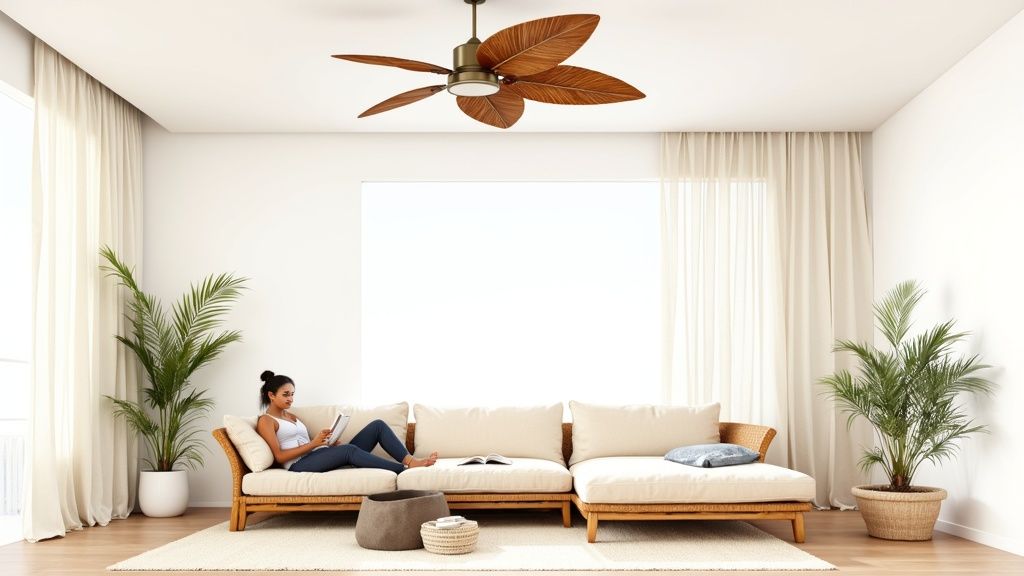
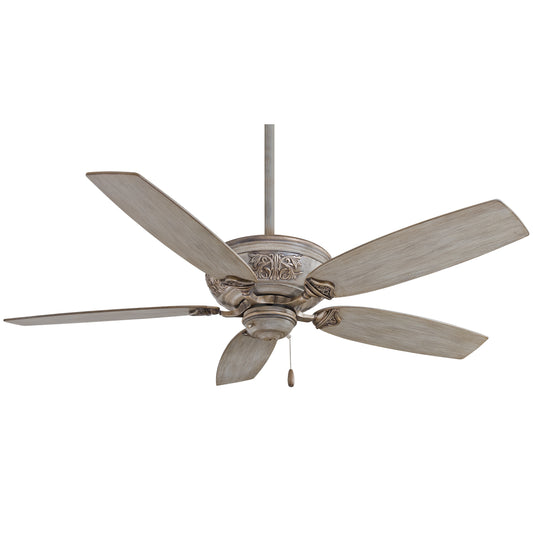
A palm ceiling fan is where gorgeous form meets practical function, instantly giving a space that sense of calm and escape we all crave. Unlike your standard, run-of-the-mill fans, their defining feature is the blades, which are artfully shaped to look like real palm or banana leaves. This unique look makes them an immediate focal point, capable of tying an entire room's decor together.
But don't think these fans are just for beach houses! Their organic shapes and natural textures let them slide beautifully into all sorts of design schemes. Whether you're going for a bohemian vibe, a traditional look, or even a modern-eclectic space, the right palm fan can add that unexpected touch of artistry and warmth.
More Than Just a Pretty Fan
While the looks are what first draw you in, a high-quality palm ceiling fan is also a serious cooling machine. The best ones are engineered not just for style but for performance, moving a ton of air to keep your room comfortable. Investing in a premium model means you get both a stunning centerpiece and an appliance that actually does its job.
The real benefits of adding a palm fan to your home are clear:
- Aesthetic Enhancement: They act like a piece of hanging sculpture, elevating the style of living rooms, bedrooms, or covered patios.
- Atmosphere Creation: The gentle sound and organic look work together to create a relaxing, resort-like ambiance.
- Versatile Styling: They play well with a huge range of decor, from coastal and tropical to bohemian and traditional.
A common myth is that decorative fans can't move much air. The truth is, modern engineering ensures today's premium palm fans—especially those over $300—pack powerful motors that deliver impressive airflow, easily rivaling their more industrial-looking cousins.
This guide will walk you through everything, from the artistry behind the blade designs to picking the perfect model for your home. If you're ready to see how these fans can completely change your space, you can browse a hand-picked selection of beautiful options in our tropical ceiling fan collection. Get ready to find a fan that’s both a powerful cooling machine and a stunning work of art.
The Artistry of Palm Blade Materials and Designs
The soul of a palm ceiling fan isn't in the motor—it's in the blades. Let's be honest, these aren't just functional parts. They're what gives the fan its personality, that special something that makes you feel like you're on a breezy veranda, even if you're just in your living room. The material and shape are where the real magic happens, blending natural beauty with smart engineering.
When you're choosing, the first big decision comes down to authentic, natural materials versus modern, durable composites. Each one offers a totally different vibe and is built for a different kind of space. Getting this right is key to making sure you love your fan for years to come.
Natural vs. Synthetic Blades
There's something special about genuine palm leaf blades. Often made from dried and preserved palm or even bamboo, they have an organic texture and earthy feel that's impossible to perfectly replicate. They bring an authentic piece of nature right into your room. But, that beauty comes with a trade-off: they need a dry, controlled environment. High humidity can make them warp, droop, or even mildew over time, so they're strictly for indoor, dry-rated spots.
On the other side of the coin, you have composite or ABS plastic blades. These are the workhorses, engineered to be tough. They're designed to look just like natural palm leaves, right down to the gentle curves and textures. Their biggest advantage is resilience. Since they're immune to moisture and humidity, they are the only real choice for covered porches, patios, and lanais. A quality palm ceiling fan, especially one in the $300+ range, will usually feature weatherproof finishes on these blades so they won’t fade or bend, even in salty coastal air.
Choosing between natural and synthetic isn't just about where the fan will hang; it's about your lifestyle. If you want that pure, authentic look in a climate-controlled family room, natural blades are stunning. But for a worry-free lanai where summer humidity is a given, engineered blades give you peace of mind and lasting style.
The Impact of Blade Shape and Craftsmanship
Beyond the material, the shape of the blades makes a huge difference in both how the fan looks and how it moves air. You can really see the craftsmanship shine through in the different designs.
- Wide, Rounded Leaves: These often look like banana leaves and tend to create a softer, more dispersed breeze. They have a lush, full appearance that can make a dramatic statement in a room.
- Slender, Pointed Fronds: Fans with narrower, tapered blades have a more classic and subtle tropical style. Their shape often allows for a slightly quicker, more direct airflow.
- Hand-Carved Wood: This is where you get into the high-end models. Some fans feature blades hand-carved from wood to look like palm fronds. This level of detail is a sign of superior craftsmanship and adds a rich, luxurious feel that justifies a higher price. The Gulf Coast Fans Cabana is a perfect example, with intricately detailed blades that are durable and look incredibly authentic, typically priced around $380.
At the end of the day, the blades are what turn a palm ceiling fan from a simple appliance into a piece of functional art. Whether you go for the raw elegance of natural leaves or the durable artistry of composite designs, the quality and thoughtfulness of the design are what will truly transform your space into your own little getaway.
How to Choose the Right Size Palm Fan
Picking the right palm ceiling fan is a bit like casting a lead actor—size and presence are everything. Go too small, and the fan gets lost in the room, looking a little silly while struggling to move any real air. Go too big, and you’ll create a wind tunnel instead of that gentle, tropical breeze you were dreaming of.
Getting the size just right is the secret to a fan that not only looks like it belongs but also does its job perfectly.
The most important measurement here is the blade span, which is the full diameter of the fan from the tip of one blade to the tip of the opposite blade. This single number tells you how much air the fan can effectively move around a room. To figure out what span you need, you first have to know how big your space is.
Matching Blade Span to Room Size
It all starts with a quick measurement. Just multiply the length of your room by its width to find the total square footage. Once you have that number, you can confidently choose a fan that delivers the perfect amount of airflow without overwhelming the space.
This simple table breaks down our recommendations to help you find the perfect match.
Matching Palm Fan Size to Your Room
Use this table as a quick reference to find the right blade span for your room's dimensions, ensuring balanced aesthetics and efficient airflow.
| Room Size (Up to Sq. Ft.) | Recommended Blade Span (Inches) | Ideal for |
|---|---|---|
| 75 sq. ft. | 29-36 inches | Home offices, breakfast nooks |
| 175 sq. ft. | 42-48 inches | Standard bedrooms, dining areas |
| Over 175 sq. ft. | 52 inches or more | Great rooms, open-plan living |
With these guidelines, you're well on your way to choosing a fan that feels custom-fit for your room.
For an even more detailed breakdown of sizing, be sure to check out our complete guide on how to choose a ceiling fan size.
Mounting Options for Every Ceiling
Once you’ve found the perfect blade span, it’s time to think about how the fan will actually hang. Your ceiling height is the deciding factor here, and getting it right is crucial for both safety and performance. You’ll want the fan blades to be at least 7 feet from the floor, but the sweet spot for optimal air circulation is really between 8 and 9 feet.
This handy decision tree helps visualize when to choose natural versus composite blades based on your fan's location.
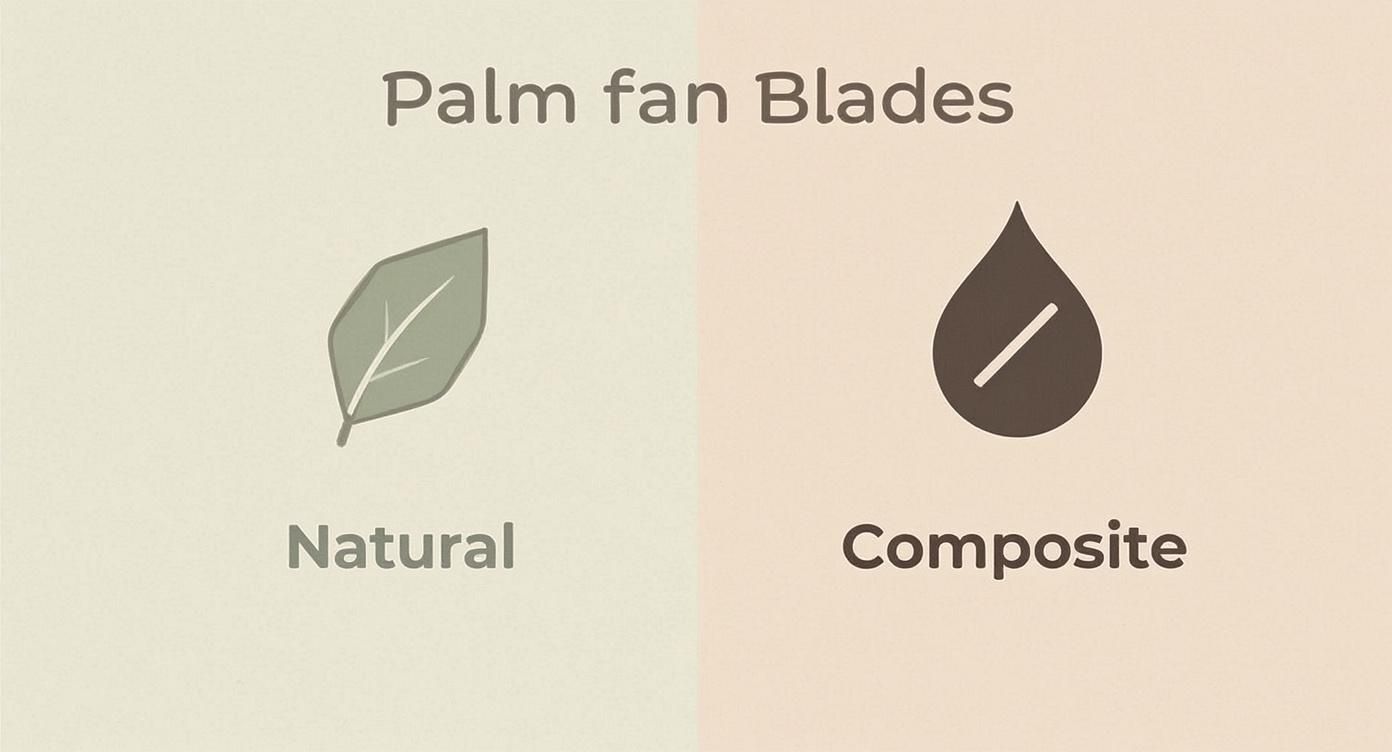
As you can see, natural blades are a beautiful choice for dry, indoor spaces, while the more durable composite blades are built to handle humidity and the outdoors.
Most palm ceiling fans come with a short downrod that works great for standard ceilings around 8 to 9 feet high. But if your ceilings are a little different, you’ll need a specific solution:
-
Low Ceilings (Below 8 feet): You absolutely need a flush-mount or "hugger" fan. These models mount directly against the ceiling, skipping the downrod entirely to give you as much headroom as possible.
-
High or Vaulted Ceilings: For any ceiling over 9 feet, a longer downrod is essential. It brings the fan down into that 8-9 foot sweet spot where you can actually feel the breeze. For sloped ceilings, an angled mounting kit will ensure the fan hangs level and operates smoothly without any wobbling.
Understanding Indoor and Outdoor Palm Fans
Not all palm ceiling fans are created equal, and where you install one makes all the difference in the world. Picking the wrong fan for your space isn't just a design mistake—it can lead to warped blades, a corroded motor, and a fan that dies an early death.
The secret to getting it right comes down to one simple but critical detail: the UL rating. Think of it as the fan's personal weather report. It tells you exactly what kind of environment a fan is built to handle, making sure it performs safely and lasts for years. Nailing this is the first step toward a smart, long-term investment.
Decoding UL Ratings for Palm Fans
Underwriters Laboratories (UL) gives ceiling fans one of three ratings, each designed for a specific spot in or around your home. Learning them is simple and will save you a ton of headaches down the road.
-
UL Dry-Rated: These fans are strictly for indoor use. Think bedrooms, living rooms, and dining areas—any space completely protected from moisture and humidity. Putting a dry-rated fan in a bathroom or on a porch is asking for trouble.
-
UL Damp-Rated: This is your go-to for covered outdoor spaces. Damp-rated fans are perfect for screened-in porches, covered patios, and lanais where they won't get hit directly by rain but will definitely be exposed to humidity. They’re built with moisture-resistant motors and materials that won't warp or sag.
-
UL Wet-Rated: For any area that faces the elements head-on, you need a wet-rated fan. These are the heavy-duty champions built for pergolas, gazebos, and uncovered decks. They feature totally sealed motors and all-weather blades that can handle direct rain, snow, and even salt air without rusting or falling apart.
Investing in a Premium Outdoor Palm Fan
When it comes to your outdoor spaces, you really do get what you pay for. While a cheaper fan might look tempting on the shelf, it’s almost always a poor investment in the long run. Premium outdoor palm ceiling fans, which typically start around $300 or more, are engineered for durability from the inside out.
These higher-quality models use superior materials that make a huge difference in performance and lifespan. For example, the Gulf Coast Fans Windward IV, priced around $380, is a fantastic damp-rated option with weatherproof composite blades designed to look like natural palm leaves while standing up to humidity like a champ.
The real value in a premium outdoor fan is peace of mind. Models from trusted brands are built with powder-coated finishes, rust-resistant stainless steel hardware, and sealed motors that protect the internal workings from moisture and corrosion, guaranteeing lasting beauty and performance.
Ultimately, choosing the right UL rating protects your investment and ensures your fan remains a stunning, functional centerpiece for years to come. For more guidance on finding the perfect model for your patio or lanai, explore our comprehensive guide to the best outdoor ceiling fans.
Styling Your Fan with Decor and Lighting
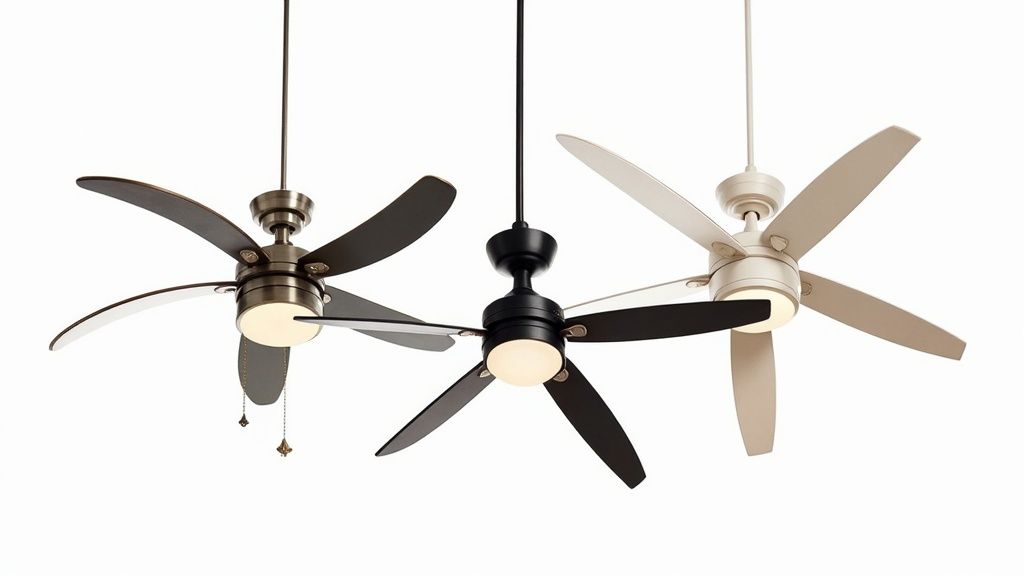
A palm ceiling fan is a serious design move, but it really shines when it feels like a natural part of your room's decor and lighting. You want it to look intentional—like it was always meant to be there—not like an afterthought. It's the finishing touch that pulls the whole space together into one cohesive, inviting vibe.
The first step is getting the finish right. A good finish connects the fan to other fixtures and furniture in the room, making it feel perfectly placed. For that modern coastal or minimalist style, a crisp matte white or a sleek brushed nickel finish helps the fan blend into a light ceiling, letting the palm blades become the main event.
But if your room is more rustic or bohemian, a rich oil-rubbed bronze or even a dramatic matte black can create some beautiful contrast. It's a great way to tie into darker furniture, window frames, or other hardware. Here's a pro tip: matching the fan's finish to your door handles, cabinet pulls, or light fixtures is a simple trick that makes the whole room feel polished and thoughtfully designed.
To Light or Not to Light
This is one of the biggest decisions you'll make: do you go for a palm fan with a built-in light kit, or a fan-only model? The right answer really just depends on the lighting you already have.
If the fan is going to be the main overhead light source in a bedroom or living room, then a model with an integrated light is a must. On the other hand, if your room is already well-lit with recessed cans, lamps, or wall sconces, a fan-only design offers a cleaner, more streamlined look.
A fan should complement your lighting, not complicate it. A model like the Gulf Coast Fans Islander, which usually runs around $450, is a great example because it offers options with and without light kits. You can tailor it to your room without giving up on that great tropical style.
Creating the Perfect Ambiance
If you do go with a light kit, the style and color temperature of the light are key to setting the right mood. The lighting should feel just as relaxed and tropical as the fan itself.
- Subtle Bowl Lights: These give off a soft, diffused glow that’s perfect for creating a chill atmosphere in a bedroom or on a covered patio. They provide general light without being harsh or glaring.
- Elegant Candelabra Styles: For a more traditional or formal space, a fan with candelabra-style lights can add a touch of classic elegance, blending that tropical flair with a more sophisticated look.
- Warm Color Temperature: To keep that cozy, vacation-like feel, stick with bulbs that have a warm color temperature (think 2700K to 3000K). That soft, yellowish light is way more inviting and relaxing than the harsh, blue-toned light you get from cooler bulbs.
When you carefully pick the right finish and lighting, your palm ceiling fan becomes more than just a cooling device. It turns into a stunning focal point that elevates the entire space.
Common Questions About Palm Ceiling Fans
Thinking about bringing that breezy, tropical vibe home with a palm ceiling fan? It's a fantastic choice, but you probably have a few practical questions. You see the gorgeous, leafy designs and start picturing yourself on vacation, but then reality hits. Will it actually move enough air? And how in the world do you clean those blades?
Let’s get those questions answered. Making a smart choice now means you’ll be happy with both the look and the breeze for years to come. These fans are a real investment in your home’s atmosphere, so let’s make sure you get it right.
Are Palm Blade Fans Actually Good at Moving Air?
Yes, you'd be surprised! While those beautiful, leaf-shaped blades look like they’re just for show, a high-quality palm fan is engineered for serious performance. It all comes down to two key things: the power of the motor and the pitch, or angle, of the blades.
Premium fans, especially those in the $300+ range, are built with powerful, quiet motors. Their blades are also set at just the right pitch to scoop up and push down a ton of air. This is measured in CFM (Cubic Feet per Minute), and you’ll find that good ones really deliver. The wider blades often create a gentler, more spread-out breeze that feels completely natural—not like the harsh, focused downdraft you get from some industrial-style fans.
How Do I Clean Natural Palm Leaf Fan Blades?
This is way easier than it looks. Natural blades just need a gentle touch to keep their organic beauty. The main thing to remember is to avoid harsh chemicals or soaking them with water.
For regular upkeep, just follow these simple steps:
- Dust Often: A quick wipe with a soft feather duster or a microfiber cloth is usually all it takes to handle dust.
- Deeper Clean: Got a stubborn spot? Lightly dampen a soft cloth with a bit of water and maybe a single drop of mild soap.
- Support and Wipe: Gently wipe the blades clean while holding them from underneath with your other hand. This keeps them from bending or cracking.
- Dry Right Away: Follow up immediately with a clean, dry cloth to get rid of any moisture. A little care like this will keep them looking great for years.
Can I Install a Palm Fan on a Sloped Ceiling?
Absolutely. Most modern palm ceiling fans are built for this, but you’ll need the right gear. To do it right, you'll need a specific angled mount adapter and, in most cases, a longer downrod.
These parts are usually sold separately, but they’re essential. They allow the fan to hang perfectly level, which is critical for preventing any wobble and making sure the fan runs safely and smoothly. Just be sure to check the fan’s specs to see the maximum slope it can handle.
Investing in a premium palm ceiling fan is a decision that pays off in both performance and longevity. These models typically feature superior, quieter, and more energy-efficient DC motors, durable all-weather materials that resist warping, or authentic hand-carved wood blades. They also come with better warranties and modern features like remote controls, making them a durable and stylish centerpiece for your home.
At Fan Connection, we believe a ceiling fan should be the perfect blend of artistry and function. Take a look through our curated collections to find a high-quality palm ceiling fan that will turn your space into a breezy, tropical escape. Find your perfect fan today.


