







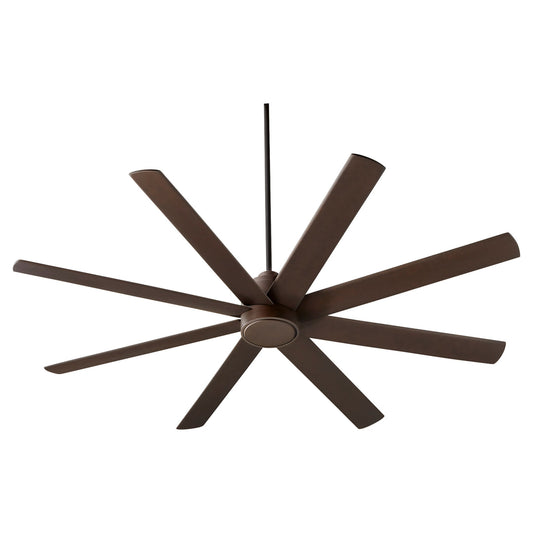


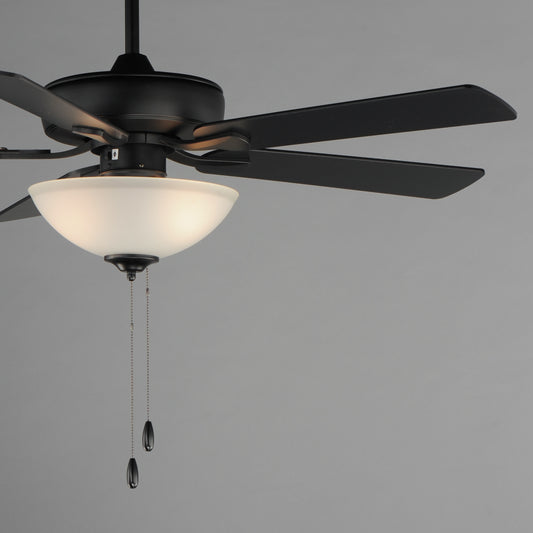


Find Your Perfect Breeze: A Guide to Quick Ceiling Fan Delivery & Pro Installation
You’ve finally found it—the perfect ceiling fan. It's got the style, the power, and it’s going to completely transform your space. But that initial thrill can quickly turn into a logistical nightmare when you're faced with slow shipping and the dreaded, separate search for a qualified installer.
Let's be real, there's a much cooler way to do this. The secret is finding providers offering quick delivery and professional ceiling fan installation all in one seamless package. This all-in-one approach guarantees your investment in a high-end fan gets the VIP treatment it deserves, turning a potential multi-step headache into one simple, breezy upgrade.
The Modern, No-Sweat Solution for Your Ceiling Fan Upgrade

The old-school method—buying from a big box store and then endlessly scrolling through online listings for an installer—is officially a thing of the past. Smart, forward-thinking companies now understand that the customer experience shouldn't end at checkout. They're rolling out the red carpet with a complete solution that handles everything from the moment you hit "buy" to the first time you feel that sweet, silent breeze.
This is about so much more than just convenience; it's about getting the job done right and protecting your investment. When you’re splurging on a stunning, design-forward masterpiece like the $700+ Minka-Aire Artemis XL5, you need iron-clad certainty that it’s installed perfectly. Proper installation not only protects the warranty but also guarantees that glorious, wobble-free, silent performance you paid a premium for. An all-in-one provider elegantly removes all the guesswork.
Why Integrated Services Are the New Cool
This seamless, all-in-one experience isn't just a trend; it's what modern homeowners demand, and it's shaking up the industry. In a booming global ceiling fan market, providers that bundle the product and the service are the new rock stars. The data backs this up—online sales are skyrocketing on platforms that offer transparent pricing and simple, bundled payment options.
This shift is a huge reason why 70% of buyers now prioritize speed and expertise over a rock-bottom price tag. They're not just buying a fan; they're buying a lifestyle upgrade with zero friction. You can dive into more details about these market trends to see how consumer habits are evolving.
The real magic of an integrated service is total peace of mind. You’re not just buying a box with a fan in it; you’re buying a finished, professionally-handled project from start to glorious finish.
This modern approach vaporizes the pain points of home projects. Instead of the frantic dance of trying to align a shipping timeline with a contractor’s jam-packed schedule, you have a single point of contact orchestrating the entire show. This solves the most common frustrations homeowners face:
- Scheduling Nightmares: Say goodbye to endless phone tag trying to sync delivery dates with an installer's limited availability.
- The Blame Game: If something goes wrong, there’s no finger-pointing between the seller and the installer. One company owns the entire result.
- Painful Delays: The provider manages all the logistics, which means a predictable, fun, and far less stressful timeline for you.
Ultimately, choosing a company that delivers both the fan and the pro to install it means you get the best of both worlds—an incredible new fixture and a flawless installation to match.
How to Vet and Choose Your Installation Pro
Finding the right person to install your ceiling fan is about more than just a quick online search. You're trusting someone with a valuable, often heavy, piece of equipment inside your home. It’s all about trust and expertise. So let's skip the fluff and get straight to what really matters when you're hunting for a true professional.
Home service platforms like Thumbtack or Angi can be a solid starting point, but don't stop there. A fantastic, often-overlooked resource is your local electrician's association. These groups often maintain directories filled with licensed, reputable pros who are serious about their craft.
As you vet potential installers, check out their online presence. Understanding what goes into an effective website design for electricians can reveal a lot. A clean, professional site is often a strong signal of a well-run, trustworthy business.
The Non-Negotiable Questions for Every Potential Installer
Once you have a shortlist, it's interview time. The answers you get will quickly separate the seasoned experts from the hobbyists. Don't be timid—any real pro will welcome your thoroughness.
Here’s your practical checklist for those crucial conversations:
- "Are you licensed and fully insured for this specific type of work?" Don't just take their word for it; ask for proof. General liability insurance is a start, but confirm their policy specifically covers electrical work and potential property damage.
- "Can you share photos of recent installations, especially on high or sloped ceilings?" This isn't just about admiring their work. It's concrete evidence they have real-world experience with tricky setups.
- "Do you have experience with premium, design-focused fans?" Get specific. Mentioning a high-end model like the Fanimation Aviation series, which can run over $500, will reveal if they're comfortable handling valuable and sometimes complex equipment.
- "What's your plan if the ceiling's electrical box isn't fan-rated?" An experienced installer will know exactly what this means and should immediately explain their process for installing a proper fan-rated brace. This is an absolute must-have for safety.
For a deeper dive, our guide on finding a ceiling fan installer near you offers even more tips. A pro’s answers should be direct, confident, and clear. Any hesitation or attempts to downplay these points is a massive red flag.
A great installer doesn't just hang a fan. They ensure its safety, performance, and longevity. Vetting is your most powerful tool to protect your investment and your home.
Quick-Check Vetting Table for Installation Providers
When you're juggling multiple quotes, it's easy to lose track. Use this simple table to compare potential installers at a glance and ensure you've covered all the critical bases before making your final decision.
| Qualification Criteria | Provider A | Provider B | Provider C |
|---|---|---|---|
| Licensed & Insured? | |||
| Proof of Insurance Provided? | |||
| Experience with High/Sloped Ceilings? | |||
| Experience with Heavy/Premium Fans? | |||
| Clear Plan for Non-Rated Box? | |||
| Provided a Detailed, Written Quote? | |||
| Professional & Timely Communication? |
This checklist helps you transform a gut feeling into a confident, fact-based choice.
Spotting Red Flags Before You Hire
Just as crucial as asking the right questions is knowing how to spot the warning signs. High-pressure sales tactics are a major one; a good installer will provide a clear quote and give you the space you need to decide.
Be wary of anyone who throws out a vague price over the phone without seeing the space or asking detailed questions about ceiling height and existing wiring. Evasive answers about their license or insurance? That's an immediate deal-breaker.
Ultimately, trust your gut. If something feels off, it probably is. Finding the right pro isn't just a transaction—it's about hiring someone you can trust with a significant upgrade to your home's comfort and style.
Syncing Delivery and Installation Without the Headache
Let’s be honest: the biggest headache in a ceiling fan upgrade isn't picking the fan—it's the logistics. It happens all the time. Your beautiful new fan arrives on the porch, but your go-to installer is booked solid for the next three weeks. Suddenly, an exciting home improvement project turns into a stressful waiting game.
But it doesn't have to be that way. With a little bit of smart coordination, you can manage the whole process like a seasoned pro.
The trick is to start the moment you click "buy." As soon as you have an estimated delivery window for your new fan—whether it’s a tropically-inspired Cabana fan (priced over $300) or a sleek, minimalist Aerovon model—it's time to start calling installers. Don’t make the mistake of waiting for the box to land on your doorstep.
The Art of Tentative Scheduling
The key here is to book a tentative installation date, not a firm one. When you get an installer on the phone, be upfront and clear about the situation. I’ve found that a simple opener works best: "Hi, I've just ordered a ceiling fan that's estimated to arrive between [Date A] and [Date B]. I'd like to pencil in an installation appointment with you, keeping that window in mind."
This kind of honest communication sets clear expectations from the get-go. Most professional installers are completely used to this and actually appreciate the heads-up. It lets them manage their own schedules while keeping your project on their radar.
Pro Tip: I always recommend building a buffer of two to three days after the latest estimated delivery date. This little cushion is a lifesaver, accounting for any shipping delays without completely derailing your installation plans.
Critical Communication with Your Installer
Effective communication is more than just picking a date. You need to ask the right questions to make sure you're both on the same page and can handle any curveballs. These questions also help you vet their flexibility and professionalism before you commit.
Here’s what I always ask:
- "What is your policy if my fan delivery is delayed?" A true pro will have a flexible rescheduling process, not a rigid, unforgiving one.
- "Is there a cancellation or rescheduling fee if the fan hasn't arrived by our tentative date?" You need to know this upfront to avoid any surprise charges.
- "Can you confirm you'll have all the necessary tools for the job, especially for a high ceiling if I have one?" This ensures they show up ready to work, saving everyone time and money.
If you really want to eliminate the stress of coordinating all these moving parts, a good universal package tracker can be a fantastic tool. It gives you real-time updates that you can easily forward to your installer. And if you're still exploring your options, you might find our guide on the best places to buy ceiling fans with installation included helpful.
This infographic breaks down the core steps for vetting any provider you’re considering.
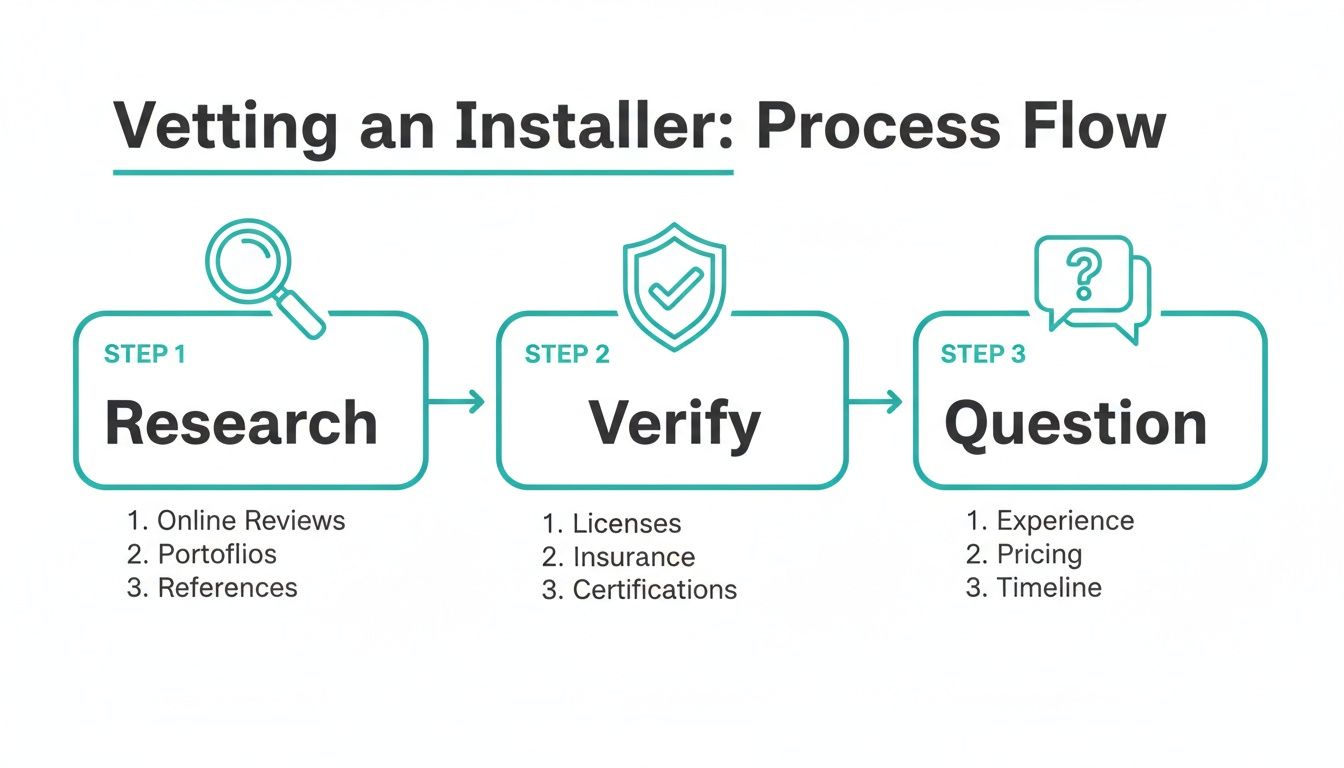
Ultimately, this all comes down to doing your homework. Thorough research, verifying credentials, and asking direct questions are the foundation of a successful project. By thoughtfully syncing your delivery and installation, you can transform a potentially chaotic task into a smooth, efficient, and totally stress-free experience.
Decoding Your Installation Quote and Total Cost
Let's be honest, a professional installation quote should be a clear roadmap, not a confusing mystery. When you’re investing in a beautiful, high-performance fan, you need to know the total cost to get it spinning overhead. It’s about more than just an hourly rate; it’s about understanding the complete financial picture from start to finish.
A solid estimate from any reputable installer should break down every single charge. This kind of transparency is what helps you budget properly and avoid any nasty surprises when the final bill shows up.
What to Look for in a Detailed Quote
A trustworthy quote will itemize each part of the job. You should be able to see exactly what you’re paying for. If someone just scribbles a single number on a notepad, that’s your cue to ask for a more detailed breakdown.
A good quote should clearly spell out these key areas:
- Hourly Labor Rate: The installer's standard charge for their time and expertise.
- Fixture Removal Fee: Usually a small charge for taking down and hauling away your old fan or light fixture.
- Cost of Additional Materials: This covers any unexpected but necessary parts, like a stronger, fan-rated ceiling brace for a heavier fan—a common need in older homes.
- Complex Installation Surcharges: These are extra fees for more challenging jobs, like running new wiring to a spot that's never had a fixture before.
It just makes sense that installing a fan on a 20-foot vaulted ceiling is going to cost more than a standard job in a room with 8-foot ceilings. A quality quote accounts for that kind of complexity right from the get-go.
A detailed quote isn't just a sales tactic; it's a sign that you're working with a pro who respects your budget and wants to build trust. It’s your best tool for comparing providers fairly.
Why Quality Installation is a Smart Investment
It can be tempting to save a few bucks by going with the cheapest installer you can find, but this is one area where cutting corners can really cost you down the road. When you're pairing a premium, design-forward fan like the Matthews Fan Co. Artiste (often priced over $1000) with a proper installation, think of it as a non-negotiable part of the investment.
This isn’t just about getting the fan attached to the ceiling. Professional installation is what guarantees safety, a silent and wobble-free performance, and—most importantly—it protects the manufacturer's warranty. Improper installation is one of the quickest ways to void it.
The numbers back this up, showing that professional installations can boost a fan's lifespan by as much as 50% and prevent 30% of common vibration issues that come from improper mounting. For builders or designers sourcing multiple fans for a project, this translates into real savings and fewer callbacks. As online fan sales continue to grow, bundled services are becoming the standard because homeowners love the simplicity and reliability. You can discover more insights about ceiling fan market trends here.
Ultimately, the goal is to protect your purchase. A quality fan is an upgrade to your home’s comfort and style, and a professional installation ensures it lives up to its full potential for years to come.
Getting Your Home Ready for Installation Day
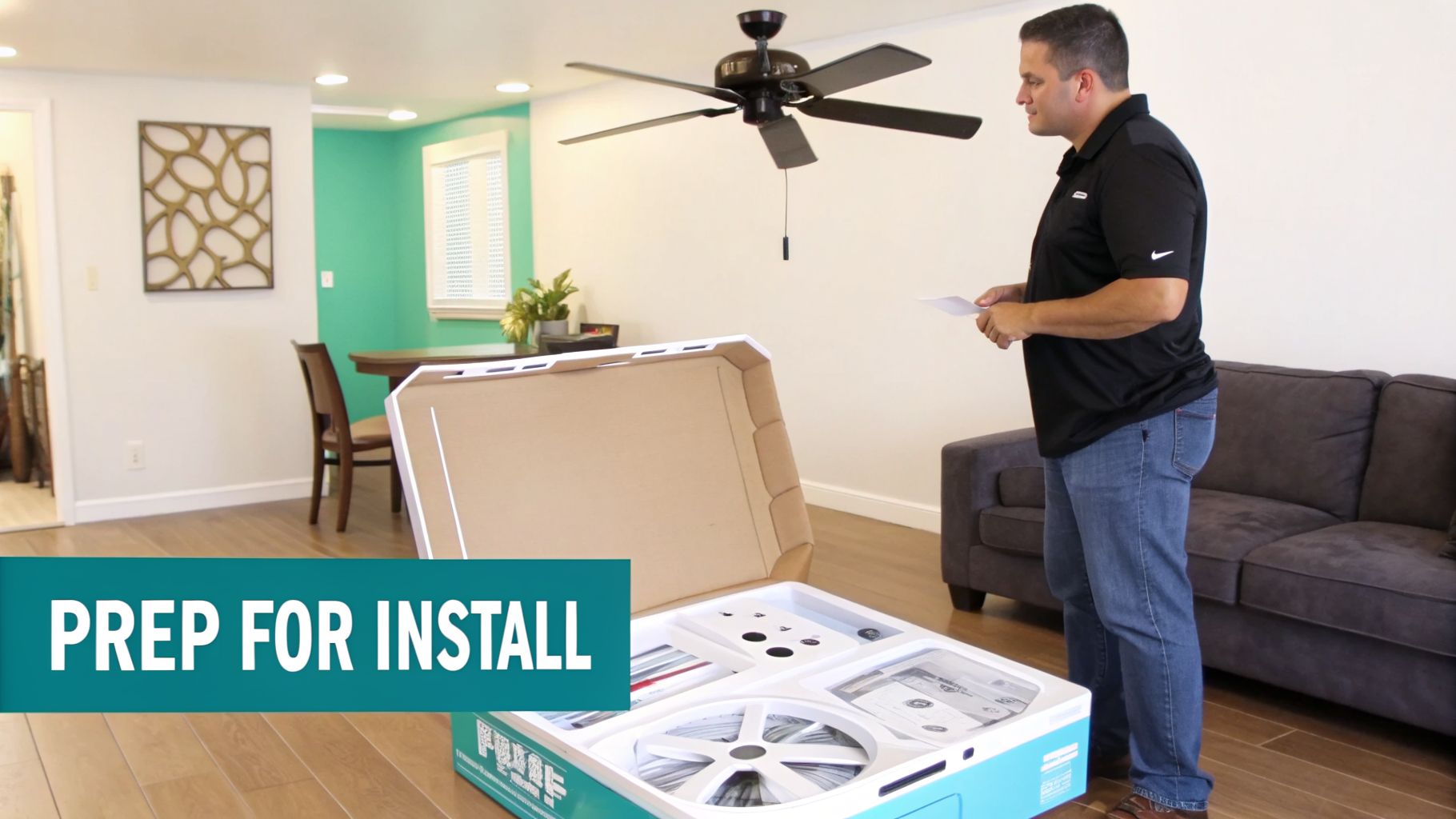
The moment has arrived. Your new fan is here, the installer is booked, and you're just a few hours away from a perfect breeze. A little prep work right now can make a huge difference, ensuring the entire process is smooth, safe, and efficient. Think of it as setting the stage for a flawless installation.
When you hire providers offering quick delivery and professional ceiling fan installation, you're paying for their expertise, not their time spent moving furniture. A few simple steps from you can make their job much easier and faster.
Clear the Workspace
First and foremost, the installer needs a clear, safe area to work. The space directly under where the fan will hang needs to be completely open. This isn't just for a ladder—it's a critical safety measure.
- Move Furniture: Shift any couches, tables, or chairs out of the immediate area. If something is too heavy to move out of the room, slide it against a wall and toss a drop cloth or an old sheet over it for protection.
- Protect Your Floors: Most pros will bring their own drop cloths, but it never hurts to add your own layer of protection. This is especially true if you have delicate hardwood floors or light-colored carpeting.
- Secure Fragile Items: Take down any nearby pictures from the walls and move lamps, vases, or other decorations to another room. It’s a simple way to prevent accidental bumps and breaks.
It’s also incredibly helpful to clear a path from your front door to the installation spot. This lets the technician carry their tools and the fan box straight to the room without navigating an obstacle course.
Being prepared isn't just a courtesy—it's a time-saver. An installer who can get right to work is more efficient, which can sometimes translate into lower labor costs if they bill by the hour.
A Few Words on the Fan and Your Electrical System
There are a couple more things you can do to head off any potential hiccups on installation day. A little knowledge about your home's electrical setup goes a long way.
Before the installer shows up, find your circuit breaker panel. If the breakers are clearly labeled, you can point them to the correct one in seconds. And if you know about any weird electrical quirks in your home—like a light switch that controls a random outlet across the room—give your installer a heads-up. That kind of insider information is gold to them.
If you ordered a larger or more intricate fan, like the gorgeous Artemis IV (priced at over $500), you might want to open the box ahead of time. You can carefully lay out all the components on a blanket or drop cloth. This helps you confirm everything arrived in one piece and saves your pro the time of unboxing and sorting all the parts.
By taking these simple steps, you're doing more than just clearing a room. You’re setting the entire installation up for success and guaranteeing a smooth, stress-free upgrade.
Your Final Checklist After the Installation is Complete
The tools are packed away, the dust has settled, and your stunning new ceiling fan is finally up. Before you sign off on the job and wave goodbye to your installer, take a few minutes to run through a final inspection.
This last step is crucial—it's what separates a "finished" job from a truly complete one. Think of it as the victory lap for your home improvement project, ensuring your investment brings years of silent, stylish comfort.
The Performance Test
First things first, let's put the fan through its paces. Your installer should absolutely stick around while you do this; it’s a standard and expected part of any professional service.
- Run Through All Speeds: Start the fan on its lowest setting and cycle all the way up to the highest. Listen closely. What you're listening for is what you don't hear—any buzzing, humming, or clicking noises are a red flag.
- The Wobble Check: Keep your eyes on the fan's motor housing as it spins on high. Is it perfectly still? A tiny bit of movement can sometimes be normal, but a professional installation should be nearly rock-solid. If you notice any shaking, point it out immediately.
- Test the Lights and Controls: If your fan has an integrated light kit, flick it on and off. If it’s dimmable, check the full range. Make sure the remote control or wall switch works flawlessly for every single function—speed, light, and reverse.
A wobbly fan is a common issue that can put unnecessary stress on the motor and mounting hardware over time. If you want to know more about what causes this and how it's fixed, you can check out our guide on how to balance a ceiling fan. A good installer will take care of this on the spot.
Don’t sign off until you are 100% satisfied with the fan's performance. A true professional will be happy to make adjustments to ensure the job is done right.
The Final Paperwork and Wrap-Up
With the physical inspection done, it’s time to handle the final details. This is where you confirm warranties and payment, officially closing out the project.
Ask for the final, itemized invoice and compare it against the original quote. This is also the perfect time to clarify the warranty—you'll want to understand the coverage on both the fan itself (from the manufacturer) and the labor (from the installer). Make sure you have their contact information and know who to call if an issue pops up later.
In North America, where the smart fan market is booming, professional installations are key to ensuring 98% compatibility rates with home automation systems, which dramatically slashes callbacks. It's why contractors increasingly favor bundled services that pair quick two-day delivery with same-week setup. This trend is also why 75% of hospitality operators now select providers offering quick delivery and professional ceiling fan installation. You can learn more about these ceiling fan market findings.
Completing these final steps ensures your stylish upgrade, like the eye-catching Fanimation Andros (priced over $400), delivers on its promise of both form and function.
We believe in a seamless experience from start to finish. Explore our curated collections of premium ceiling fans and discover the perfect centerpiece for your space.


