








Finding Ceiling Fan Installation Near Me A Homeowner's Guide
When you punch "ceiling fan installation near me" into a search bar, what you're really after is confidence. You want to know that your fan will be safe, solid, and spin without a single wobble. Let's be honest, nobody wants their gorgeous new ceiling fan to sound like a helicopter getting ready for takeoff. A professional installer delivers that peace of mind, making sure your new fixture is a breezy upgrade, not a future headache.
Why A Professional Touch Matters For Your New Fan
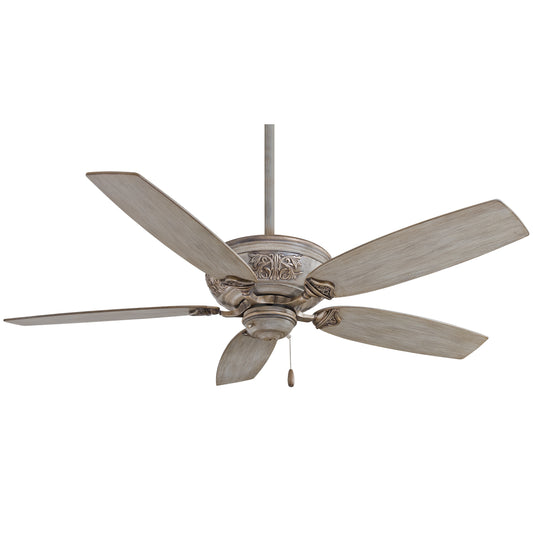
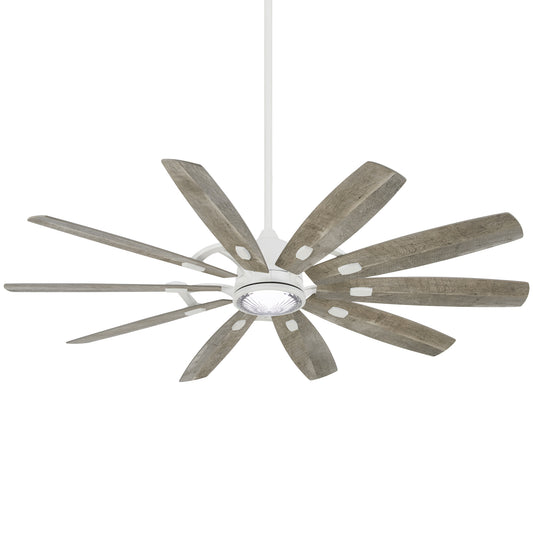
Picking out a new ceiling fan is the fun part. Maybe you've gone for a real showstopper like the 62-inch Artemis XL5, a beautiful piece that runs over $800 and looks like a work of modern art. Or perhaps you chose the classic elegance of the Chateaux, which adds a touch of class for around $500. Either way, these aren't just appliances; they're investments in your home's comfort and style.
A professional installation is the best way to protect that investment. It takes all the guesswork and "what-if" scenarios out of the equation, preventing a simple weekend project from turning into a costly, "honey-I-think-we-broke-the-ceiling" repair job.
The Real Value Of Expert Installation
Hiring someone who does this for a living is about more than just getting an extra pair of hands. You're paying for experience—the kind that gets the job done right the first time, so you can kick back and enjoy the breeze.
- Safety Is Everything: Pros are trained to handle electrical wiring without taking shortcuts. They know how to prevent faulty connections that could lead to shorts or, in the worst-case scenario, a fire. No sparks, no drama.
- No Code Violations: A licensed expert makes sure the entire setup meets local electrical codes. This isn't just about red tape; it's critical for your home's safety and for any future inspections.
- The Right Support: They’ll confirm the electrical box in your ceiling is actually rated to hold a fan. A standard light fixture box isn't strong enough to support the weight and constant motion, and this is a detail a DIYer might miss.
- Perfectly Balanced: A pro has the knack for balancing the blades perfectly. This is the secret to avoiding that annoying wobble and hum that can ruin the quiet comfort a fan is supposed to provide.
The demand for high-quality, efficient fans is exploding. The global ceiling fan market is on track to hit USD 31.6 billion by 2035, a clear sign that homeowners are embracing energy-saving cooling. Here in the USA, the market is growing just as fast as people swap out old models for new ones with better features.
If you’re curious how your search for "ceiling fan installation near me" connects you with the right people, it helps to understand the local lead generation strategies that service pros use. Knowing a little about how they find customers can make you a more informed homeowner.
At the end of the day, hiring a professional ensures your stylish new fan will do its job—quietly, efficiently, and safely—for years to come.
Quick Guide Professional vs DIY Installation
Not sure which path is right for you? This quick comparison should help you decide whether to call in a pro or tackle the installation yourself.
| Factor | Professional Installation | DIY Installation |
|---|---|---|
| Safety | High. Professionals are licensed, insured, and know electrical codes. | Moderate to Low. Risk of improper wiring or insecure mounting. |
| Cost | Higher upfront cost for labor. | Lower upfront cost (just the price of the fan and materials). |
| Time | Fast and efficient. Typically 1-2 hours for a standard installation. | Can take several hours or a full weekend, especially for a first-timer. |
| Tools | The installer brings all necessary specialized tools. | You'll need to own or borrow the right tools (ladders, testers, etc.). |
| Complexity | Handles any situation: high ceilings, new wiring, or complex fans. | Best for simple swaps where existing wiring and support are adequate. |
| Guarantee | The work is usually guaranteed, offering peace of mind. | No guarantee. If something goes wrong, the cost of repairs is on you. |
Ultimately, while a DIY project can be satisfying, a professional installation is a smart investment in your home's safety and your own peace of mind.
Deciding Between DIY And Professional Installation
So, you've got your new ceiling fan. Now comes the first big decision: do you install it yourself or call in a pro?
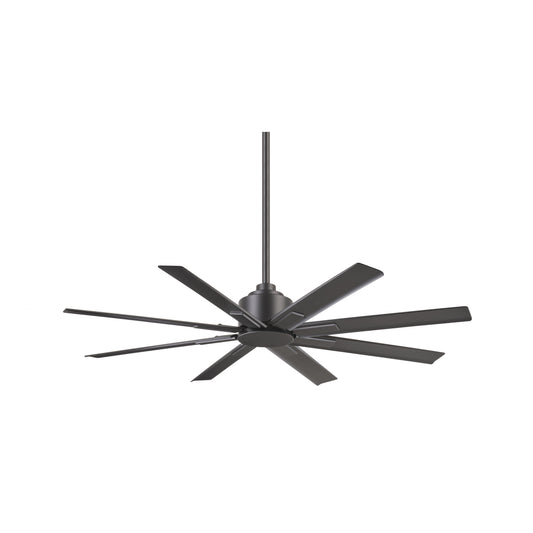
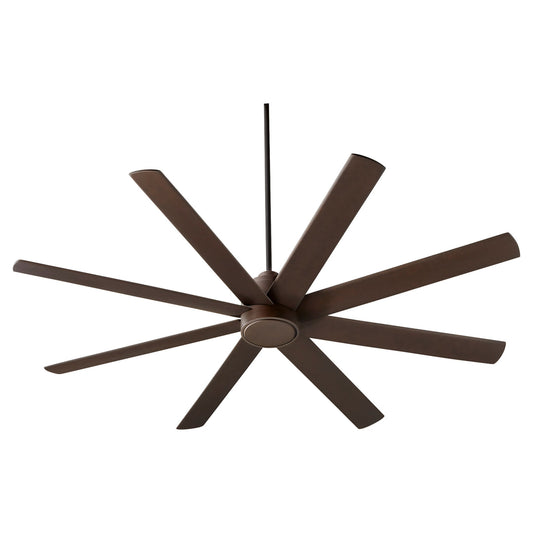
Think of it like this: anyone can put together a simple bookshelf on a Saturday afternoon. But building a custom staircase that's safe and beautiful? That’s a job for a skilled carpenter. Installing a ceiling fan, especially a more powerful model like the industrial-chic Aviation, which can run over $500, often falls into the second camp.
Hiring a professional is really an investment in peace of mind. You’re paying for guaranteed safety, knowing all the electrical work is up to code, and getting a perfectly balanced fan that won't ever wobble.
On the flip side, going the DIY route can be incredibly satisfying, and you'll obviously save some cash on labor. But it's not without its risks. A small mistake in the wiring can be a serious fire hazard. An improperly balanced fan will create a constant, annoying hum. And worst-case scenario, an insecurely mounted fan could come crashing down.
Making The Right Call For Your Home
To figure out which path is for you, be honest with yourself about your skills, the tools you have on hand, and how complicated this particular installation is. Simply swapping out an old, lightweight fan for a new one is a whole different ballgame than installing a fan where there was only a basic light fixture before.
If you are replacing an existing fixture, you absolutely have to confirm that the electrical box in the ceiling is fan-rated. This is crucial. Standard light fixture boxes were never meant to support the weight and constant movement of a ceiling fan. Using the wrong box is one of the most common—and dangerous—mistakes DIYers make.
A proper UL-listed, fan-rated electrical box is built to support anywhere from 35 to 70 pounds. Trying to hang a fan on a standard box that can't handle that weight is a major safety risk.
For those of you feeling confident about tackling this yourself, preparation is key. We put together a step-by-step guide on how to install a ceiling fan that walks you through the whole process. It's a great resource to help you decide if you're really up for the challenge.
This little decision tree can also help you visualize your options and see which route makes the most sense for your project.
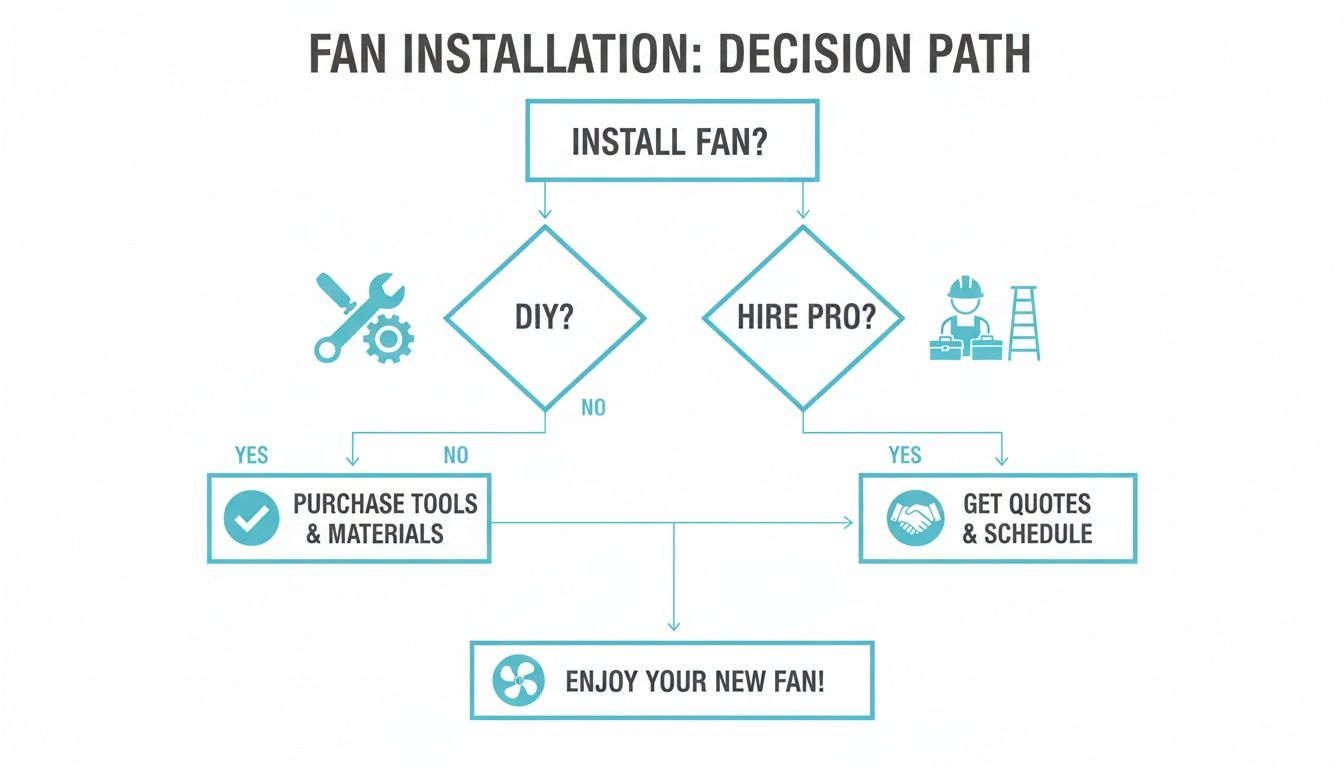
As you can see, things like having the right tools and a bit of experience are make-or-break for a good DIY outcome. For pretty much anything else, calling a pro is the smart move.
When To Absolutely Hire A Professional
While some installations are perfectly fine for a handy homeowner, there are a few situations where you should just pick up the phone. Don't even hesitate—just find a local pro if you run into any of these scenarios.
- No Existing Fixture: If you’re putting a fan where there’s just a blank ceiling, an electrician is non-negotiable. They'll need to run brand new wiring from a power source, and that's not a DIY job.
- Old Wiring: If your home has older wiring (like knob-and-tube), you need a professional to make sure everything is connected safely and brought up to modern electrical code.
- High or Vaulted Ceilings: This is all about safety and equipment. Professionals have the right ladders, scaffolding, and experience to work safely at heights. It's just not worth the risk for a homeowner.
- Complex Smart Fans: Today's high-end smart fans come with remote receivers, multiple wall controls, and app integration. The wiring can get complicated fast, and it’s best left to someone who knows exactly what they’re doing.
Ultimately, it’s your call. But when you’re dealing with electrical work and hanging a heavy object over your head, playing it safe is always the right move.
How to Find and Vet a Qualified Local Installer
Finding the right person to install your ceiling fan is about more than just a quick Google search. You're not just looking for a handyman with a ladder; you need a real professional you can trust. Let's walk through how to find and hire an expert who will get the job done right—no wobbles, no worries.

It’s no surprise that as more people buy ceiling fans online—a trend set to grow by over 6% through 2025—the searches for "ceiling fan installation near me" are skyrocketing. In fact, about 70% of us now do our homework online before hiring anyone locally. This blend of e-commerce convenience and the need for skilled, in-person service means you need a smart strategy.
Your search should definitely start online, but you need to know where to look.
Where to Find the Best Installers
A great way to start is by casting a wide net across a few reliable places. Each one offers a different angle for finding local talent.
- Local Electrician Directories: These are a goldmine for finding licensed and insured pros. Electricians are usually the best bet, especially if you're installing a fan where there wasn't one before or if your home's wiring is a bit older.
- Neighborhood Groups: Don't underestimate the power of a neighbor's recommendation. Check out platforms like Nextdoor or your local Facebook group. A referral from someone down the street is often the most honest review you can get.
- Third-Party Platforms: Websites like Angi or Thumbtack are great for quickly comparing quotes from several contractors. Just be sure to sift through the most recent reviews to get a real sense of their work.
Hiring an installer isn't just about finding someone who knows how to connect wires. It's about finding a craftsperson who will respect your home, understand the ins and outs of your specific fan, and stand by their work.
Once you’ve got a short list of three or four potential installers, it’s time for the most important part: the vetting process.
The Ultimate Vetting Checklist
Asking the right questions upfront is the key to hiring with confidence. Think of it as a friendly interview to make sure you've found the right match. For more tips, check out our guide on top-rated ceiling fan installation services close to me.
Here are the non-negotiable questions you should ask every single person you're considering:
- Are you licensed and insured? This is the big one. A license means they're accountable, and insurance protects you and your home from any accidental damage.
- Can you show me examples of your past work? A pro who takes pride in their work will be more than happy to share photos or references.
- What's your experience with more complex models? Be specific. If you've invested in a high-end fan like the elegant Artiste, which can run over $400, you need someone who won't be intimidated by it.
- Do you have experience with vaulted or high ceilings? If your room has high ceilings, this is a must-ask. This kind of job takes special equipment and a solid understanding of safety.
- Does your quote include everything? Get clarity on whether the estimate covers assembly, installation, cleanup, and getting rid of the old fixture. A transparent quote means no surprise fees later.
Taking a little extra time to properly vet your installer ensures your beautiful new fan is up and running safely and correctly from day one, giving you years of wobble-free comfort.
Understanding Ceiling Fan Installation Costs And Timelines
Once you start looking for a local installer, two questions usually pop up right away: "How much is this going to cost me?" and "How long is this going to take?"
Let’s get straight to it and give you a realistic picture. That way, you can budget properly and avoid any sticker shock when the quotes start rolling in.
Think of it like hiring someone to paint a room. The final bill isn't just for the can of paint, right? It depends on the prep work, how many coats are needed, and whether they're painting a simple, flat wall or a tricky vaulted ceiling. The same logic applies here. The final price tag and the time it takes all come down to the complexity of your specific job.
Breaking Down The Final Price
For a professional to install your ceiling fan, you can generally expect to pay somewhere between $100 to over $400. That's a pretty wide range, and the final number really hinges on a few key things that can either make the job a breeze or add a few extra steps for the installer.
A straightforward swap—taking down an old fan and putting up a new one where all the wiring and support are already in place—will land you on the lower end of that price range. But what happens when the job gets a little more involved?
Here are the most common things that can increase the cost:
- New Wiring Needed: If you’re putting a fan where there's never been a light or fan before, an electrician has to run completely new wiring. This is probably the biggest single factor that can drive up the cost.
- Ceiling Height: Have a beautiful two-story great room or vaulted ceilings? Your installer is going to need extra-tall ladders or even scaffolding to work safely, which adds a good chunk of time and labor to the bill.
- Electrical Box Upgrade: We've mentioned it before, but it's critical—the junction box in your ceiling has to be fan-rated to support the weight and movement. If yours isn't, it must be replaced. It's a non-negotiable safety step that adds to the cost.
- Fan Complexity: There's a big difference between installing a basic, three-blade fan and assembling a high-end smart model like the $350+ Spitfire, which often has more intricate parts and a remote receiver to wire in.
When you get quotes, you'll want to understand the different pricing models like time and materials vs. fixed price contracts. A fixed-price quote locks in the cost, while "time and materials" can change depending on how long the job actually takes to complete.
To give you a clearer idea, here's a quick breakdown of how different scenarios can affect the cost and time involved.
Estimated Installation Costs And Time By Job Complexity
| Installation Scenario | Estimated Cost Range (USD) | Estimated Time |
|---|---|---|
| Simple Swap-Out | $100 - $200 | 1 - 2 Hours |
| New Fan, Existing Wiring | $150 - $250 | 2 - 3 Hours |
| New Fan & New Wiring | $300 - $400+ | 3 - 5+ Hours |
| High/Vaulted Ceilings | Adds $50 - $150+ to base cost | Adds 1 - 2 Hours |
As you can see, the more prep work and electrical maneuvering required, the more you can expect the project to cost and the longer it will take.
How Long Will The Installation Take?
Just like the costs, the timeline can vary quite a bit.
A simple fan replacement might only take an experienced electrician an hour or two from start to finish. They’ll come in, set up, install the new fan, test it to make sure everything is perfect, and clean up before you know it.
On the other hand, a more complex installation can easily turn into a half-day project or longer. If the job involves pulling new electrical lines through your walls and attic, cutting a fresh hole in the ceiling, and installing a new support brace, the work is naturally more detailed and time-consuming.
Always make sure to ask your installer for a time estimate right along with their price quote. This sets a clear expectation of how long your room might be a work zone and helps you plan your day around it. A little preparation makes the whole process smoother for everyone.
How To Prepare Your Home For Installation Day

Getting a new ceiling fan installed is a team effort. A little prep work on your end can make a huge difference, helping the installer work safely and efficiently. Think of it as setting the stage for a smooth performance—the result is your beautiful new fan, up and spinning, much faster.
The most important first step? Clear the workspace. Your installer is going to need a decent amount of room to maneuver a ladder and handle tools. It’s best to move any furniture—like beds, couches, or tables—that’s sitting directly under the installation spot. If you have an area rug, rolling it up and moving it aside is also a smart move to keep it clean from any dust or debris.
You'll also want to make sure there's a clear path from your front door to the work area. This simple step helps prevent any accidental scuffs or bumps and makes it a breeze for the technician to bring in their equipment.
Your Pre-Installation Checklist
Before your installer rings the doorbell, it’s a good idea to open up the box for your new fan. Take a quick look to make sure all the parts and hardware are accounted for. Our premium models, like the sleek Bola or the tropical Cabana that both retail for over $300, come with specific components, and a quick check beforehand can save a ton of time on installation day.
- Move Furniture: Create at least a 5-foot clear radius around the spot where the fan will hang.
- Clear a Path: Ensure there’s an easy, unobstructed route from the entrance to the room.
- Unbox and Inspect: Open up your new fan and do a quick inventory to verify all the parts are there.
- Share Information: If you know of any quirks with your home’s wiring, give your installer a heads-up.
A proactive approach turns the entire process into a smooth, stress-free experience for everyone. A little prep work goes a long way in ensuring your technician can focus entirely on a perfect installation.
This small bit of preparation helps your local expert get the job done right. Plus, an efficient installation means you get to enjoy the benefits of your new fan that much sooner. Modern ceiling fans are a homeowner's secret weapon for slashing energy costs—in fact, the residential segment makes up over 80% of the demand for smart fans. Just one fan can cut your AC use by 15-30%, saving you hundreds over the course of a year. You can discover more insights on ceiling fan market trends.
Finally, getting familiar with the hardware, like understanding the differences between ceiling fan mounting bracket types, can also help you communicate more effectively with your installer and understand the process better.
Common Questions About Ceiling Fan Installation
Even with a perfect plan, it’s normal to have a few questions pop up just before installation day. We get it. To help you feel completely confident, we’ve put together answers to the most common questions homeowners ask when they start looking for "ceiling fan installation near me."
Do I Need An Electrician To Install A Ceiling Fan?
This is the big one, and the honest answer is: it depends.
If you're just swapping out an old fan for a new one, and you're 100% sure the existing wiring and ceiling box are up to code and rated for a fan, a skilled handyman can probably do the job.
However, calling a licensed electrician is a must if you’re running new wiring, the electrical box is old, or you live in an older home with questionable wiring. An electrician is your guarantee that the work is safe, meets local codes, and can handle your fan's weight and power draw. For today’s premium smart fans, an electrician also makes sure every feature works exactly as it should.
How Much Does It Cost To Have A Ceiling Fan Installed?
You can expect to pay anywhere from $100 to $350 for a pro to handle the installation. The final price tag really depends on where you live and how complex the job is. A straightforward replacement of an old fan will always be on the lower end of that range.
The cost starts to go up when the job gets more involved. Things like running new wiring to a spot that’s never had a fixture, installing a new fan-rated electrical box, or dealing with a high or vaulted ceiling will add to the bill. Always, always get a detailed quote in writing before the work begins to avoid any surprises.
Safety first, always. That electrical box in your ceiling is the foundation of your installation. A standard box made for a light fixture just isn't strong enough for a fan's weight and constant motion. You absolutely must have a fan-rated box to prevent a serious safety hazard.
Can I Install A Ceiling Fan Where A Light Fixture Is?
Yes, this is one of the most common home upgrades out there! But it comes with a non-negotiable safety check first. The electrical box holding that light fixture must be specifically rated to support the weight and movement of a ceiling fan.
A standard light fixture box is not designed for that kind of stress and can fail over time, which could cause the fan to fall. A proper fan-rated box is typically made of metal and is bolted securely to a ceiling joist or a support brace. If your current box isn't fan-rated, a professional has to replace it. This is a crucial step for any fan you choose.
What Should I Look For In A Ceiling Fan For A Large Room?
For big rooms (think anything over 225 square feet), the most important thing is airflow, measured in Cubic Feet per Minute (CFM). You need a high CFM rating to actually feel the breeze across the space.
To get that powerful airflow, here's what to look for:
- Blade Span: Go for a fan with a blade span of 52 inches or more. An impressive model like the 60-inch Aviation, which sells for over $500, is built for exactly this kind of job.
- Motor Type: Modern DC motors are the clear winner here. They're much more energy-efficient and quieter than old-school AC motors, giving you better performance and lower bills.
- Blade Pitch: Look for a steeper blade pitch, usually between 13 and 15 degrees. A steeper angle lets the blades grab and move more air with every spin.
For really long or extra-large rooms, sometimes installing two well-placed fans is a better solution for consistent, comfortable airflow than one massive fan.
At Fan Connection, our job is to help you find the perfect fan and connect you with the resources to get it installed right. Take a look through our curated collections to find a style that's just right for your home.
Browse Our Premium Ceiling Fan Collections at Fan Connection


