











Quiet Ceiling Fan for Bedroom: The Ultimate Sleep Guide
A warm night, a gentle breeze, and perfect silence—that’s the dream for any bedroom sanctuary. A truly quiet ceiling fan for your bedroom is the key, but let's be honest, many models that promise silence deliver a distracting hum that does anything but help you sleep. This guide will help you understand what really goes into creating whisper-quiet airflow.
Why Your Bedroom Needs a Truly Quiet Ceiling Fan
Imagine trying to drift off to sleep with a persistent, low-grade buzz filling the room. It’s the kind of sound that slowly chips away at your peace, turning your restful space into a source of subtle irritation. That’s the reality for many people with standard ceiling fans, where motor noise and the whoosh of wind become unwanted background music.

A truly quiet ceiling fan completely transforms this experience. It's not just about moving air; it's about creating an environment that supports deep, uninterrupted rest. The best models are engineered for silence from the ground up, focusing on the specific components that eliminate the very sources of noise.
The Problem with "Quiet Enough"
We’ve all seen fans marketed as quiet that fail the real-world test of a silent bedroom at 2 AM. The difference between a standard fan and a premium quiet model is night and day. It’s no surprise that the residential market, which includes bedroom installations, dominates the industry, accounting for over 80% of ceiling fan sales globally.
To meet that demand, top-tier "silent" or "whisper" fans are designed to operate below 30 decibels—that’s comparable to a whisper. Traditional models, on the other hand, can easily exceed 50 decibels. You can discover more about these market trends and how they’re pushing manufacturers to design better, quieter products.
The goal isn't just to find a fan that's less noisy—it's to find one you completely forget is even running. That level of silence is what separates a good night's sleep from a great one.
Choosing a quiet ceiling fan for your bedroom is an investment in your well-being. It’s a commitment to creating a space where you can fully relax and recharge without auditory distractions. This guide will walk you through the essential factors—from advanced DC motors to aerodynamic blade design—that make this level of peace possible.
The Science Behind Silent Airflow
Ever wondered what makes one ceiling fan whisper-quiet while another hums and clicks all night? The secret to a truly silent fan isn’t some industry magic; it's all about superior engineering. A quiet fan is the result of carefully designed parts working together in perfect harmony.
To really get it, let's look under the hood at the tech that separates blissful silence from that annoying background buzz.
The journey to silent airflow starts with the fan's engine—its motor. This is the number one source of the humming and buzzing that can ruin a good night's sleep. Think of it like the difference between a modern electric car and a classic gas-guzzler; one purrs along almost silently, while the other rumbles and shakes.
The Power of DC Motors
For decades, most ceiling fans used AC (Alternating Current) motors. They're the workhorses of the industry—reliable, but inherently noisy. The way they use electricity creates vibrations that translate into that constant, low-level hum. They’re the clunky, loud gas engines of the fan world.
In contrast, most premium modern fans now use DC (Direct Current) motors. These are the electric vehicles of air circulation. DC motors are engineered from the ground up for efficiency and near-silent operation, using magnets to create a smoother, quieter rotation. They often operate at decibel levels below 30 dB, which is literally as quiet as a whisper.
A fan with a DC motor is the single most important feature to look for when shopping for a quiet ceiling fan for your bedroom. It's the foundation upon which all other silent-running features are built.
This newer technology not only gets rid of distracting noise but also uses up to 70% less energy than its AC counterpart. It’s a smarter investment for both your peace of mind and your wallet.
Aerodynamics: The Unsung Hero
Beyond the motor, the fan's blades play a huge role in keeping things quiet. It’s not just about pushing air; it’s about slicing through it cleanly without creating turbulence. This is where blade design, material, and count really matter.
Manufacturers of high-end fans obsess over blade aerodynamics. Here’s what they focus on:
- Blade Pitch: The angle of the blades determines how much air they move. A well-designed pitch moves air efficiently without creating that disruptive "whooshing" sound you hear from cheap fans.
- Material and Shape: Blades carved from solid wood or molded from high-quality ABS plastic are shaped to minimize drag. This lets them cut through the air with less resistance and, you guessed it, less noise.
- Blade Count: While more blades can look stylish, the key is balance and smart design. You can learn more about the impact of fan blade count on efficiency in our detailed guide.
The Final Piece: Professional Installation
Finally, even the most expertly engineered fan will make a racket if it's not installed correctly. A solid, professional installation is absolutely non-negotiable for silent performance. An improperly secured fan will inevitably start to wobble, rattle, and click.
Proper balancing is also critical. Installers use kits to ensure the fan's weight is perfectly distributed, which prevents the subtle vibrations that can grow into irritating noises over time. When every component is secure and perfectly aligned, the fan can do its job without announcing its presence.
Matching the Right Fan to Your Bedroom
Let's be real: choosing the right ceiling fan for your bedroom isn't a one-size-fits-all deal. A fan that works beautifully in a small guest room will feel like a whisper in a sprawling master suite. The first and most important step to getting that silent, effective cooling you're dreaming of is to match the fan to your room's actual dimensions.
This all comes down to two key specs: blade span (the full diameter of the fan) and CFM (Cubic Feet per Minute), which is just a fancy way of saying how much air it moves. A classic mistake is grabbing a small fan with a high CFM rating and just cranking it up to max speed. That's a surefire recipe for noise.
Here's an industry secret: a larger fan running at a low speed is almost always quieter and more energy-efficient than a small fan fighting to keep up on high. Think about it—the slow, graceful rotation of longer blades moves a ton of air without that frantic "whoosh" you get from a fan that's working way too hard.
Finding the Perfect Fit for Your Space
Before you even start looking at styles, grab a tape measure. You need to know your room's square footage and ceiling height. For most bedrooms, a fan with a blade span somewhere between 44 and 54 inches will give you plenty of airflow without feeling overwhelming. For more detailed recommendations, you can check out our complete ceiling fan size guide.
The demand for quiet fans has absolutely soared, especially in cities where a peaceful night's sleep is a hot commodity. In fact, surveys show that over 70% of city dwellers put low noise levels at the top of their list when buying a fan.
This decision tree breaks down how all the pieces—from the motor to the blades—fit together to create a truly quiet fan.
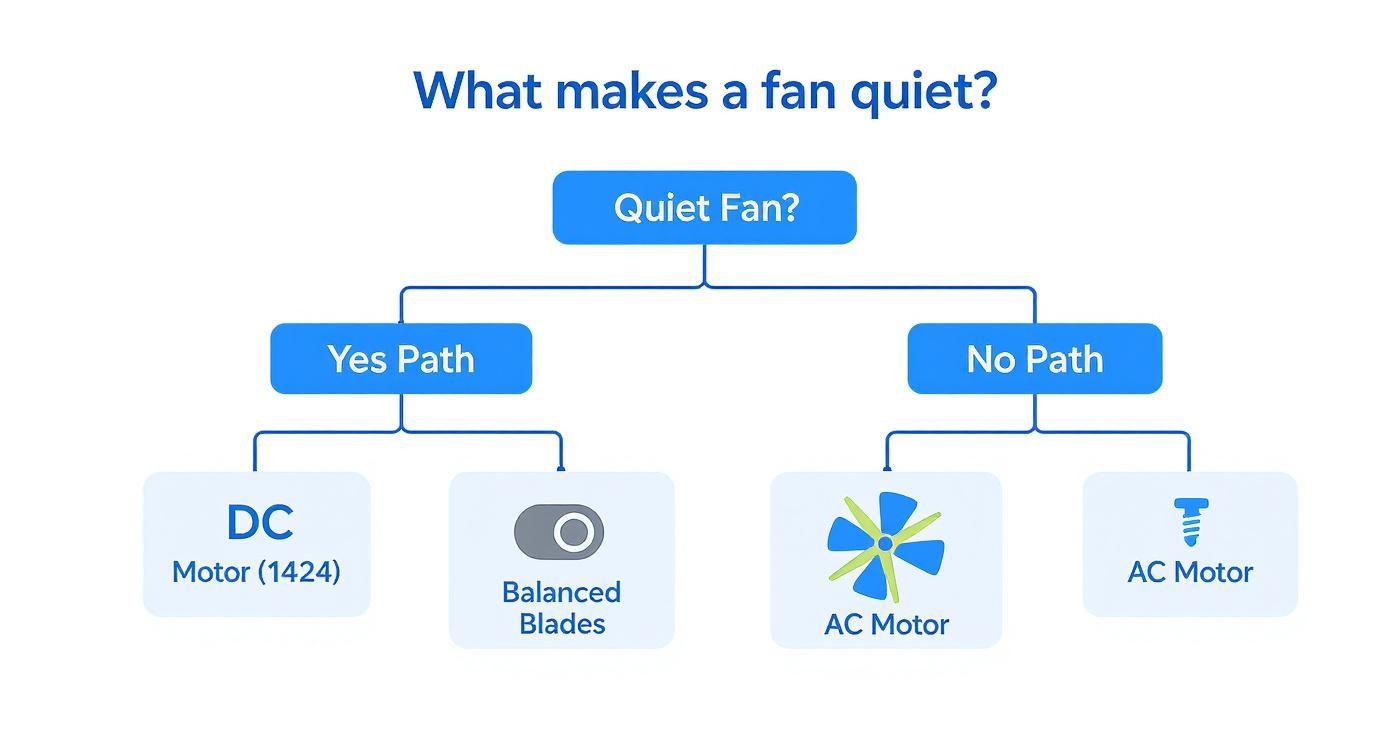
As you can see, the path to silence starts with smart choices, like picking a fan with a DC motor and making sure its blades are perfectly balanced from the get-go.
To make this even easier, here’s a quick-glance table to help you match your bedroom's size to the right blade span for quiet, efficient airflow.
Matching Fan Size to Your Bedroom for Quiet Operation
| Room Size (Square Feet) | Recommended Blade Span (Inches) | Why It Matters for Quiet Operation |
|---|---|---|
| Up to 75 sq. ft. | 29-36" | A small fan in a small room won't have to work hard, preventing motor strain and air noise. |
| 76-144 sq. ft. | 36-44" | This is the sweet spot for most standard bedrooms, providing ample airflow on lower, quieter settings. |
| 145-225 sq. ft. | 44-54" | A larger blade span moves more air per rotation, so you can keep the speed (and noise) down in an average-to-large master bedroom. |
| 226+ sq. ft. | 54" or larger | For big, open master suites, a large fan is essential. It can run slowly and still create a gentle, room-filling, silent breeze. |
Choosing the right size means your fan can do its job without breaking a sweat—or making a sound.
Accounting for Ceiling Height
Ceiling height is just as crucial as the room's square footage. It dictates how you'll mount the fan to prevent wobble, which is the number one cause of annoying clicks, rattles, and humming sounds.
- Standard Ceilings (8-9 feet): You're in luck. Most fans come with a short downrod that’s perfect for this height, giving you the best clearance for airflow.
- Low Ceilings (below 8 feet): Look for a flush mount or "hugger" fan. These models attach right up against the ceiling, so you get the cooling you need without sacrificing precious headroom.
- High Ceilings (10+ feet): You’ll need a longer downrod to bring the fan down to that ideal 8-9 foot height from the floor. This makes sure the breeze circulates where you can actually feel it, instead of just stirring the air way up high.
By thinking through your room's size and height from the start, you're setting yourself up to pick a fan that's perfectly matched to your space—one that will run silently and keep you comfortable for years to come.
Premium Quiet Fans Worth Investing In
When you’re serious about uninterrupted sleep, upgrading to a premium fan isn’t just another purchase—it's an investment in your well-being. The models in this category, usually starting around $300, are where incredible engineering and beautiful design come together to create pure, silent comfort. These aren't just appliances; they're statement pieces that genuinely improve your space.
We're going to move beyond just a list and give you a real look at what makes these fans worth the money. We’ll explore models that have mastered the combination of whisper-quiet DC motors, aerodynamically sculpted blades, and rock-solid construction to stamp out even the tiniest hint of a hum or vibration. This is where you find a quiet ceiling fan for your bedroom that you’ll literally forget is even running.
The Modern Minimalist Statement
For anyone who loves clean lines and an uncluttered look, a sleek, modern fan is the way to go. These designs often have fewer blades and simple motor housings that blend right into a contemporary bedroom.
A perfect example is the Minka Aire Roto 52" Ceiling Fan. Its simple, three-blade design is the very definition of "less is more." It’s engineered to practically disappear into a white ceiling, giving you silent airflow without demanding any attention. Models like this prove you don't need fancy details to make a big impact.
Another fantastic choice in this category is the Torsion Ceiling Fan. Available in 52" or 62" sizes, it offers some serious customization with different base and blade finishes. A bright nickel base with rich mahogany blades, for example, could easily become the centerpiece of a mid-century modern bedroom, all while delivering powerful, silent airflow.
These fans are for people who believe function should be beautiful. They give you the silent operation you need while enhancing, not distracting from, your bedroom's carefully chosen design.
The Rustic and Industrial Charm
If your style is more about warm woods, exposed hardware, and a bit of vintage character, there are premium fans designed just for that. These models often feature blades made from solid, carved wood and motor housings with finishes like dark bronze or brushed satin.
The Peregrine Industrial 60" Ceiling Fan is a great one. Its large size and simple-but-strong design make it a perfect fit for big master bedrooms with a rustic or industrial vibe. The mix of a satin base with rich walnut blades adds warmth and class, moving a huge amount of air without making a peep.
Similarly, the Spitfire Ceiling Fan has a massive range of finishes, including weathered wood and dark walnut blades that can be paired with galvanized or dark bronze bases. This level of choice lets you create a fan that feels like it was always part of your rustic decor.
The Smart and Glamorous Showstopper
For the bedroom that needs a touch of elegance or the latest in smart home tech, some fans are designed to be true showstoppers. These models blend high-end materials, cool technology, and glamorous finishes.
The Collins Smart Ceiling Fan is a stunner, with its washed white oak blades and full integration with smart home systems like Amazon Alexa and Google Home. Just imagine telling your fan to change speed without ever leaving your bed. It's the ultimate in modern convenience and style.
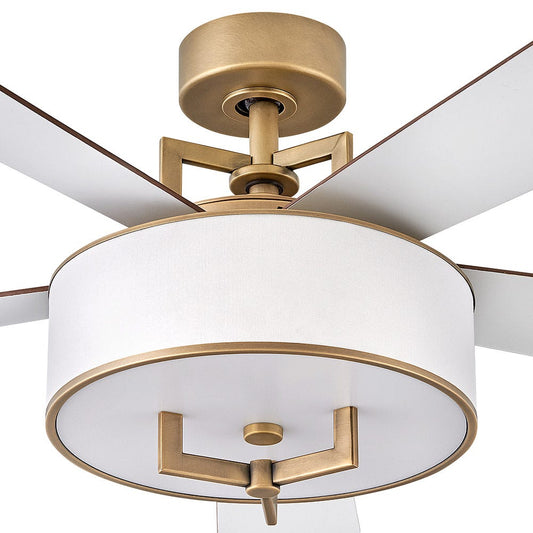
On the glamorous side of things, the Sonet Satin Brass Ceiling Fan is basically a work of art. With its satin brass base and unique acrylic blades, it adds a touch of Hollywood regency to any bedroom. This is the kind of fan that proves a quiet ceiling fan for the bedroom can be both a high-performance machine and a piece of jewelry for your ceiling.
Smart Features That Enhance Your Comfort
Let's be honest, today's best quiet ceiling fans are miles ahead of the wobbly, pull-chain models of the past. We're talking about sophisticated pieces of tech designed for pure comfort and convenience. These fans are less like simple air movers and more like essential parts of a modern, connected home.
The biggest leap forward? Smart controls. Forget fumbling for a chain in the dark. Top-tier fans now come with sleek remote controls, wall panels, or even dedicated apps for your phone. This means you can change the speed, dim the lights, and even reverse the fan's direction without ever leaving your bed. It’s a small luxury that you’ll quickly wonder how you ever lived without.
Go Beyond Basic Cooling
While fingertip control is great, the real magic is in the smart engineering that delivers practical, year-round benefits. The single most important innovation is the ultra-efficient DC motor. These powerhouses use up to 70% less electricity than old-school AC motors, which translates directly into lower energy bills, month after month.
Another game-changing feature is the reversible motor. This simple but brilliant function makes your ceiling fan a year-round MVP for your bedroom.
- Summer Mode: Set the blades to spin counter-clockwise. This creates a direct downdraft, that classic, cooling breeze that makes a room feel degrees cooler than it actually is.
- Winter Mode: Flip the switch to reverse (clockwise). This gently pulls cool air up, pushing the warm air that naturally rises and gets trapped near the ceiling back down into the living space. It’s a simple way to help your heating system work a little less hard.
The Growing Demand for Smart Silence
This perfect pairing of silent operation and smart technology is exactly what people are looking for today. In 2023, sales of smart ceiling fans with noise levels below 30 decibels jumped by an impressive 20% in major markets. And it's no surprise why: over 60% of buyers said that quiet operation was one of the main reasons for their purchase. A peaceful bedroom is clearly a top priority.
As online shopping makes it easier than ever to find the perfect fan, you can learn more about these smart ceiling fan trends and see just how much the market is shifting toward these smarter models.
When you choose a fan with these intelligent features, you're not just buying a way to cool down. You're investing in a smarter, more comfortable, and more economical way to manage your bedroom’s climate all year long.
Keeping Your Fan Silent for Years to Come
You’ve invested in a whisper-quiet fan for your bedroom, and those peaceful nights are a dream come true. To make sure it stays that way, a little bit of upkeep goes a long way. Let's be honest, even the best fans can start making tiny noises over time if they're neglected.
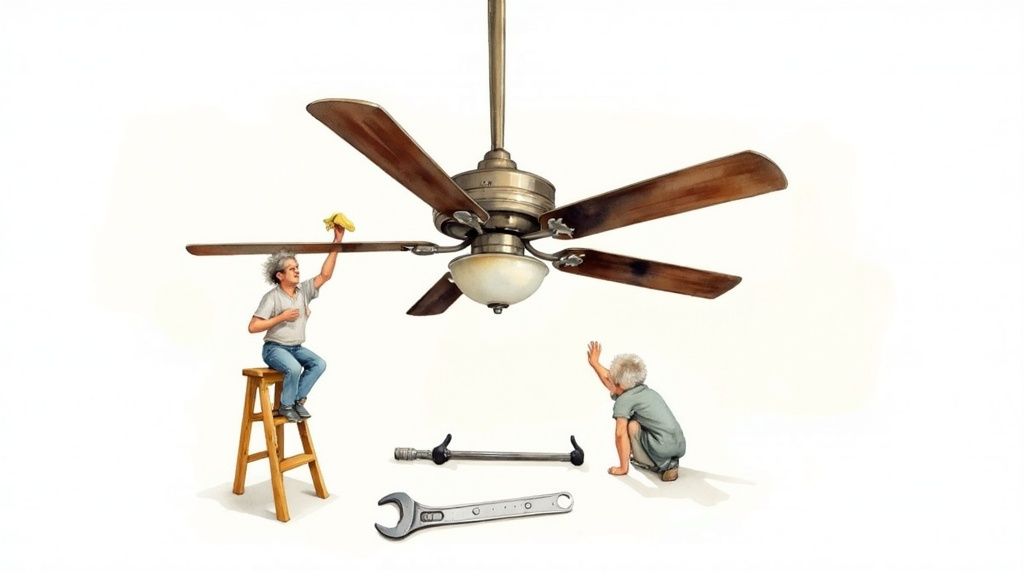
The number one culprit for a newly noisy fan? Dust. As it builds up on the blades, it throws them slightly off balance, which can lead to that annoying wobble and a soft rhythmic hum. A quick, regular cleaning is your best line of defense.
Your Simple Maintenance Checklist
The good news is that keeping your fan in top shape is surprisingly easy. You don't need any special skills—just a few minutes of attention every few months to preserve its silent, steady performance for years.
Here’s a straightforward routine to follow:
- Clean the Blades Regularly: About once a season, give each blade a gentle wipe-down with a damp cloth or a dedicated duster. This stops dust from building up and causing an imbalance. For a more detailed walkthrough, check out our simple guide on how to clean ceiling fan blades.
- Check and Tighten Screws: The vibrations from everyday use can sometimes loosen connections over time. Give the screws on the mounting bracket, downrod, and where the blades meet the motor a quick check. If anything feels loose, just give it a gentle tighten.
- Balance When Necessary: If you’ve cleaned the blades but still notice a slight wobble, it's time to break out the balancing kit. These are simple to use and usually come included with high-quality fans, letting you correct minor imbalances in a snap.
A well-maintained fan is a silent fan. Think of this simple routine as a quick tune-up for your peaceful sleep environment, ensuring it stays that way.
By making these small steps part of your regular home maintenance, you're making sure your investment continues to pay off. Your quiet bedroom ceiling fan will keep delivering that gentle, silent breeze you bought it for, preserving your sanctuary of rest.
Common Questions About Quiet Ceiling Fans
Still have a few things you're wondering about? That's completely normal. Picking the right quiet fan for your bedroom has a lot of moving parts, so we’ve rounded up the questions we hear most often to give you clear, straight answers.
Are DC Motor Fans Really Quieter Than AC Motor Fans?
Yes, and it's a difference you can actually hear (or, rather, not hear). DC motors are a game-changer. They use magnets and a more controlled electrical current, which gets rid of that classic electrical "hum" you often hear from older AC motors.
The result is a fan that's practically silent, especially on the lower speeds you'll be using most of the time while you're trying to sleep.
What Is the Best Blade Count for Quietness?
This one surprises people. While a lot of whisper-quiet fans have between three and five blades, the number of blades is less important than their design. The real secret is in the blade's material, shape, and pitch.
Top-tier fans feature aerodynamically engineered blades that are designed to slice through the air with almost zero resistance. That's what stops that disruptive "whooshing" sound.
The quietest performance comes from a holistic design where the motor, blades, and mounting work in perfect harmony. It’s the total package, not just one feature, that creates true silence.
Does a High CFM Rating Matter for a Bedroom?
CFM (Cubic Feet per Minute) is all about airflow. While a massive CFM rating is fantastic for a big, open living room, it's not the main thing to look for in a bedroom.
Instead, you want a fan with a respectable CFM that can run quietly on its lower settings. The goal is a gentle, silent breeze that keeps you comfortable, not a wind tunnel that rustles the papers on your nightstand.
At Fan Connection, we're experts in fans that have mastered the art of silence. Feel free to explore our curated collections to find a premium, whisper-quiet model that will turn your bedroom into the peaceful retreat you deserve.
Discover your perfect fan at https://www.fanandlights.com.


