











Top-rated ceiling fan installation services close to me: Trusted Local Pros
You’ve picked out the perfect ceiling fan—now for the fun part. Well, almost. Getting it installed properly is just as important as choosing the right one, because a professional installation is what guarantees it’ll run safely, quietly, and just how it’s supposed to for years. No wobbles, no weird humming noises, just a perfect breeze.
This guide is all about cutting through the noise and helping you find a reliable pro. We'll focus on what actually matters when you're searching for top-rated ceiling fan installation services close to me. Let’s look at why pairing a great fan with a skilled installer is one of the smartest (and coolest) moves you can make for your home.
Why a Pro Installation Is Your Best Home Upgrade
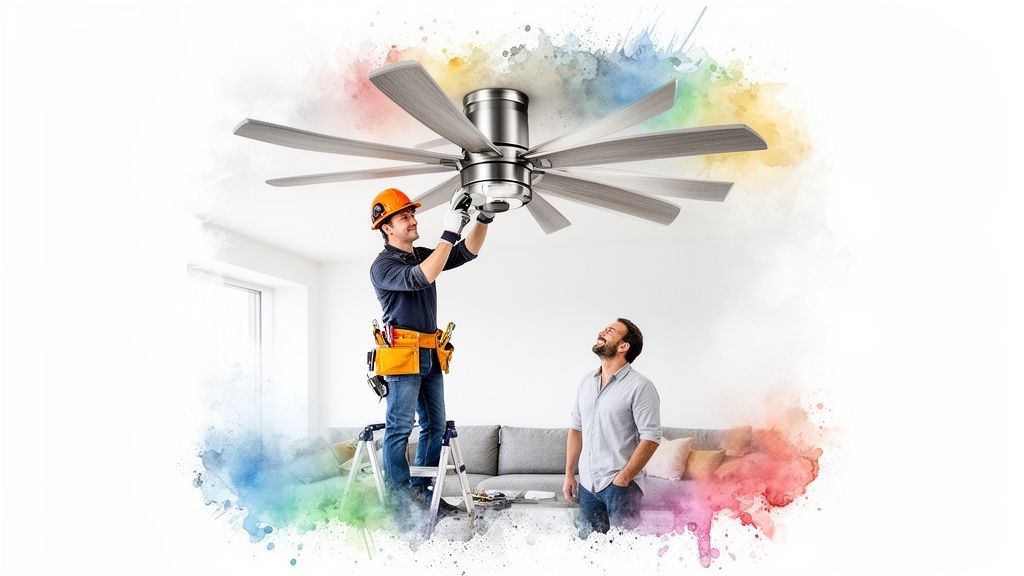
Let's be honest—the pull of a weekend DIY project is strong. But installing a ceiling fan isn't just about screwing a few things into the ceiling. It’s one of those jobs where a tiny mistake can turn into a huge headache. We're talking about a fan that wobbles like it's trying to dance, a motor that won't stop humming, or even worse, a serious electrical hazard.
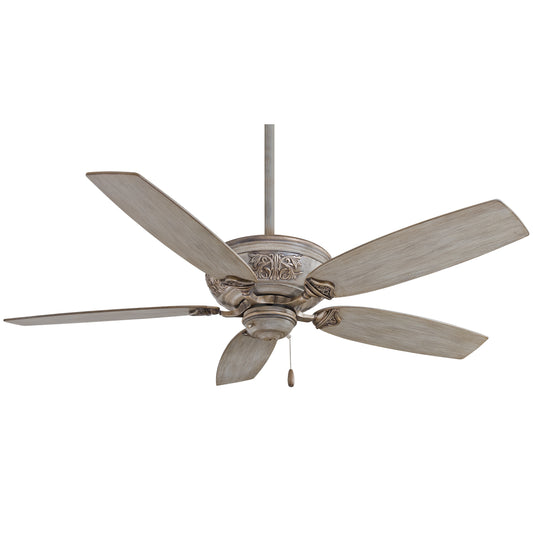
This is especially true when you've invested in a high-quality, stylish fan. After all, if you've picked out a beautiful $500+ Chateaux from Fan Connection, the last thing you want is a shoddy installation to ruin its vibe. A professional electrician or a certified installer has seen it all and knows how to get the job done right the first time. They’ve got the tools, the know-how, and the patience to make it perfect.
The Value of Real Expertise
Hiring a pro isn't just about saving yourself some time—it's about locking in safety and performance. Here's what they handle that you might not think about:
- Proper Mounting: Is the electrical box in your ceiling actually rated to hold a fan? A pro knows how to check and will make sure it can support the weight and constant motion, preventing a disaster down the road.
- Correct Wiring: Modern fans often come with lights, remote controls, and smart features that make wiring tricky. An expert ensures everything is connected correctly to avoid electrical shorts and to make sure every feature works exactly as it should.
- Perfect Balancing: Nobody wants to live with a wobbly, noisy fan. Pros have the right tools and a knack for balancing the blades perfectly, so all you hear is a gentle whisper of moving air.
The demand for ceiling fans is growing, with the global market expected to more than double to USD 31.6 billion by 2035. Much of that growth is thanks to super-efficient DC motors, which can use up to 70% less power than older models. A professional installation is key to getting every bit of that energy savings.
A pro installation takes your new fan from being just another fixture to a valuable, long-lasting upgrade for your home. It’s the final touch that protects your investment and gives you total peace of mind.
If you’re still considering doing it yourself, our guide on https://www.fanandlights.com/blogs/news/how-to-install-a-ceiling-fan-safely-and-easily-step-by-step is a great resource to understand what the job entails. And if you're still in the planning phase, you can explore a wide selection of ceiling light fixtures to find a style that will truly benefit from an expert's touch.
Finding Your Go-To Local Ceiling Fan Installer
Forget casting a wide net with generic web searches. The key to finding a great local installer is to get specific right from the start. Think about what makes your job unique.
Instead of just typing "fan installer," try a more targeted search. If you have a dramatic vaulted ceiling, a search for "licensed electrician for high ceiling fan installation" is going to pull up specialists who have the right ladders and experience. Looking for someone with a solid reputation? Try "local fan installer reviews" to find pros your neighbors already trust. A few extra words in your search bar can make all the difference.
Where to Look: Online Platforms vs. Local Word-of-Mouth
When you start digging, you'll find two main places to hunt for an installer: big online service platforms and local community groups. Each has its pros and cons.
Platforms like Angi and Thumbtack are basically giant directories. They're convenient for getting multiple quotes fast, and they often include background checks and a bunch of user reviews. The downside? It can be tough to tell if you're getting a true specialist or a general handyman who just happens to install fans on the side.
On the other hand, local Facebook groups or neighborhood forums can be goldmines. A glowing recommendation from a neighbor often feels more genuine than an anonymous online rating. You'll just need to do a bit more homework yourself, since these recommendations don't come with pre-vetted credentials.
My Two Cents: I’ve found the best approach is to use both. Start on a platform like Angi to build a shortlist, then cross-reference your top candidates in local community groups to see if their reputation holds up.
Spotting a True Specialist
So, how can you tell a dedicated expert from a generalist? A real pro is proud of their work, and it shows.
Look for websites or profiles with a gallery of clear photos showing their installations—especially the tricky ones. A specialist’s site will mention specific skills, like wiring smart fans, balancing blades for wobble-free operation, or handling premium models like the $300+ Fan Connection fans that require a delicate touch. A general handyman’s page might just list "ceiling fan installation" between "gutter cleaning" and "drywall repair."
This whole vetting process is pretty universal for any home service. In fact, if you’re wondering how to find professional installation services near you for other projects, a lot of the same rules apply.
Comparing Platforms to Find Local Installers
To help you decide where to focus your search, here's a quick rundown of the most popular platforms and what they're best for.
| Platform | Best For | Verification Level | Typical Cost |
|---|---|---|---|
| Angi | Getting multiple quotes quickly from a large pool of contractors. | Basic background checks are available for some pros. | Varies; contractors pay for leads. |
| Thumbtack | Comparing profiles, reviews, and direct quotes for specific jobs. | Offers background checks and license verification in some states. | Varies; contractors pay for leads. |
| Yelp | Finding established local businesses with extensive customer reviews. | Minimal; relies heavily on user-generated reviews. | Free to search; businesses can pay for advertising. |
| Nextdoor/Facebook | Getting trusted word-of-mouth recommendations from neighbors. | None; relies entirely on community trust and your own vetting. | Free to search and ask for recommendations. |
Each platform has its strengths, so using a combination is often the smartest way to find a reliable and skilled installer for your project.
By now, you should have a solid shortlist of 3-5 promising candidates. This list is your foundation for the next step: digging into their credentials to make sure you're hiring the best person for the job. And if you’re still on the hunt for the perfect fan, check out our guide on the best ceiling fan stores near you to see what's available locally.
The Ultimate Vetting Checklist Before You Hire
Alright, you’ve got a shortlist of potential installers. Now comes the most important part: separating the real pros from the rest. This isn’t just about finding someone who can twist a few wires; you’re trusting them with your home's safety. A little bit of vetting now can save you from a world of headaches later.
Your goal is to dig deeper than a quick online search. It’s time to ask the tough questions that prove someone is truly qualified. This is what makes the difference between a smooth, wobble-free installation and a project that goes off the rails.
Confirming Credentials: License and Insurance
Before you even start talking about price, your first two questions should be about their license and insurance. This is non-negotiable, plain and simple. A licensed electrician or contractor has proven they meet state and local standards for safety and electrical knowledge.
Insurance is just as critical. Ask to see proof of both general liability and workers' compensation. Liability insurance is your safety net—it protects your home from any accidental damage during the job. Workers' comp covers the installer if they get hurt on your property. Without it, you could be on the hook financially.
A true professional will have no problem showing you their license and insurance certificates. If they get defensive or tell you it’s not needed for a "small job," that’s a massive red flag. Thank them for their time and move on.
The flowchart below breaks down the two main ways people find installers, whether they start with a big national platform or go straight to local pros.
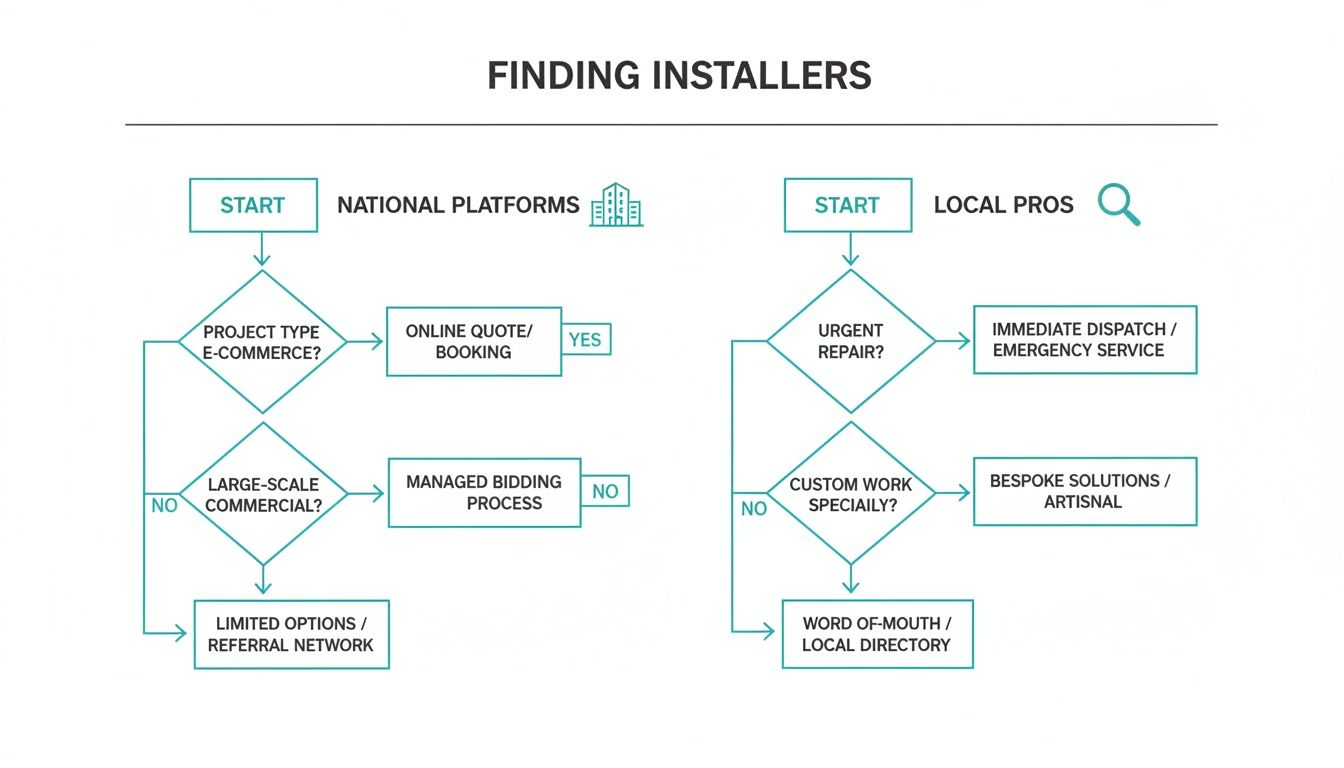
As you can see, no matter which path you take, the vetting process is what guarantees you end up with a qualified expert.
Diving Deep into Their Experience
Let's be honest, not all fan installations are the same. A simple swap-out is one thing, but what if you're installing a beast of a fan like Fan Connection's six-bladed Artemis XL5, which runs over $700? You need someone who’s been there, done that.
Get specific with your questions about their past work:
- Have you installed fans on high or vaulted ceilings before?
- What’s your experience with smart fans that connect to Wi-Fi or have complex remotes?
- What’s your process for making sure the fan is perfectly balanced and doesn't wobble?
Their answers will tell you everything you need to know. An installer who confidently walks you through their blade-balancing process or discusses the specific mounting brackets needed for heavy fans is a much safer bet than someone who gives you vague, one-word replies. A solid grasp of the electrical side is just as important. If you want to brush up on the technicals yourself, our guide on how to wire a ceiling fan switch is a great place to start.
Scrutinizing Reviews and Quotes
Customer reviews give you a peek behind the curtain at an installer’s real-world performance. Look for patterns in what people say. Are they consistently described as punctual, clean, and a good communicator? These are the hallmarks of a true professional.
Finally, when you get a quote, look for details. A lazy quote with just a single price is a warning sign. A proper estimate should break down the costs for labor, any extra materials (like a new fan-rated electrical box), and any other potential charges. This kind of transparency is how you avoid surprise fees and make sure you’re getting a fair price for a job done right.
Decoding the Cost of a Professional Installation
Figuring out what you'll pay for a professional ceiling fan installation isn't about finding one magic number. The final price can swing pretty wildly depending on just how complex the job is. Knowing what goes into a quote is the key to setting a realistic budget and knowing a fair price when you see one.
The most straightforward job is a basic swap-out—taking down an old fan and putting a new one in its place using the existing wiring. That’s your best-case scenario for cost. But the price tag starts to climb as soon as things get more involved. Remember, a pro isn't just hanging a fixture; they're making sure it’s safe, secure, and running perfectly.
What Drives the Final Price
Two big things really influence your final bill: the electrical setup you already have and the fan you’ve chosen. If there’s no fixture in the spot you want the fan, an electrician has to run new wiring from a wall switch all the way up into the ceiling. That means more time, more materials, and more expertise—all of which add to the cost.
The other major piece of the puzzle is what’s already in your ceiling. A standard electrical box for a light fixture just isn't built to handle the weight and constant movement of a ceiling fan. A pro will need to install a fan-rated brace and box, which is specifically designed to hold up to 70 pounds. This ensures your fan stays put for good.
You might be tempted to skip the fan-rated box to save a few bucks, but don't do it. An improperly secured fan is a serious safety hazard. Any qualified installer will insist on this upgrade, and it's a clear sign you've hired someone who puts safety ahead of cutting corners.
Installing High-End and Heavy Fans
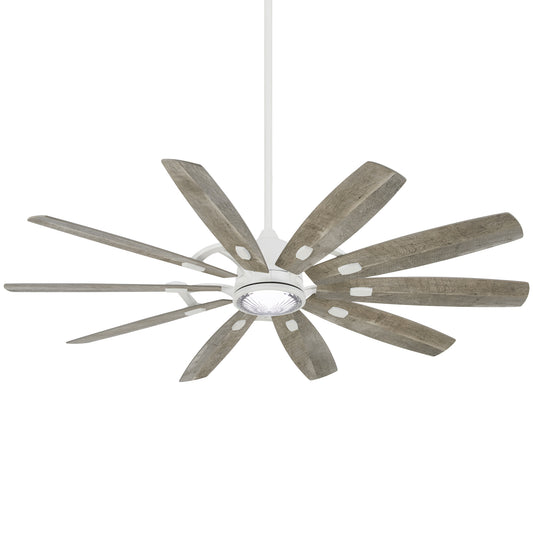
The specific fan you buy also plays a big role in the installation cost. A simple, lightweight model is a quick job to assemble and hang. But if you've picked out a heavy, industrial-style statement piece like the Barn model from Fan Connection, which can run over $300, the installation will demand more muscle and precision.
These bigger, more powerful fans often need extra support and have to be meticulously balanced to keep them from wobbling. All that extra weight and complex assembly translate to more labor time for the installer, and that will definitely show up in the final quote.
A Clear Look at Installation Costs
So, what should you actually expect to pay? Here’s a quick guide to help you make sense of the quotes you’ll get from local pros.
Before we dive in, remember these are estimates. Your location, the specific pro you hire, and any unique challenges in your home can shift these numbers.
Estimated Ceiling Fan Installation Costs
| Installation Scenario | Estimated Cost Range (USD) | Key Factors |
|---|---|---|
| Standard Replacement | $100 - $250 | Replacing an old fan with a similar one. No new wiring or structural work is needed. |
| New Installation (with wiring) | $250 - $600 | Running new electrical wiring to the ceiling and installing a new fan-rated box. |
| High Ceiling or Complex Fan | $300 - $750+ | Installation on a vaulted or very high ceiling, or handling a heavy, intricate fan model. |
Always make sure to ask your installer if their quote includes all the necessary materials, like the brace box or extra wiring. Getting clear on these potential add-ons from the start helps you avoid any nasty surprises when the final bill arrives.
Preparing for a Flawless Installation Day
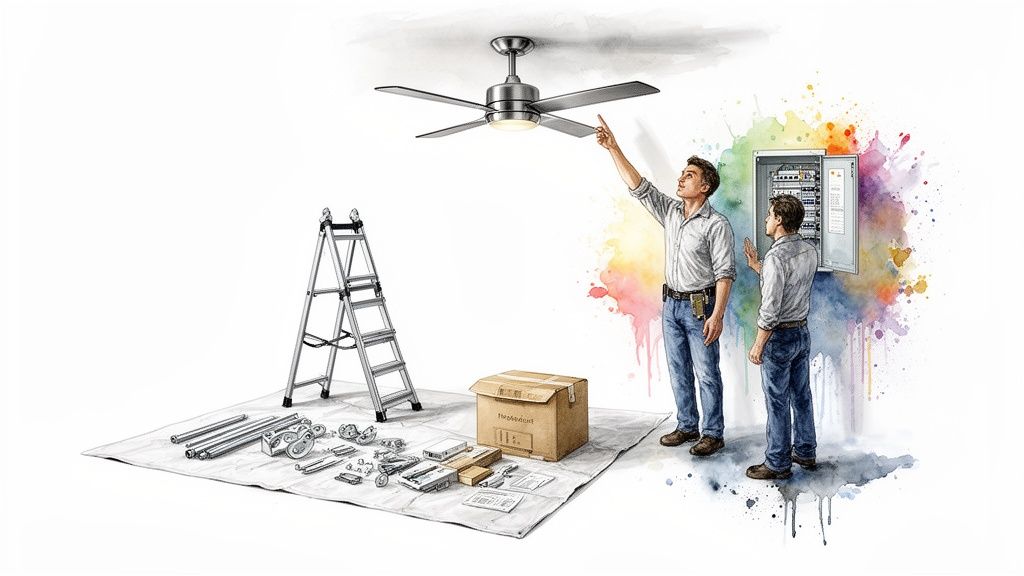
You’ve already done the tough part: vetting the pros and finding one of the top-rated ceiling fan installation services close to me. Now, with the appointment on the calendar, a little prep work can make all the difference. Think of it as setting the stage for a perfect performance.
Getting ready is surprisingly simple. Your main job is just to create a clear, safe workspace for the technician. This little bit of effort helps them work more efficiently and keeps your belongings safe from dust or an accidental bump.
Your Pre-Arrival Checklist
Before your installer shows up, a few quick moves will make their job—and your day—much smoother. Here’s a simple checklist to get everything in order:
- Clear the Area: Move any furniture, rugs, or breakable items from directly under where the fan will go. You’ll want to create at least an 8-10 foot clear radius. This gives the installer plenty of room for their ladder, tools, and assembly.
- Unbox the Fan: It's a great idea to have your new fan unboxed with all the parts laid out. This lets the installer do a quick inventory to make sure every component is there and undamaged before they even get started.
- Secure Pets and Kids: For everyone's safety and to minimize distractions, it's best to keep pets and small children in another part of the house while the work is being done.
This isn't just about being courteous. It helps the pro focus completely on the technical side of the job—especially important when they're installing that high-end, $400+ fan you picked out.
Taking 15 minutes to prep the room isn't just about clearing a space. It's about helping guarantee the quality and safety of the final installation. A focused installer is an effective installer.
What to Expect During the Installation
Once your pro arrives, you should see a methodical and professional process unfold. Any top-tier installer will start by confirming the job details with you and then immediately turn their attention to safety.
First things first, they'll shut off the power at the circuit breaker and use a voltage tester to double-check that the fixture is dead. This is a non-negotiable step for any qualified electrician. From there, they'll securely mount the new brace and fan-rated box, assemble the fan itself, and wire everything meticulously according to code.
The final—and most crucial—step is balancing the fan blades. Even a tiny imbalance can create that annoying wobble we all hate. A true professional will take the time to test the fan at all speeds, making small adjustments with weights until it runs whisper-quiet. Your final sign-off on the completed work is all that’s left before you can enjoy that cool, comfortable breeze.
Of course, even after you’ve done your homework, some questions always seem to come up right before you hire someone. Let's walk through the most common ones I hear from homeowners so you can feel confident making that final call.
One of the biggest uncertainties is whether you really need a dedicated, fan-rated electrical box. The answer is almost always a hard yes. A standard light fixture box just isn't built to handle the weight and constant vibration of a spinning ceiling fan. Any good pro will insist on installing a proper fan-rated box to prevent a dangerous wobble or, in the worst-case scenario, the fan detaching from the ceiling entirely.
Do I Need an Electrician or a Handyman?
This is a really important distinction, and getting it right is crucial for safety. While a skilled handyman can probably handle a straightforward replacement of an old fan with a new one, anything more involved needs a licensed electrician.
This includes situations like:
- New Wiring: If you're installing a fan where there's no existing fixture, an electrician has to run new wiring from the breaker box. This is non-negotiable and definitely not a handyman job.
- Old Homes: I've seen it all with older wiring—it can be brittle, confusing, and not up to modern safety standards. An electrician knows how to work with it safely and bring it up to code.
- Smart Fans: Those high-end fans, like a fancy $450 model that connects to your smart home system, have complex wiring that a generalist might not be familiar with.
Hiring an electrician ensures every connection is solid, meets local codes, and that your brand-new fan works exactly as it should. Think of it as a small extra investment for total peace of mind.
Remember, the goal isn't just to get the fan hanging from the ceiling. It's to get a safe, efficient, and perfectly balanced installation that will last for years. A licensed professional is your best bet for that.
This emphasis on quality installation isn't just a local thing, either. While the Asia-Pacific region dominates with over 52% of the global ceiling fan market, North America is a strong second with a 20% share. Here in the U.S. and Canada, more and more homeowners are investing in high-performance fans to help with rising energy costs, which is why searches like "top-rated ceiling fan installation services close to me" have become so common. A proper installation is key to getting the most airflow (CFM) out of these premium models and making sure they live up to their efficiency promises. You can learn more about these global market trends here.
At the end of the day, deciding between DIY and a pro comes down to safety and quality. For anything beyond a simple swap-out, hiring a certified professional protects your home, your investment, and guarantees your new fan performs beautifully from day one.
Ready to upgrade your home with a fan that combines stunning design and powerful performance? At Fan Connection, we offer a curated collection of premium ceiling fans to fit any style. Explore our collections and find the perfect centerpiece for your room.


