





Top-Rated Ceiling Fans with LED Lighting for Living Rooms Guide 2026
Picture your living room: it’s comfortable, perfectly lit, and has a stunning centerpiece pulling it all together. That’s what the best top-rated ceiling fans with LED lighting for living rooms deliver. When you look at models priced over $300, you’re not just buying an appliance; you're investing in a piece of functional art that combines a powerful, quiet motor with a beautiful, integrated LED light. This is your chance to turn a purely functional item into the star of the show, and we're here to make it fun!
Why a Premium LED Ceiling Fan Transforms Your Living Room
Let's be honest, ceiling fans used to be a purely functional choice—and sometimes not a very pretty one. But times have changed! Today's best designs are genuine showstoppers, acting as your primary light source and your go-to for air circulation. Choosing a high-quality fan with a built-in LED is one of the smartest (and most exciting!) moves you can make for your main living space.
Instead of cluttering your ceiling with a separate fan and light fixture, a premium combination unit gives you a clean, streamlined look. This is where modern fans really prove their worth, solving two big needs with one elegant solution.
A Statement in Style and Performance
Today’s top-rated fans are meant to be seen. Forget those wobbly, noisy fans from decades past. Premium models, like the sculptural Artemis IV or the powerful Aerovon, are built with superior materials and smarter engineering. They move air almost silently while casting beautiful, adjustable light over your room.
This isn't just about feeling a breeze; it's about defining your room's style. Whether your home is minimalist, rustic, or industrial, there’s a fan out there that won’t just fit in—it will elevate the entire space. It’s proof you don't have to sacrifice style for function. You can dive deeper into how modern ceiling fans boost comfort and efficiency in our detailed guide.
The Smart Investment in Comfort and Efficiency
Investing in a premium fan (we’re talking $300 and up) pays you back in real comfort and lower energy bills. The advantages go way beyond just good looks.
- Year-Round Comfort: A fan with a high CFM rating keeps you cool in the summer. In the winter, you can reverse the blade direction to push warm air down from the ceiling, helping you feel cozier without cranking up the thermostat.
- Superior Lighting: An integrated LED isn't just an afterthought. It provides bright, even light that's often dimmable and has adjustable color temperatures, so you can set the perfect mood for movie night or a lively get-together.
- Energy Savings: This is a big one. Modern DC motors and LED lights use up to 70% less energy than old-school AC fans and incandescent bulbs. You'll definitely see the difference on your utility bills.
More and more homeowners are catching on. The global ceiling fan market, which includes top-rated ceiling fans with LED lighting for living rooms, hit USD 11.83 billion in 2025 and is set to keep growing. This trend makes it clear: people want fixtures that do it all—move air, provide great light, and save energy. (You can check out the market data for yourself over at Fortune Business Insights).
To put it all together, let’s look at why a premium LED fan is such a smart choice for your living room.
Quick Look: Why Premium LED Fans Are a Smart Investment
| Benefit | Key Advantage for Your Living Room | Fan Connection Model Example |
|---|---|---|
| All-in-One Design | Creates a clean, uncluttered look by combining air and light in one fixture. | The sleek, minimalist Icer Collection |
| Energy Efficiency | Lowers electricity bills with modern DC motors and integrated LEDs. | The ultra-efficient Aerovon Collection |
| Enhanced Ambiance | Dimmable, color-tunable LEDs let you create the perfect lighting for any mood. | The elegant Artemis IV Collection |
| Year-Round Use | Provides cooling in summer and helps circulate warm air in winter. | The versatile Java Collection |
| Style Centerpiece | Acts as a stunning focal point that elevates your interior design. | The bold, architectural Maverick Collection |
In short, a high-quality fan isn't an expense—it's an upgrade that pays for itself in comfort, style, and savings. It’s one of the few home improvements that you’ll see and feel every single day.
Understanding Fan Performance: CFM and Sizing
When you're shopping for a top-rated ceiling fan, it's easy to get bogged down in specs. But if you want to feel that perfect, cooling breeze on a warm day, there are really only two numbers that count: the fan's size (its blade span) and its airflow, measured in Cubic Feet per Minute (CFM).
Think of CFM as the fan's real-world power. It’s the true measure of how much air it can actually move. A higher CFM means a stronger breeze and better circulation, which is exactly what you want in a busy living room.
Don't get caught in the trap of assuming more blades or a bigger fan automatically equals better airflow. A well-designed fan with a powerful motor and the right blade pitch—that’s the angle of the blades—will always run circles around a clunky, poorly engineered one. This is especially true once you get into premium models over $300, where you’re paying for superior motor technology that delivers on its promises.
This decision tree shows how upgrading to a premium fan and light combination enhances your living room's comfort, style, and efficiency.
 The takeaway here is pretty simple: a single, high-quality fixture can solve for comfort, style, and efficiency, making it one of the smartest upgrades you can make for your main living space.
Sizing Your Fan for Maximum Airflow
Getting the size right is the first and most important step. If you put an undersized fan in a large living room, it’s just going to spin its heart out without making much of a difference. On the flip side, a massive fan can feel overwhelming in a smaller, cozier room.
Pro Tip: For most living rooms, look for a fan that can push between 4,000 and 6,000 CFM. If you’re dealing with a large, open-concept space or a room with high, vaulted ceilings, you’ll want to aim for something over 6,000 CFM to really get the air moving everywhere.
To figure out what you need, just grab a tape measure. It only takes a second.
- Calculate Your Square Footage: Multiply your living room's length by its width (in feet). So, a 15-foot by 20-foot room is 300 square feet.
- Match Fan Size to Your Room: Use that number to find the right blade span.
If you want to go deeper and get the perfect fit for any room in the house, check out our comprehensive ceiling fan size guide for a full breakdown.
The Sweet Spot for Living Rooms
For the average living room, a fan with a blade span between 52 and 60 inches is usually the perfect fit. This size range hits a great balance of powerful airflow and visual scale, so it looks like it belongs there. It’s versatile enough for rooms anywhere from 225 to 400 square feet.
But what if you have a great room, an open floor plan, or soaring ceilings? That’s when you need to go bigger, and it’s where high-performance models really prove their worth.
Examples of High-CFM Premium Fans:
- The 'Andros' Fan: With its huge 82-inch blade span, this fan from our Andros Collection is built to move a ton of air in massive living areas. It's a great example of how a larger size, when paired with a top-notch motor, delivers incredible performance for well over $300.
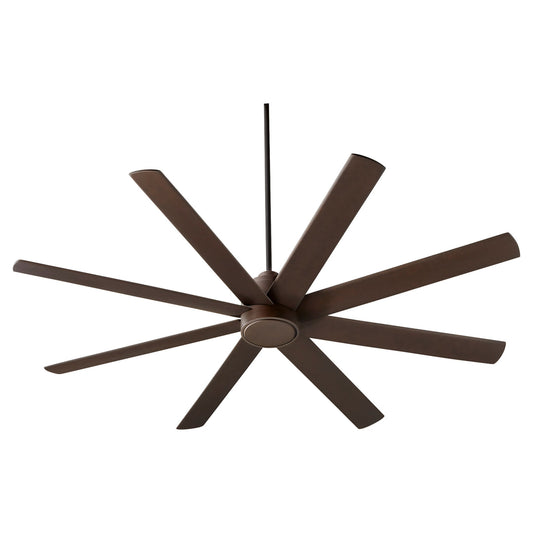
- The 'Aviation' Fan: This 60-inch fan from the Aviation Collection has a cool, industrial look but backs it up with serious power. Its high-CFM output makes it a fantastic choice for larger living rooms that need strong circulation without compromising on style.
These kinds of high-end fans, typically over $300, are engineered specifically for the demands of bigger spaces. They give you both the impressive CFM you need and the quality construction you expect, ensuring your living room feels as good as it looks.
The Brilliance of Integrated LED Lighting
Great lighting can completely transform a living room. It sets the mood for a lively get-together just as easily as it does for a quiet night in. When you pick a top-rated ceiling fan with an integrated LED, you’re not just getting a light fixture; you're investing in a sophisticated lighting system. Let's cut through the technical jargon and talk about what really matters for making your space both functional and inviting.

Lumens: The Volume of Your Light
Think of lumens as the "volume" knob for brightness. A higher lumen count means a brighter light. Simple as that. For a living room, you need enough light to read, entertain, and spot the remote control, but not so much that it feels like you're on a movie set.
A common mistake is buying a fan where the light is just an afterthought, leaving your room feeling gloomy and unwelcoming. For most living rooms, the sweet spot is a fan that delivers between 1,500 and 3,000 lumens. This is bright enough to serve as the main light source, which means you can skip the extra floor or table lamps if you're going for a cleaner, more minimalist look.
Color Temperature: The Mood of Your Light
If lumens are the volume, then color temperature is the mood. Measured in Kelvins (K), this is what makes a light feel warm and cozy or cool and energizing. Getting this right is the secret to creating the perfect atmosphere.
The right light makes all the difference. It can make a room feel larger, more welcoming, and more stylish. It’s a design element that affects how you experience the space every single day.
For a living room, these are the most popular and versatile choices:
- Warm White (2700K - 3000K): This is that classic, cozy glow we associate with old-school incandescent bulbs. It's perfect for creating a relaxing, intimate vibe for movie nights or quiet conversations.
- Neutral White (3500K - 4000K): A crisp, clean light that’s brighter and feels more modern. It's fantastic for general use, like when you're entertaining guests or need to see details clearly.
- Cool White (5000K+): This light is designed to mimic natural daylight. While it can be a bit intense as the main light in a living room, it's great for home offices or modern designs that call for a stark, bright feel.
The good news? With many of today's best fans, you don't have to pick just one. Learning how to put your living room in the best light is a key part of good design, and modern fans make it easy.
Dimmable and Color-Tunable Technology
This is where modern top-rated ceiling fans with LED lighting for living rooms really show off. The best models give you total control with dimmable LEDs and color-tunable technology. You can shift the entire atmosphere with the touch of a button. Go from a bright, 4000K neutral white for a game night to a dim, 3000K warm glow for winding down afterward.
This kind of flexibility is a huge deal. It’s why energy-saving ceiling fans with LED lighting are a major force in the market, which is expected to grow from USD 4.22 billion in 2026 to USD 5.77 billion by 2034. These fans often pair those tunable LEDs with super-efficient DC motors, delivering 50-75% energy savings while providing the 2,000-3,000 lumens perfect for multi-use living rooms. And if you're thinking about upgrading an existing fan, you can check out our guide on finding the right light kit for your ceiling fan.
Matching Your Fan to Your Interior Design Style
A ceiling fan is so much more than an appliance—it's the finishing touch, a piece of functional art that can tie your entire living room together. When you're looking for a top-rated fan, performance is key, of course. But finding a model that also clicks with your home's aesthetic is what separates a good choice from a great one.
Think of it as the final piece of the puzzle. Let’s break down how to match a fan to some of the most popular design styles out there.

Sleek and Modern Minimalism
If your style is built on clean lines, uncluttered surfaces, and a "less is more" mindset, your fan needs to reflect that same elegant simplicity. A busy, ornate fan would just feel out of place.
For modern spaces, you'll want to look for fans with a minimal blade count—usually three—and simple, geometric shapes. Finishes like matte black, brushed nickel, or a crisp white blend right in. A model from the Apex Collection, with fans priced over $300, is a perfect fit. Its streamlined profile and integrated LED light offer function without fuss, enhancing the room's sophisticated, airy vibe.
Rustic Warmth and Farmhouse Charm
For living rooms that are all about warm woods, shiplap walls, and cozy textures, the fan should feel just as inviting and authentic. Farmhouse and rustic styles are grounded in materials that feel natural and have a bit of history to them.
Look for fans with beautiful wood-finished blades, from a light weathered oak to a rich, deep walnut. Motor housings in oil-rubbed bronze or galvanized steel add a touch of industrial character that works beautifully here. The Barn Collection, with its reclaimed wood look and premium pricing, feels like it was made for these spaces, acting as a charming centerpiece.
Breezy and Relaxed Tropical Style
Want to bring that relaxed, resort-like atmosphere into your living room? A tropical-style fan is the way to do it. These designs are all about creating a vacation mood right at home, and their most distinctive feature is often the blades.
- Leaf-Shaped Blades: Many tropical models have blades shaped like broad palm or banana leaves, which instantly sets a laid-back, exotic tone.
- Natural Materials: To really sell the organic feel, look for fans that use rattan, bamboo, or natural wood finishes.
- Generous Size: These fans often have larger blade spans to create that signature gentle, room-enveloping breeze.
Models like those in the Cabana Collection can truly transform your space, making every day feel a little more like an escape. For more inspiration, check out the latest ceiling fan design trends.
Decorative ceiling fans with LED lighting for living rooms are surging in popularity, with standard and designer segments leading as 45.2% of the global market. Top-rated models from Fan Connection's collections—like the stylish Bowie, Chateaux, or Aviation with 52-60 inch blades—combine 5,000 CFM airflow and 1,800-lumen LEDs, capturing 25% of North American sales growth since 2022 amid interior design trends. You can discover more insights about the growing fan market on gminsights.com.
The Impact of Blade Count on Style
Beyond the finish and shape, the number of blades a fan has says a lot about its style. It’s a small detail that can push the overall look from sharply modern to classically traditional.
- 3-Blade Fans: This is the signature of modern design. The minimalist look feels light, architectural, and clean. It's all about sharp lines and an uncluttered silhouette that’s perfect for contemporary living rooms.
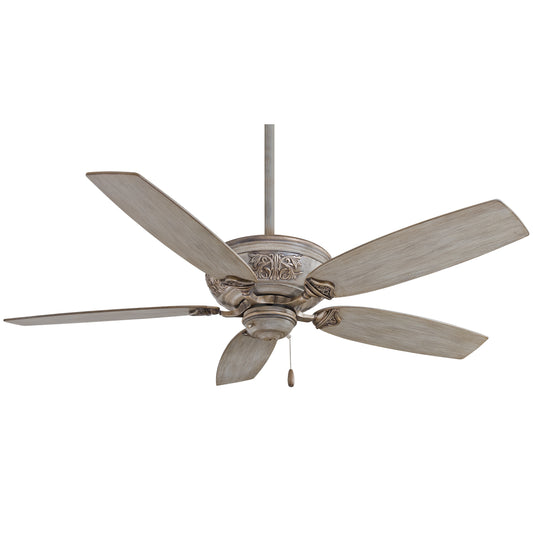
- 5-Blade Fans: This is the traditional standard, giving a fan a classic, balanced appearance. A 5-blade fan feels a bit more substantial and is versatile enough to fit into everything from transitional to traditional decor, offering a timeless appeal.
Neither one is better than the other—they just speak different design languages. Your choice really just comes down to the aesthetic you’re going for.
To make it even easier, here's a quick guide to matching your living room's aesthetic with the perfect fan design.
Find Your Living Room Fan Style
| Style | Key Characteristics | Ideal Blade Count | Fan Connection Collection Example |
|---|---|---|---|
| Modern | Clean lines, simple form, neutral finishes like matte black or white. | 3 | Apex Collection |
| Rustic | Wood-look blades, oil-rubbed bronze or galvanized finishes. | 5 | Barn Collection |
| Tropical | Leaf-shaped blades, natural materials like bamboo or rattan. | 5+ | Cabana Collection |
| Industrial | Metal cages, exposed hardware, larger scale. | 3-5 | Aviation Collection |
At the end of the day, the best top-rated ceiling fans with LED lighting for living rooms are the ones that feel like a natural part of your home’s personality. When you match the fan’s design to your decor, it becomes more than just a way to stay comfortable—it becomes a defining feature in a space you love.
The Engine Room: Smart Features and Efficient Motors
Let's get into the guts of a great ceiling fan. The technology humming away inside your fan is just as important as the style you see on the outside. When you start looking at top-rated ceiling fans with LED lighting for living rooms, especially those priced over $300, you’re not just paying for looks—you're investing in advanced motors and smart controls that make life easier and save you money in the long run.
The real game-changer in any premium fan is its motor. Getting a handle on the difference between motor types is the key to picking a fan that will run quietly and efficiently for years to come.
The Power of DC Motors Over AC
Most standard, budget-friendly ceiling fans you’ll find run on an Alternating Current (AC) motor. They’ve been around forever and they get the job done, but it’s older technology. On the other hand, premium fans almost always feature a Direct Current (DC) motor, and for very good reason.
Think of it this way: an AC motor is like a classic incandescent bulb, and a DC motor is like a modern LED. Both give you light, but one is worlds ahead in efficiency and performance.
DC motors are the undisputed champs. They use a smart combination of internal magnets and electronics to spin the blades, making them incredibly energy-efficient. A fan with a DC motor can use up to 70% less energy than its AC cousin, all while pushing out more powerful airflow.
Key Takeaway: Choosing a fan with a DC motor is one of the smartest upgrades you can make. They are whisper-quiet, more powerful, give you more speed settings, and will seriously lower your electricity bill over the fan's lifetime.
The difference a DC motor makes is something you'll notice right away:
- Whisper-Quiet Operation: DC motors are practically silent. This makes them perfect for living rooms where you don't want a noisy hum interrupting a movie or a good conversation.
- More Speed Options: While AC motors usually just give you three speeds (low, medium, high), DC motors often come with six or more, letting you dial in the exact amount of breeze you want.
- Reversible from the Remote: No more climbing a ladder to flip a switch! Most DC fans let you reverse the blade direction right from the remote, making it a breeze to switch from summer's downdraft to winter's updraft.
If you want to dive deeper into the tech, check out our guide that details the many benefits of a DC ceiling fan.
What the ENERGY STAR Label Really Means
When you see that blue ENERGY STAR label on a fan, it’s not just a marketing sticker—it's a promise of serious efficiency. To earn that rating, fans have to pass strict performance tests set by the U.S. Environmental Protection Agency. It means they're built from the ground up to move more air while sipping electricity.
On average, an ENERGY STAR-rated fan is 60% more efficient than a standard model. That might not sound like much at first, but over a decade, it can add up to hundreds of dollars in savings on your utility bills. Pair that with an integrated LED light, and you're running two of the most efficient technologies out there in a single fixture.
Smart Home Integration for Total Control
The best modern ceiling fans don't just hang there and look pretty; they become part of your connected home. Smart features have turned the humble fan into a high-tech centerpiece, offering a level of convenience we used to only see in sci-fi movies.
How You Can Control a Smart Fan:
- Handheld Remotes: Still the go-to for most, offering easy control over speed and lighting from anywhere in the room.
- Wall-Mounted Panels: A great option if you’re prone to losing remotes. It gives you a fixed control point right on the wall.
- Smartphone Apps: Control your fan from anywhere, whether you're on the couch or on vacation. You can set schedules, adjust speeds, and even sync up multiple fans.
- Voice Commands: The ultimate in convenience. Many top-tier models work with smart assistants like Amazon Alexa or Google Assistant. Just say, "Alexa, set the living room fan to 50%," and it happens.
This is the kind of practical tech that makes a modern fan a cornerstone of a comfortable, connected home. Our smart fan collections at Fan Connection are designed for exactly this, giving you the power to create the perfect atmosphere without ever leaving your seat.
Installation and Care for Lasting Performance
You’ve picked out the perfect fan—that’s the fun part. Now comes the step that ensures it runs just as beautifully as it looks for years to come. Getting the installation and care right is what transforms a top-rated ceiling fan with LED lighting for living rooms from a simple fixture into a lasting, high-performance centerpiece.
While we always recommend bringing in a professional electrician—it protects your warranty and guarantees safety—it pays to know what a good installation looks like. A few key details separate a flawless setup from a wobbly, noisy disaster.
Setting the Stage for a Secure Installation
Before you even open the box, the most important first step is to look up. A ceiling fan is heavy and it moves, so the electrical box in your ceiling needs to be specifically rated to handle both the weight and the motion. A standard box meant for a simple light just won't cut it.
Next, you’ll need to factor in your ceiling height. This will tell you what downrod length you need to get the blades hanging at the sweet spot for airflow and safety.
- Standard Ceilings (8-9 feet): Most fans come with a short downrod that works perfectly for these heights. This is what's known as a standard mount.
- Low Ceilings (Under 8 feet): You’ll need a fan designed for a "hugger" or flush-mount installation. This lets the fan body sit directly against the ceiling, maximizing headroom.
- High or Vaulted Ceilings (10+ feet): An extended downrod is a must. The goal is to get the blades 8 to 9 feet off the floor, which is the ideal height for circulating air effectively throughout the entire room.
Imagine a premium fan like one from the Maverick Collection (which can cost over $700) on a tall, vaulted ceiling. With the right downrod, it doesn't just move air; it becomes a stunning architectural element.
Maintaining Your Fan for Longevity
Once your fan is spinning beautifully, a little bit of upkeep goes a long way. Think of it as a quick tune-up that prevents wobbling, keeps the motor whisper-quiet, and preserves the finish on the blades and housing.
A few months after it’s installed, and then about once a year after that, it’s a good idea to run through these simple checks:
- Check All Connections: Over time, vibrations can cause screws to loosen. Give all the visible screws on the blades, fan body, and mounting bracket a gentle check to make sure they’re still snug.
- Look for Wobble: If you spot any wobbling, don't worry—it's usually just an unbalanced blade. Most fans include a simple balancing kit to help you fix it in minutes.
- Clean with Care: A layer of dust can throw the blades off balance, leading to noise and strain on the motor. Keeping them clean is essential.
For advice on the right way to do this without damaging the finish, you can learn how to clean ceiling fans properly. After all, the technique for a solid wood blade is very different from what you'd use on a painted composite one.
A well-maintained fan isn't just about looking good; it's about performance. Even a small amount of dust can affect blade balance, creating noise and making the motor work harder. A quick dusting every month or two is all it takes to keep things perfect.
Follow these simple tips, and your fan won't just be a purchase; it will be a quiet, efficient, and beautiful part of your living room for many years.
Frequently Asked Questions About Living Room Fans
Even with all the details, a few questions always pop up right before you make a final decision. To help clear up any last-minute doubts, we’ve tackled the most common ones we hear about choosing the right top-rated ceiling fan with LED lighting for a living room.
How Much Should I Spend On a Great Living Room Ceiling Fan?
You should plan to invest between $300 and $900 for a fan that truly delivers. This is the sweet spot for models with powerful and quiet DC motors, bright integrated LEDs, and the kind of designs that make a statement.
Fans in this range are built to last and perform. They give you that high-CFM airflow, serious energy savings, and smart features that separate a "good enough" fan from a great one. While you can find cheaper options, think of this as an investment in something you'll use and appreciate every single day for years.
Can a Single Fan Light Up My Entire Living Room?
In many cases, yes. A lot of modern LED ceiling fans are designed to be a room's main light source, pumping out 1,600 to over 3,000 lumens. That’s more than enough light for most living rooms, easily replacing several old-school bulbs.
Of course, if your room is especially large or has an awkward layout, you might still want a floor lamp in a reading corner. Just be sure to check the "Lumen Output" on the spec sheet to make sure you're getting the brightness you need.
Key Insight: A fan that doubles as your primary light source is a huge win for a clean, uncluttered look. It streamlines your ceiling by combining two essential jobs into one stylish fixture.
What Is More Important Airflow CFM or Style?
That's the classic trade-off, isn't it? But here’s the good news: you really don't have to choose. Airflow (CFM) is a fan's whole reason for being, so getting the performance right for your room size is non-negotiable. A fan that just looks pretty without moving air is just an expensive decoration.
At the same time, your living room fan is a major design feature. You have to love how it looks. The goal is to find that perfect spot where performance and style meet. This is why browsing curated collections is so helpful—you can zero in on high-performance models that already fit your aesthetic.
Are Ceiling Fans with Lights Still in Style?
Absolutely. In fact, they’re more stylish than ever. Forget those clunky, wobbly fans from decades past. Today's top-rated ceiling fans with LED lighting for living rooms are sleek, architectural, and often become the centerpiece of a room's design.
Designers and homeowners are all-in on them because they pull double duty, save energy, and look fantastic doing it. A well-chosen fan is a timeless, fashionable fixture for any modern home.
Ready to find the perfect blend of performance, light, and style? Dive into the curated collections at Fan Connection and see which fan is ready to transform your living room.


