











A Homeowner’s Guide to the Light Kit for Ceiling Fan
Picking out the right light kit for your ceiling fan really boils down to three simple steps: making sure it fits, deciding if you want a built-in or add-on style, and choosing a look that complements your room. It sounds complicated, but we'll walk you through it. This isn't just a technical task; it's a chance to completely upgrade your space with a touch of fun and flair.
Brighten Your Space With the Perfect Fan Light
Let's be real: a ceiling fan without a light can leave a room feeling dark and unfinished. You end up with lamps taking up precious floor and table space, creating clutter. Adding a light kit is the perfect fix, combining air movement and lighting into one clean, central fixture. It’s more than just a practical upgrade—it's an opportunity to redefine the whole vibe of your room.
Think of it this way: the fan motor is the engine, but the light kit gives the fan its personality. It sets the mood, delivers the brightness you need, and pulls the room's design together. A great light kit can turn a dim, uninviting living room into a warm, welcoming gathering spot or transform a home office from just functional to bright and inspiring.
The Modern Shift to Efficiency
Lighting technology has come a long way, and it’s completely changed the game for ceiling fans. Gone are the days of clunky, energy-guzzling incandescent bulbs. Today, the market is all about sleek, integrated LED options that are miles ahead in performance and design. This isn't just a passing trend—it's a direct response to homeowners wanting better efficiency without sacrificing style.
The move to LEDs has totally reshaped how ceiling fan light kits are designed. If you swap out an old 60W incandescent fan light for a modern 12–30W integrated LED kit, you can see energy savings of 75–90% from the lighting alone.
This shift toward LEDs brings some serious perks for homeowners:
- Real Energy Savings: Using less wattage means a lower electricity bill. It’s a benefit you’ll notice month after month.
- Seriously Long Lifespan: Many LED modules are rated for up to 25,000 hours. That means you might go years—even a decade or more—without ever thinking about changing a bulb.
- Better Light, Your Way: Modern kits give you a huge range of color temperatures. You can pick a cozy, warm glow for the living room or a crisp, cool white light for the kitchen or office.
And you don't have to give up style to get this efficiency. In fact, because LEDs are so compact, designers have been able to create more creative and low-profile fixtures than ever before. This industry-wide evolution is a hot topic, and you can explore market research on ceiling fan trends to see just how much things have changed.
Light Kit Selection at a Glance
Choosing a light kit can feel overwhelming with all the options out there. This table breaks down the key things you need to check to make sure you get the perfect fit and function for your fan and your home.
| Consideration | What to Check | Why It Matters for Your Home |
|---|---|---|
| Compatibility | Your fan's model number and brand specifications. Does it have a switch housing cap and wiring harness? | Not all kits fit all fans. Checking this first saves you a massive headache and a return trip. It ensures a safe, secure installation. |
| Kit Type | Integrated (built-in) vs. Add-On (sold separately). | An integrated kit offers a seamless, modern look. An add-on kit gives you more flexibility to upgrade or customize an existing fan. |
| Bulb Technology | LED, Halogen, or CFL. | LEDs are the winner for energy savings and longevity. Halogens offer bright, crisp light but run hot. CFLs are efficient but may have a warm-up time. |
| Style & Finish | The shape of the glass (bowl, globe, schoolhouse) and the finish of the metal (brushed nickel, matte black, bronze). | This is all about aesthetics. You want a kit that matches your fan's finish and complements your room's overall decor, from modern to traditional. |
| Dimming | Is the light kit and are the bulbs you choose "dimmable"? | If you want to control the mood and brightness, you need a dimmable kit paired with a compatible dimmer switch. It's essential for creating ambiance. |
Think of this table as your pre-shopping checklist. A few minutes of research upfront will ensure you bring home a light kit that you'll love for years to come.
Integrated vs. Add-On Kits: Understanding Your Options
When it comes to picking a light kit for your ceiling fan, you're looking at two main roads: integrated or add-on. It’s a bit like buying a new car. The integrated kit is the factory-installed, top-of-the-line sound system—it’s built right in, perfectly matched, and looks like it was always meant to be there.
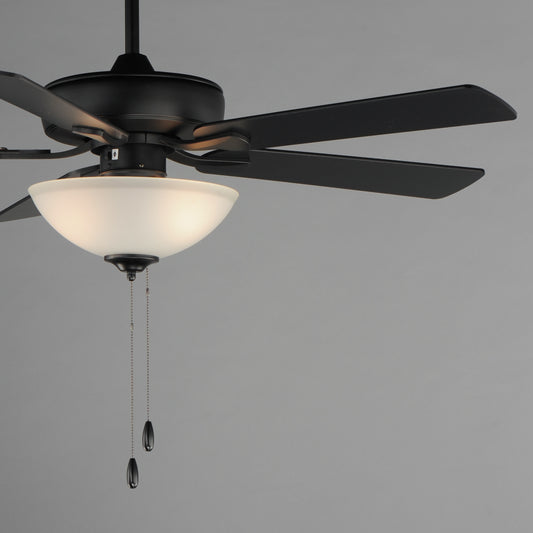
On the other hand, an add-on kit is like buying an awesome aftermarket stereo. It might have incredible features and you can swap it out later, but you’ve got to make sure it fits your car's dash first. Each path has its own perks, and the right choice really depends on your fan and what you’re trying to achieve.
The All-in-One Appeal of Integrated Lights
An integrated light kit is baked right into the fan’s design from the start. The manufacturer designed the fan and light to work as a single, seamless unit. This gives you a clean, unified look, where the light housing flows directly into the fan’s body without any weird gaps or finishes that don't quite match.
You'll see this built-in style most often in modern fans where those clean, uninterrupted lines are everything. Because the LEDs are often flat panels, designers can get really creative, crafting super low-profile and unique fixtures that you just can't get with clunky, old-school bulbs. If you want a guaranteed perfect match and a "set it and forget it" solution, an integrated kit is the clear winner. The only real trade-off? Less flexibility. If the LED module eventually gives out or you decide you want a different look, you can't just screw in a new one.
The Flexibility of Add-On Light Kits
An add-on light kit is a separate piece you buy to attach to a "light-kit adaptable" ceiling fan. This is your best friend if you already have a fan without a light or if you're someone who likes to change up their decor every few years. The biggest win here is pure, unadulterated versatility.
This freedom lets you customize your fan to your heart's content. Here's what makes this route so popular:
- Style Freedom: You can pick from a massive range of styles—from classic frosted bowls to elegant multi-arm candelabra fixtures—to nail the exact look your room needs.
- Future-Proofing: Tastes change. If you decide to go from farmhouse to mid-century modern in a few years, you can just buy a new light kit instead of replacing the entire fan.
- Easy Replacements: If a part breaks, finding a replacement add-on kit is usually a lot simpler than tracking down a specific integrated LED panel for a fan that’s a few years old.
The bottom line is simple: Add-on kits put you in the driver's seat. You’re not locked into one look for the life of the fan, giving you the power to adapt your room's lighting whenever inspiration strikes.
The main thing to watch out for with add-on kits is compatibility. You absolutely have to make sure the kit's mounting system and wiring will connect to your fan. Sticking with the same brand for both the fan and the kit is always your safest bet.
A Practical Guide to Fan and Light Kit Compatibility
So you’ve found the perfect light kit to brighten up your room, but will it actually fit your ceiling fan? Think of this as your matchmaking guide to prevent the heartbreak of buying a beautiful kit that’s a total mismatch. It’s a common mistake, but thankfully, it's an avoidable one.
Making sure a light kit for ceiling fan is compatible involves a little more than just liking its style. It really comes down to a few quick mechanical and electrical checks.
Brand and Model: The Safest Starting Point
Your fan’s brand is always the best place to start. While a lot of fans might look the same on the surface, manufacturers often use their own proprietary mounting hardware and wiring connectors. Sticking with the same brand for your light kit is the surest way to guarantee a perfect fit and takes all the guesswork out of the equation.
Next, you'll need your fan's model number. Look for a sticker on the top of the motor housing—you’ll probably need a step ladder to see it. Once you have that number, a quick search on the manufacturer’s website should pull up a list of approved light kits.
The Myth of the "Universal" Kit
You'll see "universal" light kits everywhere, and while they sound like a super easy solution, that term can be a bit misleading. A universal kit is designed to fit a wide range of fans, but definitely not all of them.
These kits usually come with several sets of hardware to accommodate different mounting hole patterns. They’re built for flexibility, but they are not a one-size-fits-all miracle.
A "universal" kit just increases the chances of a fit—it never guarantees it. Always double-check the kit’s specs against your fan’s requirements before you buy.
This decision tree gives you a great visual for that first big choice: are you dealing with an integrated system or looking for an add-on kit?
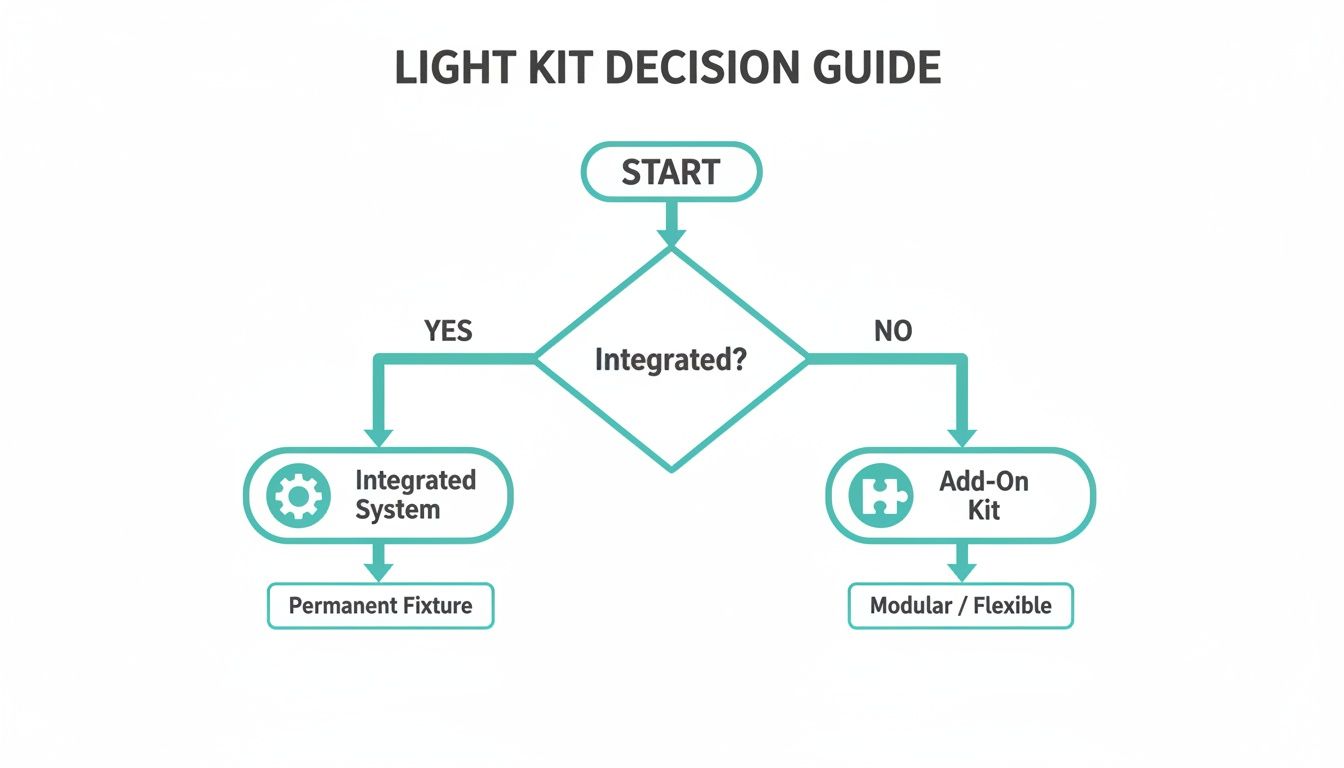
This simple chart helps you figure out your options right from the start, based entirely on the type of fan you already have.
Essential Mechanical and Electrical Checks
Beyond just matching the brand, there are a few key details you need to confirm. These are the non-negotiables for a safe and successful installation.
- Mounting Holes: Take a look underneath your fan where the light would attach. You’ll see a few screw holes. Count them, and then measure the distance between them. Your new light kit must match this pattern exactly.
- Wiring Connectors: Pop off the switch housing cap on your fan. Most modern fans use a simple plug-in connector (often a Molex plug) for the light. Make sure the light kit has the matching male or female plug. If the wiring looks a bit more complicated, our ceiling fan wiring diagram with remote control guide can help you sort it out.
- Wattage Limits: That same sticker on your fan's motor will also list a maximum wattage for a light kit. It is critical not to exceed this limit to prevent the fan from overheating, which is a serious fire hazard. This is less of a worry with energy-efficient LEDs, but it’s still a crucial safety check you can’t skip.
The demand for fans that come with lights has exploded, especially in places like the Asia Pacific region, which holds about 60–63% of the market share. Manufacturers there often bundle fans with light kits to meet the huge residential demand for that all-in-one functionality. This global trend just underscores how important it is for manufacturers to make compatibility clear for everyone.
How to Style and Size Your Light Kit for Perfect Ambiance
Now for the fun part—picking a light kit for ceiling fan models that truly completes your room. This is where you get to move beyond the technical stuff and think about aesthetics and ambiance. The right fixture doesn't just provide light; it’s the finishing touch that pulls the whole space together and injects a bit of your personality into a functional appliance.
Choosing the right size is all about visual balance. Think of it like this: you wouldn't wear a tiny hat with an oversized winter coat—it just looks off. The same idea applies here. A small, dinky light kit on a massive fan will get completely lost, while a huge, bulky one will make the entire fan feel clumsy and bottom-heavy.
Finding the Right Visual Proportions
Here’s a simple rule of thumb we've used for years: make sure the light kit's diameter isn't wider than the fan's central motor housing. This little trick keeps the proportions looking intentional and balanced. If you picture the fan blades as the shoulders and the motor as the torso, the light kit is the main accessory—everything needs to work in harmony.
To really nail the scale, think about the fan's blade span. A smaller fan, maybe a 42-inch model, is going to look great with a simple, low-profile bowl light. But for a big 60-inch fan in a great room with high ceilings, you can afford to be bolder with an elegant multi-arm fixture that has more presence. If you want to dig deeper into getting this balance just right, our guide on how to choose a ceiling fan size is a great resource.
Matching Styles for a Cohesive Look
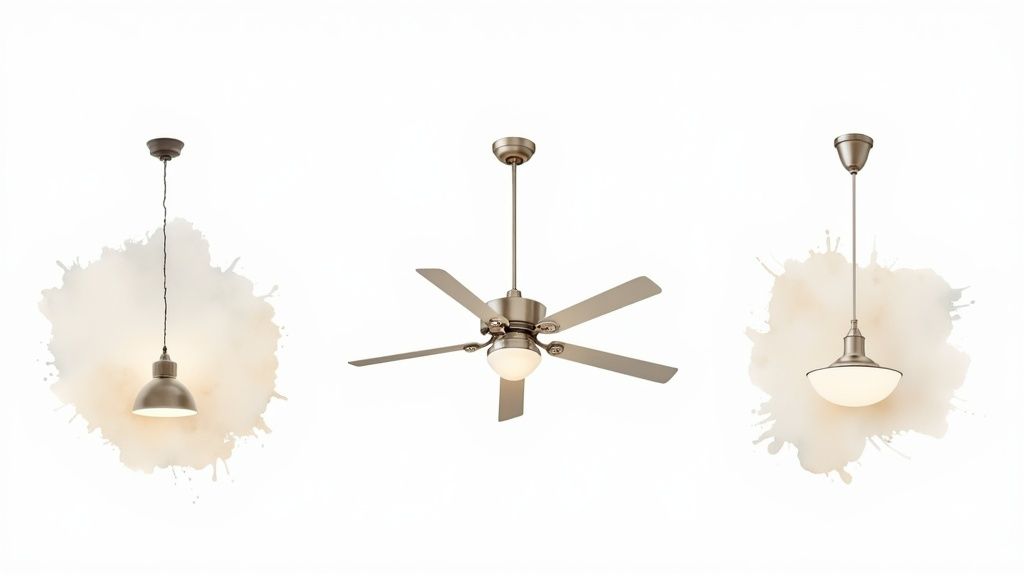
Beyond just size, the light kit’s style should echo the rest of your room's decor. Is your home modern and minimalist? A sleek, integrated LED kit will blend in seamlessly. Or is your vibe more of a cozy, rustic farmhouse? Look for something with a bronze finish and maybe a classic schoolhouse-style glass shade.
Here are a few popular styles we see customers gravitating toward:
- Bowl Lights: Simple, clean, and classic. They give off a nice, diffused light and honestly work well in almost any setting.
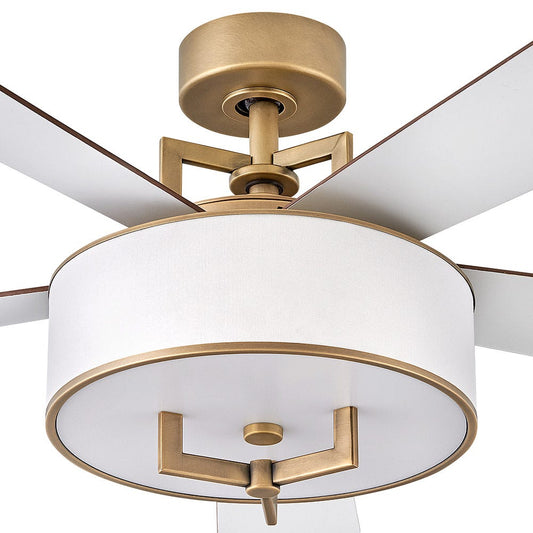
- Multi-Arm Fixtures: These often look like small chandeliers, adding a touch of elegance that’s perfect for more traditional or formal spaces.
- Globe Lights: A single, spherical glass shade creates a soft, modern look. It’s a fantastic choice for mid-century or contemporary designs.
- Spotlights: If you're going for an industrial vibe or just need focused light, adjustable spotlights let you aim the light exactly where you need it.
For some fantastic inspiration on how lighting can truly transform a space, check out these luxury bedroom lighting ideas that can complement your new fan perfectly.
Decoding Lumens and Kelvin
Alright, let's quickly translate some lighting jargon into plain English so you can create the perfect mood.
Lumens are all about brightness—the higher the number, the brighter the light. For a living room, 800 lumens (what you'd get from a traditional 60-watt bulb) is often plenty. For a kitchen or home office where you need to see what you're doing, you'll probably want 1,600 lumens or even more.
Kelvin (K), on the other hand, measures the color temperature of the light. It's what makes a light feel "warm" or "cool."
- 2700K: This is that warm, cozy, yellowish glow you love in a bedroom or living room. It's all about relaxation.
- 3000K: A soft, neutral white light. It's a great all-rounder, perfect for places like bathrooms and kitchens.
- 4000K-5000K: This is a crisp, bright, bluish-white light that feels a lot like natural daylight. It’s excellent for workspaces, garages, and home offices where you need to stay alert and focused.
Getting a handle on these two simple metrics gives you total control over your room’s ambiance. You can fine-tune the feeling of your space with a surprising amount of precision just by picking the right bulb.
Showcasing Premium Ceiling Fans With Integrated Lights
When you’re looking to make a real statement, a ceiling fan isn't just an appliance—it's a piece of functional art. In the world of premium fans, those priced at $300 and above, the light kit for ceiling fan models is never an afterthought. It’s an integral part of the design, a centerpiece that defines the entire fixture.
These high-end models offer a completely different experience from your standard, run-of-the-mill options.
Investing in a premium fan means you’re paying for superior materials, cutting-edge technology, and a level of design artistry that elevates your entire space. The integrated lights in these models are often custom-designed to complement the fan's unique form, creating a cohesive and stunning visual that just works.
The Minka-Aire Collection: Sculptural Elegance
One of the most celebrated names in high-end fan design is Minka-Aire. Their fans are known for fluid, organic shapes that often blur the line between a fixture and a sculpture. A fan like the Minka-Aire Artemis IV, with its gracefully twisting blades and centrally integrated light, is a perfect example of this philosophy.
This fan isn't just for moving air; it's designed to be a focal point. Its sweeping lines make it an ideal fit for coastal or contemporary interiors, where it can echo the natural movement of waves or wind. The LED light is seamlessly built into the hub, providing powerful illumination without disrupting the fan's elegant silhouette. The value here is in that beautiful fusion of form and function.
Fanimation: The Intersection of Innovation and Style
Fanimation is another brand that excels in the premium space, often pushing the boundaries with smart technology and bold, modern designs. Models like the Fanimation Ascension are crafted for modern living, featuring clean lines, powerful DC motors, and smart home compatibility. You can control both the fan speed and the light with your voice or phone.
In this price range, you’re not just buying a fan; you're investing in an experience. Silent DC motors, dimmable LED lights, and smart controls come together to provide effortless comfort and ambiance.
These fans are built with exceptional materials like brushed nickel and natural wood, ensuring they not only look incredible but are also built to last for decades.
A Quick Look at Premium Integrated Fans
This table highlights what sets these high-end models apart, focusing on their integrated lighting and design story.
Comparison of Premium Fan and Integrated Light Kits
Explore the features of high-end ceiling fan models that come with sophisticated, built-in light kits.
| Model and Brand | Key Features and Style | Ideal Room Application | Price Range |
|---|---|---|---|
| Minka-Aire Artemis IV | Fluid, sculptural blades with a powerful, integrated LED light. Perfect for coastal and modern aesthetics. | Great rooms, master bedrooms, and open-concept living areas with high ceilings. | $500 - $700 |
| Fanimation Ascension | A sleek, minimalist design with smart home integration and an efficient DC motor. | Modern living rooms, home offices, and minimalist bedrooms. | $400 - $600 |
| Monte Carlo Maverick | A stunning fan with hand-carved balsa wood blades and a subtle, down-firing light. Ideal for modern farmhouse or rustic-chic interiors. | Covered patios, large living spaces, and vaulted-ceiling rooms. | $600 - $900 |
Ultimately, choosing a premium fan with an integrated light kit is about more than just illumination. It's a commitment to quality craftsmanship, lasting style, and a superior living environment. These fixtures don't just light up a room—they transform it.
A Simple Overview of the Installation Process
So you've picked out a new light kit and you're ready to get it installed. Good news: it's usually a pretty straightforward job. But before we get into the nuts and bolts, let's go over a few things to give you the confidence to tackle it yourself. The number one rule? Safety first.

Before you even grab a screwdriver, walk over to your circuit breaker box and flip the breaker for the room you're working in. Don't just rely on the wall switch—cutting the power at the source is a non-negotiable step that keeps you safe.
The Basic Installation Steps
With the power safely off, you'll find that adding a light kit to most modern fans is surprisingly simple. Think of it like snapping together LEGO bricks or plugging in a USB cord; the skills are very similar.
Here’s a quick rundown of what you can expect:
- Pop Off the Housing Cap: Look at the very bottom of your fan. You'll see a small plate or cap covering where the light kit will go. Unscrew it to get access to the wiring and mounting points.
- Connect the Wires: Inside, you’ll likely find two wires—often blue and white—ending in a simple plug. Your new light kit should have a matching connector. Just click the two plugs together. It’s that easy.
- Attach the Fixture: Line up the light kit with the fan's mounting plate and secure it with the screws that came in the box. Give it a gentle wiggle to make sure it's snug and secure.
- Add Bulbs and a Shade: Screw in your light bulbs, then attach the glass shade or bowl. This is the last step and the one that really completes the new look.
While adding a light kit is often a quick job, replacing an entire fan is a bigger project. If you're starting from scratch, it’s a good idea to check out a full guide on how to install a ceiling fan to make sure everything is done safely and correctly from the get-go.
Knowing When to Call a Pro
Doing it yourself is a fantastic way to save a few bucks, but it’s crucial to know when to step back and call in a licensed electrician. Don't hesitate to make the call if you encounter any of these red flags:
- The wiring in the ceiling looks old, brittle, or frayed.
- You're trying to integrate the fan into a complex smart home system.
- The ceiling fan itself feels wobbly or unstable.
Your safety is always the most important thing. When in doubt, let a professional take it from here.
Common Questions About Ceiling Fan Light Kits
Even after covering the basics, a few questions always seem to pop up. Let's tackle some of the most common ones we hear from customers trying to add a light kit to their ceiling fan.
Can I Add a Light Kit to Any Ceiling Fan?
Not every fan is built to have a light added later. Your fan needs to be "light-kit adaptable," which simply means the manufacturer designed it with the right wiring and a place to mount a light.
The easiest way to check is to look at the very bottom of the fan's motor housing. If you see a removable cap or a small plate held on by a few screws, you're probably in luck. That's where a light kit would attach. If the housing is just one solid, seamless piece, then it wasn't designed for a light kit.
How Do I Know What Size Light Kit to Buy?
Getting the size right is a mix of practicality and style. First, the light kit has to physically fit—the mounting holes on the kit need to line up perfectly with the holes on your fan.
Aesthetically, a good rule of thumb is to choose a light kit with a diameter that’s no wider than the fan’s central motor housing. This keeps the whole unit looking balanced and proportional. A light kit that’s too big can look clunky and awkward, while one that’s too small might get visually lost and won't provide enough light for your room.
Can I Use LED Bulbs in My Old Light Kit?
In most cases, absolutely! As long as the new LED bulb has the same base as the old one (like a standard E26 screw-in base) and physically fits inside the glass shade, you can make the switch. It's an easy upgrade.
One small thing to watch for: if your fan has a dimmer, make sure you buy "dimmable" LED bulbs. Using non-dimmable ones will cause that annoying flickering or buzzing. The good news is that LEDs use so much less power that you'll almost never have to worry about exceeding the fixture's maximum wattage rating.
Ready to find a fan that perfectly combines style, performance, and brilliant illumination right out of the box? Explore the curated collections at Fan Connection and discover premium fans with beautifully integrated lighting designed to transform your space.


