











Where Can I Buy Ceiling Fans With Remote Control Nearby
So, you're on the hunt for a new ceiling fan with a remote and find yourself asking, "Where can I find one near me?" The quickest way to get started is right from your phone or computer. Popping terms like "premium lighting showrooms" or "designer ceiling fan dealers" into your favorite maps app can uncover specialized local spots you might have otherwise missed, giving you a much better shot at seeing some high-quality models in person.
Your Guide To Finding The Perfect Remote Control Ceiling Fan
Let's be honest, finding a ceiling fan that hits all the right notes—style, convenience, and performance—can feel like a real chore. You want that modern ease of a remote control, but you also need a fixture that actually looks good in your home. The great news is, you’ve never had more choices, especially if you're looking for a premium model that's built to last.
The global ceiling fan market, valued at a cool USD 14.6 billion in 2025, is growing like crazy, mostly because everyone wants a remote. In fact, projections show the market is expected to hit USD 31.6 billion by 2035. That’s a huge jump, and it tells you one thing: homeowners are all-in on smart, convenient tech. You can actually dig into these market trends to see what’s driving the demand.
This guide is here to cut through the noise and walk you through the two main ways to find your perfect fan: shopping at local retailers or exploring specialized online stores.
Checking Out Your Local Options
For a lot of us, the first move is to see what’s available nearby. There’s just something about seeing and touching a product before you commit. A trip to a local showroom lets you:
- Feel the build quality yourself: You can get a sense of the materials and see if a model feels flimsy or solid.
- See the real finish: Colors and textures can look way different on a screen. Seeing them under actual store lighting is a game-changer.
- Get expert advice on the spot: Sales associates can answer your specific questions about installation, motor types, or what will work in your space.
A great tip when you're shopping in person: try to match the fan to your ceiling. If you have a matte white ceiling, a matte white fan will create a clean, monochromatic look. It helps the fan blend in and become an integrated part of the design, not just a clunky fixture.
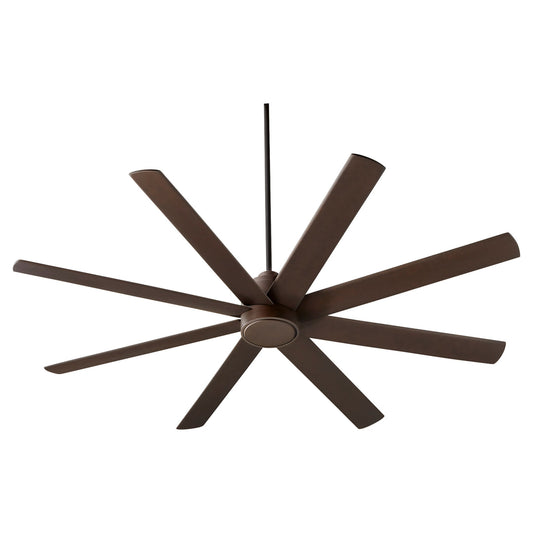
The main drawback with local shopping, though, is usually the limited selection. A physical store can only hold so much inventory. That means you might not find those really premium, design-forward models like the sleek Aerovon (which retails for over $500) or the statement-making Artemis XL5, a true showstopper priced above $800. And that's exactly where an online store can save the day.
How To Pinpoint The Best Local Fan Retailers
Before you start driving all over town, a little digital legwork can save you a ton of time and frustration. The goal here isn't just to find any fan store; it's to skip the generic big-box aisles and find the specialty lighting showrooms or dedicated dealers who stock the good stuff.
This is where your search query becomes your secret weapon. Instead of just typing "ceiling fan store" into the search bar, think like an interior designer. Get specific with phrases that tell the search engine you have a discerning eye.
Try searching for things like:
- "High-end lighting showrooms near me"
- "Designer ceiling fan dealer [your city]"
- "Modern ceiling fan store with remote control"
Queries like these signal that you're not hunting for a bargain-basement fan. You’re looking for retailers that carry stylish, higher-quality products—the kind of fans that are typically priced over $300. This simple trick helps filter out a lot of the mass-market noise and points you directly toward stores with more curated selections.
Fine-Tuning Your Local Search
Once you've got a list of potential stores, don't just jump in the car. Do a little recon online first. Check out their websites and recent customer reviews, paying close attention to any photos or comments that mention specific brands or fan styles. This gives you valuable intel on what they actually keep in stock.
Honestly, a quick phone call can be the most efficient next step. Just ask them directly: "Do you have a good selection of ceiling fans with remote controls on display, specifically from more premium brands?" This confirms right away whether a visit is even worth your time.
Pro Tip: When you call, ask if they have any models with DC motors in the showroom. A store that stocks fans with these quiet, ultra-efficient motors is a huge tell. It shows they care about quality and performance, not just the basics.
This whole process—from a smart local search to scoping out showrooms and even considering specialized online shops—is the modern way to find the perfect fan.
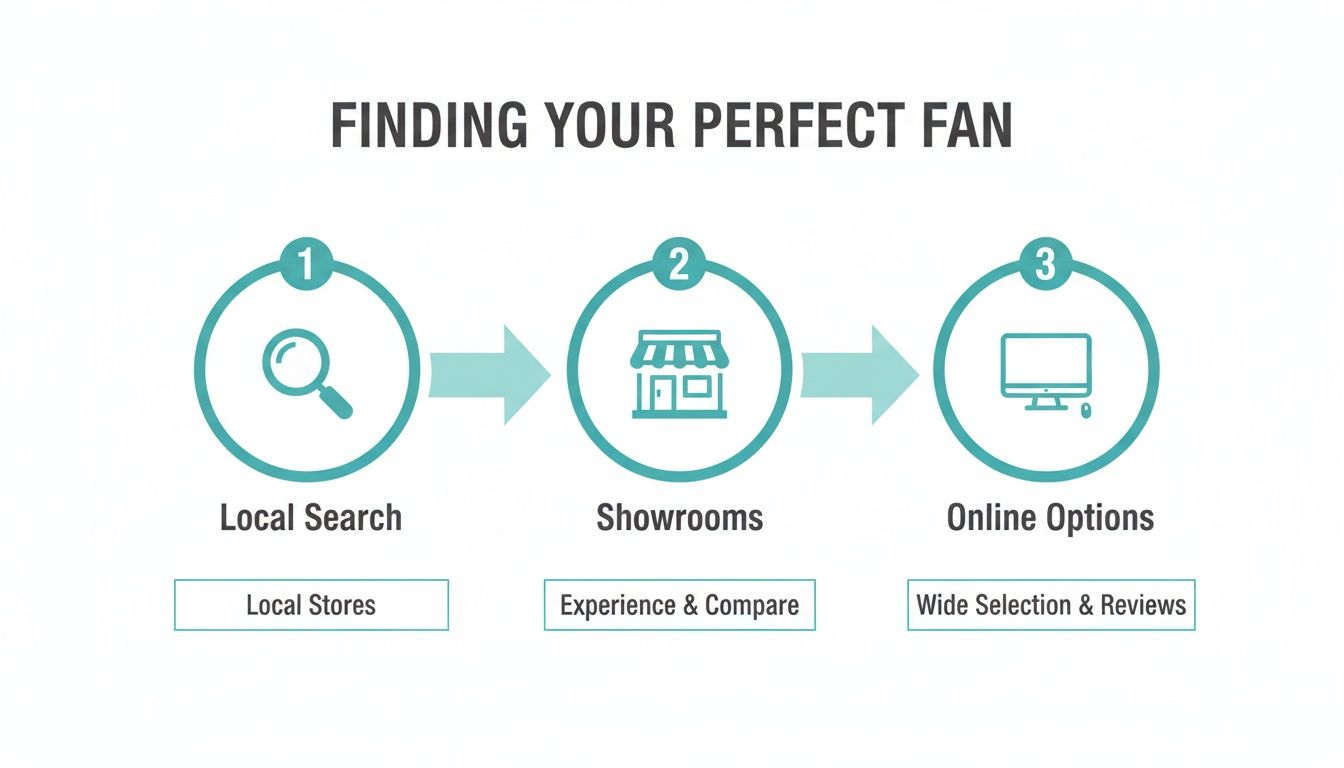
The takeaway here is pretty simple: combine some savvy digital research with a few targeted local visits. It’s the best way to maximize your chances of finding a fan you'll love.
Preparing For Your Visit
By creating a shortlist of two or three promising local retailers, you can focus your energy where it actually counts. Before heading out the door, get a few key details ready. You'll want your room dimensions (length, width, and ceiling height) and a few photos of your space handy on your phone.
If you need more general advice on picking a good local spot, a guide to choosing a hardware store can offer some solid tips on finding places with quality products and real support. And for a deeper dive into finding specialized dealers, check out our guide on the best ceiling fan stores near me.
Walking in prepared means you can have a much more productive conversation with a salesperson, turning your visit from a browse-fest into a successful mission.
What To Look For At The Showroom
Alright, you've done the digital detective work and have a shortlist of local showrooms. Now for the fun part—the hands-on inspection. This is your chance to really see if that fan you liked online is as impressive in person. The in-store experience is invaluable, giving you a feel for quality that pictures just can't capture.
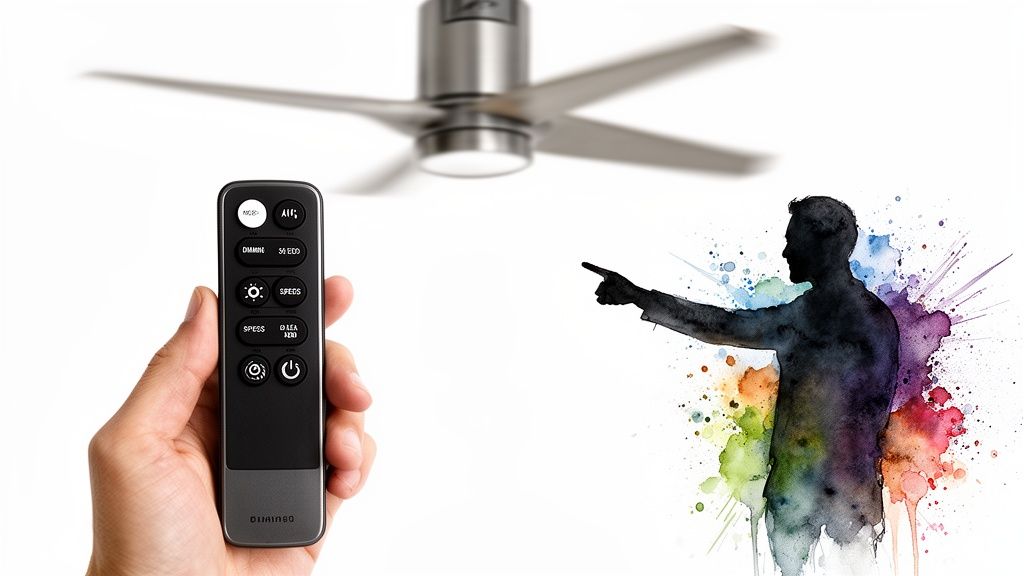
Your first stop should be the remote control itself. Pick it up. Does it feel cheap and plasticky, or does it have a nice, sturdy weight to it? Are the buttons intuitive and easy to press, or will you need an engineering degree just to change the fan speed? Trust me, a poorly designed remote can sour the entire experience of owning an otherwise great fan.
The Remote Control Deep Dive
Not all remotes are created equal, and you need to confirm it offers the features essential for your comfort. Think beyond just turning the fan on and off.
Here are the critical functions to look for:
- Multiple Speeds: A basic remote will have three speeds. More premium models, especially those paired with DC motors, can offer five or six for much more precise airflow control.
- Light Dimming: If the fan has an integrated light, is the dimming function smooth, or does it flicker? A great bonus is the ability to adjust the color temperature from warm to cool white.
- Reverse Function: Having a reverse switch right on the remote is a massive convenience. It lets you switch between summer and winter modes without having to climb a ladder.
- Timers and Smart Features: Some higher-end remotes include timers or even integrate with smart home systems like Alexa or Google Home, offering a whole new level of convenience.
Also, be sure to ask the salesperson whether the remote uses Infrared (IR) or Radio Frequency (RF). IR remotes require a direct line of sight—just like your TV remote—which can be annoying. RF remotes work through walls, giving you much more freedom. It’s a small detail that makes a huge difference in day-to-day usability. You can learn more about how remote control ceiling fan technology works to get the full picture.
Judging The Build And Motor Quality
While the remote is key, the fan's physical construction is just as important for its longevity and performance. Don't be shy—get up close to the floor models.
Gently wiggle the blade brackets (the arms holding the blades). Do they feel solid and secure, or is there a lot of play? Look closely at the finish. Is it smooth and consistent, or can you spot imperfections? High-quality fans, especially those in the $300+ range, should feel substantial and well-crafted. This tactile feedback is something you can only get in a showroom.
Your most important question for the salesperson should be about the motor. Ask, "Is this an AC or DC motor, and what is the warranty on it?" A long motor warranty, often 10 years or even a lifetime, is one of the clearest indicators of a quality product.
DC motors are really the gold standard in modern, premium fans. They are significantly more energy-efficient (using up to 70% less power), run almost silently, and allow for more speed settings. While they often come with a higher initial price tag, the superior performance and long-term energy savings make them a smart investment for any homeowner.
Why Buying Online Is Often The Smarter Choice
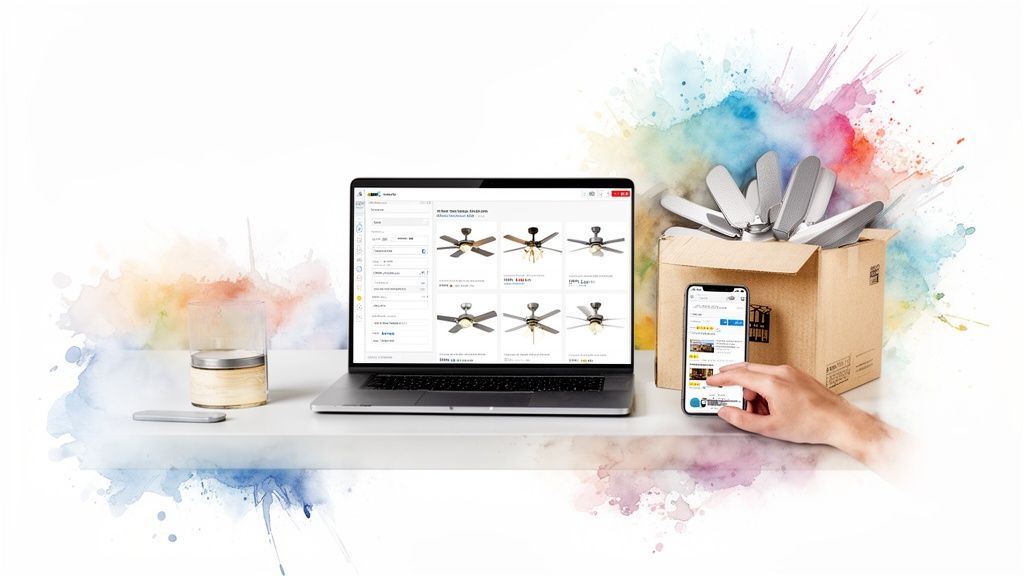
While there’s something to be said for the hands-on experience of a local showroom, the reality is that the best store "nearby" might just be the one on your screen. When you're searching for a premium ceiling fan with a remote, turning to a specialized online retailer like Fan Connection often turns out to be the winning strategy.
The biggest advantage? The sheer breadth of selection. Physical stores are limited by their floor space, which means they can usually only display a handful of their most popular models. That limited inventory often leaves you choosing from what's available, not what's perfect for your home.
Endless Aisles At Your Fingertips
Online, those physical limitations completely disappear. You get access to massive, curated collections that you just won't find in a local shop. Imagine being able to filter through dozens of high-end options right from your couch.
- For the Modernist: Instantly compare the minimalist lines of an Artiste fan with the sleek, aerodynamic profile of an Andros model.
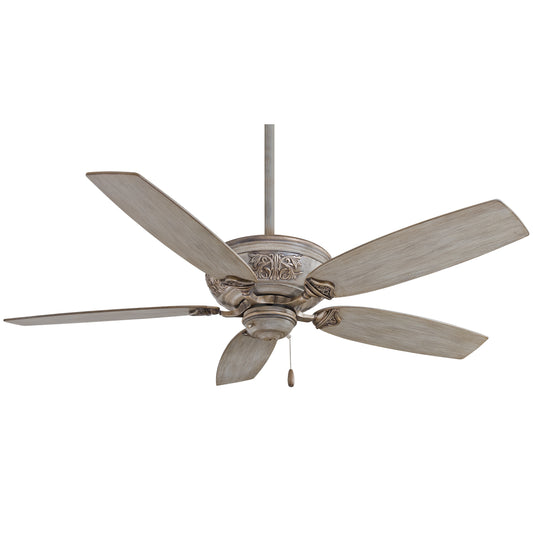
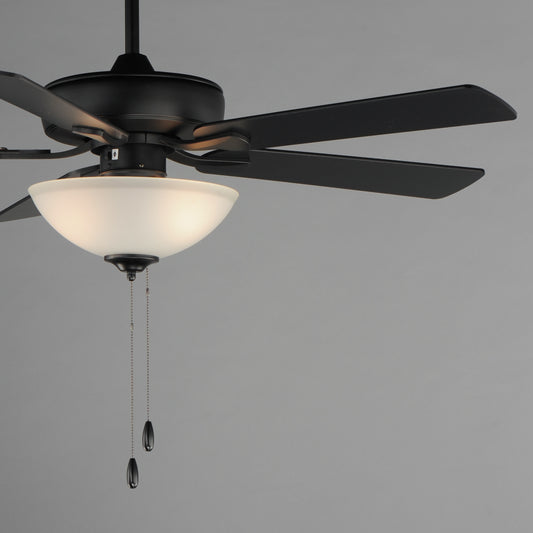
- For the Traditionalist: Explore fans with classic 5-Blade designs or even unique Tropical styles perfect for a sunroom.
- For the Bold Designer: Discover statement pieces that can become the centerpiece of an entire room.
This is a total game-changer for interior designers and discerning homeowners with a specific vision. You're no longer stuck with the four or five models a local store decided to stock. Instead, you have an entire warehouse of premium fans, all priced at $300 or more, ready for you to explore. To make the best choice from such a wide selection, check out our complete ceiling fan buying guide for expert tips.
The Power Of Information And Convenience
Beyond just having more to choose from, online shopping offers a level of detail and transparency that showrooms struggle to match. Every product page gives you immediate access to comprehensive specs, customer reviews, and detailed images from multiple angles. All this information empowers you to make a much more informed decision.
The online channel is surging in popularity for good reason. While in-person sales still hold the largest market share, the smart ceiling fan market is projected to reach USD 993.6 million in revenue by 2025, with online convenience and a wider selection driving significant growth. Learn more about these smart home trends from Grand View Research.
Ultimately, buying your remote control ceiling fan online streamlines the entire process. You get transparent pricing, direct-to-your-door shipping, and the ability to find the exact style that fits your aesthetic. For anyone asking "where can I buy ceiling fans with remote control nearby," the answer is increasingly found right at your fingertips.
Choosing The Right Fan Size And Style
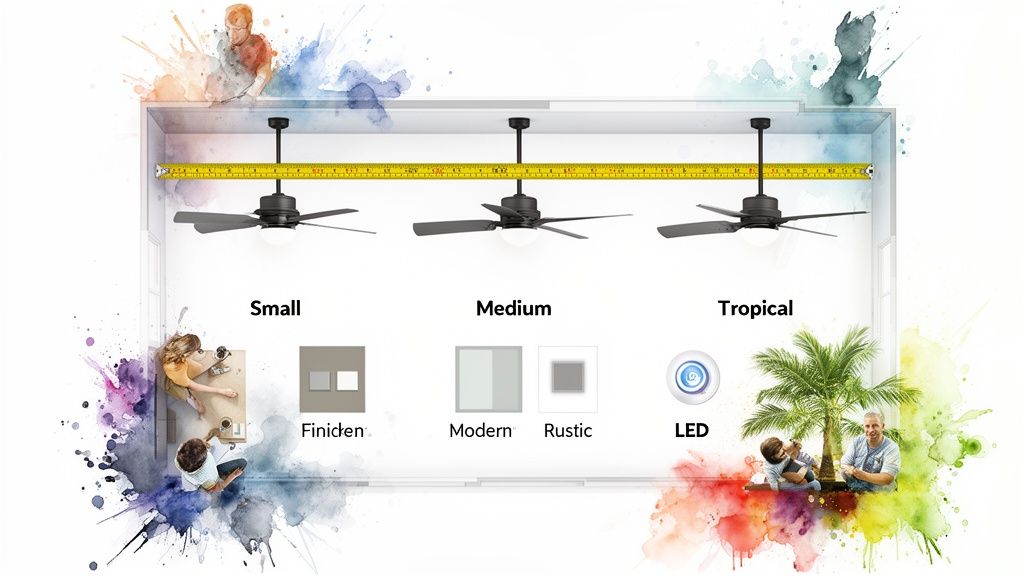
The perfect ceiling fan does more than just move air; it completes a room’s entire vibe. Whether you're standing in a showroom or browsing an online collection, picking the right model really boils down to two things: size and style. Nail these, and your fan will be a beautiful, functional addition you'll appreciate for years to come.
First things first, let’s talk about sizing. This is non-negotiable. A fan that’s too small for a room will just spin its blades without creating any real airflow. Go too big, and you’ll create an uncomfortable, hurricane-like gust every time you turn it on. The goal is efficient, gentle circulation, and thankfully, the industry has clear standards to get you there.
It all comes down to matching the fan's blade span to your room's square footage. It's a simple calculation that guarantees your fan will actually do its job.
Matching Fan Size To Your Room
Here’s a quick reference guide to help you find the right fit. Just measure your room's length and width to get the square footage, then match it to the blade span below. Easy.
| Room Size (Square Feet) | Recommended Fan Blade Span |
|---|---|
| Up to 75 sq. ft. | 29 – 36 inches |
| 76 – 175 sq. ft. | 42 – 48 inches |
| 176 – 350 sq. ft. | 52 – 56 inches |
| Over 350 sq. ft. | 60 inches or larger |
Getting the size right is the foundation of a good fan purchase. Once you have that locked in, you can move on to the fun part: aesthetics.
Defining Your Room's Aesthetic
This is where your personal taste really comes into play. Are you aiming for a cozy, rustic atmosphere or a clean, modern look? The fan you choose should feel like a natural extension of your existing decor, not an awkward afterthought.
Think about the vibe you're going for:
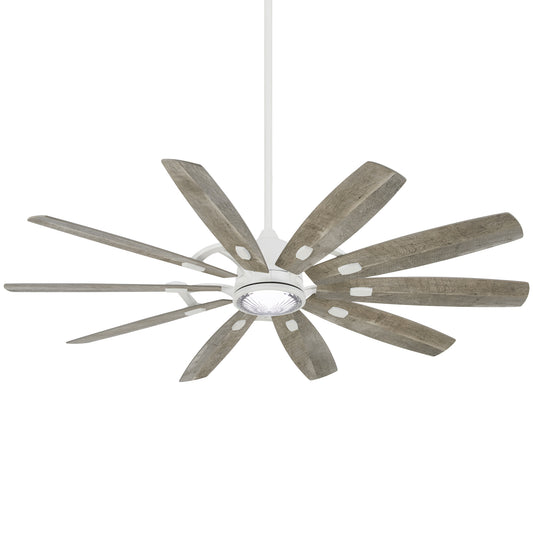
- Rustic & Industrial: Look for models like the Barn fan, which often feature weathered wood blades and dark metal finishes.
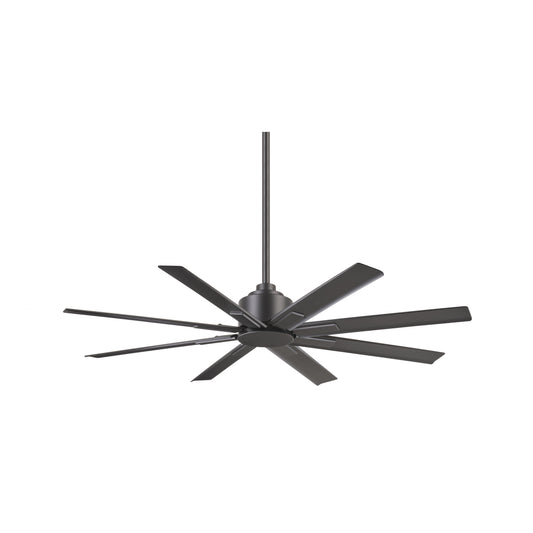
- Sleek & Modern: An Apex or Artiste fan with clean lines and a minimalist three-blade design can blend seamlessly into a contemporary space.
- Coastal & Tropical: For that relaxed, vacation-like feel, a Cabana fan with woven or palm-leaf style blades is the perfect choice.
Here's a pro design trick: make the fan disappear. If your ceiling is matte white, a matte white fan creates a clean, monochromatic look that feels intentional and integrated.
Looking Beyond The Basics
With size and style decided, it's time to focus on the features that elevate a good fan to a great one. You'll find that premium models—typically priced over $300—often come with advanced tech that makes a huge difference in performance. One of the biggest upgrades to look for is the DC motor.
Back in 2024, the global ceiling fan market saw China commanding 26.7% of all sales, with remote control features becoming a massive draw. A key innovation driving this is the DC motor, which slashes power consumption by 50-70% compared to old-school AC motors. It’s a huge win for sustainability and your electric bill, and it’s fast becoming a standard in quality remote-controlled fans. You can dig into these market trends on imarcgroup.com if you're curious.
Also, keep an eye out for integrated LED lights with adjustable color temperatures. This lets you shift from a warm, cozy light for evenings to a cool, bright light for daytime tasks—all from the comfort of your remote. It's a game-changer.
Common Questions About Buying Ceiling Fans
Stepping into the world of ceiling fans, especially when you have your heart set on a remote-controlled model, can definitely bring up a few questions. Let's clear the air and tackle some of the most common things people ask, whether they’re searching for "ceiling fans with remote control nearby" or just starting their research online.
Are Ceiling Fans With Remote Controls Hard To Install?
This is a big one, and the honest answer is: it really depends on your comfort level with DIY projects. Most fans with remotes come with a small receiver that has to be wired into the fan's housing and connected to the electrical box in your ceiling. If you’re just swapping out an old fan, the wiring is usually right there, which makes the whole process much more straightforward.
But when you're investing in a higher-end fan—something that costs $300 or more—things can get a little trickier. These premium fans are often heavier and might pack in more advanced features that require a more delicate touch during installation.
Our advice? For your own safety, to keep that warranty valid, and to make sure everything is up to electrical code, hiring a licensed electrician is always the smartest move, especially for those premium models. It's just not worth the risk.
Can I Add A Remote Control To My Existing Fan?
Technically, yes, but it comes with a few "ifs" and "buts." You can find universal remote kits pretty much anywhere. These kits give you a receiver to tuck into the fan's canopy and a handset to control it.
The problem is, "universal" doesn't always live up to its name. These kits can be finicky and might not work with every fan model out there, especially older ones or those with unique designs. Even if it does work, it might not be able to control every single feature your fan has, leaving you with a half-baked solution.
For performance you can count on and a truly seamless experience, your best bet is to buy a fan that was designed from day one with its own dedicated remote. That's exactly what you'll find with the high-performance models we carry at Fan Connection.
What Is The Advantage Of A DC Motor?
If you see a fan advertised with a DC motor, it’s worth paying attention. DC (Direct Current) motors are a serious upgrade over the traditional AC motors found in most standard fans, and you'll typically find them in higher-quality models.
There are a few key benefits that make them well worth the investment:
- Crazy Energy Efficiency: This is the showstopper. DC motors can use up to 70% less electricity than their AC cousins. That's a difference you’ll actually see on your energy bills over the life of the fan.
- Whisper-Quiet Operation: DC motors are famously quiet. This makes them the perfect choice for bedrooms or any other spot where peace and quiet are a top priority.
- More Speed Options: Forget the standard three-speed pull chain. DC motor fans often give you five or six speeds, offering much finer control over the airflow in your room.
The remotes that come with DC fans are usually more advanced, too, often including handy features like one-touch reversing for winter and summer use. While the initial price tag is a bit higher, the superior performance, energy savings, and quiet operation make a DC motor fan a fantastic long-term investment in your home's comfort.
Ready to find a fan that brings together style, performance, and the convenience of a remote? Explore the curated collections at Fan Connection and discover the perfect model to elevate your space. Find your ideal fan at https://www.fanandlights.com.


