











Where to find outdoor ceiling fans? The Ultimate Buyer's Guide 2026
So, you're on the hunt for an outdoor ceiling fan that not only looks great but can actually stand up to the elements. Where do you even start? If you want the absolute best selection and solid advice, a specialized online retailer like Fan Connection is hard to beat. They’ve done the hard work of curating collections and laying out all the specs, so you know you’re getting a fan properly rated for outdoor use. But if you’re after something truly high-end and want to see it in person first, a lighting showroom is the place to be.
To help you figure out which path is right for you, let's take a look at the pros and cons of the most common places to buy an outdoor ceiling fan.
Where to Buy Your Outdoor Ceiling Fan A Quick Comparison
This table breaks down the main channels so you can quickly see where your priorities—be it speed, selection, or service—line up.
| Buying Channel | Best For | Pros | Cons |
|---|---|---|---|
| Specialized Online Retailer | Best selection, detailed specs, and competitive pricing. | Massive inventory, easy to compare features, direct shipping. | You can't see it in person first; shipping times vary. |
| Local Lighting Showroom | Seeing premium, high-end models up close. | Expert one-on-one service, tangible quality, unique designs. | Higher prices, limited stock, may need to special order. |
| Big-Box Retailer | Immediate need and budget-friendly options. | You can take it home the same day; convenient locations. | Limited selection of styles and quality; less expert advice. |
| Wholesale/Trade Supplier | Contractors and designers buying in bulk. | Trade pricing, access to exclusive lines. | Requires a business account; not accessible to the public. |
Ultimately, there’s no single “best” place—it all comes down to what you need for your specific project.
Your Quick Guide to Buying an Outdoor Fan
Finding the right outdoor ceiling fan is about more than just beating the summer heat. It's really about finishing your outdoor space and making it a place you actually want to be. Imagine kicking back on a breezy patio for a weekend hang or hosting a comfortable dinner on the deck—the right fan pulls it all together. But with so many options out there, figuring out where to buy one can be a headache.
Don't worry, we'll break it down for you. Let's walk through the three main places you can buy your fan: specialized online stores, big-box retailers, and local lighting showrooms. Each has its own perks, and the best one for you depends on whether you're prioritizing a huge selection, need a fan right now, or want to see a premium fixture with your own eyes.
Making the Right Choice for Your Needs
Before you pull out your wallet, think about how the fan fits into the bigger picture. It’s a key piece that can complement your outdoor living space design ideas and tie the whole look together.
Your shopping journey usually boils down to a few simple questions about your project timeline and what you value most.
- Need it today? If you're in a time crunch, a local big-box store is your best bet for instant gratification.
- Want the best selection? For the widest variety of styles and features, nothing beats a specialized online retailer.
- Prefer to see it first? Head to a lighting showroom. It’s the only way to really get a feel for the quality and scale of those high-end models.
This little flowchart basically maps it out for you.

As you can see, knowing what you need right now points you in the right direction and saves you a ton of time. At the end of the day, the goal is to get a fan that not only looks fantastic but is built to last for years. For a much deeper dive into the nitty-gritty of what to look for, check out our complete ceiling fan buying guide for more pro tips.
Why Specialized Online Stores Offer Superior Value
When you start shopping for an outdoor ceiling fan, you’ll quickly run into two very different worlds: the endless aisles of a big-box store and the focused collections of a specialized online retailer. While grabbing a fan along with your lumber has its convenience, anyone serious about quality and style—from homeowners to design pros—knows that dedicated stores like Fan Connection offer a far better experience. It’s like choosing a precision tool crafted for a specific job instead of just grabbing a generic one from a bucket.

These specialty shops aren't just digital warehouses piling products high. Think of them more like curated galleries. Instead of a jumbled mess, you get a hand-picked inventory where every fan has already been vetted for quality and performance. This saves you from sifting through subpar options and lets you focus on finding a fan that actually fits your vision. For a deeper dive into the different kinds of retailers, our guide on the best places to buy ceiling fans breaks it all down.
A Curated and Detailed Shopping Experience
One of the biggest wins of shopping with a specialist is the ability to find exactly what you need with precision. They build their sites to make filtering and browsing intuitive, turning a potential headache into a simple search.
- Shop by Style: Have a specific look in mind? You can easily browse collections like our stunning Modern Outdoor Fans or rustic Farmhouse Outdoor Fans to find a model that nails your home's aesthetic.
- Shop by Feature: Need a tough fan for a large, exposed pergola? Just filter for wet-rated models with a high CFM (airflow) to guarantee it can handle the elements and move enough air.
- Shop by Size: From a compact fan for a small porch to a grand statement piece for a vaulted patio, you can sort by blade span to get the perfect fit for your space.
This kind of organization transforms the whole process from a chore into a creative part of your design project.
It's no surprise that more people are investing in their outdoor spaces. The ceiling fan market, valued at USD 11.83 billion in 2025, is expected to grow to USD 17.98 billion by 2034. This boom is all about the growing desire to create comfortable and stylish outdoor living areas. You can see more on this expanding market at Fortune Business Insights.
Confidence Through Clarity
Maybe the most important thing you get from a specialty store is confidence. A premium fan like the Artemis XL5, which can run well over $800, is a real investment. You want to be sure you're getting it right. These stores remove the guesswork by giving you all the details you need:
- High-resolution images that show the fan from every angle.
- Clear UL damp vs. wet ratings so you know exactly where it can be safely installed.
- Transparent specifications that cover everything from the motor type to the blade pitch.
This level of detail—plus access to expert customer service and exclusive designs—is what gives you the peace of mind to invest in a high-quality fan that will be delivered right to your door.
Navigating Big-Box Stores and Local Showrooms
While shopping for fans online gives you a massive selection, sometimes you just have to see it to believe it. This is where brick-and-mortar stores come in, but it’s a tale of two very different experiences: the hands-on expertise of a local lighting showroom versus the grab-and-go convenience of a big-box store.
If you’re after a true statement piece, a lighting showroom is a must. Think of it as an art gallery for your ceiling. It’s here you can really get a feel for the scale, finish, and solid build of premium models like the grand Maverick Super Max, which can easily top $1,000. Seeing a fan in person lets you feel the quality and picture it in your space in a way no online photo can.
The Big-Box Advantage: Convenience and Immediacy
On the other hand, you have the big-box giants like Home Depot or Lowe's. These places are masters of convenience. Need a fan for a weekend project right now? You can walk in and have one in your cart in minutes. They stock the popular, no-fuss models that get the job done.
But that convenience has its trade-offs. The selection is usually limited to mass-market designs, and finding true expert advice on outdoor-specific needs can be tough. The associates are generalists, not fan specialists, so you really need to be your own expert.
Your In-Store Shopping Checklist
When you’re hunting for an outdoor ceiling fan in a physical store, you’ve got to put on your detective hat. Be ready to inspect the packaging and ask the right questions to avoid a costly mistake down the road.
- Find the UL Rating: This is non-negotiable. Look for "UL Damp Rated" for covered areas or "UL Wet Rated" for exposed spots printed right on the box. If you can't find it, assume it’s an indoor-only fan and keep looking.
- Check the Materials: Get hands-on. Do the blades feel like durable, all-weather ABS plastic, or do they feel more like flimsy particleboard? The box should clearly state what they’re made of.
- Ask Smart Questions: Don't just ask, "Is this a good fan?" Instead, try, "Can you show me on the box where it says this fan is wet-rated for an uncovered pergola?" This pushes for a specific, fact-based answer.
A huge mistake people make is grabbing a fan from the "outdoor" aisle and assuming it works for any outdoor space. Always, always check that UL rating yourself. The wrong fan can lead to warped blades, a rusty motor, and a serious safety risk.
At the end of the day, physical stores definitely have their place. Showrooms are fantastic for homeowners and designers investing in a high-end fixture that defines a space. Big-box stores are perfect when you need a functional, budget-friendly fan immediately. If you're leaning toward the showroom experience, our guide on finding a ceiling fan showroom near you can point you in the right direction.
What to Look for in a Great Outdoor Fan

Finding a store that sells outdoor fans is one thing; picking the right one is a whole different ballgame. A good outdoor fan is an investment in your home’s comfort, so you need to know exactly what you’re paying for. The absolute first thing to check is its UL Rating, because this little detail tells you where it can be safely installed.
Get this wrong, and you could end up with a ruined fan and a worthless warranty.
- UL Damp-Rated: Think of these as perfect for covered outdoor spots like porches, patios, and sunrooms. They’re built to handle humidity but can’t take a direct hit from rain.
- UL Wet-Rated: These are the tough ones. Built for fully exposed areas like pergolas and gazebos, their motors are sealed tight and the hardware is made to resist rust from direct rain, snow, and wind.
Materials and Motors: The Keys to Longevity
Once you've got the rating sorted, take a close look at what the fan is made of. The materials are a dead giveaway for its quality and how long it’ll survive the weather. For a solid fan in the $300 and up range, you should be looking for powder-coated metals and all-weather ABS blades. These are non-negotiable if you want to avoid rust and warped, drooping blades.
Just as important is what’s spinning those blades. You’ll run into two main motor types—AC and DC—and the one you choose affects everything from performance to your power bill.
A common mistake is thinking all outdoor fans are basically the same. The truth is, the motor and materials make a world of difference. Investing in a fan with a quality DC motor and all-weather blades means you're getting a quiet, efficient, and durable fixture that will last. To really get into the weeds on how different parts affect performance, you can dig into the specifics of ceiling fans for exterior spaces.
This push for better quality isn't just a niche trend. People are investing more in their outdoor living spaces, and they expect products that last. The global market for ceiling fans, valued around USD 12.9 billion in 2025, is expected to hit USD 18.1 billion by 2035, with North America leading the charge. A lot of that growth comes from premium outdoor models that look great and perform for years, a shift you can read more about at GM Insights.
Performance Specs That Actually Matter
Let’s get past the marketing jargon and talk about what really creates that breeze. Airflow, measured in CFM (Cubic Feet per Minute), is the big one. Simply put, a higher CFM means more air movement and a stronger breeze. Blade pitch—the angle of the blades—also plays a huge part in how effectively a fan moves air.
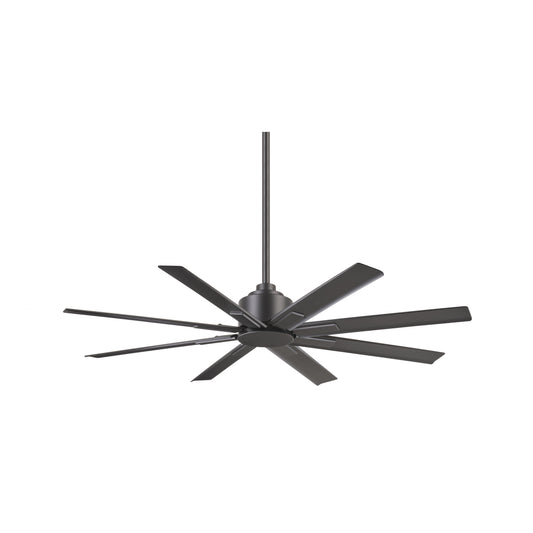
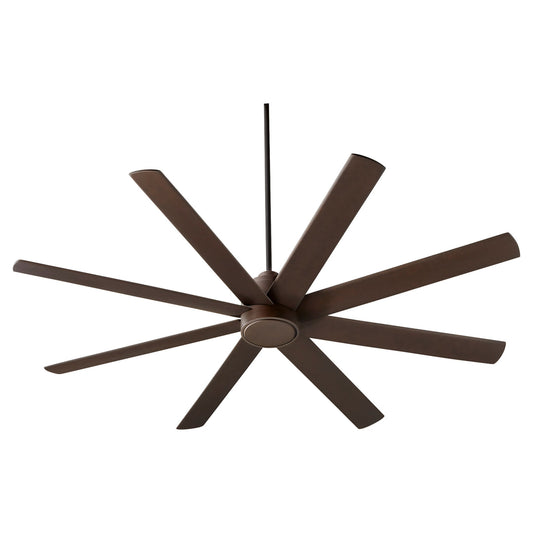
These specs are tied directly to the fan's design. For instance, the Osprey, a striking 8-blade fan from our Large Outdoor Ceiling Fan Collection, is engineered to create a powerful, widespread breeze that’s perfect for a grand patio. On the other hand, a sleek 3-blade model like the Spitfire is often designed for a more targeted, stylish airflow.
Knowing the difference ensures you’re buying a fan that doesn't just look good, but actually delivers the comfort you're after.
A Pro's Guide to Sourcing Fans for Projects
When you’re a contractor, designer, or property manager, picking an outdoor ceiling fan is way more than just a style choice. It’s a piece of the puzzle that can affect your schedule, your client’s happiness, and ultimately, your reputation. You need a reliable source, and that's where a trade-focused supplier like Fan Connection really makes a difference.
Let's face it: time is money on a job site. You can't afford to get bogged down scrolling through thousands of options online. A curated collection lets you get right to the good stuff—stylish, durable fans you can confidently show your clients. It cuts down on the back-and-forth and keeps the project moving.
The Professional Advantage
Working with a dedicated supplier gives you a serious edge. You get one-stop access to everything from unique, eye-catching fans to dependable workhorses, all with the backup you need to keep your project on track.
- Warranty Clarity: You need clear, easy-to-find warranty info, especially on premium models over $300. It’s peace of mind for you and your client.
- Dependable Shipping: Projects live and die by their timelines. A supplier who delivers when they say they will prevents expensive delays and keeps your crew working.
- Access to Statement Pieces: For those high-impact designs, you need a source for fans like the sculptural Rainman or the grand Odyn. A specialty retailer ensures you can get your hands on these unique pieces without a hassle.
This whole approach means you can source premium outdoor fans that hit the budget, wow your clients, and make your work shine. And when you're doing major outdoor work, like building a roof over your deck, thinking about ventilation from the start is what separates the pros from the amateurs.
The demand for outdoor fans is booming, and not just for homes. The North America ceiling fan market is expected to hit USD 5.77 billion by 2034, and the commercial side is growing at a blistering 9.1% CAGR. This is a huge opportunity for professionals. You can find more details on this growing market at Market Data Forecast.
Meeting Diverse Project Demands
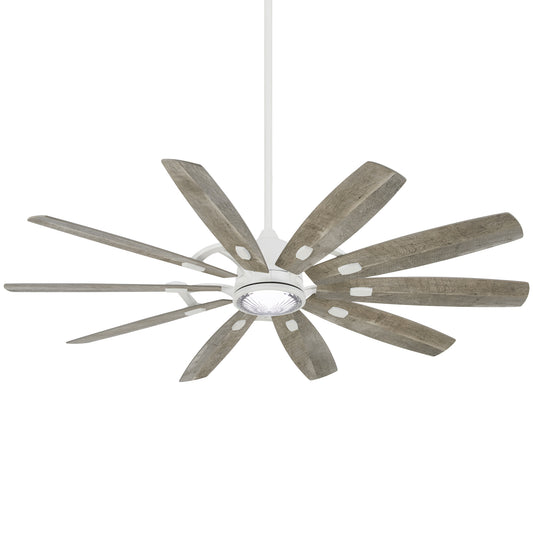
Every project is different. One day it's a chic hotel patio, the next it’s a custom home's lanai. You need a range of options. A versatile model like the Maverick from our Outdoor Fans with Lights Collection can create a specific mood, while something like the sleek Mori is perfect for clean, modern spaces. Good suppliers organize these by blade count and style, making your job a lot easier.
At the end of the day, you need a sourcing partner who gets it. Someone who offers a solid variety of durable, stylish fans and has the logistics down to a science. If you need to go even more specialized, you can always check out our guide on local companies that provide custom ceiling fan designs.
Your Outdoor Ceiling Fan Questions Answered

When you start shopping for an outdoor ceiling fan, the questions can pile up fast. Suddenly you’re knee-deep in technical ratings, material specs, and price points. It’s a lot to sort through, so let’s clear things up and tackle the most common questions head-on.
What Is The Difference Between a Damp Rated and a Wet Rated Fan?
This is easily the most important question to ask, and getting it right is non-negotiable. A "damp-rated" fan is designed for covered outdoor areas like porches or screened-in patios. It can handle humidity and ambient moisture, but it's not meant for direct exposure to rain.
On the other hand, a "wet-rated" fan is the real workhorse. These are built to be installed in completely exposed spaces, like a pergola or an open deck, where they’ll get hit with rain. They feature sealed, waterproof motor housings and blades made from materials like ABS plastic that won't warp or fail when they get soaked.
Think of it this way: a damp-rated fan is like wearing a water-resistant jacket in a light drizzle, while a wet-rated fan is like wearing a full waterproof rain suit in a downpour. Using the wrong fan isn't just a safety hazard that can fry the motor—it will also void your warranty instantly.
Can I Use an Indoor Fan On My Covered Porch?
The short answer is a hard no. Even if your porch is fully covered, putting an indoor fan outside is a recipe for disaster. The constant humidity alone will cause standard wood or particleboard blades to droop, warp, and become wobbly and unbalanced.
Even worse, moisture can easily work its way into an unsealed motor, corroding the internal wiring and creating a serious fire risk. For any outdoor space, you absolutely must use a fan that is, at a bare minimum, UL damp-rated.
How Much Should a Good Outdoor Ceiling Fan Cost?
You can definitely find basic outdoor fans for under $200, but for a high-quality model that delivers on performance, durability, and style, you should expect to start around $300. This is the sweet spot where you move from a purely functional appliance to a real design feature.
In the $300-$700 range, you'll find some incredible options, like the Maverick or Spitfire models from Fan Connection. Fans in this tier bring some serious upgrades to the table:
- Powerful DC Motors: These are a game-changer. They’re much quieter and more energy-efficient than old-school AC motors, often providing up to 70% in energy savings.
- Premium Materials: You'll see all-weather ABS blades and powder-coated metal housings that are built to look great for years, no matter the weather.
- Designer Styles: This is where you get access to stunning designs that can truly define and elevate your entire outdoor living area.
Investing here gets you a reliable cooling machine that also serves as a beautiful centerpiece for your patio.
What Features Are Best for Coastal or Humid Areas?
If you live near the coast or in a super humid climate, you're not just fighting rain—you're up against salt spray and constant moisture. In these environments, durability is everything.
Always choose a UL wet-rated fan, even for covered spaces. The extra protection is worth it. The best materials for resisting corrosion are marine-grade stainless steel or powder-coated aluminum for the motor and hardware. For blades, stick with ABS composite, since it's completely waterproof and will never sag or warp in high humidity.
Your best bet is a fan specifically engineered for these tough climates. A model from Fan Connection's Tropical Collection, like the Kewl, is purpose-built to fight off rust and keep your fan running and looking its best for years.
Ready to find the perfect outdoor ceiling fan with total confidence? At Fan Connection, we've curated the best collections to make your choice simple. Explore our stylish and durable fans, all backed by clear specs and expert support.


