







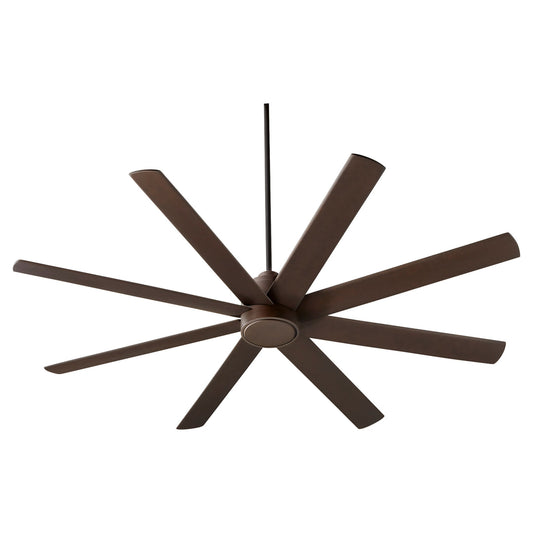


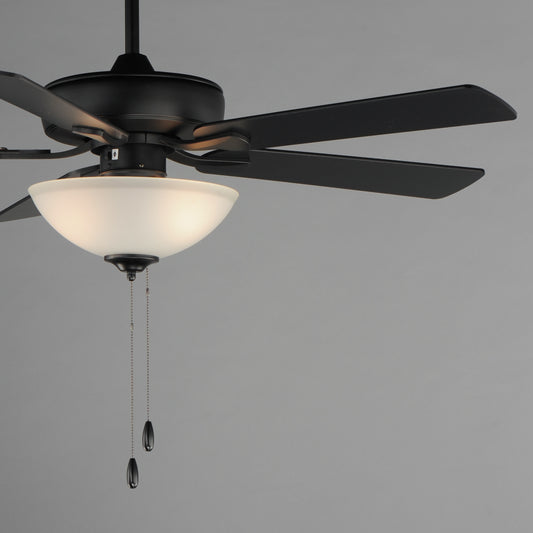


Your Ultimate Guide to Choosing the Perfect Fan Light Kit
Picture this: one sleek fixture that delivers both a refreshing breeze and the perfect glow for your room. That’s the magic of a fan light kit—it's the ultimate two-for-one deal for your home, merging cooling power and illumination into a single, stylish package. This clever combination saves you precious ceiling real estate and creates a clean, cohesive look that can elevate any space from "just okay" to "wow!"
What Is a Fan Light Kit and Why It Matters
At its core, a fan light kit is exactly what it sounds like: a light fixture built into a ceiling fan. It transforms a single-purpose appliance into a multifunctional centerpiece. This ingenious pairing is a lifesaver in rooms where you don't have the space—or the desire—to install separate fixtures, like bedrooms, home offices, or cozy living areas. By merging two essential home functions, it offers a smart, streamlined solution for modern living.
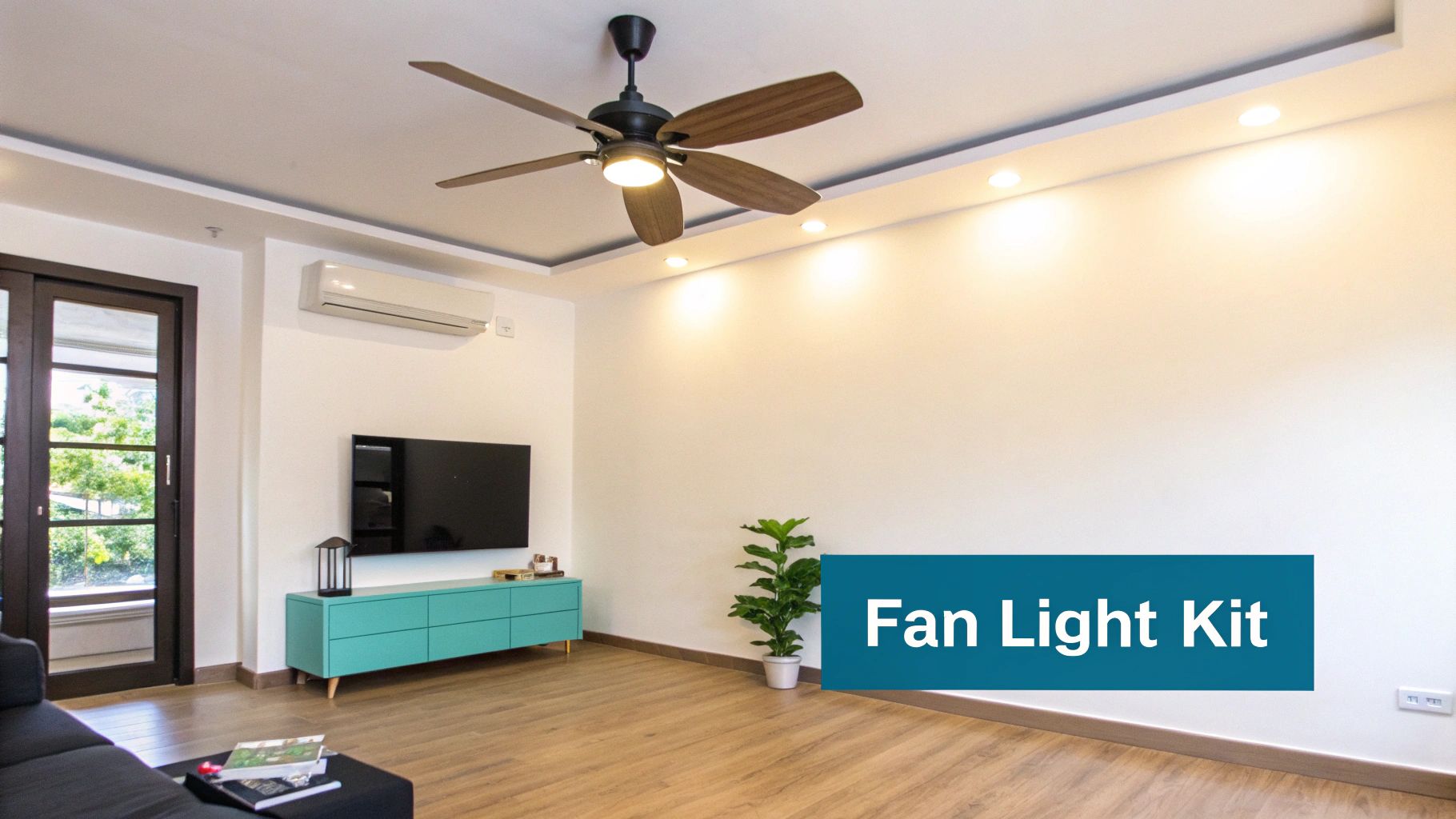
The biggest win here is efficiency. Instead of cluttering your ceiling with a fan and a light, you get one unified design that boosts both comfort and ambiance. This single addition can completely change a room’s vibe, whether it's casting a warm, inviting glow in a den or providing bright, functional light over a kitchen island. It’s the kind of upgrade that makes you wonder how you ever lived without it.
The Growing Demand for Dual Functionality
It’s no surprise that these all-in-one units are becoming a must-have in home design. The global market for ceiling fans with light kits was valued at a whopping USD 3.011 billion in 2023 and is only expected to grow. Homeowners are driving this trend, with household use making up over 70% of total sales as families look for fixtures that deliver both airflow and lighting.
This shift shows we’re all looking for smarter, more practical, and more beautiful solutions for our homes. A fan with an integrated light isn't just about saving space anymore; it’s about making our living experience better.
A well-chosen fan light kit does more than just brighten a room—it becomes a central design element that pulls the entire space together, adding both character and practicality.
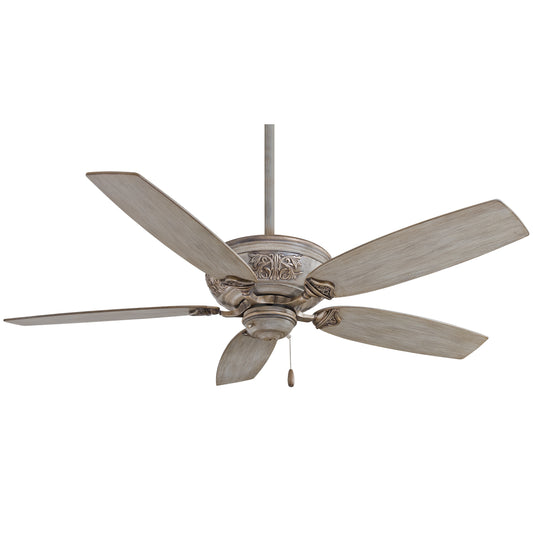
Take a premium model like the Aviation ceiling fan (starting at $558). It can act as a stunning focal point in a modern loft while providing powerful air circulation and beautiful light. Finding the right fan-and-light combo is the key to unlocking a room's full potential. To learn more about how a fan can improve your space, check out our guide on the breezy benefits of having a ceiling fan.
Integrated vs Add-On Kits: Which Path to Take?
When you're hunting for a fan light kit, the first big question you’ll hit is: integrated or add-on? Think of it like buying a suit. An integrated kit is like getting a bespoke, tailored suit where every piece is designed to work together perfectly from day one. An add-on kit, on the other hand, is like finding the perfect designer tie to upgrade your favorite suit—it can look fantastic, but you have to make sure it’s a perfect match first.
Let's break down what that really means for you and your fan.
The All-in-One Advantage of Integrated Lights
An integrated fan light kit is built directly into the ceiling fan’s design from the start. The manufacturer designed the light and the fan as a single, cohesive unit, which means you get a guaranteed perfect match, both in how it looks and how it works.
If you’re buying a brand-new ceiling fan and want a clean, polished look right out of the box, this is almost always the way to go. You don’t have to waste time worrying about compatibility, fiddly wiring harnesses, or whether the brushed nickel on the light kit will match the brushed nickel on the fan. It’s all engineered to be seamless.
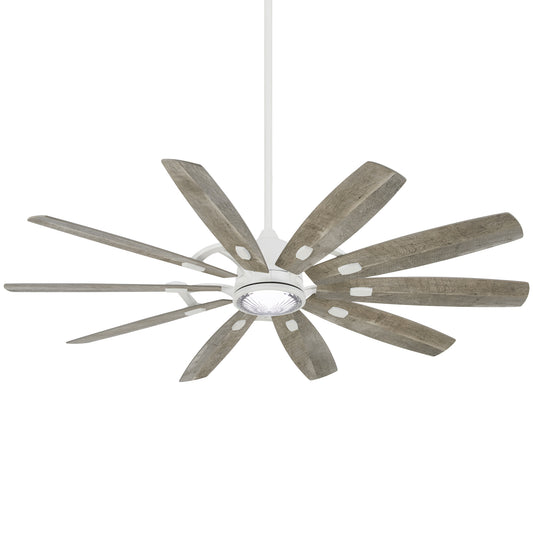
This is especially true for premium, design-forward models. Take a look at the stunning Aerovon fan collection, where high-design fans start well over $300. The lighting on these fans isn't an afterthought; it’s a core part of their sleek, aerodynamic profile. This unified construction creates a cleaner silhouette and often comes with more advanced features, like dimmable LEDs that are perfectly calibrated for the fan.
An integrated light kit delivers a curated, intentional design. It elevates the fan from a simple utility to a true statement piece, ensuring every component works in perfect harmony.
The Flexibility of Add-On Kits
Now, let's talk about the other side of the coin. An add-on fan light kit offers incredible flexibility, especially if you already have a fan you love but wish it had a light. This is your chance to give an existing fixture a major upgrade without replacing the entire unit. It’s a practical and often more budget-friendly way to breathe new life into a room.
The catch? This path requires a little bit of detective work on your part. Not every fan is "light kit adaptable," so you absolutely need to confirm compatibility before you buy anything.
Here’s a quick checklist for your existing fan:
- Check the Switch Housing: Look at the very bottom of the fan motor. Is there a removable cap or plate held on by a few screws? This is a good sign.
- Look for Pre-Drilled Holes: Once you pop that cap off, you should see pre-drilled, threaded holes. These are there specifically to accept the mounting screws of a light kit.
- Find the Wiring Plug: Inside, you should see a small plastic connector with a couple of wires (usually one blue and one white). This is the plug-and-play connection that makes installation a breeze.
If your fan has all three of these features, you’re in luck! An add-on kit can be a fantastic and straightforward upgrade. Just be sure to match the brand and, if possible, the specific model line to ensure the fit and finish are spot on.
Integrated vs Add-On Fan Light Kits At a Glance
Feeling a bit stuck? Use this quick comparison to decide which type of fan light kit is the right call for your project, budget, and existing setup.
| Feature | Integrated Light Kit | Add-On Light Kit |
|---|---|---|
| Best For | New fan installations or a complete room redesign. | Upgrading an existing "light kit adaptable" fan. |
| Design | Seamless, cohesive look. Designed as a single unit. | Style depends on matching kits to your fan. |
| Installation | Simpler overall, as it's part of the main fan install. | Requires checking compatibility and a separate install step. |
| Compatibility | Guaranteed to work. No guesswork needed. | Must confirm your fan is "light kit adaptable." |
| Cost | Often part of a higher-priced, premium fan package. | Can be a very cost-effective way to add light. |
| Selection | Limited to the fan models that come with integrated lights. | Wide variety of styles and brands available. |
Ultimately, whether you choose the seamless design of an integrated kit or the practical flexibility of an add-on, both paths lead to a brighter, more functional space. It all comes down to what you’re starting with and the final look you want to achieve.
Matching Your Kit for a Perfect Fit
Think of an add-on fan light kit as a dance partner for your ceiling fan—they have to be perfectly in sync to work. Compatibility is everything. Taking a few moments to check if they’re a match will save you the headache of a frustrating return and a half-finished project staring you down. This isn't just about looks; it’s about a safe, functional installation.
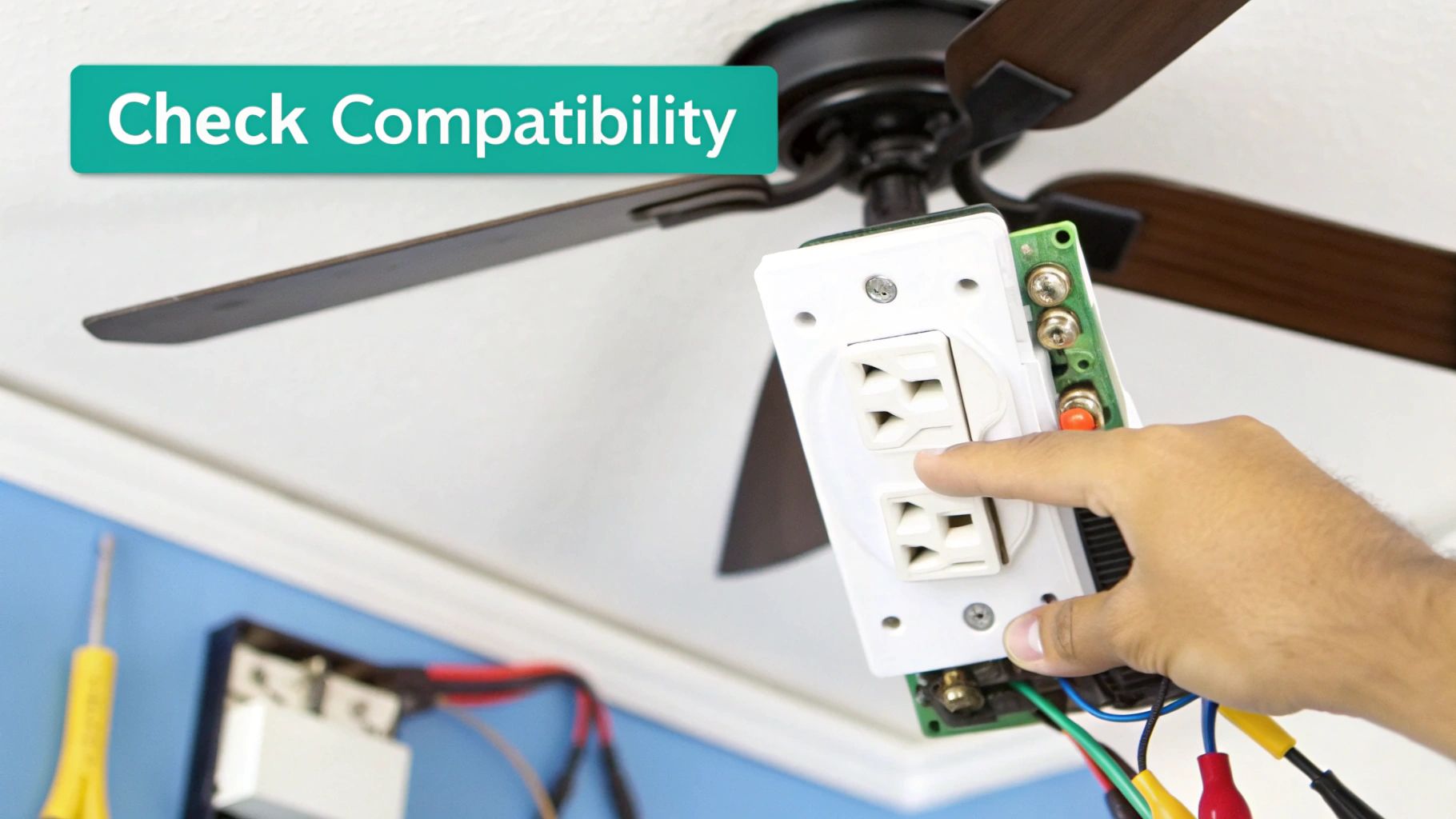
Before you fall in love with a stylish kit, it’s time to play detective with your fan. Your mission, should you choose to accept it, is to find out if your fan is "light kit adaptable." Most fans that are ready for an upgrade will have some pretty clear tell-tale signs.
The Compatibility Checklist
Start by looking at the very bottom center of your fan. This area, known as the switch housing or switch cup, is where the magic happens. Here’s exactly what to look for to confirm your fan is ready for a new light:
- A Removable Plate: Most adaptable fans have a decorative cap or plate held on by a few small screws. If you see this, it’s your first green light.
- Pre-Drilled Holes: Once that plate is off, peek inside. You should see threaded holes ready to accept the mounting screws from a new light kit. No holes means no go.
- The Wiring Harness: This is the most crucial clue. You're looking for a small, plastic plug with two wires (typically blue and white). This is the dedicated power source for the light, which makes the wiring connection a simple—and safe—snap.
If your fan checks all three boxes, congratulations! It’s ready for its lighting debut.
Why Universal Is Not a Guarantee
You’ll see a lot of kits out there labeled "universal," but it's a term to treat with a bit of caution. While a universal kit is designed to fit a wide range of fan models, it doesn't mean it will fit every fan. The brand and design of your fan's mounting system still matter a great deal.
A "universal" fan light kit is more of a guideline than a guarantee. Always prioritize brand-specific compatibility for a flawless fit and finish.
For example, a high-end model like our Chisel Ceiling Fan (starting at $458) is engineered with precise components. Trying to fit a generic kit might work, but it could also result in an awkward gap, a mismatched finish, or even an unstable connection. Whenever possible, your best bet is to opt for a kit made by the same manufacturer as your fan. You'll ensure the screw holes align perfectly and the finish—whether it's brushed nickel or matte black—is a seamless match. For a deeper dive into fan hardware, our guide on ceiling fan mounting bracket types offers some great insights.
Finally, don't forget to check the wattage limit. Your fan is designed to handle a specific electrical load. The instruction manual or a sticker on the motor housing will specify the maximum wattage for a light kit. Exceeding this limit can overload the fan's internal wiring, which is a serious safety risk. By confirming these details upfront, you can shop with confidence, knowing your chosen fan light kit will be a perfect—and safe—fit.
Finding the Right Style and Ambiance
Let's be honest, the light kit on your fan is more than just a place to stick a bulb—it's the finishing touch that really defines a room's whole vibe. This is the fun part, where you get to step away from the technical details and think purely about style. The right design can pull your decor together, turning your fan from a simple appliance into a genuine piece of art.
Whether your home is a clean-lined modern space or a cozy traditional retreat, there's a light kit to match. You could go for a minimalist bowl light that gives off a soft, clean glow, or maybe a multi-arm fixture that brings a classic, chandelier-like feel to the room. For a more industrial or contemporary look, sleek spotlights can point the light exactly where you need it most.
Decoding the Language of Light
To really nail the perfect atmosphere, it helps to know a little bit about light itself. Two terms are your best friends here: lumens and Kelvin. Think of them as the volume and tone knobs for your room’s lighting.
- Lumens (Brightness): This is just a measure of how much light a bulb puts out. More lumens mean brighter light, which is perfect for work-focused areas like kitchens or home offices. Fewer lumens give you a softer, more relaxed feel that's ideal for bedrooms and living rooms.
- Kelvin (Color Temperature): This tells you the color of the light, measured on a scale from warm to cool. Lower Kelvin numbers (around 2700K) create a warm, yellowish glow like a classic incandescent bulb—think cozy and inviting. Higher numbers (4000K and up) produce a crisp, blue-white light that feels clean and energizing, making it great for workspaces.
The right mix of lumens and Kelvin is your secret weapon for creating mood. A warm, low-lumen light can make a big room feel more intimate, while a cool, high-lumen light can make a small workspace feel bright and open.
The Power of Premium Design and Efficiency
When you invest in a premium ceiling fan, the light is designed to be a centerpiece, not an afterthought. For homeowners and designers looking for a true statement piece, a model like the magnificent Artemis XL5 (starting at $1,058) isn't just a fan with a light; it's a sculptural element where the lighting is flawlessly blended into its fluid form. This kind of intentional design elevates the entire room. You can also find high-end fans with unique lighting effects, like the ones in our guide on dazzling crystal ceiling fans with lights.
This focus on quality naturally extends to efficiency. Modern fan light kits almost exclusively use LED technology, and for good reason. Since 2020, with the rise of remote work, global sales of smart-enabled fan light kits have jumped by 25%. Features like dimmable LEDs have been shown to cut household energy costs by up to 40% compared to old-school bulbs. This trend aligns perfectly with the advanced, efficient options you'll find here at Fan and Lights. You can read more about this market shift on datainsightsmarket.com.
Step-by-Step Installation Essentials
Alright, you've picked out your perfect light kit and you're ready to brighten up your space. Installing a fan light kit is one of those incredibly satisfying DIY projects that can completely change the feel of a room. This isn't about deciphering complex electrical schematics; it's about walking you through the core steps so you can get the job done right.
The first, last, and most important rule of any electrical project is safety first. Seriously. Before you even think about touching a wire, march over to your circuit breaker box and flip the switch for the room you're working in. This isn't just a friendly tip—it's the golden rule that keeps you safe.
Preparing for a Smooth Installation
With the power confirmed off, you can get down to the fun part. The installation process usually starts with attaching the new light kit to the fan's switch housing. This part is typically pretty straightforward, just a few screws that line up with the pre-drilled holes you checked for earlier.
Next up is the wiring, which is often much simpler than people fear. Many modern kits use a simple plug-in wiring harness, which makes it a literal snap to connect. If your kit has separate wires, you'll just match them up—usually blue to blue and white to white—and secure them with wire nuts. Once everything is connected, you can attach any glass shades or covers.
If you're looking for a more detailed, A-to-Z guide on the whole process, we've got a great article on how to install a ceiling fan with lights that you might find helpful.
This infographic breaks down the fun choices you'll get to make when picking your perfect light.
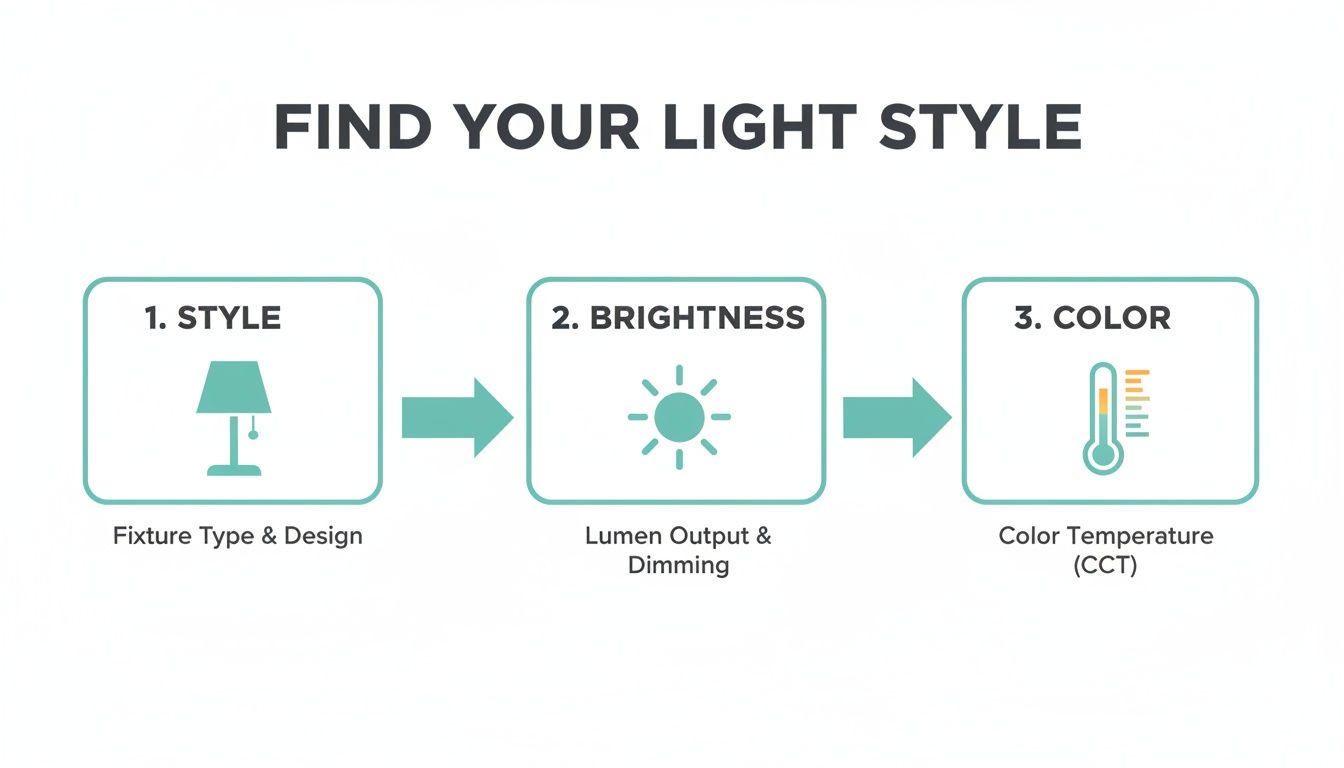
As you can see, finding the ideal glow for your room is a simple three-step journey from fixture style to brightness and color.
Location Matters: Damp and Wet Ratings
Thinking about putting a fan on your porch, patio, or even in a large bathroom? You absolutely have to consider the location. For any area that might see some moisture, you need to choose a fan and light kit with the correct UL rating.
- UL Damp-Rated: These are built to handle humidity and moisture, making them perfect for covered outdoor spaces like patios or lanais, as well as indoor spots like bathrooms. They can take the dampness, but not a direct downpour.
- UL Wet-Rated: Built tough for the great outdoors, these kits can handle direct exposure to rain, snow, and ice. If your fan will be in a pergola, gazebo, or any other open-air setting, this is the only rating you should consider.
A great real-world example is the Cabana Ceiling Fan (starting at $458). It's UL Damp-Rated, which is why it's such a fantastic choice for a breezy, covered porch where it can stand up to humidity year after year.
Choosing the wrong rating isn't just a question of whether the fan will last—it's a major safety issue. Always match the UL rating to the fan's environment to guarantee a safe and long-lasting installation. And remember, while this guide covers the basics, if you ever feel out of your depth, calling a licensed electrician is always the smartest move.
Discover Premium Fan and Light Solutions
For a lot of people, home fixtures are a form of art. A ceiling fan is much more than a utility—it's a statement. When you start looking at premium models, a fan with a fan light kit goes from being a simple appliance to a high-performance centerpiece that can define an entire room’s vibe. These aren't just fans; they're meticulously engineered pieces of functional decor.
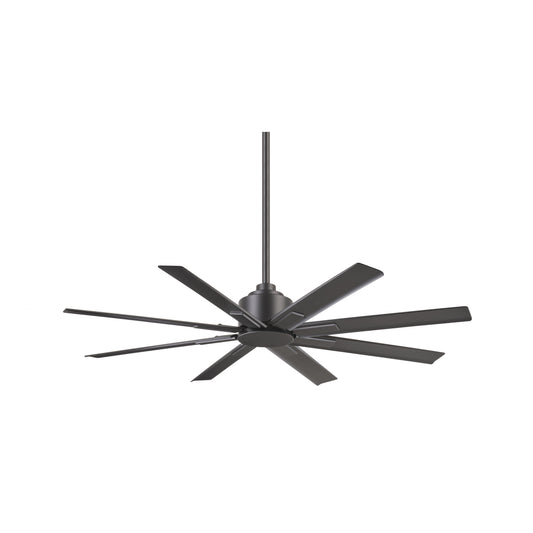
Investing in a premium model means you're choosing a fan where the light is an integral part of its identity, not just some afterthought. The design is intentional, creating a fluid, cohesive look that really elevates your space. Just picture the bold, industrial-chic appeal of the Aviation series (from $558) creating a dramatic focal point in a high-ceilinged loft. Its powerful form and integrated light command attention while delivering exceptional airflow.
Curated Designs for Every Aesthetic
Finding the right high-end fan is really about matching its form to your unique vision. Our curated collections are designed to help you discover a fan that feels like it was made just for your space.
- For Grand, Open-Concept Living: The magnificent Artemis XL5 (starting at $1,058) is a masterpiece of scale and grace. Its sweeping blades and central light fixture fill large areas with both a gentle breeze and beautiful illumination, making it perfect for great rooms and vaulted ceilings.
- For Resort-Style Elegance: If you want to create a breezy, relaxing atmosphere on a covered patio or sunroom, look no further than the Andros ceiling fan (from $718). Its design evokes a sense of tropical luxury, blending seamlessly with outdoor living spaces.
Globally, the preference for 44-52 inch fan sizes accounts for a whopping 45% of units shipped. That size range is the sweet spot that blends powerful performance with pleasing aesthetics. Many of our premium collections feature models in this popular size range, catering directly to homeowners and designers looking for that perfect mix of style and efficiency. You can discover more insights about ceiling fan market trends on cognitivemarketresearch.com.
Choosing a premium fan light kit means you are investing in a higher caliber of design, materials, and performance. It’s a commitment to creating a space that is not only comfortable but also inspiring.
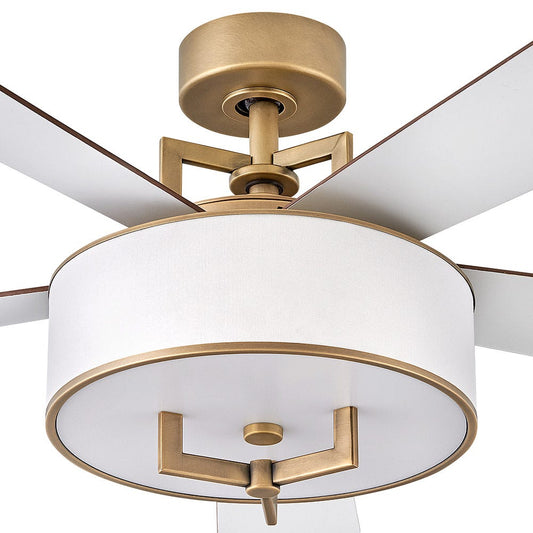
Whether you're an interior designer sourcing for a client or a homeowner looking for that perfect final touch, exploring options like the elegant Titus Light Kit can reveal just how transformative the right fixture can be.
Your Fan Light Kit Questions Answered
Let's dig into some of the most common questions that pop up when you're choosing or installing a fan light kit. Getting these details right from the start can save you a ton of headaches and help you sidestep those all-too-common DIY roadblocks. It’s time for some rapid-fire answers!
Can I Add a Light Kit to Any Ceiling Fan?
Not every fan is built to play nice with a light kit. While plenty of fans are "light kit adaptable," you can't just assume yours is one of them. The tell-tale sign is a removable cap on the very bottom of the fan’s switch housing. If you can take that off and see a dedicated wiring plug tucked inside, you’re in business.
If you pop the cap and there's nothing there, or you're just not sure, your best bet is to invest in a new fan that comes with a beautiful integrated light. This approach guarantees everything will work together perfectly and gives you that clean, seamless look you see in high-design collections like the Aerovon fan collection, where models start well above $300.
How Do I Control the Fan and Light Separately?
Don't worry, you're not stuck with the light on every time you need a breeze. Modern fan light kits are designed for independent control, which is usually handled in one of three ways:
- Dual Pull Chains: The classic, no-fuss method. You get one chain for the fan speeds and a separate one for the light. Simple and reliable.
- Wall Control: This involves a specialized wall switch with separate buttons or sliders for the fan and the light, giving you control right as you walk into the room.
- Remote Control: The ultimate convenience. A good remote gives you distinct buttons for all fan and light functions, and often includes handy extras like dimming.
What Causes a Fan Light to Flicker?
That annoying flicker often has a surprisingly simple fix. Before you panic, check the most common culprit: make sure the light bulbs are screwed in all the way. A loose bulb is often the whole problem.
If your fan is wired to a dimmer switch, you must use dimmable bulbs. Standard bulbs just aren't designed to handle reduced power and will absolutely flicker. If the problem still won't go away after checking those two things, it could be a loose wire. Just be sure to kill the power at the breaker before you go poking around.
Ready to find the perfect centerpiece for your room? At Fan and Lights, we offer a curated selection of premium fans with integrated lighting to elevate any space. Explore our stunning collections today


