

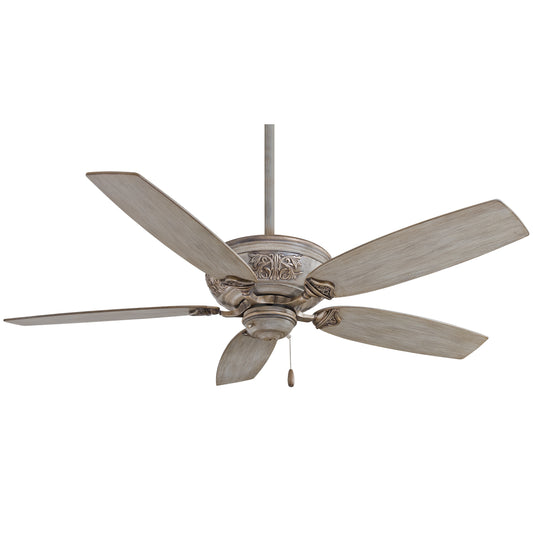

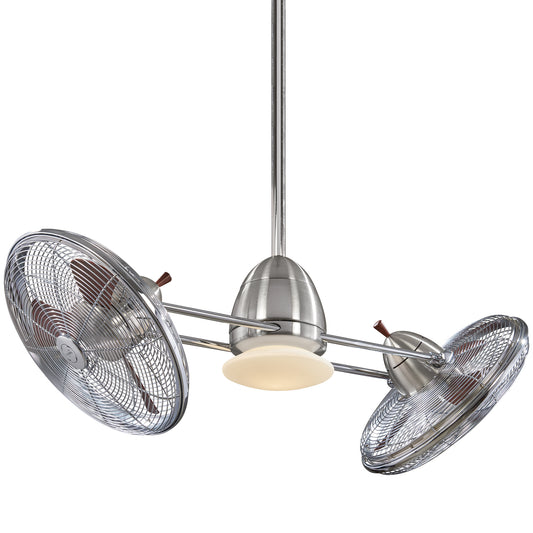

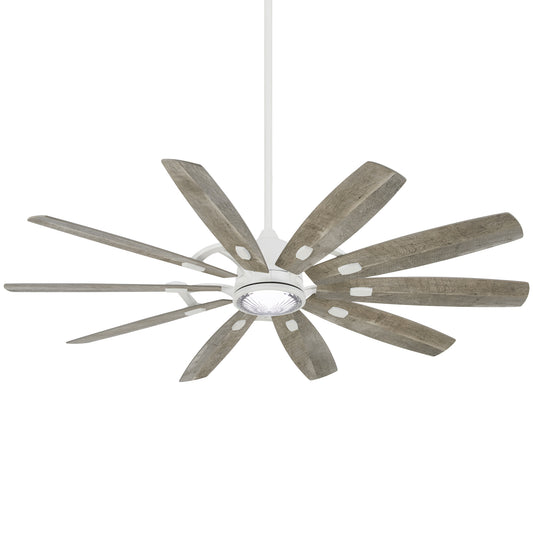

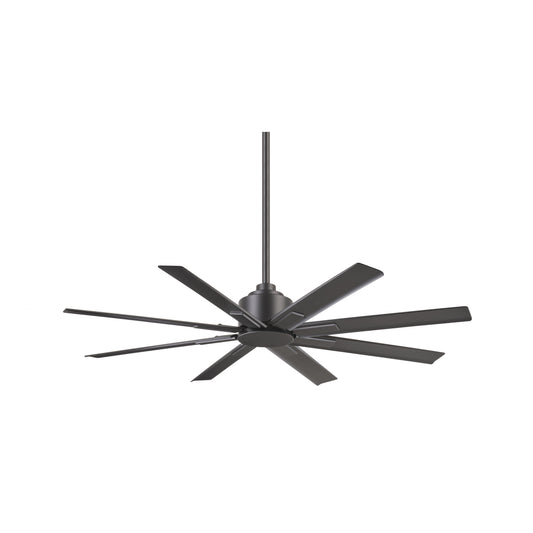







Finding Premium Ceiling Fans For Sale In My Area
When you start a search for "affordable ceiling fans for sale in my area," it’s tempting to grab the cheapest option at the nearest big-box store. But let's get real for a second. True affordability isn't about that initial price tag; it's about snagging a fan that delivers incredible value and performance for years to come. Think of it as a one-and-done purchase that brings comfort and a serious style upgrade for a decade or more. A cheap fan? That’s often just a fast track to replacement costs and a whole lot of wobbly, humming frustration.
Redefining What a "Deal" Really Means
Let's ditch the quest for a cheap fan and start the hunt for a smart investment. It’s way more fun, I promise.
When you invest in a quality ceiling fan—typically one priced at $300 or more—you're getting so much more than a basic appliance. You’re buying superior craftsmanship, durable materials, and a motor engineered to last. Say goodbye to the wobbles, the hums, and the need to replace the darn thing every few years.
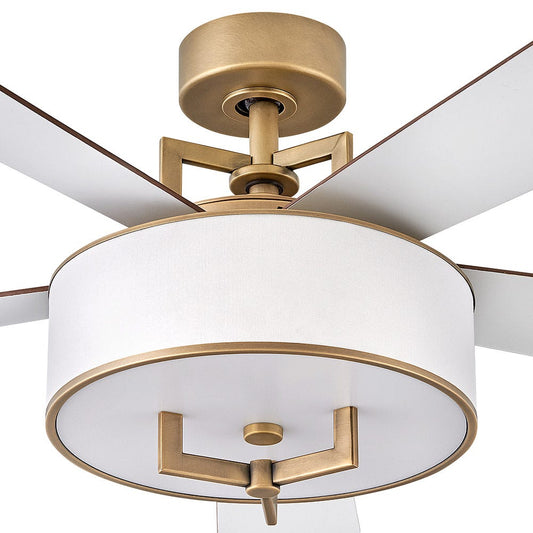
Instead, you get a fixture that genuinely elevates your home's look and feel. The best models are designed to be stunning centerpieces, not just functional afterthoughts. They blend incredible design with performance you can count on, day in and day out.
The Not-So-Hidden Costs of a "Bargain" Fan
A budget fan might feel like a victory at the checkout, but the hidden costs can sneak up on you fast. I've seen it a million times. These costs usually pop up as:
- Frequent Replacements: Cheaper materials and motors simply don't last. They can fail in just a couple of years.
- Higher Energy Bills: Inefficient motors have to work overtime—guzzling electricity—to produce a weak breeze.
- Noise and Wobbling: Poorly balanced blades and flimsy parts are the main culprits behind those annoying sounds and wobbles that can drive a person mad.
This cycle of buying, replacing, and tolerating subpar performance is the polar opposite of affordable.
The global ceiling fan market is projected to grow substantially, reaching roughly USD 31.6 billion by 2035. A big reason for this is a major consumer shift towards more energy-efficient and higher-quality models. People are finally catching on to the long-term benefits of investing in a better fan from the start.
To really see what you're paying for, it helps to put things side-by-side.
Value Check: High-End Features vs. Budget Buys
This table breaks down the tangible benefits you get when you step up to a fan over $300 compared to a standard budget option. It's not just about looks; it's about what’s under the hood.
| Feature | Standard Budget Fan (Under $200) | Premium Fan (Over $300) |
|---|---|---|
| Motor Type | Basic AC Motor; can be noisy and less efficient. | High-efficiency DC Motor; whisper-quiet, uses up to 70% less energy. |
| Blade Material | Particleboard (MDF) or cheap plastic; can warp or droop over time. | Solid wood, aircraft-grade aluminum, or durable ABS composite. |
| Blade Balance | Factory-balanced but often requires balancing kits to fix wobbles. | Precision-balanced blades are matched in sets for wobble-free operation. |
| Controls | Basic pull chains. A separate remote is an extra cost. | Integrated remote control, wall controls, and often smart home compatibility. |
| Warranty | Limited 1-year warranty on parts. | Lifetime motor warranty and 2-5 year warranty on parts and finishes. |
| Airflow (CFM) | Lower CFM, meaning it moves less air for the energy it uses. | Higher CFM rating, providing powerful, efficient air circulation. |
Looking at it this way, it’s clear that the higher initial cost buys you a whole lot more in performance, longevity, and peace of mind.
Find Local Quality Online
Thinking about "affordable ceiling fans for sale in my area" shouldn't stop at the local hardware store. The best deals, designs, and quality are often just a click away, delivered right to your door.
And as you redefine affordability, remember that this concept applies to other home upgrades, too. For example, exploring resources for local blind and shade options in Miami can offer similar insights into finding quality home essentials. A little research goes a long way in making sure your money is well-spent.
Finding The Perfect Fan For Your Home's Style
Let's be honest, a ceiling fan is more than just a motor with blades—it's a major design piece. It can either be the perfect finishing touch or an awkward afterthought that throws off the whole room. When you're searching for "affordable ceiling fans for sale in my area," it's easy to get sidetracked by all the technical details, but don't forget about style. The right fan acts as a functional centerpiece, tying everything together.
Think about it. A sleek, minimalist living room practically begs for a clean, 3-blade model like the $350 'Artemis IV' in a brushed nickel finish. It just fits. But in a cozy, traditional bedroom, that same fan would feel out of place. There, the classic charm of a 5-blade, $450 'Chateaux' fan with warm wood tones would feel right at home. Your fan should work with your decor, not against it.
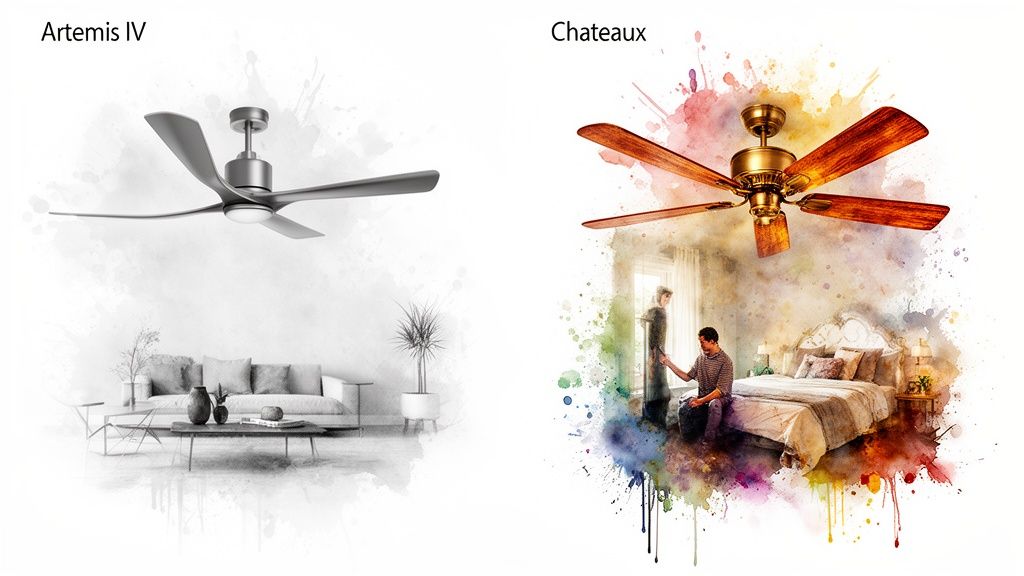
Matching Blades and Finishes To Your Decor
The number of blades makes a huge difference, both visually and in how the air feels. More blades don't always mean more airflow, but they definitely create a different vibe.
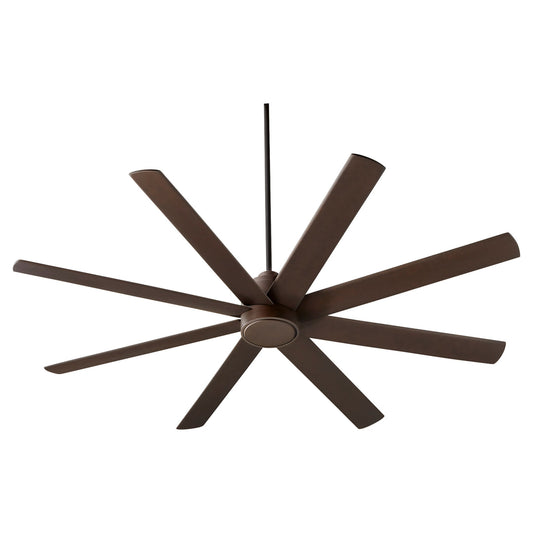
- 3-Blade Fans: These usually look more modern and streamlined. They’re great at moving air efficiently and are a perfect fit for contemporary or industrial-inspired spaces.
- 5-Blade Fans: This is the traditional standard. It offers a classic, balanced look that works well in almost any style, from modern farmhouse to transitional.
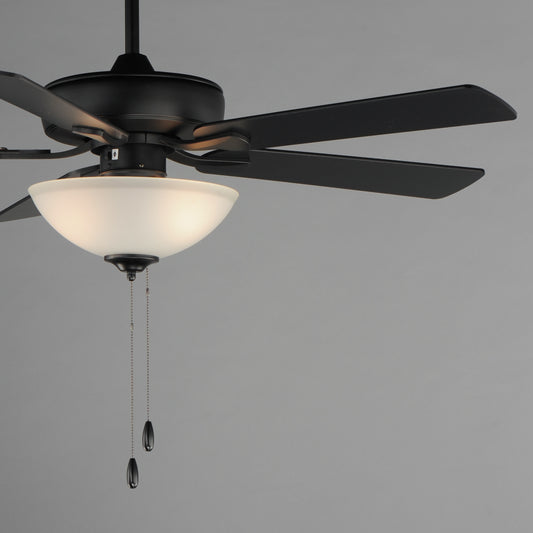
Once you’ve settled on the blade count, the finish is your next big decision. Matte black makes a bold, contemporary statement, while brushed nickel is a bit softer and more versatile. A great tip is to look at the existing hardware in your room—things like doorknobs, cabinet pulls, and light fixtures—and pick a fan finish that creates a cohesive look.
This focus on getting the aesthetics right isn't just a niche trend. North America is the second-largest market for ceiling fans, and customers are increasingly looking for premium, smart, and energy-efficient models. This shows that people want fans that are both functional and beautiful, which is exactly what curated collections like ours at Fan Connection are all about. You can dig deeper into ceiling fan market trends to see where things are headed.
At the end of the day, you want a fan that feels intentional. It should blend right in with your ceiling and decor, becoming an integrated part of the room's design. Taking a little extra time to think through these style details ensures your new fan will be an investment that enhances your home for years to come.
Why A Quality Fan Is An Investment That Pays Off
We've all been there: a ceiling fan that starts to wobble, hum, or just flat-out dies after a couple of seasons. It’s a common frustration, and it’s a perfect example of how a low price tag doesn't always mean you got a good deal. This is exactly where investing in a quality fan truly pays off, turning a simple purchase into a smart, long-term home improvement.
Let's get into what really separates a premium fan—often priced at $300 or more—from the budget models. The secret is almost always in the motor. Top-tier models like the $500 'Aviation' and the $650 'Andros' are built with advanced DC (Direct Current) motors.
Unlike the clunky old AC motors found in most cheaper fans, DC motors are engineered to be whisper-quiet. They’re also incredibly efficient, using up to 70% less energy. That’s not just a number on a box; it’s a real, noticeable drop in your monthly electricity bill.
Beyond The Motor, Materials Matter
A great motor is just one piece of the puzzle. The materials used to build the fan play a massive role in how long it lasts and how well it performs. Cheap fans often use flimsy particleboard blades that can easily warp in humid weather, which is what causes that dreaded wobble.
In contrast, premium fans are built with superior materials that are meant to last for years. This includes things like:
- Warp-Resistant Blades: These are often made from solid, kiln-dried wood or durable, all-weather composites that hold their shape and stay perfectly balanced.
- Durable Housings: You'll find high-grade metals with finishes that are designed to resist rust, corrosion, and fading, even if you install the fan in a damp location like a covered patio.
For a homeowner, this means you get to install a beautiful, reliable fixture and then forget about it. For a property manager, it means fewer angry calls about noisy fans and no more replacement costs. To dig a little deeper into the savings, you can explore how energy-efficient ceiling fans save you money in our detailed guide.
When you choose a quality fan, you're not just buying a product. You're investing in peace of mind, quiet comfort, and a fixture that will look and perform beautifully for a decade or more. It’s the definition of buying it once and buying it right.
Get Your Fan Sizing And Placement Right
We’ve all seen it: a tiny fan trying its best in a massive living room, or a giant fan overwhelming a small bedroom. Getting the size and placement just right isn't just about looks—it's the key to getting great airflow and keeping your fan running safely and without a wobble.
Choosing the right fan diameter for your room is where you need to start. A fan that’s too small for the space will have to work way too hard just to create a tiny breeze. Go too big, and you can create an uncomfortable, windy feeling in a small room. For a sprawling great room, you might need the impressive 60-inch span of the $700 'Artemis XL5' to really move the air around. But for a compact home office or a cozy reading nook, a smaller fan like the $300 'Anywhere' is often the perfect fit.
Match The Fan To The Space
Here’s a quick cheat sheet to get you started:
- Small Rooms (Up to 75 sq. ft.): Look for fans with a blade span between 29-36 inches.
- Medium Rooms (76-175 sq. ft.): A fan with a 42-48 inch blade span is your best bet.
- Large Rooms (Over 175 sq. ft.): You'll want a fan with a blade span of 52 inches or more.
If you want to dig deeper into the specifics, our complete ceiling fan size guide has all the details you need to find the perfect match.
Don't Forget Downrods And Clearance
Once you've picked a size, placement is the next critical piece of the puzzle, especially when it comes to your ceiling height. For safety, you absolutely need at least 7 feet of clearance between the floor and the fan blades. No exceptions.
A downrod—that's the pipe connecting the fan motor to the ceiling mount—is a must-have for high or sloped ceilings. It brings the fan down to the sweet spot for air circulation (usually 8-9 feet from the floor) and helps prevent that annoying wobble that can happen when a fan is mounted too high.
While you're planning the installation, think about where the fan will live. If you're putting it in a humid area like a covered porch or a steamy bathroom, you’ll need a fan built for those conditions. It's worth understanding damp and wet ratings for fan lights to make sure your fan can handle the moisture.
Your Guide To A Seamless Online Shopping Experience
Let's be honest, the days of giving up a weekend to wander through a giant hardware store are over. The search for "affordable ceiling fans for sale in my area" has moved online, and for good reason. Today, the best showroom is right on your screen, with dedicated e-commerce shops like Fan Connection bringing a hand-picked collection straight to you.
This modern approach puts you squarely in the driver's seat. Instead of feeling swamped by a hundred fans that all look the same, you can use intuitive online filters to instantly narrow things down. Imagine sorting through every option by style, finish, or even blade count in seconds—all without leaving your couch.
Shop With Confidence and Ease
One of the biggest advantages of shopping with a specialty online store is the sheer amount of detail you get. You can dive deep into product specs, compare airflow ratings (CFM), and even check out photos from other customers to see how a fan really looks in someone's home. That kind of transparency lets you make a decision you can feel good about.
Plus, checkout is usually a breeze. When you see familiar, secure payment options you already trust, it adds another layer of confidence. Using services like these makes the whole process fast and simple:
- Apple Pay
- PayPal
- Shop Pay
When you shop with a dedicated online retailer, you’re not just buying a product; you're getting access to expert advice that you just can't find in a typical big-box store. Resources like blogs and support teams are there to guide you from picking the right model all the way through installation.
If you're still weighing the pros and cons of online versus in-person, our guide on the best ceiling fan stores near you breaks it all down. It's the best way to find a high-quality, affordable fan with zero hassle and total satisfaction.
Still Have a Few Questions About Premium Ceiling Fans?
Even after digging into the details of style, sizing, and motors, it's totally normal to have a few questions left. You're making a smart investment in your home, and we want you to feel completely confident before you make a decision. Let's tackle some of the most common things people ask.
Are Expensive Ceiling Fans Really Quieter?
Yes, and the difference is night and day. When you step up to a premium fan—especially one over $300—you’re usually getting a high-quality DC motor. These things are engineered to be whisper-quiet, which means you can finally say goodbye to that annoying hum and rattle you get from cheaper models.
This is exactly why they're perfect for bedrooms, nurseries, or any space where you just want some peace and quiet.
How Much Can I Really Save On Energy?
An energy-efficient DC motor fan can use up to 70% less electricity than a standard AC fan. While the exact dollar amount you'll save depends on how often you run it, that kind of efficiency really adds up on your monthly energy bills.
Over its lifespan, a good fan can pretty much pay for itself through these consistent savings.
Choosing a fan with an energy-efficient motor isn't just about saving money; it's about making a smarter, more sustainable choice for your home. It's a win for your wallet and a small win for the planet.
Do I Need A Special Fan For Outdoor Patios?
Absolutely. For any outdoor space, even if it's covered, you have to use a fan with a UL damp or wet rating.
These fans are built to handle the elements, with moisture-resistant motors and all-weather blades designed to prevent rust, corrosion, and warping. Putting an indoor fan outside is not only a safety risk, but it will also void the warranty instantly.
Why Buy From A Specialty Online Retailer?
When you search for "affordable ceiling fans for sale in my area," the big-box stores might pop up first, but a specialty retailer offers a much better experience. Places like Fan Connection have a curated selection from top brands, giving you access to better quality and more unique designs you won't find elsewhere.
You’ll also get more detailed product information and can talk to experts who actually know what they're talking about, which makes finding the right fan so much easier.
Ready to find a fan that brings together stunning design with powerful, quiet performance? At Fan Connection, we offer a curated collection of premium ceiling fans to fit any style. Explore our collections today and discover the perfect centerpiece for your home.


