







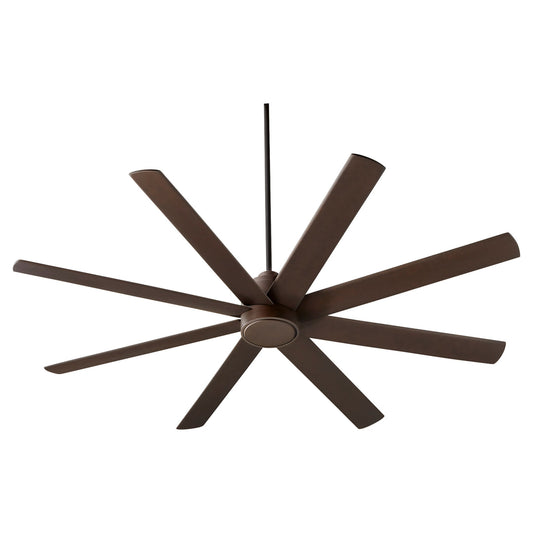


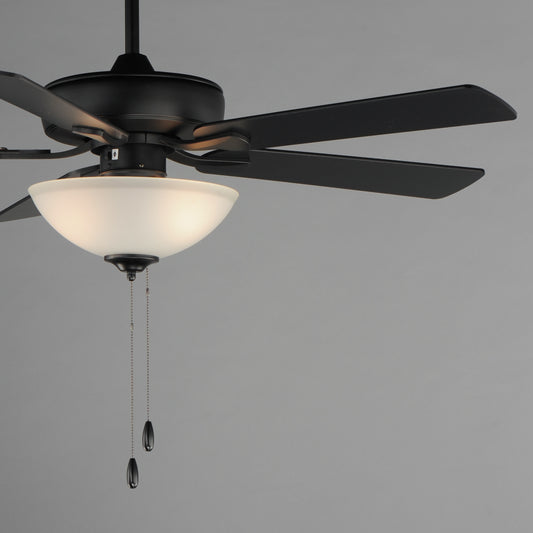


Best Ceiling Fans for Vaulted Ceilings
Picking out the best ceiling fans for vaulted ceilings really boils down to a few key things: a powerful DC motor, a long enough downrod, and the right hardware for a sloped ceiling. These features are non-negotiable for circulating air properly in a tall, angled space. You'll find that premium fans in our curated collections, usually those priced at $300 or more, are engineered from the ground up to handle these unique architectural demands.
Choosing the Right Fan for Your High Ceilings
There’s no denying it—vaulted ceilings are stunning. They bring a sense of openness and drama to a room that you just can't get with a standard flat ceiling. But their grand height and angled lines create a real headache when it comes to air circulation.
It's a simple matter of physics: hot air rises. In a vaulted room, all that warm air gets trapped way up at the peak, leaving the actual living area below feeling stuffy and stagnant, no matter the season.
Trying to solve this with a standard ceiling fan is like trying to cool a big room with a tiny desk fan. The effort is there, but it just won't make a dent. That’s why getting a fan with specialized features isn't just a suggestion; it's a necessity for these beautiful spaces.
Essential Features for Vaulted Ceilings
To really get the air moving in a tall, angled room, you need a fan that was built for the job. The right fan can completely transform your space from stuffy to comfortable, keeping the air feeling fresh all year long.
Here are the key things to look for:
- Longer Downrods: This is probably the most critical part. A downrod drops the fan down to the perfect height—usually around 8-9 feet from the floor. This ensures the fan is moving air where you can actually feel it, not just stirring the air at the top of the ceiling.
- Powerful DC Motors: You'll notice that most premium fans use DC motors. There's a good reason for that. They are incredibly energy-efficient, whisper-quiet, and give you more speed options. Their extra power is exactly what's needed to circulate the massive volume of air in a vaulted room.
- Sloped Ceiling Adapters: Your fan has to hang perfectly straight to work safely and effectively, even on an angle. Many high-quality fans include this hardware right in the box, but sometimes you might need to buy a separate adapter kit.
Choosing a fan without these features for a vaulted ceiling is one of the most common mistakes we see. It almost always leads to poor performance and buyer's remorse. A little extra investment in a fan designed for your space pays off big time in both comfort and energy savings.
Of course, getting the size right is also crucial for performance. To make sure you choose a fan that fits your space perfectly, check out our comprehensive ceiling fan size guide for detailed recommendations.
Why Vaulted Ceilings Need a Special Kind of Fan
There's no denying that a vaulted ceiling is a beautiful architectural choice. But that extra height creates a tricky situation that a standard ceiling fan just isn't built to solve. It all comes down to a simple physics problem called thermal stratification.
In plain English, hot air rises. In a room with a vaulted ceiling, that warm air gets trapped way up at the peak, leaving the space where you actually live feeling too hot in the summer and surprisingly cold in the winter.
Think of it like trying to stir a huge pot of soup with a tiny spoon. A standard, flush-mount fan is like that tiny spoon—it only swirls the air at the very top, never reaching down to mix everything together. That's exactly what happens when you put a regular fan on a high ceiling. It just moves the trapped hot air around up high, doing absolutely nothing for the air you're sitting in.
The Real Deal on Comfort and Airflow
A fan that’s actually meant for a vaulted ceiling acts like a much longer spoon. It’s designed to hang down into the room with the right downrod, breaking up that stagnant layer of hot air and mixing it all together.
In the summer, it creates a refreshing downdraft, making the room feel several degrees cooler without you ever touching the thermostat. In the winter, you can flip the fan’s direction, and it will gently push all that trapped warm air from the ceiling down along the walls. This warms up your living space without creating an annoying draft. This one simple change can make a real difference in your energy bills.
It's More Than Just a Long Pole
Let’s be clear: solving this problem isn’t as simple as just adding a longer pole to any old fan. Today's homes often have vaulted ceilings that are well over 12 feet high, with angles anywhere from 15 to 45 degrees. These kinds of spaces need fans specifically built for the job.
A standard fan made for a typical 8-foot ceiling just won't cut it. Homeowners are increasingly looking for fans rated for sloped ceilings that come with the right downrod—anywhere from 12 to over 60 inches long—to get the blades to that sweet spot, about 8 to 9 feet from the floor. You can see more on these trends over at Future Market Insights.
This specialized hardware isn't just for show; it's critical for both safety and performance.
- Sloped Ceiling Adapters: These little gadgets are non-negotiable. They let the fan hang perfectly straight, even on a steep angle. This is what prevents that annoying wobble, reduces stress on the motor, and keeps the fan running quietly and smoothly for years.
- Powerful Motors: It takes some serious muscle to move the sheer volume of air in a vaulted room. You'll find that premium fans, often those priced over $300, usually have powerful DC motors that deliver high airflow (CFM) without gobbling up electricity.
A specialized fan for a vaulted ceiling isn't a luxury—it's a must-have for real, year-round comfort and energy savings. Think of it as an investment that turns an architectural challenge into a cozy, inviting space. Without one, you're just paying to heat and cool a bunch of air you never even feel.
Nailing the Measurements: Downrod Length and Blade Span
Getting the measurements right is probably the single most important part of this whole process. Think of it like getting a suit tailored—a perfect fit makes all the difference, and for a fan on a vaulted ceiling, that means getting two numbers just right: the downrod length and the blade span.
Let's start with the downrod. This is the metal pipe that connects the fan motor to the ceiling mount. Its entire job is to lower your fan from that high peak down to an ideal height, which is consistently 8 to 9 feet above the floor. Any higher, and you're just cooling the air 20 feet above your head. Any lower, and it feels like a helicopter is about to land in your living room.
Thankfully, figuring out the right length is just simple math. Take your ceiling's height at its highest point, subtract the ideal fan height (let's go with 8 feet), and what's left is roughly the downrod length you'll need. This quick calculation is your best defense against buying a beautiful fan that just doesn't do its job.
Matching Your Downrod to Your Ceiling Height
You don't even have to guess. There are standard downrod lengths made specifically for common ceiling heights, which turns what seems like a complicated decision into a quick check on a chart.
For a deeper dive into how it all works, you can check out our complete guide on choosing the right downrod for your fan.
Getting the Blade Span Right
Next up is the blade span—the full diameter of the fan from the tip of one blade to the tip of the opposite blade. This is all about matching the fan's size to the room's square footage. A small fan in a huge great room will just spin its heart out without moving much air. On the flip side, a massive fan can easily overpower a smaller, cozier space.
Here’s a simple way to break it down:
- Medium Rooms (up to 175 sq ft): A blade span of 42 to 48 inches will feel just right.
- Large Rooms (175 - 350 sq ft): You’ll want to look for a fan in the 52 to 56-inch range.
- Great Rooms (over 350 sq ft): Go big. You'll need a fan that’s 60 inches or more to get the air moving properly.
This little flowchart helps visualize that first big decision: whether you need a specialized fan for your vaulted ceiling or if a standard one will do.
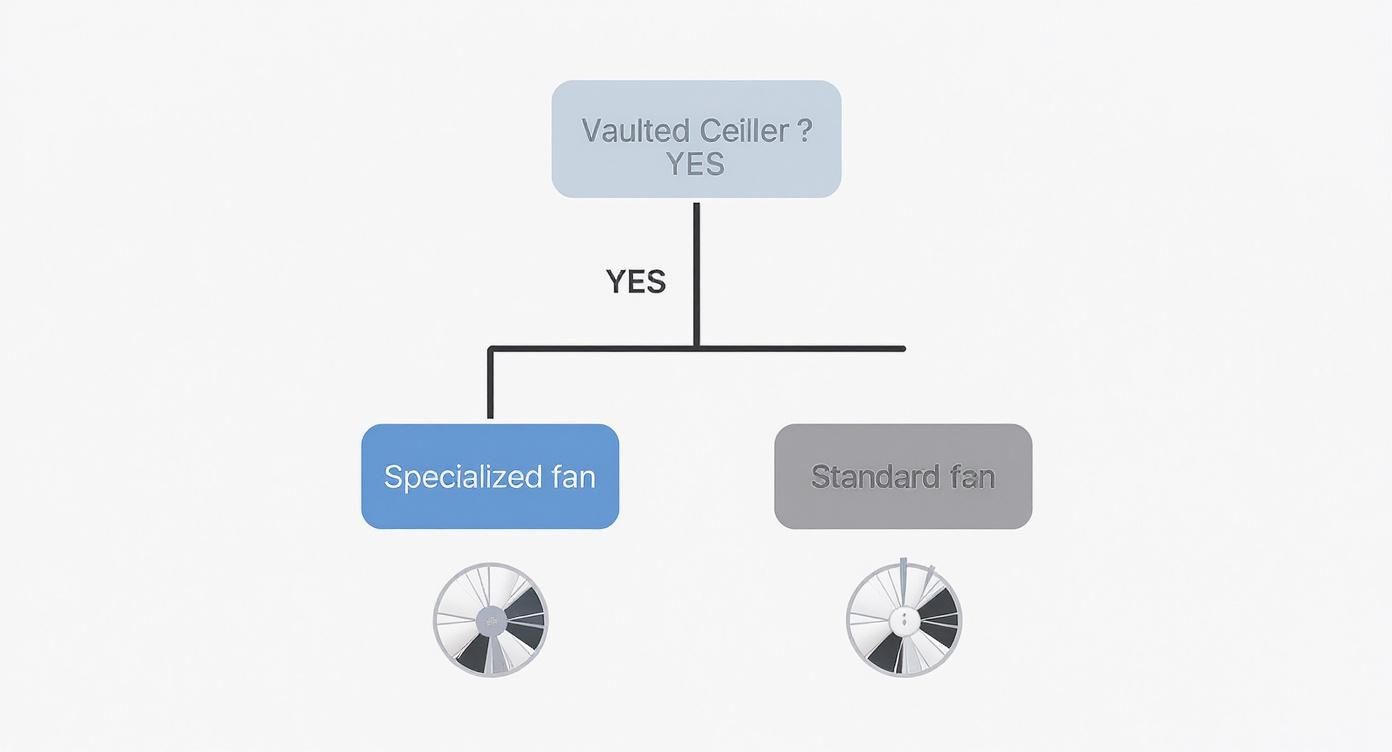
As you can see, the moment you have a vaulted or sloped ceiling, you're immediately looking at fans designed to handle that angle and height.
Let’s put it all together with an example. Imagine you've got a gorgeous great room with a 20-foot vaulted ceiling, and the room measures about 300 square feet.
- Find the Downrod Length: A 20-foot ceiling needs a 72-inch downrod to bring the fan down to that sweet spot 8-9 feet off the floor.
- Find the Blade Span: At 300 square feet, your room is in the "large" category. You should be looking for a fan with a 52 to 56-inch blade span.
With those two key numbers in hand—a 72-inch downrod and a roughly 54-inch blade span—you can shop with total confidence. You'll know for sure that you're picking a fan that's perfectly scaled to look great and perform beautifully in your space.
Downrod Length and Blade Span Sizing Guide
To make things even easier, here’s a handy table that combines all the key measurements. Just find your ceiling height and room size to get a solid recommendation for both your downrod and blade span.
| Ceiling Height (ft) | Recommended Downrod Length (in) | Room Size (sq ft) | Recommended Blade Span (in) |
|---|---|---|---|
| 12 ft | 24 inches | Up to 175 | 42-48 inches |
| 14 ft | 36 inches | 175-350 | 52-56 inches |
| 16 ft | 48 inches | Over 350 | 60+ inches |
| 18 ft | 60 inches | --- | --- |
| 20 ft | 72 inches | --- | --- |
This quick reference guide should help you narrow down your options fast, taking the guesswork out of finding that perfect fan.
Our Top Picks for High-End Vaulted Ceiling Fans
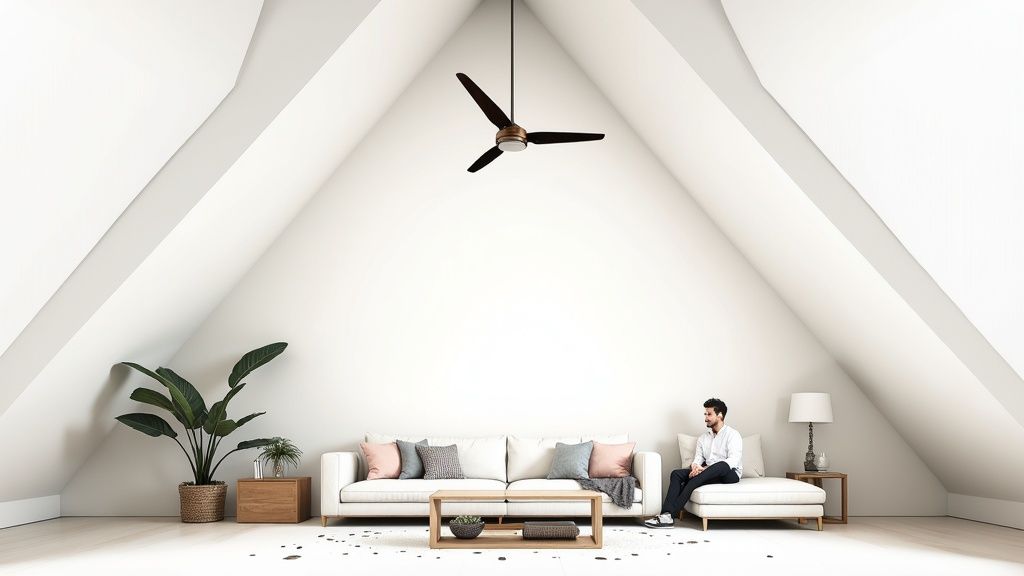
Alright, now for the fun part—let’s look at a few fans that truly deliver on both performance and style. We’ve handpicked some premium models, all priced over $300, that are specifically engineered to master the challenges of high, sloped ceilings. These aren't just fans; they're statement pieces designed to move air with serious power and grace.
When you invest in a high-end fan, you’re paying for superior engineering. Think powerful yet whisper-quiet DC motors, impressive airflow measured in CFM (Cubic Feet per Minute), and smart controls that make operation effortless, even from 20 feet below. Let's dive into some top contenders that blend these features with stunning design.
The Artemis XL5: A Masterpiece of Airflow
Imagine a fan that looks less like a home appliance and more like a piece of kinetic sculpture. That’s the Artemis XL5. With its distinctive, flowing blades, this fan is the perfect centerpiece for a modern great room with soaring ceilings. Its aesthetic is bold and unforgettable, making it a conversation starter that also happens to be a total workhorse.
But its beauty is much more than skin-deep. The Artemis XL5 is legendary for its incredible air movement, often boasting a CFM rating well over 6,000. That kind of power makes it one of the absolute best ceiling fans for vaulted ceilings in large, open-concept living areas where moving a massive volume of air is essential.
- Best For: Modern, contemporary, or even coastal-inspired great rooms.
- Key Feature: Its powerhouse DC motor and high-CFM output ensure you feel a real breeze throughout the entire space.
- Price Point: Typically starts around $600, reflecting its premium design and performance.
The Aviation: A Nod to Classic Design
For anyone who appreciates a blend of industrial and rustic charm, the Aviation fan is a fantastic choice. Its clean, three-blade design is inspired by vintage aircraft propellers, giving it a timeless appeal that works beautifully in loft-style spaces, modern farmhouses, or rooms with exposed wooden beams. It’s a design that manages to feel both nostalgic and refreshingly modern at the same time.
The Aviation excels in performance, too. It’s built with a robust motor that’s more than capable of handling the demands of a large room with a high ceiling. This fan is proof that you don't have to sacrifice powerful airflow for a classic, understated look.
When you're working with a space that has distinct architectural elements like wooden trusses or beams, a model like the Aviation can complement the aesthetic rather than compete with it. Its simple, strong lines harmonize with rustic textures, creating a really cohesive feel.
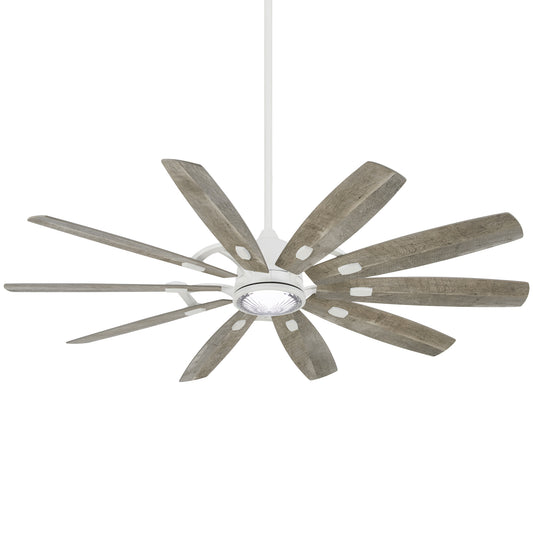
The Barn: Bold and Rustic Elegance
If your home has a rustic lodge or modern farmhouse vibe, the Barn ceiling fan will feel right at home. With its larger-than-life presence and blade spans that often hit 60 inches or more, this fan is designed to make a statement while moving some serious air. Its rugged, barn-inspired design elements add a ton of character and warmth to any vaulted space.
This fan is all about high-volume, low-speed (HVLS) airflow, which is the secret sauce for circulating air in massive rooms without creating a disruptive windstorm. It gently pushes warm air down in the winter and creates a wide, cooling breeze in the summer, making it a true year-round solution for comfort in those grand, open spaces.
- Best For: Large great rooms, open-plan barns, or any space with a rustic, industrial, or farmhouse aesthetic.
- Key Feature: Exceptional blade spans and HVLS technology for gentle, whole-room air circulation.
- Price Point: These substantial fans usually start in the $500-$800 range—a worthy investment for their scale and impact.
Choosing from these high-end options means you're not just buying a fan; you're investing in a long-term solution for both comfort and style. Each of these models is specifically equipped to handle the unique demands of high, angled ceilings, ensuring your beautiful room feels just as good as it looks.
Understanding Modern Fan Technology
When you're choosing one of the best ceiling fans for vaulted ceilings, what’s happening inside the motor housing is just as important as the blade span. A great fan is so much more than just its blades. Modern fan technology has completely transformed these fixtures from simple air movers into highly efficient, intelligent home appliances.
The biggest leap forward has been the shift from old-school AC (alternating current) motors to modern DC (direct current) motors. Think of an AC motor like a basic light switch—it's either on or off, with just a few speeds in between. A DC motor, on the other hand, is like a dimmer switch. It gives you a much wider and more precise range of control.
This difference is huge. DC motors are up to 70% more energy-efficient than their AC counterparts, which means lower electricity bills for you. They’re also virtually silent, which is a must-have for large, open rooms where every little sound can echo.
The Power of Smart Controls and Lighting
The perks don't stop with the motor. Modern fans have gotten a lot smarter, which is a lifesaver when your fan is mounted 20 feet up. Gone are the days of fumbling for a pull chain; today’s premium fans are all about convenience.
- Remote and Wall Controls: Most high-end fans now come with a remote that controls everything from speed to light intensity. Many also offer sleek wall panels for a more permanent and stylish control solution.
- Wi-Fi and Smart Home Integration: The real game-changer is Wi-Fi. Fans with this feature can sync up with smart home systems like Amazon Alexa or Google Home. You can adjust your fan with a simple voice command—"Alexa, set the living room fan to 50%"—a luxury you'll get used to real fast.
This demand for smarter, more efficient fans is a huge driver in the global market. The ceiling fan market was valued at around USD 11.39 billion in 2024 and is expected to keep growing as more people look for models with silent operation and smart features. You can dig into these market trends over at Fortune Business Insights.
For a high vaulted ceiling, smart controls aren't just a cool feature—they're a necessity. Being able to reverse the fan's direction for winter use from an app or remote makes it practical to use your fan for year-round energy savings.
Integrated LED Lighting
Finally, let's talk about lighting. Many of the best ceiling fans for vaulted ceilings now come with integrated LED light kits. These aren't the bulky, unattractive lights you might remember from the past.
Modern LED modules are sleek, powerful, and often dimmable, providing beautiful ambient light that can easily fill a large room. They are also incredibly long-lasting and energy-efficient, perfectly matching the fan’s efficient DC motor. If you're looking for more inspiration, check out our guide on the best modern ceiling fans that masterfully combine style and technology.
Common Questions About Vaulted Ceiling Fans
Picking the right fan for a high, angled ceiling can feel a little tricky. Once you start thinking about downrods, motor types, and air movement, it’s natural to have a few questions pop up.
Let's clear the air and tackle the most common things people ask when choosing a fan for a vaulted ceiling. Getting these answers straight will help you buy with confidence.
Can I Just Put a Long Downrod on Any Fan for My Vaulted Ceiling?
Not quite. While a long downrod is a must-have to get the fan down to the right height, it's only one piece of the puzzle. The fan's mounting system itself has to be rated for sloped ceilings.
Many fans are built for flat ceilings only and can’t hang correctly or safely on an angle. You need to check the fan's specs to see the maximum slope it can handle. Some fans might also need a separate "sloped ceiling adapter" to keep everything hanging straight and prevent dangerous wobbling. It's a critical safety check.
What Is CFM and Why Is It Such a Big Deal for High Ceilings?
CFM stands for Cubic Feet per Minute, and it's the single best measure of a fan's real-world power. It tells you exactly how much air the fan is capable of moving.
In a big room with a vaulted ceiling, a high CFM isn't just a nice-to-have, it's essential. You've got a massive volume of air to circulate, plus a pocket of hot air that gets trapped way up at the peak. A weak fan just won't cut it. For rooms like this, you should be looking for a fan with a CFM of 6,000 or higher. That's the kind of power needed to create a breeze you can actually feel down where you're sitting.
A powerful fan with a high CFM rating is the difference between gently stirring the air 20 feet above you and creating a genuinely refreshing breeze where you live. It's one of the most important performance metrics for a vaulted ceiling application.
Are DC Motor Fans Really Worth the Extra Money?
For a fan in a primary living space that you'll use all the time, the answer is a definite yes. DC motor fans are an incredible investment. For starters, they are up to 70% more energy-efficient than old-school AC motors. That adds up to real savings on your electricity bill over the life of the fan.
Even better, they're practically silent. In a big, open room, a humming motor can echo and become a real annoyance. DC motors eliminate that problem. They also give you way more speed options, so you can dial in the perfect amount of airflow. For high ceilings, the combination of efficiency, quiet operation, and control makes them well worth it.
How Am I Supposed to Reverse My Fan for Winter if It’s 20 Feet Up?
This is exactly why a modern fan with a remote or smart control is non-negotiable for a high ceiling. Older fans had a little toggle switch right on the motor housing—totally unreachable once the fan is installed way up high.
Thankfully, almost any quality fan you buy today, especially one with a DC motor, has the reverse function built right into the remote control or a smartphone app. With the push of a button, you can switch the blade direction to push all that trapped warm air down from the ceiling, making your room feel cozier in the winter without ever needing a ladder.
At Fan Connection, we've hand-picked a collection of premium fans specifically designed for the unique challenges of vaulted ceilings. You'll find the performance, style, and modern features you need. Explore our collections to find the perfect fit for your space at https://www.fanandlights.com.


