











Ceiling fan repair services near my location: Fast fixes and trusted pros
That dreaded wobble, that incessant clicking, or worse—the complete silence from your ceiling fan. It’s frustrating, but it doesn't have to be a major headache. Before you even start searching for "ceiling fan repair services near my location," a few quick checks can help you get to the bottom of the problem.
This little bit of detective work might even lead to a simple fix, saving you the cost of a service call and getting your breeze back in minutes. It's a bit like being a home detective, and honestly, it can be pretty satisfying to solve the mystery yourself!
Diagnosing Your Fan Before You Make the Call
When a fan starts acting up, it’s easy to jump to worst-case scenarios. But honestly, most common issues have surprisingly simple explanations. Spending a few minutes to triage the situation can tell you whether you’re dealing with a minor hiccup you can handle yourself or something that truly needs a professional's touch.
A wobbly fan, for example, is probably the number one complaint we hear. It's the fan equivalent of a car with a flat tire – annoying and a bit alarming! Before you do anything else, safely get on a ladder and give the fan blades a gentle wiggle. Are they securely fastened to their brackets? Are the brackets themselves tight against the motor housing? You’d be amazed how often a few loose screws are the real culprit behind a noisy, shaky fan.
If you want to dive deeper into this common problem, our guide on how to balance a ceiling fan is a great resource.

Before calling in the cavalry, run through this quick checklist. It helps narrow down the usual suspects and makes you sound like a pro when you do have to call someone.
Quick Troubleshooting Checklist Before You Call a Pro
| Symptom | Potential Cause | DIY Fix or Call a Pro? |
|---|---|---|
| Fan is totally dead | Circuit breaker is tripped, wall switch is off, or loose wiring in the switch. | DIY First: Check your breaker box and the wall switch. If that doesn't work, Call a Pro to check the wiring. |
| Humming noise, but no spin | A bad capacitor is the most likely culprit. | Call a Pro. Capacitors store electricity and can be dangerous to handle without experience. |
| Lights work, fan doesn't (or vice-versa) | Faulty remote receiver, a bad pull chain switch, or internal wiring issue. | Call a Pro. This points to an electrical issue inside the fan that's best left to an expert. |
| Fan is noisy or clicking | Loose screws, blades are out of balance, or a problem with the motor bearings. | DIY First: Tighten all visible screws. If the noise persists, Call a Pro. |
| Wobbly and shaking | Unbalanced blades, loose mounting bracket, or bent blade iron. | DIY First: Use a balancing kit or tighten screws. If it’s still shaky, Call a Pro. |
This little diagnostic can make all the difference when you eventually talk to a technician, helping them understand the issue before they even arrive.
Common Symptoms and What They Mean
Let's break down those typical signs of trouble. Each one tells a different story about what's going on with your fan.
- The Fan is Completely Dead: No lights, no motor hum, nothing. Start with the absolute basics—the circuit breaker and the wall switch. It sounds almost too simple, but you'd be surprised how often a flipped breaker is the cause.
- The Fan Hums But Won't Spin: This is the classic sign of a failed capacitor. Think of the capacitor as the component that gives the motor the initial "kick" it needs to start spinning. This is a very common and straightforward repair for any experienced technician.
- The Lights Work, But The Fan Doesn't (or Vice Versa): When one function works but the other doesn't, it often points to an issue with the remote control receiver or the fan's internal wiring. The light kit and the fan motor are on separate circuits, so one can fail while the other keeps on working.
These kinds of problems are more common than you might think. The global ceiling fan market was valued at around USD 14.6 billion in 2025, and within that massive market, issues like motor burnout or capacitor failure affect about 20-25% of units within their first five years.
Homeowners end up spending an estimated $500 million each year on these kinds of repairs, which just goes to show you're not alone in this. You can see more about market trends over at Future Market Insights. By figuring out the likely issue first, you can have a much more informed and productive conversation when you do decide to call in a pro.
Finding Trusted Ceiling Fan Repair Services Near My Location
Alright, so you’ve fiddled with the pull chain and checked the breaker, but the fan is still on the fritz. When a DIY fix is officially off the table, it’s time to call in a pro. But finding the right professional is about more than just a quick search—it’s about locating a reliable expert who will get the job done right without wasting your time or money.
The good news? Finding a great local technician is easier than ever if you know where to look and what to look for. It’s a quest, and you're the hero seeking a skilled artisan to restore peace (and airflow) to your kingdom.

Forget generic web searches. Your first stop should be platforms designed to connect you with local services.
Mastering Your Local Search
Think of map-based apps and service directories as your secret weapon. They are absolute goldmines for finding vetted professionals, and they lay out a ton of information at a glance, from star ratings to real photos from past customers.
- Google Maps: Just searching "ceiling fan repair" will instantly populate a map with local electricians and handymen. You can see their service areas, hours, and—most importantly—what other homeowners have to say about them. I always look for businesses with a healthy number of recent, positive reviews.
- Yelp: This is another powerhouse for local reviews. What I love about Yelp is that customers often get really specific, describing the exact problem they had and how the technician solved it. It gives you a much clearer picture of their actual skills.
- Thumbtack & Angi: These platforms are built specifically for hiring pros. You can see their credentials, request quotes directly, and read detailed feedback from people who hired them for similar jobs.
When you're searching, remember you're tapping into the world of home service providers. The best ones know how to market themselves and build trust online. A polished, well-maintained profile is almost always the first sign of a professional operation.
Decoding a Technician's Profile
A strong online profile is way more than just a name and phone number. It’s their digital resume, and it’s your best tool for deciding if they're the right person for your job. Once you find a promising candidate, it’s time to do a little digging.
Key Takeaway: A pro's digital footprint tells a story. Look for consistency across different platforms, clear communication in their business description, and solid evidence of recent, successful projects.
A solid profile should always include these things:
- Photos of Past Work: Legitimate technicians are proud of what they do, and they want to show it off. You want to see clear photos of actual electrical work or fan installations, not generic stock images.
- Proof of Licensing and Insurance: This is completely non-negotiable. A licensed and insured electrician protects you from liability if anything goes wrong on the job. Most pros will list their license number right on their profile for you to check.
- Genuine Customer Reviews: Pay close attention to how the business responds to feedback—both good and bad. A professional, calm response to a negative review is often a better sign of a great company than a flawless, all-five-star record.
By using these digital tools and knowing what to spot, you can quickly build a shortlist of reliable experts ready to get your fan spinning again. This little bit of research upfront is your best defense against hiring the wrong person.
Vetting Technicians and Understanding Repair Costs
Okay, you’ve got a solid shortlist of local pros. Now comes the part that really matters: picking the right person for the job without getting taken for a ride. A quick, well-informed phone call at this stage can save you a world of headaches and hidden costs later on.
Think of it as a mini-interview. You’re the hiring manager, and your fan’s future is on the line.
The goal isn't just finding someone who can fix the problem, but finding a professional you feel comfortable having in your home. A good technician will welcome your questions and give you clear, confident answers. To get a better sense of what makes a service provider seem reliable, it's worth understanding the common strategies businesses use to build trust.
Essential Questions to Ask Before You Hire
Before you even get to the price, you need to feel out the technician's expertise and professionalism. A few direct questions can tell you a lot about their experience and how they do business.
Don't be shy about this—a real pro will appreciate that you’ve done your homework.
Here are the questions I always recommend starting with:
- "Do you have experience with my fan's brand and model?" Someone who knows their way around a Minka-Aire’s remote receiver or a Hunter fan's unique mounting system is going to be far more efficient than a technician who’s learning as they go.
- "Are you licensed and insured?" This is non-negotiable. It’s your safety net. Ask for their license number—it protects you from liability if an accident happens on your property.
- "Do you offer a warranty on your repair work and any parts used?" A reputable service always stands behind its work. A 30 to 90-day warranty on both labor and parts is a standard sign of quality you should look for.
These questions help you quickly filter out the less-qualified folks and focus on a true expert who can handle your specific repair.
Decoding the Repair Quote
Once you feel confident in their skills, it's time to talk money. A vague quote like, "it'll probably be a couple hundred bucks," is a massive red flag. A professional estimate should be broken down so you know exactly what you’re paying for.
Pro Tip: Always, always ask for a written quote that separates labor costs from the cost of parts. This transparency prevents surprise fees at the end of the job and makes it much easier to compare offers from different technicians.
Several things can affect the final cost. Accessibility is a big one. A fan on a 20-foot vaulted ceiling will naturally cost more to service than one in a standard eight-foot room because it requires special ladders and extra safety measures. The complexity of the repair and the price of any replacement parts are the other key variables.
It’s also good to know that the ceiling fan world is changing. The industry-wide shift to super-efficient BLDC motors can cut electricity use by up to 60%, but these newer fans come with their own set of repair challenges. For instance, IoT connectivity failures now affect 12% of smart fans within their first two years, while simple remote malfunctions account for 18% of all service calls.
Even with these new complexities, statistics show that professionally repaired fans regain 95% of their original performance. That simple repair can save homeowners an average of $100-300 compared to buying and installing a whole new fan.
Preparing Your Home for a Smooth Repair Visit
Once you’ve booked a technician for your ceiling fan repair, a little prep work can make a world of difference. Taking a few simple steps before they arrive ensures the visit goes smoothly, safely, and even saves you a bit of money. Think of it as rolling out the welcome mat for a quick and easy fix.
The first, and most important, thing to do is think about safety. Before the technician shows up, find your circuit breaker box and flip the breaker that powers the room with the broken fan. This simple step completely removes the risk of electrical shock while they work—it’s a professional courtesy every electrician appreciates.
Create a Clear and Safe Workspace
Next, take a look at the area right under the fan. Your technician is going to need a good amount of space for their ladder, tools, and to move around freely without tripping over an ottoman.
- Move Furniture: Slide any couches, coffee tables, or chairs out from under the fan. A clear radius of at least five feet is perfect.
- Protect Your Floors: It’s a good idea to lay down a drop cloth or even an old blanket to catch any dust, debris, or small parts that might fall.
- Secure Pets: For their own safety and to help the technician focus, it’s best to keep curious cats or dogs in another room until the job is done.
Have the Right Information Ready
To help the technician diagnose the problem faster, try to gather a few key details about your fan. Knowing the brand and maybe even the model number can give them a head start on what parts they might need.
Jot down a quick but clear description of what’s going wrong. Instead of just saying "it's broken," be specific. Something like, "It makes a rhythmic clicking noise on medium and high speeds, but it's quiet on low," is incredibly helpful. It also doesn't hurt to give the fan a quick wipe-down, which can sometimes reveal hidden screws or model numbers. If you're not sure where to start, our guide on how to clean ceiling fan blades has some easy tips.
A prepared homeowner is a technician's best friend. Having the space cleared and the fan’s info ready can easily shave 15-30 minutes off the labor time, which directly saves you money on the final bill.
The Smart Choice: Repairing vs. Replacing Your Ceiling Fan
You're standing there, staring up at a wobbly, noisy, or completely dead ceiling fan, and the big question pops into your head: is it worth fixing, or is it time to just replace the whole thing? This is a classic homeowner dilemma, and the right answer isn't always just about the upfront cost. It’s really a strategic choice that impacts your home's comfort, style, and even your long-term energy bills.
A great rule of thumb I always share with people is the 50% rule. It's simple: if the repair quote is more than half the cost of a new, comparable fan, it's almost always smarter to just replace it. Pouring a lot of cash into an aging fan can feel like throwing good money after bad, especially when you see what modern fans have to offer.
Before you even make that call, though, a little prep work goes a long way. This flowchart gives you a quick visual guide on the first few things to check—safely, of course.
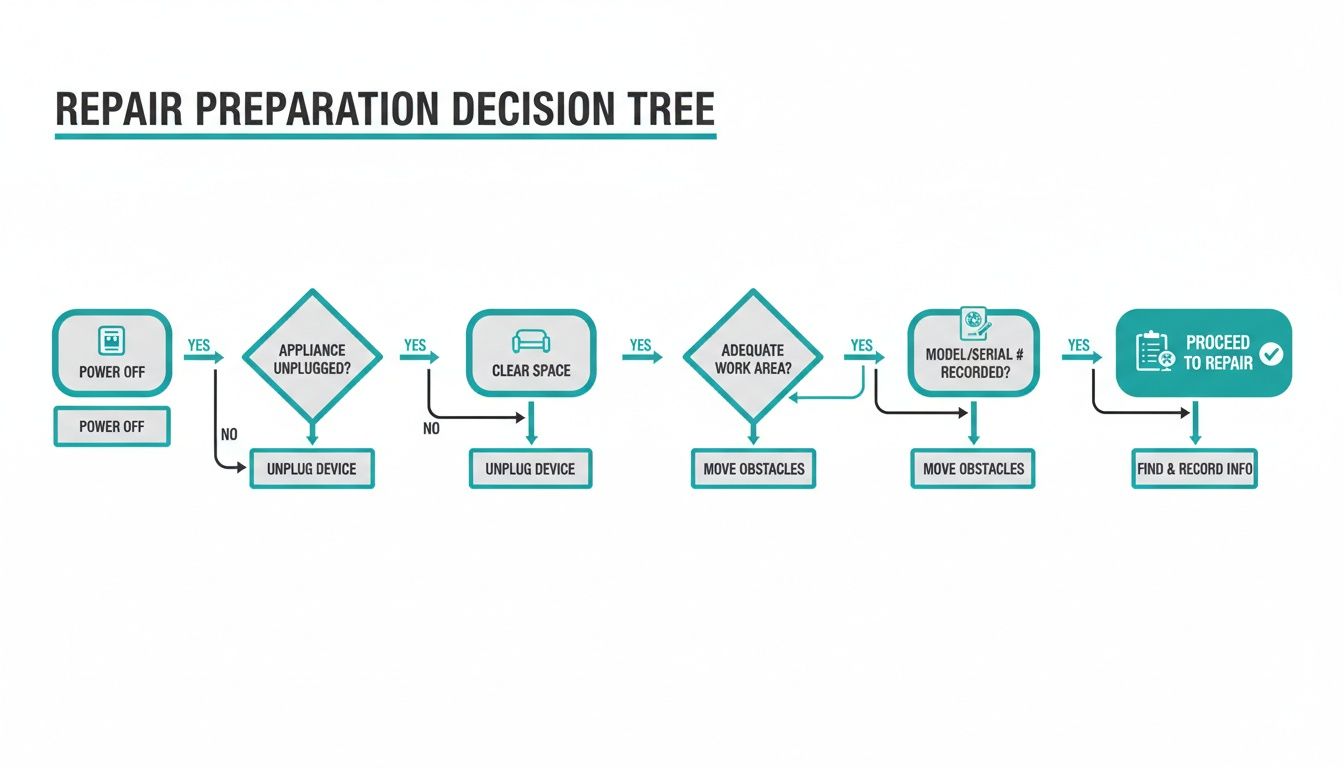
Being ready with some basic info and having done these safety checks makes everything smoother, whether you end up with a repair technician or an installer at your door.
Beyond the Price Tag
While your wallet is a big part of the decision, don't let it be the only thing you consider. The age and efficiency of your current fan are huge factors. An older, energy-guzzling model might be quietly adding more to your utility bills than you realize. Swapping it for a modern, energy-efficient fan can lead to some pretty noticeable savings over its lifetime.
Then there's the parts problem. For older or more obscure fans, finding a replacement motor or a specific remote receiver can turn into a real treasure hunt. A technician could spend hours just trying to track down a part, and that labor time adds up fast. Sometimes, the problem is a simple fix like a bad capacitor. If you think that might be the issue, you can learn more from our detailed guide on the role of a ceiling fan capacitor.
The Upgrade Opportunity
Try to think of this situation not as a problem, but as an opportunity. Instead of sinking money into a dated fan that you don't love, you could invest that cash into a new centerpiece that totally redefines the room. Today's ceiling fans are so much more than just appliances; they're genuine design statements.
For example, you could completely elevate your living room with the sleek, sculptural lines of the Minka-Aire Artemis XL5 ($799.95). Or, if you're leaning more toward a rustic, elegant vibe, the Fanimation Odyn ($811.98) is a powerful and incredibly chic option. These kinds of premium fans offer whisper-quiet performance, fantastic energy savings, and an aesthetic that can transform a room's entire feel.
With residential fans making up 65% of the market, a professional repair can definitely squeeze a few more years out of a fan—sometimes up to five. But here's an interesting stat: 28% of all fan repairs are needed because of a bad initial installation. When you know that, a full replacement with an expert installation starts to sound like a much better long-term investment, especially with the leaps in efficiency and design we're seeing today.
Answering Your Ceiling Fan Repair Questions
When a ceiling fan starts acting up, it’s easy to feel a little lost. Is it a simple fix or a major problem? How much is this going to cost? Let’s cut through the confusion and tackle the most common questions homeowners have when they start searching for "ceiling fan repair services near my location."
Think of this as your quick-start guide to getting that breeze back—and your peace of mind.
How Much Will It Cost to Fix My Ceiling Fan?
This is usually the first question on everyone's mind. The cost to repair a ceiling fan can swing a bit depending on where you live and what's actually wrong, but a good ballpark figure is anywhere from $75 to $200.
Little jobs, like balancing a wobbly fan or swapping out a broken pull chain, will keep you on the lower end of that range. But for more complex work, like replacing a bad motor or a fried remote receiver, you might see the total climb closer to $250 once you factor in parts and labor.
My best advice? Always, always ask for a detailed quote in writing before the technician even touches a screwdriver. It saves you from sticker shock and makes sure there are no surprise charges on the final bill.
Are There Any Repairs I Can Safely Do Myself?
For sure! A lot of common fan problems are perfect for a weekend DIY project. If you're comfortable with basic tools, you can absolutely handle things like:
- Tightening the screws on the blade brackets to stop a wobble.
- Replacing a snapped pull chain.
- Giving the fan a deep cleaning to improve performance.
But here’s the crucial part: if the repair involves electrical wiring, it's time to call a pro. That means anything to do with replacing capacitors, changing a wall switch, or messing with the motor itself. Electricity is no joke, and a small mistake can lead to serious injury or even more expensive damage to your home’s wiring.
What's Causing That Annoying Humming Noise?
That persistent, low-grade hum is almost always an electrical issue. The number one culprit I see? An incompatible dimmer switch on the wall. Ceiling fans need a dedicated fan speed control—a standard light dimmer just can’t regulate the motor’s power correctly, and that struggle is what you hear as a hum.
It could also be a sign of a failing capacitor (the little part that gives the motor a kick-start) or loose wiring inside the motor housing. A good technician can diagnose the source of that hum safely and get it sorted out pretty quickly.
How Do I Know If My Fan's Motor Is Completely Dead?
When a fan motor gives up, it doesn't usually go quietly. The signs are pretty clear and often signal the end of the road for that fan. You'll know it's likely a goner if:
- The fan won't turn on at all, even after you've checked the circuit breaker.
- You smell a distinct burning odor coming from the fan.
- You hear a loud electrical hum, but the blades aren't moving an inch.
While replacing a motor is technically possible, it’s almost never worth the cost and hassle. The parts and labor can easily add up to more than the price of a brand-new fan. In nearly every case, you’re far better off putting that money toward a modern, stylish, and energy-efficient replacement that comes with a fresh warranty.
If a repair just doesn't make sense and it's time for an upgrade, Fan Connection is here to help. We have a fantastic selection of fans that do more than just move air—they redefine a room. For a real showstopper, take a look at the Minka-Aire Artiste ($399.95). It’s a gorgeous piece of modern design that delivers powerful, whisper-quiet performance.
Find your next ceiling fan on our website and discover the perfect fit for your home.


