











Ceiling Fans Easy Install: Quick, DIY Steps for a Pro Finish
Thinking about installing a ceiling fan but picturing a tangled mess of wires, a wobbly ladder, and a whole weekend of frustration? Let’s change that picture. The great news is that modern ceiling fans with easy install features aren't a myth anymore—they’re a total game-changer for homeowners. Thanks to some clever engineering, a project that once felt like a pro-only job can now be done in under an hour, turning a daunting task into a fun and rewarding upgrade.
Your Guide to a Cool and Stylish Home

Honestly, the very idea of putting up a ceiling fan can be intimidating. But what if it could actually be a simple, straightforward, and—dare I say—satisfying project? That’s exactly what easy-install fans offer. It’s your chance to add a touch of high-end style and incredible comfort to your space, all by yourself.
This guide is all about giving you the confidence to do it yourself. We'll walk through the process, cut through the jargon, and show you how to get a professional-looking result without the headache. Your home is about to get a major upgrade in both comfort and style.
What Exactly Makes an Install "Easy"?
The secret sauce is all in the design. Manufacturers have gotten really competitive about making installation a breeze for the average person, and that friendly competition has led to some fantastic innovations that save a ton of time and trouble.
So, what should you look for in a true "ceiling fans easy install" model?
- Quick-Install Mounting Brackets: These are a lifesaver. They often let you slide and lock the motor into place, so you can let go and use both hands for the wiring. No more awkward balancing act on the ladder.
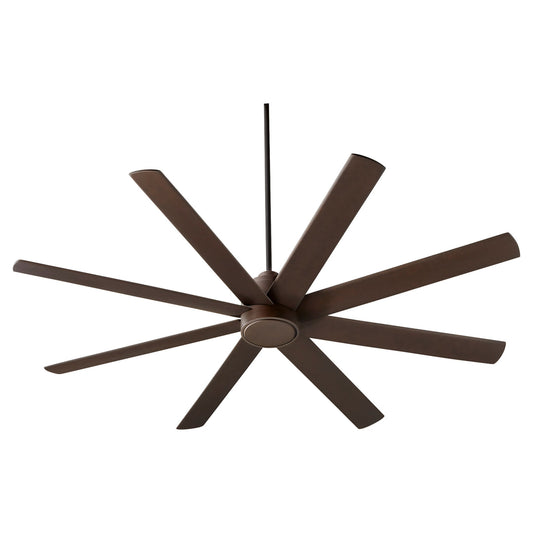
- Snap-In Blades: Forget fumbling with a dozen tiny screws for the blades. On modern fans, like the sleek Artiste ($499), the blades just click securely into place. This alone cuts assembly time down like you wouldn't believe.
- Pre-Wired Housings and Plugs: For most people, wiring is the scariest part. Fans with pre-wired motors and simple quick-connect plugs turn a complex electrical task into something as easy as plugging in a lamp. Just match the colors and snap them together.
These aren't just minor perks; these features can genuinely cut your installation time by more than half compared to older, traditional fans.
Easy Install vs Traditional Fan Installation
Here’s a quick comparison showing why modern easy-install fans are the superior choice for DIY projects.
| Feature | Easy Install Fans (e.g., Artemis XL5, Artiste) | Traditional Fans |
|---|---|---|
| Mounting Bracket | Slide-on or hook-in design for hands-free wiring. | Requires you to hold the heavy motor while wiring. |
| Blade Attachment | Snap-on or twist-lock blades; no screws needed. | Multiple screws per blade, often difficult to align. |
| Wiring | Color-coded quick-connect plugs. | Manual wire stripping, twisting, and securing with wire nuts. |
| Assembly Time | Typically under 60 minutes. | Can take 2-3 hours or more. |
| Tools Required | Basic tools: screwdriver, ladder, wire stripper. | May require more specialized tools and extra patience. |
As you can see, choosing an easy-install fan sets you up for a much smoother, faster, and less frustrating experience from the start.
More Than Just a Breeze
Opting for an easy-to-install fan isn't just about saving an hour on a Saturday. These models are often packed with other great features. A perfect example is the powerful Artemis XL5 ($899), which is known for its simple setup but also comes with a super-efficient BLDC motor.
This is a crucial point: an efficient motor not only moves air more effectively but also consumes significantly less electricity. A fan that’s easy to install and saves you money on energy bills is a double win for any homeowner.
The market is definitely responding to this demand for user-friendly upgrades. The global ceiling fan market is projected to hit a staggering USD 15.60 billion by 2031, and a huge part of that growth is thanks to these "plug-and-play" style kits, which can slash setup time by up to 70%.
This shift empowers you to take charge of your own home improvements. You can pick a fan that perfectly matches your style from our stunning Designer Ceiling Fans collection, install it yourself over the weekend, and immediately start enjoying a cooler, more comfortable room. A straightforward installation means you can spend less time worrying and more time enjoying the fun part—choosing a fan you absolutely love.
Preparing for a Smooth Installation
A successful DIY project starts way before you even crack open the box. Think of this as your pre-flight checklist for a flawless ceiling fan install. Taking a few minutes to get your space and tools ready will make the whole process smoother, quicker, and a lot less stressful. Let's get you set up for success right from the get-go.
The very first, and most important, check happens up in your ceiling. You need to make sure the electrical box you plan to hang the fan from is actually fan-rated. This isn’t a friendly suggestion—it’s a critical safety rule. A standard box for a light fixture just isn't built to handle the weight and constant motion of a spinning fan.
A proper fan-rated box will be marked as such inside, but more importantly, it will be anchored securely to a ceiling joist or a heavy-duty fan brace. If you pop the old fixture off and find a flimsy plastic box, you absolutely have to replace it. This is a non-negotiable step for a safe, wobble-free fan.
Measure Twice, Install Once
With the electrical box sorted, your next job is to measure your ceiling height. This simple number determines the type of fan you can install and is crucial for getting the best airflow and safe clearance. The golden rule is that fan blades must hang at least 7 feet from the floor.
Here’s a quick breakdown based on your ceiling height:
- 8-Foot Ceilings (or lower): You’ll need what’s called a "hugger" or flush-mount fan. These models, like the sleek Chisel ($369), mount directly to the ceiling to maximize headroom in cozier spaces.
- 9- to 10-Foot Ceilings: This is the sweet spot for most standard installs. The short downrod included in almost every fan box is designed perfectly for this height, positioning the fan for ideal air circulation.
- Vaulted or High Ceilings (11 feet+): For these grander rooms, you'll need to buy a longer downrod to bring the fan down to its optimal height of 8-9 feet off the floor. A statement piece like the majestic Andros ($859) looks incredible in a vaulted room when hung at the right level.
Gathering Your Tools and Supplies
Nothing is more frustrating than being halfway up a ladder and realizing you're missing a tool. Before you even unbox that new fan, getting your toolkit ready is a must. For a great rundown of what every DIYer should have, check out this guide to essential tools for homeowners.
For this job specifically, you'll want to have these items within arm's reach:
- A sturdy ladder: Make sure it's tall enough for you to work comfortably without stretching.
- Non-contact voltage tester: This is your most important safety tool. It's how you'll confirm the power is truly off before touching any wires.
- Screwdrivers: You’ll need both a Phillips head and a flat-head. A multi-bit driver is even better.
- Wire strippers/cutters: A must-have for prepping the wires for a solid connection.
- Pliers: A good pair of needle-nose pliers will be your best friend for handling small wires.
Pro-Tip from Experience: Grab a small magnetic tray or even a few empty yogurt cups. Use them to hold all the tiny screws and hardware that come with the fan. Trust me, this simple trick has saved me from crawling around on the floor looking for a dropped screw more times than I can count.
By taking these few prep steps, you're not just getting ready—you're actively making sure your project is an easy one. You’ve checked the structural support, picked the right fan for your room, and gathered your gear. Now, the actual installation will be much more straightforward because you’ve laid the perfect groundwork. For a closer look at the hardware you'll be using, our article on different ceiling fan mounting bracket types is a great resource.
Let’s get ready for the main event.
Getting Your New Fan Installed
Okay, with the prep work out of the way, it's time to get this fan installed. You've got your tools, you've checked your setup, and the new fan is waiting. Let's walk through it together. Forget those confusing manufacturer manuals—we'll make this feel less like a chore and more like a satisfying weekend project.
As a quick recap, a successful install really comes down to three simple checks you've already done.

It all builds on a solid foundation: a fan-rated box in the ceiling, the right height for your space, and all your tools within arm's reach.
Safety First—No Exceptions
Before you even think about touching a wire, let’s talk safety. This is the one part you absolutely cannot skim. Head to your main circuit breaker panel, find the breaker for the room you're working in, and flip it to the "OFF" position.
Don't just rely on the wall switch! Power can still be live in the ceiling box even if the switch is off. To be 100% certain the circuit is dead, grab your non-contact voltage tester and hold its tip near the wires in the box. If it stays quiet and dark, you're clear to proceed.
This simple check is the single most important step in the whole process. Your safety is everything. Always, always test for power before you start working.
Assembling the Fan on the Floor
Now for the fun part. Most of the assembly happens on the ground, which is a lot more comfortable than fumbling with parts on top of a ladder. Open up the box and lay everything out on a blanket or rug to keep the finish from getting scratched.
Here’s where you’ll really start to appreciate an easy-install design. Fans like the beautiful Aviation ($489) from our collection are built with features that make this whole process a breeze. You'll typically attach the downrod to the fan's motor housing first and then feed the electrical wires through it. It’s pretty straightforward, but read the instructions that came with your specific model.
Securing the Mounting Bracket
Once the old light fixture is down, you can install the new mounting bracket. This little piece of metal is what holds the entire weight of your fan, so it has to be completely solid. Use the screws provided with the fan to attach it securely to that fan-rated electrical box in your ceiling.
You'll notice many modern brackets have a small hook or a slot. This is a game-changer. It lets you hang the motor assembly from the bracket, which frees up both of your hands for the wiring. It makes the job so much easier than the old-school balancing act.
Wiring It Up with Confidence
Wiring is what makes most people nervous, but it’s simpler than it looks. In a standard installation, you’re just matching up the colors:
- Black to Black: Your "hot" wire that carries the power.
- White to White: Your "neutral" wire.
- Green/Copper to Green/Copper: Your ground wire for safety.
Many easy-install models, especially those with remote controls, now use simple plug-in connectors. You literally just click the plugs from the fan into the corresponding plugs on the remote receiver. It's almost impossible to mess up. If you're using traditional wire nuts, just make sure to twist them on until they're snug for a safe, solid connection. If you want to feel more comfortable with the basics, a basic electrical wiring guide can give you some foundational knowledge.
For a more detailed look, especially if you have a remote control involved, our guide on ceiling fan wiring diagrams for remote controls is a fantastic resource.
Downrod vs. Flush Mount Installation
The exact steps vary a little based on your fan type. For a downrod fan, which is best for ceilings 9 feet or taller, you’ll hang the entire motor assembly from that hook on the mounting bracket using the ball at the top of the downrod.
If you have a flush-mount or "hugger" fan for a lower ceiling, you’ll usually attach the motor housing directly to the mounting bracket itself. The wiring is the same, but the physical attachment is much more compact to save every inch of headroom.
Attaching the Blades and Final Touches
You’re in the home stretch! This is where you'll really love those easy-install features. Many of today's fans have snap-fit blades that just click right into place—no more fumbling with tiny screws while on a ladder. It's fast, secure, and feels great to get it done in seconds.
Once the blades are on, you'll install the light kit if your fan has one. This is usually another simple plug connection, followed by a few screws to hold the fixture in place. Pop on any glass shades and screw in the light bulbs.
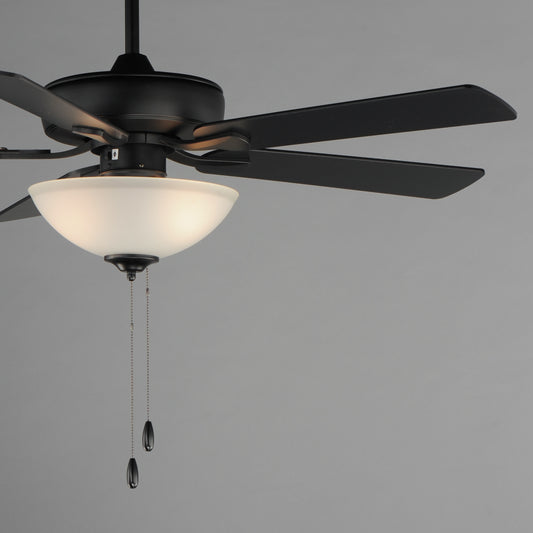
With everything assembled, it's time to turn the power back on at the circuit breaker and give your new fan a test run. Use the remote or pull chains to go through all the speeds and test the light. Don't worry if you see a slight wobble at first—we'll cover how to balance the blades in the troubleshooting section. You did it!
Choosing a Fan That Makes Installation Simple
Let's be honest—the difference between a frustrating Saturday spent on a ladder and a quick, satisfying DIY win often comes down to the fan you choose. Not all ceiling fans are built the same, and some are specifically engineered to make your life a whole lot easier during installation.
When you're looking through our collections, you're not just picking a style. You're also shopping for a simpler setup. Think of it as an investment in your own time and sanity. A higher price tag on certain models often points to clever engineering that makes the whole process smoother and faster.
Look for Time-Saving Features
Certain features are dead giveaways of a fan designed for an easy install. These are the little details that can turn a complicated job into something you can knock out in under an hour. Keep an eye out for these game-changers.
-
Quick-Install Mounting Brackets: This is probably the single best innovation for DIYers. Instead of trying to hold a heavy motor with one hand while fumbling with wires, these brackets have a hook or slot. You just hang the motor assembly on the bracket, which frees up both of your hands to work safely.
-
Pre-Wired Motor Housings: For a lot of people, wiring is the most intimidating part of the job. Fans with pre-wired housings and simple, color-coded quick-connect plugs take all the guesswork out of it. If you can plug in a lamp, you can handle this.
-
Tool-Free or Snap-On Blades: Forget juggling a dozen tiny screws for each blade while you're balanced up high. Many modern fans come with blades that just snap or twist securely into place. This feature alone can easily save you 15-20 minutes.
These smart design choices are why a premium fan can feel so effortless to put up. And it’s a trend that’s catching on. Fortune Business Insights projects the global ceiling fan market will grow to USD 17.98 billion by 2034, with a huge part of that growth coming from user-friendly models.
Our own Modern Ceiling Fans and Contemporary Ceiling Fans collections are perfect examples, with many customers telling us they had fans like the Amped ($399) and Breeze ($389) installed in under 45 minutes.
Premium Models Built for Speed
When you invest in a high-quality fan, you’re not just paying for good looks and better airflow. You're paying for smart engineering that simplifies everything. Models like the sleek Artiste ($499) or the powerful Artemis XL5 ($899) are known for their incredibly straightforward assembly.
These fans are designed from the ground up to be user-friendly. Their components fit together with precision, the instructions are clear, and the clever installation aids—like those hands-free brackets—are built right in. This is where the price reflects a better overall experience.
Don't Underestimate Great Instructions
A well-written manual with clear pictures is the unsung hero of any DIY project. Vague diagrams and confusing text can turn a simple step into a major roadblock. The best brands know this and invest in creating instructions that actually guide you instead of confusing you.
Even modern smart features are designed for a plug-and-play setup these days. Pairing a remote or syncing with a smartphone app used to be a hassle, but now it’s often as simple as pushing a button. It’s that kind of thoughtful design that makes your life easier, from the moment you open the box to the first time you feel that cool breeze.
If you're still weighing your options, our comprehensive ceiling fan buying guide is a great resource to help you narrow down the perfect choice.
Troubleshooting Common Installation Hiccups

Alright, so your new fan is up, you’ve stepped back to admire your work… and something’s not quite right. Don’t sweat it. Even the easiest ceiling fan installation can have a little quirk or two.
The good news is that most of these issues are incredibly common and have simple fixes. You've already done the heavy lifting; think of this as the final five percent. Let's walk through the most frequent hiccups I see.
The Dreaded Wobble
If there's one post-install headache almost everyone encounters, it's the wobble. You flip the switch, and the fan looks like it's trying to dance its way off the ceiling. Relax—this is almost never a serious problem. It’s just a simple imbalance.
And the fix? It's usually straightforward with the balancing kit that came in the box.
- Check the Obvious First: Before you even open that kit, grab your screwdriver. Make sure every single blade screw is tightened down securely. A single loose screw is the number one cause of a wobbly fan. Also, give the fan housing a wiggle to ensure it’s sitting snug against the mounting bracket.
- Time to Use the Kit: The kit has a small plastic clip and a few sticky weights. Clip the plastic piece onto the edge of one blade, turn the fan on low, and watch. Did the wobble get better or worse? Repeat this on every blade until you find the one that calms the fan down the most.
- Stick the Weight: Once you’ve pinpointed the problem blade, take one of the adhesive weights and stick it to the top center of that blade, right where the clip was. Pull the clip off, fire up the fan, and enjoy that smooth, steady spin.
For a more detailed walkthrough, check out our guide on how to balance a ceiling fan.
Fan Makes a Humming Noise
Turned on your fan and hear a low hum? Don't panic. Most new fan motors have a short “break-in” period of about 24 hours. Just let it run continuously for a day, and more often than not, the hum will work itself out as the components settle in.
If the sound sticks around, the next thing to check is your wall switch. A lot of modern fans don’t play well with older dimmer switches, and that mismatch can cause the motor to hum. Unless the fan is specifically rated for it, you'll need a standard on/off switch.
Lights Flicker or Don't Work
This one almost always comes down to a loose wire. It’s a pain, but the fix is simple. Kill the power at the breaker, carefully lower the canopy, and give every wire connection a gentle tug. A wire that just isn't making solid contact is the usual suspect for flickering or dead lights.
While you're at it, double-check that your light bulbs are screwed in all the way and are the right type for your fan. It sounds silly, but you’d be surprised how often that’s the fix!
A Quick Note on Remotes: If the pull chain works but the remote does nothing, it’s probably just a syncing issue. Your manual will have a quick pairing process—it usually involves holding a button as you restore power. And yes, it’s worth checking the battery first!
The whole reason these fixes are getting easier is because manufacturers are listening. The ceiling fan market, valued at USD 12,293 million in 2024, is booming precisely because of innovation in easy-install features. Industry analysts at MarkNtel Advisors predict it will reach USD 17,263 million by 2030, driven by fans with snap-on blades and pre-wired remotes.
It’s why we love models like our Apex ($329) and Axis ($419), which are packed with these features and can cut a multi-hour job down to under an hour.
Got Questions? We've Got Answers
Even the most straightforward project can leave you with a few lingering questions. Trust me, I've been there. Let's clear up some of the most common things people ask before and during a fan install so you can move forward with total confidence.
Think of this as the quick chat we'd have over the phone if you called the shop.
Can I Install a Ceiling Fan Where a Light Fixture Is?
You sure can. In fact, this is probably the most common way people tackle this project, and it's a fantastic starting point for a DIYer. All the basic wiring is already waiting for you, which saves a ton of time.
But here's the one thing you have to check: the electrical box in the ceiling. You need to make sure it's fan-rated. A regular box is only designed to hold the dead weight of a light fixture. A fan-rated box, on the other hand, is built to handle both the weight and the constant motion and vibration of a running fan. They are typically metal and will be secured directly to a ceiling joist.
If the box isn't rated for a fan, it has to be swapped out. It's a deal-breaker. Once that's handled, the rest of your installation will be a breeze.
How Long Does an Easy Install Really Take?
Ah, the million-dollar question! The real answer depends on your experience, but you might be surprised. For many of our newer "easy install" fans, like the beautiful Artemis IV ($799) or the sleek Artiste ($499), a seasoned DIYer can genuinely have it up in 30 to 60 minutes.
That's because features like snap-on blades, pre-installed screws, and simple wiring plugs are designed to get rid of all the fussy, time-consuming steps. If you're doing this for the first time, give yourself about 90 minutes. That's plenty of breathing room to follow the instructions, work comfortably, and not feel rushed.
If you've got a few home projects under your belt, getting it done in under an hour is a totally realistic goal. You'll be amazed at how quickly it all comes together.
What Is the Minimum Ceiling Height for a Fan?
This one is all about safety and performance. You need at least 7 feet of clearance from the floor to the bottom of the fan blades. Period. This is non-negotiable for safety (and avoiding any accidental haircuts). That measurement will guide which type of fan you should buy.
Here’s a quick breakdown:
- For standard 8-foot ceilings: You'll want a "hugger" or flush-mount fan. These mount directly to the ceiling to give you maximum headroom.
- For ceilings 8 to 9 feet high: A standard fan with the short downrod included in the box is usually the perfect fit.
- For ceilings taller than 9 feet: You'll need to buy a longer downrod. This isn't just for looks; it drops the fan to the ideal height of 8-9 feet off the floor, which is the sweet spot for effective air circulation.
Do I Really Need to Turn Off the Power at the Breaker?
Yes. 100% yes. I can't say this enough: this is the most critical safety step of the entire project.
Just flipping the wall switch is not good enough. There can still be live power in that ceiling box, even with the switch off. You need to walk over to your main breaker panel, find the correct circuit for the room, and switch it completely to the "OFF" position.
Then, as a final check, touch your non-contact voltage tester to the wires in the box. Only when it confirms there's no power should you proceed. Safety first, always.
Can I Change the Light Kit Later?
That's a great question, and the answer really depends on the fan's design.
- Integrated LED Fans: A lot of modern fans have sleek, built-in LED light panels. They are incredibly efficient and last a long time (think up to 25,000 hours). The trade-off is that they aren't designed to be swapped out by the user.
- User-Replaceable LED Fans: Some newer models are starting to offer user-replaceable LED modules, which is a nice feature that gives you more control.
- Add-On Light Kits: Many fans are sold as "light-kit adaptable," which means you have the freedom to add or change a light kit later on. Just be aware you’ll likely need an electrician to wire it in for you.
At Fan Connection, we believe that upgrading your home should be exciting, not intimidating. Explore our curated collections of stylish and easy-to-install ceiling fans to find the perfect fit for your space and start your DIY journey today. Find your perfect fan at https://www.fanandlights.com.


