











Finding Ceiling Fans in My Area: A Fun & Modern Buyer's Guide
Typing "ceiling fans in my area" into a search bar can feel a bit like shouting into the void. You get a mix of big-box stores and random online listings, but what you’re really looking for is simpler: the perfect fan for your home. It's about finding that sweet spot between seeing something in person and accessing the specialized, high-end selection you can only get from experts. This isn't just about moving air; it's about elevating your space with a functional work of art.
Your Search for Local Ceiling Fans Starts Here
Let's cut through the noise. While local showrooms are great for getting a feel for a few models, specialized online retailers like Fan Connection offer a curated collection that a physical store just can't fit on its floor. The real journey begins before you even start browsing—it starts with figuring out what your home actually needs to feel cool, comfortable, and seriously stylish.
The demand for good fans is growing, and fast. The ceiling fan industry is set to hit USD 16.18 billion by 2032, a huge leap from its USD 11.39 billion valuation. This isn't just a trend; it's a reflection of how essential fans have become in modern homes, fueled by a boom in both residential and commercial construction. You can read more about it over at Fortune Business Insights.
Defining Your Home's Needs First
Before you fall in love with a fan online or in a store, take a minute to think about your space. This is the most important step. It's not just about size; it's about picturing how the fan will work as both a practical tool and a piece of your home's decor.
A few questions to get you started:
- What's the room's main job? A fan for a busy living room is going to have different requirements than one for a quiet, relaxing bedroom.
- What's your style? Are you going for sleek and modern, cozy farmhouse, or a breezy coastal vibe? The fan should fit right in.
- How high are the ceilings? This is a big one. It'll tell you if you need a standard mount, a "hugger" model for low ceilings, or a downrod for those beautiful vaulted spaces.
For instance, a minimalist three-blade fan like the Aerovon ($398.00) is a natural fit for a contemporary living room with its clean, understated design. On the other hand, the five-blade Andros ($358.00) could be the perfect finishing touch for a sunroom, bringing in that relaxed, tropical feel.
Think of your ceiling fan as functional furniture. It should complete the room's look, not clash with it. The right fan can tie everything together beautifully.
Here's a quick table to help you nail down the specifics before you even start your search.
Quick Guide to Defining Your Fan Needs
| Key Consideration | What to Ask Yourself | Example Model (Fan Connection) |
|---|---|---|
| Room Function | Is it a bedroom needing quiet operation, or a living room where style is key? | Andros ($358.00) - Great for living areas |
| Home Aesthetic | Does your decor lean modern, traditional, rustic, or something else? | Aerovon ($398.00) - Perfect for modern spaces |
| Ceiling Height | Do I need a standard mount, a flush mount for low ceilings, or a downrod for high ones? | Both models offer versatile mounting options. |
Thinking through these points first makes the whole process smoother. You'll know exactly what to look for, whether you're browsing online or walking into a local shop.
By balancing the convenience of seeing what’s in stock nearby with the huge selection from dedicated stores, you're setting yourself up to make a much smarter buy. Our guide on finding ceiling fans near you has even more tips to get you started. A little planning now means you'll end up with a fan you genuinely love for years to come.
Alright, before you get swept away by a fan's good looks, let's talk about the practical stuff. Nailing your measurements is the one step you absolutely can't skip. It's the difference between a fan that's a perfect fit and one that turns your bedroom into a wind tunnel or, just as bad, barely stirs the air at all.
Getting this right is easier than it sounds. First, you need to figure out your room's square footage. Just multiply the length of the room by its width. That number is your starting point—it's what tells you what blade span to look for. And remember, a smaller blade span isn't a sign of a cheap fan; it’s specifically engineered to move air perfectly in a smaller, cozier space.
From Square Feet to Blade Span
Think of the blade span as the fan's wingspan—it has to be proportional to the room. So many people fall into the "bigger is always better" trap, but that’s not how airflow works. You're aiming for the right size to create a comfortable, room-filling breeze.
Here’s a simple cheat sheet to match your room size with the perfect fan:
- Small Rooms (Up to 150 sq. ft.): Stick with a 44-inch blade span. A fan like the Apex ($428.00) is ideal for a home office or bedroom, where you want gentle circulation without feeling like you're in a hurricane.
- Medium to Large Rooms (150-300 sq. ft.): This is prime territory for a 52-inch fan. A premium model like the Artemis XL5 ($758.00) has the power to move a serious amount of air, making it perfect for a large living room or great room.
The real goal isn't just to move air—it's to circulate it properly. When the fan size is right for the room, it pushes air down and out, creating a gentle, widespread breeze. A fan that's too big or small just creates a weird vortex of air directly underneath it.
Ceiling Height and Downrod Math
Okay, next up: grab a tape measure and find out your ceiling height. This is key, because it determines how far the fan needs to hang from the ceiling to be both safe and effective. For the best performance, you want the fan blades to be 8 to 9 feet off the floor.
If you have standard 8-foot ceilings, you'll want a "hugger" or flush-mount fan that sits right up against the ceiling. But if your ceilings are taller or sloped, you'll need a downrod. A downrod is just an extension pole that lowers the fan to that sweet spot. Figuring out the length is simple: take your ceiling height in feet, subtract 9 (for the ideal 9-foot blade height), and that’s roughly the downrod length you’ll need in feet.
And if you want to get a better handle on how your home's entire cooling system works together, digging into some general air conditioning information can give you the bigger picture. With these simple measurements in hand, you can walk into any local store with confidence, knowing you'll pick a fan that's a perfect fit in every way.
Choosing Styles and Features That Match Your Home
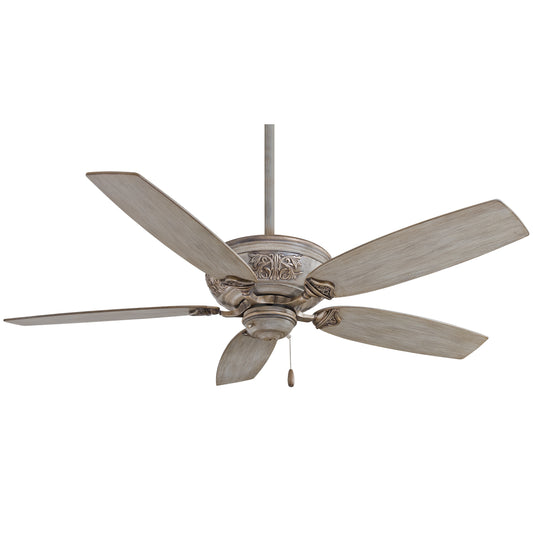
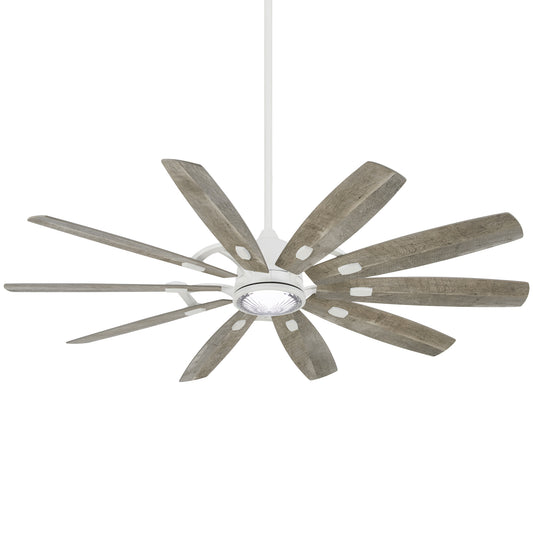
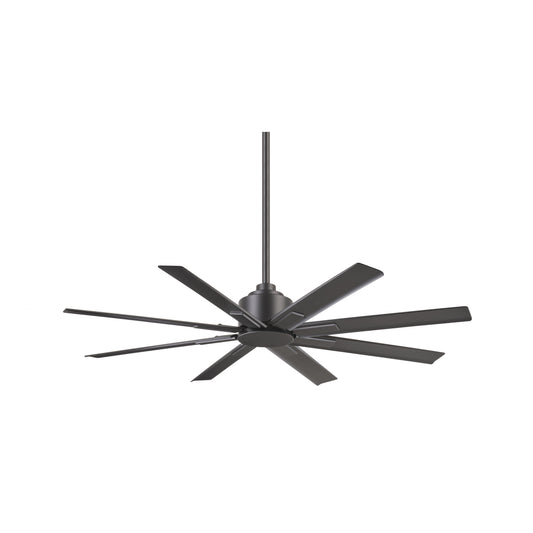
Okay, this is where the fun really starts—finding a fan that’s more than just a motor with blades. The right ceiling fan can be a real centerpiece, the final touch that pulls a whole room together. When you start looking at ceiling fans in your area, you’ll find everything from the super-clean, minimalist lines of modern designs to the warm, rugged charm of rustic and industrial styles.
Think of the blade count as a major style choice. A sleek three-blade fan like the Axis ($328.00) gives you that uncluttered, contemporary feel that can almost disappear into a white ceiling. Go for a five-blade model like the Barn ($498.00), and you get a more substantial, traditional presence—perfect for that farmhouse or industrial vibe. Finishes play a huge part, too, with options from rich walnuts to cool, modern brushed nickel.
Beyond Looks: Functional Features to Look For
While style is what catches your eye, it’s the features you'll appreciate day in and day out. Modern fans have come a long, long way from the old pull-chain models your grandparents had. Investing in a quality fan means you're also getting technology that makes life a little easier and a lot more comfortable.
Keep an eye out for these essential upgrades:
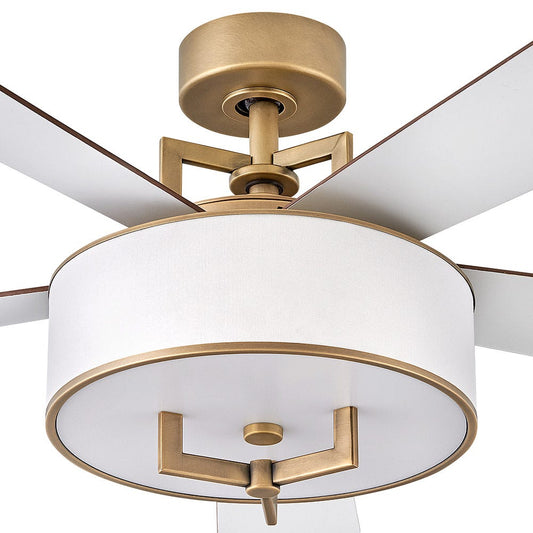
- Integrated LED Lighting: Say goodbye to harsh, unflattering light. Many high-end fans come with dimmable, energy-efficient LED kits that cast a warm, ambient glow.
- Remote Controls: Convenience is everything. A remote lets you tweak the fan speed and lighting from your couch or bed. No more stumbling around in the dark.
- Smart Home Compatibility: If you're building a connected home, look for fans that integrate with systems like Google Home or Amazon Alexa. Voice control is a game-changer.
The Power of an Efficient Motor
One of the biggest leaps forward in premium fans is the motor. Spending over $300 often gets you a model with a Brushless DC (BLDC) motor, and this is a huge deal. They are whisper-quiet and unbelievably energy-efficient. In fact, these motors can use up to 70% less electricity than old-school AC motors. That translates to real savings on your energy bills over the life of the fan.
This diagram breaks down the simple but crucial steps for measuring your space to make sure your fan is a perfect fit.
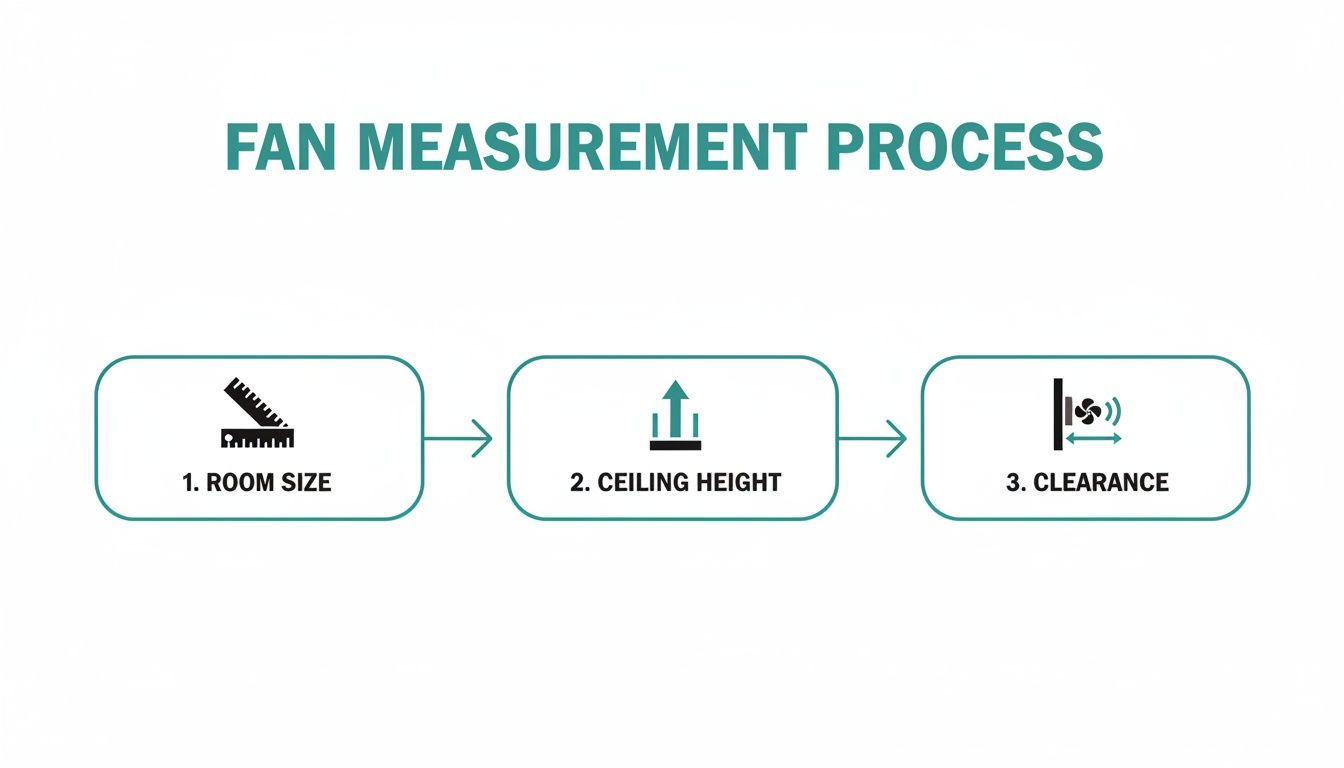
It’s a great visual guide that simplifies how room size, ceiling height, and wall clearance all work together to point you toward the ideal fan for your home.
A ceiling fan isn't just an appliance; it's a piece of functional art. If you're looking for a sculptural statement, you might gravitate towards artistic models like the Artiste ($498.00) or the Bowie ($498.00), which truly blur the line between form and function.
The market definitely reflects this shift. While standard ceiling fans held 45.2% of the market recently, the decorative segment is where all the creative energy is going. This segment is projected to grow faster than any other, proving that homeowners see fans as key design elements. You can learn more about these trends in this research about ceiling fan growth.
At the end of the day, the goal is to find a fan you’ll love looking at just as much as you love the cool breeze it provides.
Deciding Between Local Stores and Online Retailers
When your search for "ceiling fans in my area" starts getting serious, you eventually hit a fork in the road. Do you drive over to the local big-box hardware store, or do you start clicking through a specialized online shop? Both have their pros and cons, but they offer two completely different experiences—especially if you're looking for a fan that does more than just spin.
The appeal of a local store is easy to understand. You get that instant gratification of walking out with a box. You can see a floor model, get a feel for its size and finish, and that can feel pretty reassuring.
But let's be honest: that convenience often comes with a trade-off. The selection is usually pretty limited to basic, mass-market models. You're left with just a handful of choices when it comes to unique styles or high-end features.
The Online Advantage: Selection and Expertise
This is where a specialized online retailer really shines. Instead of one small aisle, you get access to a massive, curated digital showroom. The inventory is just so much deeper, with everything from sleek, modern designs to heavy-duty, commercial-grade fans.
For premium fans—anything over $300—the difference is night and day.
Think about a real-world scenario. A contractor needs to buy five matching Aviation fans (at $358.00 each) for an office renovation. Can you imagine them driving to three different hardware stores, hoping to piece together enough stock? It would be a total nightmare.
With an online specialist, they can check the inventory instantly, probably get a better price for buying in bulk, and have everything shipped right to the job site. It saves time, money, and a massive headache.
For anyone looking for a specific look or advanced tech, online retailers aren't just an alternative; they're a necessity. They’re the ones who carry the niche, high-performance models that local stores simply don’t stock.
Shopping Local vs Online: A Head-to-Head Comparison
Weighing your options can be tricky. A quick trip to the store might seem easier, but it's important to think about the whole process, from the initial purchase to long-term support. This table breaks down what you can realistically expect from each.
| Feature | Local Big-Box Store | Online Specialist (e.g., Fan Connection) |
|---|---|---|
| Selection | Limited to mass-market models | Vast selection, including niche and premium brands |
| Expertise | General staff, often limited fan knowledge | Deep product knowledge and expert guidance |
| Pricing | Standard retail pricing | Competitive pricing, often with better deals on high-end models |
| Availability | What's on the shelf; stock can be low | Large inventory, direct shipping, easy to source multiples |
| Convenience | Instant pickup for in-stock items | Shop from anywhere, direct delivery to your door or job site |
| Support | Basic returns and exchanges | Specialized customer service and long-term warranty support |
At the end of the day, both have their place. But as you can see, what you gain in immediate pickup at a local store, you often lose in selection, expert advice, and overall value.
The right choice really boils down to your priorities. If you just need a basic fan right now, a local store will get the job done. But for anyone investing in a high-quality, stylish fan that’s meant to be a centerpiece in a room, the incredible selection, better pricing, and expert guidance from an online specialist is almost always the smarter move.
You can get an even more detailed breakdown in our guide on the best place to buy ceiling fans near you.
Planning Your Fan Installation: Professional vs. DIY

You did it. You found the perfect fan, brought it home, and now you're staring at the box. The last hurdle is getting it securely up on the ceiling, which brings you to a fork in the road: do you roll up your sleeves and tackle this yourself, or is it time to call in a pro?
This decision is about more than just saving a few bucks. It’s about safety, the complexity of the job, and your own experience. While there’s undeniable satisfaction in a successful DIY project, electrical work is one area where you really can't afford to guess.
The DIY Route: Safety First, Always
If you have some basic electrical experience, installing a fan yourself can be a really rewarding weekend project. But before you even think about cutting open that box, you need to adopt a safety-first mindset. This isn't a project you just jump into.
For the confident DIYer, here's what you need to do—no exceptions:
- Kill the Power at the Source: Don't just flip the wall switch. Go to your breaker box and shut down the power to that entire room.
- Check Your Electrical Box: Not all ceiling boxes are built to handle the weight and constant motion of a fan. Make sure yours is a fan-rated box—it should be stamped as such and secured directly to a ceiling joist.
- Read the Manual. Twice: Seriously. Every fan is a little different. Don't assume you know how this specific model goes together just because you’ve done one before.
When to Call a Professional Electrician
Some jobs are just better left to the experts. Hiring a licensed electrician gives you peace of mind, knowing the installation is safe, correct, and won't void your fan's warranty.
Think about a real-world scenario. You've invested in a gorgeous, heavy fan like the Chisel ($358.00) for your living room with a 12-foot vaulted ceiling. This immediately becomes a two-person job requiring specialized ladders and expertise. This is a clear-cut case for calling a pro.
On the other hand, if you're just swapping out an old, lightweight fan on a standard 8-foot ceiling where the wiring is already in place, it could be a manageable task for someone comfortable with home repairs.
The DIY vs. pro debate often boils down to one question: How complex is this job, and how confident am I in my own skills? An improperly installed fan isn't just an eyesore; it's a serious safety hazard.
Finding and vetting a good electrician in your area is crucial. When you call around for quotes, ask them specifically about their experience with ceiling fan installations, their licensing, and their insurance. If you’re not used to hiring tradespeople, this general guide on how to choose a contractor has some great tips for vetting professionals.
In the end, whether you do it yourself or hire it out, the goal is the same: a securely mounted, perfectly balanced fan that you'll enjoy for years. For a deeper dive, check out our guide on ceiling fan installation near you.
Why Investing in a Quality Fan Is a Smart Move
It’s easy to get sticker shock when you're shopping for a new ceiling fan and just focus on the upfront cost. But trust me, the real win is in the long-term value. Putting your money into a premium ceiling fan—something in the $300 or more range—is genuinely one of the smartest upgrades you can make for your home's comfort and your wallet.
Think of it as the difference between a temporary fix and a permanent improvement.
So, what are you actually paying for when you level up? It all comes down to superior materials and seriously advanced motor technology. High-end models, like the sculptural Artemis IV ($798.00) or the elegant Chateaux ($698.00), aren't just pretty faces. They're powered by ultra-quiet, energy-saving Brushless DC (BLDC) motors. These aren't just fancy acronyms; they translate into real, everyday benefits you'll actually feel.
The Real-World Benefits of a Premium Fan
First off, there's the whisper-quiet operation. A quality fan gives you that perfect cool breeze without the annoying hum and wobble you get from cheaper models. That alone makes it a game-changer for bedrooms and living spaces.
Then there's the durability. Better construction means a fan that's built to last, often backed by strong warranties that protect your investment for years to come.
The biggest payoff, though, is in energy efficiency. A well-designed fan can make a room feel several degrees cooler, which means you can ease up on your thermostat and see a real drop in your air conditioning costs.
A ceiling fan is more than just an appliance; it's a strategic investment in your home's comfort, efficiency, and style. The right one works hard for you, cutting energy costs while elevating your decor.
This shift toward smarter, more efficient home cooling isn't just a niche trend—it's happening on a massive global scale. The ceiling fan market has ballooned to USD 12.89 billion and is on track to hit USD 15.60 billion by 2031. This growth is all about homeowners looking for effective ways to beat the heat without leaning so heavily on pricey AC units.
In fact, studies show that pairing a fan with your air conditioning can slash your energy use by up to 30%. You can check out more insights about this growing market at Mordor Intelligence.
Common Questions About Buying Ceiling Fans
As you get close to making a decision, a few last-minute questions usually pop up. That's a good thing. Nailing down these final details is what separates a good purchase from a great one you’ll love for years.
Do I Need a Light Kit?
This is probably the most common fork in the road. It really comes down to one thing: is this fan replacing the main light source in your room?
If the answer is yes, then a model with an integrated LED light isn't just a nice-to-have, it's a must. But if you've already got plenty of light from lamps or can lights, a fan without a light can give you a much cleaner, more streamlined look. For a happy medium, look for fans with low-profile LED kits that give off a warm light—something around 2700K is perfect for creating a soft, inviting atmosphere.
How Do I Choose Between a Remote and a Pull Chain?
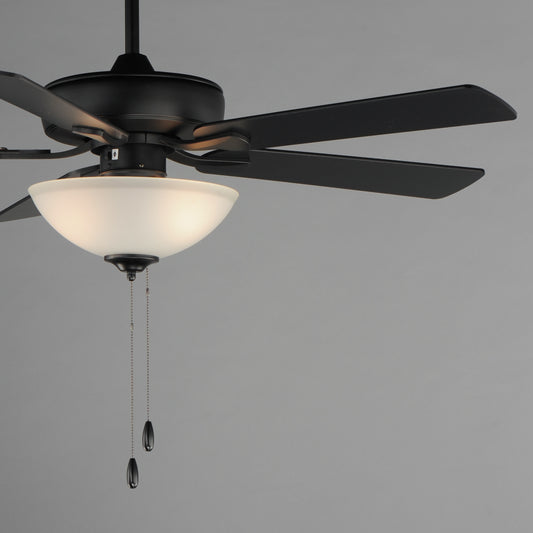
Let's be honest, while pull chains have a certain classic charm, they can feel a little dated in a modern space. A remote control is just so much easier. You can change the fan speed or adjust the lights from bed, the couch, or anywhere in the room.
It’s why so many of today’s premium fans, like the sleek Bola ($398.00), come standard with a remote. It’s all about modern convenience.
A great ceiling fan should blend seamlessly into your daily life. Consider which control method—a simple pull or a convenient clicker—best suits your lifestyle and the room's function.
Ready to make your final choice with confidence? Fan Connection has a hand-picked selection of high-quality fans with all the features and styles we've talked about. Come explore our collections and find the perfect centerpiece for your home today at https://www.fanandlights.com.


