











Compare Prices of Ceiling Fans at Nearby Retailers and Save Big
Ready to outsmart the stores and find a seriously cool ceiling fan without overpaying? When you compare prices of ceiling fans at nearby retailers, the real trick isn't just looking at the price tag. It's about matching the core specs—the motor, the blade span, and those fancy smart features—instead of getting tripped up by model numbers. Why? Retailers often use different model numbers for the exact same fan, a clever way to keep you from doing a simple price check.
But if you focus on what's under the hood, you can make a true apples-to-apples comparison. It's a bit of detective work, but it's the secret to knowing you're snagging an amazing deal on a high-end fan. Let the games begin!
How to Properly Compare Ceiling Fan Prices
Before you set foot in a showroom or start scrolling online, you need a game plan. The biggest trap is getting hung up on SKUs and model numbers that mysteriously don't match up between stores, making a direct comparison feel like mission impossible.
You can dodge this trap by focusing on the fan's DNA. Forget hunting for a matching model number. Instead, make a checklist of the key specifications. Think of it like using one of those cool digital product comparison tools—they let you line up the specs side-by-side to see what you're really getting for your money.
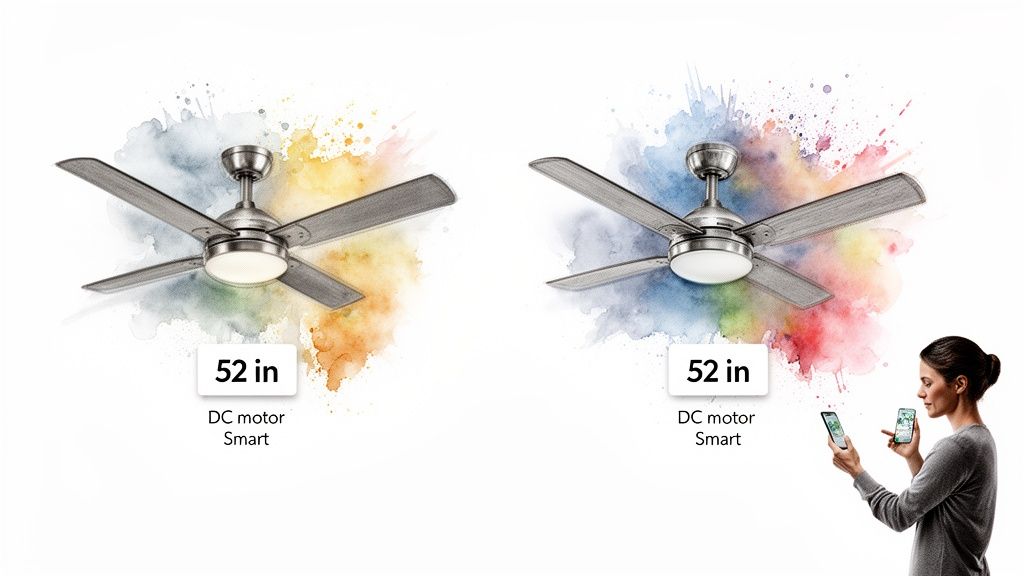
This method empowers you to spot an incredible deal on a premium fan and, just as importantly, avoid overpaying for a lower-spec model that just looks the same.
Key Specifications for Comparison
When you're eyeing fans in different stores, ignore the model name for a minute and zoom in on these critical features. Let's walk through a real-world example comparing two high-end fans that seem different but are functionally almost identical.
| Feature | Premium Fan A (Local Store) | Premium Fan B (Online) |
|---|---|---|
| Sale Price | $429.00 | $389.00 |
| Motor Type | Direct Drive (DC) Motor | Direct Drive (DC) Motor |
| Blade Span | 60 Inches | 60 Inches |
| Smart Features | Wi-Fi Enabled, App Control | Wi-Fi Enabled, App Control |
| Lighting | Integrated 24W Dimmable LED | Integrated 24W Dimmable LED |
| Warranty | 10-Year Motor Warranty | Lifetime Motor Warranty |
In this scenario, the fan from the local store looks tempting. But a closer look reveals the online option is not only $40 cheaper but also comes with a superior lifetime motor warranty. That's a huge win!
This is the kind of insight you only get when you compare the important specs, not just the sale price. Digging into these details is the only way to be sure you’re getting the best performance and long-term value.
Why Online and Local Fan Prices Differ So Much
Ever walk into a local fan showroom, spot the perfect model, then do a quick search on your phone only to find it for way less online? It’s a common story, and no, you’re not imagining things. That price gap between an online specialist and a nearby big-box store is very real, and it all comes down to how each business is built from the ground up.
Physical stores have a whole laundry list of expenses that inevitably get baked into their price tags. Think about it: the prime retail space they rent, the fancy displays designed to catch your eye, the helpful staff on the floor, and the backroom warehouse packed with inventory. All of it—from the monthly lease and utility bills to salaries and local marketing—adds up to some serious operational overhead.
Online-first retailers like Fan Connection just run a much leaner ship. We don’t have a network of expensive showrooms to maintain. By operating from centralized warehouses and shipping directly to you, we cut out a huge chunk of the costs tied to a traditional storefront. It’s a simpler model, and those savings get passed right along to you.
The Overhead Factor in Action
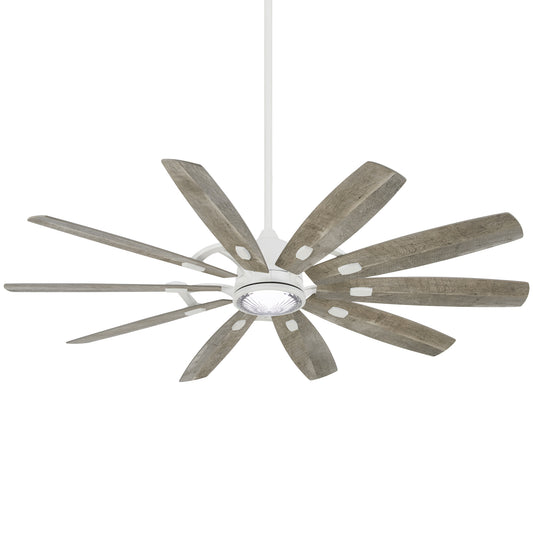
Let's put this into a real-world context. Say a local retailer decides to carry a popular, rustic-style fan like the Barn model, which we sell for $399.
- Retail Rent: A slice of their hefty monthly lease gets mentally assigned to the floor space that single fan display takes up.
- Staffing Costs: The salesperson who walks you through the features has a salary and maybe a commission, both of which have to be covered by the sale.
- Display & Utilities: Even the electricity powering the lights on that display and the store’s air conditioning adds a tiny fraction to the final cost.
Each of these little layers adds a percentage to the fan’s base price. By the time it has a tag on it, the price has been pushed up to cover all those built-in costs.
This isn't just a small markup, either. Looking back at pricing data, it's clear that fans at nearby retailers can cost 18-35% more than the same or similar models at Fan Connection. That’s a huge difference, especially in a global market that's projected to grow from USD 11.39 billion to USD 16.18 billion by 2032.
We see it all the time with major brands. Their most stylish fans get hit with markups that can bloat the price by over 22% in big-box stores. An online specialist, on the other hand, can offer a comparable fan for much less, simply because we don't have those brick-and-mortar bills to pay. If you want to dive deeper, you can discover more about the ceiling fan market's growth and pricing dynamics and see how these trends directly affect your wallet.
This operational efficiency is the secret sauce. It's the core reason you'll almost always find a better deal online when you compare prices of ceiling fans at nearby retailers. Once you understand this key difference, you can shop smarter and make sure you're paying for the fan itself—not for a slice of the store's rent.
Your Step-by-Step Fan Price Comparison Checklist
Ready to shop for a new ceiling fan like a seasoned pro? Forget just wandering through big-box stores and hoping for the best. A little bit of homework goes a long way, and a methodical approach is the only way to guarantee you’re getting the most fan for your money.
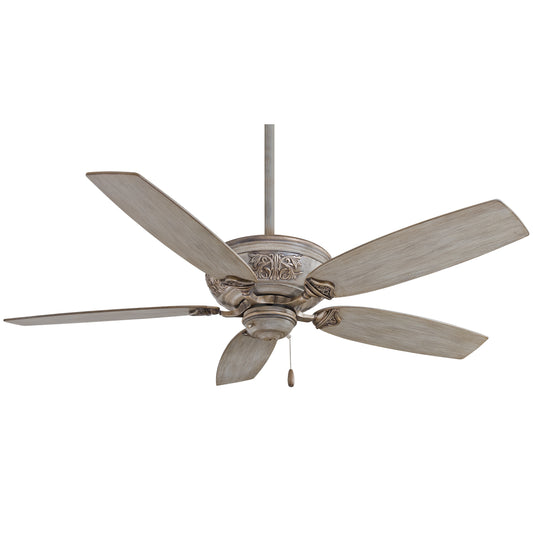
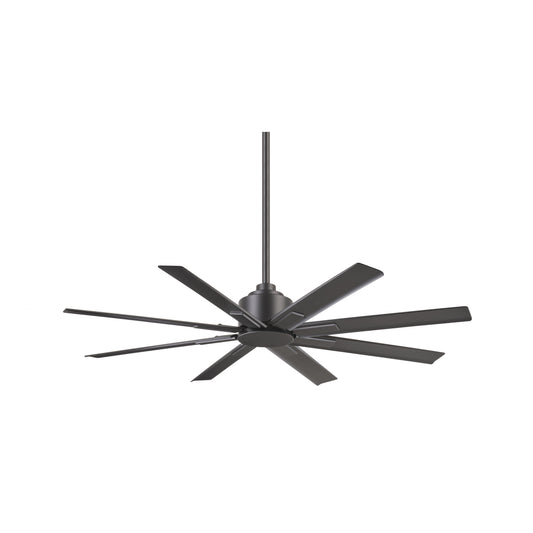
This simple checklist breaks down exactly how to do an apples-to-apples comparison. It's the secret to confidently snagging a great deal on high-end models, whether you're looking at the majestic, multi-blade Chateaux fan (on sale for $349.95) or the bold, industrial Chisel model (priced at $449.95).
Let’s dive in.
Step 1: Define Your Needs First
Before you even glance at a price tag, figure out what you actually need. Jumping straight into shopping without a plan is like going to the grocery store hungry—you’ll end up with a cart full of things that looked good but aren’t right for you.
Get specific about your non-negotiables:
- Essential Features: Does it absolutely need a remote control? Is an energy-sipping DC motor on your must-have list? What about smart home compatibility with Alexa or Google Assistant?
- Style and Size: What blade span is right for your room? Are you picturing a sleek, modern three-blade fan or something more traditional with five blades?
- Lighting: Do you need a fan with a bright, built-in LED light, or is this a fan-only situation?
Answering these questions first gives you a filter. It helps you tune out all the flashy models that don’t fit your core needs, saving you a ton of time and preventing that awful feeling of buyer’s remorse.
Step 2: Hunt Down the Exact Model Number
Once you’ve spotted a fan you love, your next mission is to find its specific model number or SKU (Stock Keeping Unit). Think of this as the fan's unique fingerprint—it's the key to unlocking a true price comparison across different stores.
Pro Tip: You can usually find the SKU on the price tag, the side of the box, or in the "product details" section of an online listing. Snap a quick photo with your phone so you have it ready for your research.
This one small step is crucial. Why? Because retailers sometimes use slightly different marketing names for the exact same fan. Having the SKU lets you cut through the noise and confirm if the fan at "Local Store A" is truly identical to the one you found online. You can also explore our guide to finding the best ceiling fan stores near you to broaden your search.
Step 3: Check Stock and Calculate the True Cost
With the SKU in hand, it's time to play detective. Head to retailer websites and use their store locators to see which local shops have your fan in stock. While you're there, compare their listed price to what online specialists like Fan Connection are offering.
But don't stop at the sticker price—that’s just the starting point. The real cost is often hidden in the details.
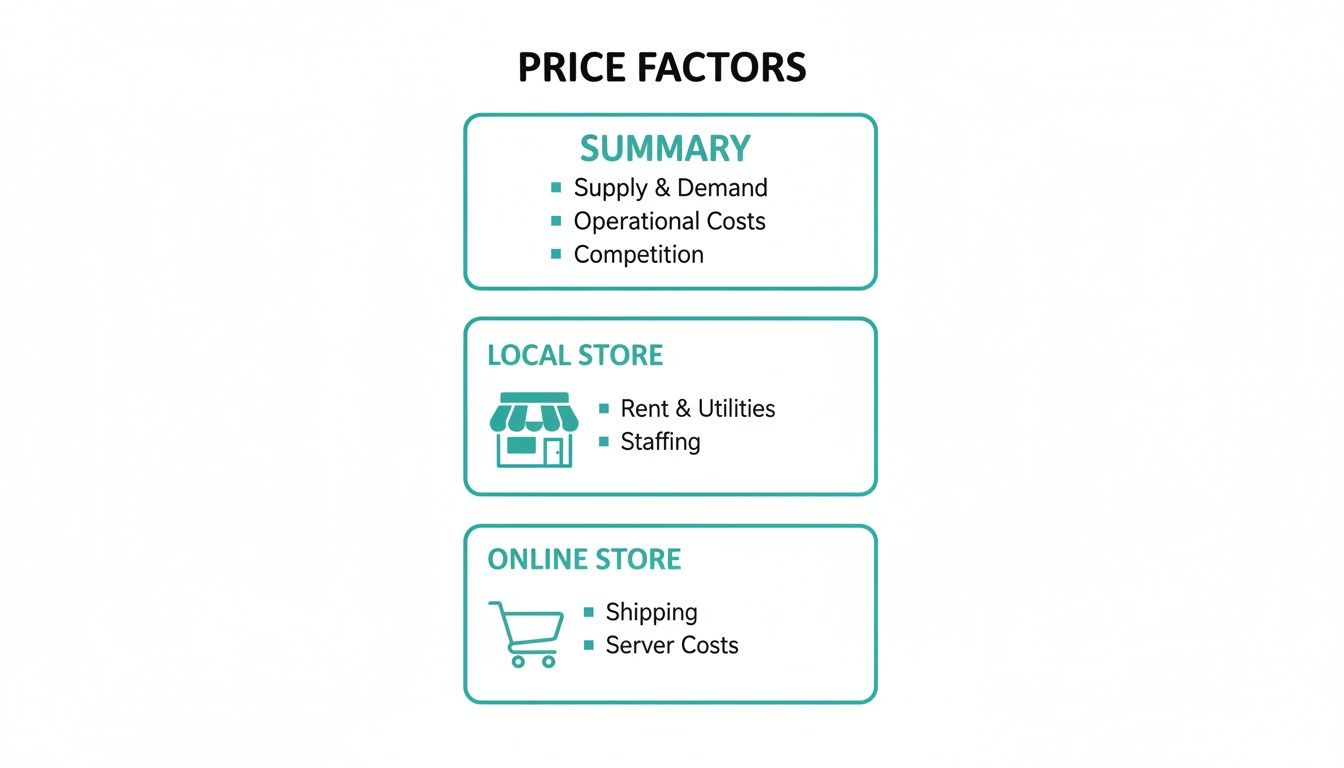
As this breakdown shows, things like taxes, shipping, and potential installation fees can dramatically change the final price. To find the real winner, you have to calculate the total landed cost—the final amount you'll pay to get that fan installed and spinning in your home.
To make this dead simple, I’ve put together a worksheet you can use. Just plug in the numbers for each retailer you're considering.
Total Cost Comparison Worksheet: Online vs. Local
| Cost Factor | Fan Connection (Online) | Local Retailer A | Local Retailer B |
|---|---|---|---|
| Fan Sticker Price | |||
| Sales Tax | |||
| Shipping/Delivery Fee | |||
| Installation Cost | |||
| Warranty/Protection Plan | |||
| Discounts/Coupons | |||
| Total Landed Cost |
Once you fill this out, you’ll see the real bottom line. Only then can you make a truly informed decision and know for sure you’ve found the best possible deal.
Evaluating Value Beyond the Price Tag
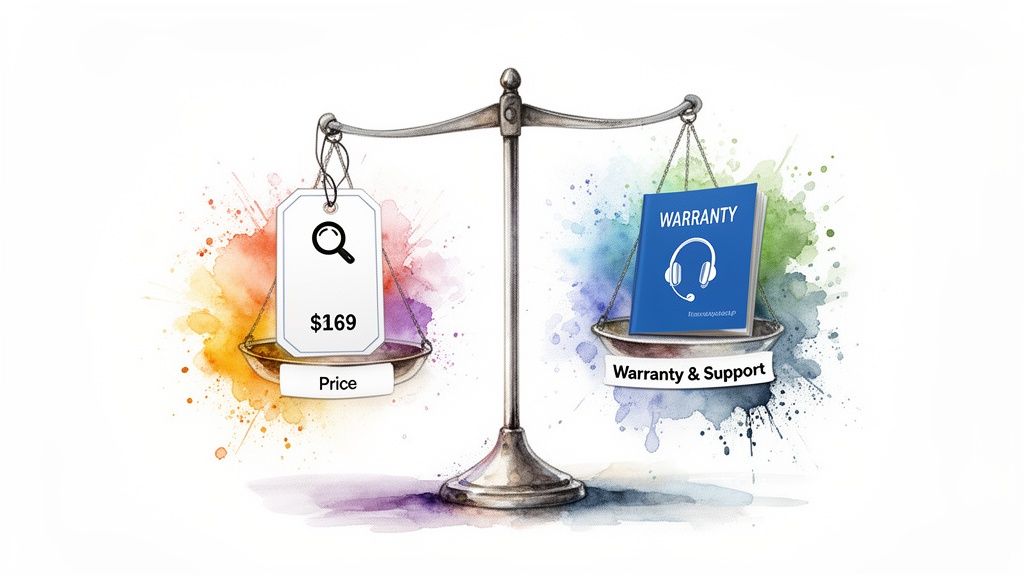
The lowest price on the sticker doesn’t always mean you're getting the best deal, especially when you’re buying something like a ceiling fan that you expect to last for years. When you compare prices of ceiling fans at nearby retailers, you have to look past that initial number and think about the total, long-term value.
This really comes down to digging into the warranty coverage, understanding the return policy, and getting a feel for the quality of customer support. A fan that's $50 cheaper might come with a flimsy one-year warranty, while a slightly more expensive model from a specialist like us could offer a lifetime motor guarantee. That peace of mind is a huge part of the purchase.
Warranties and Returns A Closer Look
A solid warranty is your safety net against defects and early breakdowns. Local big-box stores might offer a standard manufacturer's warranty, but they often try to upsell you on pricey extended protection plans. Online specialists, on the other hand, frequently include more robust warranties right in the initial price.
Let's look at a real-world example:
- Local Retailer: You might find a 5-year motor warranty on a fan like the Apex model (currently $329.95), but then they’ll ask you to pay another $40 for an extended plan that covers other parts.
- Fan Connection: We provide a lifetime motor warranty on our comparable Amped fan (on sale for $319.95) at no extra charge.
Return policies can also be tricky. A local store offers the convenience of instant, in-person returns, which is great. But online retailers often give you a longer return window and have a more streamlined process for shipping back bulky items like ceiling fans.
The Value of Curated Collections
The shopping experience itself is another big factor. Big-box retailers sell a little bit of everything, which means you have to wade through a ton of generic, low-quality options to find what you need. Online specialists like Fan Connection offer curated collections organized by style (like Tropical or Industrial) and specific features.
This curated approach doesn’t just save you time—it ensures you’re browsing a selection of higher-quality, design-focused fans from the start. Instead of getting lost in a sea of generic choices, you can quickly find a fan that perfectly matches your home's look and performance needs.
This difference often shows up in the pricing, too. In a ceiling fan market that’s projected to hit USD 15.23 billion by 2030, physical retailers frequently build in a 20-30% premium to cover their overhead. A quality fan might sell for over $400 in a local store, whereas Fan Connection can offer a similar model for much less by keeping operations lean.
When you weigh these benefits—better warranties, easier browsing, and superior support—the true value becomes much clearer. To get a better sense of how different factors contribute to a final price, it's helpful to look at the breakdown of professional service costs and see what goes into their value. And if running costs are on your mind, check out our guide on finding the best energy-efficient ceiling fans.
When Buying Online Is the Smartest Choice
While there’s a certain satisfaction in walking into a local store and seeing a fan in person, there are definitely times when buying from an online specialist like Fan Connection is the smarter move. It really comes down to a trade-off: do you need it right now, or are you focused on long-term value and getting the perfect fan for your space?
The biggest argument for shopping online is simple: price. The global ceiling fan market is huge, valued at around USD 14.6 billion, and online specialists can consistently offer 15-25% lower prices. They can do this by sourcing directly from manufacturers and skipping the expensive overhead of a brick-and-mortar showroom. For property managers and contractors, this is a game-changer; industry surveys show they can cut costs by up to 22% just by shifting their purchasing online for big projects. You can discover more about the growing ceiling fan market to see how these numbers stack up.
Scenarios Where Online Wins
Beyond just the sticker price, here are a few moments when heading straight to an online store makes the most sense.
- You're Seeking Unique Designs: If you have your heart set on a specific, less common model—like a sleek Aviation fan (on sale for $459) or a bold Artiste model (on sale for $499)—you’ll find a much better selection online. Local stores have limited floor space, so they usually stick to the most popular, generic fans that sell quickly.
- You're Placing a Large or Multi-Unit Order: Need to outfit an entire house or a commercial building? The volume discounts and lower base prices you’ll find online add up to savings that local stores just can't compete with.
- You're Prioritizing Premium Features: For high-end fans with advanced DC motors or smart home integration, the savings get even bigger. It’s not uncommon to find a premium fan that costs $600+ at a local retailer for under $500 online.
When a Local Retailer Still Makes Sense
Of course, a trip to a nearby store is sometimes the right call.
If you absolutely need a fan today or you’re on the fence about a specific finish and want to see it under real-world lighting, the convenience of a local retailer can't be beaten. Sometimes, being able to touch and see the product is the deciding factor.
Ultimately, the best choice depends on your priorities. If you're looking for specialized designs, planning a bigger project, or just want the best possible price on a premium fan, online retailers have a clear advantage. And if you're looking for fans with specific features, you can also check out our guide on where to buy ceiling fans with remote controls nearby.
Got Questions About Buying a Ceiling Fan? We've Got Answers.
Shopping for a ceiling fan can bring up a lot of questions, especially when you're weighing the pros and cons of buying from a local store versus an online specialist. We get it. To help you feel confident in your choice, here are some straightforward answers to the questions we hear the most.
Is the Quality Really the Same Online vs. In-Store?
This is a huge one, and the answer might surprise you. Big-box stores are great for a lot of things, but to hit those super low price points, they often stock generic, mass-produced fans. An online specialist like Fan Connection, on the other hand, lives and breathes ceiling fans. Our reputation is built on curated collections.
That means we've hand-picked higher-quality, design-forward fans that are built to last—like the sleek Aerovon ($399.95) or the elegant Bola ($419.95). You’re not just buying a fan; you’re getting a better-vetted selection from people who know what makes a fan durable, quiet, and stylish.
How Can I Possibly Match a Fan's Finish Online?
Trying to match a finish like brushed nickel or matte black to your existing decor without seeing it in person feels like a gamble, right? It doesn't have to be. The key is to use the tools right on the product page.
- High-Resolution Photos: Don't just glance. Zoom way in on the images to get a feel for the texture and how the light hits the finish from different angles.
- Customer Reviews: This is gold. Look for photos from real customers to see how the fan looks in an actual home, not a perfectly lit photo studio.
- Ask for Swatches: It never hurts to ask. Some premium brands or dedicated retailers can send you small finish samples so you can see it for yourself.
These little steps make a huge difference in getting the look just right.
Here's a pro tip: once you have the product page open, hold your phone or tablet screen right up against the wall, trim, or furniture you're trying to coordinate with. It’s not a perfect science, but it gives you a much better real-world sense of the color harmony than just guessing.
Will a Local Store Install a Fan I Bought Somewhere Else?
Generally, no. Most big retailers bundle their installation services with products they sell, tying it to their own warranties and business model. But honestly, this shouldn't stop you.
Finding a qualified, insured local electrician is easier than you think, and their rates are often very competitive. This actually gives you the freedom to hunt down the absolute best fan for the best price online, and then pair it with professional, reliable installation. You get the best of both worlds.
Ready to find that perfect fan with a top-notch warranty and a style you'll love for years? Explore the full collection at Fan Connection and see why shopping with the specialists is the smarter choice. https://www.fanandlights.com


