











Find Your Perfect Fan for Office
By 3 PM, most offices don’t have a motivation problem. They have an airflow problem.
The signs are familiar. One side of the room feels warm, another gets stale, someone near the window is comfortable, and someone in the center starts fiddling with the thermostat for the third time that day. In a home office, it shows up as fatigue and distraction. In a shared workplace, it turns into complaints, hot spots, and a cooling system that never seems to make everyone happy.
A well-chosen fan for office use solves more than temperature. It improves how a room feels to work in. It can support focus, help people stay comfortable without overcooling the entire building, and add visual polish instead of looking like an afterthought. The best office fans aren’t clunky utility pieces. They’re part comfort tool, part design move, part operating-cost strategy.
Beating the Afternoon Slump with Better Airflow
The afternoon slowdown often starts with the room, not the workload. Air sits still. Heat builds around monitors, task lighting, and people. Concentration drops because comfort drops first.
Personal airflow changes that quickly. Studies on open offices show that enabling individual thermal adjustments with personal fans can boost occupant satisfaction and productivity by up to 20-30% through better air distribution, while also supporting eco-conscious operations, according to desk fan market findings. That tracks with what many office planners see in practice. When people can fine-tune their own comfort, the whole room functions better.
A fan also works best when it’s treated as part of a broader comfort plan. Furniture layout, seating material, monitor placement, and lighting all affect how warm a workstation feels through the day. If you’re rethinking the whole environment, this guide to upgrading workplace comfort is a useful companion read because airflow doesn’t operate in isolation.
Better air movement won’t fix bad space planning, but it often fixes the “this room feels off” problem faster than another thermostat adjustment.
For shared rooms, circulation matters as much as cooling. A large fan can keep air moving across a conference room or open-plan floor. For solo workstations, a compact fan can make one person comfortable without forcing everyone else into the same setting. If you want a practical primer on improving the room itself, this overview of how to improve air circulation in a room helps connect layout and airflow.
Choosing Your Airflow Champion Fan Types Explained
Not every office needs the same kind of airflow. The right fan depends on how people use the room, where they sit, how often the layout changes, and whether the goal is personal comfort or whole-room circulation.

Ceiling fans for shared comfort
A ceiling fan is the strongest choice when the room itself is the problem. In open-plan offices, meeting rooms, studios, and reception areas, overhead circulation does what a desktop unit can’t. It moves air across the whole occupied zone instead of cooling one person at a time.
This is usually the best fit for facility managers and designers working on the full workplace experience. It’s also the cleanest visual option because it doesn’t consume floor space or clutter desks.
A few trade-offs matter:
- Best for larger zones: Open-plan workspaces, conference rooms, lounges, and private offices with enough ceiling clearance.
- Works well when design matters: Modern ceiling fans can read as architectural, not mechanical.
- Needs proper installation: Ceiling height, blade span, and furniture placement all matter.
If you’re comparing overhead models, this ceiling fan buying guide is a good reference point for understanding motor type, blade design, and use case.
Tower fans for flexible layouts
Tower fans work well in offices that change often. Think leased suites, temporary team zones, training rooms, or home offices where permanent installation isn’t ideal. They occupy a small footprint and usually distribute air across a wider vertical band than a desk fan.
They’re especially useful when you need a quick fix with minimal setup. Place one near a seating cluster or at the edge of a conference area and you’ll feel the difference.
Their limitations are straightforward. They don’t create the same visual impact as a ceiling fan, and in larger rooms they often become a compromise rather than a full solution.
Desk fans for personal control
Desk fans are the specialist. They’re not trying to solve the entire room. They’re solving one seat.
That makes them perfect for employees in cubicles, reception desks, enclosed offices, and hybrid workstations where preferences vary. One person runs warm, another doesn’t. A personal fan avoids thermostat wars and gives immediate relief where it’s needed most.
Practical rule: Use desk fans when the complaint comes from a person. Use room fans when the complaint comes from the space.
The downside is visual clutter and limited reach. If every workstation ends up with a different plug-in fan, the office can start looking patched together.
Wall-mount and targeted fans for problem spots
Some offices have stubborn areas that don’t need a fan everywhere, just in one difficult location. A wall-mounted fan or directional circulating fan helps in corridors, copy rooms, small back offices, and service points where air gets trapped.
This type is less about aesthetics and more about solving a dead-air zone without sacrificing desk or floor space. It’s often the quiet hero in support spaces that never seem to get enough circulation from the main HVAC system.
Which type suits which role
Different decision-makers should look at this differently:
| Role | Best starting point |
|---|---|
| Employee | Desk fan or compact tower fan for personal comfort |
| Home office owner | Ceiling fan if the room is permanent, tower fan if it’s multi-use |
| Facility manager | Ceiling fans for shared zones, targeted fans for known hot spots |
| Designer or contractor | Ceiling fan first, then supplemental personal airflow where needed |
The mistake I see most often is choosing by category before choosing by problem. A fan for office use should answer a specific question. Is the room stagnant, or is one person uncomfortable? Is this a permanent layout, or does the furniture move often? Start there, and the right fan type becomes obvious.
The Science of Airflow Sizing and CFM Targets
A fan can look right on the plan and still miss the room once people sit down. The usual mistake is sizing for square footage alone, then wondering why the open desk area feels flat while the corner offices feel drafty.
CFM, or cubic feet per minute, measures how much air a fan moves. On its own, that number does not tell you whether the space will feel comfortable. In office projects, the better question is how the airflow behaves across the occupied zone, where people work, meet, and spend long stretches of the day.

Why sizing goes wrong
Office layouts create very different airflow problems, even when the rooms measure the same. A private office with one occupant, a closed door, and upholstered furniture holds air differently than an open-plan workspace packed with monitors, task lighting, and low partitions. Add west-facing glass, a low ceiling, or a dense meeting schedule, and the fan choice changes again.
I see three sizing errors come up repeatedly:
- Oversizing for a small enclosed office: The fan dominates the room visually and can create more movement than the occupant wants.
- Undersizing a shared workspace: The unit runs at a higher speed all day, yet the far side of the room still feels stale.
- Ignoring the layout inside the room: Screens, dividers, shelving, and workstation clusters interrupt airflow long before it reaches the people you are trying to cool.
That is why a room-size chart only gets you to the shortlist.
A practical way to judge CFM
The target is not the biggest airflow number. The target is the right airflow pattern for the way the office is used.
For a facility manager, that usually means even coverage across a wider floor plate, with enough control to handle changing occupancy and hot spots near glazing or equipment zones. For an employee choosing for a private office or home workspace, the goal is simpler. Steady air movement, low distraction, and comfort at the desk without papers fluttering or dry eyes by mid-afternoon.
Blade span, mounting height, motor quality, and blade design all shape that result. A well-sized DC ceiling fan with moderate CFM often feels better in an office than a more aggressive model that only performs on paper.
Office Fan CFM Sizing Guide
| Office Type / Size | Recommended CFM Range |
|---|---|
| Personal desk zone | Lower-range targeted airflow suitable for one occupant |
| Small private office | Moderate airflow for steady circulation |
| Medium office or conference room | Mid-to-high airflow for even room coverage |
| Large open-plan office | High airflow with broad distribution |
| Large commercial floor or atrium-like workspace | Very high airflow, often best handled by commercial ceiling solutions |
Use this table as a starting point, then adjust for layout and role. If you need a span-based reference to narrow your options, this ceiling fan size guide for matching blade diameter to room dimensions is a useful next filter.
Size the fan to the occupied zone, not just the room shell. Desks, dividers, and ceiling height all change what people feel.
What facility managers should check
A facility manager usually needs consistency, not a one-room fix. Start with the parts of the floor that fall outside HVAC comfort, then review these factors:
-
Occupant density
More people, monitors, and equipment create concentrated heat loads. -
Ceiling height
Air behaves differently in a taller room than it does under a standard office ceiling. -
Control range
Fine speed control helps match airflow to changing occupancy through the day. -
Efficiency
CFM per watt is the better comparison if the fan will run for long business hours.
For larger open offices, HVLS-style solutions can make sense where broad circulation matters more than direct cooling. In a standard office fit-out, a premium residential or light-commercial ceiling fan often delivers enough airflow with a cleaner visual presence.
What employees and home office owners should check
If the fan is for one person or one room, keep the decision practical:
- The desk feels stuffy, but the room is fine: Choose direct, targeted airflow.
- The whole office feels stagnant: Choose overhead circulation that serves the full occupied area.
- The layout changes often or you are renting: Choose a portable option with easy repositioning.
- The fan sits in view all day: Pick a finish and form that belongs in the room, not one you will want to hide.
Good sizing is rarely the exciting part of fan shopping. It is the part that determines whether the fan becomes part of the office routine or gets switched off after the first week.
The Sound of Silence Prioritizing Low Noise Operation
A fan can solve a comfort problem and create a concentration problem at the same time. I see that mistake most often in offices where airflow was chosen by room size alone, without enough attention to how the room is used.
In a private office, a faint motor hum can become the loudest thing in the room during focused work or video calls. In an open-plan office, the standard shifts a bit. People can tolerate a little more background sound, but they still notice choppy airflow, ticking blades, and a fan that cuts across conversation.
What quiet actually means in an office
“Quiet” only matters if the fan stays comfortable at the speed people will use.
A desk fan may sound acceptable on low and become distracting on medium. A ceiling fan may test well in a showroom but feel intrusive once it is running above heads for eight hours. The best office fans avoid both problems. They keep motor noise restrained and move air in a steady, even pattern instead of creating a pulsing draft.
That is one reason premium office projects often favor DC motors. They usually run with less mechanical harshness than older AC designs, and the finer speed steps help facility managers tune airflow by zone instead of jumping between too little and too much. For a closer look at how motor design affects comfort and sound, see this guide to the best DC motor ceiling fans.
Noise comes from more than the motor
Motor quality matters, but it is only part of the acoustic picture.
Blade pitch, blade material, balancing, and mounting quality all affect how a fan sounds in a finished office. A poorly balanced fan can produce a light wobble that turns into clicking or rhythmic vibration. An overly aggressive blade design can push plenty of air but make that airflow feel rough at desk level. In a conference room or executive office, that kind of noise gets noticed quickly.
I usually advise clients to judge sound and airflow together. A fan that feels calm often sounds calmer too.
If low noise is a priority, ask for a published decibel rating and check whether the fan is still quiet at useful working speeds, not just its lowest setting.
Match the sound profile to the room and the user
The right choice depends on who is living with the fan every day.
| Space | What to prioritize |
|---|---|
| Private office or focus room | Very low motor noise, gentle airflow, precise speed control |
| Open-plan workspace | Broad circulation, low tonal noise, minimal distraction across multiple desks |
| Conference room | Quiet operation during speech, no wobble, no buffeting over seated occupants |
| Reception or lounge | Good comfort with more flexibility on sound, as long as the fan still feels refined |
Facility managers usually need consistency across a larger floor plate. Employees and home office users usually care more about what they hear and feel from one seat. Both are valid. The better fan is the one that suits the layout, the role, and the kind of work happening in that room.
The best office fans fade into the background. People stop noticing the fixture and start noticing that the room feels easier to work in.
Style Meets Function Our Premier Office Fan Picks
A fan in an office is always on display. In a private office, it sits in the employee’s line of sight for hours. In an open-plan workspace, it becomes part of the visual rhythm across the ceiling. That is why good specifications start with layout and role, not just finish samples.

For office projects with room in the budget, I usually start at the premium tier. Better fans tend to bring cleaner motor housings, stronger blade materials, more refined finishes, and DC motor options that feel quieter and more controlled in day-to-day use. In office settings, those details matter because people see the fan up close and hear it during focused work, meetings, and calls.
For modern offices with clean lines
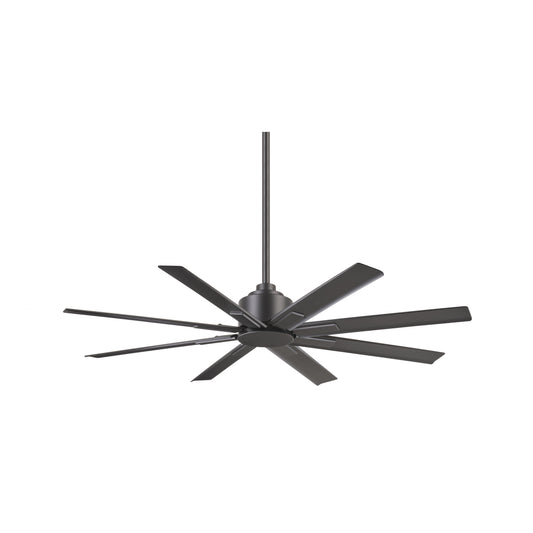
Minimal interiors benefit from restraint. A sculptural fan with a slim motor housing and well-proportioned blades can suit a conference room, executive office, or design studio without making the ceiling feel busy.
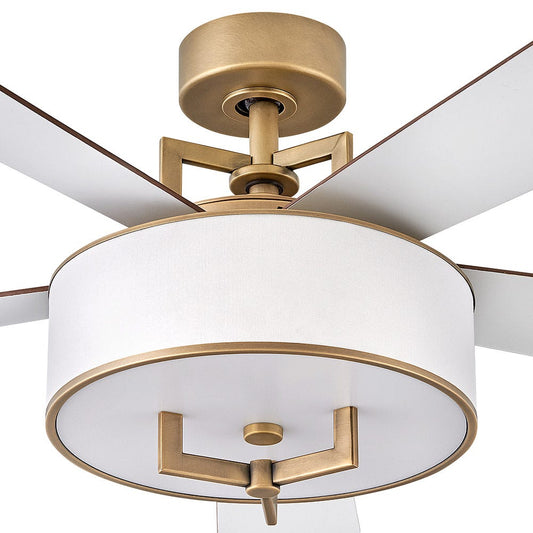
Artemis XL5 and Apex fit that brief well. They work best where the furniture, lighting, and glazing already carry a precise architectural language. In a private office, that kind of fan reads as intentional rather than decorative. In an open-plan fit-out, repeating one clean profile across zones can help facility teams maintain a consistent look without flattening the design.
Three-blade designs are often the strongest visual match for this type of room. They usually look lighter overhead, which helps in offices with exposed structure, narrow sightlines, or a lot of suspended lighting.
For industrial and character-rich workspaces
Some offices need more presence from the ceiling plane. Creative studios, converted warehouses, and hospitality-led workplaces often have brick, timber, dark metal, or exposed services that can make a small, plain fan disappear visually.
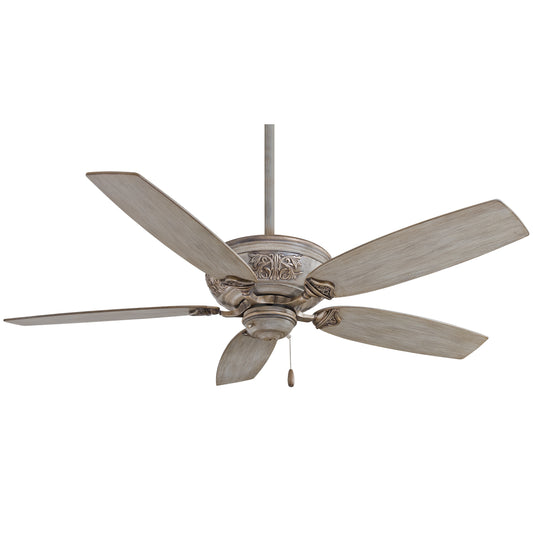
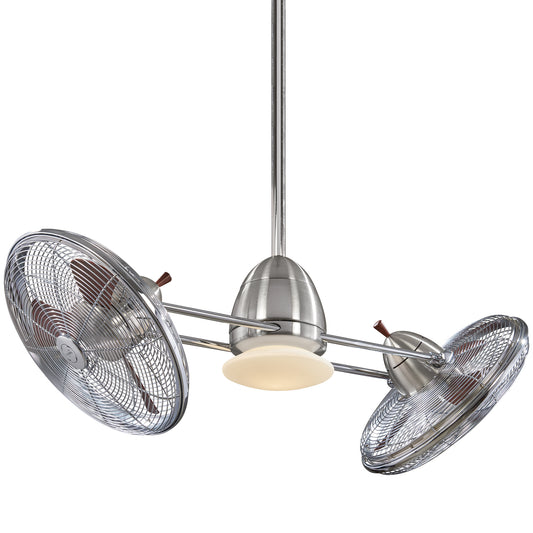
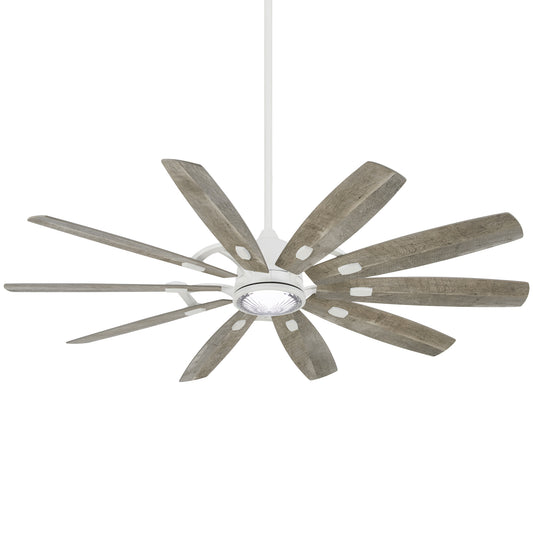
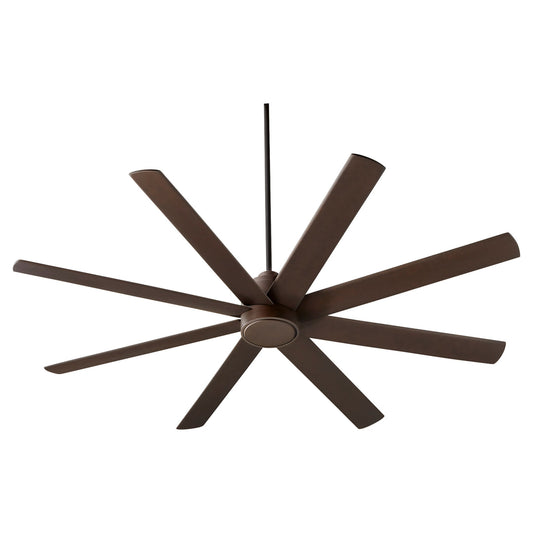
Aviation and Barn style fans suit those rooms because they hold their own against heavier materials. The trade-off is visual weight. In a compact office, that can feel a little dominant. In a larger open-plan area with higher ceilings, it often feels right.
Blade count also changes the look. Five-blade and higher-blade-count fans can read fuller and more substantial, which can help anchor larger rooms. For a facility manager specifying across several open areas, that extra visual presence can make the fan feel proportionate to the scale of the floor plate.
In a design-led office, the best fan looks specified, not tolerated.
A short visual walk-through helps when you’re narrowing the look:
For relaxed offices and hospitality-adjacent spaces
Some workplaces need to feel less formal. Client lounges, wellness practices, boutique reception areas, and waiting rooms often benefit from a softer visual tone.
Cabana and other tropical-inspired styles can work well here, especially with natural finishes, warmer palettes, and textured materials. The key is context. In the right room, that softer blade shape feels welcoming. In a law office or a sharply detailed corporate boardroom, it usually feels out of place.
A practical style filter
Use the room and the user to narrow the field.
- Choose sculptural modern for executive offices, meeting rooms, and polished home offices where visual control matters.
- Choose industrial character for open-plan studios, adaptive reuse spaces, and larger rooms that need more presence overhead.
- Choose relaxed organic for client-facing spaces where comfort, warmth, and first impressions carry more weight than strict corporate formality.
The best premium office fan solves two problems at once. It moves air in a way that suits the people under it, and it looks right for the kind of work the room is meant to support.
The Smart Investment Energy Efficiency and Budgeting
Budget decisions around office fans usually get made in two very different ways. A facility manager is comparing operating hours, maintenance calls, and how a fan supports the HVAC plan across multiple rooms. An employee outfitting a private office is often deciding whether daily comfort and lower noise justify paying more for a better motor and cleaner design.
Both are reasonable. Both need a fan that earns its place.
A premium fan often costs more upfront and less over time to live with. The gain is not only lower energy use. It is steadier comfort, quieter operation, better controls, and a product people keep using instead of avoiding after the first week.
That matters in offices because usage patterns are uneven. An open-plan team area may run fans for long stretches, especially in shoulder seasons when the goal is to keep air moving without pushing the air conditioning harder. A private office may use a fan more selectively, but expectations are usually higher. If the fan hums, wobbles, or looks out of step with the room, it will feel like a bad purchase fast.
Budget for the room, not just the product
A low-priced fan can still be expensive if it solves the wrong problem.
In open-plan offices, the value question is usually operational. Can the fan circulate enough air to support perceived comfort across occupied zones, and can it do that without generating noise complaints from staff? In private offices, the value question is more personal. Does the fan give one person direct relief without creating visual clutter or distracting noise during calls and focused work?
That is why room layout belongs in the budget conversation. A larger open office may justify a higher-spec ceiling fan with a DC motor because the fan will run often and any efficiency gain gets repeated day after day. A compact executive office may justify a premium desk, tower, or small ceiling fan because finish quality, control, and low noise affect the user experience more than raw airflow alone.
What tends to justify a higher spend
Use this shortlist when comparing office-ready fans:
| Priority | Why it affects value |
|---|---|
| DC motor quality | Lower energy use, quieter operation, and finer speed control |
| Airflow matched to occupancy | Helps the fan feel effective in the actual work zone, not just on paper |
| Sound profile | Reduces distraction in calls, meetings, and focused tasks |
| Controls and scheduling | Makes daily use easier for staff and simpler to manage across offices |
| Finish and build quality | Holds up better in visible workspaces and lowers replacement regret |
One detail I watch closely is motor type. In offices, DC models usually justify their premium because they are quieter at usable speeds and give more precise control. That shows up in the human experience immediately. The room feels calmer, and people are more likely to leave the fan running at a comfortable setting instead of toggling between off and too much.
Total ownership beats sticker price
Purchase price is only one line item. Cleaning time, service calls, employee complaints, and early replacement all belong in the actual budget.
For facilities teams, that usually means standardizing on a few dependable models instead of buying a different low-cost fan for every room. For individual buyers, it means choosing a fan that suits the office layout from the start. A fan that is slightly more expensive but properly scaled and quiet will usually outlast the cheap option that never feels quite right.
If you are weighing cost against performance, it helps to review creative ceiling fan placement ideas to maximize airflow and style at the same time. Placement changes how much value you get from the fan you buy.
The best office fan purchase is the one that fits the room, runs quietly, and stays useful year after year. Lower operating cost helps. Better comfort and fewer compromises matter just as much.
Perfect Placement and Ongoing Care
Even an excellent fan can disappoint if it’s installed in the wrong spot or left dusty and loose for years. Placement changes how air feels. Maintenance changes how the fan sounds and performs.

Placement that works
For ceiling fans, keep the airflow centered over the occupied area, not just centered in the room if furniture clusters live off to one side. In offices with desks, tables, or seating groups, comfort follows use patterns more than geometry.
A few practical habits help:
- Keep circulation clear: Don’t crowd a floor or tower fan behind storage, side chairs, or boxes.
- Aim for people, not paperwork: Desk fans should skim the user’s upper body instead of blasting directly across loose papers.
- Respect the room layout: In conference rooms, place airflow where people sit longest, not where the fan looks most symmetrical.
For overhead planning ideas, this set of creative ceiling fan placement ideas to maximize airflow and style gives useful visual examples.
Care that keeps performance steady
Office fans don’t need complicated upkeep, but they do need consistency.
- Clean blades and grills regularly: Dust changes balance and can dull airflow.
- Check mounting hardware: A slight looseness can become a noticeable wobble or tick.
- Review seasonal settings: If your fan includes reversible operation, adjust direction as conditions change.
- Listen for changes: New sounds usually mean something needs tightening, cleaning, or inspection.
A fan for office use should feel effortless in daily life. Good placement gets you there first. Light, routine care keeps it that way.
Frequently Asked Office Fan Questions
Is a ceiling fan or desk fan better for an office
Choose based on who needs relief and how the office is used. A ceiling fan suits private offices, meeting rooms, and shared spaces where several people need the room to feel lighter and less stuffy. A desk fan suits individual workstations where one employee wants personal airflow without creating a draft for nearby colleagues.
For a facility manager, that usually means solving the broader comfort pattern first. For an individual employee, controllable local airflow is often the better answer.
Can a fan help if the office already has air conditioning
Yes. In many offices, a fan improves how the air-conditioned room feels rather than replacing the cooling system. Air movement helps people feel comfortable at a higher thermostat setting, which can ease strain on the HVAC system and reduce the cold-hot complaints that show up in mixed teams.
That pairing works especially well in offices where one side of the room runs warm in the afternoon or where staff sit still for long stretches.
Are DC motor fans worth it for office use
Often, yes. DC motor fans usually offer quieter operation, lower energy use, and more precise speed control than standard AC models. In a private office, that means easier fine-tuning through the day. In a boardroom or client-facing space, it means airflow that feels polished instead of mechanically intrusive.
They do cost more up front. In offices where the fan runs daily, the quieter motor behavior and better control usually justify it.
What’s the best fan for an open-plan office
Open-plan offices usually need coordinated airflow, not a scatter of personal fans fighting the room. A well-sized ceiling fan, or a planned set of ceiling fans in larger layouts, gives more even circulation and a cleaner visual result.
The best choice also depends on role. A facility manager should look at coverage, noise, and how the fan integrates with the HVAC layout. An employee choosing for a home office nook inside a larger shared space should focus on local comfort and adjustable speed.
How do I know if a fan is too noisy for work
Start with the type of work being done. If the room is used for video calls, focused writing, finance work, or one-to-one meetings, even a mildly distracting hum becomes noticeable over a full day.
Look for a stated decibel rating if the brand provides one. Then consider the sound character, not just the volume. A smooth, low motor sound is easier to live with than clicking, rattling, or a choppy air noise.
Should style matter this much in an office fan
Yes. In an office, the fan sits in view for hours at a time. It affects how finished the room feels, especially in executive offices, reception spaces, studios, and any workplace where clients visit.
Style also needs to match the layout. A bold statement fan can work in a private office with a clear design point of view. In an open-plan office, cleaner lines and quieter finishes usually sit better across a larger shared environment.
Is a premium fan really worth more than $300
In many offices, yes. Higher-end models usually bring better blade balance, more stable motors, cleaner finishes, and less visual bulk. Those details matter more in a workspace than people expect because the fan is used often and noticed constantly.
Cheap fans can work for temporary needs or low-visibility back rooms. For daily use in a polished office, a premium fan usually feels better, sounds better, and holds its appearance longer.
Transform Your Workspace Today
The right fan for office use balances three things. It moves enough air to address the comfort issue, it stays quiet enough to support focus, and it looks like it belongs in the room. That could mean a refined ceiling fan in a boardroom, a personal desk fan in a cubicle, or a more expressive model in a design-led workspace.
Choose for the layout, the people using the space, and the atmosphere you want to create. The result is a workspace that feels better every day.
Explore premium ceiling fans and design-led collections at Fan Connection if you’re ready to upgrade an office, studio, reception area, or home workspace with a model that delivers comfort, quiet operation, and polished style.


