











Great Room Ceiling Fan: The Ultimate Buyer's Guide 2026
You’re standing in the middle of your great room, looking up at all that beautiful space. The ceiling is high. The layout is open. The room feels impressive.
And yet, it doesn’t always feel comfortable.
Maybe the sofa area feels still and warm, while the kitchen side feels different. Maybe your air conditioner runs, but the room still feels heavy. That’s where choosing the right great room ceiling fan changes everything. Not just any fan. The right size, the right motor, the right mounting height, and the right style for the room you inhabit.
A lot of shoppers start with square footage alone. That’s helpful, but in a great room, it’s not enough. Height matters. Air volume matters. Placement matters. If you’ve ever bought a fan that looked good online but felt weak once installed, that’s usually why.
Why Your Great Room Needs More Than Just a Fan
A great room is rarely a simple box. It’s often the busiest room in the house, with seating, dining, traffic flow, and tall ceilings all in one space. That makes airflow harder, not easier.
A small fan can spin all day and still leave parts of the room untouched. You feel a breeze in one chair, but the rest of the room stays stagnant. That’s frustrating because the room looks grand, but it doesn’t feel balanced.
Why big open spaces behave differently
In a bedroom or office, air has less space to move through. In a great room, the fan has to circulate air across a wider footprint and through a taller air column. That’s why this room needs more than a decorative fixture with blades.
A great room ceiling fan should serve two jobs at once. It has to improve comfort, and it has to reach across the whole room instead of one corner.
There’s also a long history behind why fans matter in large living spaces. After the 1973 oil embargo, the U.S. ceiling fan market surged from a few hundred thousand units sold annually to several million by 1980 as rising energy costs pushed homeowners toward more efficient comfort solutions, especially in open spaces where airflow mattered most, as noted by the Los Angeles Times archive on the ceiling fan revival.
That history still shows up in today’s homes. Homeowners want comfort, but they also want smarter air movement.
Why “any fan” usually disappoints
A standard fan choice often misses one of these:
- Room height: Tall ceilings can make airflow feel distant.
- Room shape: Open kitchen, dining, and living areas create uneven circulation.
- Fan scale: A fan that looks decent in a photo may be far too small once installed.
- Mounting height: Even a powerful model underperforms if it’s stuck too close to the ceiling.
If you’re curious about the everyday comfort side of that equation, this overview of the breezy benefits of having a ceiling fan gives a helpful companion read.
The biggest shift in thinking is simple. Don’t shop for a great room ceiling fan like you’re shopping for a basic room fan. Shop for the amount of air your room holds.
Sizing Your Fan for Room Volume Not Just Square Feet
Most sizing charts begin with floor area, and that shortcut causes plenty of frustration in great rooms.
Two rooms may share the same square footage and need very different fans. A fan moves air through the full cubic space of the room, so ceiling height changes the job in a big way. That is why a great room with a tall ceiling often needs more than a wider fan.
Great rooms behave like deep swimming pools
Two pools can have the same length and width, yet the deeper one holds much more water. Great rooms work the same way with air.
A higher ceiling adds more air for the fan to circulate. In practical terms, your fan has a larger space to reach, and comfort becomes harder to create if you size by floor area alone.
Use this simple formula:
Room volume = length × width × ceiling height
That one step gives you a clearer starting point than square footage by itself. If your room is 20 feet by 25 feet with a 16 foot ceiling, you are working with 8,000 cubic feet of air. That helps explain why a fan that works in a standard living room can feel weak in a large open great room.

What CFM means in plain language
CFM stands for cubic feet per minute. In the showroom, I usually describe it as the fan’s ability to move air you can feel across a large space.
For great rooms over 400 square feet, a minimum of 5,000 CFM is recommended. For 600 to 800 square feet, the target rises to 7,700 to 9,000 CFM, and larger spaces may need over 10,000 CFM, according to DelMar Fans’ guide to big modern ceiling fan sizing and airflow.
Those numbers matter because a great room needs broad, even circulation. Without enough airflow, you may feel a breeze under the fan while the sofa area or kitchen edge stays stuffy.
A quick way to match room size and fan scale
Here is a practical reference point:
| Great room size | Airflow target | Typical blade span |
|---|---|---|
| Over 400 sq ft | 5,000 CFM minimum | 60 inches and up |
| 600 to 800 sq ft | 7,700 to 9,000 CFM | Larger great room sizes often need 60 to 96 inches |
| Larger spaces | Over 10,000 CFM | Extra-large models or carefully planned multi-fan layouts |
The same DelMar source notes that undersized 52-inch fans tend to cool only localized zones, while properly sized 60 to 96 inch fans create a more uniform breeze across a large room.
That is a useful checkpoint, but blade span is only part of the answer.
Why blade span and room volume need to match
Blade span is the first thing many homeowners notice because it is easy to see. It also affects how wide an area the fan can cover. In a great room, though, width without enough airflow is a little like using a wide paintbrush with very little paint on it. The reach looks promising, but the coverage falls short.
A fan that appears proportionate in a wide room with an average ceiling may still struggle in the same footprint with a vaulted or cathedral ceiling. If the fan suits the architecture visually but the room feels uneven, the likely problem is airflow rather than appearance.
Use this process when you shop:
- Measure the room footprint: Record the length and width.
- Measure the average ceiling height: Use an average height for sloped or vaulted ceilings.
- Calculate volume: Multiply length, width, and height.
- Check the CFM rating: Compare the fan’s airflow output with the size of the space.
- Match the blade span: Many great rooms land in the 60 to 96 inch range, not the standard sizes used in smaller rooms.
If you want a side-by-side reference while comparing models, this ceiling fan size guide for blade span and room dimensions can help narrow the field.
Keep efficiency in the conversation
Airflow comes first, but efficiency still deserves a look. DelMar also notes that ENERGY STAR® certified models can achieve 64% greater efficiency in this category. That makes it worth checking how well a fan moves air, not just how large it looks in the product photo.
The best great room fan fits the room in three dimensions. Once you calculate volume and compare it with blade span and CFM, you are choosing with a much clearer picture of how the fan will feel at home.
Choosing Your Fan's Engine Motors and Blades
Shoppers often focus on finish first. Matte black, brushed nickel, distressed wood, palm leaf. All of that matters. But a fan's true personality comes from its motor and blade design.
If you’ve ever wondered why two large fans can look similar but feel very different in person, this is usually the reason.

AC motor versus DC motor
An AC motor is the classic workhorse. It’s familiar, dependable, and common in many ceiling fans.
A DC motor feels more like the modern upgrade. It’s often quieter, more efficient, and smoother in operation. In a large room where the fan becomes part of daily life, that quieter feel can make a real difference.
If you’re choosing for a primary living space, many homeowners prefer DC because it tends to feel more refined in everyday use, especially in open layouts where fan noise carries farther.
Blade count changes the character of airflow
More blades doesn’t automatically mean more performance. That’s one of the most common misunderstandings in the showroom.
Hunter notes that three-blade configurations often optimize for maximal CFM per watt and minimal noise, with operation under 50 dB, while fans with 5 or more blades may trade a slight 5 to 10% reduction in peak airflow for smoother, quieter operation in residential settings, as explained in Hunter’s great room fan collection guidance.
Here’s the practical version:
- Three blades: Cleaner, more modern look. Often built for strong airflow efficiency.
- Five or more blades: Fuller visual presence. Often chosen for a gentler, smoother feel.
Neither is automatically better. It depends on whether your priority is raw air movement, quieter texture, or a certain style.
Blade pitch matters more than many people expect
Blade pitch is the angle of the blade. It’s easy to miss, but it affects how forcefully the fan pushes air.
A 12 to 15 degree blade pitch is especially important for strong air thrust in a large space, according to the same Hunter guidance. In plain English, that means the blades are shaped to do real work, not just turn attractively overhead.
In a great room, the best fan is rarely the one with the most decorative parts. It’s the one with the motor and blade geometry to move air where people sit and walk.
If you enjoy comparing form and function, this breakdown of the impact of fan blade count and fan efficiency is a helpful companion.
A fast showroom shortcut
When comparing great room fans, ask yourself three things:
| Question | What it tells you |
|---|---|
| Is the motor AC or DC? | How the fan may feel in terms of efficiency, sound, and control |
| How many blades does it have? | Whether the design leans toward stronger airflow or a smoother residential feel |
| Is the blade pitch substantial? | Whether the fan is built to push air effectively in a large room |
That combination tells you much more than finish color ever will.
The Unsung Hero Downrods and Mounting
Even a high-performance fan will underperform if it hangs at the wrong height.
In a great room, that mistake is common. The ceiling is tall, the fan looks impressive, and yet the seating area still feels still. The problem usually is not the motor. It is placement.
A fan works a lot like a lamp. If you mount a lamp near the ceiling, the light spreads in the wrong place for reading. A ceiling fan behaves the same way with air. To feel the airflow where people sit, walk, and gather, the blades need to be brought down into the room instead of left floating far overhead.

The target height that makes a fan feel effective
For great rooms with tall ceilings, the usual goal is to position the blades about 8 to 9 feet above the floor. That is the working zone where airflow is far more likely to reach people instead of staying trapped near the ceiling.
This is also where the room-volume approach matters. If you already measured a large great room and chose a bigger blade span to move enough air, the mounting height has to support that decision. Blade span, motor strength, and room volume can be matched correctly, but the fan still falls short if the downrod leaves it too high to do useful work.
A short downrod can make a large fan feel weaker than its specs suggest.
Why downrods matter in tall great rooms
Many fans come with a short standard downrod. In a room with a conventional ceiling height, that may be fine. In a great room, it often keeps the fan too close to the ceiling plane, especially if the room has a vaulted or cathedral shape.
That creates a few predictable comfort problems:
- Airflow stays above the living zone
- Warm and cool spots feel uneven across the room
- The fan looks large enough, but the breeze feels disappointing
In many great rooms, a downrod is the component that lets the fan function at the height it was meant to.
If you want a practical shopping reference, this overview of downrods for fans explains how different lengths affect fit and performance.
Ceiling shape changes the mounting hardware
Flat ceilings are the easiest setup. Sloped and vaulted ceilings need more planning.
The fan has to hang straight, and the mounting hardware has to match the ceiling angle. Otherwise, you can end up with wobble, clearance issues, or strain on the mounting point over time. If you are reviewing installation details with your contractor or electrician, this guide to safe installation of ceiling fans is a useful reference for what proper support and safe mounting should include.
A simple way to choose the right downrod
Here is the showroom version of the math.
- Measure the floor-to-ceiling height.
- Set your target blade height at about 8 to 9 feet above the floor.
- Account for the height of the fan motor housing and light kit, if there is one.
- Choose the downrod length that brings the blades into that target zone.
- Check the ceiling slope before ordering, so you know whether you need an angled-mount adapter.
That process sounds small, but it changes how the fan feels every day. A properly mounted fan can make the same motor and blade set feel stronger, more even, and more comfortable across the whole great room.
Beyond Airflow Lights Controls and Smart Features
Once the fan’s performance is sorted out, the lifestyle features become a lot more fun. Here, a great room ceiling fan shifts from “air mover” to part of the room’s daily rhythm.
Some people want one fixture overhead that handles both airflow and illumination. Others already have recessed lighting or statement pendants and want the fan to stay visually clean. Both approaches can work well.
Choosing a fan with or without lights
An integrated light kit can be a smart fit when the fan sits at the center of the room and needs to pull double duty. It keeps the ceiling cleaner and can reduce fixture clutter.
In other great rooms, especially design-led spaces with layered lighting, a no-light fan often looks more architectural. The blades become the feature, and the room lighting stays separate.
Think about how you use the room at night. If the fan is your main overhead fixture, built-in lighting may be the simpler path. If your room already has strong lighting from cans, sconces, or chandeliers, a fan without lights can feel more intentional.
Controls change how often you use the fan
Control style affects convenience more than many realize.
A wall control feels tidy and permanent. A handheld remote is flexible, especially in large seating areas where you don’t want to get up to make a quick adjustment. Smart controls go a step further and make the fan part of your daily routine rather than a seasonal appliance.
Shoppers often consider these options:
- Wall control: Best for a built-in feel.
- Remote control: Best for convenience from the sofa or bed.
- Smart fan features: Best for connected homes and automation.
Smart features make a large room easier to manage
In a great room, convenience matters because the space does so many jobs. Movie night, dinner prep, reading, hosting, and relaxing all ask for different airflow and lighting moods.
A smart fan can fit that kind of room well. You can change speed without crossing the room, pair controls with your daily routine, or keep settings consistent with the rest of your home’s tech. If that appeals to you, this guide to ceiling fans with smart home integration options is worth a look.
The best feature set isn’t the longest checklist. It’s the combination you will use every day.
The key is not to chase every extra. Match the controls and lighting plan to the way your household lives in the room.
Find Your Style in Fan Connection's Curated Collections
You have the measurements. You know the room volume. You have a better handle on blade span, motor strength, and downrod length. Now comes the part customers usually enjoy most. Picking a fan that looks right in the room every single day.
A great room fan works like a fireplace mantel or a large dining table. It sets the tone because your eye goes to it right away. In a space with high ceilings and wide sightlines, the fan is part of the architecture, not just a utility item.

For clean modern rooms
Modern great rooms usually look best with a fan that has clear lines and a confident silhouette. Three-blade designs often fit that job well because they read more like a design piece than a background fixture.
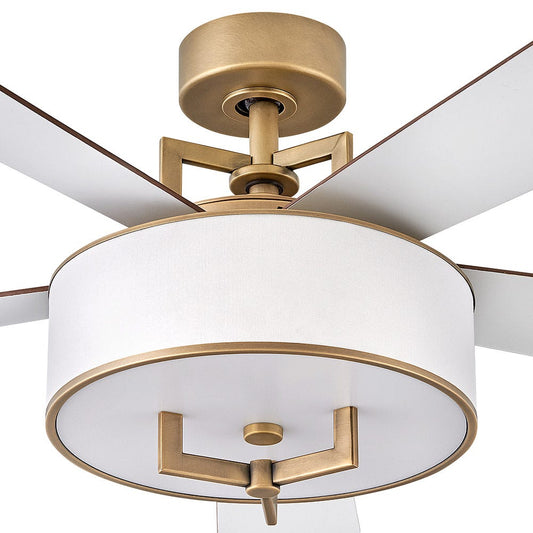
If you are browsing the 3 Blade Collection, a model such as the Artemis XL5, shown in the table below, gives you that sculptural look. It suits larger rooms where a small fan would feel visually lost. If you are also styling your living room, this type of fan pairs well with low-profile furniture, simple finishes, and open floor plans.
For rustic and farmhouse spaces
Rustic great rooms usually ask for more visual texture. Wood beams, stone, warm metals, and layered fabrics can make a sleek fan feel too light for the setting.
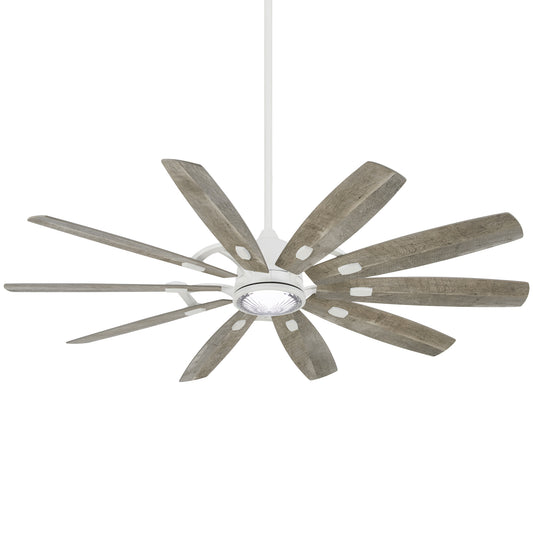
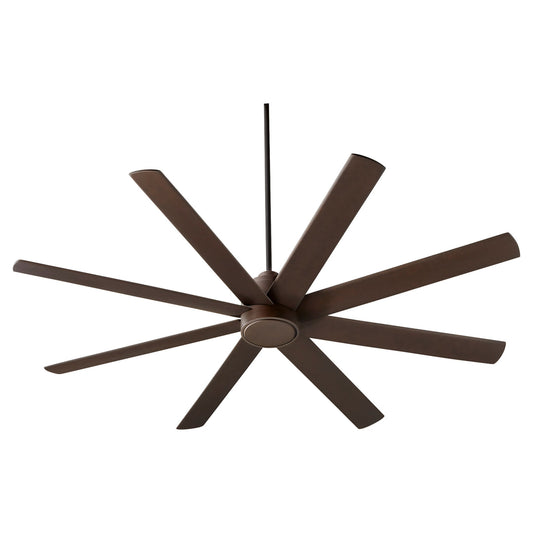
That is where a five-blade design often feels more at home. In Fan Connection's 5 Blade Collection, options like The Barn, listed below, carry more presence and help the fan relate to the room's materials. The look feels grounded, which matters in a tall room where the fan has to hold its own against large architectural features.
For coastal, tropical, and relaxed interiors
Some great rooms need softness instead of sharp lines. Natural blade shapes, woven details, and lighter finishes can make a large space feel more relaxed and welcoming.
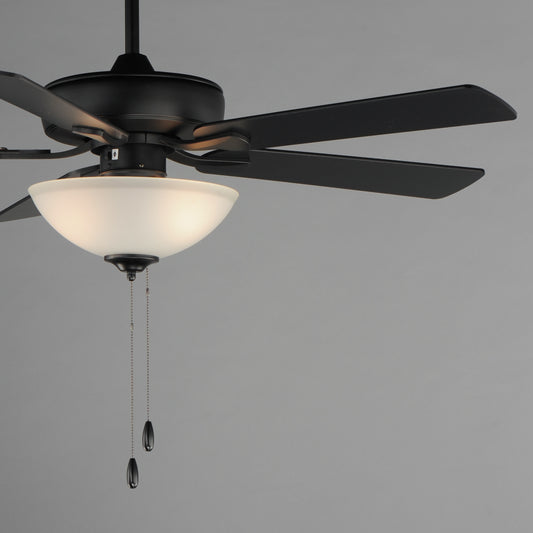
The Tropical Collection fits that mood well. A fan such as the Cabana, included in the table, brings personality without making the room feel heavy or formal. This style often works especially well in bright spaces with natural textures, pale woods, linen upholstery, and indoor-outdoor flow.
A fast style matching guide
| Room style | Good collection to browse | Example premium direction |
|---|---|---|
| Contemporary and minimal | 3 Blade Collection | Artemis XL5 |
| Rustic and farmhouse | 5 Blade Collection | The Barn |
| Coastal and tropical | Tropical Collection | Cabana |
A premium fan often makes sense in a great room because the room itself asks more from it. The fan has to move air across a larger volume, hang at the right height, and still look balanced from across the space.
The best result comes from matching style after the technical fit is solved. Once the fan is sized for your room volume and ceiling height, the finish and blade shape become the final layer that makes the whole room feel intentional.
Your Great Room Upgrade Checklist and Fan Care
By the time you’re ready to buy, the process should feel much simpler. Not because great rooms are simple, but because the right checklist removes the guesswork.
Your buying checklist
Run through these before you order:
- Measure the room fully: Get length, width, and average ceiling height.
- Calculate volume: This keeps you from underbuying for tall spaces.
- Choose the right airflow class: Match your room to the level of performance it needs.
- Confirm blade span: Great rooms usually call for large-diameter fans.
- Pick motor and blade style: Balance airflow goals, sound, and visual style.
- Measure for the downrod: Blade height matters as much as fan size.
- Decide on light and controls: Keep the room’s lighting plan and daily use in mind.
- Match the finish to the room: The fan should support the rest of the space.
Easy maintenance that protects performance
A quality fan doesn’t need complicated care, but it does benefit from regular attention.
Do these simple things:
- Dust the blades: Dust buildup can affect balance and appearance.
- Check screws occasionally: Hardware can loosen over time.
- Watch for wobble early: A small movement is easier to fix before it becomes annoying.
- Use reverse seasonally: In cooler months, reversing the fan can help circulate warm air more gently through the room.
Clean blades and secure hardware do more than improve appearance. They help the fan run the way it was designed to run.
Keep the room design working with the fan
A great room fan doesn’t live in isolation. Rug placement, furniture grouping, lighting, and wall decor all influence how the room feels once the fan is installed. If you’re refreshing the space at the same time, this article on styling your living room can help you think about the room as a whole.
The right fan should make the room feel calmer, more balanced, and easier to enjoy every day.
Frequently Asked Questions for Great Room Fans
Can I use two smaller fans instead of one large fan
Yes, sometimes. In very large or unusually shaped great rooms, two fans can make sense.
The key is placement. If they’re too close, airflow can fight itself and create turbulence. If they’re thoughtfully spaced, they can help cover separate living and dining zones more evenly. In a straightforward great room, though, one properly sized fan often gives a cleaner look.
My great room opens to a covered patio. Do I need a special fan
Possibly. If moisture or outdoor air regularly reaches the fan, you’ll want to check whether the location calls for a damp-rated or wet-rated model.
Covered spaces are not all the same. A protected interior opening is different from an area that gets blowing rain or heavy humidity. If your fan sits near that transition point, it’s smart to choose a model designed for that environment rather than treat it like a standard indoor room.
Are large great room fans noisy
They don’t have to be. Noise depends on build quality, motor type, blade design, and installation.
A well-made fan with the right motor and proper mounting can feel very quiet in use. Poor mounting, the wrong downrod setup, or a fan pushed beyond what the room calls for can create the kind of hum or wobble shoppers worry about. If quiet operation matters a lot to you, compare the fan’s design carefully and avoid treating all large fans as if they perform the same.
Should the fan be the visual centerpiece of the room
Sometimes yes, sometimes no.
In some homes, the fan is a sculptural focal point. In others, it blends into beams, lighting, and ceiling color. The best answer depends on your room’s style. In a great room, either approach can work as long as the scale is right.
What’s the most common great room fan mistake
Buying based on looks alone.
The second most common mistake is ignoring mounting height. A beautiful fan that’s too small or mounted too high won’t make the room feel better. That’s why size, volume, and placement have to come first.
If you’re ready to choose a fan that fits your great room, browse Fan Connection for curated collections, premium large-scale models, and design-forward options that make shopping by style and performance much easier.


