







How to Ventilate a Room Without Windows: Get Fresh Air!
A room without windows can go stale fast. You feel it in the basement office that gets heavy by midafternoon, the interior bathroom that never seems fully dry, or the walk-in closet that smells a little musty no matter how tidy it is.
The good news is that fixing it usually does not require tearing open walls or living with an ugly industrial setup. If you understand how air should move, then add the right mechanical help and the right circulation fan, you can make a sealed room feel far more comfortable, healthier, and better designed.
That Stuffy Room Feeling and How to Banish It
A windowless room feels wrong for a reason. Air gets trapped, humidity hangs around, and everyday pollutants from paint, flooring, furniture, and cleaning products do not have an easy escape path.
That stale feeling is not just about odor. Moisture can collect on cooler surfaces, and that creates a friendlier environment for mildew and mold. If that is already a concern in your home, this guide on how to prevent mold for good is worth reading alongside your ventilation plan.

What is causing the problem
Most windowless rooms struggle with some mix of these issues:
- Stale air buildup: Air sits in corners and near the ceiling with very little mixing.
- Lingering moisture: Bathrooms, laundry zones, and lower-level rooms hold dampness long after use.
- Odors that stick around: Without a path out, smells settle into soft materials.
- Heat layering: Warm air collects overhead while the lower part of the room still feels flat and stuffy.
A lot of homeowners try one quick fix and stop there. They add a small portable fan, run a dehumidifier, or crack the door occasionally. Those steps can help, but they do not solve the whole problem if air still has nowhere to go.
Tip: Ventilation removes stale air. Circulation moves the air already in the room. You usually need both.
The better approach
The rooms that feel best usually use a simple combination:
- A pathway for air to travel
- A fan or ducted system that actively moves air
- A circulation fan that mixes the room so dead spots do not linger
That last part often gets overlooked. Good circulation makes a room feel fresher faster, and it can make your main ventilation equipment work better.
If your bigger comfort issue is temperature, not just air quality, this practical guide on cooling strategies is also useful: https://www.fanandlights.com/blogs/news/how-to-cool-a-room-without-ac
Assessing Your Room's Airflow Needs
Before buying anything, inspect the room like a contractor would. Your nose, skin, and a few simple observations tell you a lot.
If the room smells stale after the door has been shut, if mirrors or walls collect moisture, or if the air feels oddly heavy, the room is asking for a better air exchange plan.

Quick signs that your room needs more help
Run through this checklist:
- Odors linger: The room still smells used long after you leave it.
- Condensation appears: You notice damp walls, mirrors, or cool surfaces collecting moisture.
- The room feels sleepy or stuffy: That often points to poor fresh air delivery.
- Dust settles unevenly: Corners and shelves stay stagnant.
- The door changes the room instantly: If opening the door makes the room feel better within minutes, the room likely lacks a proper air path when closed.
The metric that matters
The most useful concept here is Air Changes per Hour, or ACH. It means how many times the air in the room gets replaced in an hour.
For office-type spaces, a proper mechanical exhaust setup typically targets 4 to 6 ACH according to Astberg Ventilation’s guidance on windowless-room ventilation, which also notes that undersized fans are a common failure in retrofits when they deliver less than 3 ACH Astberg Ventilation.
ASHRAE Standard 62.1 also sets a ventilation benchmark for windowless rooms, including 5 cfm per person plus 0.06 cfm per square foot for offices, and following those guidelines helps prevent CO2 buildup and can reduce VOCs by up to 50% Airwoods Comfort.
Pressure matters more than commonly realized
A room can be:
| Pressure type | What it does | Best use |
|---|---|---|
| Negative | Pulls air out of the room | Bathrooms, odor control |
| Positive | Pushes cleaner air into the room | Spaces where you want fresher supply air |
| Balanced | Coordinates supply and exhaust | Higher-end comfort and whole-home planning |
If a bathroom has no makeup air path, the exhaust fan struggles. If an office gets too negative, it can start pulling smells from adjacent spaces. That is why airflow pathways matter just as much as fan power.
Key takeaway: Do not buy by looks alone. Start with room use, occupancy, and whether you need odor removal, moisture control, or comfort mixing.
If you are also choosing a ceiling fan for the same room, size matters. This fan sizing guide is a smart companion read: https://www.fanandlights.com/blogs/news/how-to-choose-a-ceiling-fan-size
Creating Pathways for Natural Air Exchange
A closed room with no air path is hard to fix with brute force alone. Air needs an entry and an exit, or at least a transfer route.
That is why “just leave the door open” only partly works. It helps while the door is open, then the problem returns the moment privacy matters again.
Start with the door
The door is usually the easiest place to improve airflow.
A door undercut can let air pass even when the room is closed. It is a small detail, but it often makes the difference between an exhaust fan that hums and an exhaust fan that moves air.
Another option is a transfer grille. These can go through the wall, over the door, or between adjacent rooms. They let air travel without turning the room into an echo chamber.
Practical options from simplest to more involved
- Open-door airflow: Best for occasional use rooms. It is free, but inconsistent.
- Door undercut: Subtle, inexpensive, and effective where privacy still matters.
- Transfer grille: Better for steady air movement between rooms.
- Jumper duct: A cleaner, quieter option when you want airflow without a direct sightline.
What works best depends on the room’s job. A closet can live with a simpler path. A bathroom or interior office usually benefits from something more deliberate.
What to avoid
Many DIY setups fail because the fan gets installed first and the air path gets ignored. Then the room still feels stuffy, and everyone blames the fan.
Common mistakes include:
- Sealing the room too tightly
- Blocking the area under the door with rugs or thresholds
- Installing a transfer grille into a poor source room
- Expecting a circulation fan to remove moisture on its own
Tip: If you hold a tissue near the door gap and it barely moves when the fan runs, the room probably needs a better transfer path.
There is also a design angle here. Some homeowners do not want a standard ceiling fan in the center of a low room, or they need airflow directed along a wall or through an awkward layout. In those cases, wall-mounted fan options can solve a real layout problem without making the room look improvised: https://www.fanandlights.com/blogs/news/wall-mount-ceiling-fans
Installing Mechanical Muscle for Serious Airflow
A room with no windows can have a decent transfer path and still feel stale by the end of the day. That is usually the point where passive fixes have done all they can. Mechanical ventilation takes over and gives the room a predictable air change strategy instead of a hopeful one.
The right setup depends on the job the room needs to do. Some spaces need to dump humidity fast. Others need a steady exchange rate so the air stays fresh during work, workouts, or long hobby sessions. The best installs match the fan type to the room, the duct route, and the level of finish you want.

Exhaust fans for moisture and odors
A standard exhaust fan is still the right call for bathrooms, powder rooms, laundry spaces, and other rooms where moisture or odor is the main problem.
Its job is straightforward. Pull dirty or damp air out of the room and discharge it outdoors. Venting into an attic, soffit cavity, or another enclosed space just moves the problem to a new location.
Choose this route if:
- Humidity is the main issue
- The room is compact
- You want a cost-conscious upgrade with clear results
The trade-off is makeup air. If the room cannot pull replacement air from somewhere nearby, performance drops, noise often goes up, and the fan spends more time fighting pressure than clearing the room.
Inline duct fans for tougher layouts
Inline fans solve real layout problems. They work well when the vent point is several feet away, when the ceiling location is awkward, or when you want the fan motor mounted remotely for a quieter room.
I recommend them often for interior offices, dressing rooms, and converted storage spaces where a basic bath fan would be underpowered or annoyingly loud. Sizing matters here, and so does duct design. A fan with enough capacity on paper can still disappoint if the duct run is long, kinked, or packed with sharp turns.
ACH is the useful metric to watch because it tells you how often the room’s air gets replaced in an hour. That gives homeowners a way to compare options on performance, not just looks or price. If you are also weighing comfort and style upgrades, the benefits of having a ceiling fan become much more noticeable once the room already has real air exchange.
Through-the-wall fans and supply fans
If the room sits on an exterior wall, a through-the-wall fan can be the cleanest mechanical fix. It avoids a long duct run and usually delivers more direct performance for studios, enclosed offices, and hobby rooms.
Supply fans handle a different problem. They bring fresher air into the room, which helps in spaces that feel flat or stale even without a moisture load. The catch is simple. Air needs an exit path. Without one, you are pressurizing the room and pushing that stale air somewhere else in the house.
Balanced ventilation for the cleanest result
Balanced ventilation is the polished option for people who want control, efficiency, and a more complete indoor air strategy. HRV and ERV systems both exchange stale indoor air with fresh outdoor air while managing energy loss better than a simple exhaust-only setup. For a broader look at where energy recovery ventilators fit, that reference is worth a read.
This approach costs more and usually makes the most sense in larger remodels, high-performance homes, or specialty rooms that get used for long stretches. It is also the setup that pairs best with a design-forward plan, where ventilation hardware, grille placement, and premium air-moving fixtures all need to work together instead of looking added on later.
A practical comparison
| System | Best for | Strength | Trade-off |
|---|---|---|---|
| Exhaust fan | Bathrooms, small enclosed rooms | Removes moisture and odors well | Needs a replacement air path |
| Inline duct fan | Longer runs, remote venting, quieter installs | Better placement flexibility and lower room noise | More installation effort |
| Through-the-wall fan | Rooms on an exterior wall | Direct and efficient | Less useful for interior rooms |
| Supply fan | Stale but not wet spaces | Brings in fresher air | Does not solve exhaust on its own |
| Balanced HRV or ERV | Higher-end projects and whole-home planning | Controlled air exchange with better energy performance | Higher cost and more complexity |
What works and what does not
What works:
- Proper ducting to the outdoors
- Fan sizing based on room volume and target ACH
- A clear makeup air route
- Controls such as timers, humidity sensors, or occupancy switches
- Attention to noise, especially in offices and bedrooms
What does not:
- Tiny fans picked for appearance alone
- Ducts with extra bends and crushed sections
- Venting into enclosed cavities
- Ignoring pressure balance
- Assuming an air purifier can replace ventilation
Key takeaway: For recurring moisture, odors, or heavy stuffiness, install a real mechanical exhaust or balanced system first. Then add circulation for comfort, coverage, and visual finish.
Circulation Superstars Ceiling Fans and More
Once the room has a legitimate path for air exchange, circulation becomes the force multiplier. This is the part many people skip, and it is why some rooms technically vent but still feel dull.
A good ceiling fan does not replace ventilation. It makes ventilation feel effective by mixing the room, smoothing out hot and cool layers, and eliminating dead pockets that cling to corners and alcoves.

Why circulation changes the experience
The air in a windowless room often stratifies. You can have one zone near the ceiling that is warmer and another area near the floor that feels flat and stale.
A strong ceiling fan breaks that up. It helps the room feel fresher faster, especially when paired with a door pathway, transfer grille, or active exhaust setup.
During the COVID-19 pandemic, CDC guidance noted that strategic fan use in windowless rooms can reduce airborne virus particles by up to 70% when fans mimic exhaust ventilation, and a two-fan setup can achieve 4 to 6 ACH while outperforming static air in particle removal CDC ventilation guidance.
That does not mean every fan setup is equal. Placement matters. Direction matters. Fan type matters.
What fan styles do best in enclosed rooms
A cheap box fan can move air, but it tends to create a narrow stream. A well-sized ceiling fan creates a room-wide mixing effect that feels much more even.
For design-forward spaces, premium fans earn their keep. Models such as the Artemis XL5, Andros, Aerovon, and Artiste are not just decorative fixtures. Their blade geometry and motor quality make them far better at creating smooth, broad circulation than bargain fans that just chop the air.
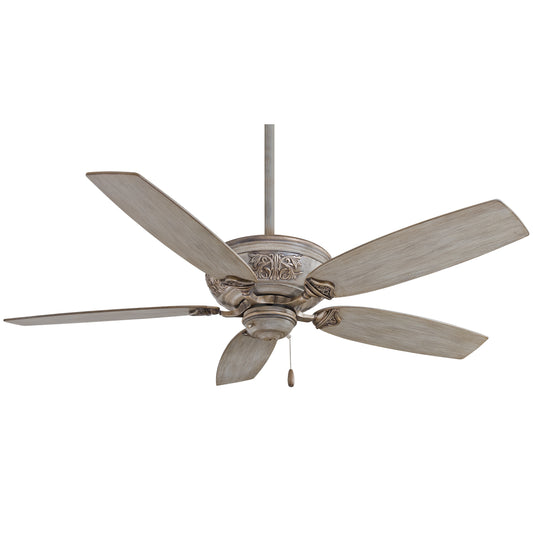
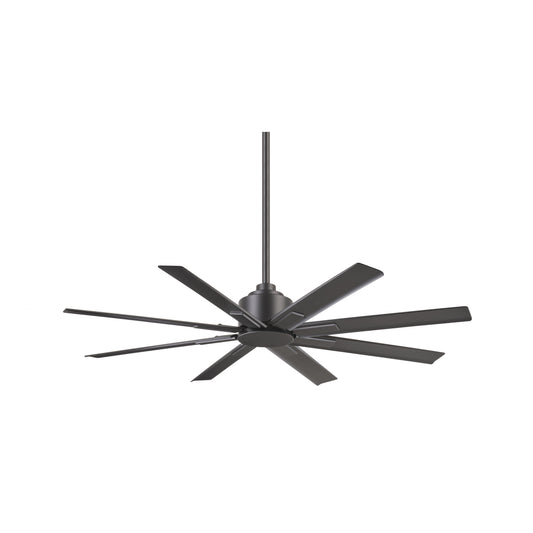
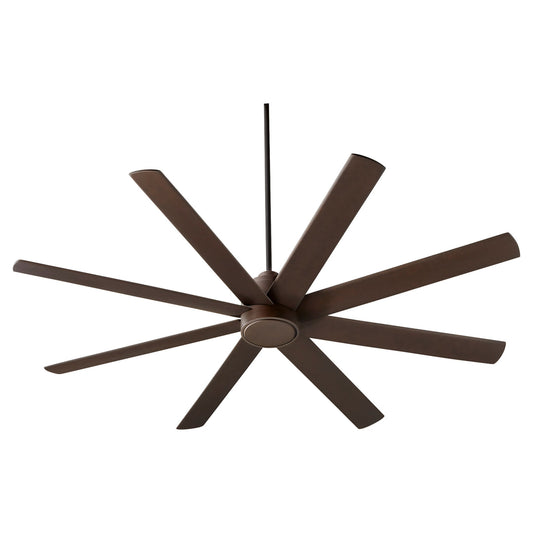
If your style leans minimalist, a curated 3 Blade collection often gives you a cleaner architectural look. If you want a stronger visual statement, a 5 Blade or 6+ Blades model can bring more presence. If the room needs warmth and texture, Tropical designs can soften a sealed space that otherwise feels too hard-edged.
Matching the fan to the room mood
Some rooms need the fan to disappear. Others benefit from the fan becoming the room’s best object.
Consider these pairings:
- Interior office or study: Look for a modern silhouette with disciplined lines and a finish that matches your hardware.
- Windowless bedroom: Prioritize broad, even air mixing and quiet operation.
- Dressing room or closet lounge: A sculptural fan can add movement and personality where the room lacks natural dynamism.
- Hospitality suite or lounge area: A larger statement fan often makes the room feel intentional, not enclosed.
A useful companion read on comfort and airflow is this breakdown of ceiling fan benefits: https://www.fanandlights.com/blogs/news/the-breezy-benefits-of-having-a-ceiling-fan
Here is a quick visual primer before you choose a style and setup:
What I would install
In a basic interior bathroom, I would lead with a proper exhaust fan and then use circulation elsewhere in the adjacent zone.
In a basement office or media room, I like a combined approach. Give the room an air path, add mechanical ventilation if the space stays closed for long stretches, then install a substantial ceiling fan instead of relying on a tabletop fan that only blasts one corner.
For high-end residential spaces, the fan should solve comfort and finish the room visually. Premium models in a higher price range often make sense. You are not just buying airflow. You are buying a fixture that carries the design while helping the room feel alive.
Tip: In enclosed rooms, the best-looking fan is the one that also fixes stagnant zones. Beauty without movement is just ceiling sculpture.
Your Ventilation Project Checklist and Final Steps
At this point, the decision gets simpler. You are choosing a system, not a single gadget.
A windowless room improves fastest when you work through the room in order. First create an air path. Then add the right mechanical ventilation. Then add circulation that makes the whole setup feel better day to day.
Final buying checklist
- Room use: A bathroom needs odor and moisture removal. An office may need longer-run comfort and better mixing.
- Air path: Confirm that replacement air can enter through a door undercut, grille, jumper duct, or adjacent route.
- Mechanical strategy: Pick exhaust, supply, or balanced ventilation based on the room’s actual problem.
- Fan sizing: For a 200 sq ft windowless room, a ceiling fan rated at 100 to 200 CFM can help achieve 4 to 6 ACH when paired with open doors, while a box fan may only deliver 2 to 3 ACH. Premium multi-blade designs can produce over 4,000 CFM for strong air mixing Alen.
- Noise: Bedrooms, offices, and meeting rooms benefit from quieter equipment.
- Filters and maintenance: If the system uses filtration, stay on top of replacement intervals.
- Install complexity: Call a pro if you are adding new duct runs, electrical circuits, or exterior penetrations.
- Code check: Always verify local code requirements before cutting openings or routing ductwork.
One last design note
Do not treat the fan as an afterthought. In a room without windows, the ceiling fixture often becomes a major visual anchor.
That is why I like choosing the ventilation plan and the fan together. The result feels intentional, and the room finally stops feeling sealed off from the rest of the house.
For a broader product-planning walkthrough, this buying resource is useful before you commit: https://www.fanandlights.com/blogs/trade-pro-tips/ceiling-fan-buying-guide
If you are ready to upgrade a stuffy room with a ceiling fan that contributes to comfort and looks good doing it, browse Fan Connection. Their curated collections make it easy to shop by blade count, design style, and standout models like Artemis XL5, Andros, Aerovon, and more, especially if you want a premium fan over $300 that feels like part of the room instead of a compromise.


