










What does flush mount mean? Unlock sleek, low-ceiling ceiling fan design
So, What Exactly Is a Flush Mount Fan?
Put simply, a flush mount ceiling fan is built to install directly against the ceiling. There’s no gap, no downrod—nothing but the fan itself. This is why you’ll often hear them called 'hugger' fans; they literally hug the ceiling, making them the only real choice for rooms where headroom is at a premium. It's a design born from a simple, elegant solution to a common problem: how do you get a cool breeze in a room without a tall ceiling?
Decoding the Flush Mount Ceiling fan
Think of a modern light fixture that sits flat against the ceiling. That’s the basic idea behind a flush mount fan. Instead of hanging from a metal tube (a downrod), the motor housing is designed to attach right to the mounting bracket inside your ceiling's electrical box. This design is clean, minimalist, and, most importantly, a critical safety feature in the right kind of space.
This direct-mount installation maximizes every inch of vertical space, which is a lifesaver in rooms where you can't afford to lose any headroom. It's the go-to solution for anyone with ceilings under eight feet tall—a common sight in basements, hallways, smaller bedrooms, and many older homes. By keeping the blades tucked up close to the ceiling, you get plenty of clearance for people to walk underneath without a second thought. Understanding the different ceiling fan mounting bracket types can help you see exactly how this secure, low-profile fit is achieved.
Why It Matters for Low Ceilings
Flush mount fans are engineered specifically for rooms with ceilings between 7 and 8 feet high. In these spaces, a standard fan with a downrod would hang dangerously low. Hugger fans solve this problem by mounting flat against the ceiling, which usually keeps the total drop to less than 12 inches from the ceiling to the bottom of the blades.
This is a bigger deal than you might think. In the U.S., about 30% of homes built before 1980 have ceilings under 8 feet, which explains why the popularity of flush mount fans has skyrocketed, especially in home renovation projects.
But this design isn't just about safety—it also creates a clean, uncluttered look. A flush mount fan can make a small room feel bigger and more open just by staying out of the way. And for anyone worried about sacrificing style for practicality, you don't have to. Premium options like the Maverick II 52 Inch Ceiling Fan ($750.00) prove that a low-profile fan can still be a stunning centerpiece, packing a powerful DC motor and hand-carved balsa wood blades that work perfectly in rooms with lower ceilings.
Flush Mount vs. Standard Downrod Fans: A Clear Comparison
Picking the right fan isn't just about looks; it's a practical choice about engineering and airflow. When you're figuring out what a flush mount fan can do for your home, it's essential to compare it to the more common downrod fan. The difference is simple but has a huge impact: a downrod fan hangs from the ceiling on a pole, while a flush mount fan—often called a "hugger"—attaches directly to it.
This one detail creates two totally different airflow situations. A standard fan with a downrod leaves a critical pocket of air between the blades and the ceiling. That space lets air circulate freely, pulling it from above and pushing it down for powerful, efficient cooling. For rooms with high or vaulted ceilings, this design is a must-have.
A flush mount fan, on the other hand, trades that air pocket for more headroom. The blades are much closer to the ceiling, which can slightly reduce the amount of air it can pull from above. But for rooms with ceilings under eight feet, it's really the only safe and practical way to go. If you want to get into the nitty-gritty, our guide on the purpose of a ceiling fan downrod for fan breaks this down even further.
Finding the Middle Ground With Semi-Flush Mounts
There’s a third option that often gets overlooked: the semi-flush mount fan. Think of it as a happy medium. It has a very short downrod—usually just a few inches long—that drops the fan slightly from the ceiling. This improves airflow compared to a true hugger model but still saves more vertical space than a standard fan, making it a great fit for ceilings in that 8-to-9-foot sweet spot.
This simple chart really drives home the main factor in your decision: ceiling height.
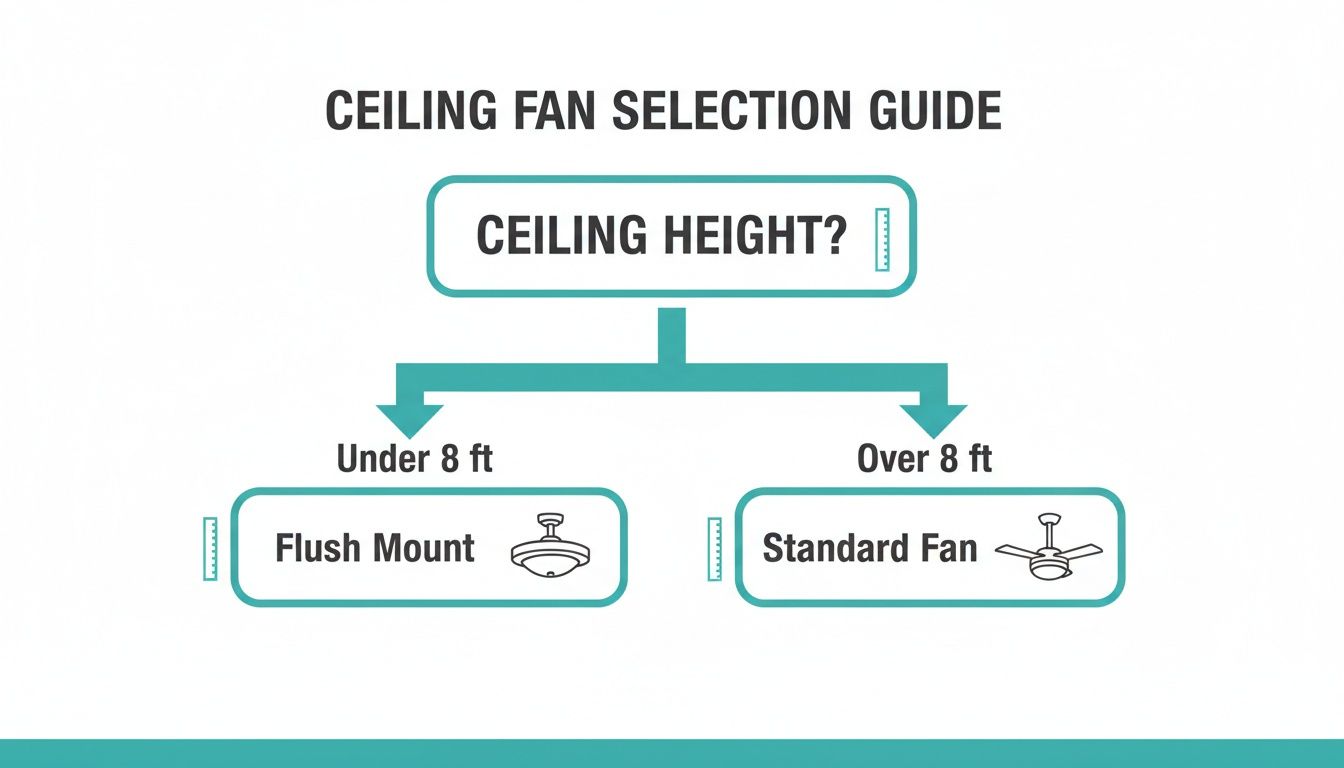
As you can see, the choice is pretty clear. Ceilings below 8 feet need a flush mount for safety, while taller ceilings get the best performance from a standard downrod fan.
Ceiling Fan Mounting Styles Compared
To make things even easier, let's lay out the best uses for each fan type. Use this table to quickly compare the three main styles and find the perfect match for your ceiling height.
| Mount Type | Ideal Ceiling Height | Best Use Case | Key Design Feature |
|---|---|---|---|
| Flush Mount | Under 8 feet | Small rooms, basements, hallways | Mounts directly to the ceiling |
| Semi-Flush Mount | 8 to 9 feet | Medium-sized rooms | Uses a very short downrod (2-4 inches) |
| Standard Downrod | 9 feet and over | Large rooms, vaulted ceilings | Hangs from a pole for maximum airflow |
At the end of the day, the right fan truly depends on your room's dimensions. A showstopper like the Artemis IV 54 Inch Ceiling Fan ($799.95) looks incredible on a downrod in a grand living room, but its flush mount version delivers that same modern style and powerful breeze to a cozier space with lower ceilings.
Choosing the Right Size Fan for Your Space
So you’ve decided a flush mount fan is the way to go. Great! The next big decision is picking the right size. It might seem like a minor detail, but getting the blade span just right is a game-changer for both comfort and efficiency.
Think about it: a fan that’s too small for a big room will barely stir the air, feeling more like a faint whisper than a cooling breeze. On the flip side, an oversized fan can turn a cozy den into an uncomfortable wind tunnel. It all comes down to matching the fan's blade span—the full diameter from the tip of one blade to the tip of the opposite blade—to your room's square footage. This isn’t just a friendly suggestion; it’s the secret to getting air moving where you need it.
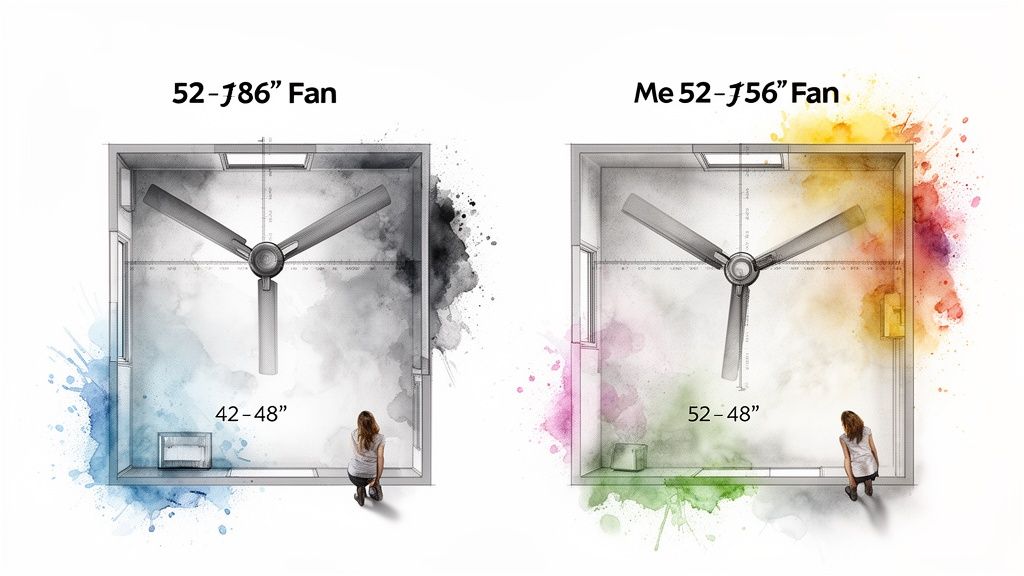
A Simple Guide to Fan Sizing
It's a lot like choosing the right paintbrush for a wall—you need the right tool for the job. Luckily, the guidelines are pretty straightforward. Just grab a tape measure and find your room’s square footage by multiplying its length by its width.
Here’s a quick breakdown to get you pointed in the right direction:
- For cozy spaces up to 75 sq. ft. (like a small home office or breakfast nook), a fan with a blade span of 30-36 inches is perfect.
- For standard rooms from 76-144 sq. ft. (think guest bedrooms or kitchens), look for a blade span of 36-42 inches.
- For larger rooms between 151-300 sq. ft. (such as a master bedroom or living room), a fan with a 42-52 inch blade span will work wonders.
- For great rooms and open-concept areas from 301-450 sq. ft., you'll want to go bigger with a blade span of 52-56 inches.
Getting this right really matters. A mismatched fan that's too small for a 225 sq. ft. living room might only deliver 3,000 CFM (Cubic Feet per Minute) of airflow when you really need 4,000-5,000 CFM. That means its cooling efficiency could be slashed by as much as 25%.
Beyond Blade Span: What Really Moves the Air
While blade span is your starting point, it isn't the whole story. The real muscle behind a fan’s performance is its motor and blade pitch. A high-quality, powerful motor—especially an energy-efficient DC motor—can push a whole lot more air than a standard AC motor.
The blade pitch, which is just the angle of the blades, also plays a huge role. A steeper pitch, typically between 12 and 16 degrees, lets the blades scoop and move more air with every single spin.
This is why a premium fan can feel so different. For a deeper dive into making the perfect choice, check out our complete ceiling fan size guide. It’ll walk you through everything you need to know.
Premium Flush Mount Fans That Redefine Style
Knowing what a flush mount fan is solves a practical problem, but seeing how one can completely transform a room? That's where the fun begins.
A low-profile ceiling fan doesn't mean you have to compromise on design. In fact, some of the most stunning, high-end models are crafted specifically for this purpose, proving that amazing form and function can coexist, even in rooms with lower ceilings. When you invest in a premium flush mount fan, you're not just buying an appliance—you're choosing a centerpiece.
These aren't your average, forgettable fixtures. We're talking about showstoppers where advanced engineering meets artistic design, usually priced at $300 or more. These are the fans that turn a simple necessity into a deliberate style choice, perfectly complementing your home's aesthetic while delivering incredible comfort.
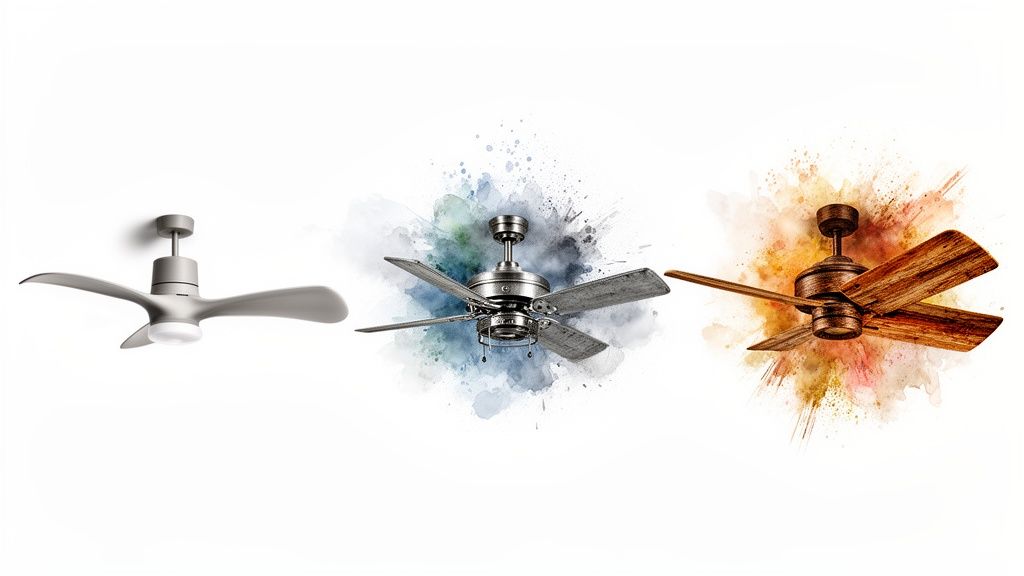
Modern Marvels and Rustic Charm
Let's look at a few examples that really break the mold. These models are celebrated not just for their looks but for their whisper-quiet DC motors, impressive airflow (CFM), and high-end finishes that feel as good as they look.
-
For the Minimalist – The Artemis IV ($799.95): This fan is pure sculpture. Its gracefully curved, liquid nickel blades create a stunning visual, whether it's spinning or standing still. It’s the perfect choice for a contemporary living room or master bedroom where you want a touch of sophisticated, organic design without overwhelming the space.
-
For the Industrialist – The Aviation Fan ($599.95): Inspired by vintage propellers, the Aviation fan by Minka-Aire brings a bold, industrial-chic vibe to any room. Its strong lines and distressed koa finish make it an ideal fit for lofts, home offices, or any space with an edgy, urban feel. It’s solid proof that a powerful fan can also be a work of art.
-
For the Farmhouse Fanatic – The Prairie II Fan ($550.00): This fan captures the essence of modern farmhouse style with its rustic, weathered wood blades and clean, simple housing. It’s perfect for adding warmth and character to a cozy den or an open-concept kitchen, blending right in with shiplap walls and natural textures.
A premium flush mount fan does more than just move air; it completes a room's design story. By choosing a model that reflects your personal style, you turn a functional item into a focal point that elevates your entire home.
These examples show that a flush mount fan can be so much more than a simple solution for a low ceiling. They are thoughtfully designed pieces that deliver powerful, energy-efficient cooling while making a serious style statement.
For more inspiration, you can check out more of the best low-profile ceiling fans that masterfully combine performance with cutting-edge design.
Essential Installation and Safety Guidelines
Getting your new flush mount fan installed correctly is the final, non-negotiable step. It's what ensures your fan is safe, whisper-quiet, and does its job right. While you should always follow the manufacturer's manual to the letter, a few universal rules of thumb can help you sidestep common mistakes.
First and foremost is the golden rule of ceiling fans: the blades must be at least 7 feet above the floor. This isn't just a friendly suggestion—it’s a critical safety requirement to prevent any accidents. You'll also want to make sure there are at least 18 inches of clearance between the blade tips and any nearby walls or tall furniture. This breathing room is essential for proper air circulation.
The Foundation of a Stable Fan
One of the biggest blunders we see DIYers make is trying to hang a fan from a standard electrical box—the kind meant for a simple light fixture. Those boxes just aren't designed to support the weight and constant motion of a fan, which can lead to dangerous wobbling or, worse, a complete collapse.
Always use a fan-rated electrical box. These are specifically engineered to handle the dynamic load of a spinning fan. It's the single most important element for a secure, worry-free installation that will last for years.
Making sure the fan is perfectly level is another secret to silent, smooth operation. Even a slight tilt can cause an annoying wobble and put unnecessary strain on the motor. Take a moment to use a level during installation; it guarantees a balanced fit.
Beyond just the hardware, think about the efficiency you're gaining. Flush mount ceiling fans often run circles around traditional AC in terms of energy savings. A good fan will move 4,000-10,000 CFM of air while using only 55-100 watts. That’s about the same as a few light bulbs! Compare that to a room AC unit, which can easily pull over 1,000 watts.
While many installations are straightforward, never hesitate to call in a licensed electrician if you're the least bit unsure about your home's wiring or structural support. For a more detailed walkthrough, check out our guide on how to install a ceiling fan safely and easily step-by-step.
Got Questions About Flush Mount Fans? We’ve Got Answers.
Alright, let's wrap things up by tackling some of the most common questions we hear from homeowners and pros alike. Think of this as a quick-fire FAQ to clear up any lingering doubts and help you choose your fan with confidence.
Can I Install a Flush Mount Fan on a Sloped Ceiling?
In almost all cases, no. Flush mount fans are specifically built for flat, level ceilings. Their entire design relies on sitting directly against the ceiling, so trying to force one onto a slope is a recipe for disaster—you risk the blades smacking the ceiling, which is a serious safety hazard.
If you’ve got angled or vaulted ceilings, you’ll want a standard fan that hangs from a downrod. You'll then pair it with a sloped ceiling adapter, which ensures the fan hangs perfectly level and operates safely.
Do Flush Mount Fans Really Move Less Air?
This is a classic myth, but the truth is a bit more nuanced. While it's true that the blades are closer to the ceiling, which can slightly reduce air intake from above, a well-engineered flush mount fan will absolutely outperform a cheap, wobbly downrod model any day. The mounting style isn't what determines performance—it's the quality of the fan itself.
The number you really want to pay attention to is the CFM (Cubic Feet per Minute) rating. A high-quality flush mount fan with a powerful motor and an aggressive blade pitch can move a surprisingly huge volume of air. It’s proof that you don’t have to sacrifice a good breeze for a low-profile design.
What’s the Lowest Ceiling You Can Safely Install a Flush Mount Fan On?
Safety first, always. Building codes are pretty clear on this: fan blades must be at least 7 feet off the floor. Most flush mount fans drop down about 12 inches from the ceiling to the bottom of the blades.
This makes them a perfect fit for standard 8-foot ceilings, leaving you with that required 7 feet of clearance. If your ceiling is even a few inches shorter than 8 feet, you’ll need to measure carefully to make sure you can still meet that crucial safety standard before you buy.
Ready to find the perfect fan that hugs your ceiling and elevates your style? At Fan Connection, we offer a curated collection of premium flush mount fans designed for performance and beauty. Explore our modern, rustic, and statement-making designs to find the ideal fit for your space. Shop our full collection today at Fan Connection


