

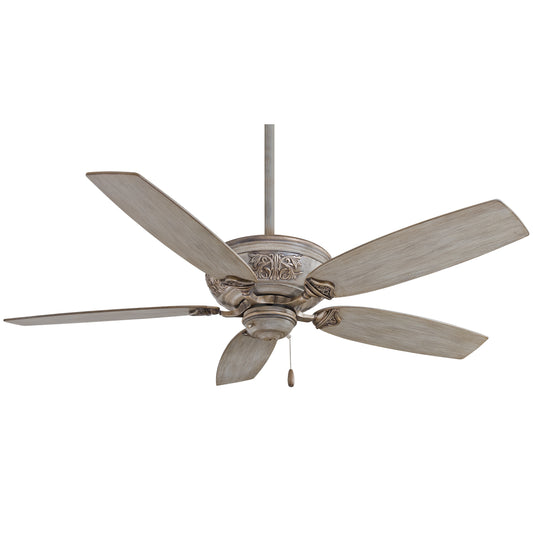


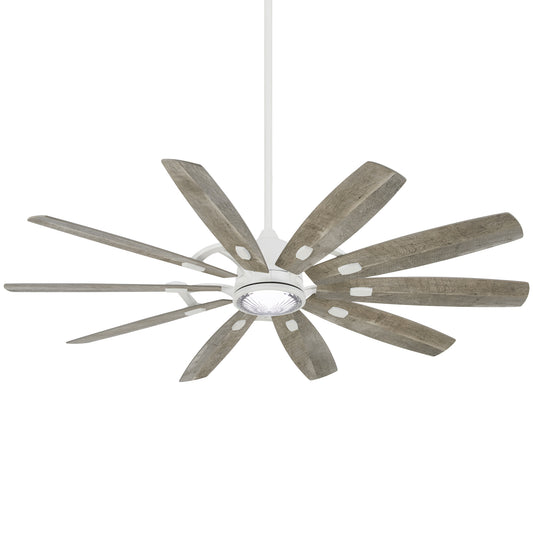

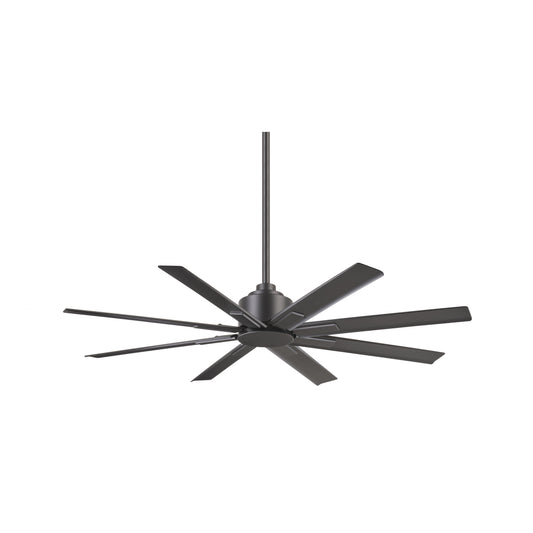

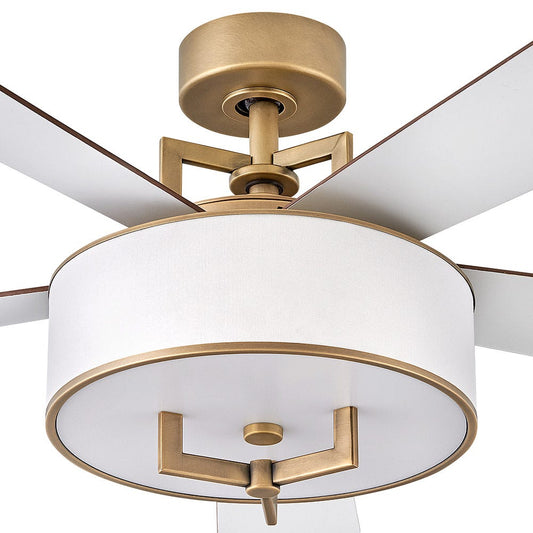






What is the current trend in ceiling fans? 2026: Find out now
So, what's the latest in ceiling fans? It's a whole lot more exciting than you might think! Today, it’s all about a smart, fun mix of good looks, powerful performance, and cutting-edge tech. The newest models are less like the clunky appliances you grew up with and more like a true upgrade for your home—think ultra-efficient motors, seamless smart home controls, and minimalist designs that could honestly double as art.
The Future of Airflow Is Already Here
Forget those noisy, wobbly fans that were just a functional afterthought. The modern ceiling fan has stepped up, becoming a central piece of any well-designed space. Homeowners are looking for ways to lower their energy bills, get effortless control, and add a touch of style, and today's fans deliver on all fronts. This isn't just a cosmetic change; it's a complete shift in how these fans work and what we expect from them.

One of the biggest drivers behind this evolution is the move toward incredibly efficient BLDC (Brushless DC) motors. Thanks to new energy standards and a real demand for sustainability, these motors can deliver 60-70% energy savings over old-school AC motors. That’s a difference you’ll absolutely see on your utility bills. It's a change that's good for the planet and even better for your wallet.
To help you get a handle on what's new and exciting, we've put together a quick-glance table. It breaks down the leading trends, the benefits you'll actually feel, and a few premium models that nail each one.
Top Ceiling Fan Trends for 2026 at a Glance
| Trend | Key Benefit | Example Fan Models |
|---|---|---|
| Smarter Technology | Voice and app control for total convenience. No more fumbling for a pull chain. | The smart-enabled Aerovon or Andros models. |
| Superior Efficiency (BLDC) | Massive energy savings, whisper-quiet operation, and a longer lifespan. | The powerful and silent Artemis IV fan. |
| Architectural Style | Sleek, minimalist designs with premium materials that become a room's focal point. | The sculptural Chisel or the Skyline Collection. |
| Customized Performance | Right-sized fans for perfect airflow, preventing weak breezes or wind tunnels. | The statement-making Artemis XL5. |
This table shows just how far fan design has come, merging style with substance in a way that truly improves your home.
Four Pillars of Modern Ceiling Fan Design
When you're trying to figure out what defines the current trend in ceiling fans, it really boils down to four key areas. These are the biggest changes you'll see in the market, and each one makes for a better, more comfortable home.
- Smarter Technology: Modern fans play nice with voice assistants like Alexa and Google Home. You can change the speed, dim the lights, and turn it on or off without getting off the couch.
- Superior Efficiency: The widespread switch to BLDC motors is a game-changer. These fans are quieter, last longer, and sip electricity compared to older models.
- Architectural Style: Design is no longer an accident. Fans now feature intentional, streamlined forms and high-end materials that turn them into a statement piece.
- Customized Performance: Sizing isn't a guessing game anymore. There’s a much bigger focus on matching the fan's blade span and downrod length to your room’s exact dimensions for the best possible airflow.
This shift means that a high-quality fan, often in the $300 or more range, is a real investment in your home’s comfort, style, and value. It’s one of those rare appliances that can pay for itself through energy savings while making your space feel more elevated.
These aren't just abstract ideas; they're real improvements you can feel and see every single day. From the whisper-quiet operation in your bedroom to the beautiful design statement it makes in your living room, the modern ceiling fan has officially arrived. For a closer look at the aesthetics, check out our ceiling fan design trends.
Why BLDC Motors Are the New Standard of Efficiency
If there’s one single game-changer defining the current trend in ceiling fans, it’s what’s under the hood. For years, fans relied on old-school AC (Alternating Current) motors. They did the job, but they were often clunky, inefficient, and noisy. Today, the new gold standard is the Brushless DC (BLDC) motor, and the difference is truly night and day.
Think about the leap from a classic, gas-guzzling muscle car to a sleek, modern electric vehicle. That’s the kind of performance shift we’re seeing here. An old AC motor creates rotation using physical brushes, which means friction, heat, and wasted energy. A BLDC motor, on the other hand, uses a savvy combination of magnets and sensors for a frictionless, elegant design that’s wildly more effective.

From Tech Specs to Tangible Benefits
Okay, so what does all this engineering talk actually mean for your home? It all comes down to real-world benefits you’ll notice from day one. This isn't just about fancy technology; it's about making your space more comfortable and your electric bills more manageable.
Here’s a quick rundown of what you actually get with a BLDC motor:
- Serious Energy Savings: This is the big one. BLDC motors are up to 70% more energy-efficient than their AC cousins. They move just as much air—or more—while barely sipping electricity.
- Whisper-Quiet Operation: No brushes means no friction, and no friction means you get powerful airflow without the annoying hum. This makes them an absolute dream for bedrooms, home offices, and anywhere else you crave a little peace and quiet.
- Precision Control: AC fans usually give you three speeds: too slow, too fast, and "just okay." BLDC motors open up a world of control, often with six or more speeds plus a reverse function, all easily managed with a remote or smart device.
A premium fan with a DC motor is an investment that truly pays you back. While the initial cost might be over $300, those dramatic savings on your energy bills quickly add up, not to mention the years of silent, superior comfort you get to enjoy.
This huge step forward in motor tech has made modern ceiling fans a key player in improving overall home energy efficiency.
Seeing the Difference in Action
You can see this technology shine in models like the stunning Artemis IV. Priced at over $700, its powerful BLDC motor moves a massive amount of air without making a sound, giving you that perfect breeze while remaining practically invisible to your ears. It's a top-tier choice that showcases what a premium fan can do.
When you choose a fan with a quality DC motor, you’re not just buying an appliance; you're making a smart upgrade to your home’s comfort system. If you want to get into the nitty-gritty, you can learn more about DC ceiling fans and see exactly why they've become the go-to choice. It’s all about looking past the initial price tag to see the incredible long-term value.
Smart Control for an Effortlessly Comfortable Home
Beyond the motor and the blades, the biggest shift in ceiling fans today is all about intelligence. The term "smart fan" gets tossed around a lot, but what does it really mean for your day-to-day life? It means you're stepping into a world where your comfort is seamless, automated, and frankly, a ton of fun.
Imagine you’re already settled in for the night, but the room feels a bit stuffy. Instead of getting up, you just say, "Alexa, turn on the bedroom fan to low." Or picture walking into a perfectly cool room on a sweltering day because your fan knew to turn on 15 minutes before you got home. That’s not science fiction anymore—it's the new reality of home climate control.
The Power of True Integration
Modern smart fans are so much more than just remote-controlled gadgets. They’re becoming key players in a connected home. They can be programmed into "routines" that manage multiple devices at once, like a 'Goodnight' command that dims your lights, locks the doors, and sets your fan to a gentle, sleep-friendly speed.
This is the kind of convenience that completely changes how you interact with your space. It’s a proactive approach to comfort where your home starts to anticipate your needs. This trend is a huge hit with tech-savvy homeowners and forward-thinking designers who are building truly connected living spaces. If you're new to this, learning how to set up a smart home can take your fan—and your entire home—to the next level of comfort.
Justifying the Investment in Smart Tech
This is where premium fans really start to show their value. When you look at models like the sleek Aerovon (around $650) or the powerful Andros (over $1,000), you’re paying for more than just air movement. The real worth is in the sophisticated chipsets and software that allow them to integrate flawlessly with smart assistants and automation platforms.
Investing in a high-end smart fan is about future-proofing your home. The convenience, energy management potential, and elevated living experience they provide add tangible value that goes far beyond a simple cooling appliance.
These premium fans often come packed with advanced features that make the price tag make sense:
- Adaptive Learning: Some fans can actually learn your temperature preferences and automatically adjust their speed throughout the day based on the room's conditions.
- Seamless Voice Control: Top-tier models offer rock-solid integration with systems like Google Assistant, Amazon Alexa, and Apple HomeKit, so they just work.
- App-Based Scheduling: You can create detailed weekly schedules to maximize comfort and cut down on energy use, ensuring the fan only runs when you actually need it.
This level of control and automation is no longer a futuristic dream. It’s a practical and sought-after feature that defines what a modern, high-performance ceiling fan can be. To see what's out there, check out our guide to ceiling fans that come with smart home integration.
When Functional Becomes Architectural
Think back to the ceiling fans of yesterday. Chances are, you’re picturing a clunky, wobbly fixture that was purely about function, not form. It was an appliance you tried your best to ignore.
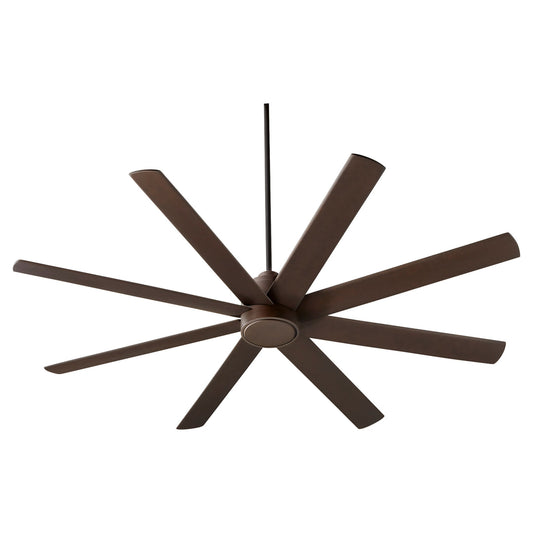
But that’s all changed. Today, one of the biggest shifts in home design is seeing the humble ceiling fan transform from a mere utility into an architectural centerpiece. Forget the bland, forgettable fixtures of the past. The modern fan is now a kinetic sculpture capable of setting the entire tone for a space.
It’s all about being intentional. Instead of trying to make the fan disappear into the ceiling, designers are creating fans that demand to be seen. They’re no longer just for moving air; they’re a core part of your home’s aesthetic.
The Rise of Minimalist Statements
You can see this trend most clearly in the move toward clean, minimalist designs. Fans with fewer blades—often just two or three—are exploding in popularity. And this isn't just a style choice; a well-engineered three-blade fan can move just as much air as an old five-blade model, but with a far cleaner, more sophisticated profile.
These designs strip away every non-essential element, leaving behind pure form and material. The result is a fan that feels light and refreshingly modern, making it a perfect match for contemporary and transitional interiors.
Think of it like modern furniture design. A single, beautifully crafted Eames chair can have more presence and style than a whole set of generic seating. The same principle applies here—a single, striking architectural fan makes a more powerful statement than a dozen forgettable fixtures.
This focus on bold, simple forms is exactly what you see in models like the sleek Chisel (nearly $600) or the aerodynamic Apex (over $700). With their sharp lines and premium finishes, these fans aren't just appliances. They're a deliberate design choice that elevates the entire room. Take a look through our curated 3 Blade Collection and you'll see just how powerful this "less-is-more" approach can be.
This flowchart can help you visualize which minimalist style best fits what you need, whether you’re focused on pure airflow or want integrated lighting.

As you can see, there’s a clear path. Whether you need a simple, sculptural fan for air movement or a hybrid lighting solution, there's a minimalist option that fits the bill.
Fusing Form and Function Beautifully
Beyond pure minimalism, two other styles are making a huge impact right now:
-
The 'Fandelier': This brilliant hybrid merges the dramatic elegance of a chandelier with the cooling power of a ceiling fan. It's the perfect answer for dining rooms, primary bedrooms, or grand entryways where you want both beautiful light and comfort without sacrificing an ounce of style. Models like the Chateaux, priced around $1,500, are the perfect example, blending sparkling crystals with hidden blades for a truly luxurious look.
-
Rustic-Industrial Charm: For spaces with a more modern farmhouse or rugged industrial vibe, fans with natural wood tones, dark metals, and exposed hardware have become the go-to. A model like the Barn, for instance, brings a touch of rustic authenticity while still packing all the performance of a modern fan. At over $400, it’s proof that architectural design isn't just for sleek, contemporary spaces.
Whether you find yourself drawn to the clean lines of a three-blade fan or the more traditional look of our 5 Blade Collection, the message is clear. A high-quality fan is no longer an afterthought—it’s a foundational piece of your room’s design.
Finding the Perfect Fan Size for Any Room
Let's bust a myth right now: there's no such thing as a one-size-fits-all ceiling fan. The secret to getting performance you can actually feel is choosing the right size for your room. A fan that’s too small will just spin its heart out without making a difference, while an oversized one can feel like an unpleasant wind tunnel.
Getting the size right is a huge part of the current trend toward customized comfort.

The first thing to look at is the blade span—that’s the fan’s total diameter—and match it to your room's square footage. It’s a simple step, but it’s the key to making sure your fan moves air effectively. It’s no wonder homeowners are getting smarter about their cooling choices. The global ceiling fan market is expected to jump from $11.83 billion in 2025 to nearly $17.98 billion by 2034, according to research from Fortune Business Insights. People are investing in what works.
Matching Blade Span to Room Size
Not sure where to start? Here’s a quick reference guide that pros use to take the guesswork out of sizing.
| Room Size (Sq. Ft.) | Recommended Blade Span |
|---|---|
| Up to 75 | 29" – 36" |
| 76 to 144 | 36" – 44" |
| 145 to 225 | 44" – 54" |
| 225 to 400 | 54" – 72" |
| Over 400 | 72" or larger |
Stick to these guidelines, and you’ll get a fan that circulates air just right for your space. For a more detailed breakdown, you can check out our comprehensive ceiling fan size guide for tips on measuring your room like a pro.
The Critical Role of the Downrod
Okay, so you've picked the right blade span. You're only halfway there. The downrod—that pipe connecting the fan motor to the ceiling—is just as important, especially if you have high or vaulted ceilings. For the best airflow and safety, you want the fan blades hanging about 8-9 feet above the floor.
For taller ceilings, a longer downrod is non-negotiable. It lowers the fan into the living space where you can actually feel the breeze, preventing the air from getting trapped up high. This is a common mistake that leaves homeowners wondering why their powerful new fan isn't doing its job.
In big, open-concept spaces and great rooms, designers are going one of two ways. Some use multiple smaller fans to create separate comfort zones. Others go big, making a statement with a single, massive fan like the Artemis XL5. With its 84-inch blade span and a price tag over $1,200, it’s a true architectural feature that also delivers incredible airflow. It’s the perfect example of form meeting function for today's grander living areas.
Answering Your Top Questions About Modern Ceiling Fans
Let's be real: choosing a modern ceiling fan can feel surprisingly complicated. With all the talk about DC motors, smart controls, and wild new designs, it’s easy to get lost. We get it.
We hear the same questions from homeowners, designers, and contractors all the time. So, here are the straight-up answers you need to pick the right fan with confidence.
How Much Should a Good Ceiling Fan Cost?
You can definitely find fans for under $100, but the ones that really deliver on modern trends—think whisper-quiet efficiency, smart home integration, and standout design—usually start around $300.
What are you paying for? It's not just a logo. You're investing in better engineering, like a high-end BLDC motor, top-tier materials, and built-in smart tech. That investment pays you back with lower energy bills, silent operation, and a fixture that genuinely elevates your space.
Are More Blades Better on a Ceiling Fan?
Not anymore. That’s an old myth from the era of clunky, inefficient AC motors. Today, a well-designed fan with just two or three blades can move just as much air as an old five or six-blade model, and often, even more.
It's all about the engineering—the blade pitch, the aerodynamic shape, and the power of the motor. A clean, three-blade fan often gives you a more architectural look without ever sacrificing performance.
Can a Ceiling Fan Really Lower My Energy Bills?
Absolutely. A ceiling fan works by creating a wind chill effect, which can make a room feel several degrees cooler than the thermostat says. This means you can raise your AC by about 4°F and feel just as comfortable, slashing your cooling costs.
In the winter, just reverse the fan's direction. It will gently push the warm air that's trapped at the ceiling back down into the room, helping your heater work a lot more efficiently.
A high-efficiency DC motor fan maximizes these savings, using up to 70% less energy than a standard AC fan. It’s one of the simplest upgrades you can make for year-round comfort and a happier wallet.
What’s the Deal with 'The Big Light'?
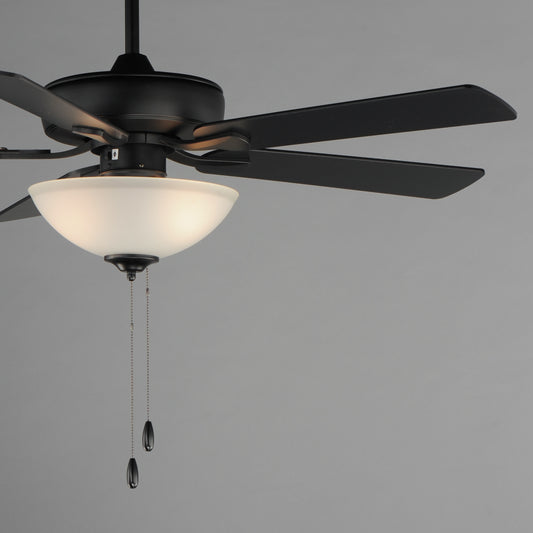
You might have seen the online debate about overhead lighting, with some designers calling it harsh. But a ceiling fan with a thoughtfully integrated light is an incredibly useful part of any layered lighting plan. For more on this, check out the great points on why modern ceiling fans with lights are a smart move.
Today’s fan lights are a world away from the single, glaring bulb of the past. Modern options offer so much more:
- Dimmable LEDs: Go from bright, functional light to a soft, ambient glow in seconds.
- Adjustable Color Temperature: Many models let you shift from a cool, energizing white light to a warm, cozy tone to match your mood or the time of day.
- Seamless Integration: The light is designed to be a beautiful part of the fan itself, not a clunky afterthought.
Is Professional Installation Necessary?
While a handy DIY-er can often manage a fan installation, we almost always recommend hiring a licensed electrician. This is non-negotiable if you're swapping out a standard light fixture.
Why? An electrician will make sure the fan is mounted to a fan-rated electrical box that can handle the weight and motion. They'll also balance it perfectly to prevent any wobbling and ensure the wiring is 100% safe. It’s the best way to get total peace of mind.
Ready to find the perfect centerpiece for your space? Fan Connection offers a curated selection of stylish and high-performance ceiling fans that embody every modern trend. Explore our collections and discover the ideal blend of beauty, efficiency, and smart control for your home.


