





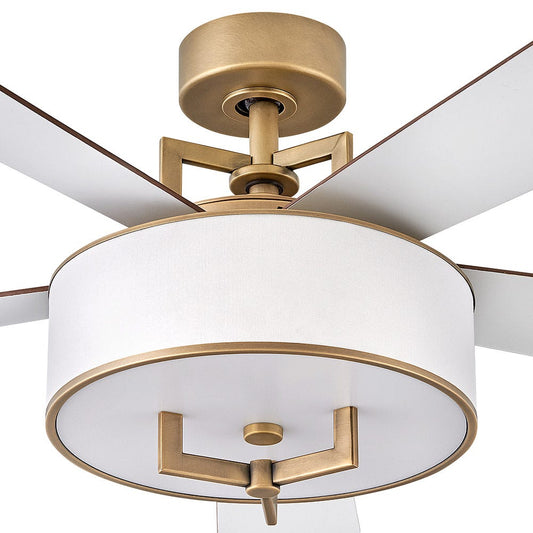


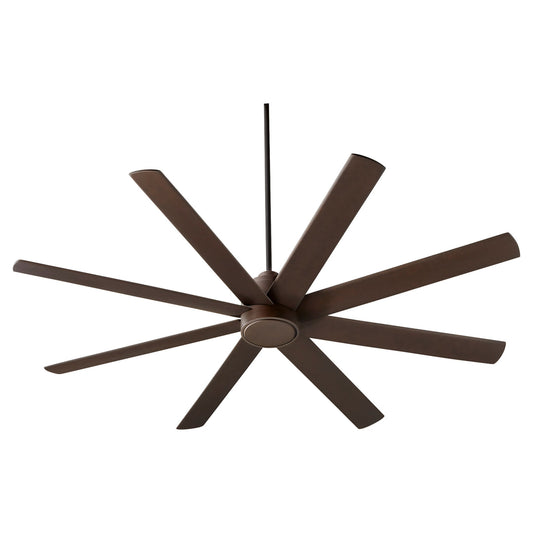


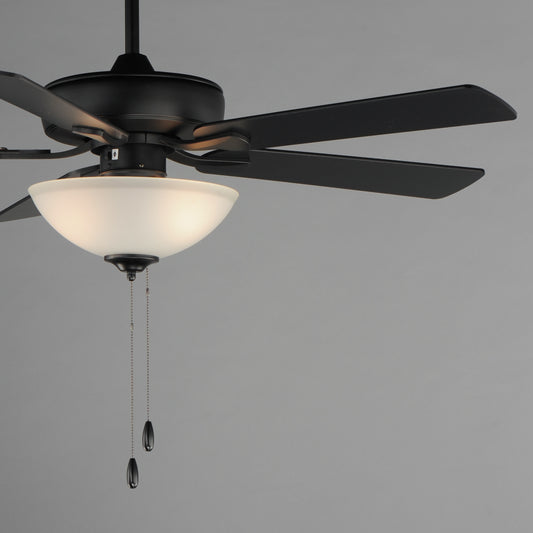


Your 12 Inch Downrod Ceiling Fan Guide for 10' Ceilings
You buy a ceiling fan for your living room, bedroom, or open great room. The finish is right. The blade shape is right. The motor looks substantial. Then it goes up on a 10-foot ceiling and something feels off.
The fan sits too close to the ceiling line, the breeze feels weaker than expected, and the whole fixture looks smaller than it did in the showroom photos. That’s the moment many homeowners realize a ceiling fan isn’t only about the fan itself. Height changes everything.
A 12 inch downrod ceiling fan setup often fixes that problem in one move. Not because the rod is flashy. It isn’t. But because the rod decides where the fan lives in the room, and that affects comfort, proportion, and how satisfied you feel every time you switch it on.
More Than Just a Metal Pole
A lot of people treat the downrod like packing material that happened to stay in the box. Installers know better.
If your ceiling is taller than standard, the rod between the canopy and the motor isn’t just a connector. It’s the part that brings the fan down into the zone where people feel the airflow and where the fixture looks like it belongs with the room’s scale.

Why homeowners notice the problem after installation
Here’s the common story. Someone chooses a fan based on blade count, finish, and style. They get it installed. Then they stand back and think, “Why does it look so high up?” A fan that hangs too close to a tall ceiling can seem disconnected from the room.
That visual problem usually comes with a comfort problem. Air has farther to travel before it reaches the people sitting below, so the room doesn’t feel as pleasant as expected.
Practical rule: A ceiling fan should look anchored to the room, not pinned to the ceiling.
A 12 inch downrod often becomes the missing piece. It lowers the fan enough to improve the room’s proportions without making the fixture feel intrusive.
The small part that changes the whole experience
The reason this matters goes beyond looks. Ceiling fans work best when placement, blade height, and room scale all line up. A fan that’s beautifully designed but hung at the wrong height can feel disappointing.
That’s why experienced shoppers don’t think of the downrod as an add-on. They think of it as part of the fan system.
A good way to think about it is this:
- Comfort: The fan sits where airflow can be felt more naturally.
- Style: The fixture fills vertical space in a way that suits modern rooms.
- Confidence: The installation feels intentional instead of improvised.
If you’ve been comparing fans and wondering why some rooms look polished while others look almost right, the downrod is often the answer.
What Exactly Is a 12-Inch Downrod and Why Does It Matter
A downrod is the metal pipe between the ceiling bracket and the fan motor. Its job sounds small, but its effect is not. It sets the fan at the height where the room can feel its airflow and where the fixture looks like it belongs.
A good comparison is a pendant light over a dining table. Hang it too high and it feels disconnected. Hang it at the right level and the whole room feels more settled. A ceiling fan follows the same logic, with one extra layer. Height affects both appearance and performance.
Why 12 inches is the sweet spot for a 10-foot ceiling
In many homes with 10-foot ceilings, a 12-inch downrod is the sweet spot because it usually places the fan blades in the recommended operating zone while keeping proper clearance from the floor. Smafan’s downrod sizing guide notes that a 12-inch downrod is commonly recommended for 10-foot ceilings and also points readers to the standard minimum blade clearance requirement.
That is why this size comes up so often. It is not an arbitrary accessory choice. It is a practical fit for one of the most common modern ceiling heights.
A short rod can leave the fan hovering too close to the ceiling plane. A much longer rod can drop the fixture lower than the room needs. In a 10-foot room, 12 inches often lands in the middle where the fan looks balanced and works the way people expect.
Where shoppers usually get tripped up
Many homeowners assume the shortest rod in the box must be the correct one because it came with the fan. That assumption causes a lot of disappointing installs.
A downrod has to solve three jobs at once:
- Floor clearance
- Air movement where people live and sit
- The visual proportion between ceiling, fan, and furniture
Miss one of those, and the fan can feel slightly off even if nothing is technically wrong.
That confusion is especially common in newer homes. Builders often use 10-foot ceilings to make rooms feel open and bright, but that extra height changes the fan’s working position. A fan mounted too close to the ceiling can seem smaller than it is and feel less present in the space below.
For a broader look at sizing options beyond this common setup, this ceiling fan extension guide gives helpful context.
Why this small part matters so much
A 12 inch downrod ceiling fan setup helps bridge the gap between a tall ceiling and everyday living space. It brings the fan closer to where people experience the breeze, and it fills vertical space in a way that looks intentional instead of accidental.
That is why this part matters. In a 10-foot room, the 12-inch downrod is often the middle-ground choice that helps a fan look right, feel right, and do the job you bought it to do.
The Goldilocks Rule Nailing Your Downrod Length
You finish a fan install in a 10 foot room, step back, and something feels off. The fan is technically mounted correctly, but it looks a little stuck to the ceiling and the breeze never quite reaches the sofa or bed the way you expected. That is usually a downrod length problem, not a fan problem.
A good ceiling fan height follows a simple Goldilocks rule. It needs to hang low enough to move air where people live, but high enough to keep the room open, comfortable, and safe.

The target height that makes a fan feel right
Manufacturers generally aim for ceiling fans to operate with the blades about 7 to 9 feet above the floor, according to Kichler’s downrod accessory guidance. That range puts the fan in the part of the room where people can enjoy the airflow instead of losing it up near the ceiling.
This is why downrod length matters so much. You are not picking a random accessory. You are setting the fan at its working height.
For many homes with 10 foot ceilings, the 12-inch downrod lands in the sweet spot. It often drops the fan enough to improve airflow and make the proportions of the room feel balanced, without bringing the fixture too far down into the visual space.
A simple way to think about sizing
Start with the ceiling height, then check where the blades will finish. That final blade height matters more than the rod length by itself because fan motor housings are not all the same size.
A downrod works a bit like the right pant hem. Too short, and everything looks slightly off. Too long, and it starts to interfere with how the room feels. The 12-inch option often hits the middle for 10 foot ceilings, which is why it shows up so often in well-proportioned installs.
| Ceiling Height | Recommended Downrod Length |
|---|---|
| 8 feet | Flush or very short downrod |
| 9 feet | Short downrod |
| 10 feet | 12-inch downrod |
| 11 feet | Longer than 12 inches |
| 12 feet | Extended downrod |
| 13 feet | Extended downrod |
| 14 feet | Long downrod |
| 15+ feet | Custom or very long downrod solution |
If your room is close to 10 feet, this ceiling fan sizing guide for matching room dimensions and fan placement can help you evaluate the whole setup.
Too high versus too low
The easiest way to judge fan height is to look at how the fan relates to the room below it.
- Too high: The fan blends into the ceiling and the airflow can feel weak or far away.
- Too low: The fan starts to dominate the room and may feel awkward above furniture or walking areas.
- Just right: The fan feels connected to the seating area, dining space, or bed below, and the room looks finished.
The best installs rarely call attention to themselves. People notice that the room feels cooler, more comfortable, and better put together.
In a 10 foot room, a 12 inch downrod ceiling fan setup is often that middle-ground choice. It gives the fan enough drop to do its job well and enough presence to look intentional, which is exactly why this size is such a strong fit for modern ceiling heights.
The Downrod Handshake Ensuring Fan Compatibility
Length is only half the decision. The other half is compatibility.
A downrod has to match the fan physically and structurally. If it doesn’t, the installation can become frustrating fast. People often discover this after ordering a rod that looks correct in the photo but doesn’t match the fan’s connection system.

Diameter is not a minor detail
Professional-grade downrods commonly use a 3/4-inch pipe diameter with tapered threads, an engineering standard intended to support fan weights of 15-40 lbs while reducing oscillation, according to the Hunter downrod product specifications at Lowe’s.
That matters because the downrod isn’t decorative tubing. It’s a load-bearing part of the assembly.
A proper diameter helps the fan stay steady. The threaded connection also spreads stress more effectively, which is one reason this format is used across major brands.
Three compatibility checks to make before buying
A lot of return problems come from skipping one of these checks.
- Check the rod diameter: Many fans are designed around the common 3/4-inch standard. If the diameter is wrong, the fit may fail immediately.
- Check the connection style: Some fans use threaded rods. Others use different hardware systems. The rod and fan have to speak the same language.
- Check brand fit: Even when the size looks familiar, some brands design parts around their own canopy, coupler, or mounting details.
For homeowners trying to sort out the hardware around the canopy and hanger area, this guide to ceiling fan mounting bracket types can make the connection points much easier to understand.
Why the wrong fit often shows up as wobble
People blame the downrod itself when a fan shakes. In many cases, the actual issue is a poor match between the rod and the fan’s connection points.
A rod that threads incorrectly, seats poorly, or doesn’t match the intended diameter can create looseness at the exact point where the fan needs rigidity. That looseness can travel through the whole fixture.
A good downrod and fan connection should feel like a firm handshake, not a loose grip.
There’s also a wiring reason to choose quality parts. Better downrods are designed with smoother interior channels so wires pass through with less risk of abrasion during installation.
A quick buying checklist
Before you click add to cart, confirm these details:
- Fan brand and model
- Required rod diameter
- Threaded or alternate connection method
- Finish match with the fan body
- Ceiling type and mount style
That five-point check saves a lot of hassle. A 12 inch downrod ceiling fan setup only works well when the rod is both the right length and the right part.
Installing Your Downrod Without the Wobble
Good installation work is what turns a smart purchase into a quiet, stable fan.
The first priority is safety. Shut off power at the breaker before touching the old fixture, the fan wiring, or the mounting hardware. Wall switches aren’t enough protection for overhead electrical work.

The connection points that matter most
A longer rod doesn’t make installation mysterious, but it does make neat assembly more important. You’re feeding wires through more pipe, managing a larger hanging assembly, and relying on every fastener to be properly seated.
Pay close attention to these spots:
- The motor coupling: Make sure the rod threads or pins seat fully.
- Set screws and locking hardware: Tighten them securely so the rod can’t shift under rotation.
- The hanger ball and bracket: The ball has to sit correctly in the bracket groove so the fan hangs centered.
If one of those points is loose, the fan can move in ways people often mistake for a balancing issue.
Why the rod usually isn’t the cause of wobble
Homeowners often say, “Maybe the longer rod is making it shake.” Usually, that isn’t the actual problem.
Most wobble comes from simple issues such as loose screws, blades that aren’t aligned, or a hanger ball that isn’t seated correctly. The rod is just the visible middle piece, so it gets blamed first.
A well-matched downrod should support the fan cleanly. If the fan wobbles, inspect the connections before you blame the rod length.
If the fan is already installed and still sways, this guide on how to balance a ceiling fan is a useful next step.
A practical install rhythm
Many DIYers do better with a sequence than with a long manual. This rhythm keeps things organized:
- Turn off power at the breaker.
- Assemble the downrod to the fan motor exactly as the manufacturer directs.
- Feed wiring carefully through the rod.
- Secure all locking screws and hardware.
- Lift and seat the hanger ball into the mounting bracket.
- Complete wiring connections in the canopy.
- Attach blades and test the fan at low speed first.
This walkthrough can also help you visualize the process before you start:
A troubleshooting check before you call it done
Before you consider the job finished, run this short check:
- Look up at the canopy: Is it sitting flush and straight?
- Watch the rod while the fan starts: Does it stay centered?
- Test multiple speeds: Problems sometimes appear only when speed increases.
- Listen closely: Clicking or ticking often points to hardware or blade issues.
A clean install should feel boring in the best way. No sway. No clatter. No second-guessing.
Find Your Perfect Fan and Downrod at Fan Connection
Shopping gets much simpler once you know what a 12 inch downrod does in a 10 foot room. You are not just choosing a fan style. You are choosing where that fan will live in the room, how well it will move air, and whether it will look properly scaled instead of pushed up near the ceiling.
That is why the 12 inch downrod is such a smart middle ground. In many modern homes with 10 foot ceilings, it puts the fan in the sweet spot. Low enough to feel present and work well, but not so low that it crowds the room. If you want a broad place to start, the full fan collection lets you compare shapes, finishes, and sizes before you narrow things down.
For a sculptural modern room
Some fans read like furniture. Artemis IV is one of them.
Its blade shape has a strong visual identity, so placement matters. In a room with a 10 foot ceiling, a 12 inch downrod helps the fan sit where people can appreciate the design. If it is mounted too close to the ceiling, the profile can feel flattened and the whole fixture loses some of its presence.
This style usually works best in rooms with clean lines, open floor space, and a restrained palette. The fan becomes part of the architecture, not just a motor with blades.
You can browse related styles in the 3 Blade ceiling fan collection.
For a bold, performance-led look
Large rooms often need a fan with more visual weight. Andros fits that role well.
In open living areas or family rooms, a fan like this should feel intentionally placed, not like it was pinned to the ceiling as an afterthought. A 12 inch downrod usually helps it read at the right level in a 10 foot room, which improves both the look and the way the fan connects with the space below.
The effect is similar to hanging a pendant at the proper height. The fixture feels related to the room, not detached from it.
If that is your style, the 6+ blade collection is a good comparison point.
For warmth and texture
Some rooms want softer lines and more natural character. Chisel is a strong example of a fan that can warm up a space while still feeling refined.
This look fits especially well in bedrooms, dens, and transitional interiors where wood tones, woven materials, and softer finishes do a lot of the design work. In those rooms, a fan mounted too close to a 10 foot ceiling can feel visually cramped. A 12 inch downrod gives the fixture a little room to breathe, which usually makes the proportions feel more comfortable.
For similar options, explore the 5 blade ceiling fan collection.
A simple way to choose
If you are torn between styles, start with the room before you start with the fan.
Ask a few practical questions:
- Should the fan blend in or stand out?
- Does the room already have a lot of visual activity?
- Will the fan be seen mostly up close, or across a long open space?
- Would a warmer finish or a cleaner silhouette fit the rest of the home better?
Those questions usually point you in the right direction faster than comparing blade counts alone.
And if you are styling the whole vertical space, not just the ceiling fixture, Decorating Walls with High Ceilings can help you tie the room together.
The best 12 inch downrod ceiling fan setup feels balanced the moment you walk in. The fan looks like it belongs there, the proportions make sense, and the room feels more comfortable without calling attention to the hardware that made it happen.
Your Final Check for Perfect Airflow and Style
The best ceiling fan installations feel natural. The fan looks like it belongs, the room feels better, and nobody walks in and wonders why the fixture is floating near the ceiling.
For many modern homes, the key move is simple. A 12-inch downrod is the go-to choice for a 10-foot ceiling. After that, the important decisions are practical ones. Make sure the rod matches the fan, make sure the hardware is secure, and make sure the finished height feels balanced in the room.
The three rules worth remembering
Keep these in mind when you shop or install:
- Match the room height: A 10-foot ceiling often pairs beautifully with a 12-inch downrod.
- Match the hardware: Length won’t help if the rod doesn’t fit the fan correctly.
- Match the installation quality: Tight connections and balanced blades matter just as much as the parts you buy.
If you’re also styling a taller room beyond the fan itself, this guide on Decorating Walls with High Ceilings offers useful ideas for making the whole space feel intentional.
A downrod may look like a small decision on paper. In the room, it changes performance, scale, and the finished look of the entire fixture. That’s why experienced shoppers don’t treat it as an afterthought. They treat it as the part that makes the fan they already paid for effective.
If you’re ready to choose a premium ceiling fan and the right downrod for your space, explore Fan Connection for design-led options across modern, rustic, and statement-making styles.


