











Choosing Ceiling Fans Lights for Bedroom Sanctuaries in 2026
A bedroom ceiling fan with a light is more than just a fixture. It's the silent partner in creating that perfect, peaceful atmosphere you need for rest and relaxation.
The best ones blend quiet performance with the right kind of light and a style that pulls the whole room together. Think of this guide as your personal roadmap to finding a fan that's not just beautiful, but truly effective at turning your bedroom into a sanctuary.
Creating Your Ultimate Bedroom Sanctuary
Choosing the right ceiling fan is really about crafting an experience. It’s that final touch that turns a bedroom from just a place to sleep into your own personal retreat. It’s the gentle breeze, the soft light, and the whisper-quiet presence that makes all the difference.
We'll break down all the technical stuff—like blade span and airflow—into simple, practical terms. No jargon, just what you need to know to choose a fan that truly works for your space. It’s why premium models, like those from our exclusive collections that feature options well over $300, are engineered to be more than just pretty fixtures. You're investing in superior performance and design that you can feel.
To get started, just ask yourself a few key questions:
- Atmosphere: How do you want the room to feel? Cozy and warm, or bright and airy?
- Functionality: Are you looking for a powerful cool-down on hot nights, or just some gentle air circulation?
- Aesthetics: What style will complete your bedroom’s look? Modern, rustic, or something in between?
The right ceiling fan becomes a silent, hardworking part of your comfort. It’s the functional centerpiece that works year-round to keep your personal sanctuary feeling just right.
At the end of the day, investing in a great fan is an investment in your own comfort and well-being. Getting a fan that's perfectly cool, beautifully lit, and peaceful isn't out of reach. If you're looking for some ideas on the style front, exploring the latest ceiling fan design trends is a great place to start.
Now, let’s find the perfect fan for a space that feels completely, uniquely yours.
Finding the Perfect Fit for Airflow and Comfort
Let's start with the most important part of choosing a fan: getting the size right. It's a lot like buying a new pair of shoes—if the fit is wrong, it doesn't matter how good they look. A fan that’s too small for your bedroom will just spin its blades without moving much air, leaving you feeling stuffy. On the other hand, a fan that's too big can create an overpowering downdraft that feels more like a wind tunnel than a gentle breeze.
The goal is to match the fan’s blade span—that’s the measurement from the tip of one blade to the tip of the opposite blade—to your room’s square footage. When you get this right, the fan circulates air perfectly and quietly, creating that ideal sanctuary for rest.
This chart breaks down the key decisions that lead to creating your perfect bedroom oasis: comfort, ambiance, and quiet operation.

As you can see, everything starts with matching the airflow to your room. Once that foundation is set, you can focus on dialing in the right light and ensuring whisper-quiet performance.
Matching Blade Span to Your Bedroom
Here's how to figure out what you need. First, find your room’s square footage by multiplying its length by its width. Once you have that number, you can easily find the right fan size.
Use this chart to match your bedroom's square footage with the recommended ceiling fan blade span for optimal airflow.
Bedroom Size to Fan Blade Span Guide
| Bedroom Size (Square Feet) | Recommended Fan Blade Span (Inches) | Ideal for Rooms Like... | Premium Collection Example (≥$300) |
|---|---|---|---|
| Up to 150 | 36 – 44 | Smaller guest rooms, home offices, or cozy bedrooms. | A compact powerhouse from our Apex Collection (over $300). |
| 150 – 300 | 44 – 54 | Most standard master bedrooms and larger sleeping areas. | The iconic 52-inch Artemis IV (over $800) moves serious air. |
For an even more detailed breakdown, you can dive into our complete ceiling fan size guide to find the perfect match for any room in your house.
Mounting Your Fan for Safety and Performance
Next up is ceiling height. This isn't just an aesthetic choice; it’s a critical factor for both safety and performance. You need enough clearance for the fan to do its job properly.
As a hard and fast rule, fan blades must always be at least 7 feet from the floor. For ceilings 8 feet or lower, you'll want a flush mount (or "hugger") fan. These models install directly against the ceiling to maximize your headroom. For ceilings 9 feet or higher, you'll need a downrod to lower the fan to its sweet spot: about 8 to 9 feet off the floor.
A downrod makes a huge difference in how well the fan can circulate air, so don't skip it if you have tall ceilings!
Of course, a great fan is just one piece of the puzzle. Combining it with other simple cooling tips for a better night's sleep will help you create the ultimate environment for rest and relaxation.
Mastering Bedroom Lighting for Perfect Ambiance

The light on your ceiling fan is just as critical as the blades themselves. It’s what sets the entire mood of your bedroom, transforming it from just a place to sleep into a true retreat. Getting the lighting right on your ceiling fan with lights is the secret to creating a space that feels every bit as good as it looks.
To get a handle on lighting, you just need to know two key terms: lumens and kelvins. Think of lumens as the "volume" of light—the higher the number, the brighter it gets. Kelvins, on the other hand, are all about the "color" of that light, from a warm, cozy yellow to a crisp, cool white.
Decoding Light Color and Brightness
Imagine having a light switch that can literally change your mood. That's what you get when you understand Kelvin ratings.
A low Kelvin rating, around 2700K to 3000K, produces a warm, candle-like glow that’s perfect for winding down before bed. But when you need to wake up, get ready, or read a book, a higher Kelvin rating of 4000K to 5000K delivers a cool, crisp light that feels more like natural daylight.
The ultimate bedroom fan light gives you the best of both worlds. Look for models with adjustable color temperatures and dimming, so you can go from a bright, energizing morning light to a soft, relaxing evening glow all with one fixture.
Today's best fans have moved past old-school screw-in bulbs. Modern integrated LED kits are built right into the fan’s housing, giving you a much sleeker look and incredible energy efficiency. For a deeper dive, you can check out our guide on selecting the right fan light kit for your needs.
This shift toward all-in-one solutions is a huge reason the global ceiling fan market, valued at USD 11.83 billion in 2025, is expected to hit USD 17.98 billion by 2034. Homeowners are demanding style and function, and the market is responding.
Premium Lighting in Action
For a fan that truly masters ambiance, look for models where the lighting isn't just an add-on but a core part of the design.
- The Bola Collection: Models from this collection (priced over $400) have beautifully integrated and fully dimmable LEDs that cast a soft, even glow.
- The Bowie Collection: With its sleek profile and powerful LEDs, the Bowie collection (starting around $350) offers fantastic brightness control, making it perfect for bedrooms that double as reading nooks or dressing areas.
By choosing a fan with a high-quality, dimmable light kit, you get total control over your bedroom’s atmosphere. It’s a simple feature that makes a world of difference.
The Secret to a Truly Quiet Bedroom Fan
There’s nothing worse than a ceiling fan that hums, clicks, or wobbles its way through the night. That annoying sound is the quickest way to ruin a good night's sleep. The secret to a silent ceiling fan with lights for your bedroom isn't some marketing gimmick—it all comes down to the motor. The motor is the fan's heart, and the technology inside is what separates a disruptive machine from a silent, sleep-friendly one.
For years, the standard was the AC (alternating current) motor. These are the workhorses of the fan world—they’re reliable and get the job done, but they’re also known for producing that low, constant hum. That sound is just part of how they're built, using electrical current to create the magnetic field that spins the blades.
Why DC Motors Are the Silent Superiors
This is where modern fans have made a huge leap forward with DC (direct current) motors. Think about the difference between an old, rumbling gas engine and a new electric car gliding by without a sound. That’s the kind of upgrade a DC motor brings to the table.
DC motors use a smarter system of magnets and sensors that creates a much smoother, more controlled rotation. This translates into some major wins for any bedroom:
- Whisper-Quiet Operation: They produce almost no audible hum. For light sleepers, this is a game-changer.
- Better Speed Control: You get far more speed options, often up to six, so you can dial in the perfect amount of airflow—from a barely-there stir to a strong, cooling breeze.
- Effortless Reversing: Switching the blade direction for winter is done right from the remote. No more climbing on a chair to flip a tiny switch like on most AC fans.
The Payoff: Efficiency and Savings
The silence is incredible, but the energy efficiency of DC motors is just as compelling. This modern engineering is a huge reason the ceiling fan market is projected to grow from USD 12.9 billion in 2025 to USD 18.1 billion by 2035. The star of the show is the BLDC (brushless DC) fan, which uses up to 70% less power than a standard AC fan.
If you run your fan all night, those energy savings add up quickly, often leading to a 30-50% reduction in your cooling costs.
Investing in a DC motor fan is an investment in uninterrupted sleep. You get the cooling you need without the distracting noise, ensuring your bedroom remains a true haven for rest.
You can see this premium performance in models engineered for silence, like those in the Aviation series (starting over $400) or the sleek Alto collection (priced over $350). These fans don't force you to choose between powerful airflow and quiet operation—a high-quality DC motor delivers both.
To see more top-tier silent options, check out our guide to the best DC motor ceiling fans available today. When you choose a fan with a premium motor, you're not just buying an appliance; you're guaranteeing a more peaceful and cost-effective home.
Matching Your Fan to Your Bedroom Style

Let’s be honest, a ceiling fan is much more than just an appliance. It's a huge visual element in your bedroom, and the right one can completely tie the room together. Think of it like the perfect piece of jewelry that finishes an outfit—it’s both functional and a defining part of your style.
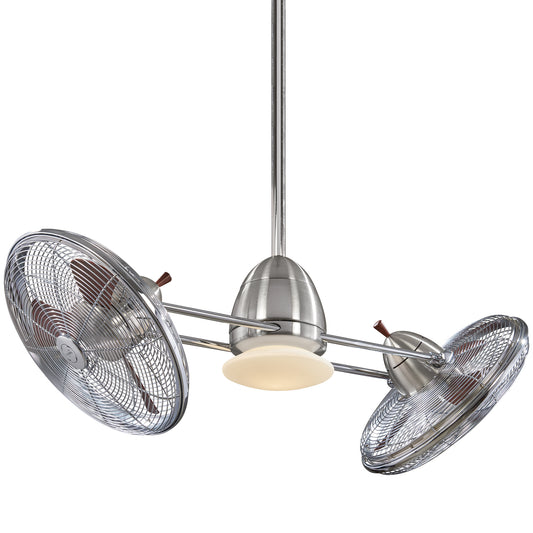
Choosing between the different kinds of ceiling fans lights for bedroom is your chance to set the tone for the entire space. It’s not just an afterthought; it’s an opportunity to make a statement that shows off your personal taste.
Find Your Fan's Personality
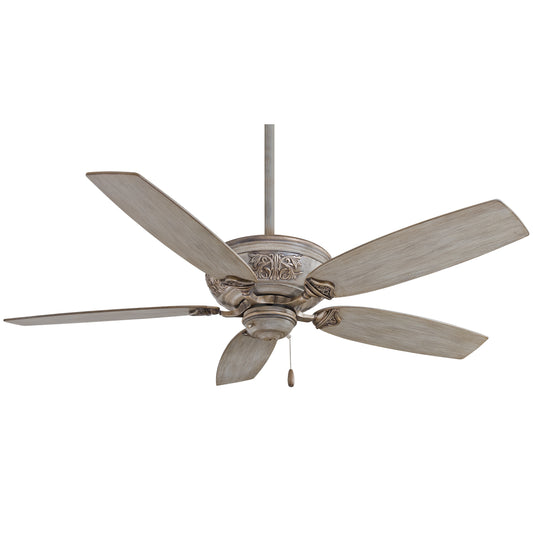
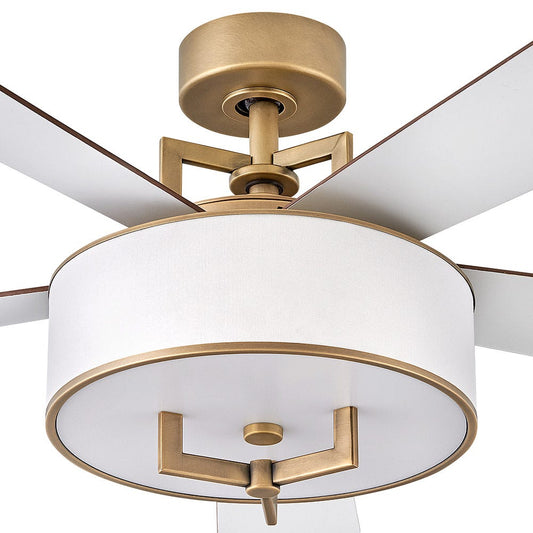
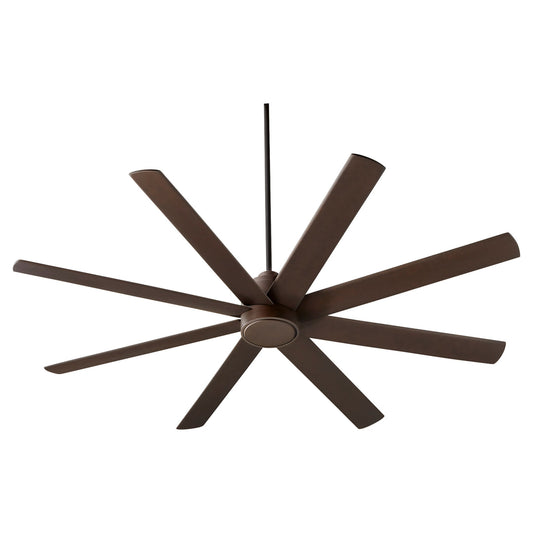
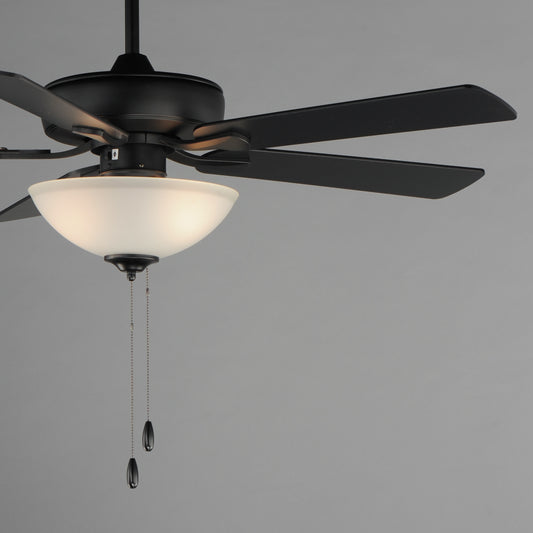
The first thing most people notice is the number of blades. Sleek, three-blade fans have clean lines that feel right at home in modern or minimalist bedrooms, giving off an uncluttered and airy vibe. On the other hand, classic five-blade fans offer a more traditional, inviting look that’s perfect for rustic, coastal, or farmhouse decor.
Your fan is one of the largest fixtures in your room. Treat its selection with the same care you would a bed frame or statement rug. The goal is to choose a fan that doesn't just fit in but enhances your existing decor.
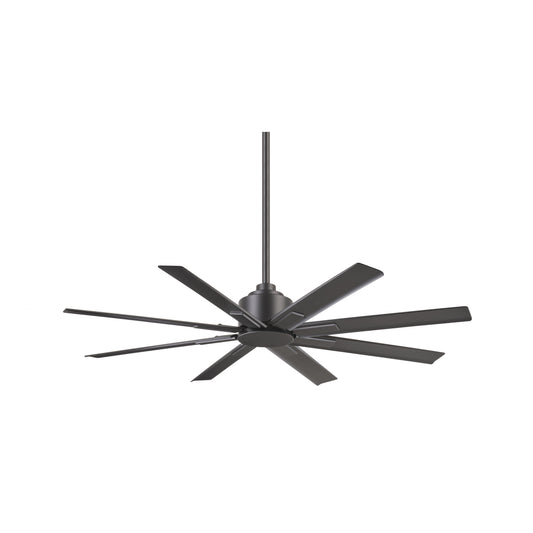
The real magic happens with the finish of the blades and motor. A matte black finish can bring a bold, contemporary edge, while brushed nickel has a softer, more versatile feel that works with just about any color palette. And you can never go wrong with warm wood tones like walnut or oak, which add a natural, organic texture to the room.
This shift toward style is a huge reason the market for ceiling fans with lights is projected to hit USD 12.61 billion by 2030. People just aren’t settling for boring, functional fans anymore. You can read more about these market trends and their growth to see how much design is shaping the industry.
From Functional to Statement Piece
At Fan & Lights, we group our fans into collections to help you find a style that really speaks to you. A fan doesn't have to blend into the background—it can absolutely be the star of the show.
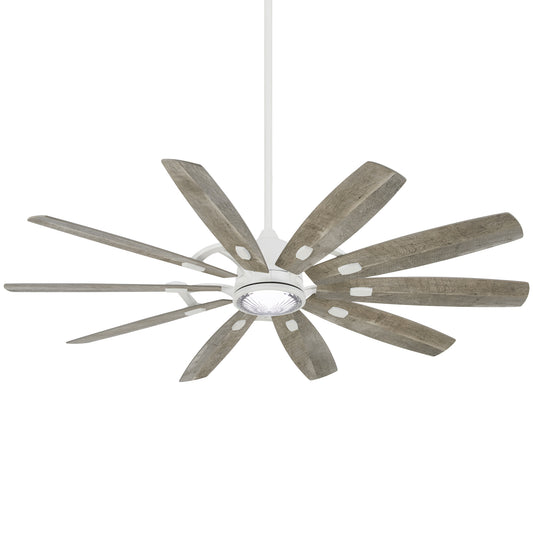
- For an Industrial Edge: Our Barn Collection (with fans over $450) has a rugged, rustic-industrial design that’s perfect for lofts or modern farmhouse bedrooms.
- For Sculptural Elegance: The Artemis XL5 from our premium collections (priced over $900) is a true work of art. Its fluid, sculptural blades make a breathtaking statement in any contemporary master suite.
When you take the time to pick a fan that truly complements your decor, you elevate your bedroom from just a place to sleep into a thoughtfully designed sanctuary.
Smart Features for Modern Convenience
Let's be honest, modern ceiling fans lights for bedroom are a world away from the wobbly, noisy fans you might remember. They’re no longer just a motor with blades; today’s fans are packed with smart tech designed to make your life way more comfortable. Forget fumbling for a pull chain in the dark or getting out of a perfectly warm bed—total control is now right in your hand.
Most quality fans come standard with a remote control, letting you change the fan speed, switch its direction, or dim the lights from anywhere in the room. This simple luxury is a total game-changer, especially in the bedroom where you want everything to be effortless.
Smarter Controls for a Smarter Bedroom
Smart home integration takes that convenience to a whole new level. Many of our fans can now link up with systems like Amazon Alexa or Google Home, so you can control everything with just your voice. Imagine just saying, "Hey Google, turn the bedroom fan to low," without even lifting a finger. It feels like the future, but it’s available right now.
For a truly connected home, think about how a smart fan can work with your other devices. Pairing your fan with a smart thermostat integration can create a climate control powerhouse, where both systems work together to keep you comfortable while saving energy. To get the full rundown on connecting your fan, check out our guide on ceiling fans with smart home integration options.
Features That Work Year-Round
Beyond the cool tech, a couple of practical features deliver serious value all year long.
- Reversible Motor: This is a must-have. In summer, the blades spin counter-clockwise to push cool air down. In winter, you just flip a switch to reverse the blades, which pulls cool air up and circulates the warm air that gets trapped near the ceiling. It’s a simple trick that makes a huge difference in how comfortable your room feels.
- Energy Star Rating: A fan with an ENERGY STAR label is certified to be way more efficient than a standard model. This isn’t just good for the planet—it’s great for your wallet, too, as it helps trim down your electricity bill.
Smart features aren’t just gimmicks. They are practical upgrades that add real comfort and convenience to your daily routine, making a high-quality fan an investment you’ll appreciate every day.
Models like the versatile fans in our Anywhere Collection (with options well over $300) really show how all these features come together. With their seamless smart controls and efficient design, they prove that the best bedroom fans are as intelligent as they are stylish.
Got Questions About Bedroom Fans? We’ve Got Answers.
Even after you've nailed down the basics, a few specific questions always seem to pop up when picking out the perfect fan for a bedroom. Let's tackle them head-on, so you can make your final choice with complete confidence.
How High Should a Bedroom Ceiling Fan Be?
This is a big one, both for safety and for getting the most out of your fan. The rule of thumb is simple: fan blades should hang at least 7 feet above the floor.
If you have standard 8-foot ceilings, a "hugger" or flush-mount fan is your best bet. These sit right up against the ceiling, maximizing your headspace. For ceilings that are 9 feet or taller, you'll want to use a downrod. This brings the fan down to that sweet spot—about 8 to 9 feet from the floor—for the best possible air circulation.
Can I Put a Ceiling Fan on a Sloped Ceiling?
Absolutely! Most fans that use a downrod are already built to handle angled ceilings, usually up to a 30-degree pitch.
It’s always a good idea to double-check the fan’s specs just to be sure. If your ceiling has a steeper slope, you might need a separate sloped ceiling adapter, which is a pretty common accessory for many premium fan models.
Is CFM or blade span more important? Both are key, but CFM (Cubic Feet per Minute) is the true measure of airflow. A fan with a higher CFM rating moves more air, which means more effective cooling. Often, a larger blade span helps achieve a higher CFM at a lower, quieter speed, making it perfect for a peaceful bedroom.
Ready to put all this knowledge to good use? The team at Fan & Lights has pulled together an incredible selection of stylish, high-performance fans ready to transform your bedroom. Take a look at our premium collections, like the Artemis IV (starting over $800), to find the perfect centerpiece for your personal sanctuary.


