

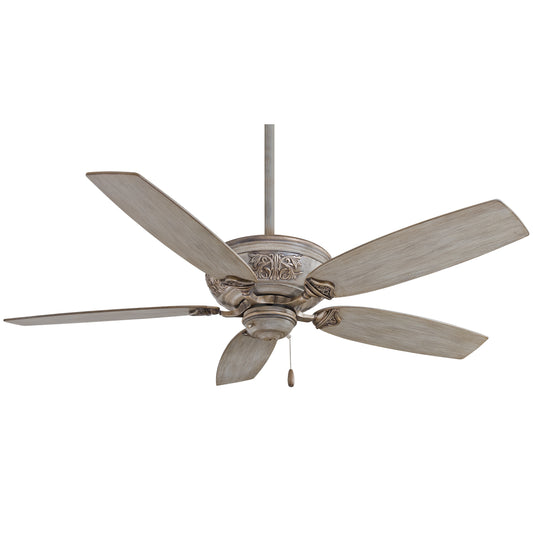

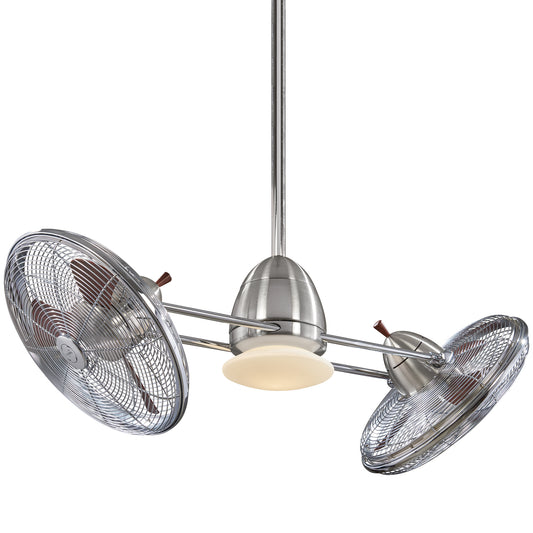

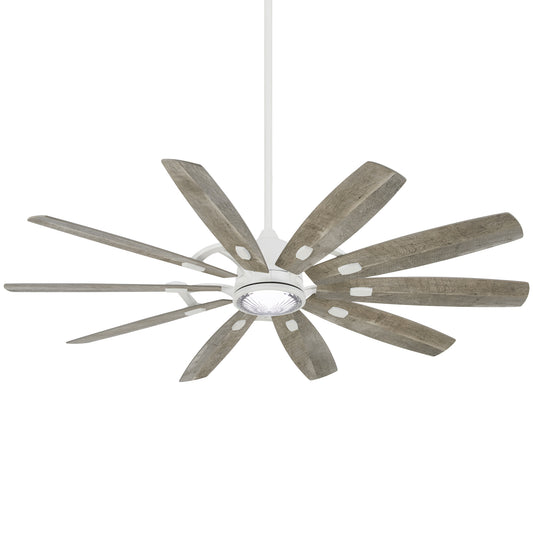

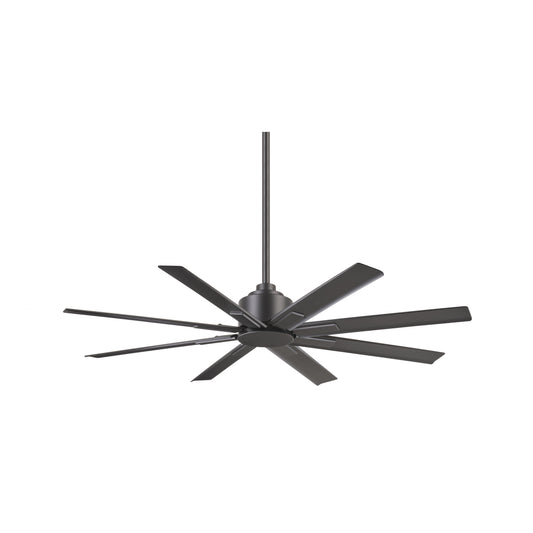

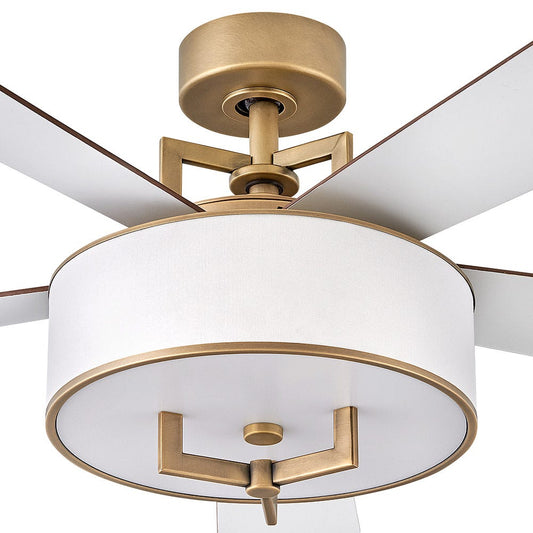


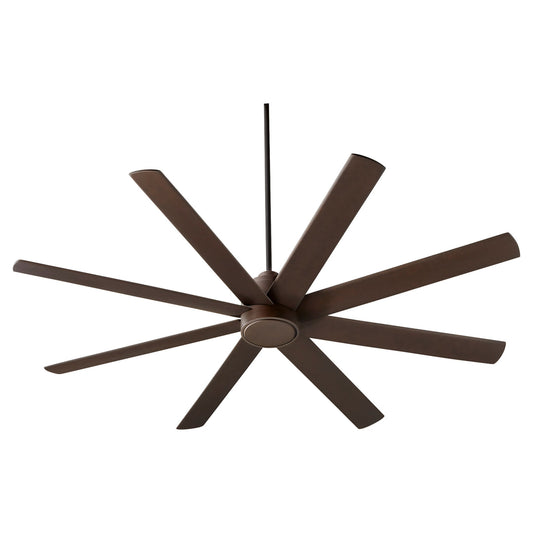


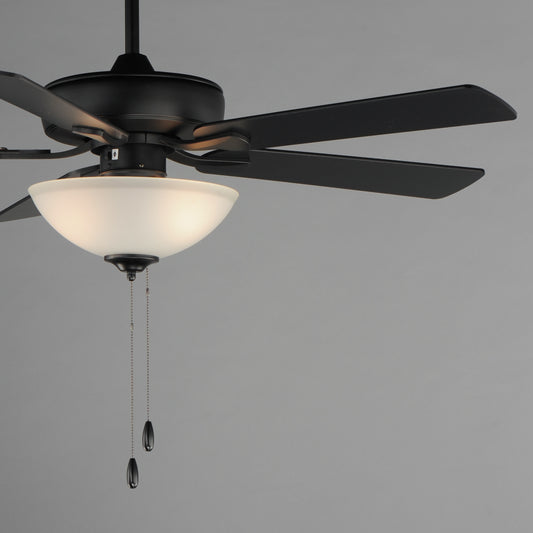


Your Ultimate Guide to Ceiling Fans With Lights
Picking a ceiling fan with a light is one of the smartest, most practical upgrades you can make to a room. It’s more than just a fixture—it’s a centerpiece that pulls double duty, instantly boosting comfort and style. This guide will walk you through everything you need to know to find the perfect, premium fan for your home.
Why A Ceiling Fan With A Light Is A Smart Upgrade
Let's be honest, combining a ceiling fan and a light fixture is the ultimate two-for-one deal for your home. You get the cooling breeze you crave in the summer and the essential light you need year-round, all wrapped up in a single, stylish package. This instantly saves precious ceiling real estate, creating a cleaner, more streamlined look.

There’s a reason the market for these combo units is booming. The global ceiling fan market, which includes these popular models, was valued at USD 11.83 billion in 2025 and is expected to climb to nearly USD 18 billion by 2034. That kind of growth shows just how indispensable these fixtures have become in modern homes.
More Than Just Air and Light
Today's ceiling fans with lights do a lot more than just move air and brighten a space; they can anchor a room's entire design. With styles ranging from sleek and minimalist to rustic and industrial, the right fan can be the finishing touch that ties all your decor together. It’s a chance to add a sculptural element that draws the eye up and completes your vision.
Think about the impact of a premium model like the striking Artemis IV (from $400). Its fluid, artistic shape and powerful integrated LED turn it into a functional work of art. Suddenly, a simple fixture becomes a conversation starter, elevating an ordinary room into a thoughtfully designed space.
Here’s a quick rundown of the benefits:
- Dual Functionality: You get cooling and lighting in one spot, which saves space and simplifies the wiring job.
- Energy Savings: A fan circulates air to make a room feel cooler, which means you can ease up on the expensive air conditioning. You can learn more about the breezy benefits of having a ceiling fan in our detailed article.
- Enhanced Ambiance: Dimmable lights let you set the mood, whether you need bright, focused light for a task or a soft, relaxing glow for the evening.
The best ceiling fans with lights are designed with the whole room in mind. They don't just add a breeze; they contribute to the overall feeling of comfort, style, and control you have over your personal space.
To get started, here's a quick look at the most important factors to consider when choosing a ceiling fan with lights.
Key Factors When Choosing Your Fan
| Factor | Why It Matters | Quick Tip |
|---|---|---|
| Lumens & CCT | Determines the brightness and color of the light. | Aim for 800-1500 lumens for most rooms and a CCT around 3000K for a warm, inviting feel. |
| Room Size & CFM | Ensures the fan can effectively circulate air for the space. | Match the blade span and CFM rating to your room's square footage for optimal performance. |
| Controls | Dictates how you interact with your fan and light. | Remote controls offer the most convenience, while smart controls provide ultimate flexibility. |
| Style & Finish | The fan should complement your home's decor. | Browse collections like Modern, Rustic, or Tropical to find a style that fits your aesthetic. |
These key elements will help you narrow down your choices and find a fan that’s a perfect fit.
Ultimately, choosing a fan with a light is an investment in your home’s everyday comfort and long-term value. By the end of this guide, you'll have all the confidence you need to pick a model that looks great and works perfectly for your lifestyle.
Choosing Your Light Source: Integrated LED Vs. Bulbs
When you’re picking a ceiling fan with a light, one of the first big decisions you’ll face is the light source itself. This choice really sets the tone for your room and determines what maintenance will look like down the road. You’ve got two main options: a fan with a built-in LED panel or one that uses traditional screw-in bulbs.
Think of an integrated LED fan like the premium sound system that comes factory-installed in a luxury car. It’s designed to be a perfect, seamless fit. The lights are built right into the fan's body, giving it a sleek, low-profile look that’s perfect for modern homes.
The Power Of Integrated LED
Integrated LEDs are the definition of "set it and forget it." They have an incredible lifespan, with many rated for 50,000 hours or more. To put that in perspective, that’s over a decade of regular use without ever thinking about climbing a ladder to change a bulb.
This longevity, combined with their amazing energy efficiency, is why they're so popular. Standard ceiling fans with lights recently made up about 42% of the global market, a slice of the pie worth roughly USD 5.16 billion. A huge driver of that growth, especially here in North America, is designers pairing fans with LEDs to get energy savings of 40-50% compared to old-school incandescent bulbs.
If you want to see this technology in action, just look at our modern collections. Sleek models like the Wave II (starting at $399) or the powerful Odyn (from $999) are perfect examples of how integrated LEDs can deliver bright, beautiful light without getting in the way of style.
The Flexibility Of Traditional Bulbs
On the other hand, a fan that uses traditional bulb sockets is more like a component stereo system—you get to pick and choose the parts. This freedom to customize and adapt your lighting whenever you want is its biggest advantage.
With bulb sockets, you're in the driver's seat. You can easily swap out bulbs to change the entire feel of the room.
- Brightness (Lumens): Need a brighter space for working? Just screw in a bulb with higher lumens. Want a softer glow for movie night? Go with a lower lumen count.
- Color Temperature (Kelvin): You can shift your room's mood from a warm, cozy yellow (2700K) to a cool, crisp white (5000K) simply by changing the bulb.
This flexibility lets you evolve your room’s lighting as your style or the room’s function changes over time. If you want to dive deeper into light kits, you should check out our comprehensive guide on choosing the right fan light kit.
The choice really comes down to your priorities. Do you prefer the hassle-free brilliance and energy savings of an integrated LED, or the customizable freedom that traditional bulbs offer?
Ultimately, there's no wrong answer here. Both will light up your space beautifully. It all depends on whether you value long-term convenience and a clean, modern look or the ability to fine-tune your lighting on a whim.
Understanding Fan Performance And Efficiency
When you're shopping for a ceiling fan with a light, it's easy to get buried in a mountain of technical jargon. Let's cut through the noise and talk about what those numbers really mean for your home, your comfort, and your wallet.
The single most important number for airflow is CFM, which stands for Cubic Feet per Minute. Think of this as the fan's muscle—it’s a straight-up measure of how much air it can move. A higher CFM means a stronger, more refreshing breeze, which is non-negotiable for large living rooms or spaces with high ceilings.
Decoding The Numbers
For the light itself, two numbers matter most: lumens and Kelvin.
Lumens are just a fancy word for brightness. The higher the lumens, the brighter the light. It's that simple. Kelvin (K), on the other hand, is all about the mood. It tells you the color temperature of the light.
- 2700K: This gives off a warm, cozy glow, very similar to an old-school incandescent bulb. It’s perfect for bedrooms and living rooms where relaxation is key.
- 3000K: Think of this as a soft, neutral white light. It’s incredibly versatile and works just about anywhere, from kitchens to home offices.
- 5000K: This is a cool, crisp light that feels like natural daylight. It’s ideal for task-heavy areas like workshops or laundry rooms where you need to see every detail clearly.
The real secret sauce behind top-tier fan performance? The motor. Premium fans, like the sleek Aviation model (starting at $549), often come with advanced DC (Direct Current) motors. These modern powerhouses are whisper-quiet and can be up to 70% more energy-efficient than their clunky AC (Alternating Current) counterparts. You get all the airflow without a scary energy bill.
Efficiency Is The Future
This drive for efficiency is changing everything. Thanks to better motors and smart home features, the ceiling fan market is projected to grow from USD 12.89 billion in 2026 to USD 15.60 billion by 2031. Homeowners are catching on, especially in high-end markets where fans that can slash energy use by 50-70% are a huge selling point.
Choosing an efficient model isn't just about saving money month-to-month. It's about investing in a higher-quality product that delivers better performance, quieter operation, and more advanced features.
A great motor working in tandem with well-designed blades is what creates that powerful, wobble-free airflow. You can learn more in our article covering the benefits of energy-efficient ceiling fans. Once you understand these key metrics, you can compare models like a pro and find that perfect mix of power, style, and savings.
Finding The Perfect Size And Placement
Choosing a ceiling fan with a light is a bit like a Goldilocks story—if it’s too small, it won’t move enough air to matter. If it’s too big for the space, it can feel like you’re living in a wind tunnel. Getting the size and placement just right is the secret to unlocking that perfect blend of comfort, style, and safety.
A fan that’s undersized for a large living room will just spin its heart out to no effect, while a massive fan in a small bedroom is simply overkill. We've seen it all, and trust us, the right fit makes all the difference.
To help you visualize how all the pieces fit together—from airflow to lighting—we put together this simple guide.

This helps connect a fan’s power (CFM) with its light output (lumens), so you can find a model that’s perfectly balanced for both. For an even deeper dive, you can check out our complete ceiling fan size guide to match your room's exact measurements.
Room Sizing Made Simple
Think of your fan's blade span as its "reach." The larger your room, the wider that reach needs to be to move air from corner to corner. Here’s a good rule of thumb to get you started:
- Small Rooms (Up to 75 sq. ft.): A blade span of 36 inches or less is your sweet spot.
- Medium Rooms (76 - 175 sq. ft.): This is the most common size, and a fan between 42 to 52 inches usually does the trick.
- Large Rooms (176 - 350 sq. ft.): You'll want to step up to a fan with a 52 to 56-inch blade span.
- Great Rooms (Over 350 sq. ft.): Go big with a fan over 60 inches. For really long rooms, sometimes two smaller fans work even better for balanced airflow.
Getting The Height Just Right
For the best possible airflow, your fan should be centered in the room and hang about 8 to 9 feet from the floor. This gives the fan the ideal amount of space to pull air in and push it down, creating that gentle, circulating breeze. Of course, not every ceiling is a standard height.
The goal is to create a consistent, gentle breeze, not a windstorm. Proper height ensures the fan works with your space, not against it, giving you that 'just right' feeling of comfort.
If your ceilings are lower than 8 feet, you'll want what's called a "hugger" or flush-mount fan. Just as the name suggests, these models mount directly to the ceiling, giving you as much headroom as possible.
For high or vaulted ceilings, a downrod is your best friend. It’s an extension pole that lowers the fan into that optimal 8-9 foot zone. The good news is you don't have to choose between function and looks. Our Anywhere Collection (starting at $300) is designed for this exact challenge, offering versatile fans with lights that can be installed on any ceiling type, so you get incredible airflow no matter what your home's architecture looks like.
How to Match a Ceiling Fan to Your Home's Style
A ceiling fan is so much more than a machine that moves air around. Think of it as a centerpiece for your ceiling—a major design choice that can either complete a room or feel totally out of place. It’s the finishing touch that pulls everything together.
Let’s get you a fan that doesn't just work with your decor, but makes it shine.

The goal here is simple: match the fan’s vibe to your existing style. A clunky, mismatched fan can make even the most beautifully decorated room feel a little off. But the right fan? It looks like it was always meant to be there, tying the whole look together.
For Modern and Minimalist Spaces
Modern design is all about clean lines, simple shapes, and an uncluttered feel. If that’s your home, you’ll want a fan that’s more like a piece of moving sculpture than a bulky appliance.
Look for sleek finishes like matte black, brushed nickel, or a crisp white. These fans often feature just three or four sharp, aerodynamic blades that cut through the air without adding any visual noise.
The Artemis IV (from $400) from our Modern Collection is a perfect example. Its blades flow into the housing seamlessly, and the integrated LED light is so subtle you barely notice it's there. It’s pure function and art, ideal for a minimalist living room where every object counts.
For Rustic and Farmhouse Charm
Rustic and farmhouse homes are all about warmth, character, and a touch of history. We’re talking natural materials, cozy textures, and a lived-in feel. Your fan should reflect that.
Look for models that pair rich, wood-finished blades with industrial-style hardware in finishes like oil-rubbed bronze or aged iron.
Our Timber Luxe fan (starting at $379) nails this look. With blades that look like reclaimed wood and a sturdy, barn-door-inspired housing, it brings a cozy, down-to-earth vibe. It’s the perfect fan to hang over a big family dining table or in a living room with a stone fireplace.
Choosing a fan is an opportunity to amplify your room's story. A tropical fan can make a sunroom feel like a vacation, while a modern fan makes a living room feel gallery-ready.
For a Relaxed, Tropical Vibe
Want your home to feel like a permanent getaway? A tropical-style fan is your best friend. These fans are known for their wide, leaf-shaped blades, often crafted from real wood or designed to look like palm fronds.
They don’t just move air; they create a gentle, resort-style breeze that immediately makes you want to kick your feet up.
The Spitfire fan (priced from $639) is a star in our Tropical Collection for this very reason. Its broad, elegant blades move with a graceful rhythm that instantly sets a laid-back mood. It’s a natural fit for a sunroom, a covered porch, or any space where unwinding is the top priority. As you think about the atmosphere your fan creates, remember that the light itself is just one piece of the puzzle. It’s worth learning how you can put your living room in the best light by layering different light sources to complement your new fan.
Smart Home Integration And Control Options
You’ve found a fan that looks fantastic—but how you use it is what really makes it part of your home. The days of fumbling for a pull chain in the dark are long gone. Modern ceiling fans with lights are all about effortless control, and this is where the real fun begins.
While we always insist a licensed electrician handles the wiring for safety, it's smart to know what’s possible beforehand. They'll make sure a fan-rated electrical box is in place to handle the weight and movement, but from there, it's all about choosing how you want to interact with your fan.
The most exciting leap forward is smart home integration. Many newer ceiling fans with lights now have built-in Wi-Fi, turning them into true smart devices. This means you can sync them up with voice assistants like Google Assistant or Amazon Alexa for completely hands-free control.
Voice Commands and App Control
Imagine walking into a stuffy room and just saying, “Hey Google, turn on the ceiling fan.” It’s a simple luxury that you’ll quickly wonder how you ever lived without. Premium models like the Maverick II (from $799) offer this seamless experience straight out of the box, complete with dedicated apps that let you control everything from fan speed to light dimming right from your phone.
The convenience of smart fans is part of a larger trend in home automation. You can get a sense of this by looking into how motorized blinds work and the luxury they add. The core ideas of automation and easy living are the same. If you want to dive deeper, check out our guide on ceiling fans with smart home integration options.
Remotes Versus Wall Controls
Even if you’re not ready for a fully “smart” setup, you still have excellent options that are a huge upgrade from the old pull chains.
- Handheld Remotes: These are the new standard for a reason. They give you the freedom to adjust the fan speed, light, and blade direction from anywhere in the room—no getting out of bed required.
- Wall Controls: A hardwired wall control gives you a permanent, central command post. You’ll never have to hunt for a lost remote, and many new designs offer a sleek, modern look with intuitive slide or touch controls.
Choosing your control method is all about matching the fan to your lifestyle. Do you want the grab-and-go convenience of a remote, the reliable simplicity of a wall switch, or the futuristic ease of voice commands?
In the end, the right control setup transforms your fan from a simple fixture into an active part of your home’s comfort system. Whether you go with a simple remote or a fully integrated smart fan, modern controls put the power of a perfect atmosphere right at your fingertips.
Frequently Asked Questions
Still have a few questions floating around? You're in good company. We hear these all the time from customers, so let's clear up some of the common sticking points and help you find that perfect fan with confidence.
Can I Add A Light Kit To Any Ceiling Fan?
That’s a great question, but the short answer is: not always. Only fans specifically labeled as "light kit adaptable" are built to have a light added on later. Even with those, you'll want to stick to a compatible light kit from the same manufacturer to make sure the fit, wiring, and finish are a perfect match.
Many of today's sleek, minimalist fans are intentionally designed without this option to keep the profile clean. Honestly, for a look that's guaranteed to be seamless, your best bet is to buy a fan with the light already built-in. That's why we put together our Fan Connection Collections—they take all the guesswork out of it.
How Much Energy Does A Modern LED Fan Use?
You’ll be pleasantly surprised—they use remarkably little power. A modern ceiling fan with an efficient DC motor typically uses only about 30 watts of electricity on its highest speed. The integrated LED light might add another 15-25 watts when it's on.
Put it all together, and you're often using less energy than a single, old-fashioned 60-watt incandescent light bulb. It's one of the most efficient ways you can both cool down and light up a room.
How Do I Clean My Ceiling Fan And Light?
First things first: safety. Always flip the circuit breaker to cut all power to the fan before you start cleaning. No exceptions!
For the blades, an extendable duster works well. Another great method is the old "pillowcase trick"—just slide a pillowcase over each blade one by one and pull it back. All the dust gets trapped inside instead of falling on your floor and furniture. For the fan body and light cover, a quick wipe-down with a soft, damp cloth is all you need.
One of the best perks of an integrated LED fan is how little maintenance the light needs. The LEDs are built to last for over a decade—often longer than the fan itself—so you’ll never find yourself on a wobbly ladder trying to change a burnt-out bulb.
Ready to find the perfect fixture? The team at Fan Connection has curated an amazing selection of ceiling fans with lights to fit every style and budget. Explore our modern, rustic, and tropical collections today.


